


Table of Contents
- What Does Coffee Strength Actually Mean?
- The Two Levers of Coffee Strength
- Mastering Coffee Ratios for Perfect Strength
- The Golden Ratio and Beyond
- Practical Example: Finding Your Ratio
- How Roast Level Affects Your Coffee
- Light Roast Characteristics
- Dark Roast Characteristics
- Matching Roast to Your Strength Goals
- Brew Time and Extraction Explained
- The Extraction Timeline
- Brew Time by Method
- A Troubleshooting Scenario
- Putting It All Together: Your Strength Strategy
- Step-by-Step Approach for Beginners
- Common Mistakes to Avoid
- Frequently Asked Questions
- Does dark roast coffee have more caffeine than light roast?
- What's the easiest way to make my coffee stronger without buying new equipment?
- Why does my coffee taste bitter even when I use the right ratio?
- Can I use the same coffee-to-water ratio for all brewing methods?
- How important is water temperature for coffee strength?
- Conclusion and Your Next Steps
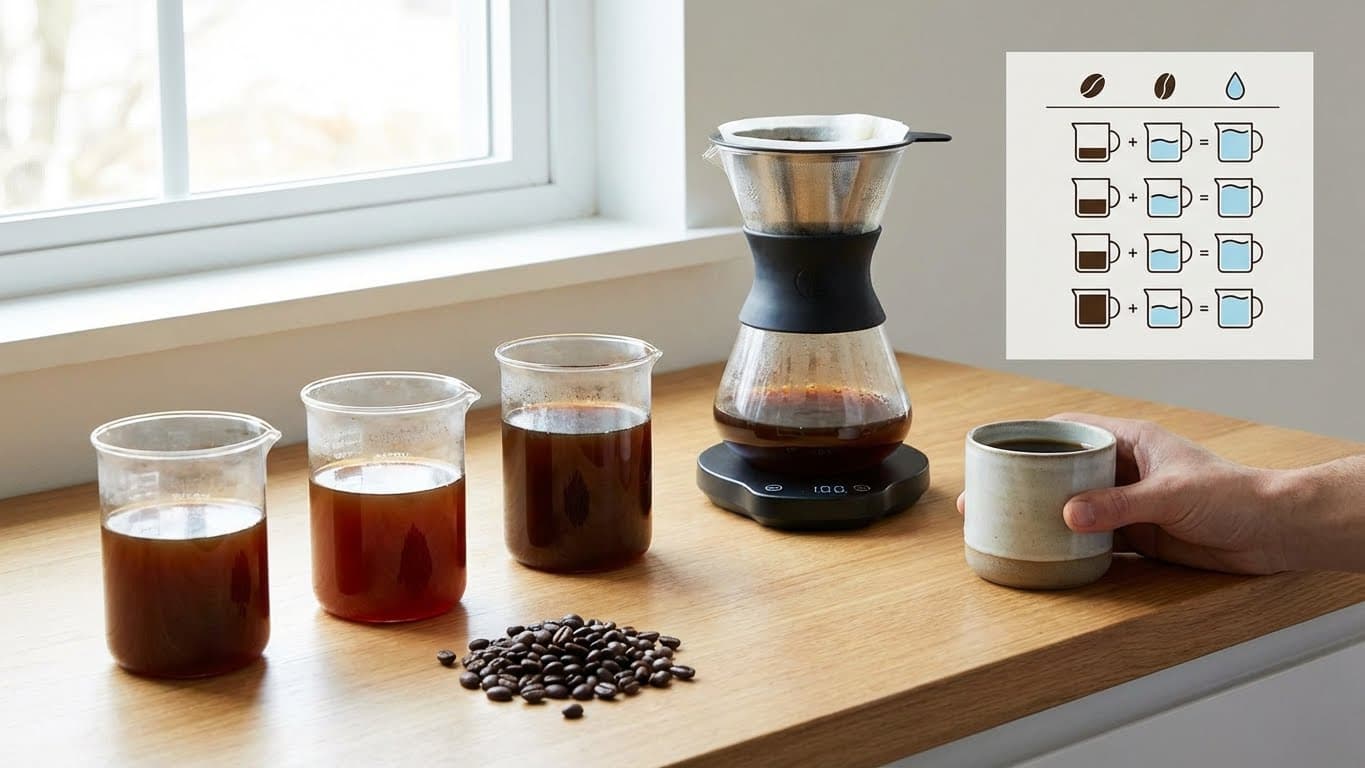
Ever made a cup of coffee that tasted like watered-down disappointment, or one so intense it practically slapped you awake? If you’ve struggled to nail that perfect balance of bold flavor without the bitter punishment, you’re not alone. Understanding coffee strength is one of the most fundamental skills any home barista can develop, and once you crack the code, every morning cup becomes something to genuinely look forward to.
In this guide, you’ll learn exactly what coffee strength really means (spoiler: it’s not just about caffeine), how to use ratios like a pro, what roast level actually does to your cup, and how brew time ties everything together. By the end, you’ll have the knowledge to dial in your perfect brew every single time.
What Does Coffee Strength Actually Mean?
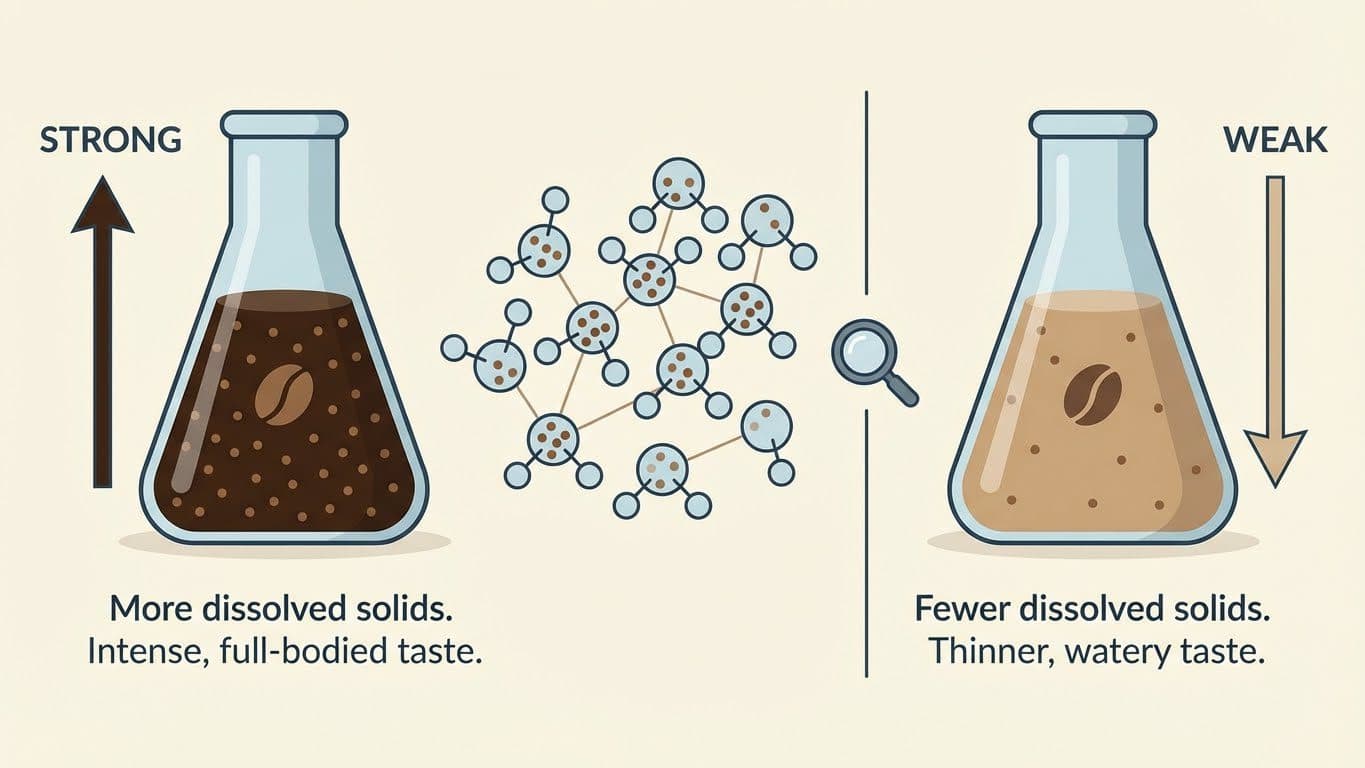
Here’s something that trips up a lot of beginners: coffee strength and coffee boldness aren’t the same thing. When we talk about strength, we’re referring to the concentration of dissolved coffee compounds in your cup. In simpler terms, it’s how much “coffee stuff” ended up in your water.
A strong coffee has more dissolved solids, making it taste more intense and full-bodied. A weak coffee has fewer dissolved solids, resulting in a thinner, more watery taste. This is completely separate from:
- Caffeine content – which depends more on bean type and serving size
- Roast darkness – which affects flavor profile, not necessarily strength
- Bitterness – which often comes from over-extraction, not strength itself
Key Takeaway: Strength is about concentration. You can have a strong light roast or a weak dark roast. Once you separate these concepts in your mind, controlling your brew becomes much easier.
The Two Levers of Coffee Strength
You control coffee strength through two main variables: how much coffee you use relative to water (your ratio), and how much of that coffee actually dissolves into your cup (extraction). I’ve found that beginners often focus only on one while ignoring the other, which leads to frustrating inconsistency.
Think of it like making soup. You can make it stronger by adding more bouillon cubes (ratio), or by simmering it longer to extract more flavor (extraction). With coffee, we balance both to hit our target.
Mastering Coffee Ratios for Perfect Strength
The coffee-to-water ratio is your most powerful tool for controlling strength. It’s expressed as a relationship between grams of coffee and grams (or milliliters) of water. Getting this right is honestly half the battle.
The Golden Ratio and Beyond
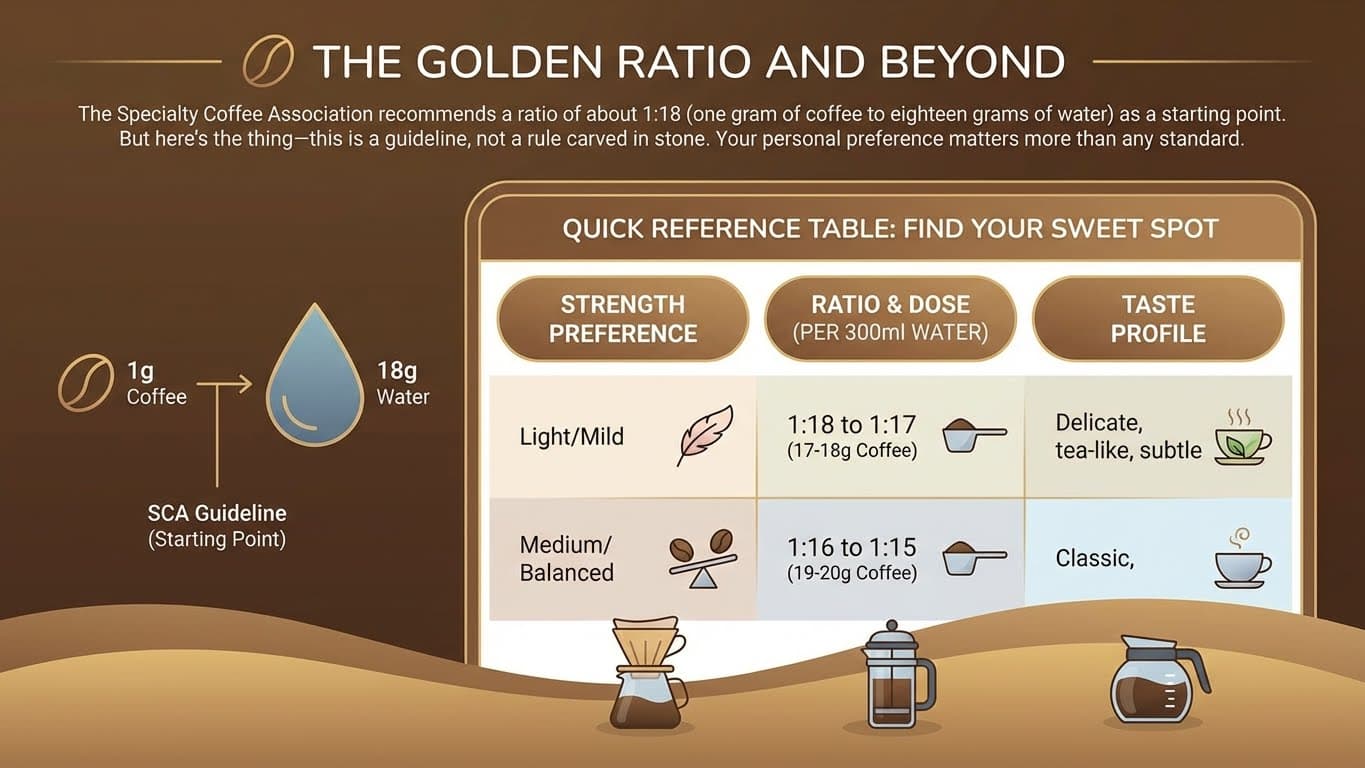
The Specialty Coffee Association recommends a ratio of about 1:18 (one gram of coffee to eighteen grams of water) as a starting point. But here’s the thing—this is a guideline, not a rule carved in stone. Your personal preference matters more than any standard.
Here’s a quick reference table to help you find your sweet spot:
| Strength Preference | Ratio | Coffee per 300ml Water | Taste Profile |
|---|---|---|---|
| Light/Mild | 1:18 to 1:17 | 17-18g | Delicate, tea-like, subtle |
| Medium/Balanced | 1:16 to 1:15 | 19-20g | Classic, well-rounded |
| Strong/Bold | 1:14 to 1:13 | 21-23g | Intense, full-bodied, punchy |
Barista Tip: Invest in a simple kitchen scale. Measuring by weight rather than scoops eliminates one of the biggest sources of inconsistency. A decent scale costs less than a bag of specialty beans and lasts for years.
Practical Example: Finding Your Ratio
Let’s say you’re brewing with a French press and you want a medium-strength cup. You’re using 350ml of water. At a 1:15 ratio, you’d need about 23 grams of coffee. Too weak? Try 1:14 next time (25 grams). Too strong? Back off to 1:16 (22 grams).
I always recommend keeping a simple note on your phone. Jot down what ratio you used and how it tasted. Within a week, you’ll have your personal formula dialed in.
How Roast Level Affects Your Coffee
Walk into any coffee aisle and you’ll see bags labeled light, medium, and dark roast. Many people assume dark roast means stronger coffee. In my experience, this is one of the most persistent myths in the coffee world.
Light Roast Characteristics
Light roasts are roasted for less time at lower temperatures. They retain more of the bean’s original characteristics—often fruity, floral, or tea-like notes. They also contain slightly more caffeine by weight (though the difference is minimal in practice).
- Higher acidity and brightness
- More complex, origin-specific flavors
- Denser beans that may need finer grinding
Dark Roast Characteristics
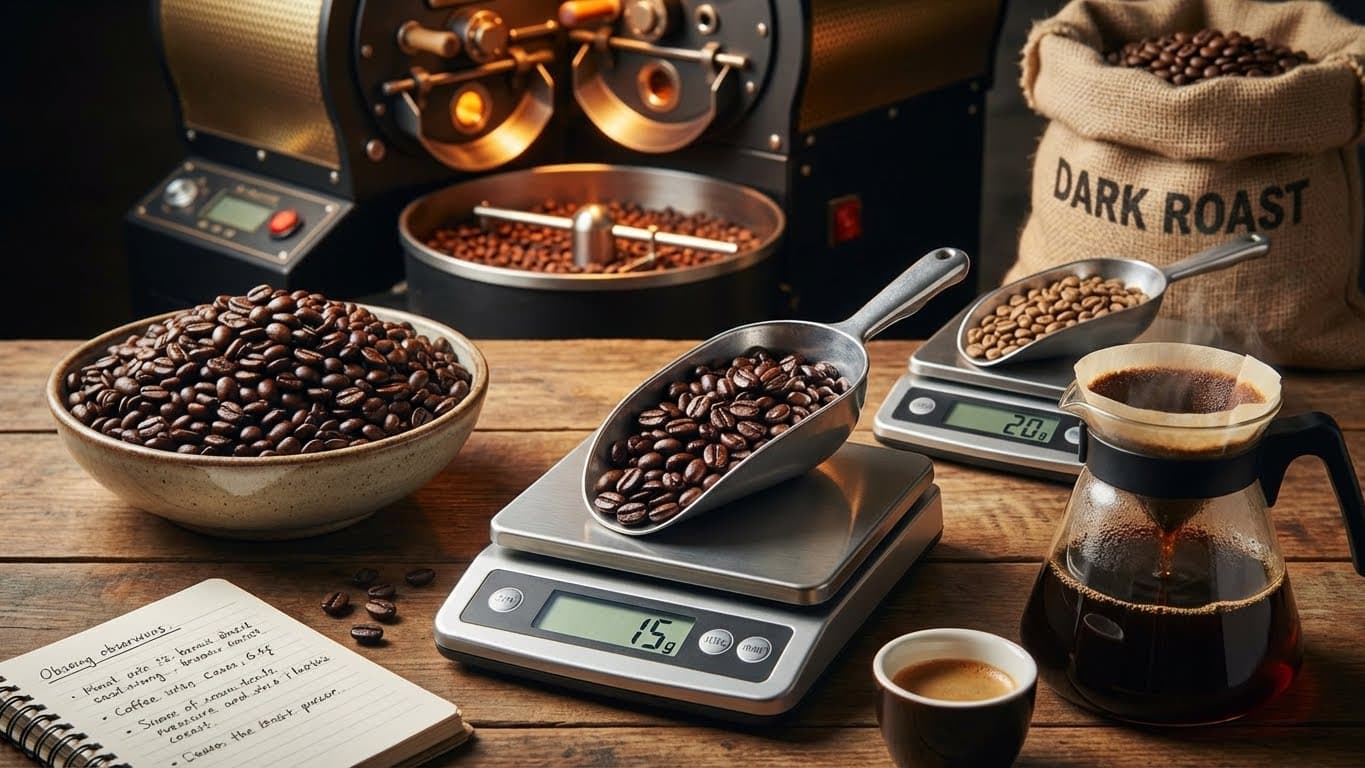
Dark roasts spend more time in the roaster, developing deeper caramelization. The original bean flavors get replaced by roasty, chocolatey, sometimes smoky notes. The beans are less dense and more porous.
- Lower acidity, fuller body
- Bittersweet, bold flavor profile
- More soluble, extracts faster
Did You Know? Because dark roast beans are less dense, a scoop of dark roast actually contains less coffee by weight than the same scoop of light roast. This is why weighing your coffee matters so much—volume measurements can be deceiving.
Matching Roast to Your Strength Goals
Here’s where it gets practical. If you want a strong-tasting cup with bold, roasty flavors, dark roast combined with a tighter ratio (like 1:14) will get you there. If you want a strong but bright and complex cup, use a light roast with that same ratio.
The roast level sets the flavor direction. The ratio controls the intensity. They work together, not separately.
Brew Time and Extraction Explained
Your coffee grounds don’t release all their flavors instantly. Different compounds extract at different rates, and controlling brew time lets you capture the good stuff while leaving the bad stuff behind.
The Extraction Timeline
When hot water hits coffee grounds, extraction happens in stages:
- First (0-2 minutes): Acids and fruity compounds dissolve quickly, creating brightness
- Middle (2-4 minutes): Sugars and balanced flavors come through, adding sweetness and body
- Late (4+ minutes): Bitter compounds and astringent tannins start dominating
This is why timing matters so much. Under-extract and your coffee tastes sour and thin. Over-extract and it turns bitter and harsh. The sweet spot is right in the middle.
Brew Time by Method
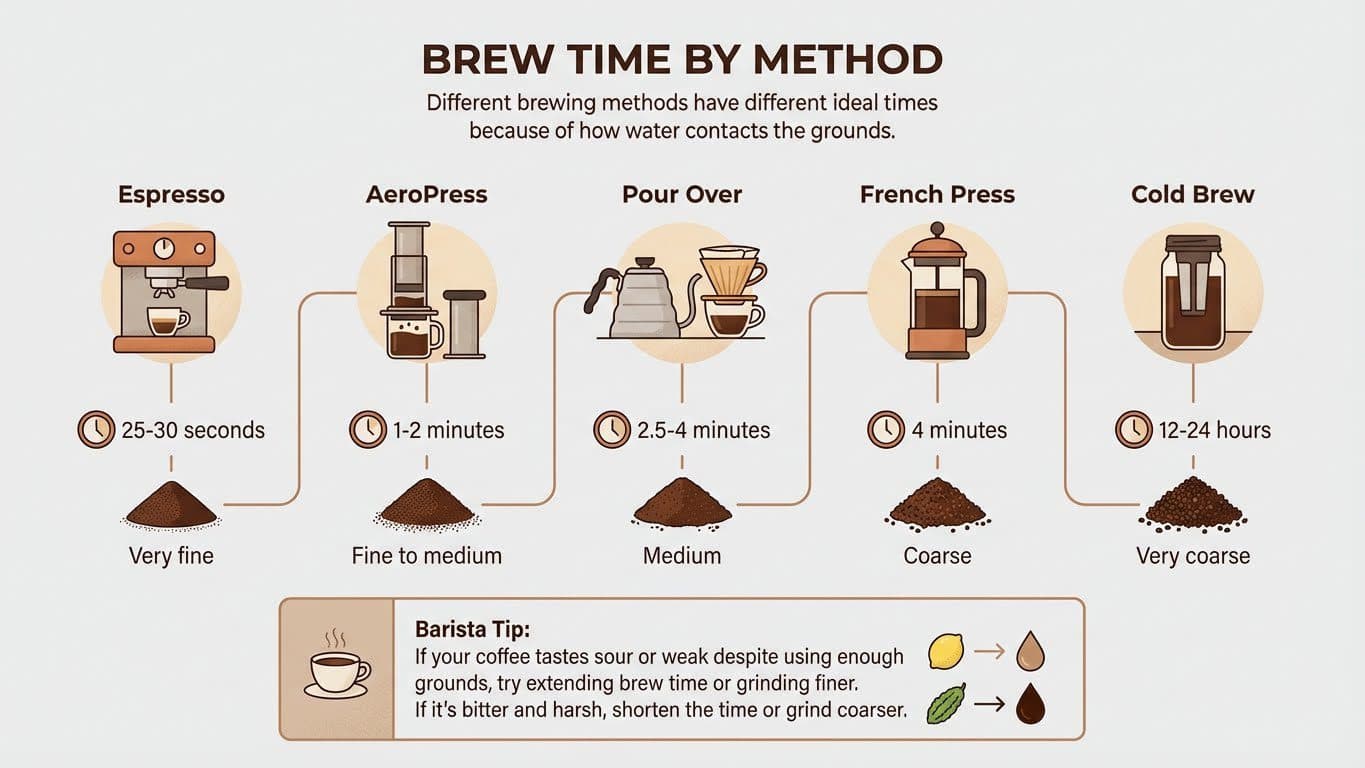
Different brewing methods have different ideal times because of how water contacts the grounds:
| Brew Method | Recommended Time | Grind Size |
|---|---|---|
| Espresso | 25-30 seconds | Very fine |
| AeroPress | 1-2 minutes | Fine to medium |
| Pour Over | 2.5-4 minutes | Medium |
| French Press | 4 minutes | Coarse |
| Cold Brew | 12-24 hours | Very coarse |
Barista Tip: If your coffee tastes sour or weak despite using enough grounds, try extending brew time or grinding finer. If it’s bitter and harsh, shorten the time or grind coarser. Grind size and brew time are connected—adjust them together.
A Troubleshooting Scenario
Imagine you’re making pour-over coffee and it consistently tastes thin and acidic, almost sour. You’re using a 1:15 ratio, which should be plenty strong. What’s happening?
Most likely, you’re under-extracting. Your grind might be too coarse, causing water to rush through too quickly. Try grinding one or two settings finer. Your total brew time should increase, and you’ll start pulling out those sweeter, more balanced flavors.
Putting It All Together: Your Strength Strategy
Now that you understand the three pillars—ratio, roast, and brew time—let’s talk about using them in combination. This is where the magic happens.
Step-by-Step Approach for Beginners
When you’re starting out, I recommend changing one variable at a time. Here’s a simple process:
- Step 1: Pick a ratio and stick with it for a few brews. I suggest starting at 1:16.
- Step 2: Use the recommended grind size and brew time for your method.
- Step 3: Taste and take notes. Too weak? Try 1:15. Too strong? Try 1:17.
- Step 4: Once the strength feels right, adjust brew time or grind to fine-tune flavor balance.
This systematic approach prevents the frustration of changing everything at once and not knowing what actually helped.
Common Mistakes to Avoid
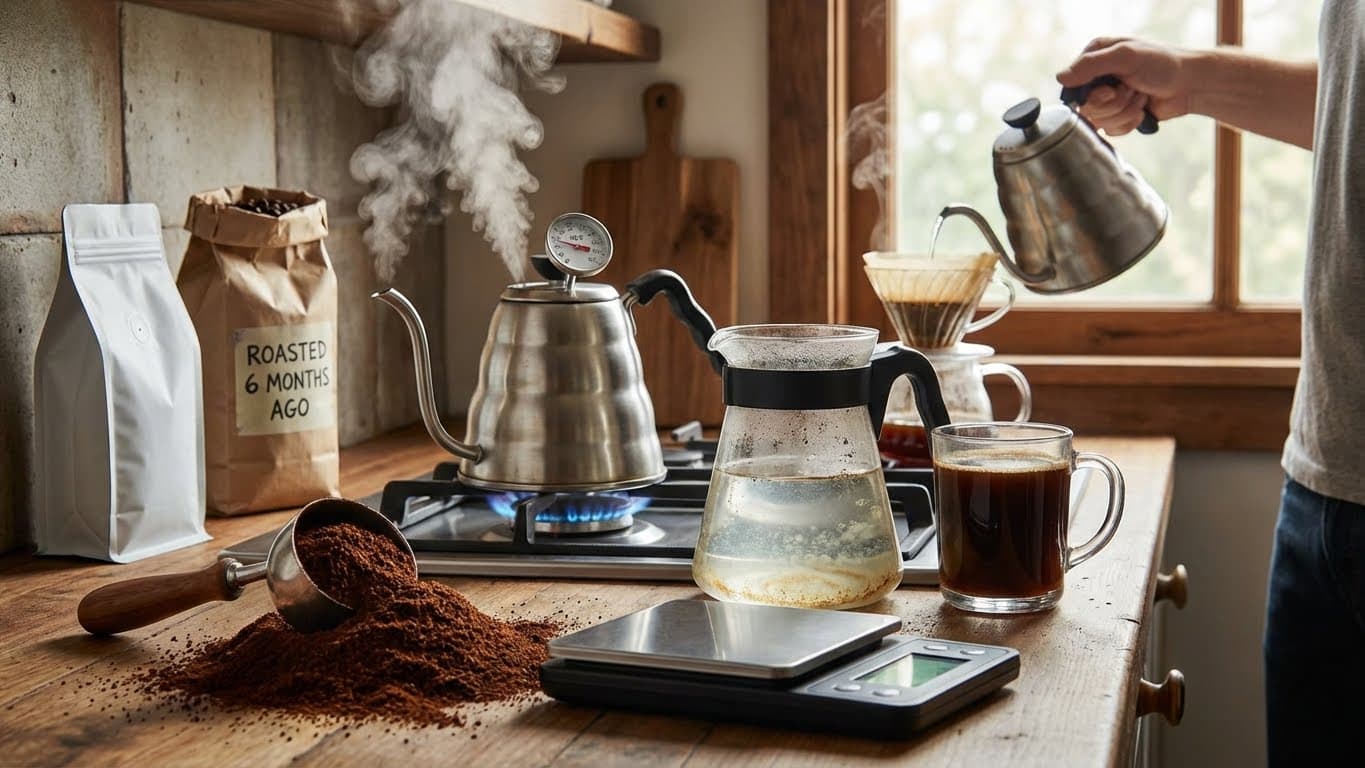
In my experience, these are the errors that trip up most home brewers:
- Eyeballing coffee amounts instead of weighing them
- Using boiling water (which over-extracts and creates bitterness—aim for 90-96°C)
- Ignoring water quality (hard or chlorinated water dulls flavor)
- Using stale coffee (beans start losing flavor about 3-4 weeks after roasting)
Fix these fundamentals first, and your strength adjustments will actually produce consistent results.
Frequently Asked Questions
Does dark roast coffee have more caffeine than light roast?
Not really. The difference is minimal. Dark roast beans weigh less individually, so if you measure by scoops, you might actually get slightly less caffeine. If you measure by weight, the caffeine content is nearly identical. This is one of coffee’s most stubborn myths.
What’s the easiest way to make my coffee stronger without buying new equipment?
Simply use more coffee grounds. If you’re currently using one tablespoon per cup, try one and a half. For precision, switch to weight-based measurements and tighten your ratio from 1:17 to 1:14. This gives you a more concentrated, stronger cup without changing anything else.
Why does my coffee taste bitter even when I use the right ratio?
Bitterness usually signals over-extraction rather than strength issues. Your grind might be too fine, your water too hot, or your brew time too long. Try grinding slightly coarser, letting your water cool for 30 seconds after boiling, or shortening your steep time by 30 seconds to a minute.
Can I use the same coffee-to-water ratio for all brewing methods?
As a starting point, yes. A 1:16 ratio works reasonably well across most methods. However, you’ll likely fine-tune based on the method’s characteristics. Espresso, for example, uses much tighter ratios (around 1:2) because of its concentrated nature. Immersion methods like French press sometimes benefit from slightly stronger ratios since not all water contacts all grounds equally.
How important is water temperature for coffee strength?
Temperature significantly affects extraction speed and completeness. Hotter water extracts faster and pulls out more compounds—including bitter ones. The ideal range for most brewing is 90-96°C (195-205°F). Too cool and your coffee under-extracts, tasting weak and sour regardless of your ratio.
Conclusion and Your Next Steps
Understanding coffee strength comes down to three interconnected factors: your coffee-to-water ratio controls concentration, your roast level sets the flavor direction, and your brew time determines extraction balance. Master these three elements, and you’ll never have to settle for a mediocre cup again.
Start with a 1:16 ratio and the recommended brew time for your method. Taste your results, take quick notes, and adjust one variable at a time until you find your personal sweet spot. Life is too short for bad coffee, and now you have the knowledge to make sure every cup counts.
Your homework? Brew two cups tomorrow—one at 1:17 and one at 1:15—using the same beans and method. Taste them side by side. That hands-on comparison will teach you more about coffee strength than any guide ever could.

Comments