


Table of Contents
- What Is a Knock Box and Why Do You Need One?
- Signs You Need a Knock Box
- Open Knock Box Design: Simple and Accessible
- How Open Designs Work
- Pros of Open Knock Boxes
- Cons of Open Knock Boxes
- Who Is an Open Knock Box For?
- Closed Knock Box Design: Contained and Tidy
- How Closed Designs Work
- Pros of Closed Knock Boxes
- Cons of Closed Knock Boxes
- Who Is a Closed Knock Box For?
- Open vs. Closed Knock Box: Direct Comparison
- Key Features to Look for in Any Knock Box
- Knock Bar Quality
- Capacity
- Stability
- Material and Durability
- Drainage
- Budget-Friendly Knock Box Recommendations
- Best Open Design for Beginners
- Best Closed Design for Small Spaces
- Best All-Around Value
- Frequently Asked Questions
- Can I use any container as a knock box?
- How often should I empty and clean my knock box?
- Do knock boxes fit all portafilter sizes?
- Are stainless steel knock boxes worth the extra cost?
- Can I compost the coffee grounds from my knock box?
- Conclusion: Picking the Right Knock Box for Your Setup
Ever wondered what to do with that soggy puck of espresso grounds after pulling a shot? If you’re still awkwardly tapping your portafilter against the trash can or making a mess over the sink, you’re missing out on one of the simplest upgrades for your home coffee station. A knock box is the unsung hero of any espresso setup, and choosing between an open and closed design can make a bigger difference than you might expect. In this guide, I’ll walk you through everything you need to know about knock boxes, help you understand the key differences between open and closed designs, and make sure you pick the right one for your budget and brewing style.
Whether you’re pulling one espresso a day or running a mini café operation from your kitchen, the right knock box keeps your workflow smooth and your countertop clean. Let’s dive in and find your perfect match.
What Is a Knock Box and Why Do You Need One?
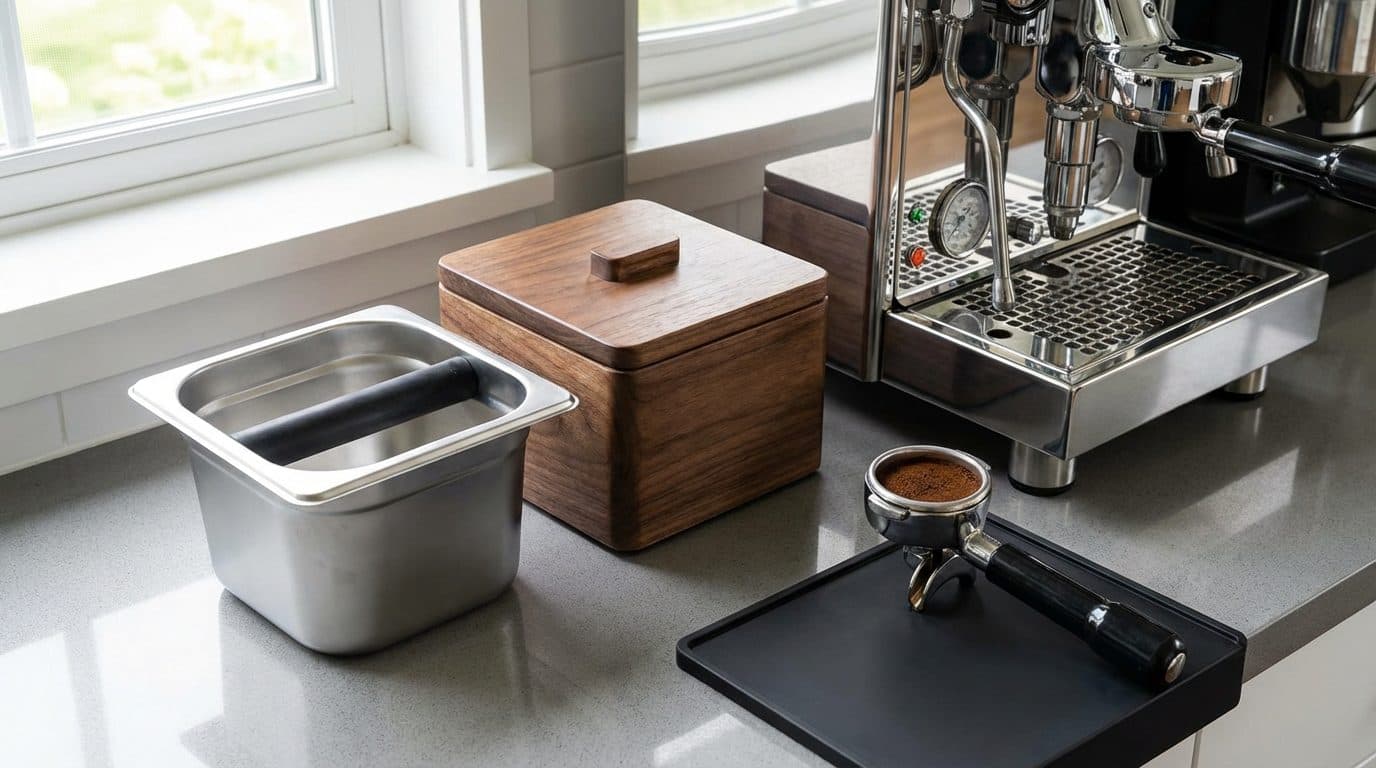
A knock box (sometimes called a knock bin or espresso dump box) is a container designed specifically for disposing of used espresso pucks. It features a sturdy bar across the top—called the knock bar—that you tap your portafilter against to release the spent coffee grounds cleanly and efficiently.
In short, a knock box means no more coffee grounds scattered across your counter, no more clogged drains, and no more awkward portafilter gymnastics. It streamlines your espresso routine and keeps things tidy, which is especially important when you’re making multiple drinks in a row.
Signs You Need a Knock Box
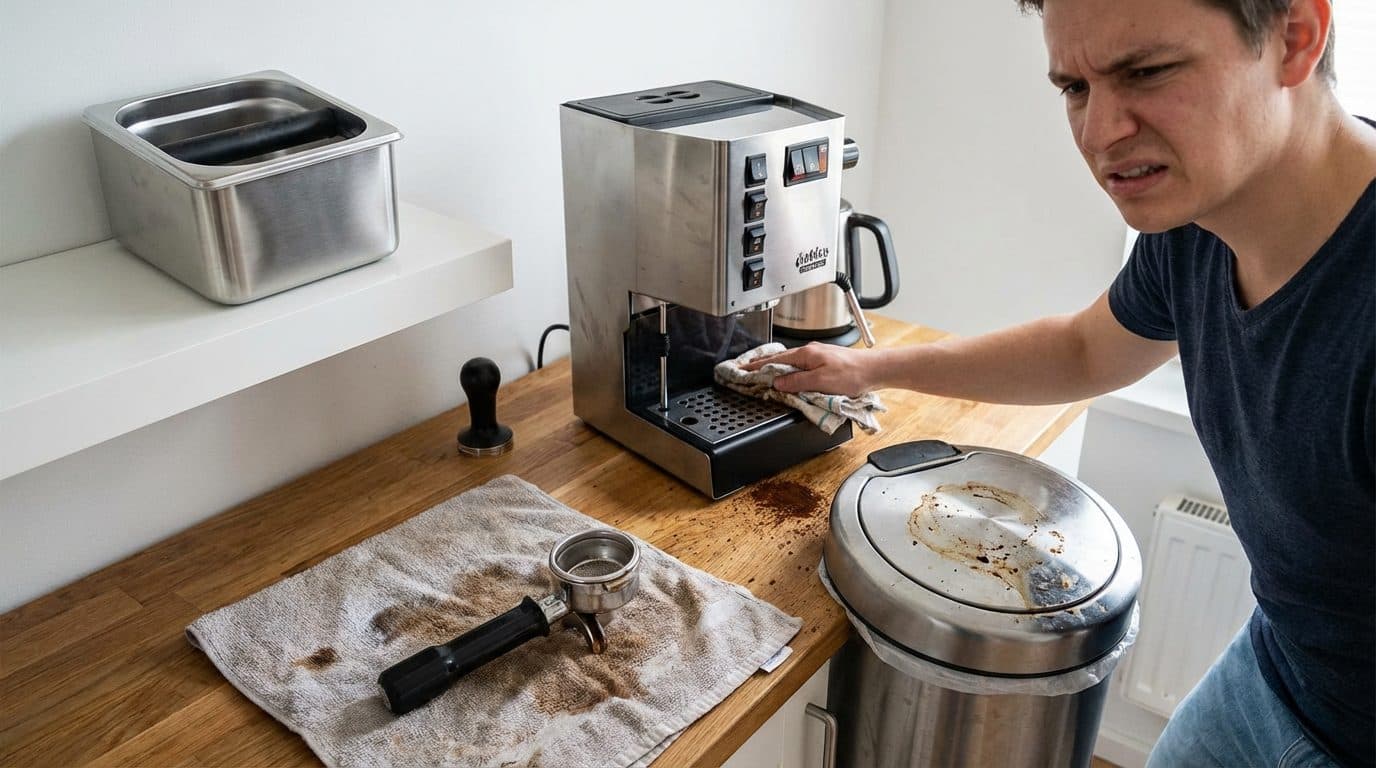
- You’re wiping up coffee grounds from your counter after every shot
- Your trash can lid is constantly covered in wet coffee residue
- You feel like disposing of pucks interrupts your brewing flow
- You want a more professional, café-style setup at home
Even if you only make one espresso per day, a knock box is a small investment that pays off in convenience. And since most budget-friendly options cost less than a bag of specialty beans, there’s really no reason to skip this essential piece of gear.
Open Knock Box Design: Simple and Accessible
An open knock box is exactly what it sounds like—a container with an open top and a knock bar suspended across the middle. There are no lids, flaps, or covers to deal with. You knock, the puck falls in, and you move on with your day.
How Open Designs Work
Most open knock boxes are shaped like a rectangular bin or a drawer-style tray. The knock bar is typically made from rubber or silicone-coated metal, cushioning the impact on your portafilter and reducing noise. After knocking out a few pucks, you simply lift the box and dump the contents into your compost or trash.
Pros of Open Knock Boxes
- Easy to clean: No hidden corners or lids means quick rinsing and drying
- Fast access: Nothing slows you down between shots
- Lower price point: Simpler construction typically means a lower cost
- Great visibility: You always know when it’s time to empty
Cons of Open Knock Boxes
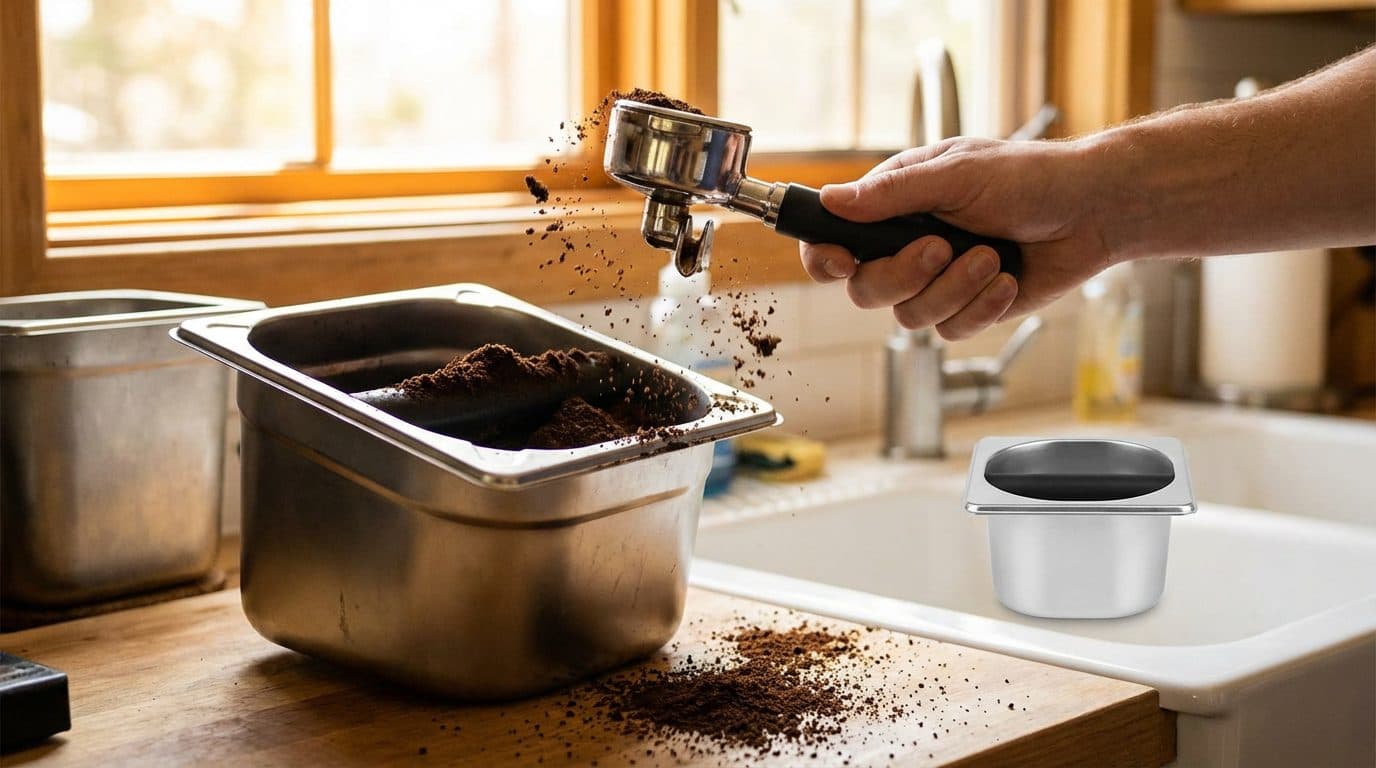
- Odor exposure: Spent coffee grounds sitting in the open can get smelly, especially in warm kitchens
- Mess potential: An aggressive knock might send grounds flying out the top
- Not ideal for infrequent emptying: If you don’t empty daily, things can get unpleasant
Barista Tip: If you go with an open design, get in the habit of emptying it every evening. I’ve found that a quick rinse before bed keeps things fresh and prevents any funky smells from developing overnight.
Who Is an Open Knock Box For?
Open knock boxes work best for home baristas who brew regularly and don’t mind a quick daily clean. If your espresso machine lives on a dedicated coffee bar with good ventilation, an open box fits right in. They’re also perfect if you value speed and simplicity over everything else.
Closed Knock Box Design: Contained and Tidy
Closed knock boxes feature a lid, cover, or enclosed chamber that contains the spent grounds after you knock them out. Some designs have a hinged flap that opens when you tap and closes automatically, while others use a drawer-style mechanism you slide out to empty.
How Closed Designs Work
With a closed knock box, you knock your portafilter against the bar just like an open design, but the grounds fall into an enclosed space. This containment keeps odors trapped and prevents any stray grounds from escaping. When it’s time to empty, you either remove a lid, open a drawer, or lift out an inner bin.
Pros of Closed Knock Boxes
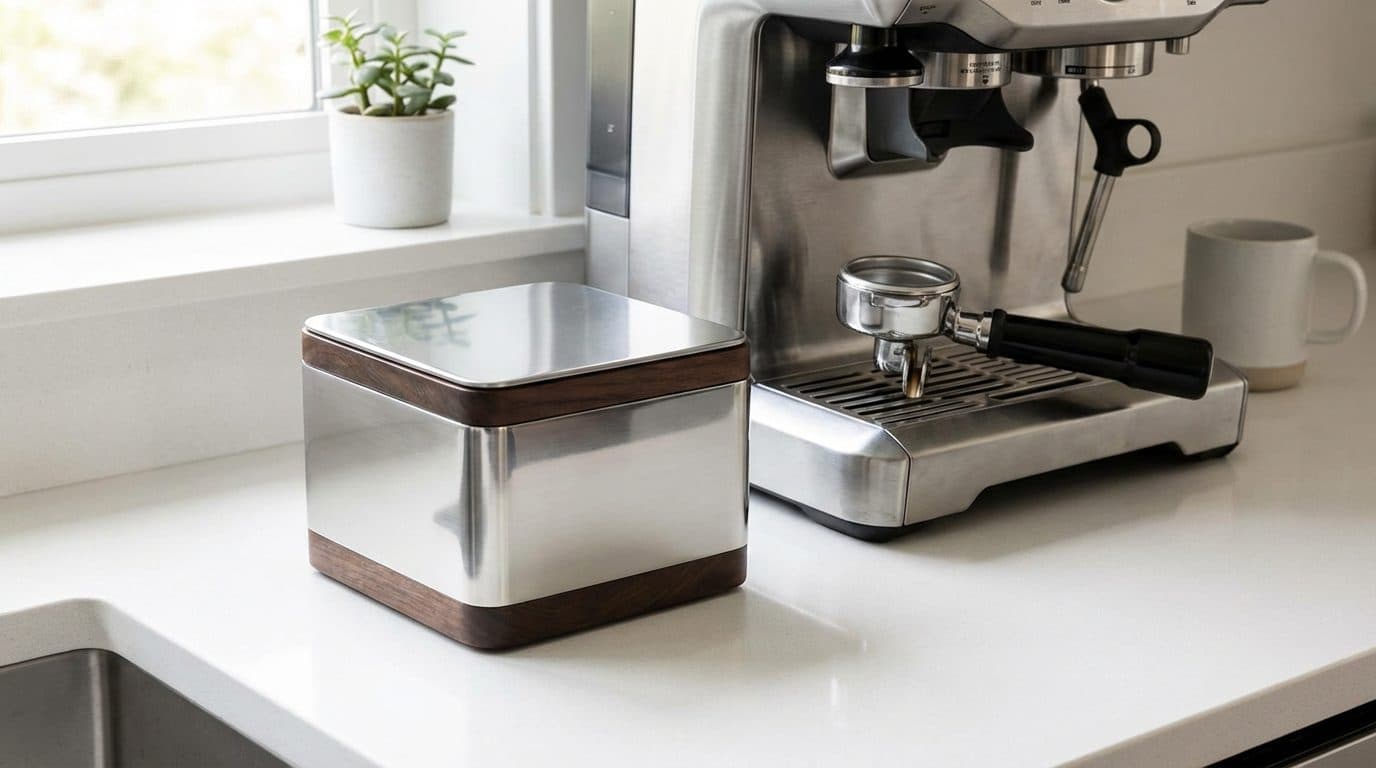
- Odor control: Enclosed grounds means less smell in your kitchen
- Cleaner appearance: Everything stays hidden and tidy
- Less mess: Even enthusiastic knocking won’t send grounds flying
- Better for occasional brewers: You can go a few days without emptying if needed
Cons of Closed Knock Boxes
- Harder to clean: More parts means more nooks and crannies to scrub
- Higher price: Additional features typically raise the cost
- Slightly slower workflow: Opening and closing adds a small extra step
- Capacity guesswork: You can’t always see how full it is at a glance
Barista Tip: If you opt for a closed design, choose one with a removable inner bin. In my experience, being able to lift out the entire container makes emptying and cleaning so much easier than trying to scrape grounds out of a fixed chamber.
Who Is a Closed Knock Box For?
Closed knock boxes are ideal if your espresso station is in a shared kitchen, near food prep areas, or anywhere you want to minimize coffee smells. They’re also great for home baristas who might not brew every single day and prefer not to see (or smell) yesterday’s grounds.
Open vs. Closed Knock Box: Direct Comparison
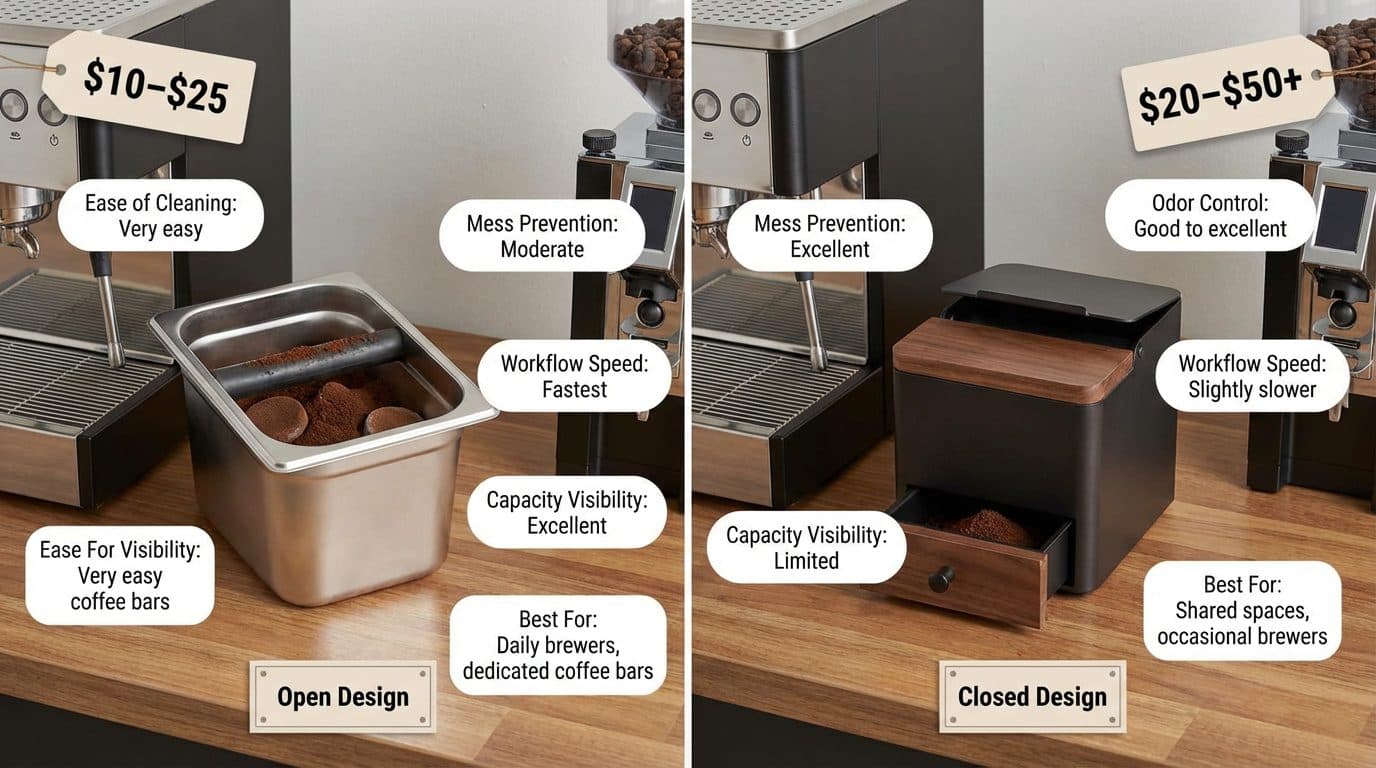
Let’s break down the key differences side by side to help you decide which design suits your setup best.
| Feature | Open Design | Closed Design |
|---|---|---|
| Price Range | $10–$25 | $20–$50+ |
| Ease of Cleaning | Very easy | Moderate |
| Odor Control | Minimal | Good to excellent |
| Mess Prevention | Moderate | Excellent |
| Workflow Speed | Fastest | Slightly slower |
| Capacity Visibility | Excellent | Limited |
| Best For | Daily brewers, dedicated coffee bars | Shared spaces, occasional brewers |
As you can see, neither design is universally better. It really comes down to your priorities and kitchen situation. Life is too short for bad coffee—and it’s also too short to fight with the wrong equipment every morning.
Key Features to Look for in Any Knock Box
Regardless of whether you choose an open or closed design, certain features make a knock box more practical and durable. Here’s what to keep on your checklist when shopping.
Knock Bar Quality
The knock bar takes a beating, so you want something sturdy. Rubber-coated or silicone-wrapped bars protect your portafilter from scratches and absorb impact noise. Avoid flimsy plastic bars that might crack over time.
Capacity
Think about how many drinks you make daily. A small knock box holds 10–15 pucks before needing to be emptied, while larger models can handle 25 or more. If you’re making espresso for the whole family, size up.
Stability
There’s nothing worse than a knock box that slides across the counter every time you tap. Look for non-slip bases, rubberized feet, or enough weight to stay put. Some boxes are designed to fit inside a drawer or against a cabinet for added stability.
Material and Durability
Most budget-friendly knock boxes are made from ABS plastic or stainless steel. Plastic is lighter and usually cheaper, while stainless steel offers better durability and a more premium feel. Either works fine for home use, so choose based on your aesthetic preferences and budget.
Drainage
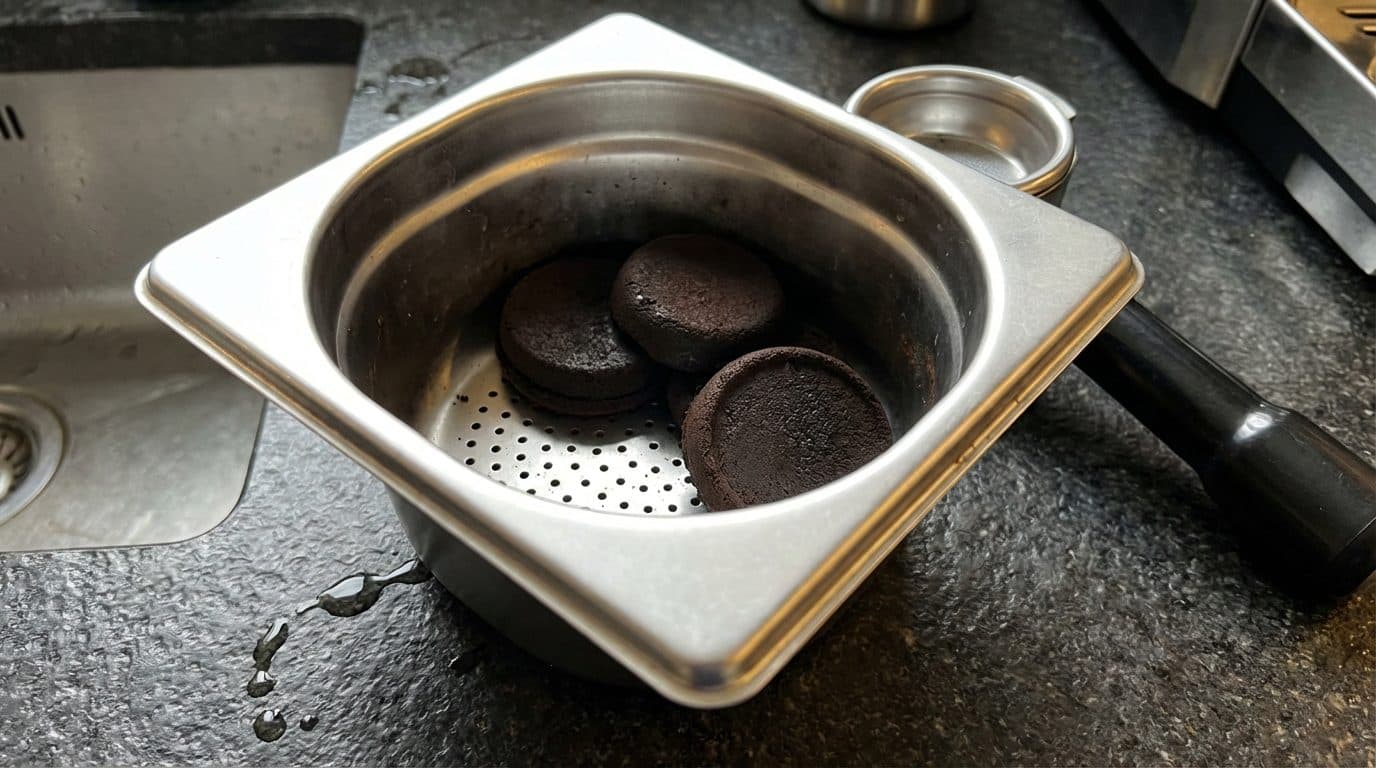
Spent espresso pucks are wet, and that moisture has to go somewhere. Some knock boxes have drainage holes or vented bottoms to prevent standing water. If you empty daily, this isn’t critical, but it’s a nice feature if you tend to forget.
Budget-Friendly Knock Box Recommendations
Since you’re looking for budget-friendly gear, here are a few general recommendations to guide your search without breaking the bank.
Best Open Design for Beginners
Look for a basic ABS plastic box with a rubber knock bar, priced around $12–$18. These are widely available, easy to clean, and get the job done perfectly for casual home use. Many popular options on Amazon fit this description.
Best Closed Design for Small Spaces
Drawer-style knock boxes that tuck under your espresso machine or fit in a cabinet are fantastic for small kitchens. Expect to pay $25–$40 for a quality enclosed option with a removable bin.
Best All-Around Value
Mid-range stainless steel open boxes in the $20–$30 range offer the best of both worlds: durability, good looks, and simplicity. They’ll last for years and still won’t cost more than a few bags of specialty beans.
Key Takeaway: You don’t need to spend a fortune on a knock box. Even the most budget-friendly options dramatically improve your espresso workflow. Focus on stability, a good knock bar, and the right size for your brewing habits.
Frequently Asked Questions
Can I use any container as a knock box?
Technically, yes—people have used everything from old plastic containers to modified trash cans. However, a proper knock box with a dedicated knock bar protects your portafilter, reduces noise, and makes the process much smoother. Given how affordable basic knock boxes are, I’d recommend investing in one rather than improvising.
How often should I empty and clean my knock box?
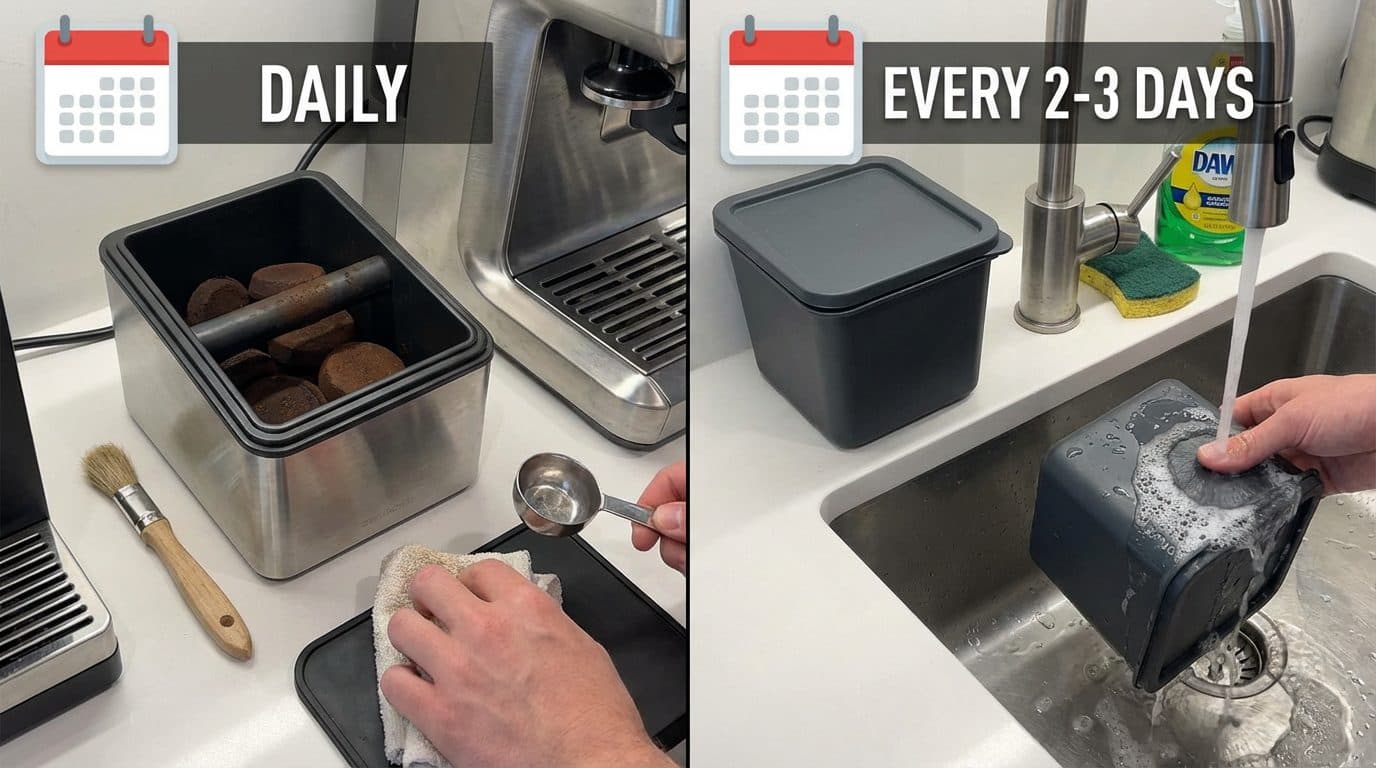
For open designs, emptying daily is ideal to prevent odors and mold growth. Closed designs can go two to three days, but I wouldn’t push it much longer. Give the whole thing a rinse with warm water every few days, and do a deeper clean with dish soap weekly.
Do knock boxes fit all portafilter sizes?
Most knock boxes are designed to accommodate standard 58mm portafilters, but they work fine with smaller sizes too. The knock bar width matters more than the box itself. If you have an unusually large or commercial-sized portafilter, just double-check the dimensions before buying.
Are stainless steel knock boxes worth the extra cost?
For most home users, plastic knock boxes work perfectly fine. Stainless steel models are more durable, look sleeker, and resist staining better over time. If you’re upgrading your coffee station aesthetically or want something that will last many years, the extra investment makes sense.
Can I compost the coffee grounds from my knock box?
Yes, absolutely. Spent espresso grounds are excellent for composting and add nitrogen to your pile. You can also sprinkle them directly in your garden as a mild fertilizer. Just don’t add too much at once, as coffee grounds are slightly acidic.
Conclusion: Picking the Right Knock Box for Your Setup
Choosing between an open and closed knock box design ultimately depends on your brewing habits, kitchen layout, and personal preferences. Open designs win on simplicity, speed, and price—perfect for daily brewers with dedicated coffee spaces. Closed designs excel at odor control and tidiness, making them ideal for shared kitchens or less frequent espresso makers.
Whichever style you choose, a knock box is one of the most practical and affordable upgrades you can make to your home espresso setup. It keeps your counter clean, speeds up your workflow, and honestly just makes you feel a bit more like a professional barista.
Start by considering how often you brew, where your machine lives, and how much mess you can tolerate. Then pick a knock box that fits your budget and needs. Once you’ve got one, you’ll wonder how you ever lived without it. Happy brewing!



Comments