



Table of Contents
- Quick Verdict: Iced Coffee for Simplicity, Iced Latte for Creaminess
- What Exactly Is Iced Coffee?
- How to Make Iced Coffee at Home
- Pros and Cons of Iced Coffee
- What Exactly Is an Iced Latte?
- How to Make an Iced Latte at Home
- Pros and Cons of Iced Latte
- Iced Coffee vs Iced Latte: Side-by-Side Comparison
- Who Should Choose Iced Coffee?
- Who Should Choose an Iced Latte?
- Taste Profile: What to Expect
- Barista Tips for Better Iced Drinks at Home
- Conclusion: Which Iced Drink Should You Make?
You’re standing in your kitchen on a hot summer morning, craving something cold and caffeinated. But here’s the dilemma: should you make an iced coffee or an iced latte? Both drinks look similar in a glass, yet they deliver completely different experiences. If you’ve ever wondered which one suits your taste buds, your schedule, and your home setup better, you’re in the right place.
In this guide, I’ll break down the key differences between iced coffee and iced latte, compare their flavor profiles, and help you decide which drink deserves a permanent spot in your morning routine. Life is too short for bad coffee—so let’s make sure you’re brewing the right one.
Quick Verdict: Iced Coffee for Simplicity, Iced Latte for Creaminess
If you want a quick, refreshing caffeine hit with minimal effort, iced coffee is your winner. It’s straightforward, budget-friendly, and lets the coffee flavor shine. However, if you prefer a smoother, creamier drink with a more balanced taste, the iced latte takes the crown. It requires an espresso machine or a way to make strong coffee, but the velvety result is worth it.
In short: iced coffee is the practical choice; iced latte is the indulgent one. Now let’s dig into why.
What Exactly Is Iced Coffee?
Iced coffee is simply brewed coffee that’s been cooled down and served over ice. You can make it by brewing a regular pot of coffee and letting it chill in the fridge, or by brewing it directly over ice (a method called Japanese iced coffee). The result is a light, refreshing drink that highlights the natural flavors of your coffee beans.
How to Make Iced Coffee at Home

The beauty of iced coffee lies in its simplicity. Here’s what you’ll need:
- Your favorite ground coffee
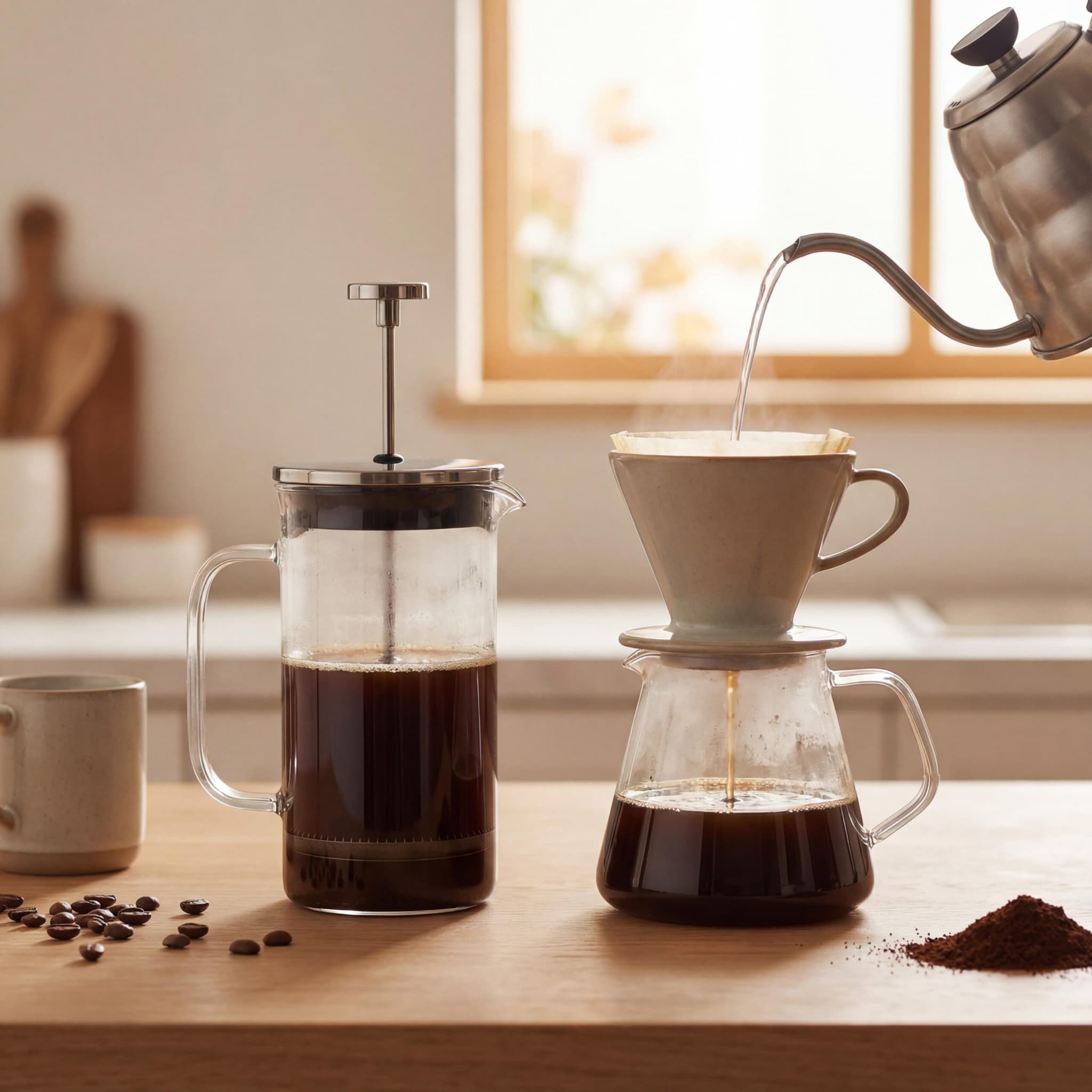
- A drip coffee maker, pour-over, or French press
- Ice cubes
- Optional: milk, cream, or sweetener
Brew your coffee slightly stronger than usual (the ice will dilute it), let it cool, and pour it over a glass full of ice. That’s it. In my experience, brewing double-strength coffee and pouring it directly over ice gives you the best flavor without that watered-down taste.
Pros and Cons of Iced Coffee
Pros:
- Extremely easy to make with basic equipment
- Lower calorie count (especially black)
- Showcases the coffee’s origin flavors
- Can be batch-brewed and stored in the fridge
- Budget-friendly—no special gear required
Cons:
- Can taste watery if not brewed strong enough
- More acidic and bitter for some palates
- Less creamy and indulgent than milk-based drinks
- Flavor fades faster when ice melts
What Exactly Is an Iced Latte?
An iced latte combines espresso (or very strong coffee) with cold milk and ice. The milk-to-coffee ratio is typically around 3:1, which creates a smooth, creamy beverage that’s less intense than straight iced coffee. It’s the drink you see in those aesthetically pleasing Instagram posts with the beautiful milk swirls.
How to Make an Iced Latte at Home

You’ll need a way to make espresso or concentrated coffee. Here’s your gear list:
- Espresso machine, Moka pot, or AeroPress
- Cold milk (dairy or plant-based)
- Ice cubes
- Optional: flavored syrups like vanilla or caramel
Pull one or two shots of espresso, fill a glass with ice, pour in your cold milk, and then add the espresso on top. The layered effect looks impressive, but you’ll want to stir before drinking. Barista tip: if you don’t have an espresso machine, a Moka pot or AeroPress can produce coffee that’s concentrated enough to stand up to all that milk.
Pros and Cons of Iced Latte
Pros:
- Creamy, smooth, and easy to drink
- Less acidic and bitter than black iced coffee
- Highly customizable with different milks and syrups
- Feels more like a treat or café-style drink
- Great for those who find straight coffee too harsh
Cons:
- Requires espresso or strong coffee concentrate
- Higher calorie count due to milk
- Coffee flavor is more muted
- Takes slightly more effort and equipment
Iced Coffee vs Iced Latte: Side-by-Side Comparison
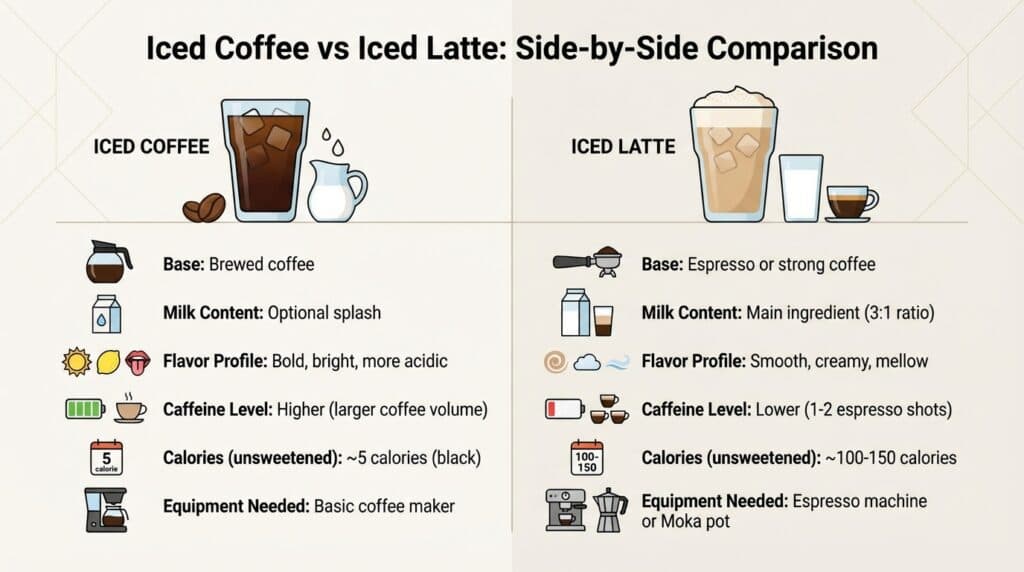
Let’s put these two drinks head-to-head so you can see the differences at a glance:
| Factor | Iced Coffee | Iced Latte |
|---|---|---|
| Base | Brewed coffee | Espresso or strong coffee |
| Milk Content | Optional splash | Main ingredient (3:1 ratio) |
| Flavor Profile | Bold, bright, more acidic | Smooth, creamy, mellow |
| Caffeine Level | Higher (larger coffee volume) | Lower (1-2 espresso shots) |
| Calories (unsweetened) | ~5 calories (black) | ~100-150 calories |
| Equipment Needed | Basic coffee maker | Espresso machine or Moka pot |
| Prep Time | 5 minutes | 5-10 minutes |
| Best For | Coffee purists, quick mornings | Creamy drink lovers, café vibes |
One thing that surprises many people: iced coffee often contains more caffeine than an iced latte. That’s because a typical iced coffee uses 8-12 ounces of brewed coffee, while an iced latte uses just one or two espresso shots. So if you’re chasing a stronger caffeine kick, iced coffee might actually be your better bet.
Who Should Choose Iced Coffee?
This drink is for you if:
- You love the taste of coffee and want it front and center
- You’re watching calories or avoiding dairy
- You want a quick, no-fuss morning drink
- You don’t own an espresso machine
- You prefer a higher caffeine content
This drink is NOT for you if:
- You find black coffee too bitter or acidic
- You prefer creamy, dessert-like beverages
- You want something that feels more like a treat
I’ve found that iced coffee works best when you use high-quality, freshly roasted beans. Since there’s no milk to mask imperfections, every flaw in your coffee will show up in the cup. Think of it as coffee in its most honest form.
Who Should Choose an Iced Latte?
This drink is for you if:
- You enjoy creamy, smooth beverages
- You like customizing drinks with flavored syrups
- You find straight coffee too intense
- You want that café-style experience at home
- You already own an espresso machine or Moka pot
This drink is NOT for you if:
- You’re trying to minimize calorie intake
- You want maximum caffeine per serving
- You prefer tasting the coffee’s origin characteristics
An iced latte is incredibly forgiving. Even if your espresso isn’t perfect, the milk smooths everything out. It’s a great option for home baristas who are still dialing in their espresso skills.
Taste Profile: What to Expect
Let’s talk flavor, because this is where the two drinks really diverge.
Iced coffee tastes bright, clean, and refreshing. Depending on your beans, you might pick up fruity, nutty, or chocolatey notes. The acidity is more pronounced, which some people love and others find too sharp. Adding a splash of milk softens it, but the coffee flavor remains dominant.
Iced latte tastes smooth, creamy, and balanced. The espresso provides a rich coffee backbone, but the milk takes center stage. You’ll notice less bitterness and acidity. If you add vanilla syrup, it starts to taste like a coffee-flavored milkshake—in the best way possible.
In my experience, your preference often comes down to whether you drink coffee for the coffee taste or for the overall experience. Purists tend to gravitate toward iced coffee; comfort-seekers lean toward lattes.
Barista Tips for Better Iced Drinks at Home
Whichever drink you choose, these tips will level up your game:
- Use coffee ice cubes: Freeze leftover coffee in ice cube trays. When they melt, they won’t dilute your drink.
- Brew stronger than usual: Ice melts and waters things down. Compensate by starting with a more concentrated brew.
- Chill your glass: A cold glass keeps your drink colder longer and prevents rapid ice melt.
- Experiment with milk alternatives: Oat milk froths beautifully and adds a subtle sweetness to iced lattes.
- Add sweetener to hot coffee: Sugar dissolves better in warm liquid. If you’re sweetening your iced coffee, stir it in before cooling.
Conclusion: Which Iced Drink Should You Make?
Both iced coffee and iced latte have earned their place in the home barista’s repertoire. The right choice depends on your taste preferences, your equipment, and what kind of morning you’re having.
Choose iced coffee when you want something quick, bold, and low-maintenance. Choose an iced latte when you’re craving something creamy, customizable, and café-worthy. Honestly? There’s no wrong answer here. The best drink is the one you’ll actually enjoy making and drinking.
My suggestion: try both this week. Make an iced coffee on Monday and an iced latte on Wednesday. Pay attention to which one you look forward to more. That’s your answer. Now go brew something delicious—your summer mornings are about to get a whole lot better.



Comments