


Table of Contents
- What Is Honey Processed Coffee?
- How Honey Processing Differs from Washed and Natural Methods
- The Different Colors of Honey Processing
- What Determines the Color?
- Why Does Honey Processing Create Sweetness?
- Sugar Absorption and Concentration
- Controlled Fermentation
- What You'll Taste in Your Cup
- How to Brew Honey Processed Coffee at Home
- Best Brewing Methods
- My Recommended Approach
- Choosing Quality Honey Processed Beans
- Frequently Asked Questions
- Does honey processed coffee contain actual honey?
- Is honey processed coffee sweeter than regular coffee?
- How should I store honey processed coffee beans?
- Can I use honey processed beans for cold brew?
- Why is honey processed coffee sometimes more expensive?
- Final Thoughts: Is Honey Processed Coffee Right for You?
Ever taken a sip of coffee and wondered why it tastes like someone drizzled honey into your cup—even though you didn’t add a thing? That sweet, syrupy quality might be the magic of honey processed coffee at work. Despite the name, there’s no actual honey involved. Instead, this unique processing method creates a flavor profile that sits beautifully between the bright fruitiness of natural coffees and the clean clarity of washed beans. If you’ve been curious about what honey processed coffee actually means and why it’s become a favorite among specialty coffee lovers, you’re in the right place.
In this guide, I’ll walk you through exactly what honey processing is, how it differs from other methods, and why it produces that signature sweetness that coffee enthusiasts can’t stop talking about. Whether you’re exploring new beans for your home brewing setup or simply want to understand what’s on the label at your local roaster, you’ll leave here with a solid grasp of this fascinating technique.
What Is Honey Processed Coffee?
Honey processed coffee refers to a specific method of preparing coffee cherries after harvest. The “honey” in the name comes from the sticky, golden mucilage layer that surrounds the coffee bean inside the cherry. During honey processing, the outer skin of the cherry is removed, but varying amounts of this sweet mucilage are left on the bean as it dries.
This mucilage is incredibly sugar-rich. As the beans dry with this layer still attached, the sugars interact with the bean, creating complex flavor compounds that translate into sweetness and body in your final cup. It’s a bit like letting fruit caramelize slowly—the natural sugars concentrate and infuse into the bean over time.
How Honey Processing Differs from Washed and Natural Methods
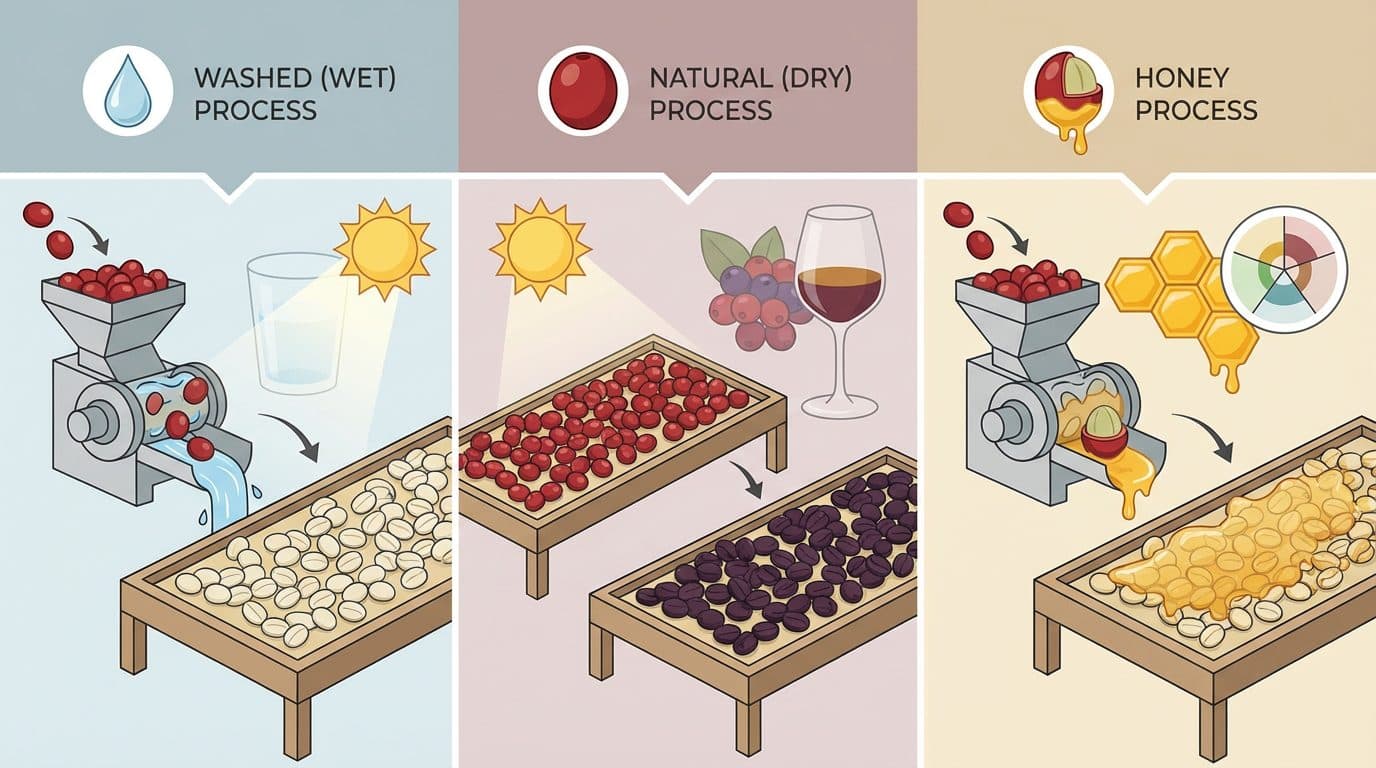
To really appreciate honey processing, it helps to understand where it sits in the spectrum of coffee processing methods:
- Washed (Wet) Process: The cherry skin and all mucilage are completely removed before drying. This produces a clean, bright cup where you taste the bean’s origin characteristics most clearly.
- Natural (Dry) Process: The entire cherry dries around the bean, which creates heavy fruit flavors and a wine-like body. It’s the oldest method and can be somewhat unpredictable.
- Honey Process: Falls right in the middle. Some mucilage remains, giving you sweetness and body without the intense fruitiness of naturals or the sharp acidity of washed coffees.
In my experience, honey processed beans offer the best of both worlds for many home baristas. You get complexity and sweetness without sacrificing clarity.
The Different Colors of Honey Processing
Here’s where things get interesting. Not all honey processed coffees are created equal. Producers actually categorize them by “color,” which indicates how much mucilage was left on the bean during drying. The more mucilage, the darker the color designation—and the sweeter and more full-bodied the result.
| Honey Type | Mucilage Remaining | Drying Time | Flavor Profile |
|---|---|---|---|
| White Honey | ~10-20% | Shortest | Clean, mild sweetness, tea-like |
| Yellow Honey | ~25-50% | Short-Medium | Light sweetness, balanced acidity |
| Red Honey | ~50-75% | Medium-Long | Noticeable sweetness, fruity notes |
| Black Honey | ~80-100% | Longest | Intense sweetness, syrupy body, complex fruit |
What Determines the Color?
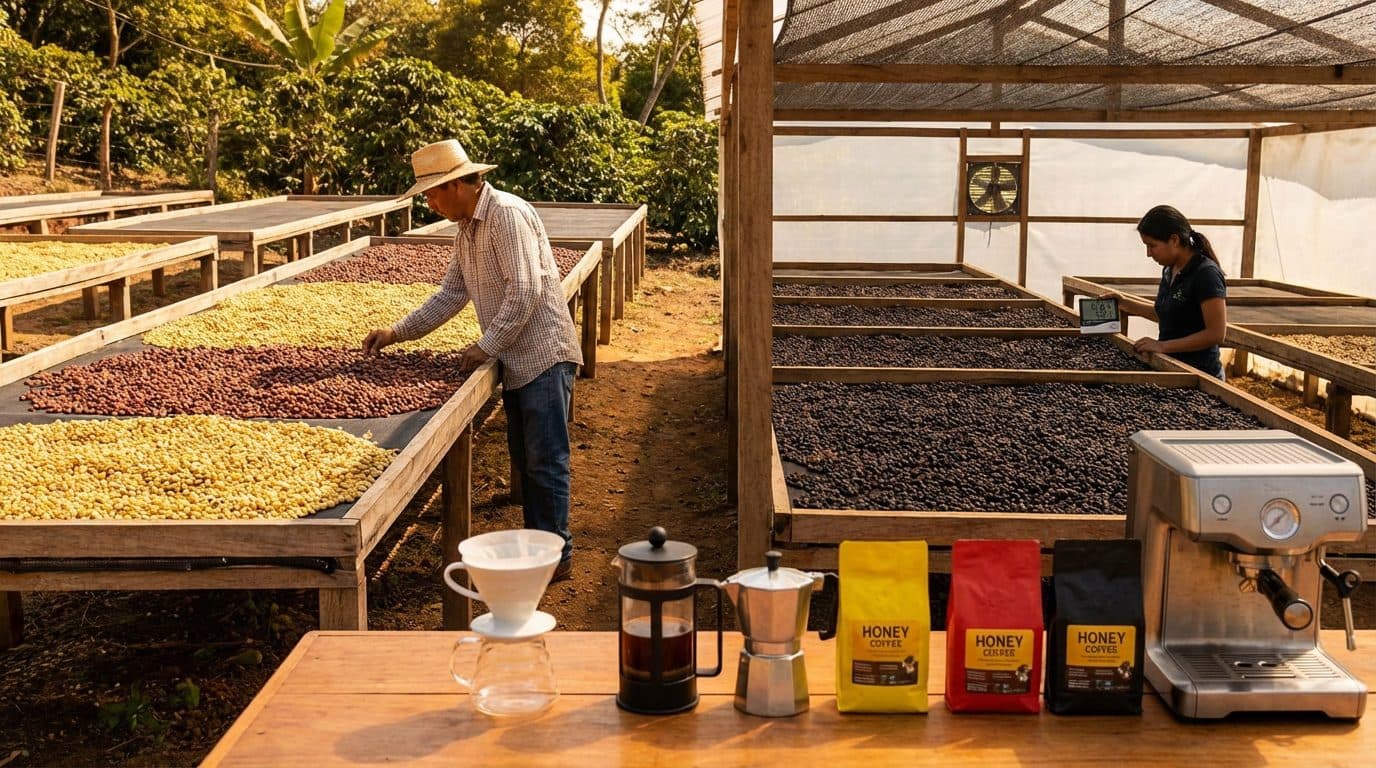
The color isn’t just about mucilage quantity—it’s also about drying conditions. Black honey coffees, for instance, are often dried in shade or under controlled conditions to slow the process. This extended drying time (sometimes up to three weeks) allows for more fermentation and sugar development.
I’ve found that yellow and red honey coffees tend to be the most versatile for home brewing. They’re forgiving across different methods, whether you prefer pour-over, French press, or espresso. Black honey, while exceptional, requires a bit more attention to get right—but when you nail it, the cup is unforgettable.
Why Does Honey Processing Create Sweetness?
Let’s dig into the science behind that beautiful sweetness. When coffee cherries are picked, the mucilage layer contains significant amounts of fructose, glucose, and sucrose—the same sugars you’d find in ripe fruit. During the drying phase, several things happen that lock in and enhance this sweetness.
Sugar Absorption and Concentration
As the mucilage dries under the sun, water evaporates, but the sugars remain. These concentrated sugars gradually absorb into the porous surface of the green coffee bean. It’s not that the bean becomes “sweet” in the way candy is sweet—rather, the sugar compounds transform during roasting into caramelized notes and smooth body.
Controlled Fermentation
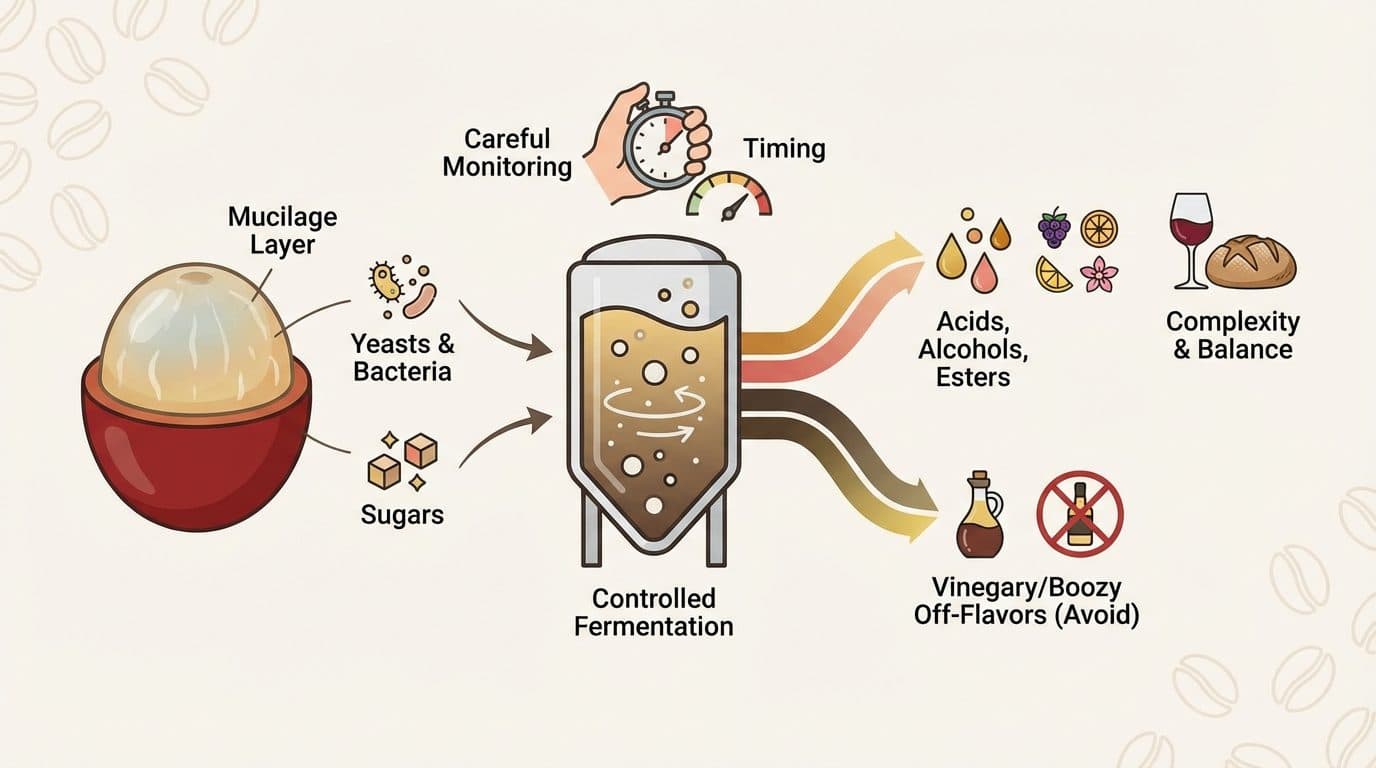
The mucilage layer doesn’t just sit there passively. Yeasts and bacteria naturally present on the cherry begin breaking down the sugars, producing acids, alcohols, and esters. When done correctly, this controlled fermentation adds complexity without creating off-flavors. Think of it like making wine or sourdough bread—fermentation is the secret ingredient.
Producers have to be incredibly careful here. Too much fermentation leads to vinegary or boozy flavors. Not enough, and you lose those interesting secondary notes. The best honey processed coffees come from farms that monitor temperature, humidity, and turning schedules obsessively.
What You’ll Taste in Your Cup
Honey processed coffees typically deliver:
- Brown sugar or caramel sweetness that lingers on the palate
- Stone fruit notes like peach, apricot, or plum
- Honey or molasses undertones (fitting, right?)
- Rounded, medium acidity that’s approachable but not flat
- Silky, syrupy body especially in red and black honeys
Imagine biting into a ripe nectarine while standing in a field of wildflowers. That’s the vibe many honey processed coffees deliver. Life’s too short for flat, boring coffee—and honey process makes sure you never have to settle.
How to Brew Honey Processed Coffee at Home
Now that you understand what makes these beans special, let’s talk about actually brewing them. Honey processed coffees are fairly flexible, but certain methods really let their sweetness shine.
Best Brewing Methods
- Pour-Over (V60, Chemex): Excellent for highlighting the nuanced sweetness and clarity. The paper filter removes oils that might muddy the delicate flavors.
- Aeropress: Creates a concentrated, sweet cup that emphasizes body. Great for yellow and red honeys.
- Espresso: Black honey beans make phenomenal espresso with natural sweetness that requires less (or no) added sugar.
- French Press: Works well but can mute some of the brighter notes. Best for fuller-bodied black honeys.
My Recommended Approach
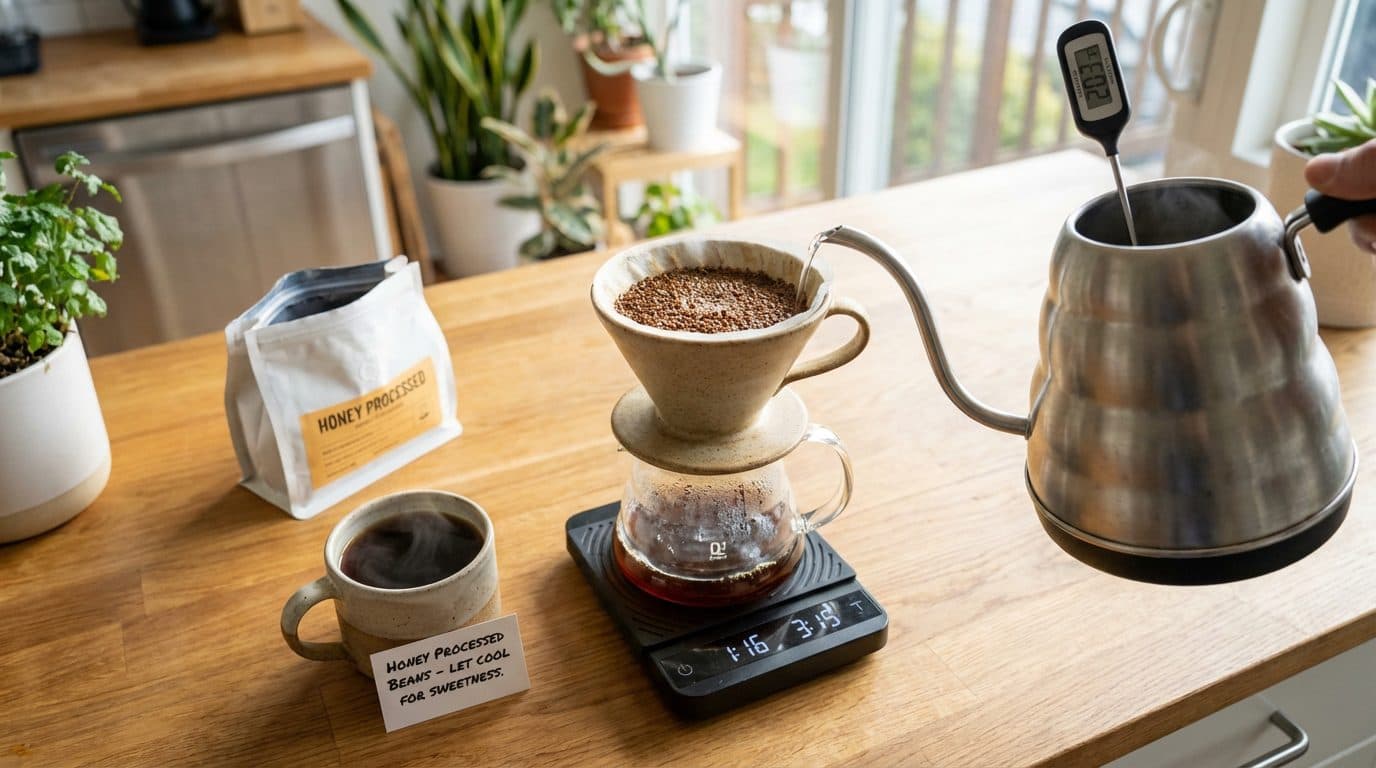
For most honey processed beans, I use a simple pour-over with these parameters:
- Medium grind (like coarse sea salt)
- Water temperature: 200-205°F (93-96°C)
- Ratio: 1:16 (coffee to water)
- Total brew time: 3-4 minutes
Barista Tip: Let your honey processed coffee cool slightly before drinking. As the temperature drops, the sweetness becomes more pronounced and the fruit notes really pop. Patience pays off here.
Choosing Quality Honey Processed Beans
Not all honey processed coffee is created equal. Here’s what to look for when shopping:
- Origin transparency: Look for single-origin beans that list the farm or region. Costa Rica, El Salvador, Guatemala, and Brazil produce exceptional honey coffees.
- Roast date: Freshness matters. Buy beans roasted within the last 2-4 weeks for optimal flavor.
- Roast level: Light to medium roasts preserve the processing characteristics best. Dark roasts can obscure the honey sweetness.
- Processing details: Great roasters specify whether it’s yellow, red, or black honey. This tells you what to expect.
I recently tried a red honey from a small farm in Costa Rica’s Tarrazú region. The first sip delivered waves of apricot jam and brown butter—no added sweetener needed. That’s the power of careful processing and quality sourcing working together.
Frequently Asked Questions
Does honey processed coffee contain actual honey?
No, there’s no honey in honey processed coffee. The name refers to the sticky, honey-like mucilage that coats the coffee bean during drying. It’s a purely natural part of the coffee cherry, not an added ingredient.
Is honey processed coffee sweeter than regular coffee?
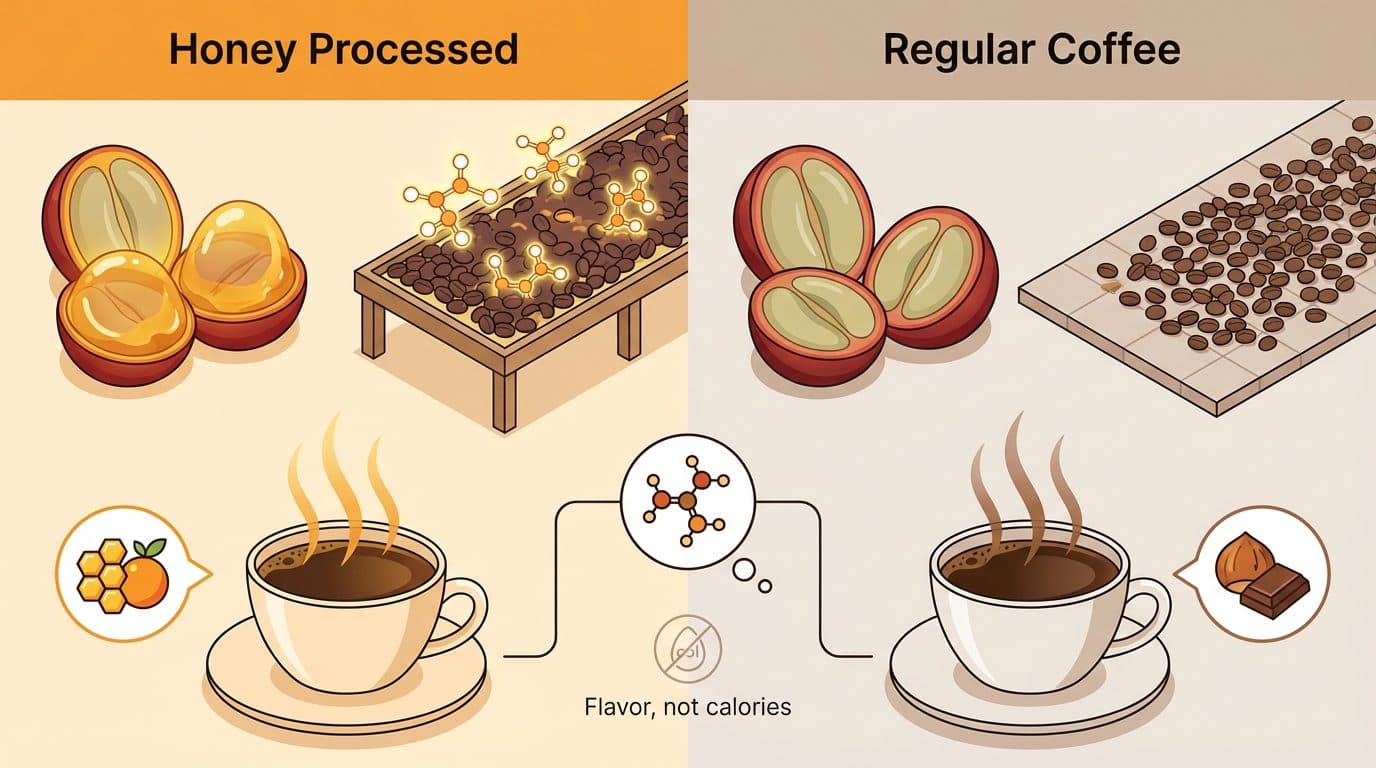
Generally, yes. The sugars from the mucilage absorb into the bean during drying, creating a perceived sweetness in the final cup. However, the actual sugar content you consume is minimal—it’s more about flavor compounds than calories.
How should I store honey processed coffee beans?
Store them in an airtight container at room temperature, away from light and heat. Avoid the refrigerator or freezer for daily-use beans. Consume within 3-4 weeks of the roast date for the best flavor.
Can I use honey processed beans for cold brew?
Absolutely. The natural sweetness of honey processed beans makes them excellent for cold brew. The cold extraction emphasizes the smooth, sweet notes while keeping acidity low. You might find you need even less sweetener than usual.
Why is honey processed coffee sometimes more expensive?
Honey processing is labor-intensive. Producers must carefully control drying conditions, turn the beans frequently to prevent mold, and monitor fermentation closely. This extra effort, combined with lower yields, means higher prices—but the cup quality justifies the cost for many coffee lovers.
Final Thoughts: Is Honey Processed Coffee Right for You?
If you love sweetness in your coffee but want to achieve it naturally—without sugar or syrups—honey processed beans might become your new obsession. They offer a unique middle ground between the fruit-forward intensity of naturals and the bright cleanliness of washed coffees. For home baristas exploring the specialty coffee world, understanding honey processing opens up a whole new dimension of flavor possibilities.
Start with a yellow or red honey from a reputable roaster, experiment with your preferred brewing method, and pay attention to how the sweetness develops as your cup cools. You’ll quickly discover why this processing method has earned such a devoted following. Here’s to sweeter mornings—no honey jar required.




Comments