


Table of Contents
- Why Your Coffee Habit Gets Expensive (And How to Fix It)
- The Real Cost Breakdown
- Budget-Friendly Brewing Methods That Deliver Quality
- French Press: The Unbeatable Value Champion
- Pour Over: Affordable Precision
- AeroPress: The Versatile Budget Hero
- How to Buy Quality Coffee Beans Without Overspending
- Buy Whole Bean and Grind Fresh
- Find Your Sweet Spot: Freshness vs. Price
- Don't Overlook Supermarket Gems
- Maximize What You Already Have
- Dial In Your Ratios
- Store Beans Properly
- Master Water Quality
- The Strategic Café Visit: When to Splurge
- When Café Spending Makes Sense
- Budget Café Hacks
- Frequently Asked Questions
- Is cheap coffee always low quality?
- How much should I budget for good coffee per month?
- Is it worth investing in an espresso machine for budget reasons?
- Can I make cold brew at home to save money?
- How do I avoid wasting coffee when experimenting with new brewing methods?
- Conclusion: Great Coffee Without the Guilt
Do you ever glance at your monthly bank statement and wince at how much you’ve spent on coffee? You’re not alone. The average coffee drinker spends anywhere from $1,000 to $3,000 per year on their daily fix, and that number climbs fast if you’re a specialty coffee enthusiast. But here’s the good news: keeping your coffee habit budget-friendly doesn’t mean you have to settle for bland, disappointing brews. With a few smart strategies, you can enjoy exceptional coffee every single day while keeping your wallet happy.
In this guide, I’ll share the practical tips I’ve learned over years of obsessing over great coffee without going broke. You’ll discover how to make café-quality drinks at home, where to find the best deals on quality beans, and which brewing methods give you the most bang for your buck. Life is too short for bad coffee—and it’s definitely too short to overpay for the good stuff.
Why Your Coffee Habit Gets Expensive (And How to Fix It)
Before we dive into solutions, let’s understand where your money actually goes. Most coffee spending falls into three categories: buying drinks out, purchasing beans or grounds, and equipment costs. The biggest budget killer? Daily café purchases. That $5 latte might seem harmless, but it adds up to over $1,800 per year if you buy one every weekday.
The fix isn’t about giving up quality—it’s about being strategic. In my experience, the home barista who brews thoughtfully can make coffee that rivals or surpasses most coffee shops, at a fraction of the cost. The key is knowing where to invest and where to save.
The Real Cost Breakdown
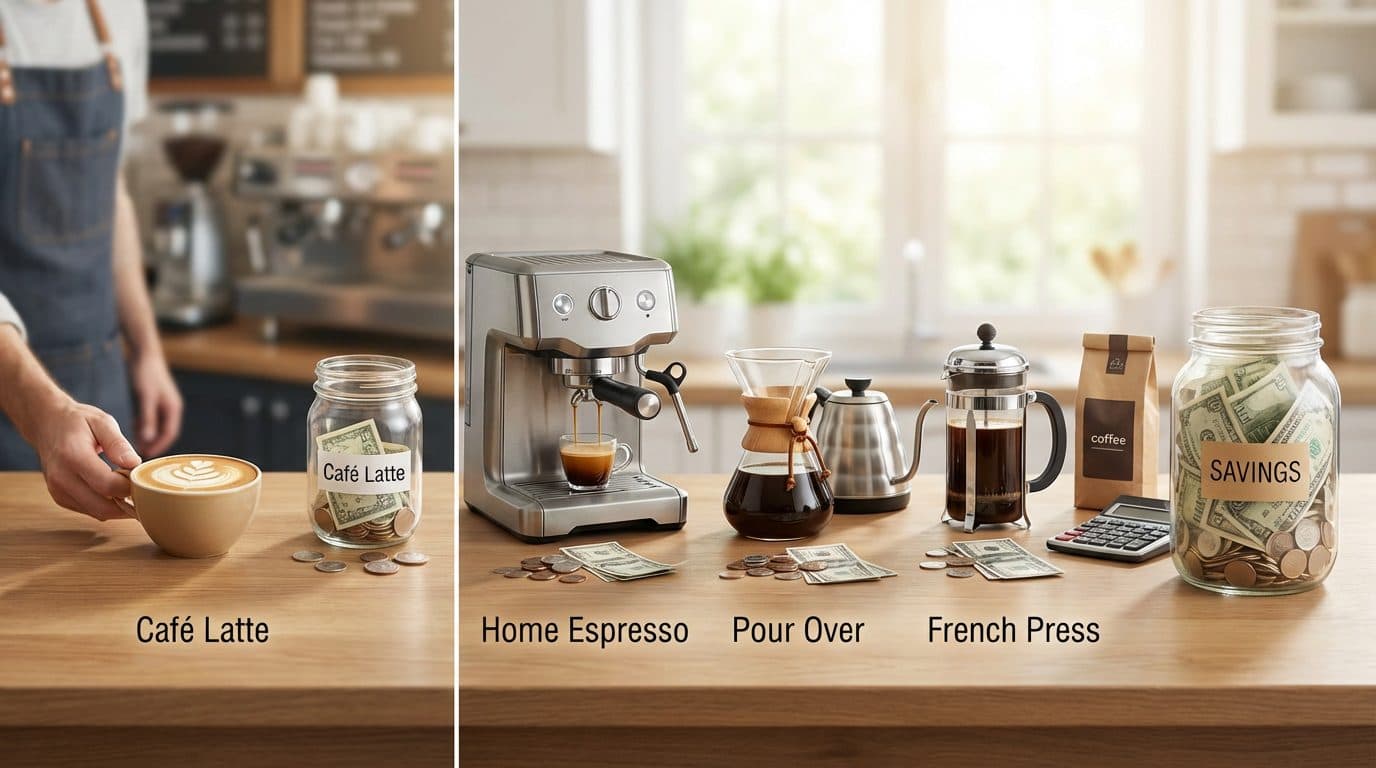
Here’s a quick comparison to put things in perspective:
| Coffee Source | Cost Per Cup | Monthly Cost (1 cup/day) |
|---|---|---|
| Café Latte | $5.00 – $7.00 | $150 – $210 |
| Home Espresso (Quality Beans) | $0.50 – $1.00 | $15 – $30 |
| Pour Over (Specialty Beans) | $0.30 – $0.60 | $9 – $18 |
| French Press (Mid-Range Beans) | $0.20 – $0.40 | $6 – $12 |
The numbers speak for themselves. Even using premium specialty beans at home, you’re looking at massive savings compared to daily café visits.
Budget-Friendly Brewing Methods That Deliver Quality
Not all brewing equipment is created equal when it comes to value. Some methods require expensive gear and ongoing costs, while others give you outstanding results with minimal investment. Here are the best options for budget-conscious coffee lovers.
French Press: The Unbeatable Value Champion
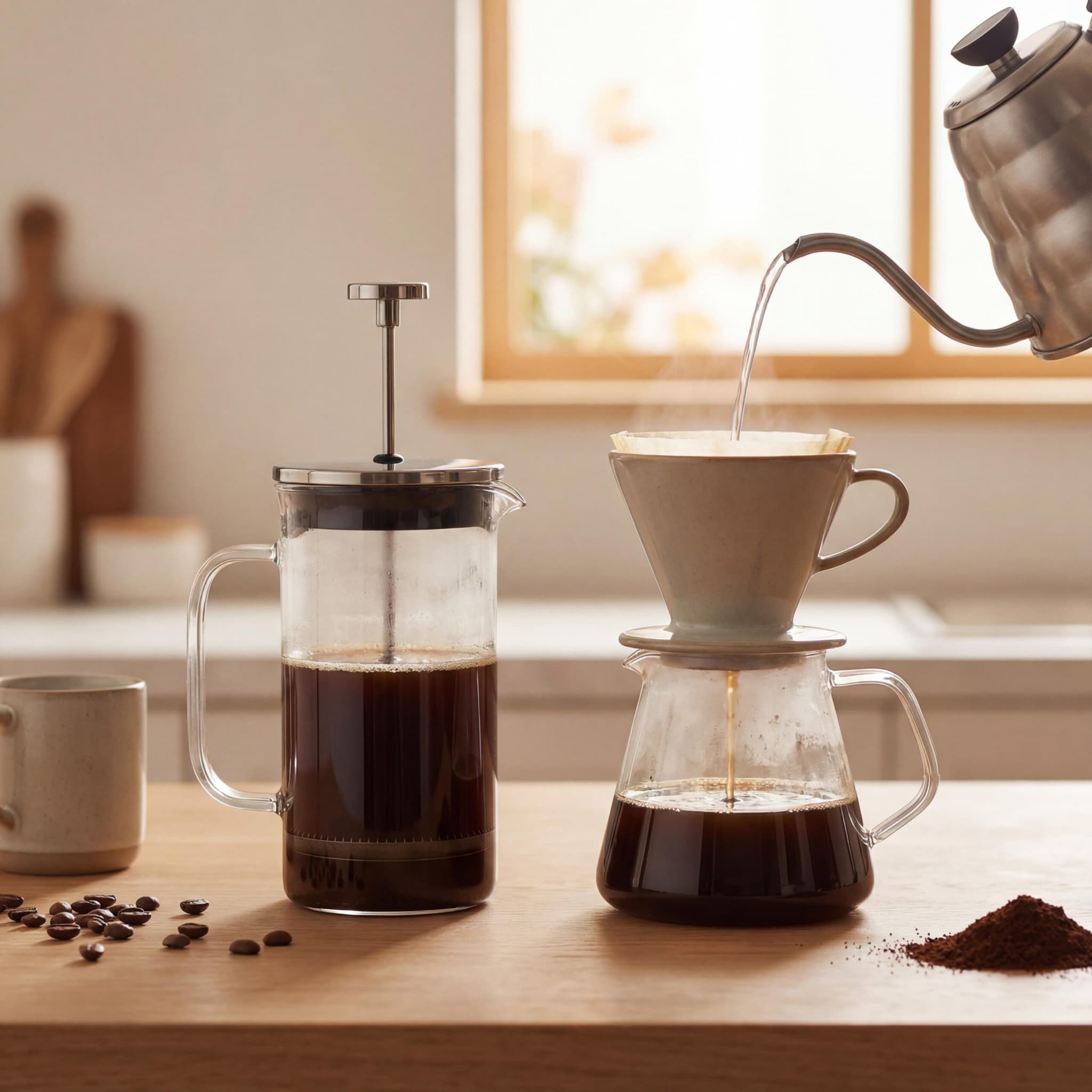
I’ve found that the French press offers the best quality-to-cost ratio for most home brewers. A solid French press costs between $20 and $40, requires no filters, and produces rich, full-bodied coffee. There are no ongoing consumable costs beyond the beans themselves.
- Initial investment: Very low ($20-$40)
- Ongoing costs: Zero (no filters needed)
- Coffee quality: Excellent, with full body and natural oils
- Learning curve: Minimal—easy for beginners
Barista Tip: Use a coarse grind and steep for exactly 4 minutes. Press slowly and don’t push the plunger all the way down—stop just above the coffee bed to avoid over-extraction and bitterness.
Pour Over: Affordable Precision
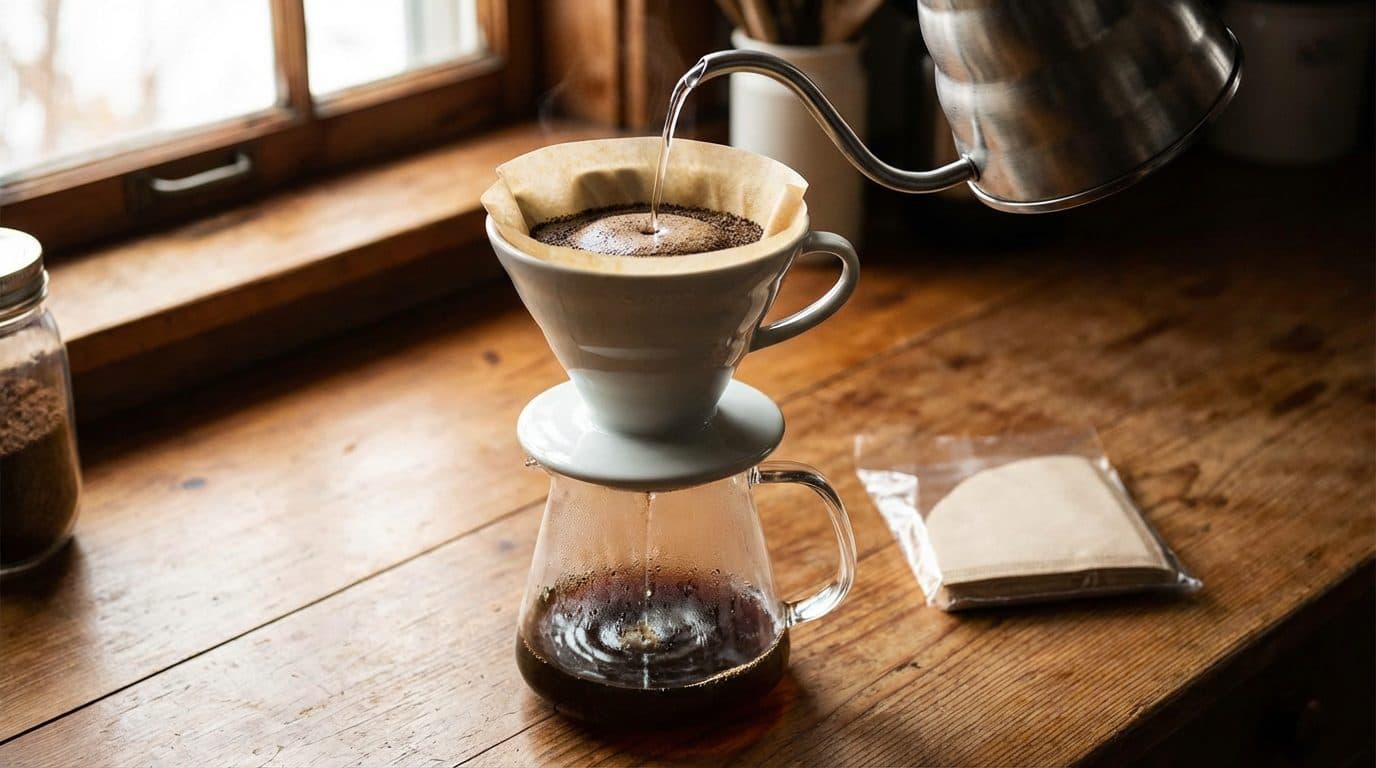
Pour over methods like the Hario V60 or Kalita Wave give you café-quality clarity and complexity. The dripper itself costs $15-$30, though you’ll need to factor in paper filters (roughly $0.02-$0.05 per cup). For someone who enjoys brighter, more nuanced coffee, this is a worthwhile investment.
AeroPress: The Versatile Budget Hero
The AeroPress has a cult following for good reason. At around $35-$40, it’s incredibly versatile—you can make everything from espresso-style concentrate to clean filter coffee. It’s also nearly indestructible and perfect for travel.
How to Buy Quality Coffee Beans Without Overspending
Your beans are the foundation of great coffee, and this is where smart shopping makes the biggest difference. Here’s how to get the best value without compromising on quality.
Buy Whole Bean and Grind Fresh
Pre-ground coffee loses its aromatics and flavor within days of grinding. Whole beans stay fresh much longer, especially when stored properly. A decent hand grinder costs $30-$50 and will last for years. This small investment dramatically improves your coffee quality and actually saves money because you won’t be throwing away stale grounds.
Find Your Sweet Spot: Freshness vs. Price
Specialty roasters charge premium prices for beans roasted within the past week or two. While ultra-fresh beans are wonderful, here’s a budget-friendly secret: beans between 2-4 weeks off roast are still excellent and often go on sale. Many roasters discount bags approaching their “best by” date, even though the coffee inside is perfectly delicious.
- Subscribe and save: Most online roasters offer 10-15% discounts for subscriptions
- Buy in bulk: Larger bags (2 lb or 1 kg) often cost 20-30% less per ounce
- Try “espresso blends”: These often use quality beans at lower prices than single-origins
- Check local roasters: They frequently offer better prices than national brands
Don’t Overlook Supermarket Gems
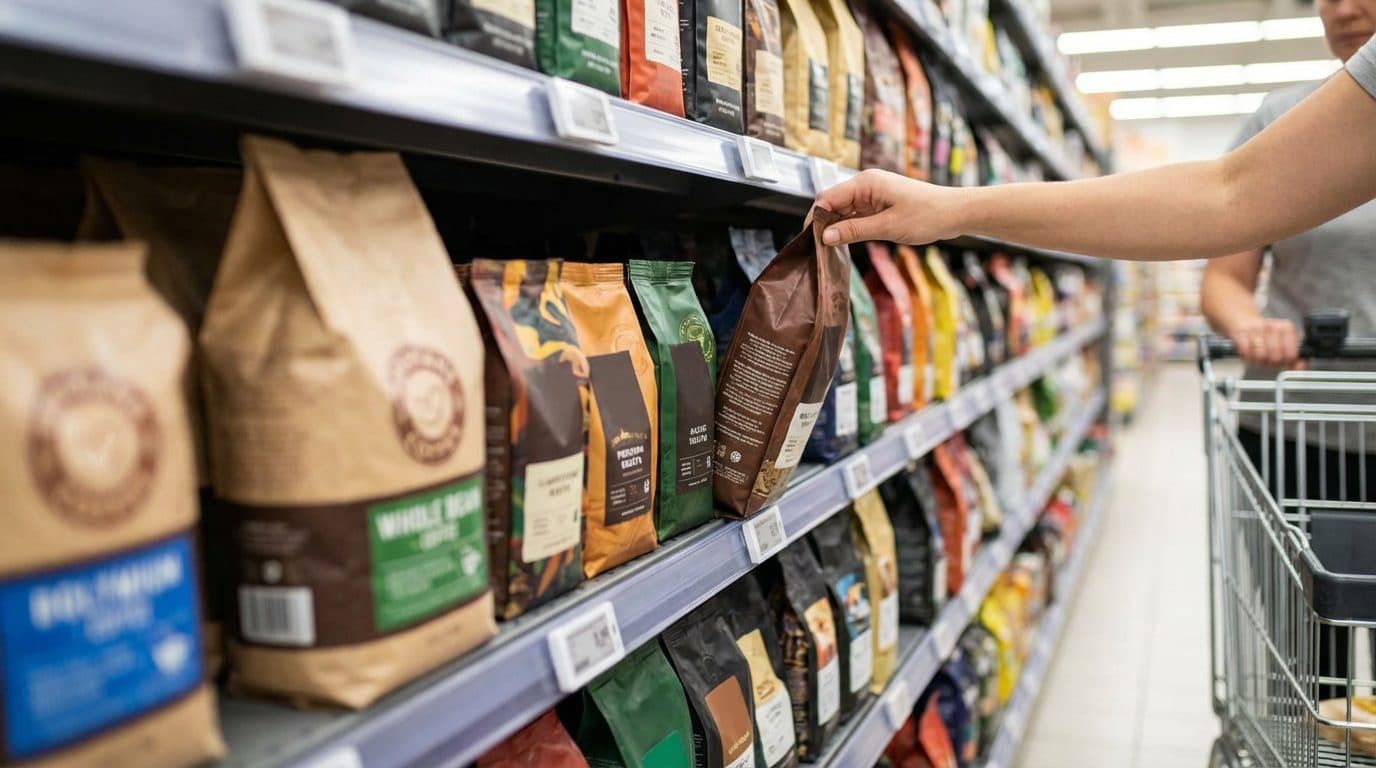
Not all supermarket coffee is mediocre. Brands like Lavazza, Illy, and even some Costco options offer respectable quality at accessible prices. I’ve found that Costco’s Kirkland brand, especially their Colombian beans, delivers solid results for everyday drinking. When you want something special, splurge on specialty beans. For your Tuesday morning rush, a good supermarket option works just fine.
Maximize What You Already Have
Sometimes the best budget strategy isn’t buying something new—it’s using what you have more effectively. Small adjustments to your routine can stretch your coffee budget significantly.
Dial In Your Ratios
Using too much coffee is one of the most common (and expensive) mistakes. The standard ratio for most brewing methods is about 1:15 to 1:17 (coffee to water). That means roughly 15-17 grams of water for every gram of coffee. A kitchen scale costs $10-$15 and helps you avoid both over-dosing (wasteful) and under-dosing (weak coffee that tempts you to toss it and start over).
Store Beans Properly
Nothing kills your budget like throwing away stale coffee. Keep your beans in an airtight container away from light, heat, and moisture. Skip the freezer for daily-use beans—the condensation from repeated opening actually speeds up staleness. If you buy in bulk, portion out a week’s worth into a smaller container and keep the rest sealed.
Master Water Quality
Bad water makes bad coffee, no matter how expensive your beans. If your tap water tastes off, your coffee will too. A simple Brita filter or similar pitcher improves water quality dramatically. This $20-$30 investment helps you get the most flavor from every bean you buy.
Key Takeaway: You don’t need expensive equipment to brew great coffee. Focus on fresh beans, proper ratios, and clean water—these fundamentals matter far more than fancy gear.
The Strategic Café Visit: When to Splurge
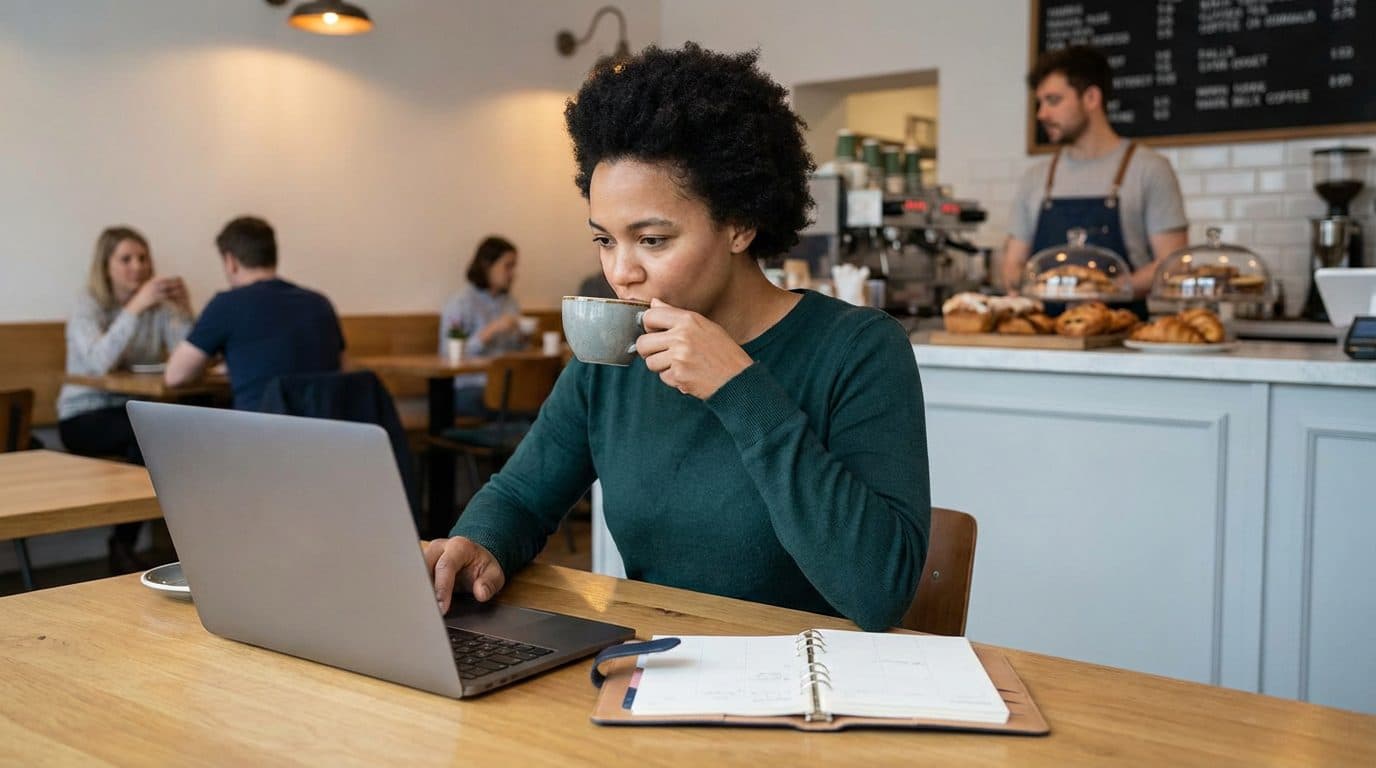
Being budget-friendly doesn’t mean never visiting a coffee shop again. The goal is intentionality. Save café visits for when they truly add value to your day, rather than making them a mindless habit.
When Café Spending Makes Sense
- Social occasions: Meeting a friend? The atmosphere is worth paying for.
- Trying new origins: Cafés let you sample expensive single-origins without committing to a full bag.
- Espresso drinks: Quality home espresso requires significant equipment investment. If you only want a cappuccino occasionally, buying out makes more financial sense.
- Travel: Exploring local coffee culture is part of the experience.
Budget Café Hacks
When you do visit coffee shops, a few strategies help you save:
- Order drip coffee instead of espresso drinks—it’s usually half the price
- Skip the dairy alternatives (oat milk upcharges add up quickly)
- Bring your own reusable cup for small discounts at many shops
- Check for loyalty programs and apps with rewards
I treat my café visits as special occasions rather than daily necessities. This mindset shift alone can cut your coffee spending by 70% or more while making those coffee shop trips feel more meaningful.
Frequently Asked Questions
Is cheap coffee always low quality?
Not necessarily. Price reflects many factors beyond quality—marketing, packaging, brand reputation, and supply chain costs all play a role. Some affordable beans offer excellent value, while some expensive coffees are overpriced. Focus on freshness, roast date, and sourcing transparency rather than price alone.
How much should I budget for good coffee per month?
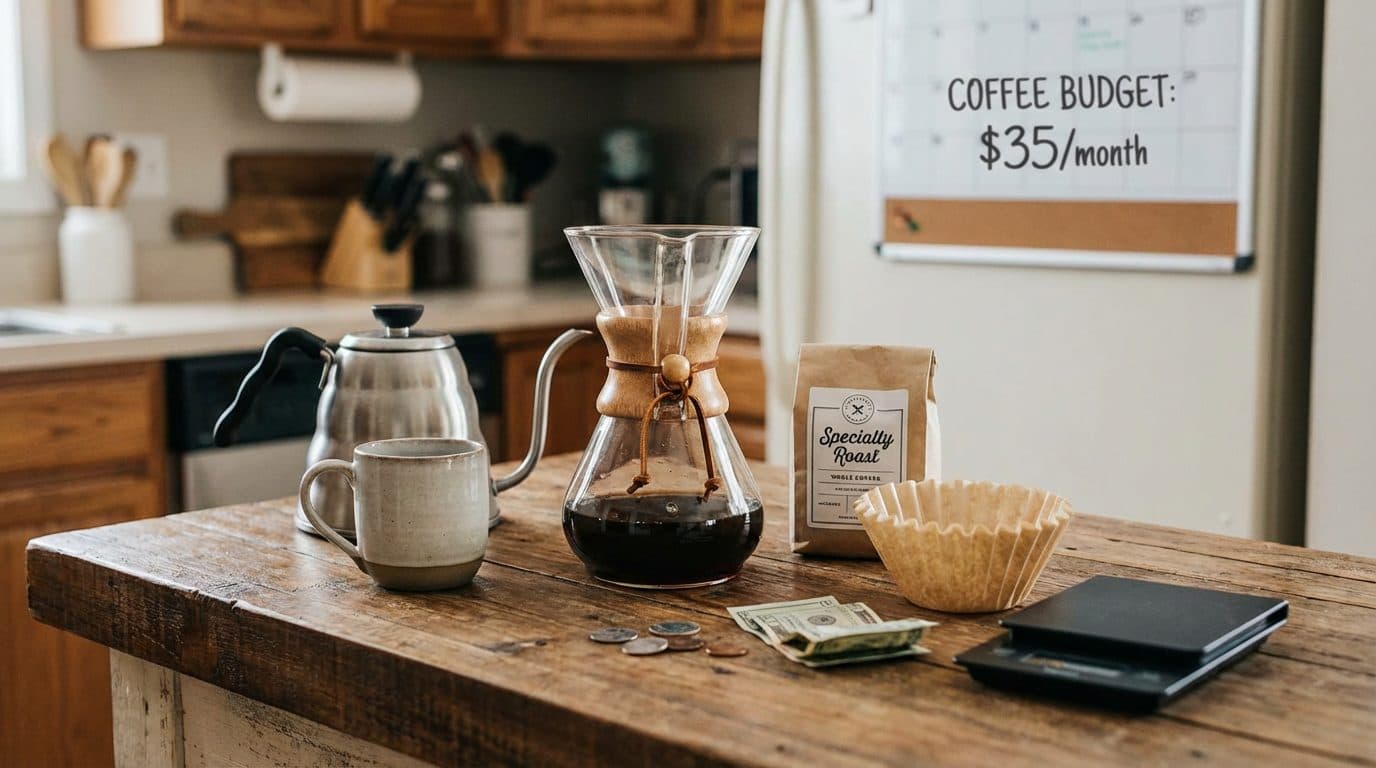
For a daily home brewer using quality specialty beans, expect to spend $15-$40 per month on beans, depending on your consumption and preferred roasters. Add occasional equipment or accessory purchases, and most home baristas spend $25-$50 monthly for excellent coffee—a fraction of daily café visits.
Is it worth investing in an espresso machine for budget reasons?
It depends on your consumption. Entry-level espresso machines start around $200-$400, and you’ll need a capable grinder ($100-$200 minimum). If you currently buy 5+ espresso drinks weekly at cafés, a home setup pays for itself within 6-12 months. If you only want occasional lattes, the upfront cost doesn’t make budget sense.
Can I make cold brew at home to save money?
Absolutely. Cold brew is one of the most budget-friendly methods. You can make it in a mason jar with coarse grounds and filtered water—no special equipment needed. A batch costs about $2-3 in beans and yields multiple servings. Compare that to $4-6 per cup at most cafés.
How do I avoid wasting coffee when experimenting with new brewing methods?
Start with small doses while you’re learning. Use your less expensive beans for practice and save the premium stuff for when you’ve dialed in your technique. Taking notes helps you avoid repeating mistakes—write down your grind size, ratio, and timing so you can adjust systematically rather than randomly.
Conclusion: Great Coffee Without the Guilt
Keeping your coffee habit budget-friendly comes down to a simple shift in approach: invest in knowledge and fundamentals rather than expensive equipment and daily café runs. By brewing at home with quality beans, proper technique, and smart purchasing strategies, you can enjoy coffee that rivals your favorite shops while spending a fraction of the cost.
Start with one change this week. Maybe it’s switching to whole beans, trying a French press, or subscribing to a roaster for that discount. Small steps add up to big savings—and better coffee. Your wallet will thank you, and honestly, so will your taste buds. Here’s to enjoying every cup without the financial hangover.



Comments