


Table of Contents
- What Is Under-Extracted Coffee and Why Does It Taste Sour?
- Key Takeaway: The Extraction Balance
- Common Causes of Under-Extracted Coffee
- Your Grind Is Too Coarse
- Your Water Isn't Hot Enough
- Your Brew Time Is Too Short
- Your Coffee-to-Water Ratio Is Off
- Your Water Quality Is Poor
- How to Fix Under-Extracted Coffee: Step-by-Step Solutions
- Step 1: Adjust Your Grind Size Finer
- Step 2: Check and Increase Your Water Temperature
- Step 3: Extend Your Brew Time
- Step 4: Review Your Coffee-to-Water Ratio
- Step 5: Improve Your Water Quality
- Troubleshooting by Brew Method
- Myths About Sour Coffee Debunked
- Myth: Sour Coffee Means Your Beans Are Bad
- Myth: Light Roasts Are Always Sour
- Myth: Adding More Coffee Will Fix Weak Flavor
- Frequently Asked Questions
- How can I tell the difference between under-extraction and over-extraction?
- Can I fix under-extraction without buying new equipment?
- How do I know when I've hit the right extraction level?
- Does the age of my coffee affect extraction?
- Why does my coffee taste fine one day and sour the next?
- Summary and Your Next Step
You take that first anticipating sip of your morning brew, and instead of the rich, balanced flavor you were hoping for, you’re hit with a sharp, sour punch that makes you wince. Sound familiar? That unpleasant tartness isn’t a sign of bad beans or a broken coffee maker—it’s almost always under-extracted coffee, and it’s one of the most common problems home brewers face.
The good news? Under-extraction is completely fixable, and once you understand what’s happening, you’ll be able to dial in your coffee like a pro. In this guide, I’ll walk you through exactly why your coffee tastes sour, what causes under-extraction, and the practical steps you can take to fix it today. Life is too short for bad coffee, so let’s get your brew back on track.
What Is Under-Extracted Coffee and Why Does It Taste Sour?
Extraction is the process of dissolving flavor compounds from your coffee grounds into water. Coffee beans contain hundreds of different compounds—acids, sugars, oils, and bitter elements—and they dissolve at different rates. The acids come out first, followed by the sweeter compounds, and finally the bitter notes.
When coffee is under-extracted, the water hasn’t had enough time, heat, or contact to pull out those balancing sugars and deeper flavors. You’re left with a cup that’s dominated by the fast-extracting acids, which is why under-extracted coffee tastes sour, sharp, and sometimes even salty or thin.
Key Takeaway: The Extraction Balance
Think of extraction like cooking pasta. Under-cooked pasta is hard and unpleasant. Over-cooked pasta is mushy. Properly cooked pasta is just right. With coffee, under-extraction leaves you with that sharp, acidic “rawness,” while over-extraction creates harsh bitterness. Your goal is that sweet spot in the middle where all the flavors are balanced.
Common Causes of Under-Extracted Coffee
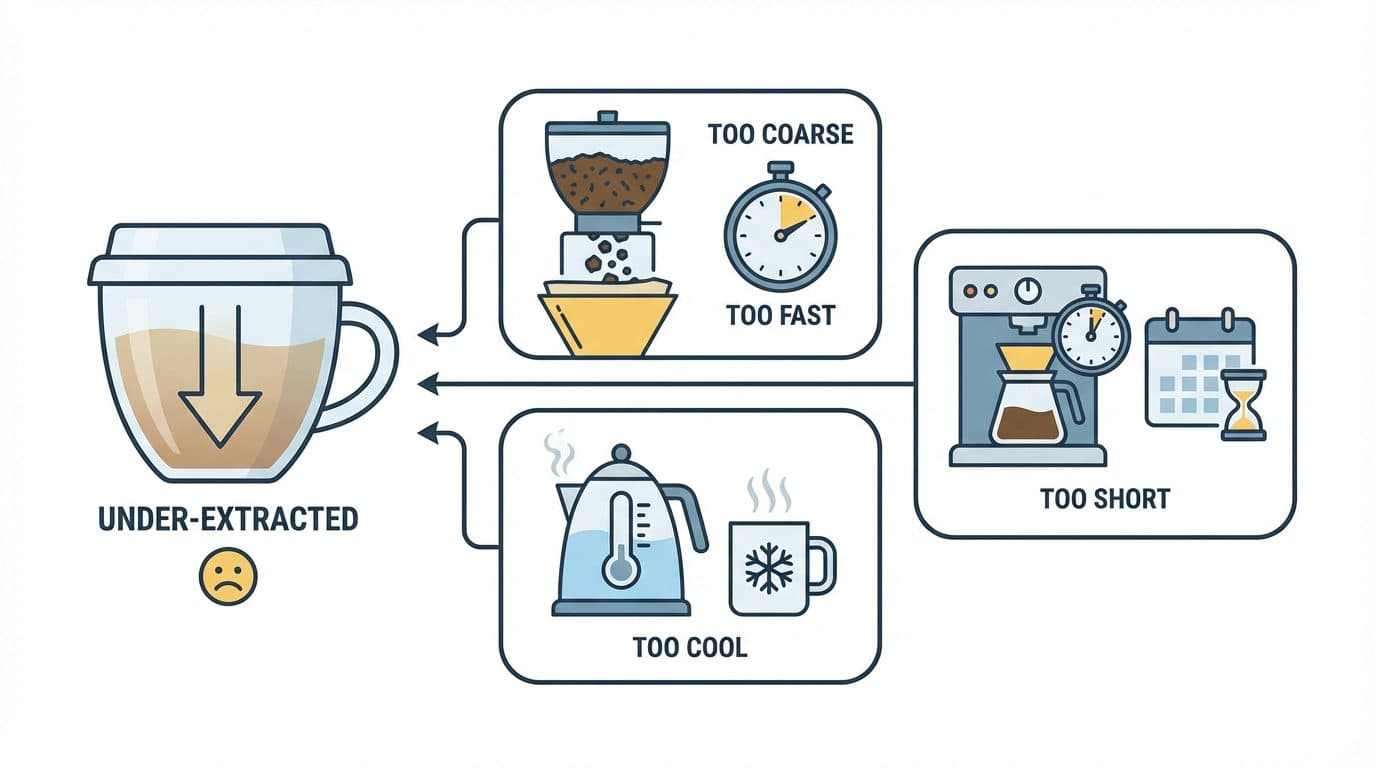
Before you can fix the problem, you need to identify what’s causing it. In my experience, under-extraction usually comes down to one or more of these factors. Let me break them down so you can troubleshoot your specific situation.
Your Grind Is Too Coarse
This is the number one culprit I see with home brewers. When your coffee grounds are too coarse, water flows through them too quickly without extracting enough flavor. Imagine trying to make tea with whole leaves versus finely crushed leaves—the crushed leaves release their flavor much faster because there’s more surface area exposed to the water.
If your grind looks like coarse sea salt when it should look more like table salt or fine sand (depending on your brew method), you’ve likely found your problem.
Your Water Isn’t Hot Enough
Water temperature plays a huge role in extraction. The ideal brewing temperature is between 195°F and 205°F (90°C to 96°C). If your water is below this range, it simply won’t have the energy to extract all those delicious compounds from your grounds.
This is particularly common with older coffee makers that don’t heat water properly, or when people let their kettle cool too long before pouring.
Your Brew Time Is Too Short
Every brew method has an optimal contact time between water and coffee. If you’re rushing the process—whether that’s a pour-over that drains too fast or a French press that you plunge after two minutes—you’re not giving extraction enough time to happen.
Your Coffee-to-Water Ratio Is Off
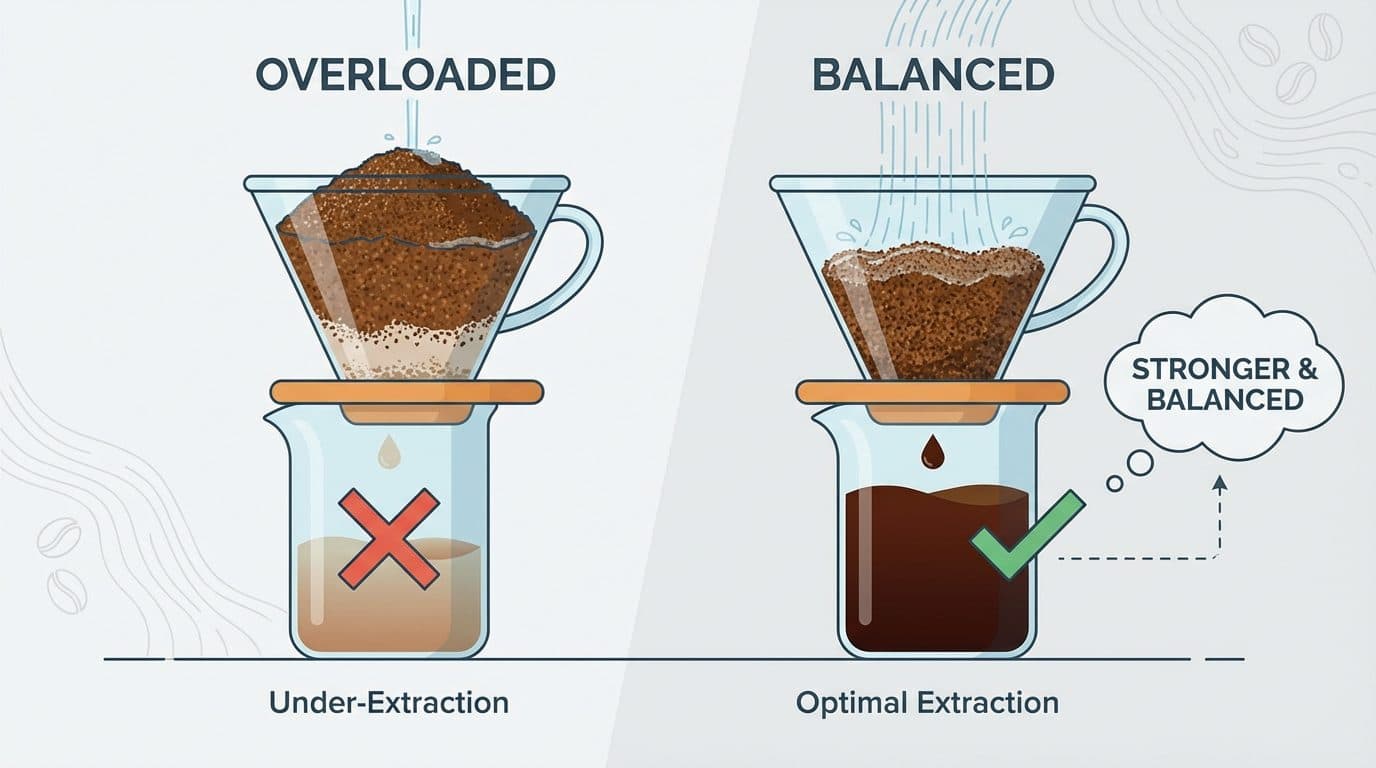
Using too much coffee for the amount of water can lead to under-extraction because each ground doesn’t get enough water contact. While it might seem counterintuitive, sometimes using slightly less coffee can actually give you a stronger-tasting, more balanced cup.
Your Water Quality Is Poor
Water that’s too soft or lacks minerals can struggle to extract properly. On the flip side, heavily chlorinated tap water can mask flavors and create off-tastes that might be confused with extraction issues.
How to Fix Under-Extracted Coffee: Step-by-Step Solutions
Now that you understand the causes, let’s get practical. Here’s how to fix that sour, sharp coffee and start brewing cups you actually enjoy.
Step 1: Adjust Your Grind Size Finer
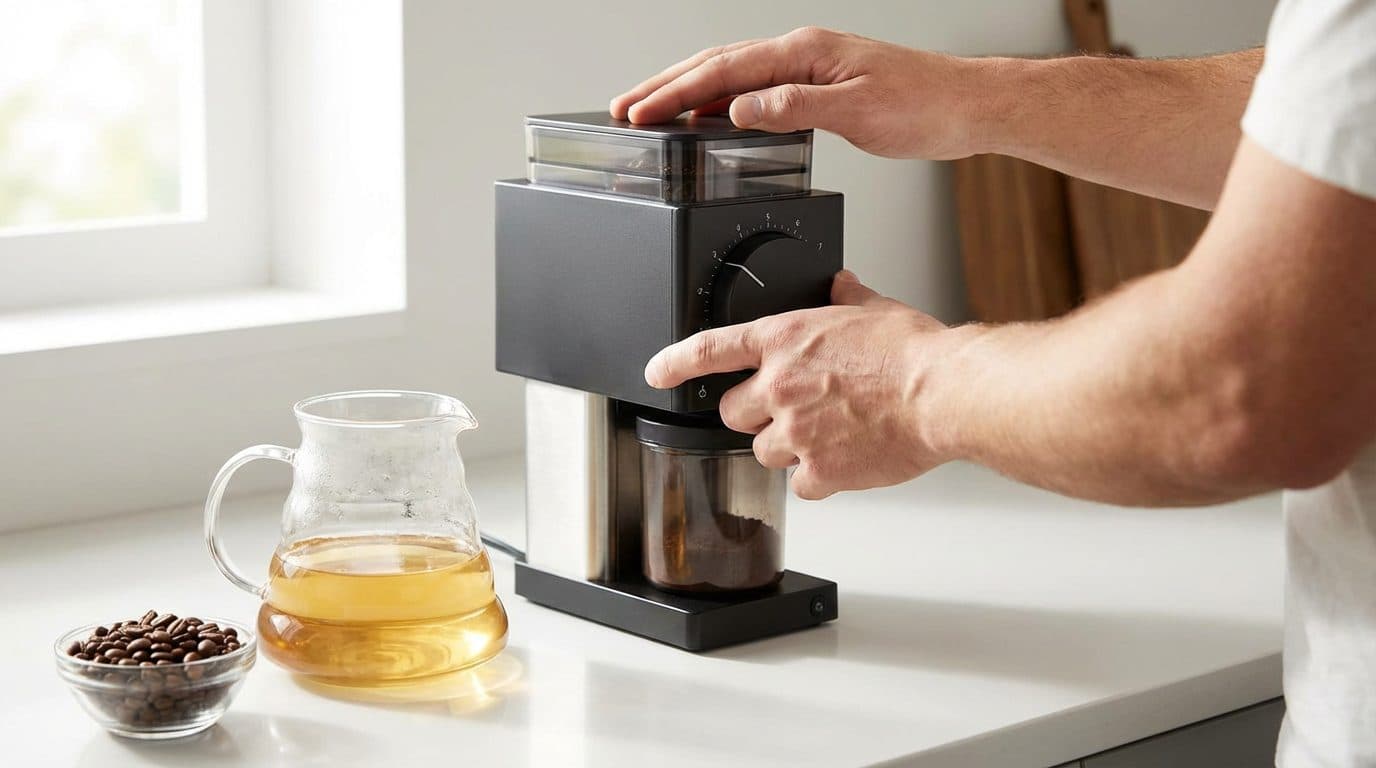
This should be your first move. A finer grind increases the surface area of your coffee, allowing water to extract more flavor in the same amount of time. Make small adjustments—going two or three settings finer on your grinder—and taste the difference.
- For pour-over: Aim for a texture similar to table salt or slightly finer
- For French press: Think coarse sand, not pebbles
- For espresso: Very fine, almost powdery but not quite
- For drip coffee makers: Medium grind, like regular sand
Barista Tip: Change only one variable at a time. If you adjust your grind and your water temperature simultaneously, you won’t know which change made the difference.
Step 2: Check and Increase Your Water Temperature
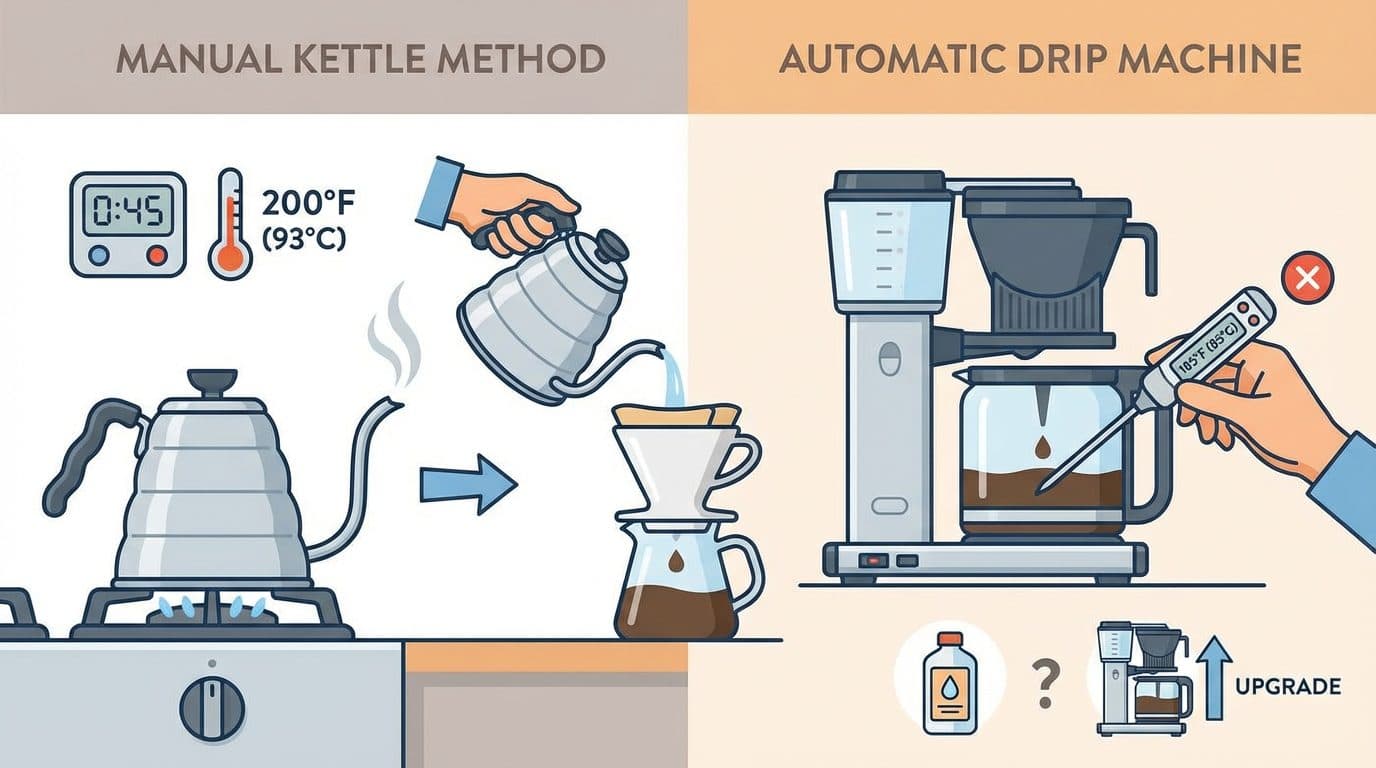
If you’re using a kettle, bring water to a boil and let it sit for 30 to 45 seconds before pouring. This usually puts you right in that 195°F to 205°F sweet spot. If you have a temperature-controlled kettle, set it to 200°F as a starting point.
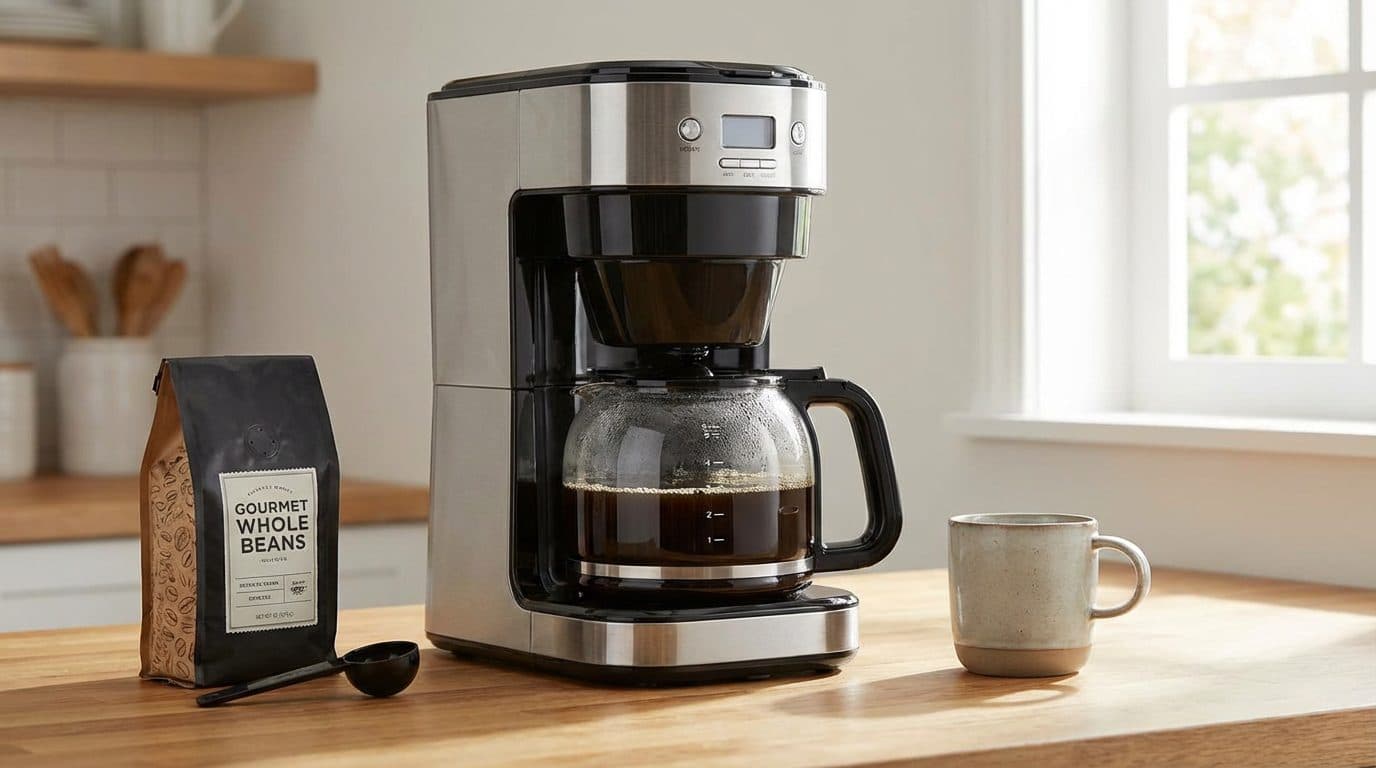
For automatic drip machines, run a brew cycle with just water and use a thermometer to check what temperature comes out. If it’s below 195°F, your machine might need descaling, or it might simply be time for an upgrade.
Step 3: Extend Your Brew Time
Depending on your brewing method, here are some ways to increase contact time:
- Pour-over: Pour more slowly in controlled circles, or use a finer grind to slow drainage
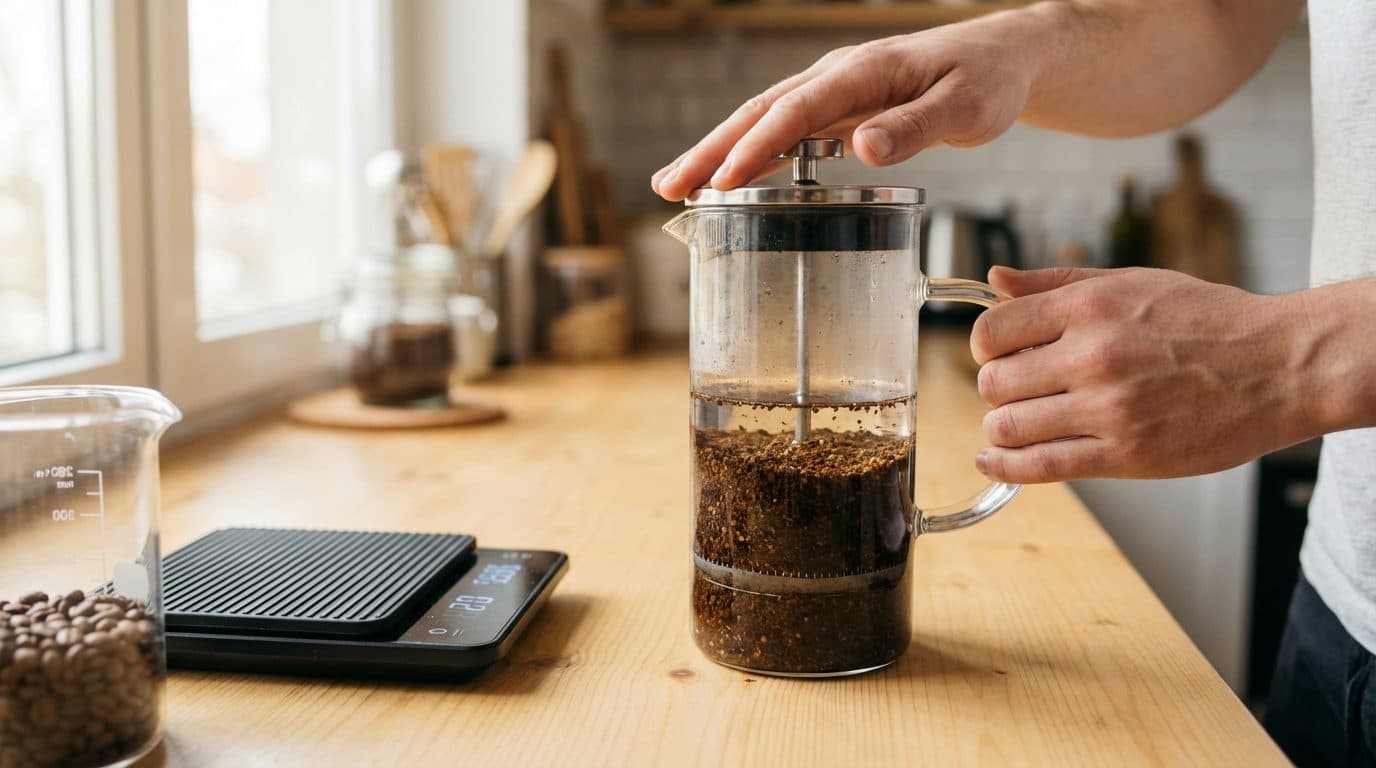
- French press: Extend your steep time from 4 minutes to 4.5 or 5 minutes
- AeroPress: Add 30 seconds to your steep before pressing
- Cold brew: Increase your brewing time by 2 to 4 hours
Step 4: Review Your Coffee-to-Water Ratio
A good starting point is 1:15 to 1:17 (coffee to water by weight). That means for every gram of coffee, you use 15 to 17 grams of water. For example, 20 grams of coffee with 320 grams of water gives you a 1:16 ratio.
If you’ve been eyeballing your measurements, I highly recommend getting a simple kitchen scale. It’s a game-changer for consistency and costs less than a bag of specialty beans.
Step 5: Improve Your Water Quality
Filtered water often makes a noticeable difference in coffee quality. You don’t need anything fancy—a basic pitcher filter works well. Avoid distilled water, which lacks the minerals needed for proper extraction, and avoid heavily mineralized water, which can create scale buildup and off-flavors.
Troubleshooting by Brew Method
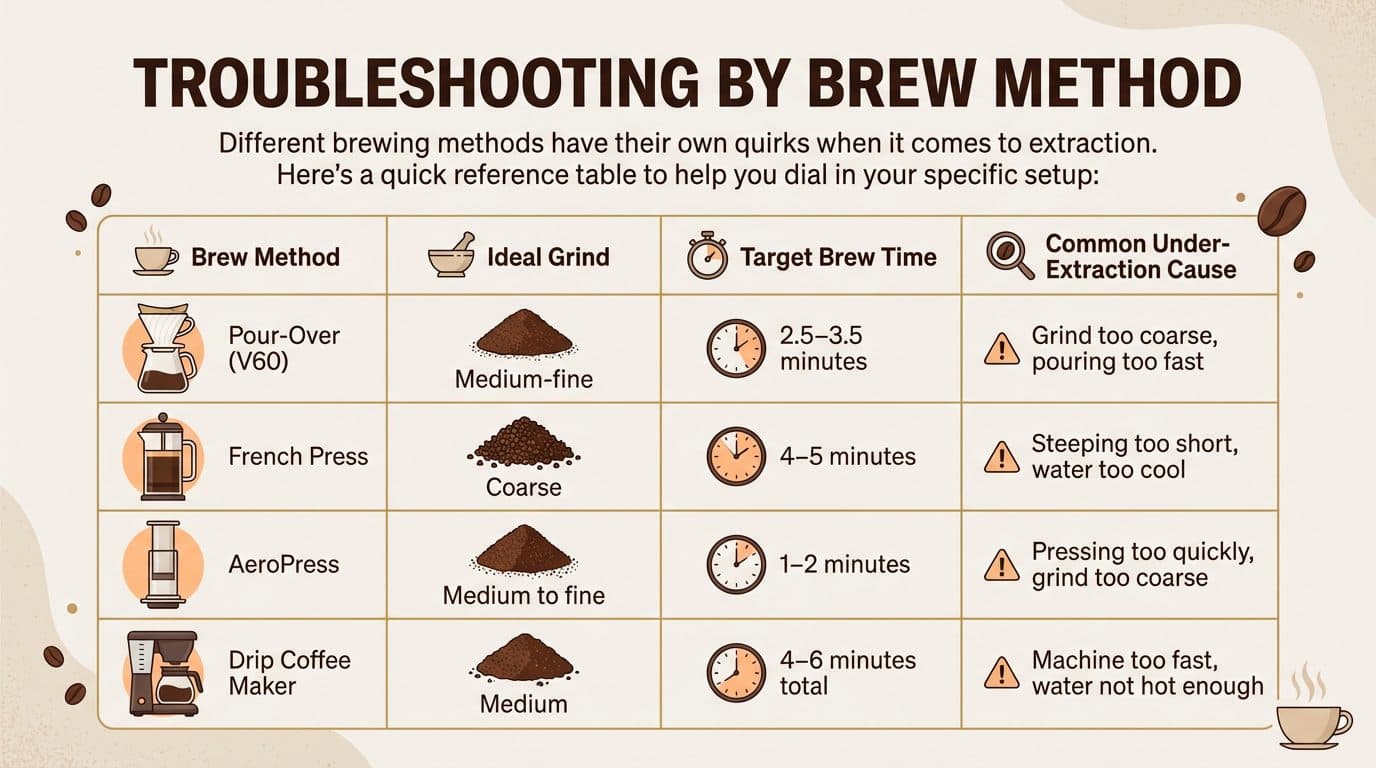
Different brewing methods have their own quirks when it comes to extraction. Here’s a quick reference table to help you dial in your specific setup:
| Brew Method | Ideal Grind | Target Brew Time | Common Under-Extraction Cause |
|---|---|---|---|
| Pour-Over (V60) | Medium-fine | 2.5–3.5 minutes | Grind too coarse, pouring too fast |
| French Press | Coarse | 4–5 minutes | Steeping too short, water too cool |
| AeroPress | Medium to fine | 1–2 minutes | Pressing too quickly, grind too coarse |
| Drip Coffee Maker | Medium | 4–6 minutes total | Machine not heating properly, old grounds |
| Espresso | Very fine | 25–30 seconds | Grind too coarse, not enough coffee |
Myths About Sour Coffee Debunked
There’s a lot of misinformation floating around about why coffee tastes sour. Let me clear up a few common misconceptions I’ve encountered over the years.
Myth: Sour Coffee Means Your Beans Are Bad
Not necessarily. While stale or poorly stored beans can taste flat or off, sourness is almost always an extraction issue, not a bean quality issue. I’ve made sour coffee with expensive, freshly roasted single-origin beans simply by grinding too coarse. The beans were perfect—my technique wasn’t.
Myth: Light Roasts Are Always Sour
Light roasts do have more natural acidity than dark roasts, but that acidity should be bright and pleasant—like the acidity in a good apple or wine—not sharp and unpleasant. If your light roast tastes harshly sour, you’re under-extracting. Try grinding finer or using slightly hotter water with light roasts.
Myth: Adding More Coffee Will Fix Weak Flavor
This often backfires. Adding more coffee without adjusting other variables can actually make under-extraction worse because each ground gets less water contact. Focus on extraction first, then adjust your ratio for strength.
Frequently Asked Questions
How can I tell the difference between under-extraction and over-extraction?
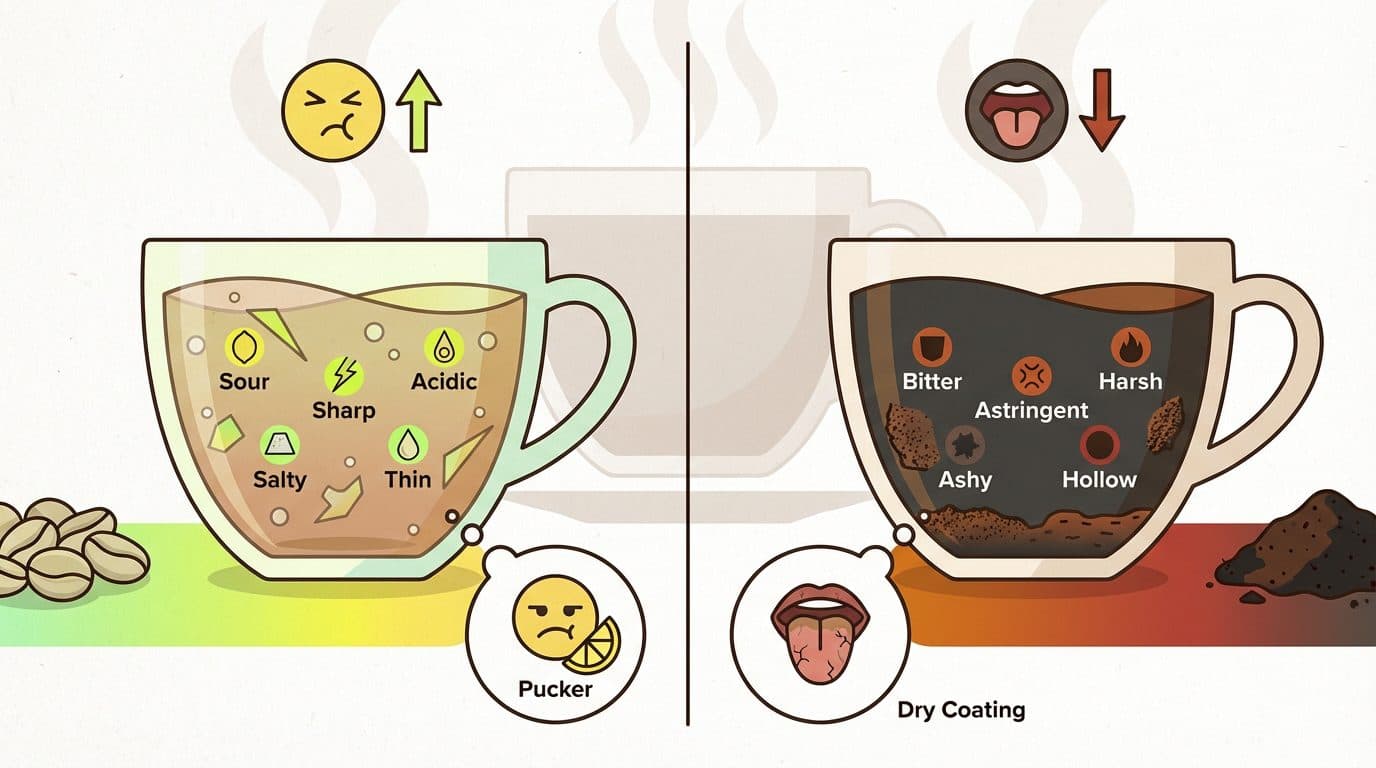
Under-extracted coffee tastes sour, sharp, acidic, and sometimes salty or thin. It lacks body and sweetness. Over-extracted coffee tastes bitter, harsh, astringent, and sometimes ashy or hollow. If your coffee is making your mouth pucker with sourness, you’re dealing with under-extraction. If it’s leaving a dry, bitter coating on your tongue, that’s over-extraction.
Can I fix under-extraction without buying new equipment?
Absolutely. Many fixes are technique-based and cost nothing. Adjusting your grind size (if you have a grinder with settings), using hotter water, extending brew time, and measuring your coffee more precisely can all make a significant difference without any new purchases.
How do I know when I’ve hit the right extraction level?
Properly extracted coffee should taste balanced—you’ll notice sweetness, some pleasant acidity (not sourness), and a clean finish without harsh bitterness. The body should feel satisfying, and the aftertaste should be pleasant. When you take a sip and think “that’s good” without any jarring notes, you’re in the right zone.
Does the age of my coffee affect extraction?
Yes, it can. Coffee that’s too fresh (less than 4-5 days off roast) can be harder to extract evenly because it’s still degassing heavily. Coffee that’s too old (more than 4-6 weeks for whole beans) loses flavor compounds and can taste flat regardless of extraction. For best results, use beans between 1-4 weeks off their roast date.
Why does my coffee taste fine one day and sour the next?
Consistency is the challenge of home brewing. Small variables—water temperature, how long you let your kettle sit, slight differences in grind, even humidity affecting your beans—can shift your extraction. This is why measuring and timing your brew helps you replicate good results and troubleshoot bad ones.
Summary and Your Next Step
Under-extracted coffee doesn’t have to ruin your morning. Now that you understand that sour, sharp flavors come from not extracting enough of the good stuff from your beans, you have the tools to fix it. Start by grinding finer, ensuring your water is hot enough, and giving your brew adequate time. Make one change at a time, taste the results, and adjust from there.
I’ve found that most home brewers can dramatically improve their coffee within just a few attempts once they understand these principles. The key is paying attention, being willing to experiment, and remembering that every “bad” cup teaches you something about what works and what doesn’t. Grab your favorite beans, apply these fixes, and start enjoying the balanced, flavorful coffee you deserve.

Comments