


Table of Contents
- What You'll Need
- Understanding Roast Levels: A Quick Breakdown
- Light Roast
- Medium Roast
- Dark Roast
- Matching Roast Levels to Your Brewing Method
- Pour-Over and Drip Methods
- French Press
- Espresso
- AeroPress: The Wild Card
- Cold Brew
- Common Mistakes When Matching Roast and Brewing Method
- How to Experiment and Find Your Perfect Match
- Frequently Asked Questions
- Can I use any roast level with any brewing method?
- Why does my light roast coffee taste sour?
- Is dark roast stronger than light roast?
- What roast level is best for beginners?
- Does roast level affect how I should store my coffee?
- Conclusion and Next Steps
Ever brewed a cup of coffee that tasted oddly sour or unpleasantly bitter, even though you followed all the “right” steps? The culprit might not be your technique—it could be a mismatch between your roast level and your brewing method. Choosing the right roast level for your favorite brewing method at home can transform your daily cup from disappointing to absolutely delicious.
In my experience, this is one of the most overlooked aspects of home brewing. Most people grab whatever bag looks appealing at the store without considering how it will interact with their specific coffee maker. By the end of this guide, you’ll understand exactly which roast pairs best with your preferred brewing style, why it matters, and how to experiment confidently.
What You’ll Need
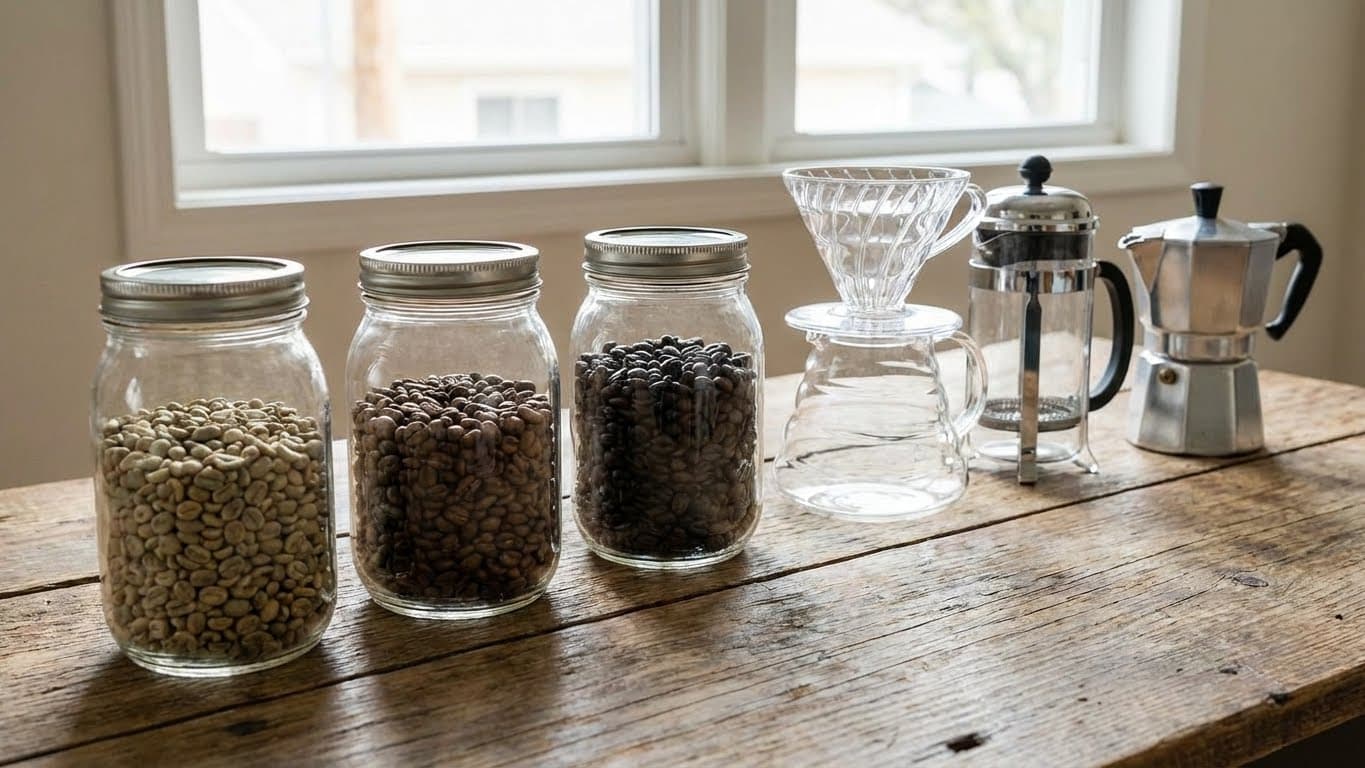
Before we dive into the matching game, here’s what you’ll need to get started:
- Your preferred brewing device (French press, pour-over, espresso machine, drip coffee maker, AeroPress, Moka pot, or cold brew setup)
- A variety of roast levels to experiment with (light, medium, and dark roast samples)
- A quality burr grinder (blade grinders work in a pinch, but burr grinders give you more control)
- Fresh, filtered water
- A kitchen scale (optional but highly recommended for consistency)
- A notebook (to track your preferences—trust me, you’ll forget otherwise)
Understanding Roast Levels: A Quick Breakdown
Before matching roasts to brewing methods, let’s make sure we’re speaking the same language. Roast level refers to how long and at what temperature the green coffee beans were roasted. This process dramatically affects flavor, acidity, body, and caffeine content.
Light Roast
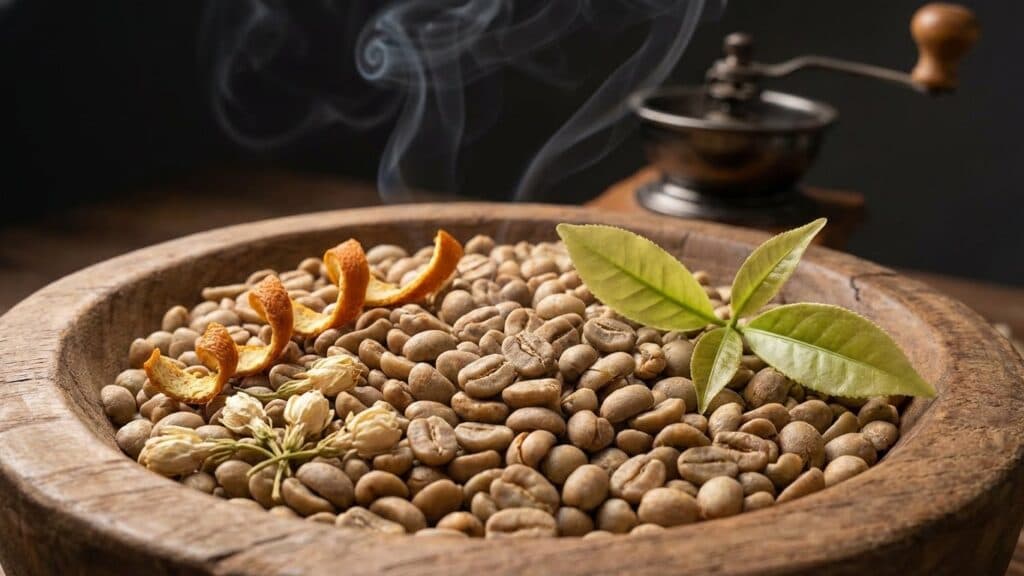
Light roasts are roasted for the shortest time, typically until just after the “first crack” (the point where beans audibly pop). They retain more of the bean’s original characteristics—think fruity, floral, and tea-like notes. The acidity is brighter, the body is lighter, and contrary to popular belief, they contain slightly more caffeine than darker roasts.
Taste Profile: Bright, complex, fruity, floral, sometimes tangy.
Medium Roast
Medium roasts hit the sweet spot for many coffee drinkers. They’re roasted a bit longer, balancing the bean’s origin flavors with the caramelization from the roasting process. You’ll notice more sweetness, a fuller body, and a balanced acidity.
Taste Profile: Balanced, sweet, nutty, caramel notes, moderate acidity.
Dark Roast
Dark roasts are roasted until the second crack or beyond. The longer roasting time brings out bold, smoky, and chocolatey flavors while reducing acidity. The oils often appear on the surface of the beans. These roasts have a heavier body and a more pronounced bitterness.
Taste Profile: Bold, smoky, chocolatey, low acidity, sometimes bitter.
Did You Know? The idea that dark roast has more caffeine is actually a myth. Light roasts retain slightly more caffeine because the roasting process burns off some caffeine content over time.
Matching Roast Levels to Your Brewing Method
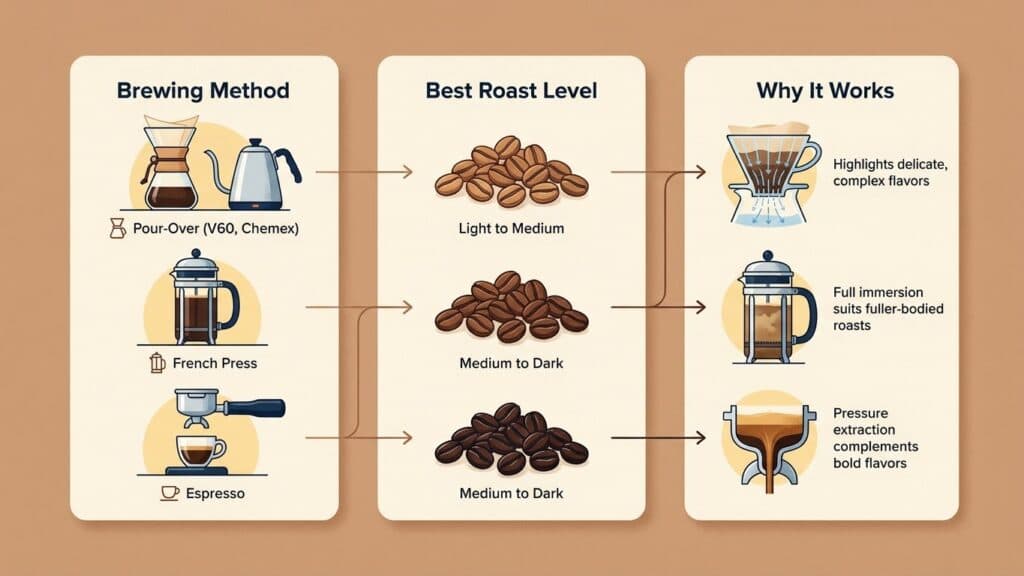
Now for the good stuff. Different brewing methods extract coffee in different ways—varying water temperature, contact time, and pressure all play a role. Here’s how to choose the right roast level for your brewing method at home:
| Brewing Method | Best Roast Level | Why It Works |
|---|---|---|
| Pour-Over (V60, Chemex) | Light to Medium | Highlights delicate, complex flavors |
| French Press | Medium to Dark | Full immersion suits fuller-bodied roasts |
| Espresso | Medium to Dark | Pressure extraction complements bold flavors |
| Drip Coffee Maker | Medium | Versatile and balanced extraction |
| AeroPress | Any (Light to Dark) | Highly versatile; adjustable to preference |
| Moka Pot | Medium-Dark to Dark | Intense brewing suits robust roasts |
| Cold Brew | Medium to Dark | Long steep time mellows dark roast bitterness |
Pour-Over and Drip Methods
Pour-over methods like the V60 or Chemex are designed to highlight nuance and clarity. I’ve found that light to medium roasts shine here because the paper filter removes oils and sediment, allowing the subtle fruit and floral notes to come through beautifully. Dark roasts can taste overly bitter or ashy with these methods.
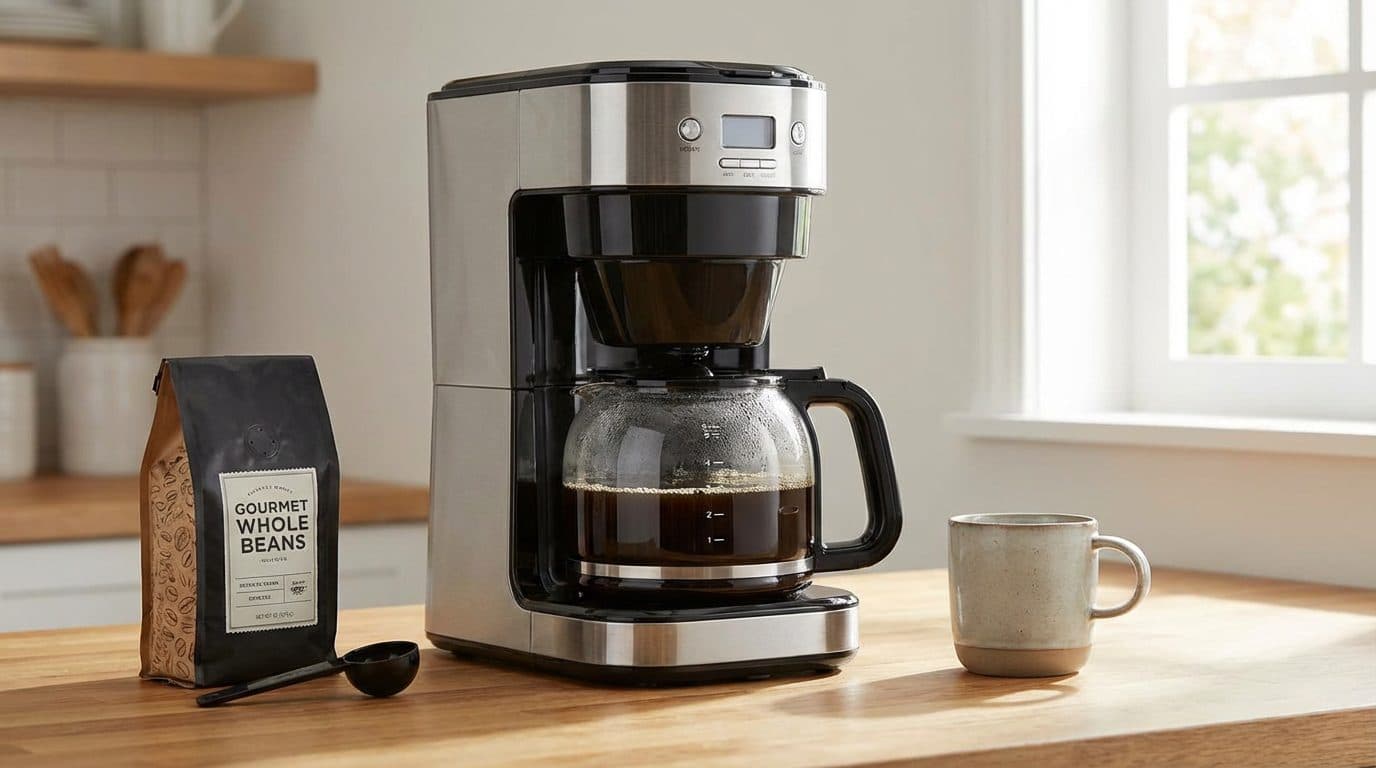
For automatic drip coffee makers, medium roasts are your safest bet. The brewing process is less precise than manual pour-over, so a balanced roast forgives slight variations in water temperature or brew time.
Barista Tip: If your pour-over tastes sour, try a slightly coarser grind or a medium roast instead of light. Sometimes a small adjustment makes all the difference.
French Press
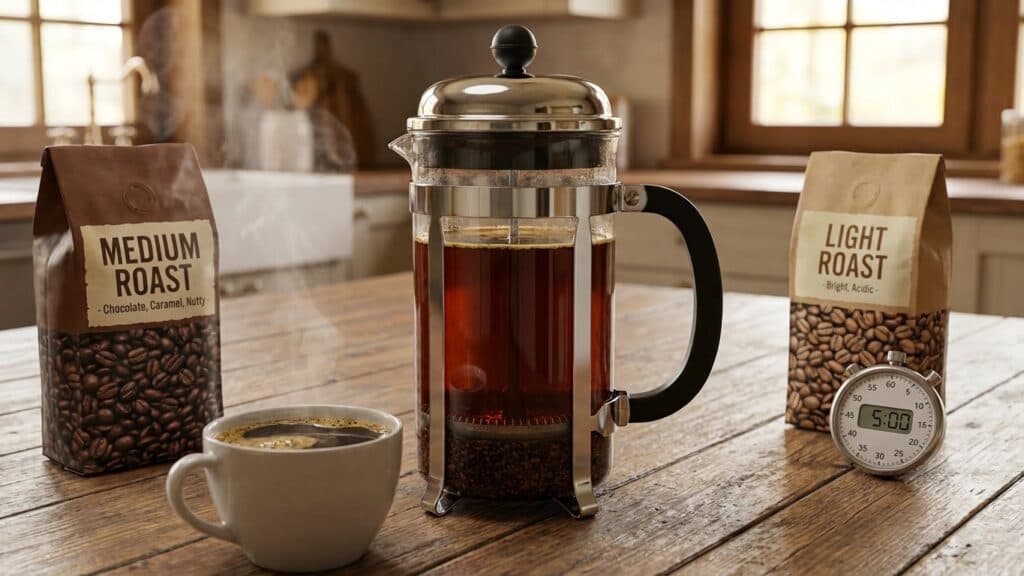
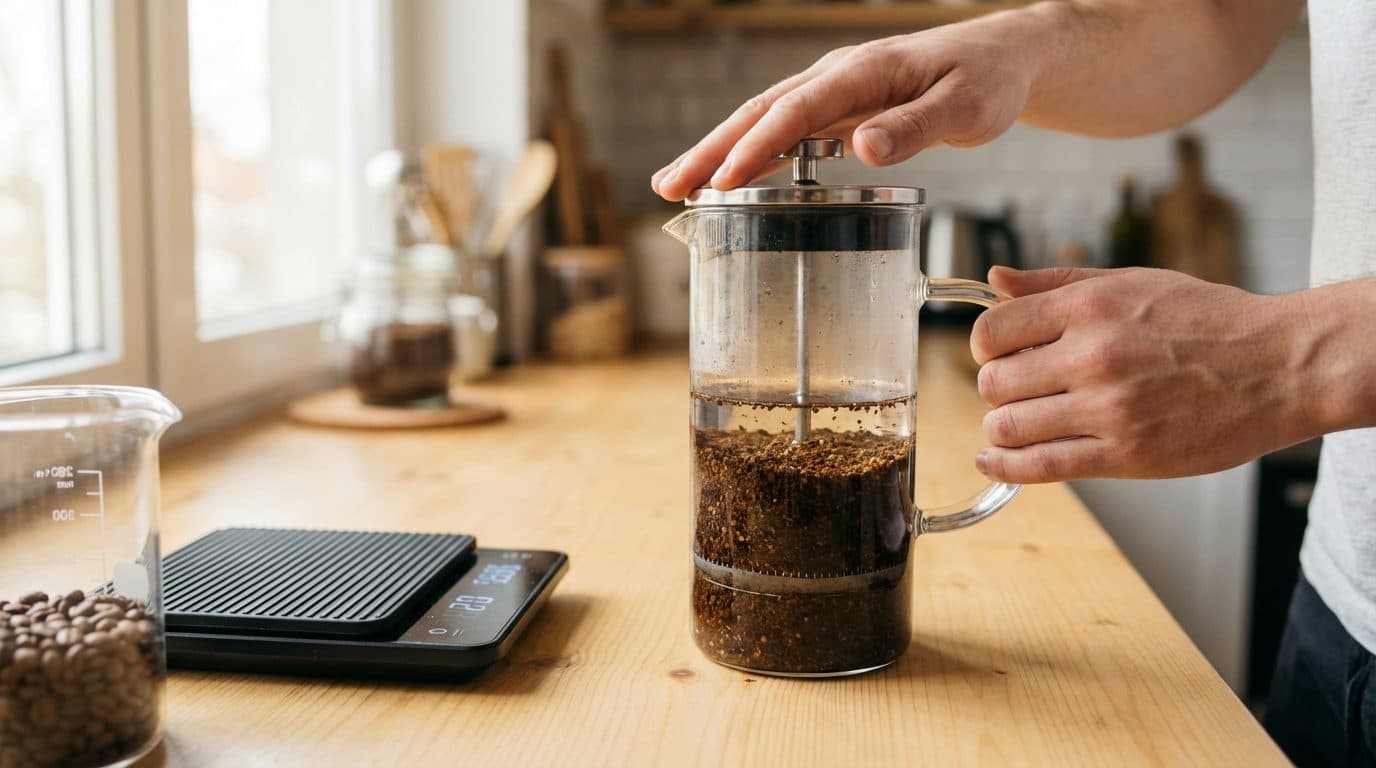
The French press is a full-immersion brewer, meaning the coffee grounds steep directly in water for an extended period. This method extracts more oils and produces a heavier body. Medium to dark roasts pair wonderfully here because their chocolate, caramel, and nutty notes complement the rich mouthfeel.
Light roasts can work in a French press, but you might find the result underwhelming or overly acidic. If you love light roasts but only have a French press, try extending your brew time slightly to extract more sweetness.
Espresso
Espresso is all about pressure and concentration. The short extraction time (25-30 seconds) works best with medium to dark roasts because these roasts are more soluble and produce the crema, body, and intensity espresso lovers crave. Light roasts can taste unbearably sour in espresso because the quick extraction doesn’t allow enough time to balance the acidity.
That said, specialty coffee shops sometimes pull light-roast espresso shots, but this requires precise equipment and technique. For home baristas, sticking with medium or dark roasts will yield more consistent and satisfying results.
AeroPress: The Wild Card
The AeroPress is one of the most versatile brewers ever invented. You can use any roast level and adjust your recipe to highlight its best qualities. Want a clean, bright cup? Use a light roast with a shorter steep time. Craving something bold and punchy? Go dark with a longer steep and press firmly.
In my experience, the AeroPress is perfect for experimenting with roast levels because you can fine-tune so many variables.
Cold Brew
Cold brew involves steeping coarse grounds in cold water for 12-24 hours. This long extraction mellows out bitterness and acidity, making medium to dark roasts ideal. The result is a smooth, sweet, and naturally chocolatey concentrate.
Light roasts can taste somewhat flat or tea-like in cold brew because the cold water doesn’t extract the bright acids effectively. If you’re committed to light roasts, try a shorter steep time or a finer grind to compensate.
Common Mistakes When Matching Roast and Brewing Method
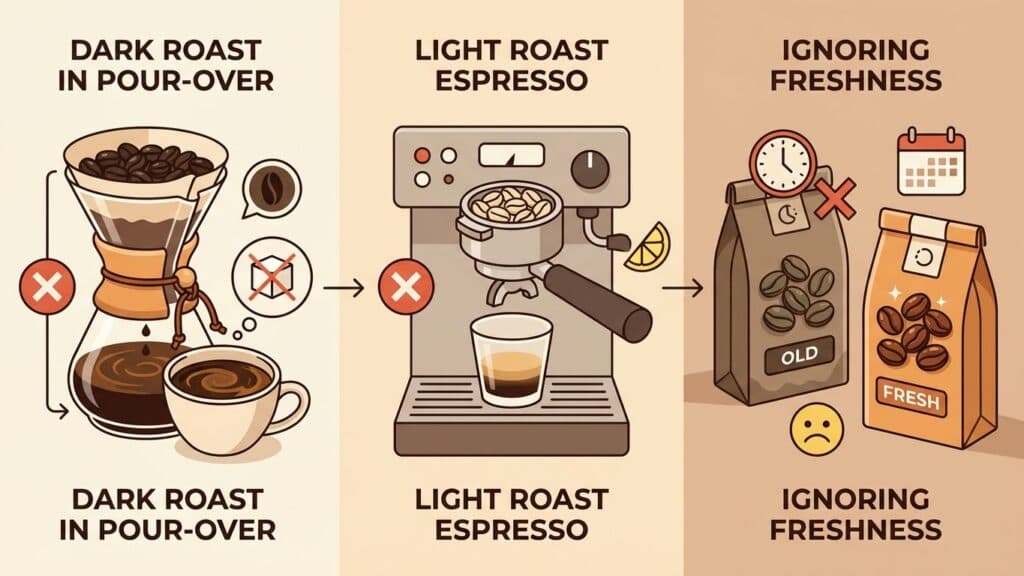
Even seasoned home baristas make these errors. Here’s what to avoid:
- Using dark roast in a pour-over and expecting sweetness. Dark roasts often taste harsh and ashy when brewed with methods designed for clarity. If your coffee is bitter, try a lighter roast.
- Pulling espresso with light roast beans. Unless you’re a pro with top-tier equipment, this usually leads to sour, thin shots. Save your light roasts for pour-over or AeroPress.
- Ignoring freshness. No matter the roast level, stale coffee will taste flat. Aim to use beans within 2-4 weeks of the roast date for optimal flavor.
- Forgetting to adjust your grind. Roast level affects how quickly water extracts flavor. Dark roasts are more porous and extract faster, so you may need a slightly coarser grind to avoid over-extraction.
Key Takeaway: The “best” roast level doesn’t exist in a vacuum. It depends entirely on how you’re brewing. A dark roast that tastes amazing in your French press might disappoint in a Chemex.
How to Experiment and Find Your Perfect Match
Here’s a simple process I recommend for dialing in your preferences:
- Pick one brewing method you use most often.
- Buy small bags of light, medium, and dark roast coffee (ideally from the same roaster for consistency).
- Brew each roast using the same recipe—same water temperature, same grind size, same brew time.
- Taste them side by side and take notes. Which one tastes most balanced? Which one highlights the flavors you enjoy?
- Adjust one variable at a time (grind size, brew time) and taste again.
Barista Tip: Life is too short for bad coffee. Don’t be afraid to toss a cup that tastes terrible and try again. Every “failed” brew teaches you something.
Frequently Asked Questions

Can I use any roast level with any brewing method?
Technically, yes. But for the best results, certain pairings work better than others. Light roasts suit pour-over and AeroPress; medium and dark roasts pair well with French press, espresso, and cold brew. Experimenting is always encouraged.
Why does my light roast coffee taste sour?
Sourness in light roast usually signals under-extraction. Try grinding finer, increasing brew time, or using hotter water. If it still tastes too acidic, a medium roast might be more to your liking.
Is dark roast stronger than light roast?
Dark roast tastes bolder and more intense, but it doesn’t contain more caffeine. In fact, light roasts have slightly more caffeine by volume. “Strength” in coffee terms refers more to the coffee-to-water ratio than the roast level.
What roast level is best for beginners?
Medium roast is often the easiest starting point. It’s balanced, forgiving, and works well across most brewing methods. Once you’re comfortable, branch out to light or dark roasts to discover your personal preferences.
Does roast level affect how I should store my coffee?
Not significantly. All roast levels should be stored in an airtight container away from light, heat, and moisture. However, dark roasts have more surface oils and can go stale slightly faster, so use them within a few weeks of roasting.
Conclusion and Next Steps
Choosing the right roast level for your favorite brewing method at home isn’t complicated once you understand the basics. Light roasts love pour-overs; dark roasts thrive in espresso and French press; medium roasts are the reliable all-rounders. The key is matching the extraction style of your brewer with the flavor profile of your beans.
Start with the recommendations in this guide, then experiment to find what tastes best to you. Grab a few different roast levels, brew them side by side, and pay attention to what makes your taste buds happy. Before long, you’ll develop an instinct for pairing roasts and brewing methods—and every cup you make will be that much more rewarding.

Comments