


Table of Contents
- Understanding What Makes Latte and Cappuccino Beans Different
- The Role of Milk in Flavor Perception
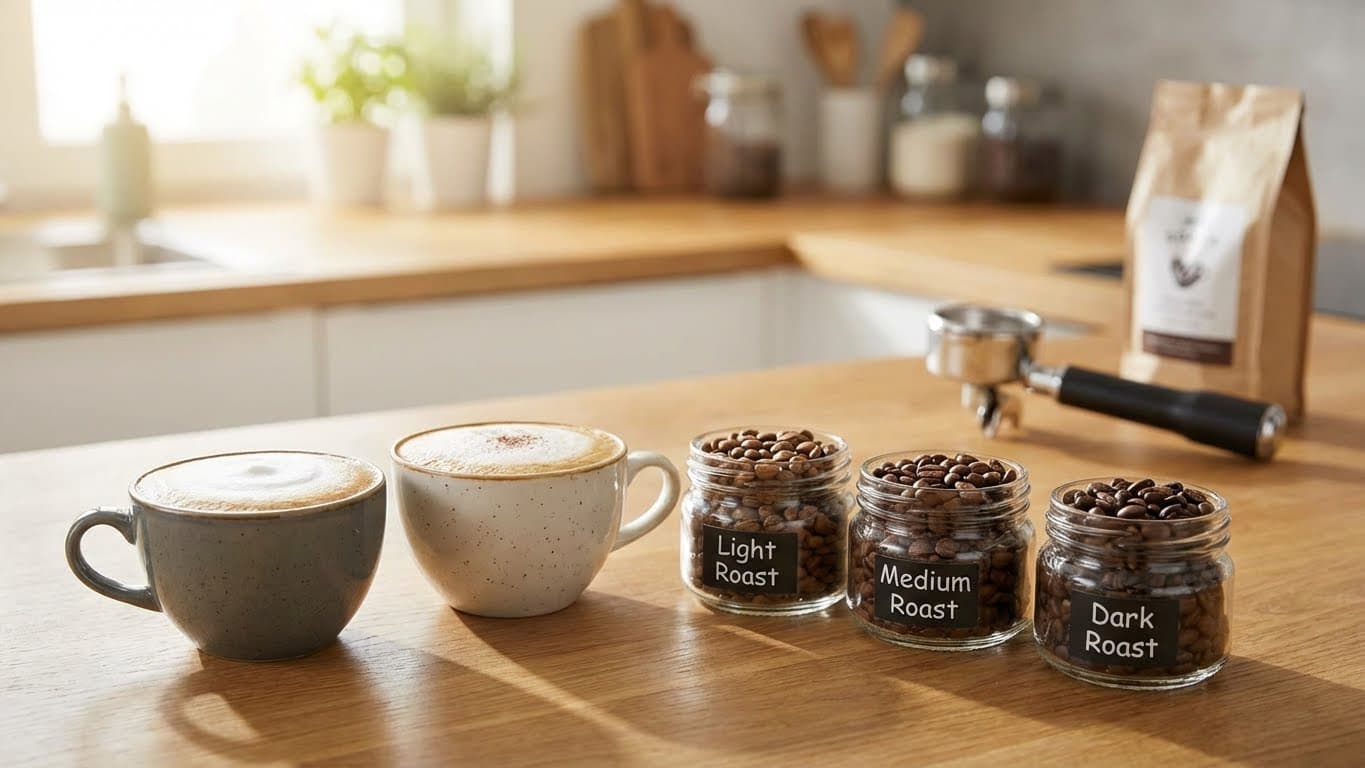
- Roast Level: The Most Important Decision for Milk Drinks
- Why Medium-Dark to Dark Roasts Work Best
- Can You Use Light Roasts?
- Origins and Blends: Finding Your Perfect Match
- Best Single Origins for Milk Drinks
- The Case for Espresso Blends
- Freshness and Buying Tips That Actually Matter
- The Freshness Sweet Spot
- Whole Bean vs. Pre-Ground
- Decoding Coffee Labels and Descriptions
- Terms That Signal Milk-Friendly Beans
- Processing Methods Explained Simply
- Frequently Asked Questions
- Can I use the same beans for latte, cappuccino, and straight espresso?
- How much should I spend on beans for milk drinks?
- Should I choose different beans for oat milk or almond milk?
- How do I know if my beans are the problem versus my technique?
- Do I need specialty coffee, or will supermarket beans work?
- Summary and Your Next Step
Ever wondered why your homemade latte tastes flat compared to the one from your favorite café? The secret often isn’t your technique or your espresso machine—it’s hiding in plain sight inside your coffee bag. Choosing the right coffee beans for latte and cappuccino can transform your morning ritual from disappointing to genuinely café-worthy. In my experience, this single decision impacts your drink more than almost any other variable.
If you’re tired of mediocre milk drinks and want to understand exactly what makes certain beans shine when paired with steamed milk, you’re in the right place. I’ll walk you through everything from roast levels to origins, help you decode those confusing labels, and share the practical tips I’ve learned from years of pulling shots at home. By the end, you’ll know precisely how to choose coffee beans for latte and cappuccino that match your personal taste preferences.
Understanding What Makes Latte and Cappuccino Beans Different
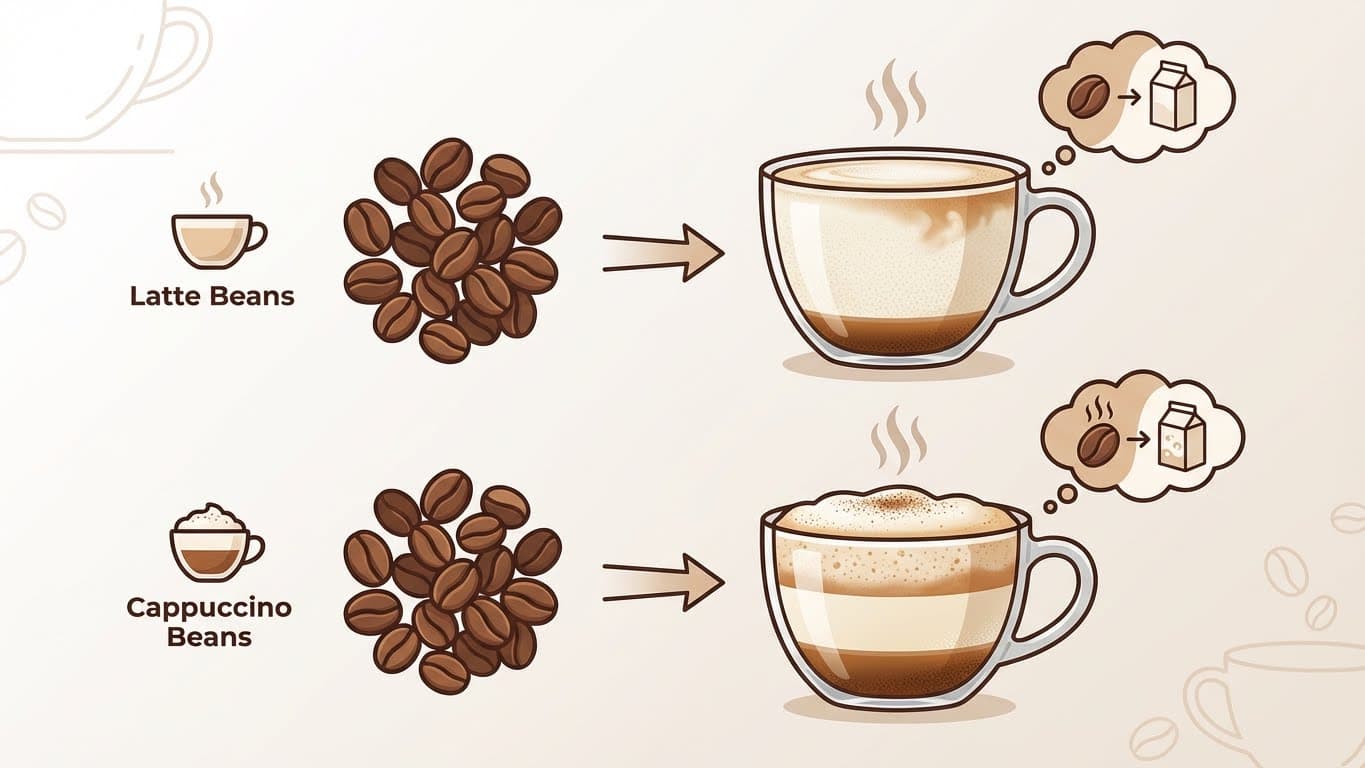
Here’s something I wish someone had told me earlier: not all coffee beans are created equal when milk enters the picture. A bean that tastes incredible as a straight espresso might completely disappear once you add steamed milk. The key difference lies in how certain flavor profiles interact with dairy.
Lattes and cappuccinos are milk-forward drinks. A latte typically has a higher milk-to-espresso ratio, creating a creamy, smooth experience. Cappuccinos have more foam and slightly less milk, letting the espresso punch through a bit more. This means:
- For lattes: You need beans with bold, persistent flavors that won’t get lost
- For cappuccinos: You can get away with slightly more nuanced beans since the espresso is more prominent
- For both: Sweetness and body matter more than delicate, fruity notes
In short, choosing coffee beans for latte and cappuccino means prioritizing intensity and sweetness over complexity. That delicate Ethiopian with jasmine notes? Save it for pour-over. Your milk drinks need something bolder.
The Role of Milk in Flavor Perception
Milk doesn’t just dilute coffee—it fundamentally changes how you perceive flavors. The fats in milk coat your palate and mute bright, acidic notes. Meanwhile, milk’s natural sweetness amplifies caramel, chocolate, and nutty flavors in coffee. This is why a medium-roast Colombian that tastes perfectly balanced black might seem boring in a latte, while a darker roast with chocolate notes suddenly shines.
Roast Level: The Most Important Decision for Milk Drinks
If I could give you just one piece of advice about choosing coffee beans for your lattes and cappuccinos, it would be this: pay attention to roast level. It matters more than origin, more than processing method, and often more than price.
Why Medium-Dark to Dark Roasts Work Best
I’ve found that medium-dark and dark roasts consistently produce the best milk-based drinks at home. Here’s why:
- They develop more caramelized sugars during roasting, creating sweetness that complements milk
- They produce more body and less acidity, preventing that sour taste some people hate in lattes
- Their bolder flavors cut through milk instead of disappearing
- They extract more consistently, which is forgiving for home espresso setups
That said, “dark roast” doesn’t mean burnt. Look for descriptors like “full city,” “Vienna,” or “Italian” roast. Avoid anything described as “French roast” or showing visible oil on the beans—these often taste bitter and ashy, even with milk’s help.
Can You Use Light Roasts?
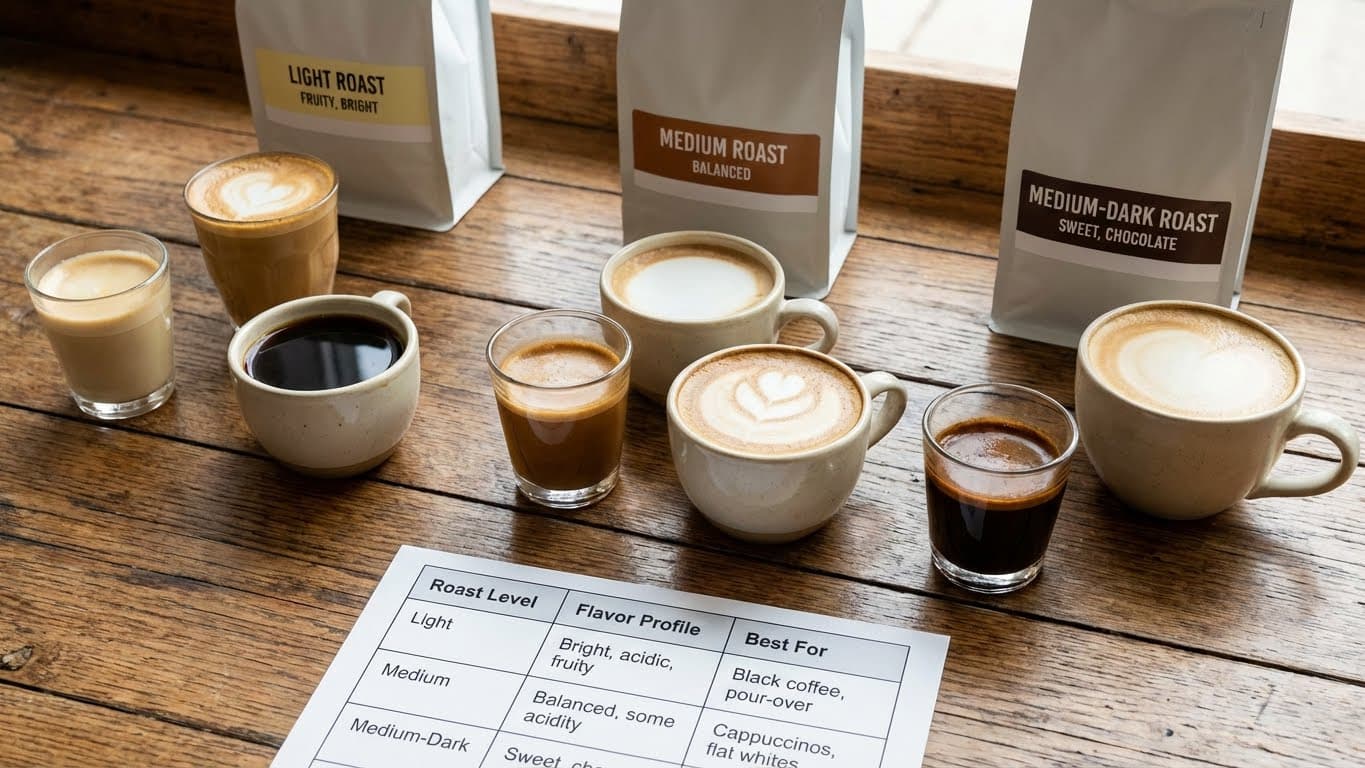
Technically, yes. Practically? It’s tricky. Light roasts have higher acidity and more delicate flavors that milk tends to overwhelm or clash with. If you love light roasts, try them in a cortado (equal parts espresso and milk) where the coffee remains dominant. For a full latte or cappuccino, you’ll likely be disappointed.
| Roast Level | Flavor Profile | Best For |
|---|---|---|
| Light | Bright, acidic, fruity | Black coffee, pour-over |
| Medium | Balanced, some acidity | Cappuccinos, flat whites |
| Medium-Dark | Sweet, chocolatey, low acid | Lattes, cappuccinos |
| Dark | Bold, smoky, bitter notes | Strong lattes, mochas |
Origins and Blends: Finding Your Perfect Match
After roast level, origin is your next consideration when choosing coffee beans for latte and cappuccino drinks. Different growing regions produce distinctly different flavor profiles, and some naturally pair better with milk than others.
Best Single Origins for Milk Drinks
Brazilian beans are my go-to recommendation for beginners. They’re naturally low in acidity, have nutty and chocolatey notes, and provide excellent body. A medium-dark Brazilian makes a latte that tastes rich and satisfying without any fancy technique required.
Colombian beans offer a bit more complexity while still working beautifully with milk. Expect caramel sweetness, mild fruitiness, and a clean finish. They’re versatile enough for both lattes and cappuccinos.
Sumatran and Indonesian beans bring earthy, full-bodied intensity that some people love in milk drinks. If you enjoy that slightly rustic, almost herbal quality, these origins won’t disappoint.
The Case for Espresso Blends
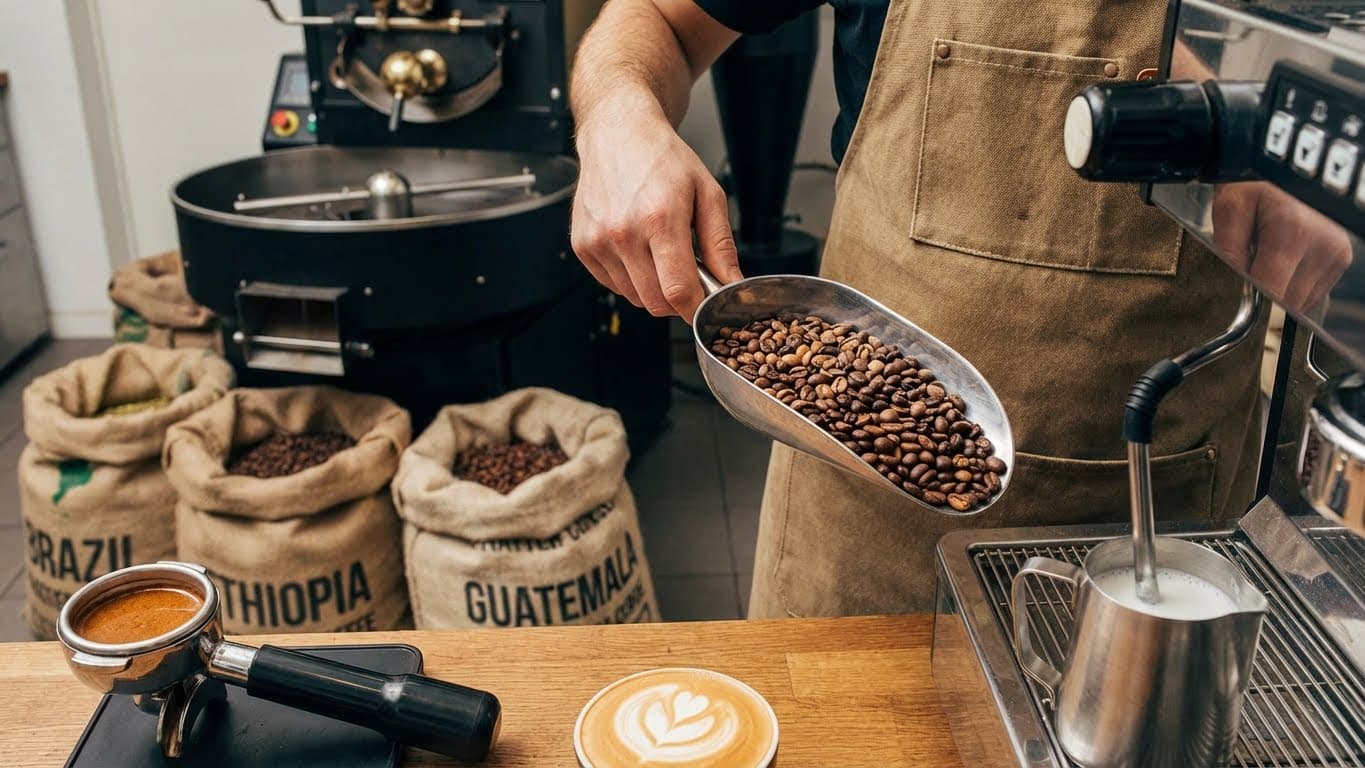
Here’s a little industry secret: most cafés use blends for their espresso-based drinks, not single origins. There’s a good reason for this. Roasters create espresso blends specifically to taste great with milk. They combine beans from different origins to achieve:
- Consistent flavor year-round (single origins vary by harvest)
- Balanced sweetness, body, and just enough complexity
- Reliable extraction and crema production
If you’re just starting out, an espresso blend from a reputable roaster is honestly your safest bet. Look for blends with descriptions mentioning chocolate, caramel, nuts, or “milk-friendly.”
Barista Tip: Don’t overlook your local roaster. Many create house espresso blends designed specifically for milk drinks. Ask them what they recommend—most are happy to guide you.
Freshness and Buying Tips That Actually Matter
You could choose the perfect bean in the perfect roast, and still make a mediocre latte if your coffee is stale. Freshness isn’t just marketing—it genuinely affects how your espresso extracts and tastes.
The Freshness Sweet Spot
Contrary to what you might think, espresso beans aren’t best immediately after roasting. They need time to degas (release CO2), or your shots will be bubbly and uneven. I’ve found the ideal window is:
- 7-14 days post-roast: Perfect for espresso extraction
- Up to 4-5 weeks: Still very good, especially for milk drinks
- Beyond 6 weeks: Flavor starts fading noticeably
Always check for a roast date on the bag—not just an expiration date. No roast date? That’s often a red flag that the coffee could be months old.
Whole Bean vs. Pre-Ground
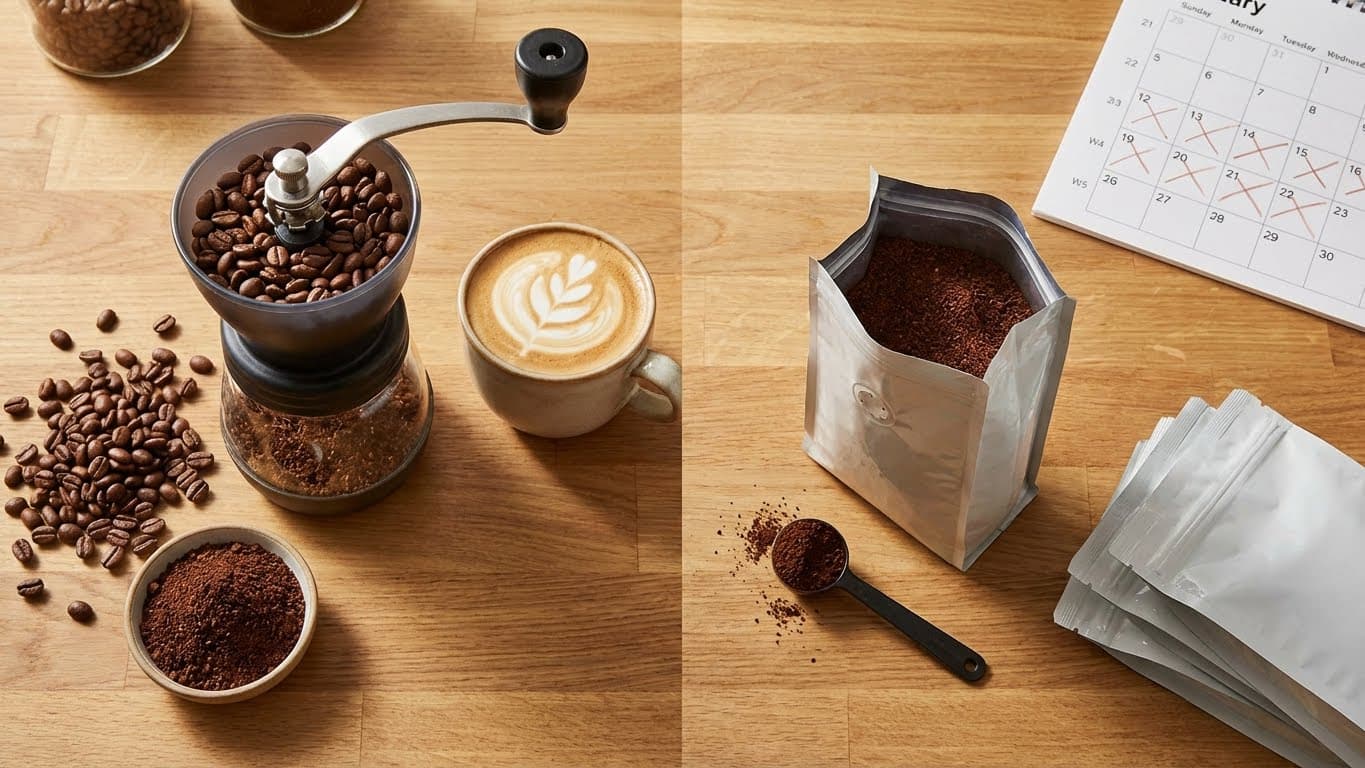
I’ll be straightforward: for the best lattes and cappuccinos, grind your beans fresh. Pre-ground coffee loses its aromatic compounds within days, and those aromatics contribute significantly to flavor. If you don’t have a grinder yet, consider it your next investment. Even a decent hand grinder makes a noticeable difference.
That said, life is short and mornings are busy. If you must buy pre-ground, choose bags with one-way valves, buy smaller quantities, and use them within two weeks.
Decoding Coffee Labels and Descriptions
Walking into a specialty coffee shop or browsing online can feel overwhelming. Single origin, natural process, tasting notes of “bergamot and stone fruit”—what does any of it mean for your morning latte? Let me simplify.
Terms That Signal Milk-Friendly Beans
When reading labels, look for these flavor descriptors:
- Chocolate, cocoa, fudge: These pair beautifully with milk
- Caramel, toffee, brown sugar: Natural sweetness that complements dairy
- Nutty (hazelnut, almond, walnut): Smooth and harmonious with milk
- Full-bodied or heavy body: Won’t get lost in your latte
Terms to approach cautiously for milk drinks:
- Bright, citrus, berry: High acidity that may clash with milk
- Floral, tea-like, delicate: Too subtle for lattes
- Wine-like, fermented: Can taste strange with dairy
Processing Methods Explained Simply
Washed/wet process: Clean, consistent flavors. Good all-around choice.
Natural/dry process: Fruitier, sometimes funky. Can work in cappuccinos but may be too wild for some.
Honey process: Sweet, syrupy body. Often excellent for milk drinks.
In my experience, washed and honey-processed coffees are most reliable for lattes and cappuccinos at home.
Frequently Asked Questions
Can I use the same beans for latte, cappuccino, and straight espresso?
Absolutely. Most home baristas (myself included) keep one bag of beans for everything. Choose a versatile medium-dark roast espresso blend, and it’ll work well across all preparations. You might adjust your shot slightly for drinking straight versus adding milk, but the same beans will perform fine.
How much should I spend on beans for milk drinks?
Here’s the good news: you don’t need the most expensive beans for lattes. Since milk softens and blends flavors, those subtle $25-per-bag single-origin nuances often get lost anyway. Quality espresso blends in the $14-18 range frequently produce excellent milk drinks. Spend your money on fresher beans rather than fancier beans.
Should I choose different beans for oat milk or almond milk?
Plant milks have different sweetness levels and flavor profiles than dairy. Oat milk is naturally sweeter, so slightly darker or more bitter beans can balance nicely. Almond milk has subtle nuttiness, so nutty coffee origins like Brazilian work well. In general, stick with the same guidelines—bold, sweet, low acidity—and adjust based on your preference.
How do I know if my beans are the problem versus my technique?
If your espresso tastes good on its own but boring in a latte, your beans might be too light or subtle. If your espresso tastes bad both ways, it’s likely technique or freshness. Try buying a sample of a different bean (ideally a recommended espresso blend) and see if the problem persists. This helps isolate whether beans or technique need adjustment.
Do I need specialty coffee, or will supermarket beans work?
Supermarket beans can make decent lattes, especially if you find options with roast dates and stick to Italian or espresso roasts. However, freshly roasted specialty beans from local roasters or quality online sources typically produce noticeably better results. The difference is more subtle in milk drinks than in black coffee, but it’s still there.
Summary and Your Next Step
Choosing coffee beans for latte and cappuccino at home doesn’t have to be complicated. Focus first on roast level—medium-dark to dark roasts with chocolate, caramel, or nutty notes will serve you well. Prioritize freshness by checking roast dates and buying whole beans when possible. Consider origins like Brazil and Colombia that naturally complement milk, or simply grab a quality espresso blend designed for the job.
Remember, the “best” bean is ultimately the one you enjoy drinking. Start with a recommended espresso blend from a reputable roaster, dial in your technique, and then experiment with different origins and roasts as you develop your palate. Life is too short for bad coffee—but finding your perfect latte bean is part of the fun.
Ready to put this into practice? Grab a fresh bag of medium-dark espresso blend this week, pay attention to those tasting notes, and see how it transforms your next homemade latte. Your taste buds will thank you.



Comments