



Table of Contents
- What is Turkish Coffee and Why Should You Try It?
- The Flavor Profile You Can Expect
- What You'll Need to Brew Turkish Coffee
- Essential Equipment
- Ingredients
- How to Brew Turkish Coffee: Step-by-Step
- Preparation
- The Brewing Process
- Common Mistakes and How to Avoid Them
- Using the Wrong Grind Size
- Brewing Too Hot or Too Fast
- Stirring During Brewing
- Drinking Too Soon
- Taking Your Turkish Coffee to the Next Level
- Flavor Variations
- Choosing Your Beans
- The Art of Fortune Telling
- Frequently Asked Questions
- Can I use regular coffee grounds for Turkish coffee?
- Do I drink the grounds at the bottom of the cup?
- Why didn't my coffee have foam on top?
- Is Turkish coffee stronger than espresso?
- What kind of cezve should I buy as a beginner?
- Conclusion: Start Your Turkish Coffee Journey
Have you ever watched someone slowly pour a cup of thick, aromatic coffee topped with a delicate foam and wondered how they made it? That’s Turkish coffee, one of the oldest and most ritualistic brewing methods in the world. Brewed in a small pot called a cezve (also known as an ibrik), this method produces an intensely flavorful cup that’s unlike anything you’ll get from a drip machine or even an espresso.
In this guide, you’ll learn everything you need to know about making Turkish coffee at home. We’ll cover the essential equipment, the perfect grind, the brewing technique, and the little secrets that transform a good cup into an unforgettable one. Whether you’re completely new to this brewing style or you’ve tried it once and want to perfect your technique, I’ve got you covered.
What is Turkish Coffee and Why Should You Try It?
Turkish coffee is a brewing method that dates back to the 15th century Ottoman Empire. Unlike filtered coffee methods, the ultra-fine coffee grounds are brewed directly in water and served in the cup, grounds and all. This creates an incredibly rich, full-bodied experience with a silky texture that coats your palate.
What makes Turkish coffee special isn’t just the taste—it’s the entire ritual. The slow brewing process, the beautiful copper cezve, the small porcelain cups, and the tradition of reading fortunes in the leftover grounds all contribute to an experience that’s as much about mindfulness as it is about caffeine.
The Flavor Profile You Can Expect
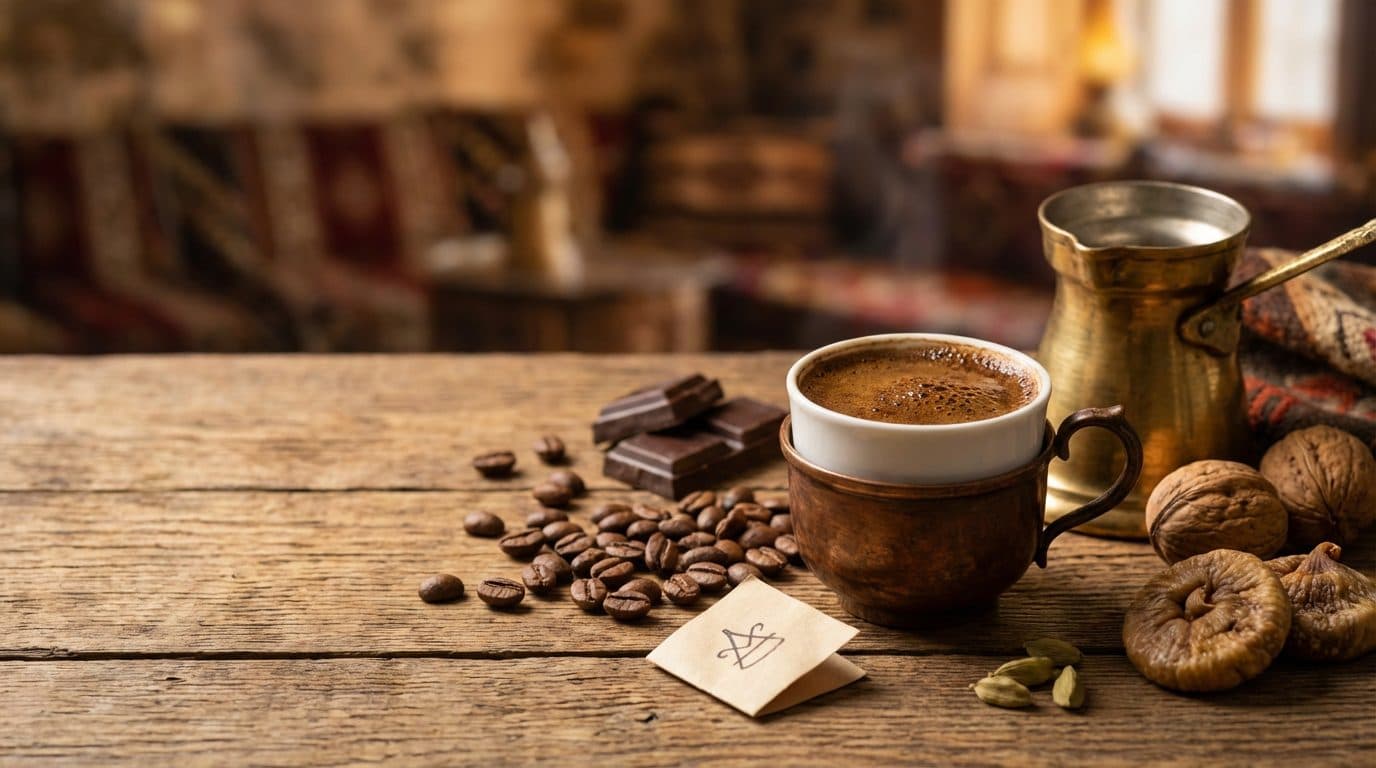
When brewed correctly, Turkish coffee delivers a bold, concentrated flavor with low acidity. Depending on your beans, you might taste notes of chocolate, nuts, dried fruit, or spices. The texture is unique—slightly syrupy with that characteristic foam (called “kaymak” or “kaimaki”) floating on top. In short, it’s coffee as an experience rather than just a morning routine.
Did You Know? In 2013, UNESCO added Turkish coffee culture to its list of Intangible Cultural Heritage of Humanity. That’s how significant this brewing method is to world culture.
What You’ll Need to Brew Turkish Coffee
Before you start, let’s gather your equipment and ingredients. The good news is that Turkish coffee requires minimal gear, but each element plays a crucial role in the final result.
Essential Equipment
- Cezve (Ibrik): A small, long-handled pot traditionally made from copper or brass. Sizes range from single-serving to multiple cups. For beginners, I recommend starting with a 2-3 cup size.
- Heat Source: A stovetop works perfectly. Some purists use a sand-filled pan for even heat distribution, but that’s optional for home brewing.
- Small Spoon: For stirring and measuring. A demitasse spoon is ideal.
- Turkish Coffee Cups (Fincan): Small, handle-less cups that hold about 2-3 ounces. Regular espresso cups work as a substitute.
Ingredients
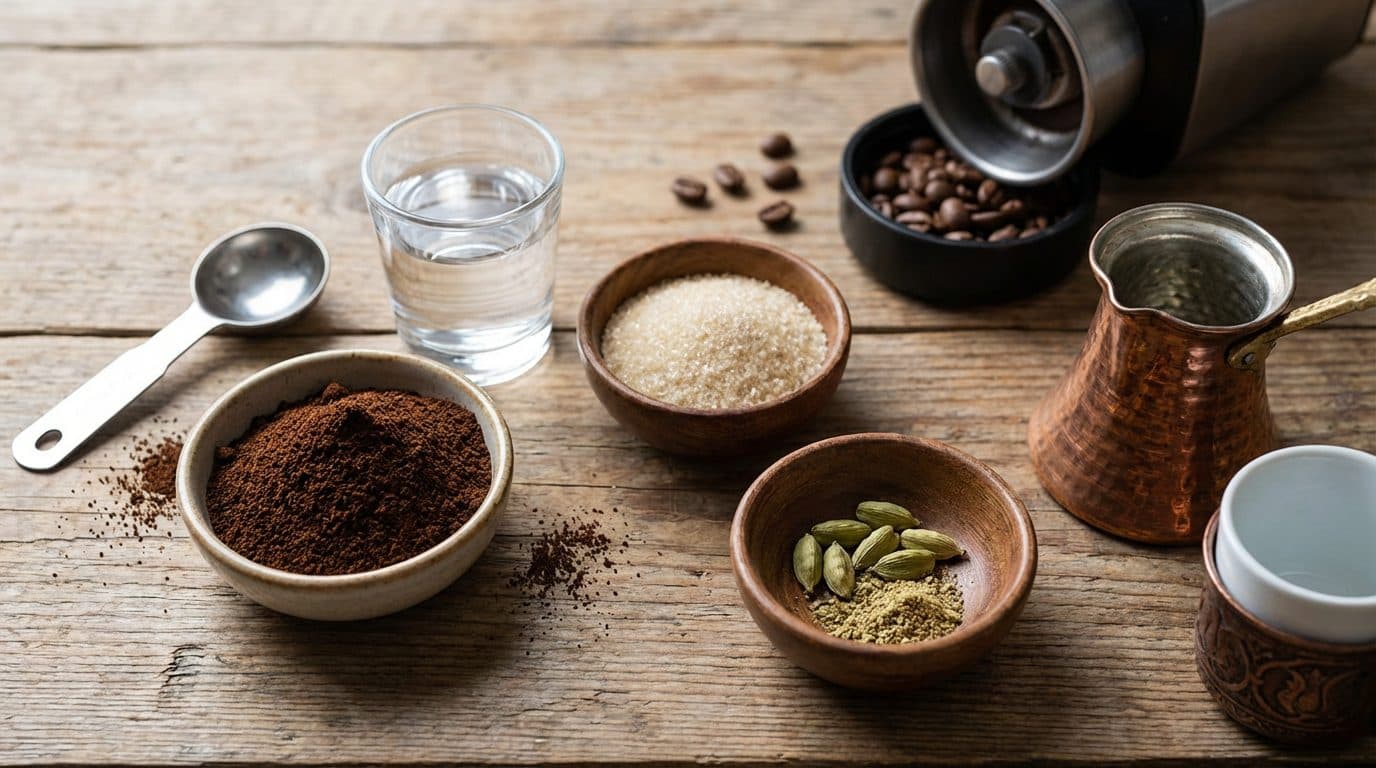
- Coffee: You’ll need about 7-10 grams (roughly one heaping teaspoon) per cup. The grind must be powder-fine—finer than espresso, almost like flour.
- Cold, Filtered Water: About 50-60ml (around 2 ounces) per cup.
- Sugar (Optional): Traditional Turkish coffee is often sweetened during brewing, not after.
- Cardamom (Optional): A popular addition in many Middle Eastern countries for extra flavor complexity.
Barista Tip: If you can’t find pre-ground Turkish coffee, you’ll need a burr grinder capable of achieving an extra-fine setting. Most blade grinders and even many burr grinders won’t get fine enough. Turkish coffee brands like Kurukahveci Mehmet Efendi come pre-ground to the perfect consistency and are an excellent starting point.
How to Brew Turkish Coffee: Step-by-Step
Now for the fun part. I’ve found that Turkish coffee is forgiving once you understand the rhythm of it, but those first few attempts might require patience. Here’s the method I’ve refined over countless cups.
Preparation
- Measure your water: Use your Turkish coffee cup as a measuring tool. Fill it with cold water and pour it into the cezve. This ensures the perfect water-to-cup ratio every time.
- Add coffee: For each cup of water, add one heaping teaspoon of Turkish coffee. Don’t stir yet.
- Add sugar (if desired): Traditional sweetness levels have specific names:
- “Sade” – no sugar
- “Az şekerli” – a little sugar (half a teaspoon)
- “Orta” – medium sugar (one teaspoon)
- “Şekerli” – sweet (one and a half to two teaspoons)
- Stir gently: Give everything a gentle stir to combine the coffee, sugar, and water. This is the only time you’ll stir during the brewing process.
The Brewing Process
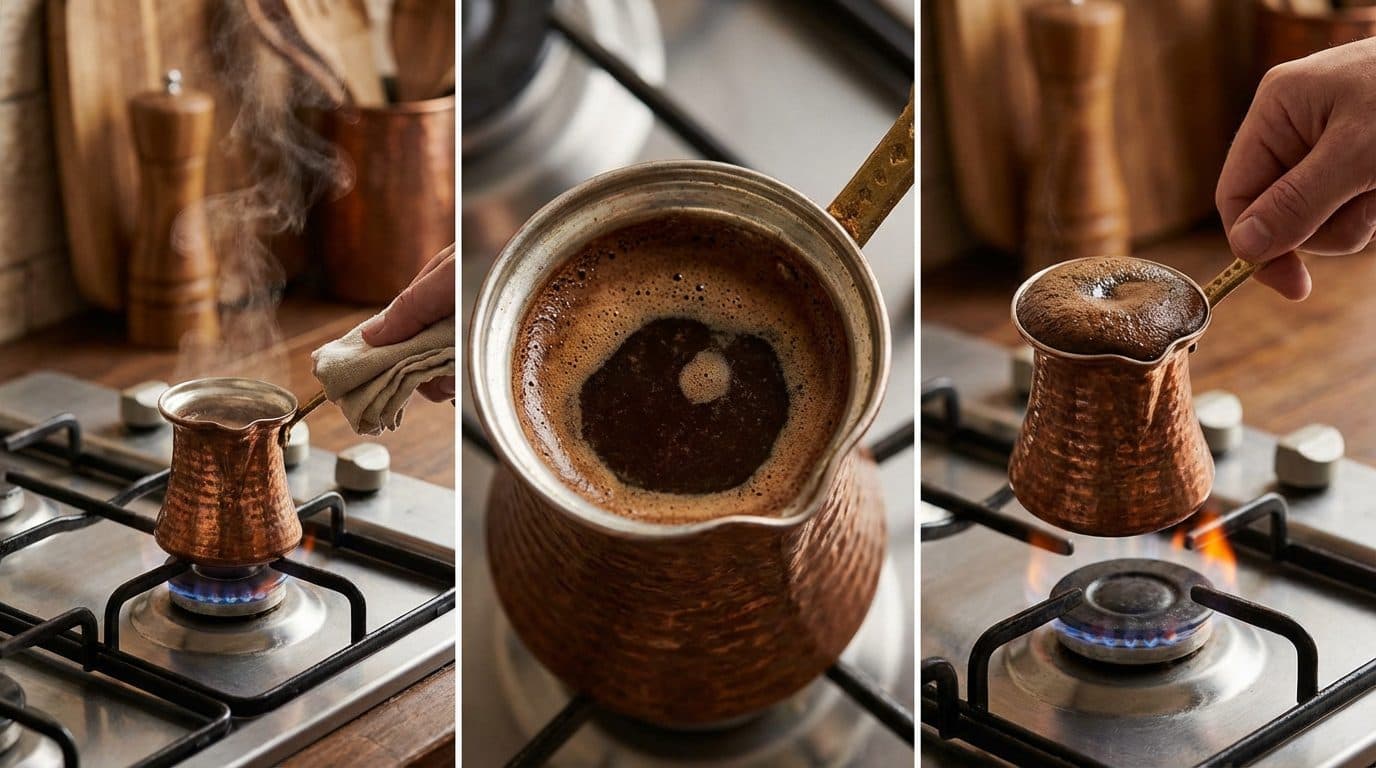
- Apply low heat: Place the cezve on your smallest burner set to low or medium-low heat. Patience is essential here—rushing with high heat will ruin your coffee.
- Watch for the foam: After a few minutes, you’ll notice the coffee starting to form a ring of darker foam around the edges. The surface will begin to rise slowly.
- Catch the first rise: Just before the coffee boils over (and it will try to), remove the cezve from the heat. You want to catch it when the foam rises and puffs up but before it erupts.
- Pour some foam: Immediately pour a small amount of the foam into each cup. This ensures everyone gets that prized kaymak layer.
- Return to heat: Put the cezve back on the heat and let it rise again. Some people do this 2-3 times for a stronger brew, but once or twice is standard for beginners.
- Final pour: Pour the remaining coffee slowly into the cups, allowing the foam to rise to the top.
Barista Tip: The foam is everything in Turkish coffee. A cup without foam is considered a failure by traditionalists. In my experience, low heat and patience are the secrets to achieving that perfect, creamy layer on top.
Common Mistakes and How to Avoid Them
Even with simple equipment, Turkish coffee has a learning curve. Here are the pitfalls I see most beginners fall into—and how to sidestep them.
Using the Wrong Grind Size
This is the most common mistake. Regular fine or espresso grind won’t cut it. Turkish coffee requires a powder-like consistency. If your coffee tastes thin or weak despite using enough grounds, your grind is probably too coarse. Invest in quality pre-ground Turkish coffee until you can source a grinder that achieves the right fineness.
Brewing Too Hot or Too Fast

High heat causes the coffee to boil rapidly, destroying the foam and creating bitter flavors. The brewing process should take 3-4 minutes minimum. If your coffee is ready in under two minutes, your heat is too high. Think of it like slow cooking—good things take time.
Stirring During Brewing
Once you’ve done your initial stir, hands off. Stirring during the heating process disrupts foam formation and creates an uneven extraction. Let the heat do its work.
Drinking Too Soon
Turkish coffee needs about 30 seconds to a minute of resting time after pouring. This allows the grounds to settle to the bottom of the cup. Take this time to enjoy the aroma and let the anticipation build. When you drink, sip slowly and stop when you reach the thick, sludgy grounds at the bottom.
| Mistake | Symptom | Solution |
|---|---|---|
| Grind too coarse | Weak, thin taste | Use powder-fine pre-ground Turkish coffee |
| Heat too high | No foam, bitter taste | Use low to medium-low heat |
| Stirring while brewing | Uneven foam | Stir only at the beginning |
| Drinking immediately | Gritty mouthfeel | Wait 30-60 seconds for grounds to settle |
Taking Your Turkish Coffee to the Next Level
Once you’ve mastered the basics, there’s plenty of room to experiment and make this brewing method your own.
Flavor Variations
Traditional Turkish coffee often incorporates spices. A small pinch of ground cardamom added with the coffee is classic in many regions. You can also experiment with:
- A tiny pinch of cinnamon
- A drop of rosewater (added to the cup before pouring)
- A few strands of saffron for special occasions
- Mastic gum (a resin that adds a unique, slightly piney flavor)
Choosing Your Beans
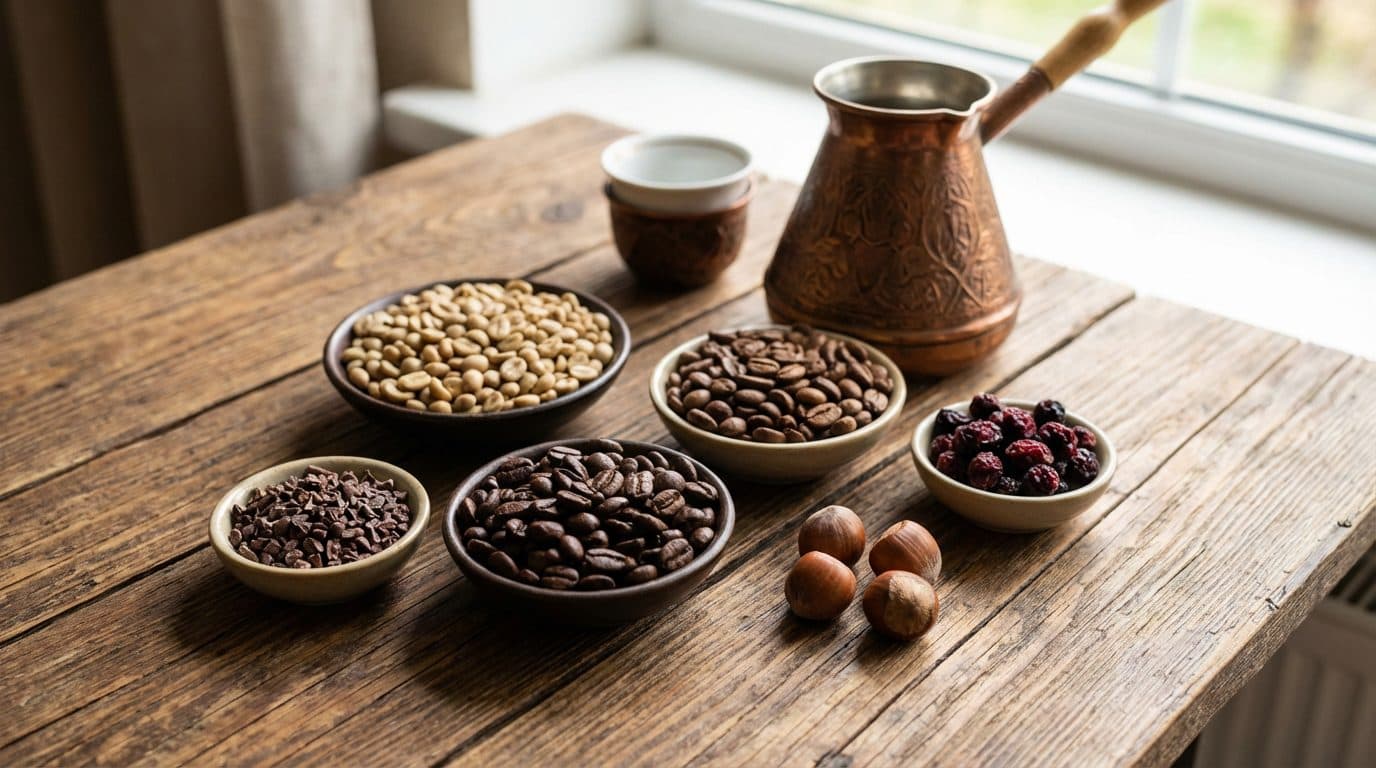
Traditional Turkish coffee uses medium to dark roasted Arabica beans. In my experience, beans with chocolate, nutty, or fruity notes work beautifully with this method. Avoid very light roasts—the brewing method amplifies acidity, and light roasts can become unpleasantly sour.
The Art of Fortune Telling
No discussion of Turkish coffee is complete without mentioning tasseography—the tradition of reading fortunes in coffee grounds. After finishing your coffee, flip the cup upside down on the saucer and let it cool. The patterns left by the grounds are then “read” for insights about the future. Whether you believe in it or not, it’s a fun tradition that extends the coffee ritual.
Frequently Asked Questions
Can I use regular coffee grounds for Turkish coffee?
No, regular ground coffee is too coarse for Turkish coffee. The method requires an extra-fine, powder-like grind that allows the coffee to remain suspended in the water. Using standard grounds will result in a weak, gritty cup that doesn’t develop proper foam.
Do I drink the grounds at the bottom of the cup?
No, you don’t drink the grounds. Turkish coffee is sipped slowly, and you stop drinking when you reach the thick layer of grounds at the bottom. These grounds are also used for the traditional fortune-telling ritual.
Why didn’t my coffee have foam on top?
Lack of foam usually indicates one of three problems: your heat was too high, you stirred during brewing, or your coffee isn’t fresh. Foam develops best with low, gradual heat and undisturbed brewing. Also, stale coffee produces less foam, so use freshly ground or recently opened Turkish coffee.
Is Turkish coffee stronger than espresso?

It depends on how you define “stronger.” Turkish coffee is typically less concentrated than espresso but has a more intense, full-bodied flavor because you’re consuming micro-grounds with each sip. Caffeine content is roughly similar, though Turkish coffee cups are often consumed more slowly.
What kind of cezve should I buy as a beginner?
Start with a copper cezve in the 2-3 cup size range. Copper distributes heat evenly and is traditional, though stainless steel works fine too. Avoid very cheap, thin metal cezves—they create hot spots that make temperature control difficult.
Conclusion: Start Your Turkish Coffee Journey
Turkish coffee isn’t just a brewing method—it’s a meditative practice that connects you to centuries of tradition. The slow, attentive process of watching the foam rise, the rich aroma that fills your kitchen, and the deep, complex flavors in your cup all make this a uniquely rewarding way to enjoy coffee.
Start with the basics: get proper Turkish ground coffee, use low heat, and be patient. Your first few attempts might not be perfect, but that’s part of the journey. With practice, you’ll develop an instinct for exactly when to pull the cezve from the heat and how to achieve that perfect foam every time. Life is too short for bad coffee, and Turkish coffee—done right—is anything but ordinary. Grab a cezve, start heating some water, and discover what coffee lovers have known for over 500 years.




Comments