


Table of Contents
- Understanding What Makes Each Brewing Method Different
- Immersion vs. Percolation
- Filtered vs. Unfiltered
- Matching Your Brewing Method to Your Lifestyle
- Morning Rush vs. Weekend Ritual
- How Many Cups Do You Need?
- Flavor Profiles: What Do You Actually Want in Your Cup?
- If You Love Bold, Full-Bodied Coffee
- If You Prefer Clean, Bright, Complex Flavors
- If You Want Something In-Between
- Budget Considerations for Your Home Coffee Setup
- Upfront Equipment Costs
- Ongoing Costs
- Common Mistakes When Choosing a Brewing Method
- Mistake #1: Buying What Looks Coolest
- Mistake #2: Starting Too Complex
- Mistake #3: Ignoring Your Water Quality
- Mistake #4: Not Experimenting
- Frequently Asked Questions
- Which brewing method makes the strongest coffee?
- Is pour-over coffee really better than French press?
- What's the easiest brewing method for beginners?
- Can I use any coffee beans with any brewing method?
- How important is a gooseneck kettle for pour-over?
- Conclusion: Finding Your Perfect Match
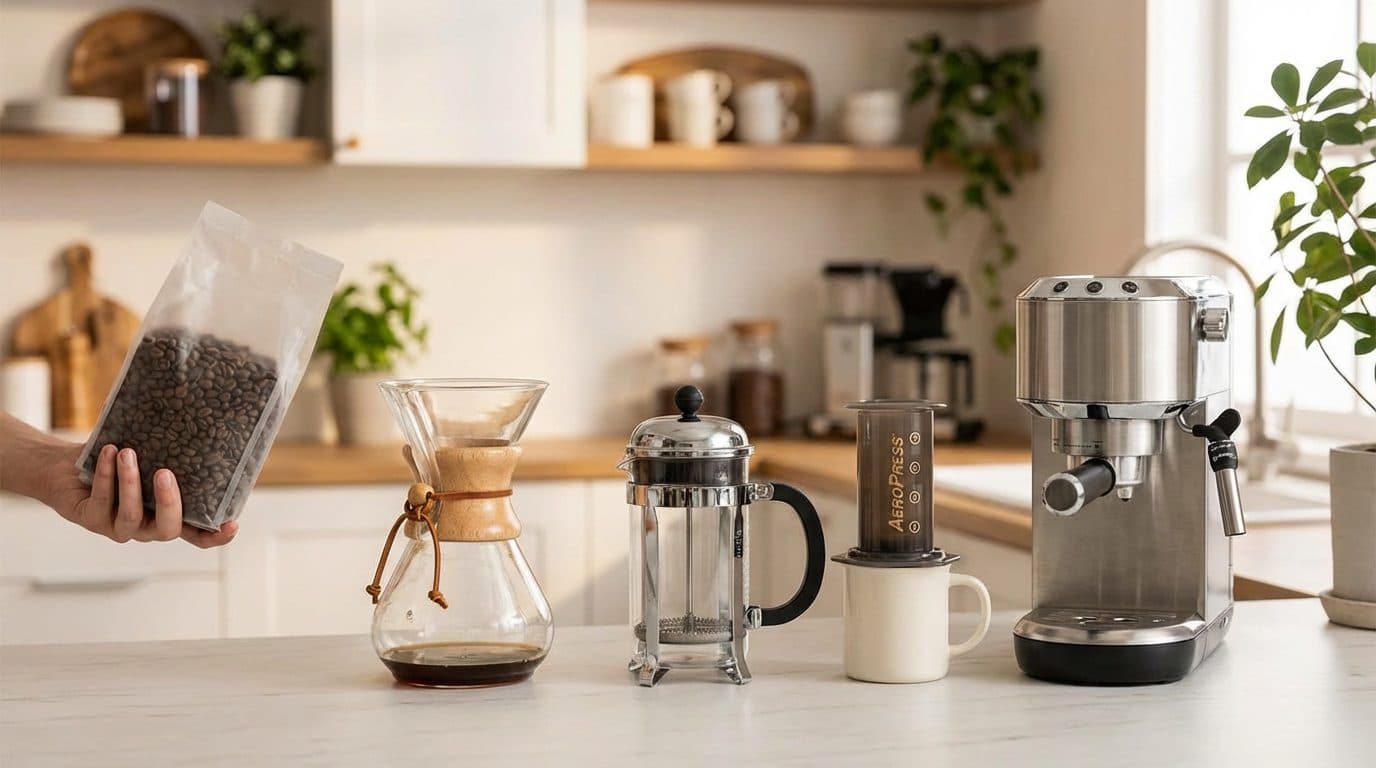
Ever stared at your kitchen counter, wondering if you’re making coffee the “wrong” way? You’re not alone. With pour-over, French press, AeroPress, and a dozen other brewing methods flooding your social media feed, choosing the right brewing method for your home coffee setup can feel overwhelming. Here’s the good news: there’s no single “best” method—only the best method for you, your lifestyle, and your taste preferences.
In this guide, I’ll walk you through everything you need to consider when selecting your ideal brewing method. We’ll cover flavor profiles, time commitments, skill levels, and budget considerations. By the end, you’ll have a clear picture of which brewing method deserves a spot in your daily routine.
Understanding What Makes Each Brewing Method Different
Before diving into specific recommendations, let’s break down how brewing methods actually differ. At their core, all coffee brewing methods do the same thing: extract flavor compounds from ground coffee using water. However, the way they accomplish this creates dramatically different results in your cup.
Immersion vs. Percolation
Brewing methods generally fall into two categories. Immersion methods (like French press) steep coffee grounds in water for a set time. Percolation methods (like pour-over) pass water through a bed of coffee grounds. This fundamental difference affects everything from body to clarity.
In my experience, immersion methods tend to be more forgiving for beginners. If your grind size is slightly off or your timing isn’t perfect, you’ll still get a decent cup. Percolation methods reward precision but can punish mistakes with bitter or sour results.
Filtered vs. Unfiltered

Paper filters remove oils and fine particles, creating a cleaner, brighter cup. Metal filters (or no filter at all) let these elements through, resulting in a fuller body and richer mouthfeel. Neither approach is superior—it’s purely about preference.
Key Takeaway: Your preference for a “clean” vs. “full-bodied” cup should heavily influence which brewing method you choose for your home coffee setup.
Matching Your Brewing Method to Your Lifestyle
The perfect brewing method on paper means nothing if it doesn’t fit your actual life. Let’s get practical about the real-world factors that should guide your decision.
Morning Rush vs. Weekend Ritual
Be honest with yourself: how much time do you realistically have for coffee on a typical morning? If you’re rushing out the door with kids in tow, a meticulous 4-minute pour-over probably isn’t happening. Here’s a quick breakdown:
| Brewing Method | Active Time | Total Time | Skill Level |
|---|---|---|---|
| French Press | 1-2 min | 5-6 min | Beginner |
| Pour-Over (V60) | 3-4 min | 4-5 min | Intermediate |
| AeroPress | 2-3 min | 3-4 min | Beginner |
| Moka Pot | 1-2 min | 5-7 min | Beginner |
| Chemex | 4-5 min | 5-6 min | Intermediate |
| Cold Brew | 5 min | 12-24 hrs | Beginner |
I’ve found that many people overestimate their weekday patience. If you think you’ll enjoy pour-over every morning but realistically hit snooze three times, consider a French press for weekdays and save the pour-over for leisurely weekends.
How Many Cups Do You Need?

Brewing for one? Most methods work fine. Brewing for a household of coffee lovers? Your options narrow considerably. A single-cup V60 becomes impractical when four people are waiting for their morning fix.
- Single serve: AeroPress, small pour-over, single-cup French press
- 2-3 cups: Standard French press, Chemex, larger pour-over
- 4+ cups: Large French press, batch brew, cold brew concentrate
Here’s a scenario: my friend Sarah switched from a Chemex to a large French press when her college-age kids moved back home. The Chemex made amazing coffee, but brewing four separate batches every morning was exhausting. Sometimes practicality wins over perfection.
Flavor Profiles: What Do You Actually Want in Your Cup?
This is where choosing the right brewing method gets fun. Different methods highlight different characteristics of the same coffee beans. Understanding these differences helps you work backward from your ideal cup.
If You Love Bold, Full-Bodied Coffee
You’ll want methods that preserve coffee oils and allow fine particles into your cup. These create that rich, almost chewy texture that bold coffee lovers crave.
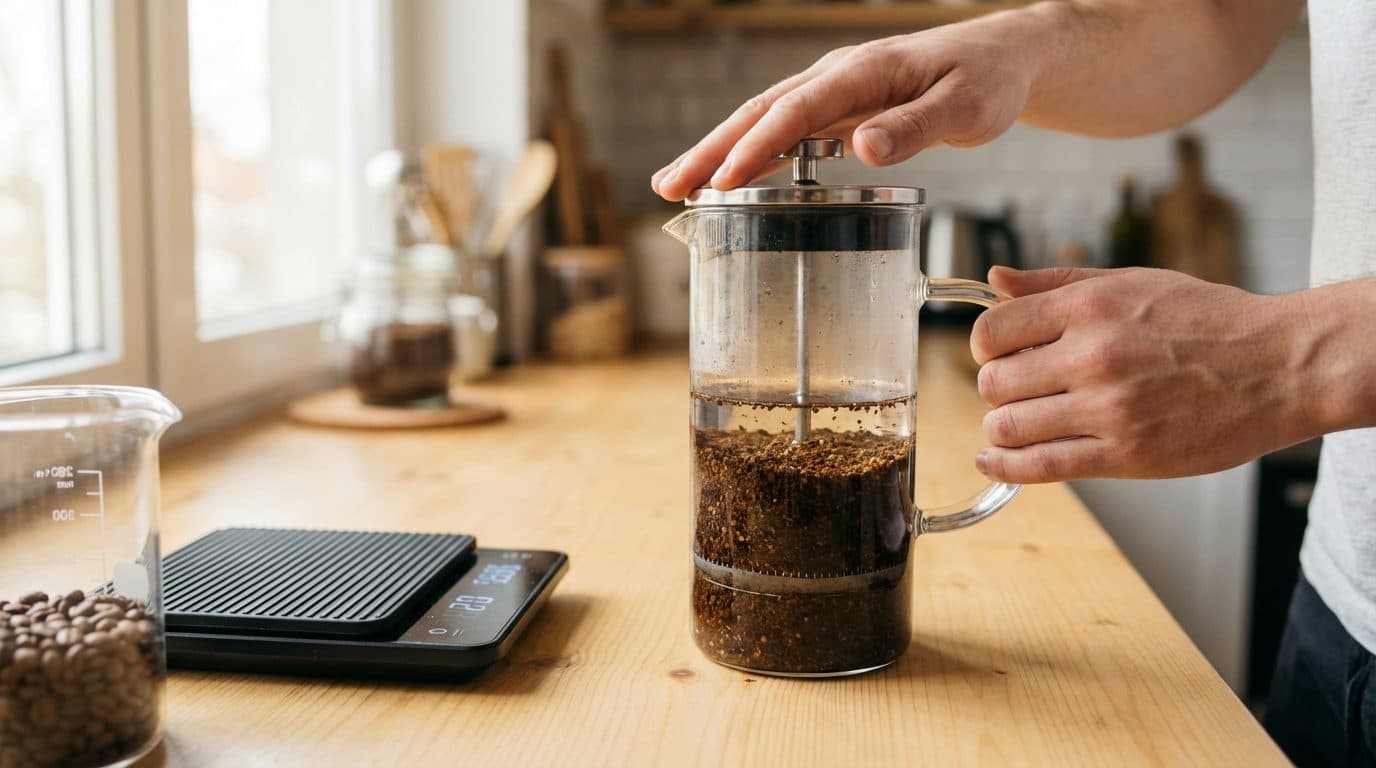
- French Press: The classic choice for full-bodied coffee. Metal mesh filter lets oils through, creating a robust cup with visible sediment at the bottom.
- Moka Pot: Produces concentrated, intense coffee with a slight crema. Not quite espresso, but close enough to satisfy those cravings.
- AeroPress (metal filter): Versatile enough to produce either clean or full-bodied coffee depending on your filter choice and technique.
Barista Tip: If you find French press too silty, try the “Hoffmann method”—steep for 4 minutes, break the crust, wait another 5-8 minutes for grounds to sink, then pour gently without plunging.
If You Prefer Clean, Bright, Complex Flavors
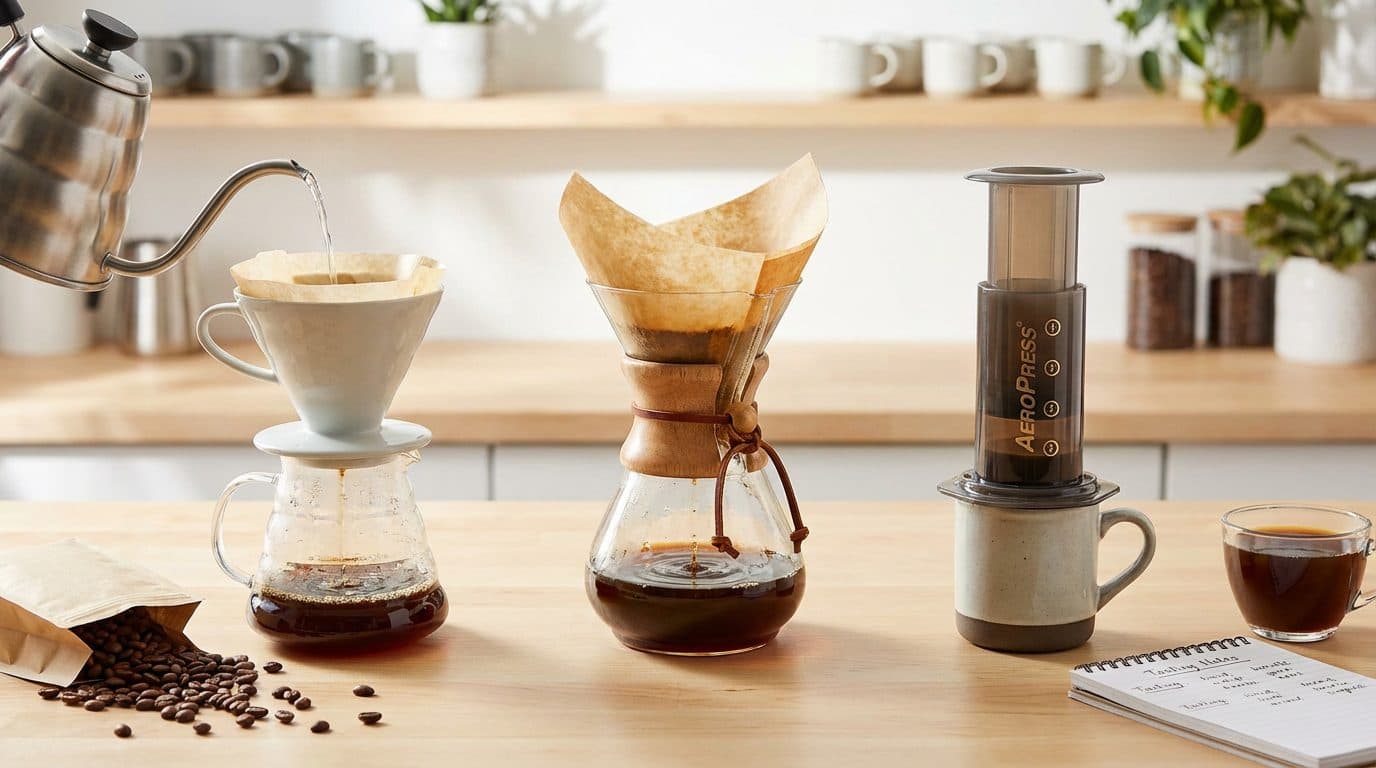
Paper-filtered methods strip away oils and sediment, letting delicate flavor notes shine through. These methods are favorites among specialty coffee enthusiasts who want to taste every nuance of a single-origin bean.
- Pour-Over (V60, Kalita Wave): Maximum clarity and brightness. Highlights floral, fruity, and acidic notes beautifully.
- Chemex: Extra-thick filters create an exceptionally clean cup. Tea-like body with brilliant clarity.
- AeroPress (paper filter): Clean but with slightly more body than pour-over methods.
In short: if your coffee bag mentions tasting notes like “jasmine,” “blueberry,” or “citrus zest,” a pour-over method will help you actually taste them.
If You Want Something In-Between
Many coffee lovers don’t want extremes. They want a balanced cup with decent body and reasonable clarity. Good news—you have options.
The AeroPress is remarkably versatile. By adjusting your filter (paper vs. metal), grind size, and brew time, you can dial in anywhere on the spectrum from clean to full-bodied. It’s an excellent choice if you’re still figuring out your preferences.
Budget Considerations for Your Home Coffee Setup
Let’s talk money. Your brewing method choice affects both upfront costs and ongoing expenses. Being realistic about your budget helps narrow down options quickly.
Upfront Equipment Costs
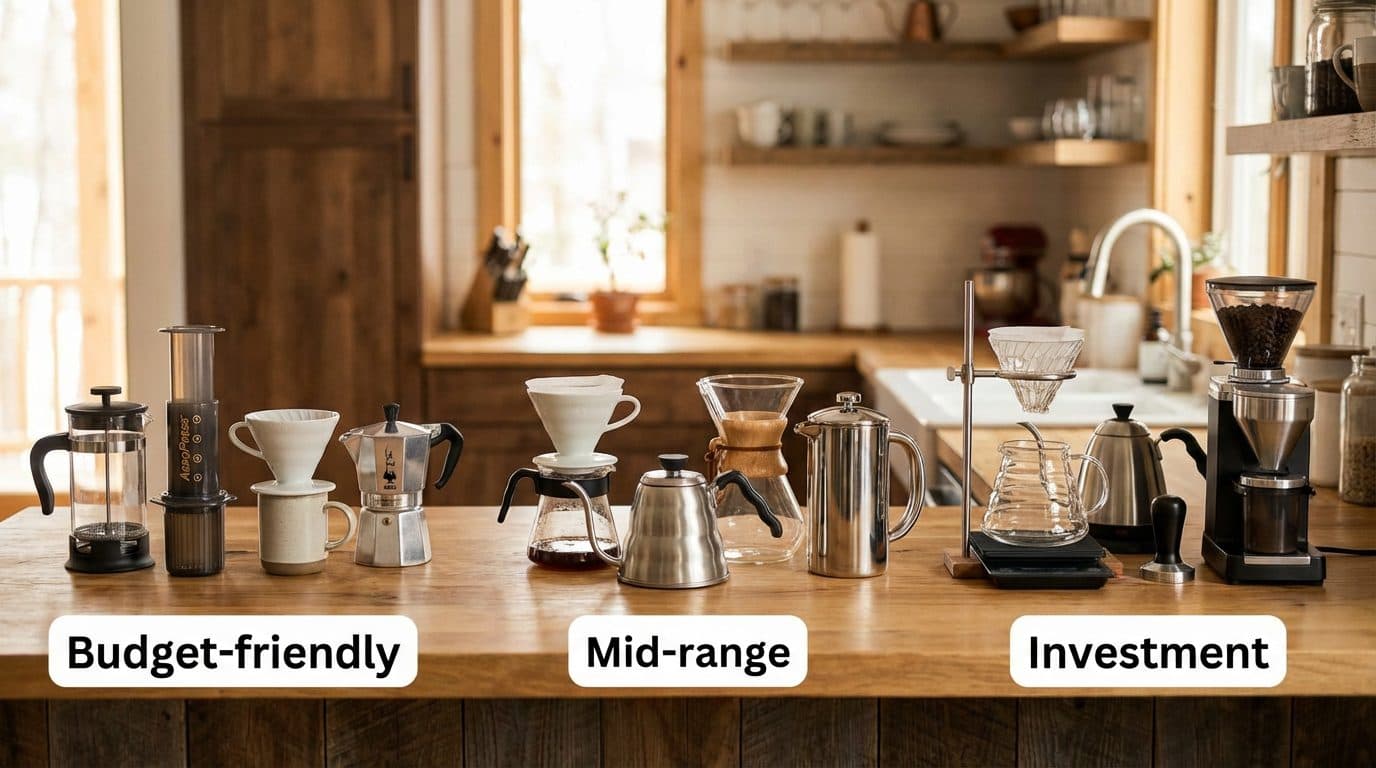
Here’s the truth: you don’t need expensive equipment to make excellent coffee at home. Some of the best brewing methods are surprisingly affordable.
- Budget-friendly ($15-40): French press, AeroPress, basic pour-over dripper, Moka pot
- Mid-range ($40-80): Quality pour-over setup with gooseneck kettle, Chemex, premium French press
- Investment ($80+): Complete pour-over station, high-end grinder (which matters more than your brewer)
Here’s something I wish someone had told me earlier: spend more on your grinder than your brewing device. A $30 French press with a $100 grinder will outperform a $100 French press with a $30 grinder every single time.
Ongoing Costs
Don’t forget recurring expenses. Paper filters add up over time, while metal filters have no ongoing cost.
- French Press: No filters needed—just coffee and water
- Pour-Over: Paper filters cost roughly $0.05-0.15 per cup
- Chemex: Proprietary filters are pricier, around $0.20-0.30 per brew
- AeroPress: Paper filters are cheap (about $0.02 each), or use a reusable metal filter
Over a year of daily brewing, filter costs can add up to $50-100. Factor this into your decision if you’re on a tight budget.
Common Mistakes When Choosing a Brewing Method
I’ve seen countless home baristas make the same errors when selecting their brewing method. Avoiding these pitfalls will save you money and frustration.
Mistake #1: Buying What Looks Coolest
That gorgeous Chemex on Instagram is undeniably aesthetic. But if you actually hate clean, tea-like coffee, it’ll collect dust on your counter. Choose function over form—at least for your primary brewer.
Mistake #2: Starting Too Complex
Pour-over can produce transcendent coffee, but it requires dialing in your grind, controlling your pour rate, and managing water temperature. If you’re new to specialty coffee, starting with a forgiving method like French press or AeroPress builds confidence without frustration.
Mistake #3: Ignoring Your Water Quality
This isn’t strictly a brewing method issue, but it affects every method equally. If your tap water tastes bad, your coffee will taste bad. Consider filtered water regardless of which brewing method you choose.
Mistake #4: Not Experimenting
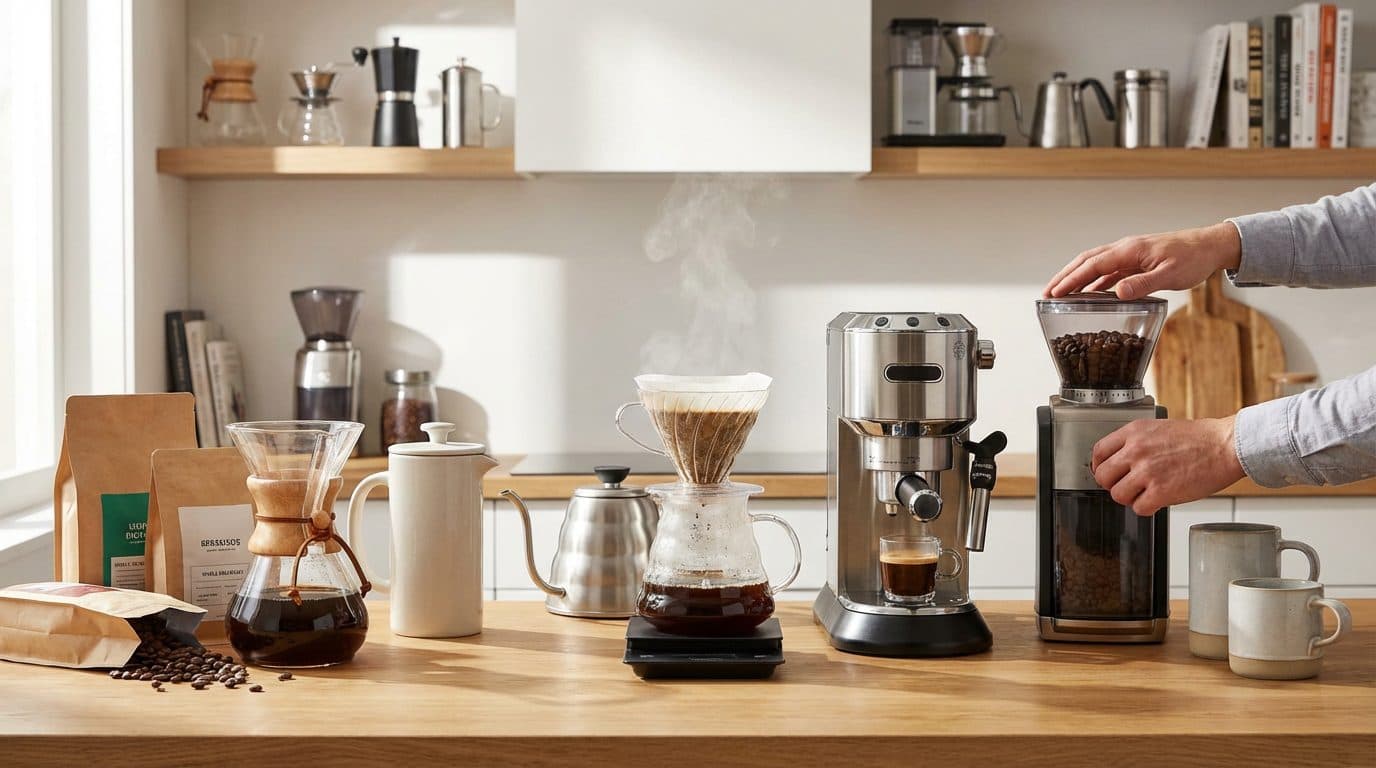
Here’s a myth worth busting: you don’t have to commit to one brewing method forever. Many enthusiasts own multiple brewers and rotate based on mood, beans, or available time. Your home coffee setup can evolve.
Did You Know? Professional coffee tasters often use multiple brewing methods to evaluate the same coffee. Different methods reveal different characteristics, which is why variety in your setup isn’t wasteful—it’s enlightening.
Frequently Asked Questions
Which brewing method makes the strongest coffee?
Strength depends more on your coffee-to-water ratio than the brewing method itself. However, Moka pots produce the most concentrated coffee among common home methods, with roughly 2-3x the strength of drip coffee. For true espresso-level strength, you’ll need an actual espresso machine.
Is pour-over coffee really better than French press?
“Better” is subjective. Pour-over produces cleaner, brighter coffee that highlights delicate flavors. French press creates fuller-bodied coffee with more oils and texture. Neither is objectively superior—it depends entirely on your taste preferences.
What’s the easiest brewing method for beginners?
French press and AeroPress are both excellent starting points. They’re forgiving of technique errors, require minimal equipment, and produce consistently good results. I typically recommend French press for beginners who prefer bold coffee and AeroPress for those who want versatility.
Can I use any coffee beans with any brewing method?
Technically yes, but certain coffees shine with certain methods. Light roasts with complex flavor notes often taste best with pour-over. Dark roasts work beautifully in French press or Moka pot. Medium roasts are versatile across methods. Experiment to find what you enjoy most.
How important is a gooseneck kettle for pour-over?
For methods like V60 or Chemex, a gooseneck kettle is nearly essential. It gives you control over pour rate and placement, which directly affects extraction. For French press or AeroPress, any kettle works fine since precise pouring isn’t required.
Conclusion: Finding Your Perfect Match
Choosing the right brewing method for your home coffee setup doesn’t need to be complicated. Start by honestly assessing your lifestyle: how much time do you have, how many cups do you need, and what’s your realistic budget? Then consider your taste preferences—do you want bold and full-bodied, or clean and bright?
Remember, there’s no wrong answer here. Life is too short for bad coffee, but it’s also too short to stress over brewing methods. Start with something that fits your life, master it, and expand from there if curiosity strikes. Most importantly, enjoy the journey—there’s something deeply satisfying about crafting an excellent cup of coffee with your own hands.
Ready to get started? Pick one method from this guide that matches your preferences, invest in decent beans and a proper grinder, and give yourself a week to experiment. You’ll be surprised how quickly your morning coffee transforms from routine to ritual.

Comments