


Table of Contents
- Caffeine in Coffee: The Basics You Need to Know
- Key Factors That Affect Caffeine Extraction
- Caffeine Content by Brew Method: A Complete Breakdown
- Drip Coffee: The Caffeine Champion
- Cold Brew: The Sneaky Powerhouse
- Espresso: Concentrated but Small
- French Press: Full-Bodied and Moderate
- Pour Over: Precision Brewing
- AeroPress: The Mild Option
- Moka Pot: Stovetop Intensity
- How to Control Your Caffeine Intake at Home
- Want More Caffeine?
- Want Less Caffeine?
- Caffeine Myths Worth Busting
- Frequently Asked Questions
- How much caffeine is safe to consume daily?
- Does the type of coffee bean affect caffeine content?
- Why does coffee affect people differently?
- Is caffeine content the same at coffee shops?
- Does adding milk or sugar reduce caffeine?
- Conclusion: Brew Smarter, Not Harder
Ever wonder why that shot of espresso seems to jolt you awake faster than your giant mug of drip coffee? Or why your cold brew hits different than your French press? The answer lies in caffeine content, and it varies wildly depending on how you brew your coffee. I’ve spent years experimenting with different brewing methods, and the caffeine differences still surprise me.
If you’re trying to manage your caffeine intake, boost your morning energy, or simply satisfy your curiosity, understanding how much caffeine is in a cup of coffee by brew method is essential knowledge for any home barista. In this guide, we’ll break down the caffeine content of every popular brewing method, explore what factors affect caffeine extraction, and help you choose the right brew for your needs.
Caffeine in Coffee: The Basics You Need to Know
Before we dive into specific brew methods, let’s cover some fundamentals. Caffeine is a naturally occurring stimulant found in coffee beans, and the amount that ends up in your cup depends on several variables. In short, caffeine content isn’t fixed—it’s the result of how you brew.
The average cup of coffee contains between 80 and 200 milligrams of caffeine, but that range is enormous. A “cup” can mean anything from a 1-ounce espresso shot to a 20-ounce venti from your favorite coffee shop. For our purposes, I’ll compare standard serving sizes for each method so you get a realistic picture.
Key Factors That Affect Caffeine Extraction
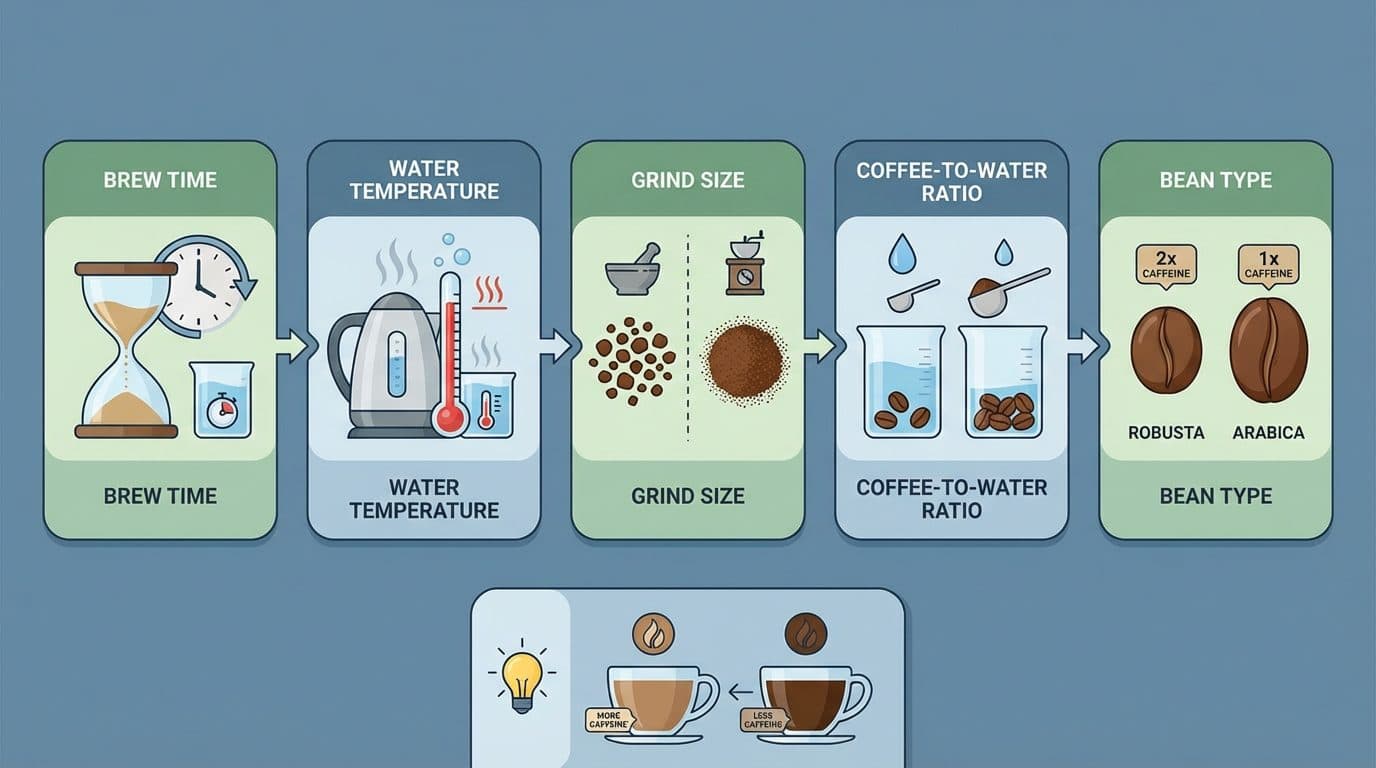
- Brew time: Longer contact between water and coffee grounds generally extracts more caffeine.
- Water temperature: Hotter water extracts caffeine faster and more efficiently.
- Grind size: Finer grinds expose more surface area, increasing extraction.
- Coffee-to-water ratio: More coffee grounds per cup means more caffeine.
- Bean type: Robusta beans contain nearly twice the caffeine of Arabica beans.
Did You Know? Light roast coffee actually contains slightly more caffeine than dark roast. The roasting process burns off a tiny amount of caffeine, so those bold, dark beans are marginally less caffeinated than their lighter counterparts.
Caffeine Content by Brew Method: A Complete Breakdown
Now let’s get into the specifics. I’ve organized this section from highest to lowest caffeine per standard serving, which might surprise you.
| Brew Method | Serving Size | Caffeine (mg) | Caffeine per oz (mg) |
|---|---|---|---|
| Drip Coffee | 8 oz | 95–165 | 12–20 |
| French Press | 8 oz | 80–135 | 10–17 |
| Pour Over | 8 oz | 80–140 | 10–18 |
| Cold Brew | 8 oz | 150–240 | 19–30 |
| Espresso | 1 oz (single shot) | 63–75 | 63–75 |
| AeroPress | 8 oz | 50–70 | 6–9 |
| Moka Pot | 2 oz | 90–130 | 45–65 |
| Instant Coffee | 8 oz | 30–90 | 4–11 |
Drip Coffee: The Caffeine Champion
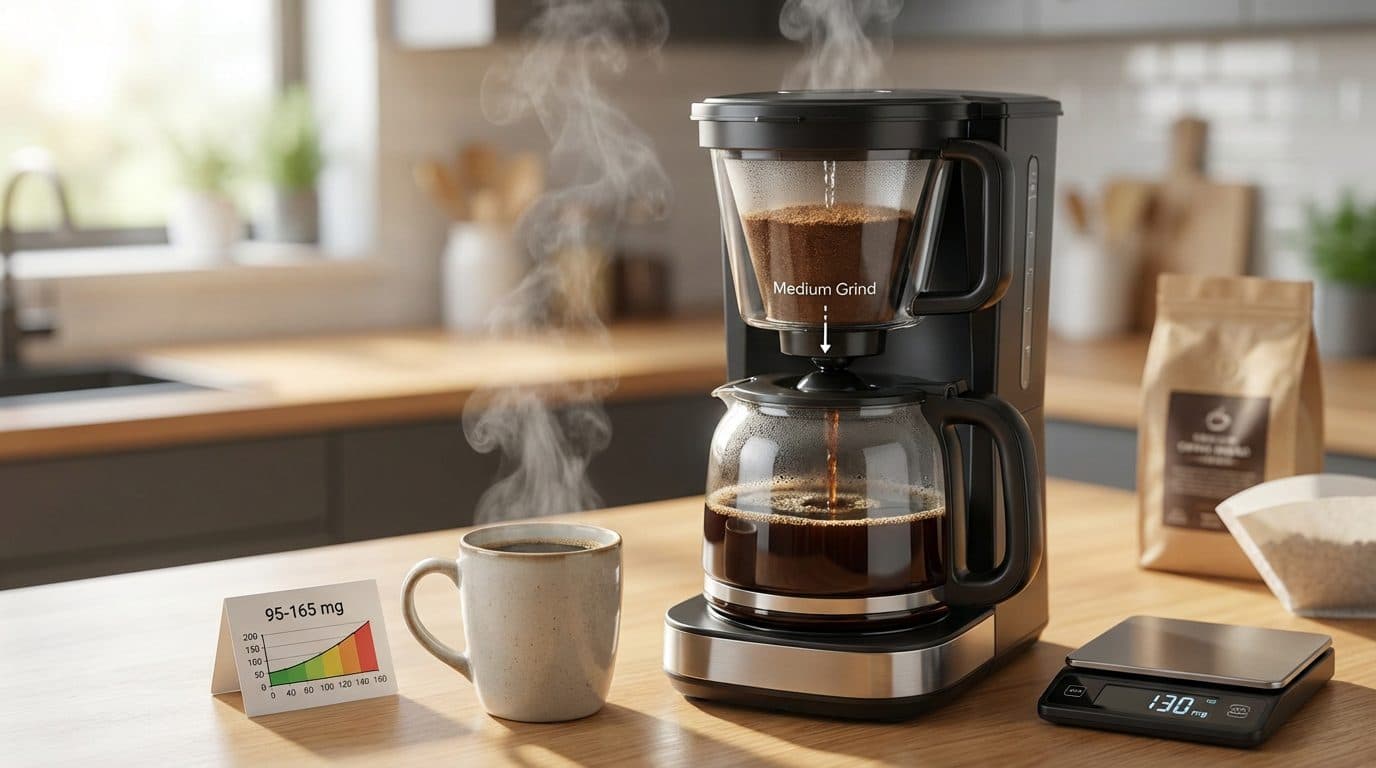
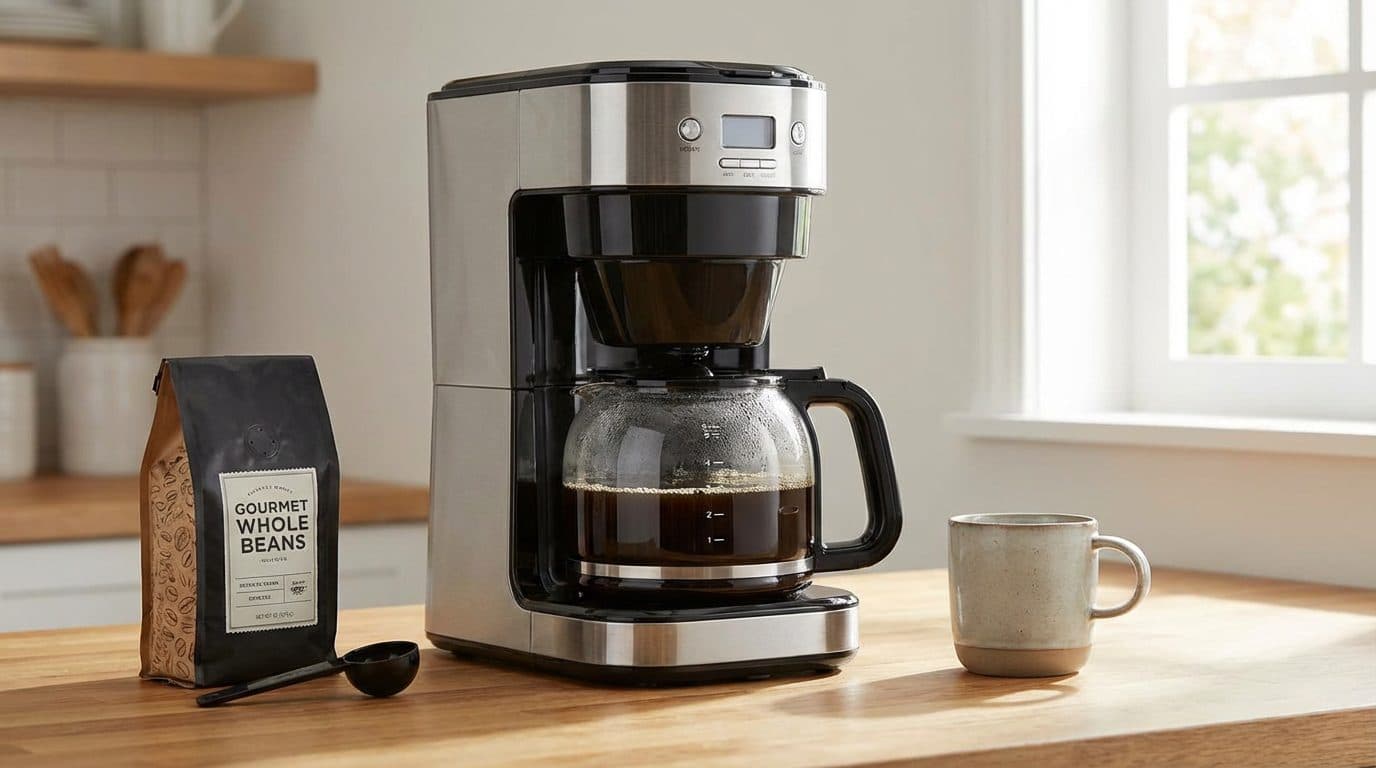
Your standard drip coffee maker produces one of the most caffeinated brews per serving. An 8-ounce cup typically delivers 95 to 165 milligrams of caffeine. The combination of hot water, medium grind, and a brew time of 4 to 6 minutes creates optimal caffeine extraction.
In my experience, automatic drip machines are incredibly consistent, making them ideal if you want predictable caffeine intake each morning. If you’re using a 12-cup coffee maker and drinking two mugs, you could easily hit 300 milligrams before leaving the house.
Cold Brew: The Sneaky Powerhouse
Cold brew is where things get interesting. Despite using cold water (which extracts caffeine more slowly), the extended steep time of 12 to 24 hours results in an incredibly concentrated beverage. An 8-ounce serving of cold brew concentrate can pack 150 to 240 milligrams of caffeine.
Here’s the catch: most cold brew is meant to be diluted. If you’re drinking it straight, you’re getting a serious caffeine punch. I’ve made the mistake of treating cold brew like regular iced coffee and felt the consequences for hours afterward. Dilute it with water or milk to bring the caffeine down to manageable levels.
Espresso: Concentrated but Small
Espresso has the highest caffeine concentration per ounce—around 63 to 75 milligrams in a single 1-ounce shot. However, because the serving size is so small, the total caffeine is actually less than a cup of drip coffee.
This is why that double shot in your latte (about 126 to 150 milligrams total) still contains less caffeine than a large drip coffee. The intensity you feel from espresso comes from how quickly you consume it, not necessarily from higher caffeine content.
French Press: Full-Bodied and Moderate
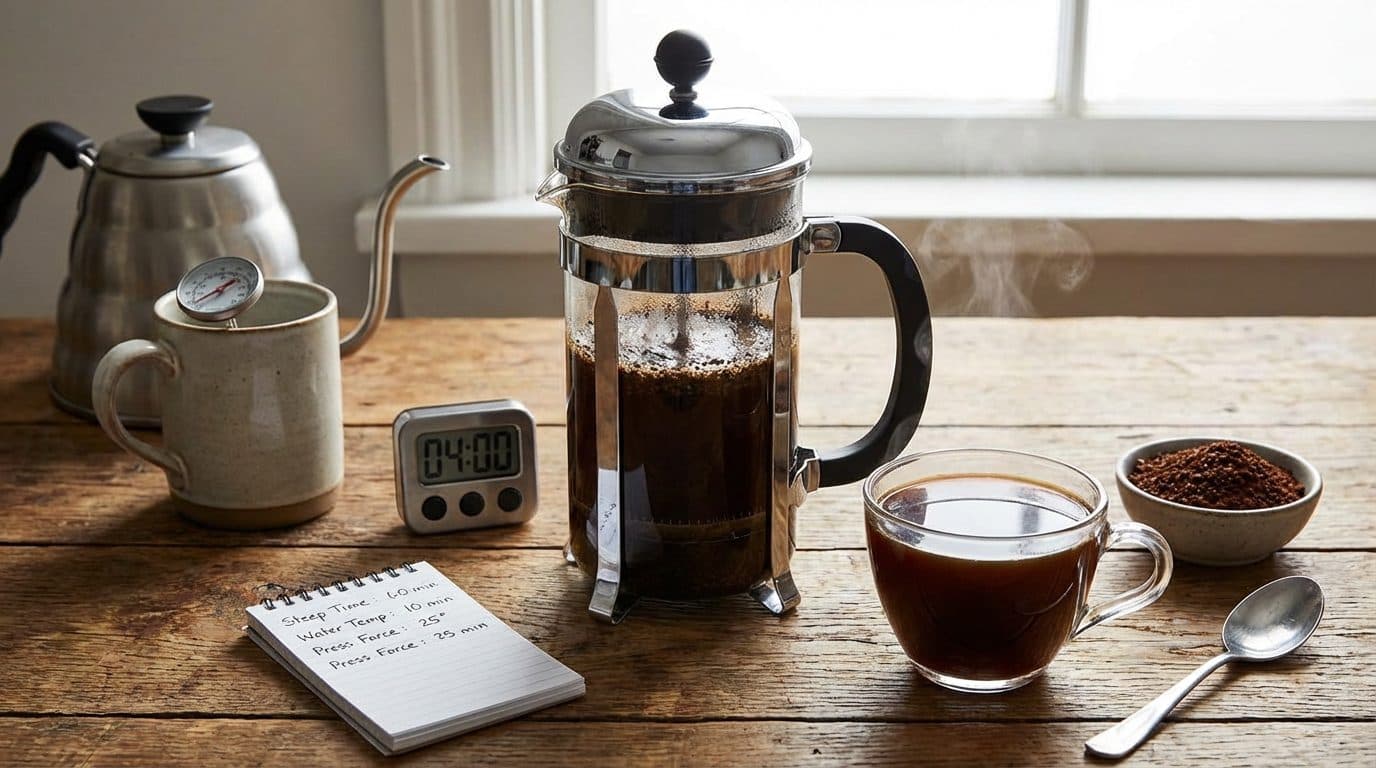
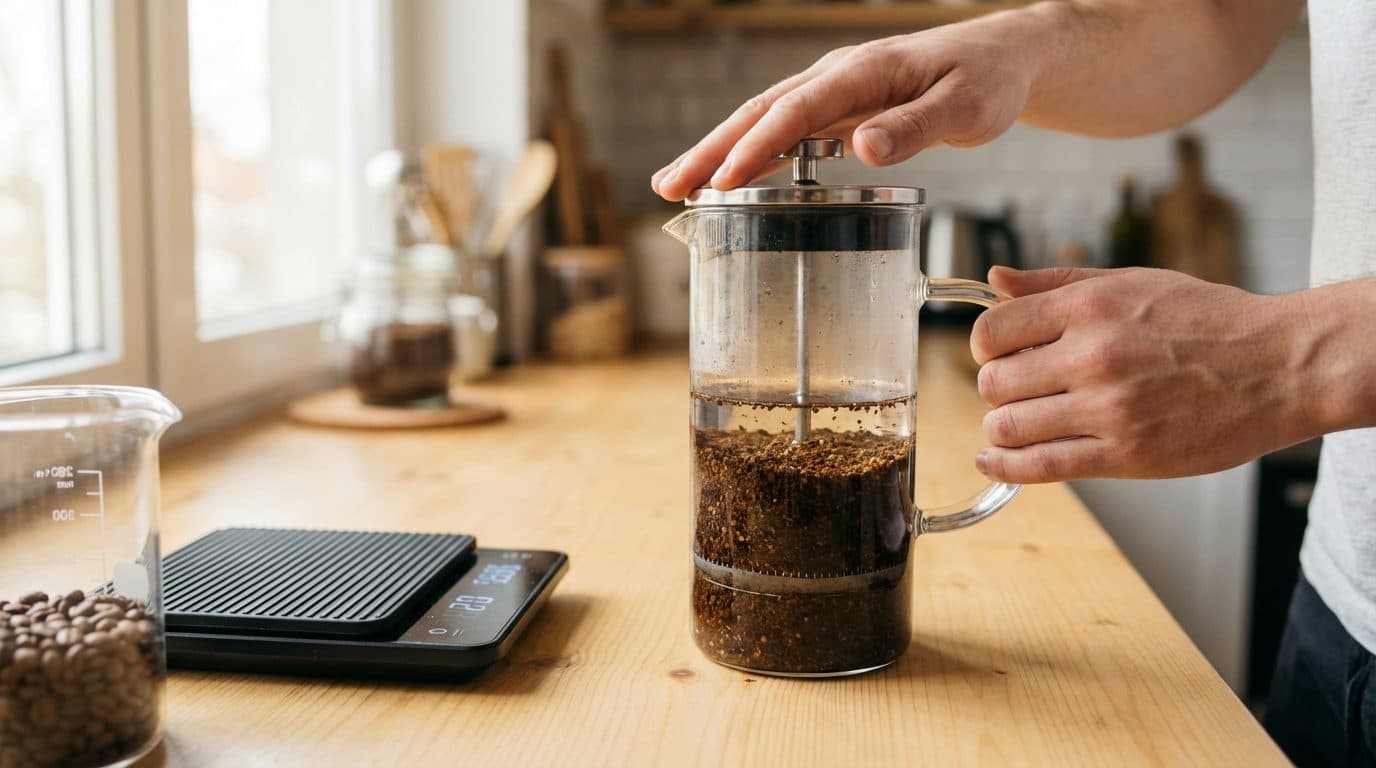
French press coffee sits in the middle of the caffeine spectrum, delivering 80 to 135 milligrams per 8-ounce cup. The 4-minute steep time and coarse grind create a balanced extraction. What you gain in rich, full-bodied flavor doesn’t necessarily translate to more caffeine.
One thing I’ve noticed is that French press caffeine content varies more than drip coffee. Your steep time, water temperature, and how thoroughly you press all affect the final result. If you want stronger caffeine, try extending your steep by 30 seconds to a minute.
Pour Over: Precision Brewing
Pour over methods like the Hario V60 or Chemex produce coffee with 80 to 140 milligrams of caffeine per 8-ounce cup. The total brew time of 3 to 4 minutes and medium-fine grind create efficient extraction, though the paper filter removes some oils and compounds.
The beauty of pour over is control. By adjusting your pour rate and grind size, you can fine-tune both flavor and caffeine extraction. Slower pours with finer grinds will extract slightly more caffeine.
AeroPress: The Mild Option
AeroPress coffee tends to be lower in caffeine, ranging from 50 to 70 milligrams per 8-ounce cup (when diluted as intended). The short brew time of 1 to 2 minutes and pressure-based extraction create a smooth cup without maximum caffeine extraction.
If you’re sensitive to caffeine but love good coffee, the AeroPress might become your best friend. I often recommend it to people who get jittery from regular drip coffee but don’t want to switch to decaf.
Moka Pot: Stovetop Intensity
Moka pot coffee is stronger than drip but weaker than true espresso. A typical 2-ounce serving contains 90 to 130 milligrams of caffeine. The pressurized brewing process extracts caffeine efficiently, creating a concentrated brew that many people enjoy diluted or with milk.
How to Control Your Caffeine Intake at Home
Understanding caffeine by brew method is only half the battle. Here’s how to practically apply this knowledge in your daily coffee routine.
Want More Caffeine?
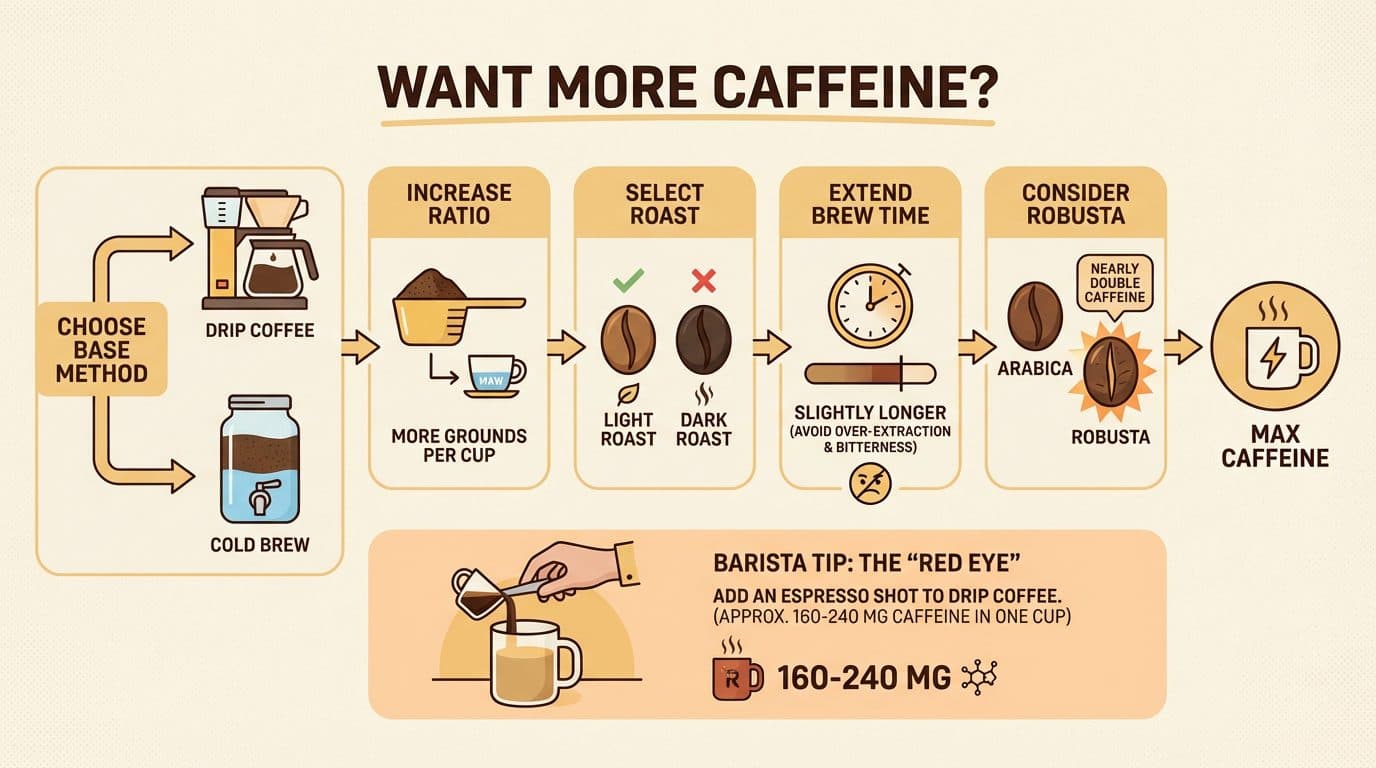
- Choose drip coffee or cold brew as your base method.
- Use a higher coffee-to-water ratio (more grounds per cup).
- Opt for light roast beans over dark roast.
- Extend your brew time slightly (within reason—over-extraction causes bitterness).
- Consider Robusta beans or Robusta blends for nearly double the caffeine.
Barista Tip: If you need a serious morning boost, make a “red eye”—a cup of drip coffee with a shot of espresso added. You’ll get around 160 to 240 milligrams in one cup.
Want Less Caffeine?
- Switch to AeroPress or shorten your brew times.
- Use a coarser grind to reduce extraction.
- Dilute cold brew concentrate with extra water or milk.
- Choose 100% Arabica beans.
- Try half-caff blends (50% regular, 50% decaf).
I’ve found that cutting back gradually works better than going cold turkey. If you’re drinking 400 milligrams daily and want to reduce, switch one cup to a lower-caffeine method rather than eliminating it entirely.
Caffeine Myths Worth Busting
Let’s clear up some common misconceptions about coffee and caffeine that I hear constantly.
Myth: Espresso has the most caffeine. Per ounce, yes. Per serving, no. A standard espresso shot has less total caffeine than a cup of drip coffee.
Myth: Dark roast is stronger. It tastes bolder, but light roast actually contains marginally more caffeine. The “strength” you perceive is flavor intensity, not caffeine content.
Myth: Cold brew is less caffeinated because it uses cold water. The extended steep time more than compensates for the lower water temperature, making cold brew one of the most caffeinated options available.
Myth: Decaf has zero caffeine. Decaf coffee still contains 2 to 15 milligrams per cup. It’s reduced, not eliminated.
Frequently Asked Questions
How much caffeine is safe to consume daily?
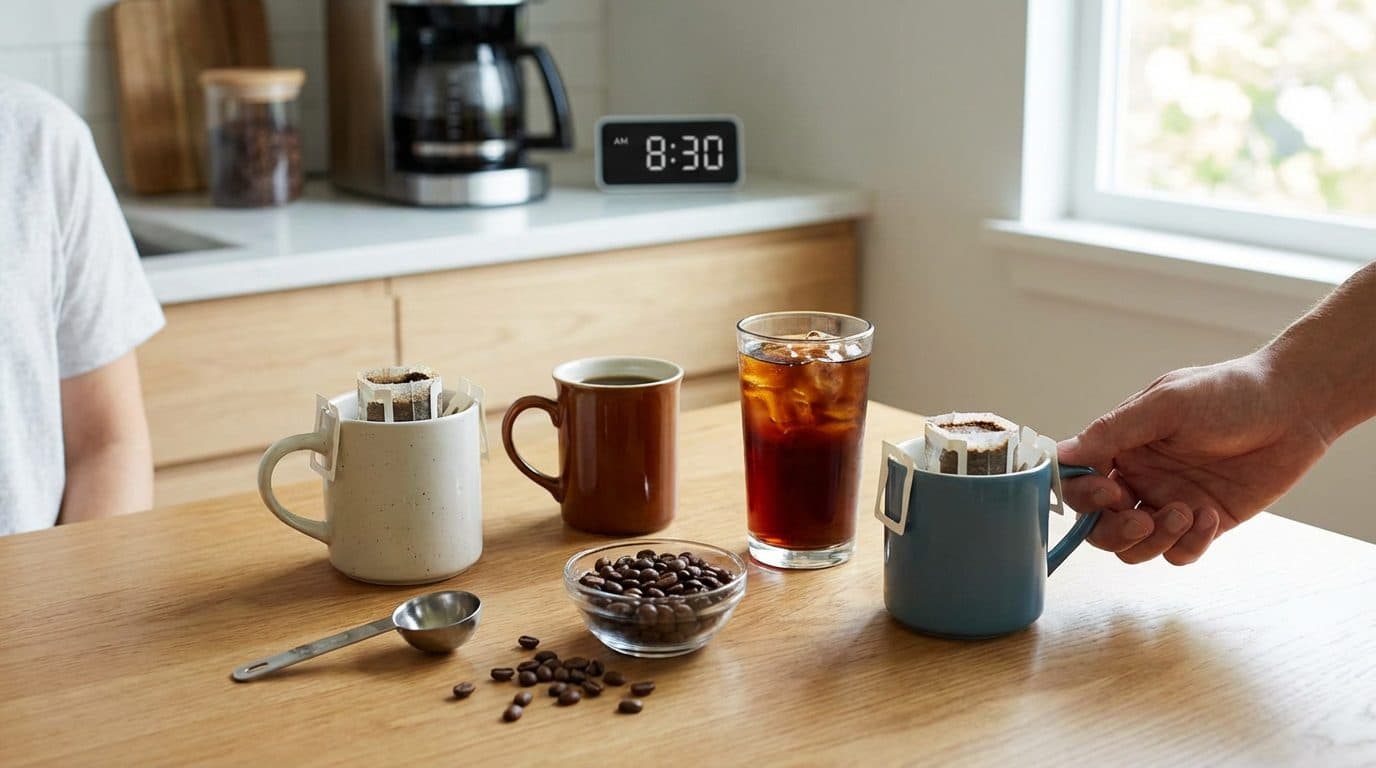
Most health organizations suggest that up to 400 milligrams of caffeine per day is safe for healthy adults. This equals roughly 3 to 4 cups of drip coffee. However, individual tolerance varies significantly, and some people experience jitters or sleep disruption at lower amounts. If you have health concerns, consult your doctor for personalized advice.
Does the type of coffee bean affect caffeine content?
Absolutely. Robusta beans contain about 2.2% caffeine by weight, while Arabica beans contain around 1.2%. If you’re buying specialty coffee, it’s almost certainly Arabica. Instant coffee and some espresso blends often include Robusta for extra kick and crema.
Why does coffee affect people differently?
Caffeine metabolism varies based on genetics, body weight, tolerance, and even medications. Some people process caffeine quickly and feel minimal effects, while others remain sensitive regardless of regular consumption. Age, pregnancy, and certain health conditions also influence how your body handles caffeine.
Is caffeine content the same at coffee shops?
Not necessarily. Coffee shop servings are often larger, and their brewing parameters differ. A “grande” drip coffee from a major chain can contain over 300 milligrams of caffeine. When in doubt, ask or check the nutritional information on the company’s website.
Does adding milk or sugar reduce caffeine?
No. Adding milk, cream, or sugar doesn’t change the caffeine content—it only dilutes the concentration slightly if you’re adding significant volume. Your latte has the same caffeine as a straight espresso shot; it just tastes different.
Conclusion: Brew Smarter, Not Harder
Understanding how much caffeine is in a cup of coffee by brew method empowers you to make better choices for your energy levels and health. Whether you’re chasing that morning jolt with cold brew or winding down with a mellow AeroPress, you now have the knowledge to control your caffeine intake.
The key takeaway? Serving size matters more than brewing method in most cases. A single espresso shot sounds intense, but your 16-ounce drip coffee delivers far more total caffeine. Pay attention to how much you’re drinking, not just what method you’re using.
Life is too short for bad coffee—and it’s also too short to feel jittery all day or crash by noon. Experiment with different methods, track how you feel, and find the perfect balance for your body. Your ideal cup is out there waiting.

Comments