


Table of Contents
- What Exactly Is Decaf Coffee?
- The Four Main Methods of Making Decaf Coffee
- 1. The Swiss Water Process
- 2. The Carbon Dioxide (CO2) Method
- 3. The Solvent-Based Methods
- 4. The Mountain Water Process
- Comparing Decaffeination Methods: Which Is Best?
- Does Decaffeination Affect Coffee Flavor?
- Frequently Asked Questions
- Is decaf coffee completely safe to drink?
- Why does some decaf taste bad?
- Can I drink decaf if I'm pregnant?
- Does decaf have any health benefits?
- How should I store decaf coffee at home?
- Conclusion: Choosing Your Perfect Decaf
Have you ever wondered how your favorite coffee manages to deliver that rich, comforting flavor without keeping you up all night? Decaf coffee has come a long way from its reputation as a flavorless compromise. In my experience, understanding how decaf coffee is made not only satisfies curiosity but also helps you choose better beans for your home brewing setup. Whether you’re cutting back on caffeine for health reasons or simply want an evening cup without the jitters, knowing what goes into the decaffeination process can transform your appreciation for this special brew.
In this guide, I’ll walk you through the main methods used to remove caffeine from coffee beans, explain the science in plain terms, and help you understand what to look for when shopping for quality decaf. Life is too short for bad coffee, and that includes decaf!
What Exactly Is Decaf Coffee?
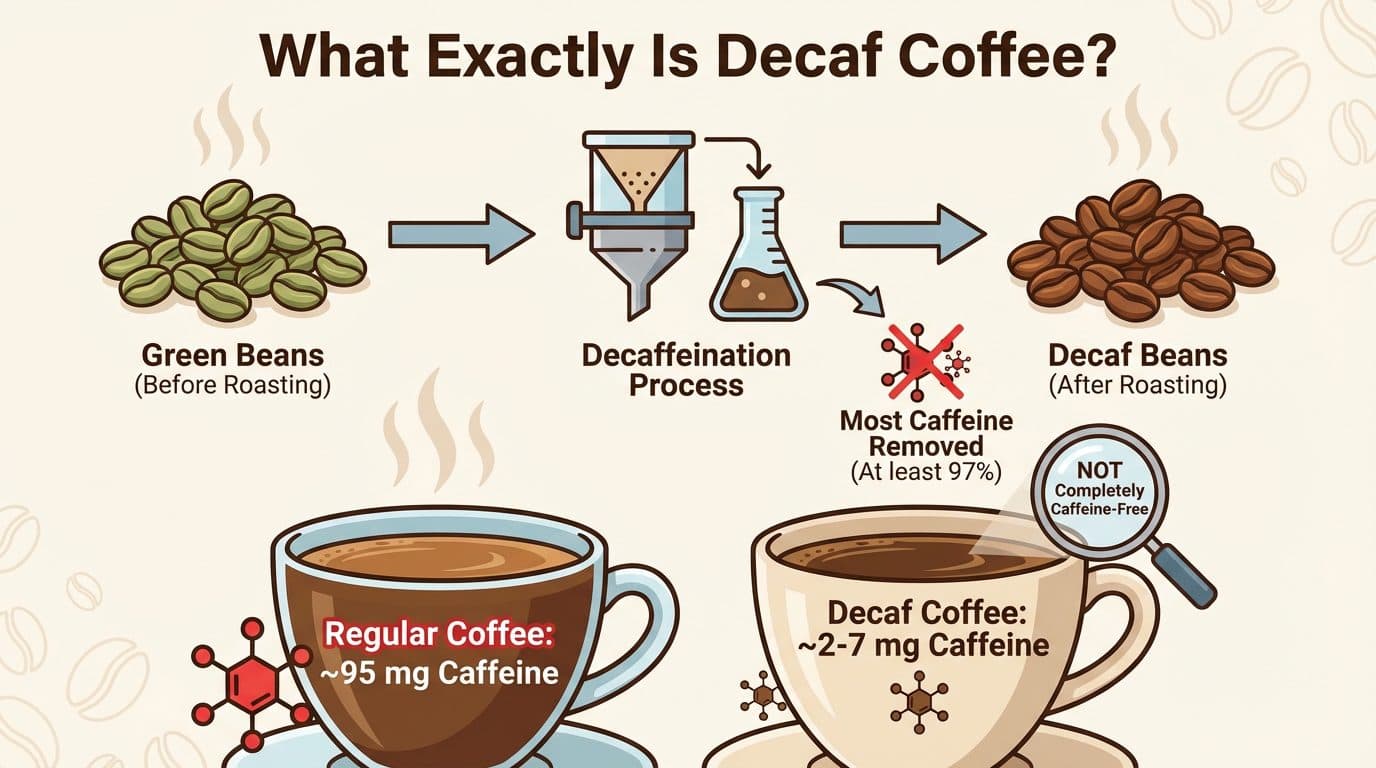
Decaf coffee is simply coffee that has had most of its caffeine removed before roasting. Notice I said “most” and not “all.” Here’s something many people don’t realize: decaf coffee isn’t completely caffeine-free. By regulation, decaf must have at least 97% of its caffeine removed, which means a typical 8-ounce cup still contains about 2-7 milligrams of caffeine compared to roughly 95 milligrams in regular coffee.
The decaffeination process always happens to green, unroasted coffee beans. This is important because caffeine is more easily extracted from beans in their raw state. Once the caffeine is removed, the beans are dried and then roasted just like regular coffee. The challenge for producers is removing the caffeine while preserving all those delicious flavor compounds that make coffee taste like, well, coffee.
Key Takeaway: Decaf isn’t caffeine-free, but it contains so little caffeine that most people sensitive to it can enjoy a cup without issues. Always check with your healthcare provider if you have specific medical concerns about caffeine intake.
The Four Main Methods of Making Decaf Coffee
Over the years, I’ve found that understanding these four methods helps home coffee lovers make smarter purchasing decisions. Each approach has its own strengths and trade-offs when it comes to flavor preservation, environmental impact, and cost.
1. The Swiss Water Process
This is my personal favorite and the method I recommend most often to home baristas who care about both flavor and natural processing. The Swiss Water Process uses only water, temperature, and time to remove caffeine, making it 100% chemical-free.
Here’s how it works in simple terms:
- Green coffee beans are soaked in hot water, which dissolves the caffeine along with other flavor compounds.
- The water passes through activated charcoal filters that trap caffeine molecules while allowing smaller flavor molecules to pass through.
- This caffeine-free but flavor-rich water (called Green Coffee Extract) is then used to soak new batches of beans.
- Because the water is already saturated with flavor compounds, only the caffeine migrates out of the new beans.
Think of it like this: imagine washing a sponge in soapy water. If the water is already full of soap, the sponge won’t lose any more soap to it. The Swiss Water Process works on the same principle with flavor compounds.
Barista Tip: Look for the “Swiss Water Process” certification on packaging. It’s a reliable indicator of quality decaf that prioritizes flavor retention.
2. The Carbon Dioxide (CO2) Method
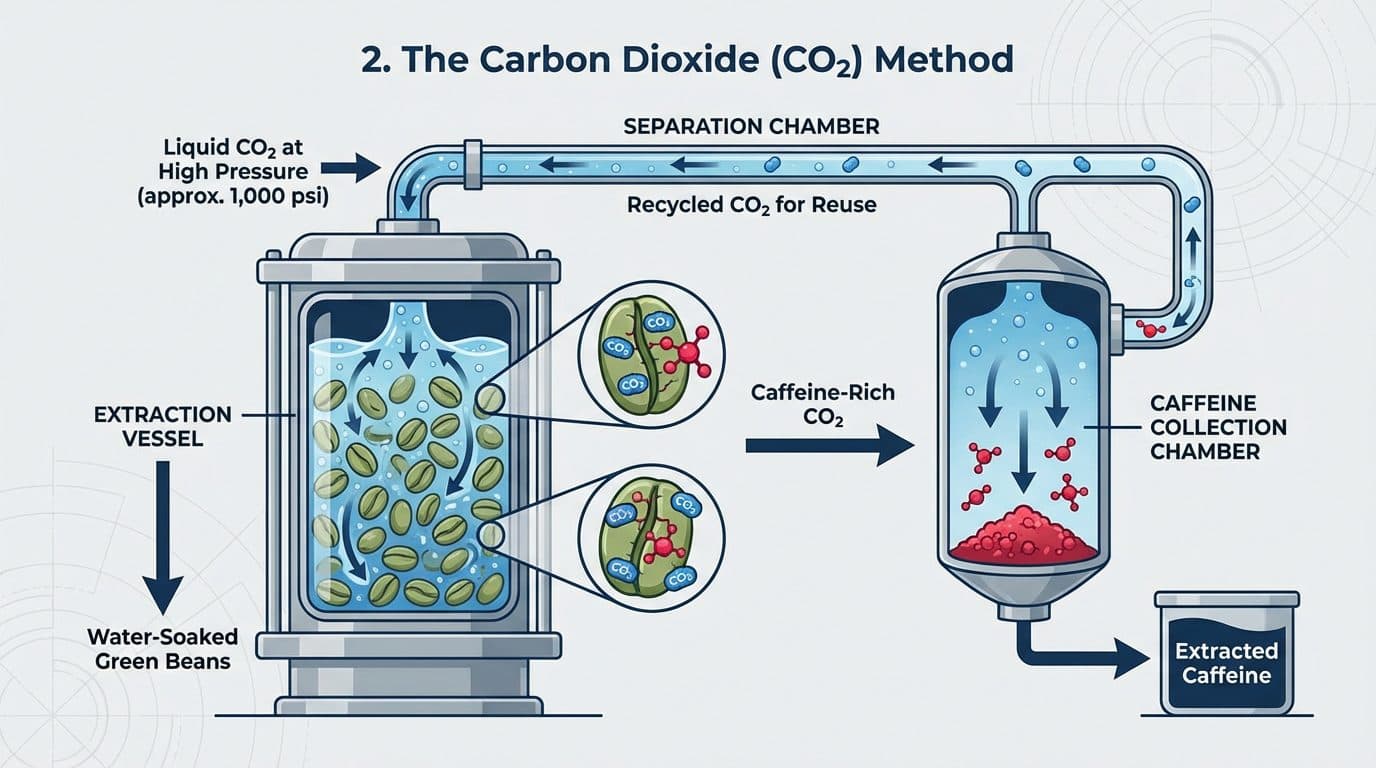
This newer, high-tech method is gaining popularity among specialty coffee roasters. It uses liquid carbon dioxide under high pressure to selectively extract caffeine while leaving most flavor compounds intact.
The process involves:
- Placing water-soaked green beans in an extraction vessel.
- Pumping liquid CO2 at pressures around 1,000 pounds per square inch through the beans.
- The CO2 acts as a solvent that targets caffeine specifically.
- The caffeine-rich CO2 is moved to another chamber where pressure is released, and the caffeine separates out.
I’ve tasted some exceptional CO2-processed decafs that retained remarkable complexity. The downside? It’s expensive, so you’ll typically find this method used for premium specialty coffees.
3. The Solvent-Based Methods
These traditional methods use chemical solvents like methylene chloride or ethyl acetate to dissolve caffeine. Before you worry, let me explain why they’re still considered safe.
Direct Solvent Method:
- Beans are steamed to open their pores.
- They’re repeatedly rinsed with the solvent, which bonds with caffeine molecules.
- The beans are steamed again to remove any residual solvent.
- Any trace amounts evaporate completely during roasting (solvents evaporate at 104°F, while roasting occurs at 400°F+).
Indirect Solvent Method:
- Beans are soaked in hot water to extract caffeine and flavor compounds.
- The beans are removed, and the solvent is added to the water to isolate caffeine.
- The solvent-caffeine mixture is separated, and beans are returned to the water to reabsorb flavor compounds.
When ethyl acetate is used, you might see the label “naturally decaffeinated” because this compound occurs naturally in fruits. In my experience, well-executed solvent-processed decafs can taste excellent, and the FDA considers them completely safe.
4. The Mountain Water Process
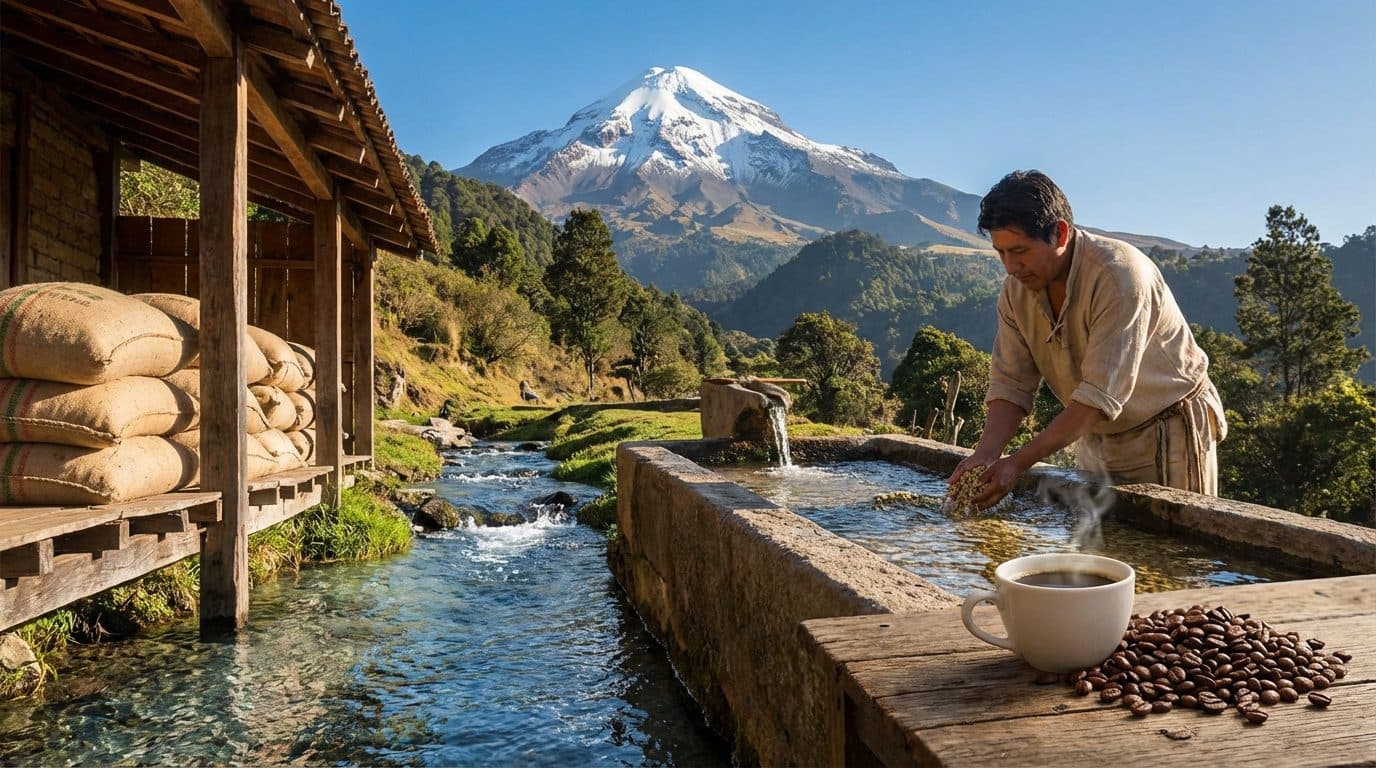
Similar to the Swiss Water Process, the Mountain Water Process (used primarily in Mexico) relies on water and no chemicals. It uses the pure water from the Pico de Orizaba mountain and works on the same saturation principle as Swiss Water.
This method produces clean, flavorful decaf and is certified organic-compatible. If you see “Mountain Water Decaf” on a bag, you can trust it’s a chemical-free option.
Comparing Decaffeination Methods: Which Is Best?
To help you decide which decaf to buy, here’s a quick comparison of the main methods:
| Method | Chemical-Free? | Flavor Retention | Cost | Availability |
|---|---|---|---|---|
| Swiss Water Process | Yes | Excellent | Medium-High | Common |
| CO2 Process | Yes | Excellent | High | Specialty only |
| Solvent-Based | No | Good-Very Good | Low-Medium | Very Common |
| Mountain Water | Yes | Excellent | Medium | Growing |
Who is chemical-free decaf for? Anyone who prefers natural processing methods, pregnant women, those with chemical sensitivities, or anyone who simply wants the cleanest cup possible.
Who is solvent-processed decaf for? Budget-conscious coffee drinkers who understand the science and aren’t concerned about trace chemicals that evaporate during roasting.
Does Decaffeination Affect Coffee Flavor?
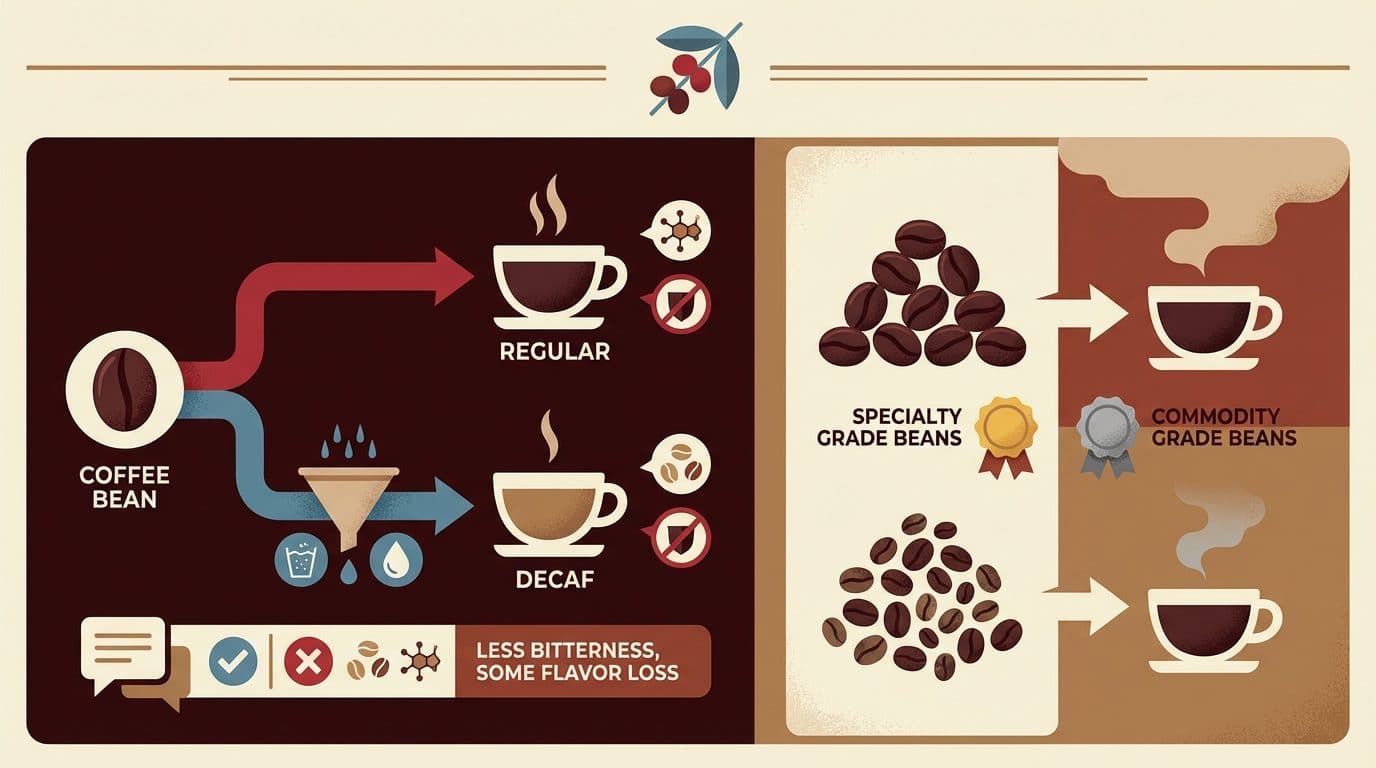
Here’s the honest truth: yes, decaffeination does affect flavor, but modern methods have minimized this impact significantly. Caffeine itself is bitter, so removing it can actually reduce bitterness. However, the processes that remove caffeine can also strip away some delicate flavor compounds.
In my experience brewing hundreds of decaf batches at home, the key factors for great-tasting decaf are:
- Bean quality: Decaf made from specialty-grade beans will always taste better than decaf from commodity beans.
- Roast date: Freshness matters even more with decaf because the beans have already been through an intensive process.
- Processing method: Swiss Water and CO2 methods generally preserve more nuanced flavors.
- Roast level: Medium roasts often showcase decaf’s best qualities.
A real-world example: I recently tried a Swiss Water decaf Colombian single-origin that had beautiful notes of caramel and mild citrus. Brewed as a pour-over, it was genuinely difficult to distinguish from regular coffee. The secret was buying from a roaster who treats their decaf program with the same care as their regular offerings.
Frequently Asked Questions
Is decaf coffee completely safe to drink?
Yes, decaf coffee is considered safe for most people. The FDA has approved all decaffeination methods currently in use, and any chemical solvents evaporate completely during the roasting process. If you have specific health concerns, consult your healthcare provider for personalized advice.
Why does some decaf taste bad?
Poor-tasting decaf usually results from low-quality beans, stale roasts, or outdated processing methods. Many roasters historically used their least desirable beans for decaf since it was considered a secondary product. Today, quality-focused roasters use excellent beans for their decaf lines, producing dramatically better results.
Can I drink decaf if I’m pregnant?
Many healthcare providers consider moderate decaf consumption acceptable during pregnancy since it contains minimal caffeine. However, always discuss your specific situation with your doctor or midwife, as individual circumstances vary. Chemical-free processing methods like Swiss Water may provide extra peace of mind.
Does decaf have any health benefits?
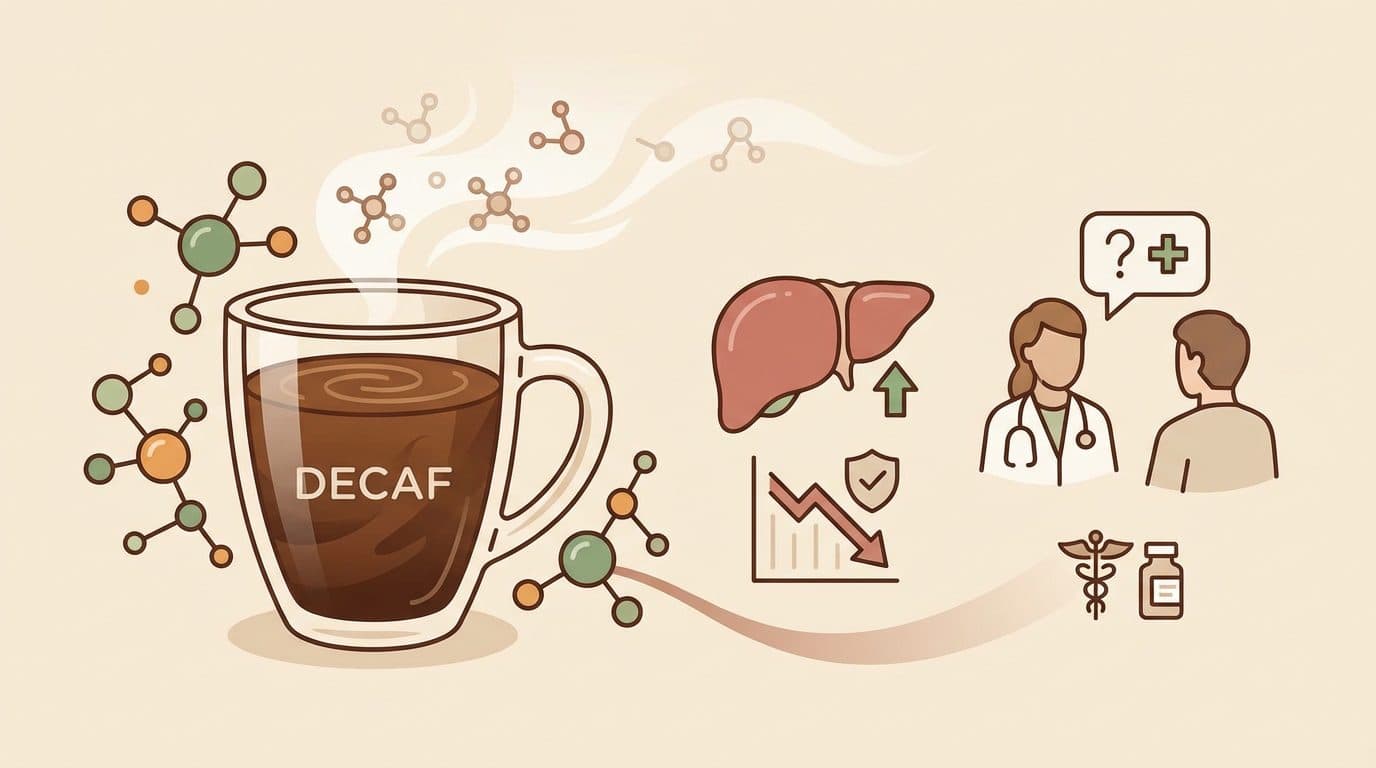
Research suggests decaf coffee retains many of the antioxidants found in regular coffee. Some studies indicate potential benefits for liver health and reduced risk of certain conditions. However, this information is general in nature, and you should consult a healthcare professional regarding your specific health goals.
How should I store decaf coffee at home?
Store decaf the same way you’d store regular coffee: in an airtight container, away from light, heat, and moisture. Because decaf has already been through extensive processing, freshness is especially important. Try to use your beans within two to three weeks of the roast date for optimal flavor.
Conclusion: Choosing Your Perfect Decaf
Understanding how decaf coffee is made empowers you to select beans that match your values and taste preferences. Whether you prioritize chemical-free processing like Swiss Water, want the high-tech precision of CO2 extraction, or simply need an affordable everyday option, there’s quality decaf out there for you.
My recommendation for home coffee lovers just starting their decaf journey: look for a freshly roasted, Swiss Water Process decaf from a reputable specialty roaster. Brew it using your favorite method, and give yourself permission to enjoy great coffee any time of day.
Start exploring different decaf options, pay attention to the processing methods on the packaging, and don’t be afraid to ask your local roaster questions. You might be surprised at how delicious your evening cup can be!


Comments