


Table of Contents
- Quick Verdict: Breville Bambino Plus
- Breville Bambino vs. Bambino Plus: Key Differences at a Glance
- Espresso Quality: Are the Shots Actually Different?
- The Milk Frothing Difference: Manual vs. Automatic
- Regular Bambino: Manual Steam Wand
- Bambino Plus: Automatic Milk Texturing
- Water Tank Capacity: Does Size Matter?
- Warranty and Long-Term Value
- Who Should Buy the Regular Bambino?
- Pros
- Cons
- Who Should Buy the Bambino Plus?
- Pros
- Cons
- The Grinder Factor: Don't Forget This Critical Piece
- Conclusion: Is the Bambino Plus Upgrade Worth It?
Quick Verdict: Breville Bambino Plus
If you’re serious about milk drinks and want a more hands-off experience, the Bambino Plus is worth the extra investment. Its automatic milk texturing, larger water tank, and extended warranty make it the better choice for latte and cappuccino lovers. However, if you’re primarily an espresso purist or working with a tighter budget, the regular Bambino delivers nearly identical shot quality at a lower price point.
So you’re eyeing the Breville Bambino lineup and wondering whether the “Plus” is actually worth the premium. You’re not alone—this is one of the most common questions I get from home baristas looking to break into espresso without breaking the bank. Both machines share Breville’s compact design philosophy and impressive ThermoJet heating technology, but there are some key differences that might sway your decision one way or the other. Let’s break down exactly what you get (and don’t get) with each model so you can make the right call for your morning routine.
Breville Bambino vs. Bambino Plus: Key Differences at a Glance
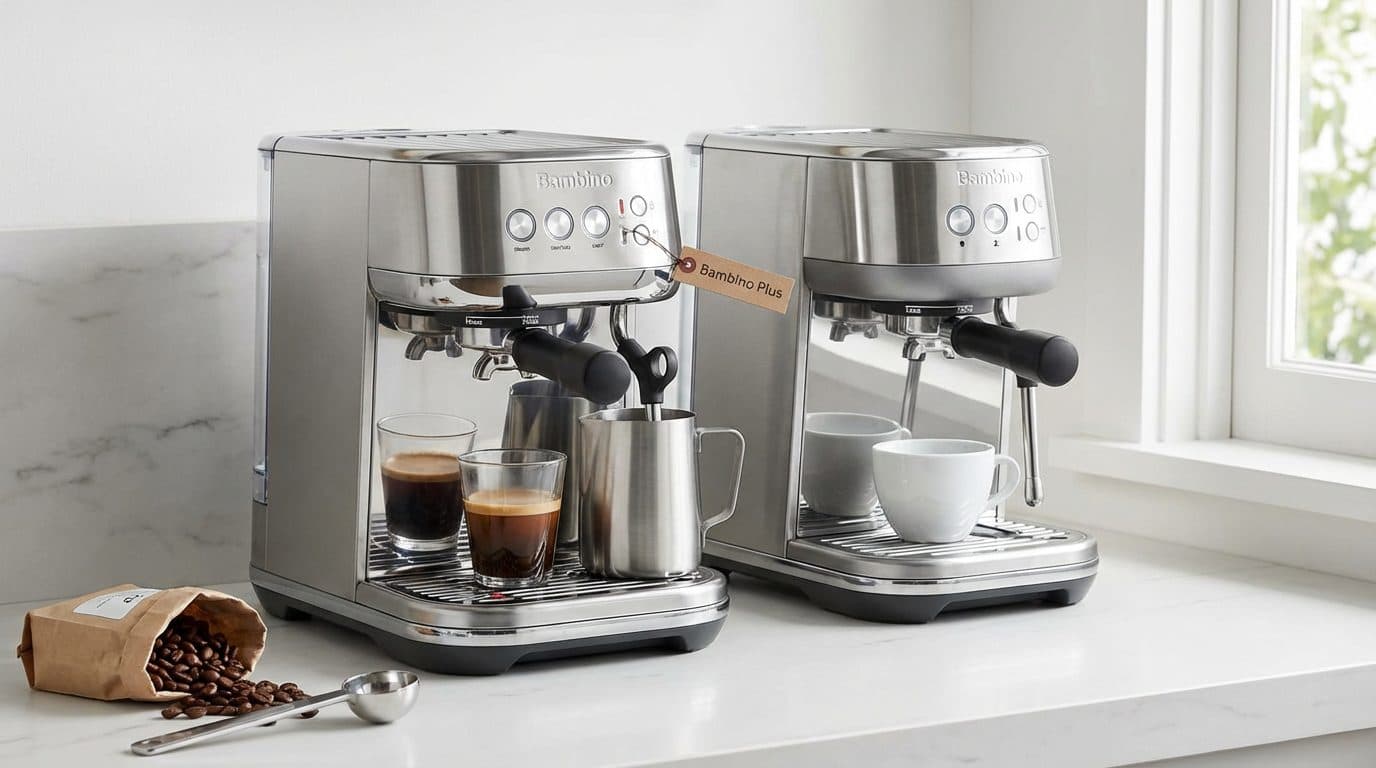
Before we dive deep, here’s a quick comparison table to give you the lay of the land:
| Feature | Bambino (BES450) | Bambino Plus (BES500) |
|---|---|---|
| Water Tank Capacity | 47 oz (1.4L) | 64 oz (1.9L) |
| Milk Frothing | Manual steam wand | Automatic milk texturing |
| Warranty | 1 year | 2 years |
| Price Range | ~$300 | ~$400-500 |
| Heat-Up Time | 3 seconds | 3 seconds |
| Portafilter Size | 54mm | 54mm |
| Pre-Infusion | Yes | Yes |
As you can see, both machines share the same core espresso-making DNA. The differences come down to convenience features and capacity rather than fundamental brewing capability.
Espresso Quality: Are the Shots Actually Different?
Here’s the thing that surprises most people: the espresso shots from both machines are essentially identical. Both the Bambino and Bambino Plus use Breville’s ThermoJet heating system, which gets you from cold to brewing temperature in about 3 seconds. That’s not a typo—three seconds. Compare that to traditional boiler machines that can take several minutes to warm up, and you’ll understand why these compact machines have earned such a loyal following.
Both models feature:
- 15-bar Italian pump for proper extraction pressure
- Low-pressure pre-infusion to gently expand the coffee grounds before full pressure kicks in
- 54mm portafilter (same size used in Breville’s more expensive Barista Express)
- PID temperature control for consistent shot temperatures
In my experience, when you dial in your grind correctly, both machines can produce shots that rival what you’d get from machines costing twice as much. The limiting factor in either case is usually your grinder, not the espresso machine itself.
Key Takeaway: If espresso quality is your only concern, save your money and go with the regular Bambino. The shots are the same.
The Milk Frothing Difference: Manual vs. Automatic
This is where the Bambino Plus really earns its “Plus” designation. The automatic milk texturing feature is a game-changer for anyone who drinks milk-based espresso beverages regularly.
Regular Bambino: Manual Steam Wand
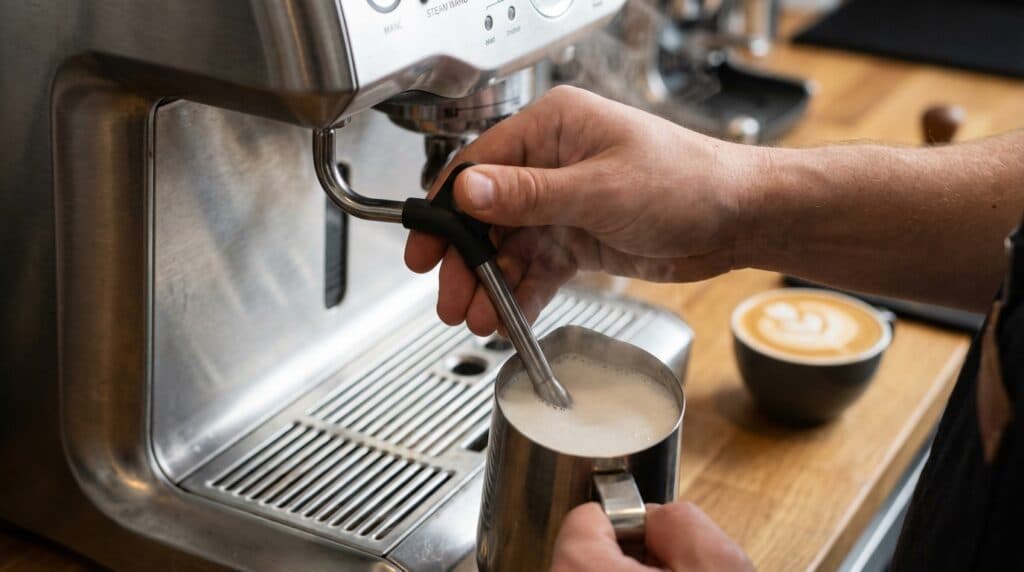
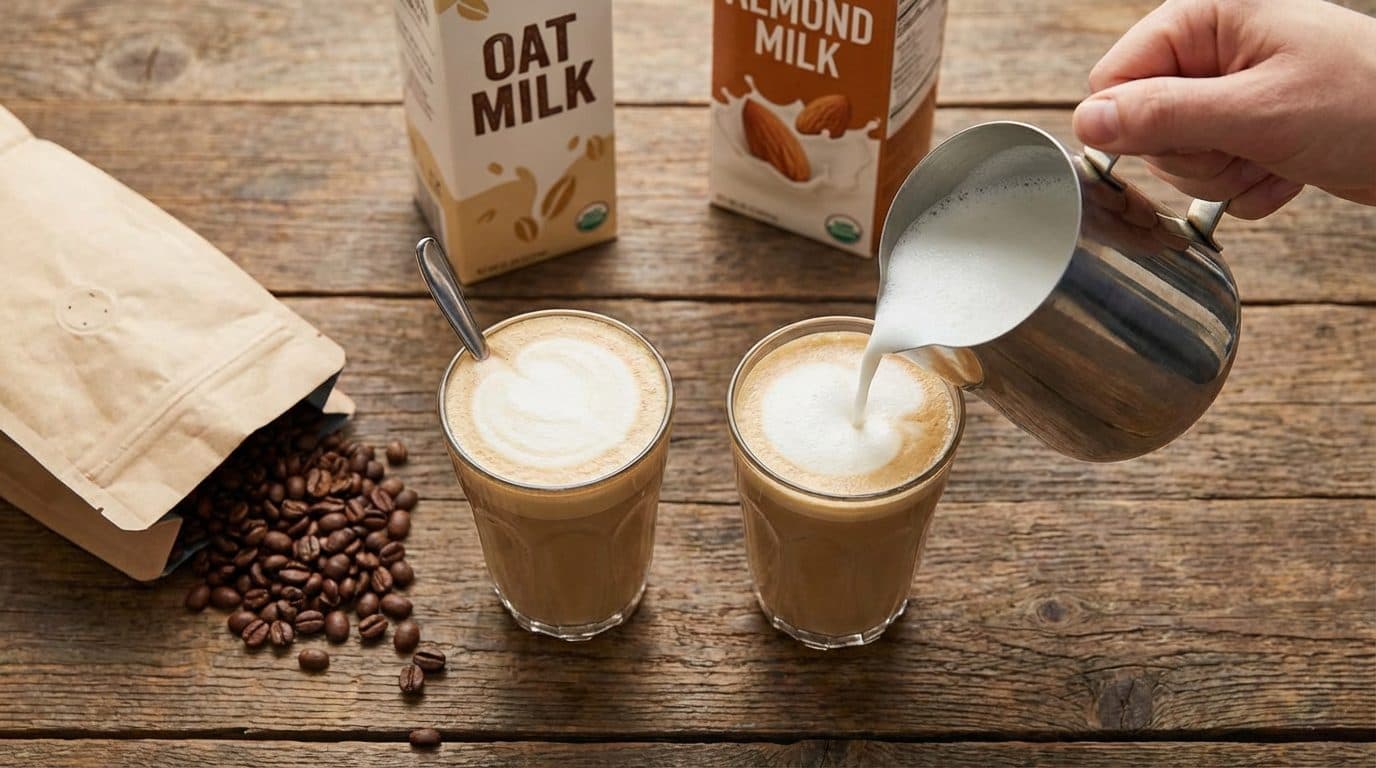
The standard Bambino comes with a traditional manual steam wand. You control the angle, depth, and timing yourself. For experienced baristas, this is actually a plus—you have complete control over the texture and temperature of your milk.
However, there’s a learning curve. Getting that silky microfoam for latte art takes practice. Expect to waste some milk (and patience) in the beginning. If you’re the type who enjoys mastering a craft, you might actually prefer this approach.
Bambino Plus: Automatic Milk Texturing
The Bambino Plus features Breville’s automatic steam wand with hands-free operation. You simply submerge the wand, press a button, and the machine does the rest. It automatically adjusts the steam pressure and stops when the milk reaches the optimal temperature.
The results are remarkably consistent. Every morning, you get the same velvety texture without having to think about it. For busy mornings when you’re half-awake and just need your caffeine fix, this convenience is hard to overstate.
Barista Tip: Even with the automatic function, you can still use the Bambino Plus’s steam wand manually if you want more control. It’s the best of both worlds.
Water Tank Capacity: Does Size Matter?
The Bambino Plus holds 64 ounces of water compared to the regular Bambino’s 47 ounces. That’s roughly a 36% increase in capacity. In practical terms, this means fewer refills throughout the day.
If you’re making multiple drinks each morning—say, one for yourself and one for a partner—the larger tank is genuinely useful. You won’t find yourself refilling mid-session as often. For single-drink households, this difference is less significant.
Here’s a real-world scenario: Let’s say you make two lattes every morning. Each latte uses roughly 2 ounces of water for the espresso shot. With the regular Bambino, you’d need to refill approximately every 10-12 days of normal use. With the Bambino Plus, you’re looking at closer to 15-16 days. Not a massive difference, but it adds up over time.
Warranty and Long-Term Value
The warranty difference is often overlooked but worth considering. The regular Bambino comes with a 1-year manufacturer warranty, while the Bambino Plus doubles that to 2 years.
Given that the price difference between the two models is typically around $100-150, that extra year of warranty coverage provides some peace of mind. Espresso machines have pumps, heating elements, and electronic components that can occasionally fail. Having that extended coverage means one less thing to worry about.
According to user feedback in espresso communities, both machines have solid reliability records. But if something does go wrong in year two, Bambino Plus owners are covered while regular Bambino owners would be paying out of pocket.
Who Should Buy the Regular Bambino?
The standard Breville Bambino is the right choice if:
- You primarily drink straight espresso or Americanos
- You want to learn manual milk steaming techniques
- Budget is a primary concern
- You’re a single-person household with modest coffee consumption
- You enjoy the hands-on process of crafting each drink
Who is this NOT for? If you make multiple milk drinks daily and value convenience over craft, you’ll likely find yourself wishing you’d spent the extra money on the Plus.
Pros
- Lower entry price (~$300)
- Same espresso quality as the Plus
- Compact footprint fits any kitchen
- 3-second heat-up time
- Manual steam wand offers more control for enthusiasts
Cons
- Shorter 1-year warranty
- Smaller water tank requires more frequent refills
- Manual milk steaming has a learning curve
- No automatic milk texturing option
Who Should Buy the Bambino Plus?
The Breville Bambino Plus makes sense if:
- You drink lattes, cappuccinos, or flat whites regularly
- Consistency and convenience matter more than hands-on control
- You’re making coffee for multiple people
- You want the security of a longer warranty
- You’re willing to invest a bit more upfront for daily convenience
Who is this NOT for? Espresso purists who rarely touch milk, or those on a strict budget who can’t justify the premium for features they won’t use.
Pros
- Automatic milk texturing produces consistent results
- Larger 64oz water tank
- 2-year warranty for added peace of mind
- Same excellent espresso quality
- Can still use manual steaming when desired
Cons
- Higher price point (~$400-500)
- Automatic steaming may feel limiting for latte art enthusiasts
- Premium features wasted if you don’t drink milk-based drinks
The Grinder Factor: Don’t Forget This Critical Piece
Whichever Bambino you choose, I can’t stress this enough: your grinder matters more than your espresso machine. Both Bambino models come with pressurized filter baskets that are forgiving of inconsistent grinds, but if you want to unlock their full potential, you’ll need a capable burr grinder.
Budget around $150-300 for a decent espresso-capable grinder. Without one, you’re essentially driving a sports car in first gear—the machine can do so much more than pre-ground coffee allows.
Barista Tip: If your total budget is $500, consider getting the regular Bambino for $300 and putting the remaining $200 toward a quality grinder rather than spending it all on the Bambino Plus.
Conclusion: Is the Bambino Plus Upgrade Worth It?
After weighing all the factors, here’s my honest take: the Bambino Plus is worth the upgrade if milk drinks are a regular part of your routine. The automatic milk texturing alone saves time and frustration, especially on groggy mornings. Add in the larger water tank and extended warranty, and the $100-150 premium starts to feel justified.
However, if you’re primarily an espresso drinker or you genuinely enjoy the process of learning manual milk steaming, the regular Bambino delivers the same shot quality at a friendlier price point. Put that savings toward a better grinder, and you’ll likely be happier with your overall setup.
Life’s too short for bad coffee—but it’s also too short to overpay for features you won’t use. Match the machine to your actual drinking habits, invest in a solid grinder, and you’ll be pulling café-quality shots at home in no time.


Comments