


Table of Contents
- Understanding Your Home Coffee Setup Needs
- The "Start Simple" Philosophy
- Essential Equipment for Your First Home Coffee Setup
- A Reliable Brewing Device
- A Way to Heat Water
- Fresh Coffee Beans
- A Coffee Grinder
- Optional Upgrades That Actually Help
- A Kitchen Scale
- A Timer
- Proper Storage
- Common Beginner Mistakes to Avoid
- Sample Beginner Home Coffee Setup Under $75
- Frequently Asked Questions
- Do I really need a grinder for my home coffee setup?
- What's the best brewing method for beginners?
- How much should I spend on coffee beans?
- Can I use tap water for brewing coffee?
- How often should I clean my coffee equipment?
- Bottom Line: Buy Less, Brew More Consistently
A simple home coffee setup needs four things: fresh coffee, a reliable brewer, a way to heat water, and some way to measure consistently. A grinder is the best early upgrade, but you do not need an espresso machine, a shelf of gadgets, or a cafe-style counter before you can make good coffee.
The smartest beginner setup is boring in the best way. It should be affordable, repeatable, easy to clean, and matched to how you actually drink coffee. Buy too much too soon and you end up managing equipment instead of improving the cup.
Understanding Your Home Coffee Setup Needs
Start with your real mornings. Do you need one fast mug before work, or do you enjoy a slower weekend brew? Do you drink coffee black, or do you add milk and sugar? Do you want one cup at a time, or a pot for two people?
Those answers matter more than online gear lists. A careful pour-over setup is a poor fit for someone who always runs late. A large drip machine is overkill for someone who wants one small cup. A French press is forgiving, but it creates a heavier cup and needs a quick rinse after every brew.
The “Start Simple” Philosophy

The common beginner mistake is buying an espresso machine, grinder, kettle, scale, tamper, frothing pitcher, and premium beans all at once. Then the first few cups taste confusing and expensive.
A better path is to buy the smallest setup that lets you brew consistently. Learn what grind size, dose, water, and brew time do. Then upgrade the piece that is actually limiting you. Coffee gear should solve a problem, not create a new hobby by accident.
Essential Equipment for Your First Home Coffee Setup
These are the practical building blocks. You can spend more later, but you do not need to start there.
A Reliable Brewing Device

This is the center of the setup. For beginners, three options make the most sense:
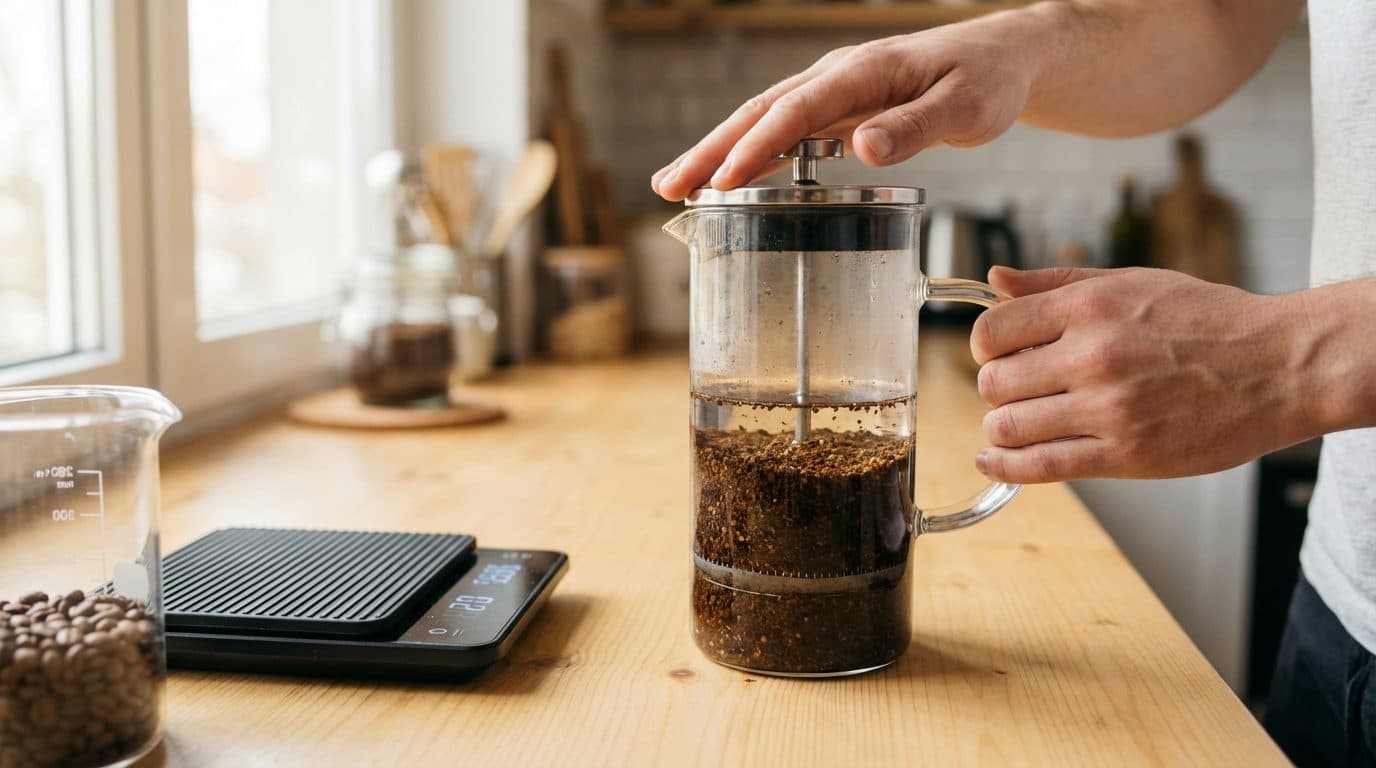
- French Press: Easy, cheap, and forgiving. Add coarse coffee, add hot water, wait about four minutes, press, and pour. Expect a full-bodied cup with some sediment. Typical cost: $15 to $40.
- Pour-Over Dripper: A plastic V60, Melitta, or similar cone is inexpensive and makes a clean cup. It asks for more attention to pouring and grind size. Typical cost: $10 to $30 plus paper filters.
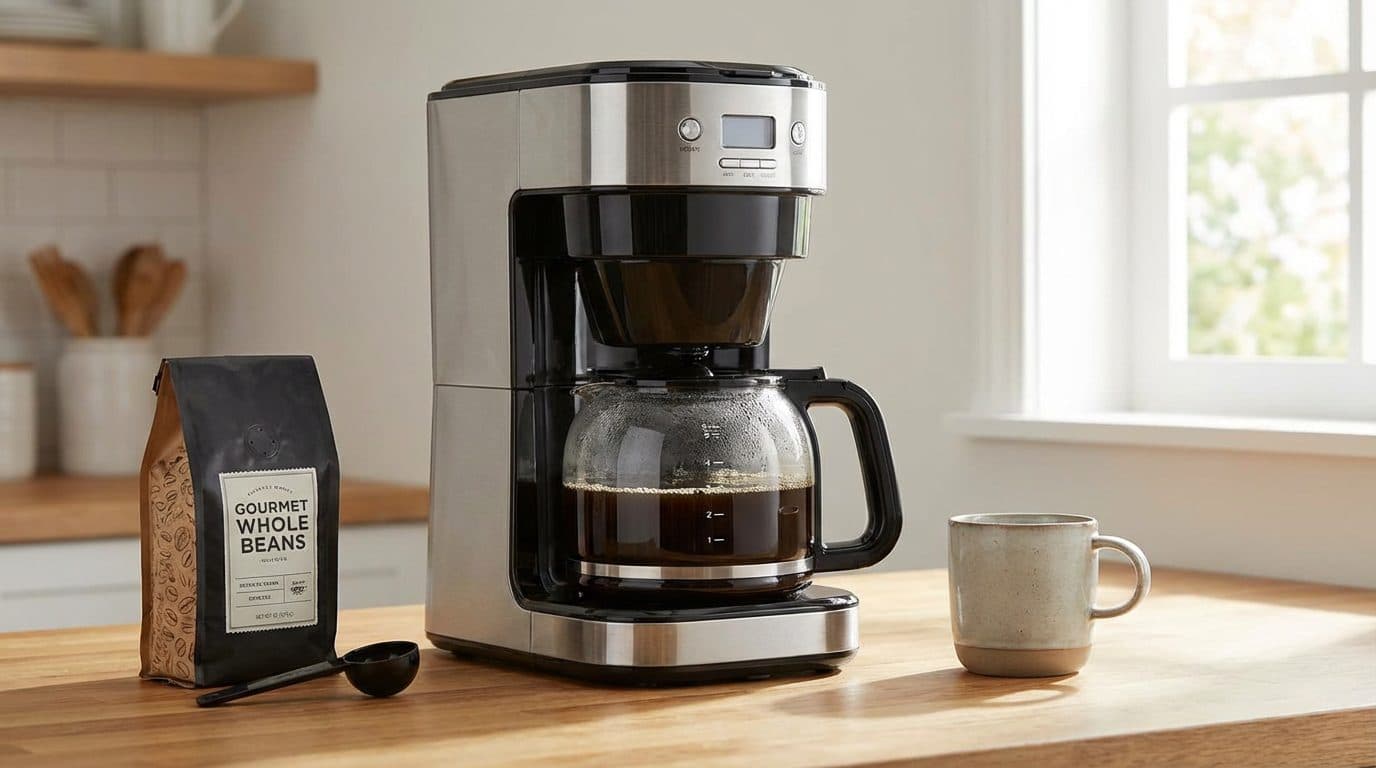
- Automatic Drip Machine: Best if convenience matters most. Look for a machine that heats properly and does not burn the coffee on a hot plate. A thermal carafe is a useful upgrade. Typical cost: $30 to $100 for basic models.
If you rush out the door every weekday, a drip machine with a timer may beat a beautiful manual setup. If you enjoy making one fresh cup, a pour-over or French press gives you more control for less money.
Also think about cleanup. A French press needs the grounds emptied and the mesh rinsed. A pour-over needs paper filters but has very little scrubbing. A drip machine is easy day to day, but the basket, carafe, and water path still need regular cleaning. The best brewer is the one you will keep clean without resentment.
A Way to Heat Water
If you use an automatic drip machine, the machine heats the water. For French press and pour-over, you need a kettle.
- Basic kettle: A stovetop or electric kettle is fine. An electric kettle is faster and easier for most kitchens.
- Gooseneck kettle: Helpful for pour-over control, but optional at the start. It matters less for French press.
Most coffee brews well with water around 195°F to 205°F. That range is also used in Specialty Coffee Association brewing protocols. Without a thermometer, bring water to a boil and let it sit briefly before pouring.
Fresh Coffee Beans
Beans matter more than most beginner gadgets. Old coffee through fancy gear still tastes old.
- Buy whole beans when possible: They stay fresher than pre-ground coffee.
- Look for a roast date: A bag roasted within the last few weeks is a safer bet than one with only a distant best-by date.
- Start with medium roasts: They are usually forgiving and balanced.
- Try local roasters: They often sell fresher coffee and can grind it for your brewer if you do not own a grinder yet.
If the budget is tight, spend more on fresh beans before buying decorative accessories. A better bag of coffee changes the cup immediately.
For a first bag, avoid extremes. Very dark roasts can taste smoky and bitter while very light roasts can taste sharp if your recipe is not dialed in. A medium roast from a recent roast date gives you more room for error while you learn your brewer.
A Coffee Grinder

A grinder is the first upgrade I would prioritize after the brewer. Grinding fresh keeps more aroma in the cup and lets you match grind size to the method.
- Blade grinder: Cheap and common, but uneven. It can work in a pinch, especially for French press, but it creates fines and boulders that extract unevenly.
- Burr grinder: More consistent. Manual burr grinders can be affordable, and entry-level electric burr grinders are convenient for daily use.
If you cannot buy a grinder yet, ask a local roaster to grind for your specific method and buy smaller amounts. Pre-ground coffee from a fresh roaster is better than old supermarket whole beans you cannot grind properly.
Grind size is worth learning early. If coffee tastes sour, thin, or tea-like, the grind may be too coarse or the brew too short. If it tastes bitter, dry, or harsh, the grind may be too fine or the brew too long. Change one setting at a time so you know what helped.
Optional Upgrades That Actually Help
These are useful, but they are not required on day one. Add them when you notice inconsistency or want more control.
A Kitchen Scale
A scale makes coffee easier, not harder. Instead of guessing scoops and water levels, you use a repeatable ratio. A common starting point is 1 gram of coffee to 15 to 17 grams of water, then adjust by taste.
Any digital kitchen scale that measures grams is enough. A coffee-specific scale with a timer is nice, but unnecessary for a first setup.
A Timer
Brew time affects flavor. Too short can taste sour or weak. Too long can taste bitter or dry. Your phone timer is fine. Use it for French press steeping, pour-over drawdown, or AeroPress recipes.
Proper Storage

Store coffee away from air, light, moisture, and heat. The original valve bag is often fine if it seals well. An airtight container in a cabinet also works.
Avoid storing daily coffee in the fridge. Coffee can absorb odors and moisture. Freezing can work for longer storage if done carefully in sealed portions, but it is not needed for a beginner buying one bag at a time.
Common Beginner Mistakes to Avoid
Most bad home coffee comes from a few repeatable issues, not from missing luxury gear.
- Using stale coffee: If the bag has been open for months, replace it.
- Ignoring water: Coffee is mostly water. If tap water tastes chlorine-heavy or metallic, try filtered water.
- Eyeballing everything: Use a scoop at minimum, or a scale if you have one.
- Wrong grind size: French press needs coarse grounds. Pour-over usually needs medium to medium-fine. Espresso needs fine, but espresso is not the easiest beginner path.
- Letting equipment stay dirty: Old coffee oils turn rancid and make fresh coffee taste stale.
For example, if your French press tastes harsh and sludgy, the answer may be coarser grinding and cleaner water, not buying a new brewer. Diagnose one variable at a time.
Sample Beginner Home Coffee Setup Under $75

Here is a practical starter list if you are buying from scratch:
- French Press (8-cup): $20 to $25.
- Manual burr grinder: $30 to $40.
- Fresh whole bean coffee (12 oz bag): $12 to $18.
- Basic electric kettle: Use what you own, or budget around $15 to $25.
If that pushes the budget, skip the grinder for the first bag and have a roaster grind it for French press. Then make the grinder your next purchase. A French press plus fresh properly ground coffee is a strong starting point.
Another route is a pour-over starter setup: a plastic dripper, paper filters, a basic kettle, and fresh pre-ground coffee from a roaster. It can cost even less than the French press version, though it asks for more attention while pouring. If you already own a kettle and scale, this may be the cheapest clean-cup path.
Frequently Asked Questions
Do I really need a grinder for my home coffee setup?
Not immediately, but it helps a lot. Ground coffee loses aroma faster than whole beans, and grind size controls extraction. If you cannot buy a grinder yet, buy smaller amounts of pre-ground coffee from a roaster and tell them your brew method.
What’s the best brewing method for beginners?
French press is the most forgiving for many beginners. Automatic drip is best for convenience. Pour-over is best if you want a cleaner cup and do not mind learning technique. The best method is the one you will use consistently.
How much should I spend on coffee beans?
Expect roughly $12 to $20 for a 12-ounce bag from many specialty or local roasters, though prices vary. That can feel expensive next to supermarket coffee, but it is still far cheaper than buying cafe coffee every day.
Can I use tap water for brewing coffee?
Yes, if it tastes good. If it tastes strongly of chlorine, minerals, or metal, use filtered water. Avoid distilled water for regular brewing because coffee extracts better with some minerals present.
How often should I clean my coffee equipment?
Rinse brewers after every use and wash them regularly with mild soap. Clean grinders by brushing out old grounds weekly. Descale kettles and drip machines as needed, especially if you have hard water.
Bottom Line: Buy Less, Brew More Consistently
A beginner coffee setup should make daily brewing easier, not more intimidating. Start with fresh beans, one brewer that fits your routine, hot water, and a repeatable ratio. Add a burr grinder and scale when you are ready for better consistency.
Pick one method this week and brew it the same way three times. Change only one variable after that. That steady approach teaches you faster than buying five gadgets and guessing every morning.

Comments