


Table of Contents
- Quick Verdict: Best Coffee for Pour Over (Floral & Fruity)
- Understanding Floral and Fruity Coffee Profiles
- What Makes Coffee Taste Floral or Fruity?
- Why Pour Over Highlights These Flavors
- Best Coffee Origins for Floral and Fruity Pour Over
- Ethiopian Coffee: The Floral King
- Kenyan Coffee: Bright and Juicy
- Other Notable Origins
- Processing Methods: Washed vs. Natural
- Washed (Wet) Process
- Natural (Dry) Process
- Roast Level: Why Light Roast Wins
- Light Roast for Maximum Flavor
- How to Identify Roast Level
- Brewing Tips for Floral and Fruity Pour Over
- What You'll Need
- Brewing Parameters
- Common Mistakes to Avoid
- How to Shop for Floral and Fruity Beans
- Tasting Notes to Seek Out
- Red Flags to Avoid
- Conclusion and Next Steps
Looking for a pour over coffee that bursts with jasmine, bergamot, blueberry, or citrus notes? You’re in the right place. Finding the best coffee for pour over with floral and fruity profiles isn’t just about grabbing any bag off the shelf—it’s about understanding origins, roast levels, and processing methods that unlock those delicate, complex flavors.
In my experience brewing countless cups at home, nothing beats the moment when a perfectly dialed-in pour over releases those bright, aromatic notes. Life is too short for flat, boring coffee. Let’s explore which beans will transform your morning ritual into something truly special.
Quick Verdict: Best Coffee for Pour Over (Floral & Fruity)
Ethiopian Yirgacheffe (Washed Process)
If you want the quintessential floral and fruity pour over experience, Ethiopian Yirgacheffe is your go-to. Its combination of jasmine-like florals, bright citrus, and tea-like body makes it the gold standard for this flavor profile. The washed process keeps everything clean and vibrant—exactly what pour over brewing showcases best.
Understanding Floral and Fruity Coffee Profiles
Before diving into specific origins, let’s talk about what creates those beautiful floral and fruity notes in coffee. It’s not magic—it’s a combination of terroir, processing, and roasting.
What Makes Coffee Taste Floral or Fruity?
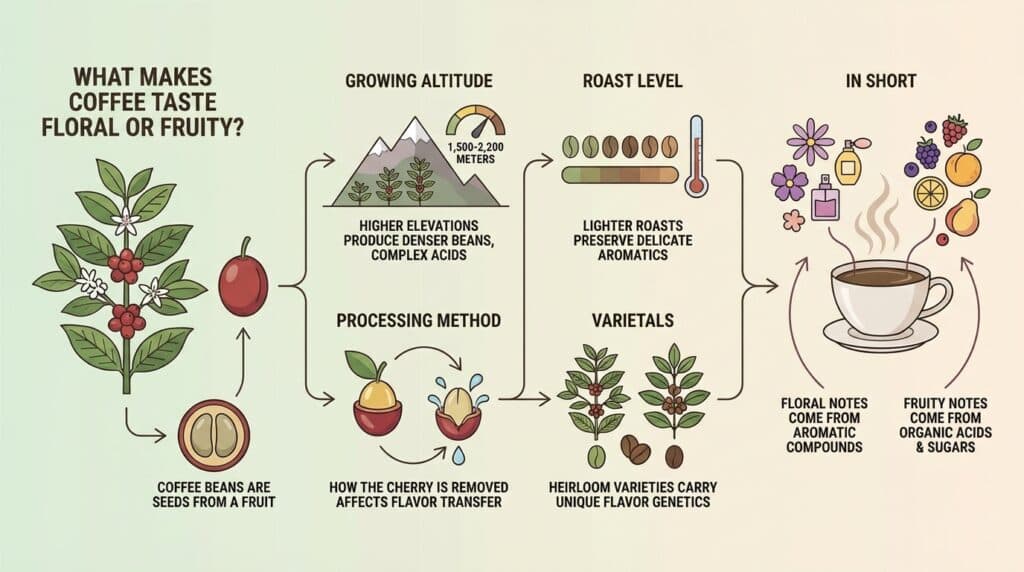
Coffee beans are actually seeds from a fruit called the coffee cherry. The flavors we taste come from:
- Growing altitude: Higher elevations (1,500-2,200 meters) produce denser beans with more complex acids
- Processing method: How the cherry is removed affects flavor transfer
- Roast level: Lighter roasts preserve delicate aromatics
- Varietals: Heirloom varieties often carry unique flavor genetics
In short, floral notes come from aromatic compounds similar to those found in flowers, while fruity notes develop from organic acids and sugars present in the bean.
Why Pour Over Highlights These Flavors
Pour over brewing is ideal for floral and fruity coffees because the paper filter removes oils and sediment, resulting in a clean, transparent cup. This clarity allows subtle notes to shine through rather than getting muddied by heavier body or bitterness. Methods like the V60, Kalita Wave, and Chemex are particularly effective at showcasing origin characteristics.
Best Coffee Origins for Floral and Fruity Pour Over
Not all coffee-growing regions produce beans with bright, aromatic profiles. Here’s where to focus your search.
Ethiopian Coffee: The Floral King
Ethiopia is the birthplace of coffee, and its beans remain unmatched for floral complexity. I’ve found that Ethiopian coffees consistently deliver the most pronounced jasmine, bergamot, and stone fruit notes.
Pros:
- Unparalleled floral aromatics (jasmine, honeysuckle, lavender)
- Bright, wine-like acidity
- Complex fruit notes ranging from blueberry to citrus
- Tea-like, delicate body perfect for pour over
Cons:
- Can be inconsistent between lots
- May taste “too light” for those used to darker roasts
- Premium prices for top-tier lots
Key regions to look for:
- Yirgacheffe: Floral-forward with lemon and bergamot
- Sidamo: Berry-heavy with wine-like qualities
- Guji: Complex fruit with tropical notes
Who is this for? Coffee lovers who want maximum floral complexity and don’t mind a lighter body. Perfect if you enjoy tea or appreciate aromatic wines.
Who is this NOT for? Those who prefer bold, chocolatey, or nutty profiles. If you like your coffee to taste like “coffee,” Ethiopian light roasts might feel too different.
Kenyan Coffee: Bright and Juicy
Kenyan beans are famous for their explosive acidity and juicy fruit character. According to coffee enthusiasts, a well-brewed Kenyan pour over can taste like blackberry juice with a coffee backbone.
Pros:
- Vibrant, mouth-watering acidity
- Bold fruit notes (blackcurrant, grapefruit, tomato)
- Full body compared to Ethiopian coffees
- Excellent consistency from established farms
Cons:
- Acidity can be overwhelming for some palates
- Less floral than Ethiopian options
- Often among the most expensive single origins
Who is this for? Those who love bright, punchy flavors and don’t shy away from acidity. Great for experienced pour over brewers who want intensity.
Who is this NOT for? Anyone sensitive to acidic foods or drinks. If citrus fruits give you heartburn, Kenyan coffee might be too aggressive.
Other Notable Origins
| Origin | Flavor Profile | Best For |
|---|---|---|
| Panama (Gesha) | Jasmine, tropical fruit, honey | Special occasions (premium price) |
| Colombia (high altitude) | Citrus, apple, caramel sweetness | Balanced fruity-sweet profile |
| Rwanda | Orange, floral, silky body | Approachable African-style coffee |
| Costa Rica (honey process) | Stone fruit, honey, mild florals | Fruit-forward but not too wild |
Processing Methods: Washed vs. Natural
The way coffee cherries are processed dramatically affects your cup. Understanding this helps you pick beans that match your flavor preferences.
Washed (Wet) Process
The fruit is removed before drying, resulting in a cleaner cup that highlights the bean’s inherent characteristics.
- Flavor profile: Bright acidity, clean florals, citrus notes
- Best for: Those who want clarity and precision in their cup
- Example: Washed Ethiopian Yirgacheffe with jasmine and lemon
Natural (Dry) Process
The bean dries inside the fruit, allowing sugars to ferment and transfer flavors to the seed.
- Flavor profile: Heavy fruit, berry, wine-like, sometimes funky
- Best for: Those who want intense, jammy fruit bombs
- Example: Natural Ethiopian Sidamo with blueberry and strawberry
Barista Tip: If you’re new to fruity coffees, start with washed process beans. They’re more approachable and less likely to taste “weird” to an untrained palate. Natural process coffees can be polarizing—some people love the intense fruitiness, while others find it overwhelming.
Roast Level: Why Light Roast Wins
Here’s a truth many home brewers overlook: roast level matters more than almost anything else when chasing floral and fruity notes.
Light Roast for Maximum Flavor
Light roasts preserve the delicate aromatic compounds that create floral and fruity flavors. The longer you roast, the more these compounds break down and get replaced by roasty, caramelized, or bitter notes.
- Light roast: Origin flavors shine—florals, fruits, bright acidity
- Medium roast: Balance between origin and roast flavors
- Dark roast: Roast flavors dominate—chocolate, smoke, bitterness
In my experience, anything past a medium roast will mute the very flavors you’re looking for. If a bag says “dark roast Ethiopian,” you’re essentially paying premium prices for beans that will taste like any other dark roast.
How to Identify Roast Level
Look at the beans themselves:
- Light roast: Light brown, no oil on surface, dense and hard
- Medium roast: Medium brown, slight sheen possible
- Dark roast: Dark brown to black, oily surface, lighter weight
Key Takeaway: For the best floral and fruity pour over experience, always choose light to medium-light roasts. The origin’s character should be the star, not the roaster’s heavy hand.
Brewing Tips for Floral and Fruity Pour Over
Even the best beans can taste flat if brewed incorrectly. Here’s how to maximize those delicate flavors.
What You’ll Need
Gear:
- Pour over dripper (V60, Kalita Wave, or Chemex)
- Gooseneck kettle with temperature control
- Burr grinder (consistency is crucial)
- Scale with timer
- Fresh, filtered water
Coffee:
- 15-18 grams of freshly roasted beans (ideally 7-21 days from roast date)
- Medium-fine grind (slightly finer than table salt)
Brewing Parameters

| Parameter | Recommendation | Why It Matters |
|---|---|---|
| Water Temperature | 92-96°C (198-205°F) | Too hot = bitter; too cool = sour |
| Ratio | 1:15 to 1:17 (coffee to water) | Lighter ratios highlight delicate notes |
| Brew Time | 2:30-3:30 minutes | Adjust grind if outside this range |
| Bloom | 30-45 seconds with 2x coffee weight | Releases CO2 for even extraction |
Barista Tip: Use filtered water. Tap water with high mineral content or chlorine can mask delicate floral notes. I’ve found that switching to filtered water alone can dramatically improve clarity in light roast pour overs.
Common Mistakes to Avoid
- Using stale beans: Floral aromatics fade quickly—buy small quantities and use within 3-4 weeks
- Grinding too coarse: Under-extraction makes light roasts taste sour and thin
- Water too hot: Boiling water scorches delicate compounds
- Pouring too fast: Aggressive pours create channels and uneven extraction
How to Shop for Floral and Fruity Beans
Walking into a specialty coffee shop or browsing online can feel overwhelming. Here’s what to look for on the bag.
Tasting Notes to Seek Out
Look for descriptors like:
- Floral: Jasmine, honeysuckle, lavender, rose, bergamot, chamomile
- Citrus: Lemon, orange, grapefruit, lime, tangerine
- Berry: Blueberry, strawberry, raspberry, blackcurrant
- Stone fruit: Peach, apricot, plum, cherry
- Tropical: Mango, papaya, passion fruit, pineapple
Red Flags to Avoid
- No roast date on the bag (freshness unknown)
- Descriptors like “bold,” “smoky,” or “dark chocolate” (wrong profile)
- Blends without origin transparency
- Beans that look oily (over-roasted)
Did You Know? Many specialty roasters now include detailed information about the farm, altitude, processing method, and varietal on their bags. This transparency is a good sign of quality and helps you make informed choices.
Conclusion and Next Steps
Finding the best coffee for pour over with floral and fruity notes comes down to three key factors: origin, processing, and roast level. Ethiopian and Kenyan coffees lead the pack for these flavor profiles, with washed process beans offering cleaner florals and natural process beans delivering intense fruit bombs. Always opt for light roasts to preserve those delicate aromatics.
Start by picking up a bag of washed Ethiopian Yirgacheffe from a reputable specialty roaster—it’s the most reliable entry point into this flavor world. Dial in your brewing parameters, use fresh beans and filtered water, and you’ll be rewarded with cups that taste like nothing you’ve experienced from a coffee maker. Once you’ve mastered that, branch out to Kenyan coffees or experiment with natural process Ethiopians for even more adventure in your cup. Happy brewing!



Comments