


Table of Contents
- Quick Verdict: It Depends on Your Goals
- What Are Single-Origin Coffee Beans?
- Why Geography Matters
- Pros of Single-Origin Coffee
- Cons of Single-Origin Coffee
- What Are Blend Coffee Beans?
- The Art of Blending
- Pros of Blend Coffee Beans
- Cons of Blend Coffee Beans
- Single-Origin vs Blend: Key Differences at a Glance
- Who Should Choose Single-Origin Coffee?
- This Is For You If…
- This Is NOT For You If…
- Who Should Choose Blend Coffee?
- This Is For You If…
- This Is NOT For You If…
- A Practical Approach: Why Not Both?
- A Real-World Example
- What About Roast Level?
- Conclusion: Choose Based on How You Brew and Drink
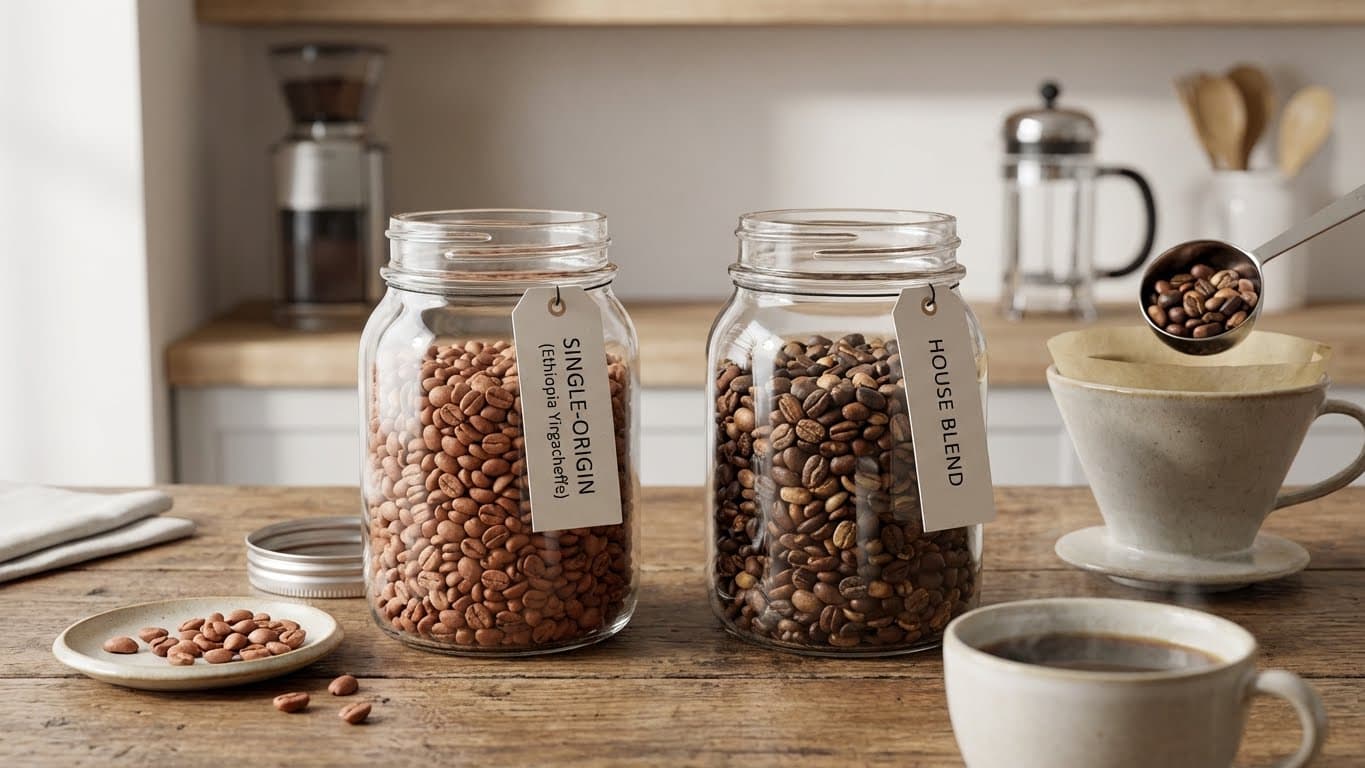
You’re standing in the coffee aisle, staring at two bags. One says “Ethiopian Yirgacheffe Single-Origin.” The other simply reads “House Blend.” Both promise a great cup, but which one actually belongs in your kitchen? If you’ve ever felt paralyzed by this choice, you’re not alone. The single-origin vs blend debate is one of the most common questions home baristas face—and the answer might surprise you.
In this guide, I’ll break down exactly what separates single-origin coffee beans from blends, help you understand the flavor profiles of each, and give you a clear framework for deciding which type suits your brewing style and taste preferences. Let’s settle this once and for all.
Quick Verdict: It Depends on Your Goals
Here’s the short answer: single-origin coffee beans are best for adventurous drinkers who want to explore unique, distinct flavors, while blend coffee beans are ideal for those who want consistent, balanced cups every day. Neither is objectively “better”—they serve different purposes in your coffee routine.
If you drink your coffee black and enjoy tasting notes like “blueberry” or “jasmine,” go single-origin. If you add milk, prefer a reliable morning cup, or make espresso-based drinks, blends will likely serve you better.
What Are Single-Origin Coffee Beans?
Single-origin coffee comes from one specific geographic location. This could mean a single country, a particular region within that country, or even a specific farm or cooperative. The key idea is traceability—you know exactly where your beans came from.
Why Geography Matters
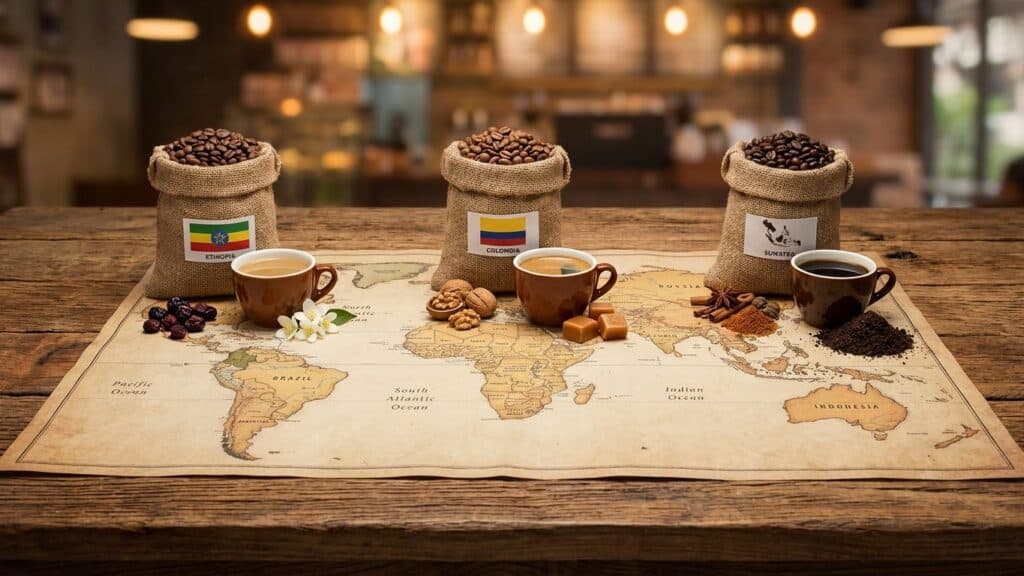
Coffee is like wine in this respect. The soil, altitude, climate, and processing methods of a region all influence the final flavor. Ethiopian beans often taste fruity and floral. Colombian beans tend toward nutty and caramel notes. Sumatran beans frequently deliver earthy, full-bodied cups.
When you buy single-origin, you’re tasting a specific place. In my experience, this is what makes single-origin coffee so exciting—each bag is a little journey.
Pros of Single-Origin Coffee
- Unique, complex flavor profiles you won’t find elsewhere
- Full traceability and transparency about sourcing
- Often supports smaller farms and sustainable practices
- Perfect for pour-over, French press, and other manual brewing methods
- Great for developing your palate and learning about coffee
Cons of Single-Origin Coffee
- Flavor can be inconsistent between harvests
- Generally more expensive than blends
- Some origins may taste too “wild” or acidic for certain palates
- Not always ideal for milk-based drinks where subtlety gets lost
- Seasonal availability means your favorite might disappear
What Are Blend Coffee Beans?
Blends combine beans from multiple origins to create a specific, consistent flavor profile. A roaster might mix beans from Brazil, Guatemala, and Indonesia to achieve a balanced cup with chocolate notes, mild acidity, and a smooth finish.
The Art of Blending
Good blending is genuinely skilled work. Roasters carefully select beans that complement each other, compensating for weaknesses and amplifying strengths. The goal is usually balance and repeatability—your morning cup should taste the same whether you buy it in January or July.
Think of it like a band. Single-origin is a solo artist showcasing their unique voice. A blend is a well-rehearsed group where each member contributes to a harmonious whole.
Pros of Blend Coffee Beans
- Consistent flavor profile year-round
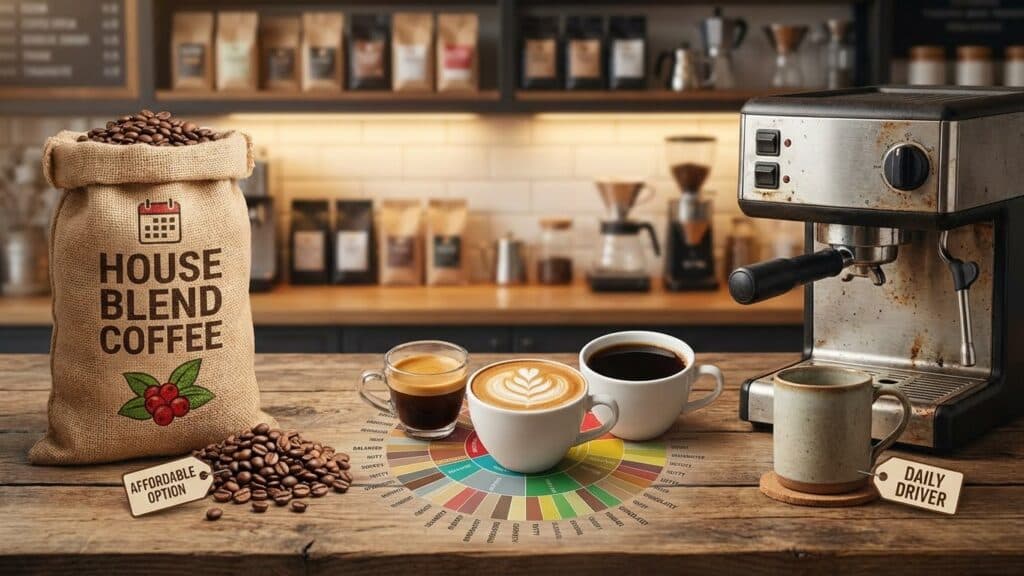
- Typically more affordable than single-origin options
- Balanced taste that appeals to a wider range of palates
- Excellent for espresso and milk-based drinks like lattes
- Easier to find a “daily driver” you can rely on
Cons of Blend Coffee Beans
- Less transparency about exact sourcing
- Can taste generic or unremarkable if poorly crafted
- You miss out on the unique characteristics of specific origins
- Lower-quality blends may use inferior beans to cut costs
Single-Origin vs Blend: Key Differences at a Glance
| Factor | Single-Origin | Blend |
|---|---|---|
| Flavor Profile | Distinct, unique, sometimes bold | Balanced, smooth, consistent |
| Consistency | Varies by harvest and season | Designed to taste the same always |
| Price | Usually higher | Usually more affordable |
| Best Brewing Method | Pour-over, French press, Aeropress | Espresso, drip, cold brew |
| With Milk? | Often overpowered | Holds up well |
| Traceability | High—you know the source | Lower—multiple sources combined |
Who Should Choose Single-Origin Coffee?
This Is For You If…
- You drink your coffee black and want to taste every nuance
- You enjoy experimenting with different brewing methods
- You’re curious about where your coffee comes from
- You appreciate seasonal variety and don’t mind change
- You want to support specific farms or cooperatives
This Is NOT For You If…
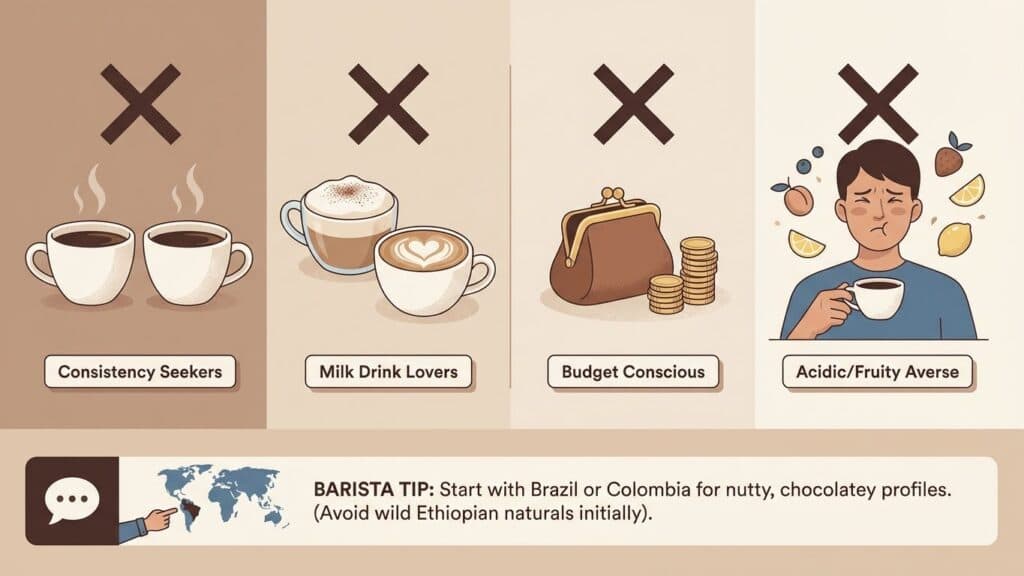
- You need your coffee to taste exactly the same every morning
- You primarily make lattes, cappuccinos, or other milk drinks
- You’re on a tight budget
- You find fruity or acidic coffees off-putting
Barista Tip: If you’re new to single-origin, start with beans from Brazil or Colombia. These origins tend to have approachable, crowd-pleasing profiles—nutty, chocolatey, and low in acidity. Save the wild Ethiopian naturals for when you’ve developed your palate a bit more.
Who Should Choose Blend Coffee?
This Is For You If…
- You want a reliable, no-surprises cup every day
- You make espresso or espresso-based drinks at home
- You add milk, cream, or sweeteners to your coffee
- You’re buying coffee for a household with different taste preferences
- You value affordability without sacrificing quality
This Is NOT For You If…
- You want to explore the full spectrum of coffee flavors
- Traceability and farm-level sourcing matter to you
- You find “balanced” coffee boring
Barista Tip: When shopping for blends, look for roasters who actually describe what’s in the blend. A good roaster will tell you the component origins and what each contributes. Vague descriptions like “smooth and rich” without any origin information can be a red flag for lower-quality beans.
A Practical Approach: Why Not Both?
Here’s what I’ve found works best for most home baristas: keep both on hand. Use a solid blend as your everyday coffee—the one you reach for half-asleep on Monday mornings or when making drinks for guests. Then keep a rotating single-origin for weekend mornings when you have time to brew slowly and actually taste what’s in your cup.
This approach gives you consistency when you need it and adventure when you want it. Life is too short for bad coffee, but it’s also too short to stress over every bean decision.
A Real-World Example
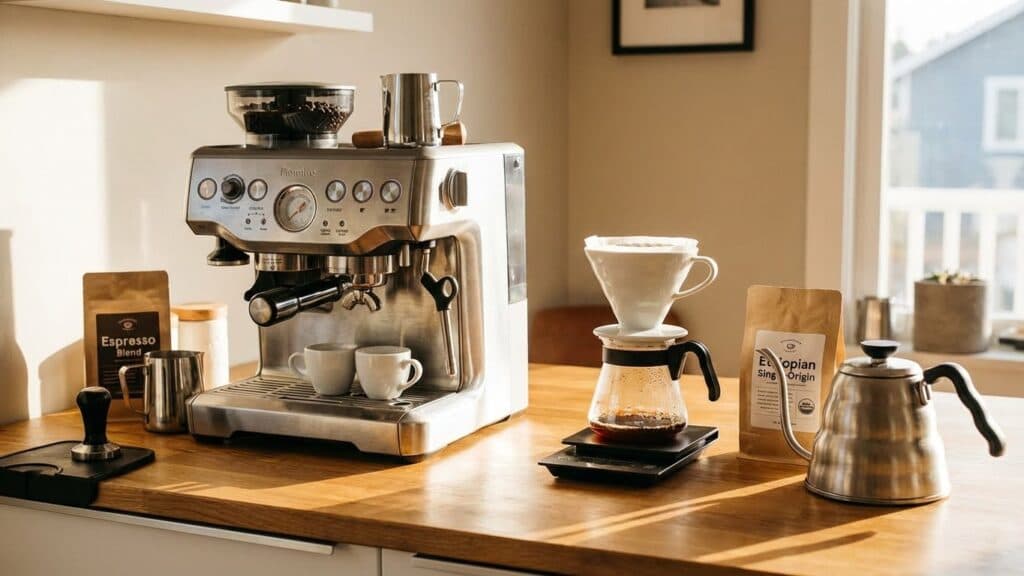
Let’s say you have an espresso machine and a pour-over setup. For espresso, a well-crafted blend will give you that rich, syrupy shot that stands up to milk. For your Saturday morning pour-over ritual, a single-origin Ethiopian or Kenyan will reward your attention with layers of fruit and floral notes you’d never get from a blend.
What About Roast Level?
One more thing worth mentioning: roast level matters regardless of whether you choose single-origin or blend. Light roasts preserve more of the bean’s original character—great for showcasing single-origin complexity. Medium and dark roasts develop more caramelization and body, which is why many espresso blends lean darker.
In short, a light-roast single-origin and a dark-roast blend are almost entirely different drinking experiences. Consider both the origin type and roast level when making your choice.
Conclusion: Choose Based on How You Brew and Drink
The single-origin vs blend debate doesn’t have a universal winner. Single-origin coffee beans shine when you want to explore unique flavors, drink black coffee, and don’t mind some variation. Blend coffee beans excel when you need consistency, make milk drinks, or want an affordable daily option that never disappoints.
My recommendation? Start by honestly assessing how you actually drink coffee most of the time. If you’re a black-coffee-in-a-pour-over person, lean toward single-origins. If you’re a latte-every-morning person, find a blend you love. And if you’re somewhere in between, grab one of each and enjoy the best of both worlds. Your perfect cup is waiting—you just need to know what you’re looking for.

Comments