


Table of Contents
- Quick Verdict: Flat Burrs
- How Burr Grinders Actually Work
- Conical Burrs
- Flat Burrs
- The Real Taste Difference
- Conical Burrs: Body and Sweetness
- Flat Burrs: Clarity and Brightness
- Conical vs. Flat Burrs: Side-by-Side Comparison
- Conical Burrs: Pros and Cons
- Who Is This For?
- Who Is This NOT For?
- Flat Burrs: Pros and Cons
- Who Is This For?
- Who Is This NOT For?
- Practical Considerations Beyond Taste
- Budget
- Noise and Heat
- Retention
- Barista Tip
- Key Takeaway
- Conclusion and Next Steps
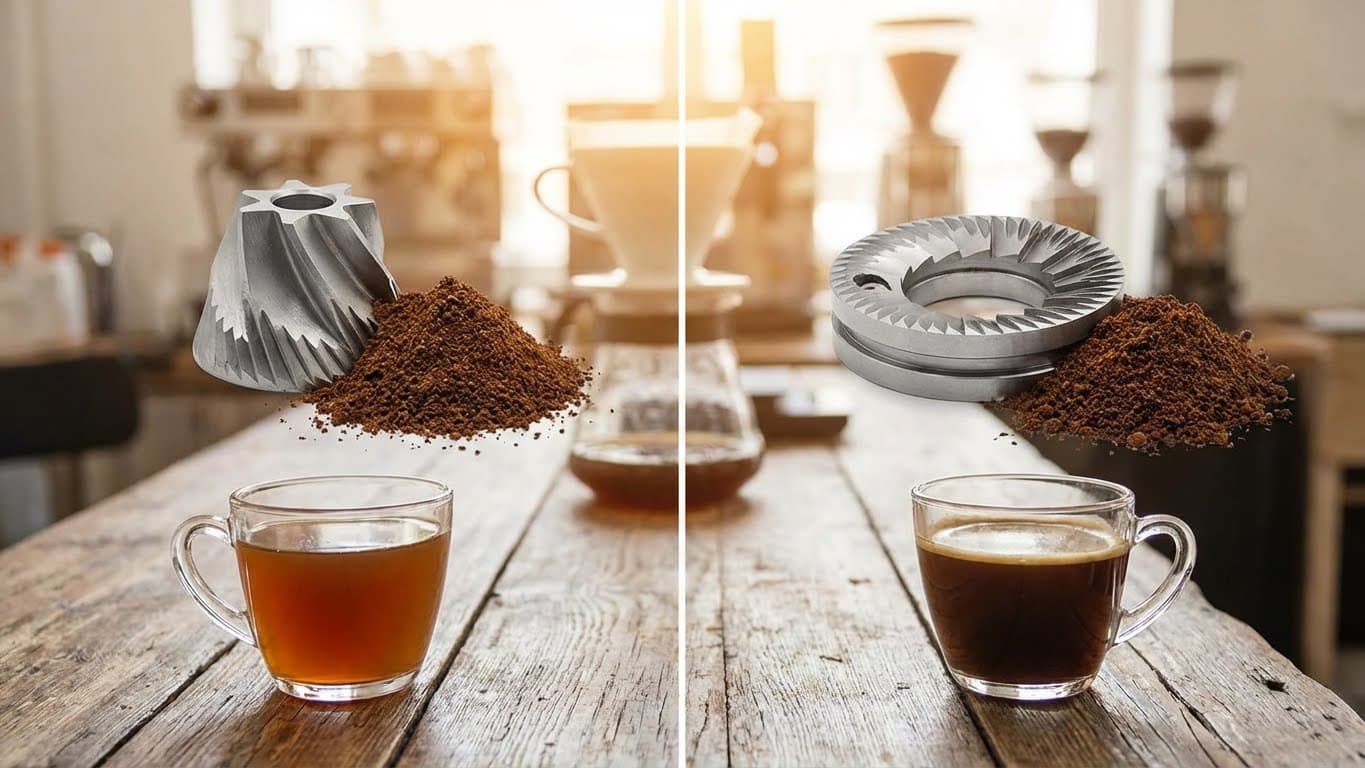
You’ve finally decided to invest in a quality burr grinder, but now you’re staring at product specs wondering: conical or flat burrs? It’s a question that sparks endless debate among coffee enthusiasts. The truth is, both designs can produce excellent coffee, but they do it differently—and yes, there’s a real taste difference worth understanding.
In this guide, I’ll break down exactly how conical and flat burrs affect your cup, which one suits your brewing style, and help you make a confident choice without getting lost in technical jargon. Life is too short for bad coffee, so let’s get this right.
Quick Verdict: Flat Burrs
For most home baristas chasing clarity and consistency in their espresso or filter coffee, flat burrs edge ahead. They produce a more uniform grind and highlight the nuanced, bright notes in specialty beans. However, conical burrs remain an excellent choice if you prefer a fuller body, want a quieter grinder, or are working with a tighter budget. There’s no wrong answer here—just different paths to great coffee.
How Burr Grinders Actually Work
Before diving into taste differences, it helps to understand the basic mechanics. Both conical and flat burrs crush coffee beans between two abrasive surfaces rather than chopping them like blade grinders. This crushing action creates more consistent particle sizes, which translates to even extraction and better flavor.
Conical Burrs
Conical burrs feature a cone-shaped ring that sits inside a hollow outer ring. Beans drop in from the top, get crushed between the two surfaces, and exit at the bottom. Gravity does most of the work, so these grinders typically spin slower and generate less heat.
Flat Burrs
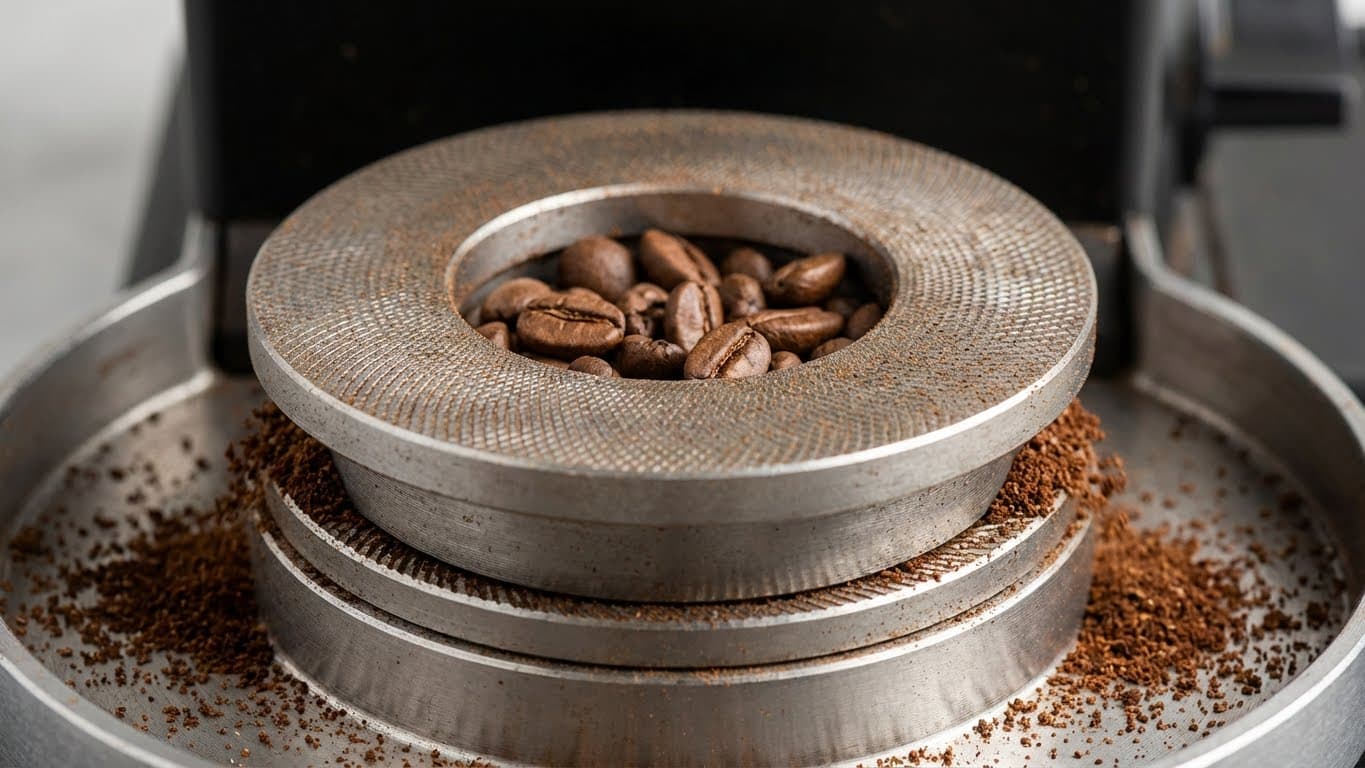
Flat burrs use two parallel, donut-shaped rings facing each other horizontally. Beans enter through the center, get ground between the faces, and shoot out the sides. This design requires higher RPMs and produces more friction, but the particle distribution tends to be tighter.
The Real Taste Difference
Here’s where things get interesting. In my experience testing dozens of grinders over the years, the flavor profiles from each burr type are genuinely distinct—especially when you’re working with high-quality, freshly roasted beans.
Conical Burrs: Body and Sweetness
Conical burrs produce what’s called a bimodal grind distribution. In short, this means you get a mix of larger and smaller particles. While that sounds like a flaw, it actually creates a richer, fuller-bodied cup with enhanced sweetness and a rounder mouthfeel.
I’ve found that conical grinders shine with darker roasts and brewing methods like French press or moka pot, where that heavier body feels right at home. If you love chocolatey, nutty, or caramel-forward coffees, conical burrs will serve you well.
Flat Burrs: Clarity and Brightness
Flat burrs create a unimodal distribution—particles that are much closer in size to each other. This uniformity leads to more even extraction, which highlights the distinct, individual flavors in your beans. Expect brighter acidity, cleaner separation of tasting notes, and a tea-like clarity.
For light-roasted, single-origin beans where you want to taste the Ethiopian blueberry or Kenyan citrus notes, flat burrs are typically the better choice. They’re also preferred by competition baristas for espresso because of that precision.
Conical vs. Flat Burrs: Side-by-Side Comparison
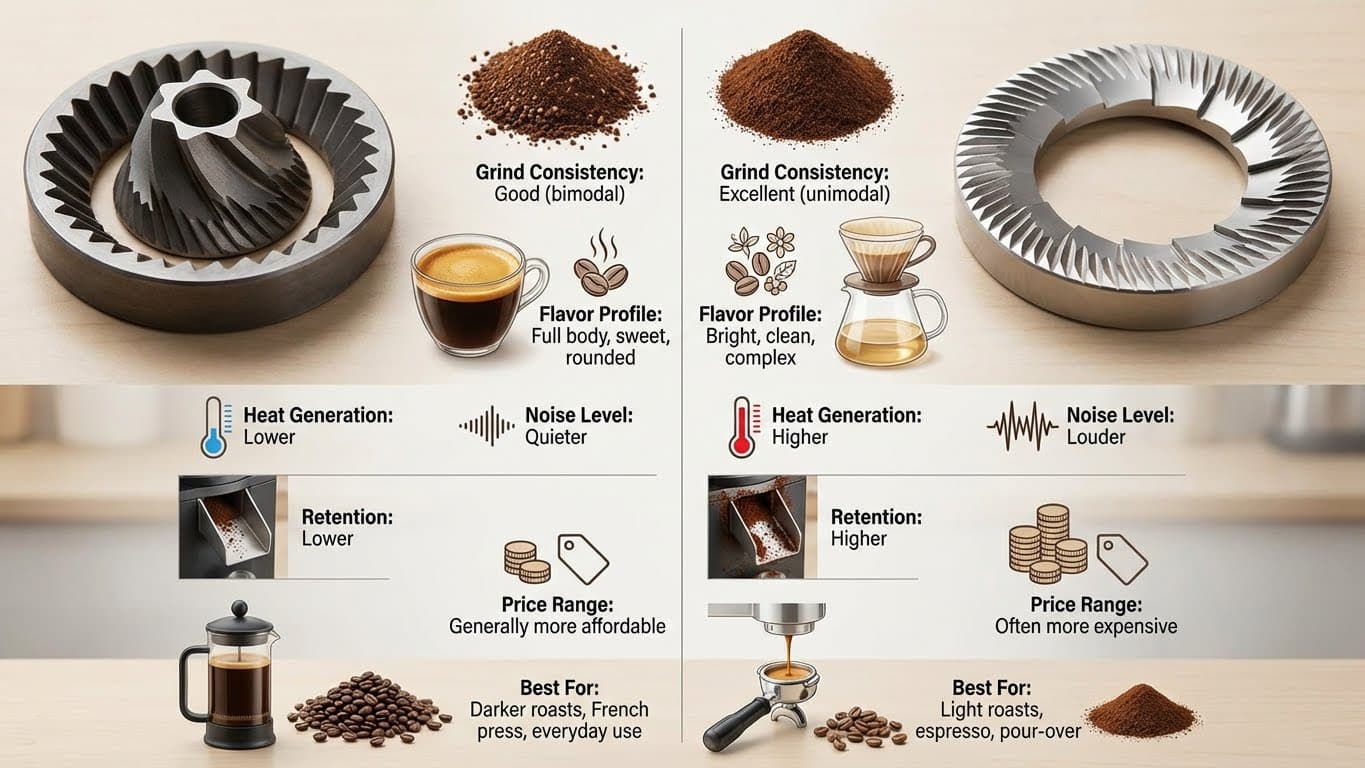
| Feature | Conical Burrs | Flat Burrs |
|---|---|---|
| Grind Consistency | Good (bimodal) | Excellent (unimodal) |
| Flavor Profile | Full body, sweet, rounded | Bright, clean, complex |
| Heat Generation | Lower | Higher |
| Noise Level | Quieter | Louder |
| Retention | Lower | Higher |
| Price Range | Generally more affordable | Often more expensive |
| Best For | Darker roasts, French press, everyday use | Light roasts, espresso, pour-over |
Conical Burrs: Pros and Cons
Pros:
- Quieter operation due to slower RPM
- Less heat buildup preserves volatile aromatics
- Lower grind retention means less waste
- Generally more affordable at entry and mid-level price points
- Produces a sweeter, fuller-bodied cup
- Forgiving with darker roasts
Cons:
- Less uniform particle size distribution
- May mask delicate, complex flavors in light roasts
- Not ideal if you prioritize clarity and brightness
Who Is This For?
Conical burrs are perfect for you if you drink medium to dark roasts, prefer immersion brewing methods like French press or AeroPress, want a quieter morning routine, or are building your first serious home setup without breaking the bank.
Who Is This NOT For?
If you’re obsessed with light-roasted specialty coffee, chase fruity and floral tasting notes, or want competition-level espresso consistency, conical burrs might leave you wanting more precision.
Flat Burrs: Pros and Cons
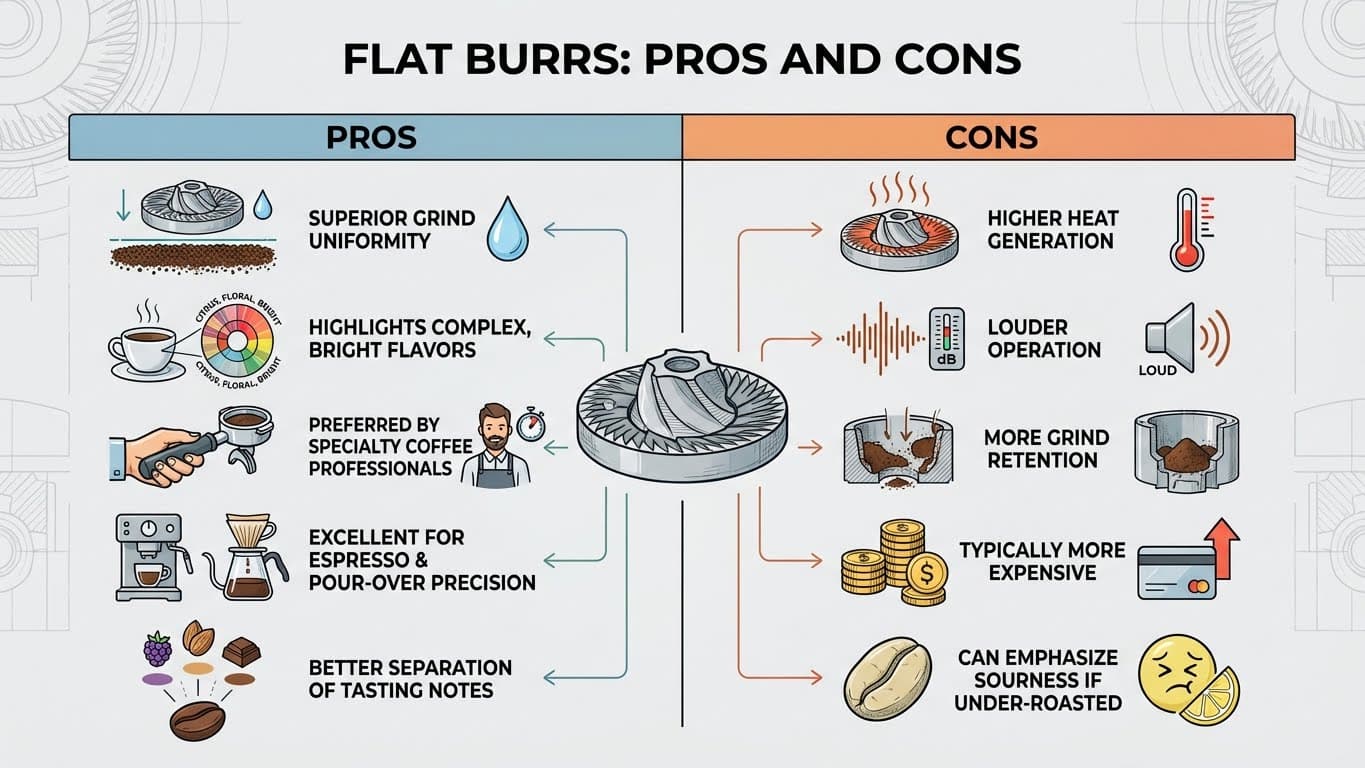
Pros:
- Superior grind uniformity for even extraction
- Highlights complex, bright, and delicate flavors
- Preferred by specialty coffee professionals
- Excellent for espresso and pour-over precision
- Better separation of individual tasting notes
Cons:
- Higher heat generation can affect flavor if grinding large doses
- Louder operation
- More grind retention in the chamber
- Typically more expensive
- Can emphasize sourness if beans are under-roasted
Who Is This For?
Flat burrs are ideal if you love light-roasted, single-origin beans, brew espresso or pour-over regularly, want to taste every nuance in your cup, or you’re ready to invest in a higher-end grinder for long-term use.
Who Is This NOT For?
If you primarily drink darker roasts, prefer a heavier body in your coffee, grind early in the morning when noise matters, or want an affordable entry point, flat burrs might be overkill for your needs.
Practical Considerations Beyond Taste
Taste is the main event, but a few practical factors deserve attention when choosing between these burr types.
Budget
Quality conical burr grinders start around $100-150, while comparable flat burr models often begin at $200-300 and climb steeply from there. If budget is tight, you’ll find more value in the conical category.
Noise and Heat
Conical grinders run slower and quieter—a real benefit if you’re grinding at 6 AM while others sleep. Flat burrs spin faster, creating more noise and heat. For single doses, heat isn’t a major concern, but if you’re grinding large batches, it can slightly affect flavor.
Retention
Flat burr grinders tend to retain more grounds in the chamber between uses. This matters if you switch beans frequently or single-dose your coffee. Many modern flat burr grinders address this with better designs, but it’s worth checking reviews.
Barista Tip
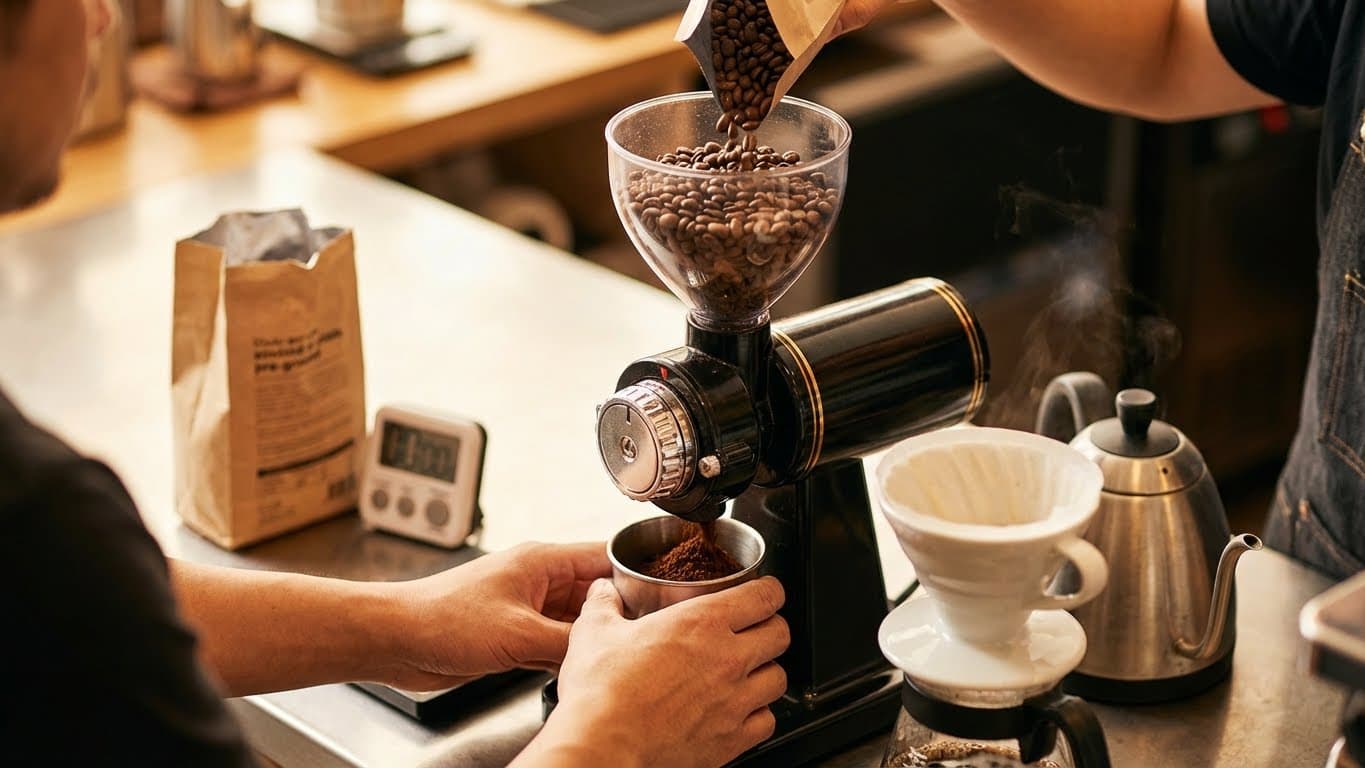
Regardless of which burr type you choose, grind fresh and grind right before brewing. Even the best grinder can’t save stale, pre-ground coffee. I’ve found that freshly ground beans—whether from conical or flat burrs—outperform week-old grounds from any grinder every single time.
Key Takeaway
The difference between conical and flat burrs isn’t about one being “better” than the other. It’s about matching the grinder to your taste preferences and brewing style. Conical burrs deliver body and sweetness; flat burrs deliver clarity and complexity. Both can make exceptional coffee in the right hands.
Conclusion and Next Steps
Choosing between conical and flat burrs comes down to what you want in your cup. If you crave a rich, sweet, full-bodied coffee and value quieter operation at a friendlier price, conical burrs will make you happy. If you’re chasing bright acidity, clean flavors, and precision extraction for espresso or pour-over, flat burrs are worth the investment.
My advice? Think about the beans you buy most often and how you brew them. Match your grinder to that reality, not to what sounds impressive on paper. Once you dial in your setup, you’ll taste the difference in every cup—and that’s what this whole journey is about.
Check the latest prices on quality burr grinders and start your mornings right. Your future self will thank you.


Comments