


Table of Contents
- What Is the Shower Screen and Why Does It Get So Dirty?
- Signs Your Shower Screen Needs Cleaning
- What You'll Need for Cleaning the Shower Screen
- Essential Gear
- Optional but Helpful
- Daily Cleaning: The Quick Wipe-Down Method
- Steps for Daily Maintenance
- Weekly Deep Cleaning: Removing the Shower Screen
- Step-by-Step Removal Process
- Cleaning the Removed Parts
- Reassembly Tips
- Monthly Deep Clean: The Backflush Method
- How to Backflush
- Common Mistakes to Avoid
- Frequently Asked Questions
- How often should I clean my shower screen?
- Can I use vinegar to clean the shower screen?
- My shower screen holes are completely blocked. What should I do?
- Will cleaning the shower screen really improve my espresso taste?
- Is it safe to put the shower screen in the dishwasher?
- Summary and Your Next Steps
Have you ever noticed your espresso tasting a bit off, maybe bitter or strangely rancid, even though you’re using fresh beans? The culprit might be hiding in plain sight. That buildup of coffee oils on your shower screen is one of the most overlooked maintenance tasks in home espresso, yet it makes a massive difference in your cup quality. Cleaning the shower screen regularly removes those rancid coffee oils and ensures every shot tastes as good as it should.
In my experience, most home baristas focus on backflushing and cleaning the portafilter but completely forget about the shower screen. I’ve found that even a week of neglect can leave a visible layer of brown, oily residue that affects extraction. In this guide, I’ll walk you through everything you need to know about removing coffee oils from your shower screen, from daily wipe-downs to deep cleaning sessions that’ll have your machine performing like new.
What Is the Shower Screen and Why Does It Get So Dirty?
The shower screen (sometimes called the dispersion screen) is that perforated metal disc located on the underside of your espresso machine’s group head. Its job is to distribute hot water evenly across your coffee puck, ensuring uniform extraction. Without it, water would blast through the center of your grounds, creating channeling and a terrible shot.
Every time you pull a shot, coffee oils, fine particles, and residue splash up and coat this screen. Over time, these oils oxidize and turn rancid. Think of it like cooking oil left in a pan for weeks—it goes bad and starts to smell. The same thing happens inside your machine.
Signs Your Shower Screen Needs Cleaning
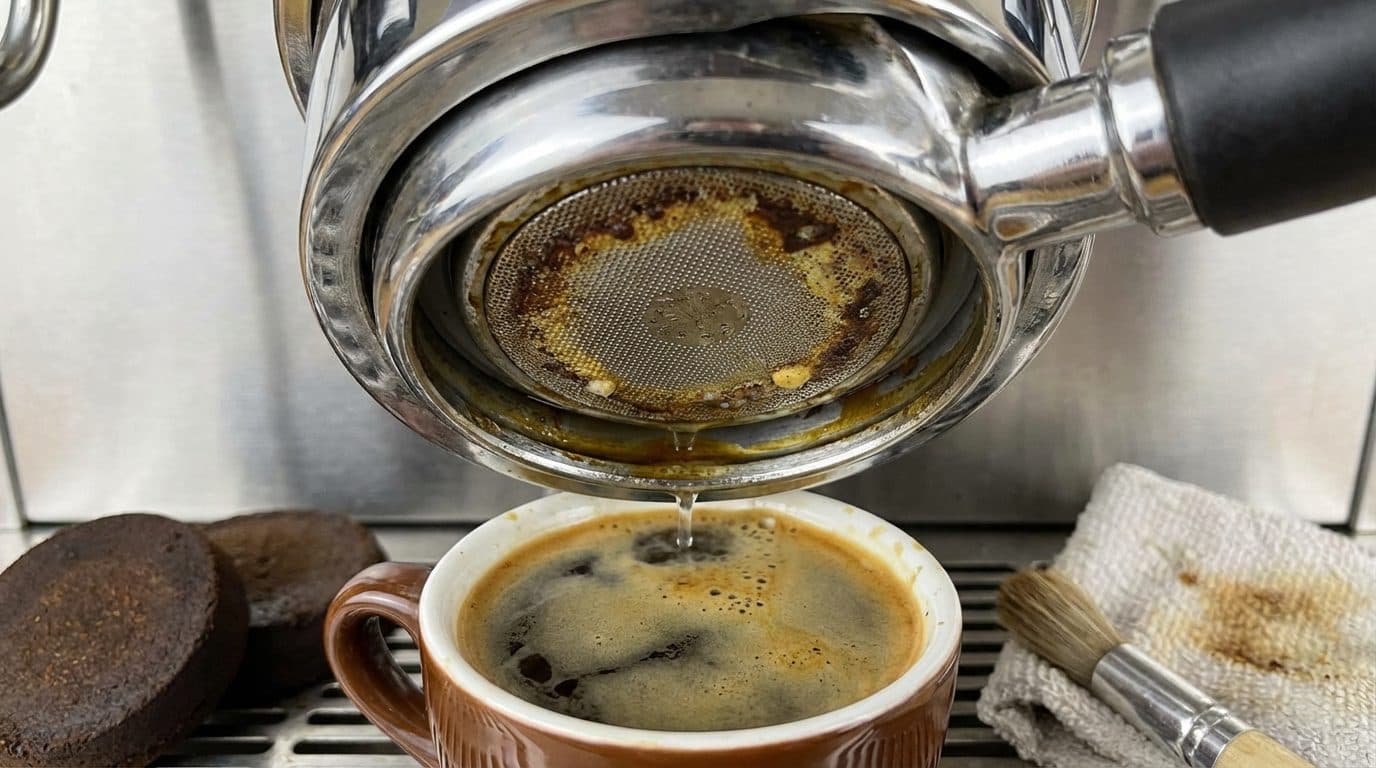
- Visible brown or yellow buildup on the screen surface
- Off-flavors in your espresso, particularly bitter, sour, or stale notes
- Uneven water distribution when you run water without the portafilter
- Slow water flow through the group head
- Oily residue on the rubber group gasket
If you’re experiencing any of these, it’s time to give that shower screen some attention. Don’t worry—this is one of the easiest maintenance tasks you can do, and it costs practically nothing.
What You’ll Need for Cleaning the Shower Screen
The good news is you probably already have most of these items at home. Here’s your complete cleaning kit:
Essential Gear
- Espresso machine brush (or a clean toothbrush)
- Microfiber cloth or clean towel
- Screwdriver (usually Phillips head, check your machine)
- Small bowl for soaking
- Espresso machine cleaner (Cafiza, Puly Caff, or similar)
Optional but Helpful
- Blind filter basket for backflushing
- Toothpick or needle for stubborn holes
- White vinegar (for occasional deep cleaning)
Barista Tip: Avoid using dish soap on coffee equipment. It can leave residue that affects taste and isn’t designed to break down coffee oils. Dedicated espresso cleaners contain surfactants specifically formulated to dissolve these stubborn oils.
Daily Cleaning: The Quick Wipe-Down Method
This takes about 30 seconds and should become part of your routine after every brewing session. I do this religiously, and it’s made a huge difference in how often I need to deep clean.
Steps for Daily Maintenance
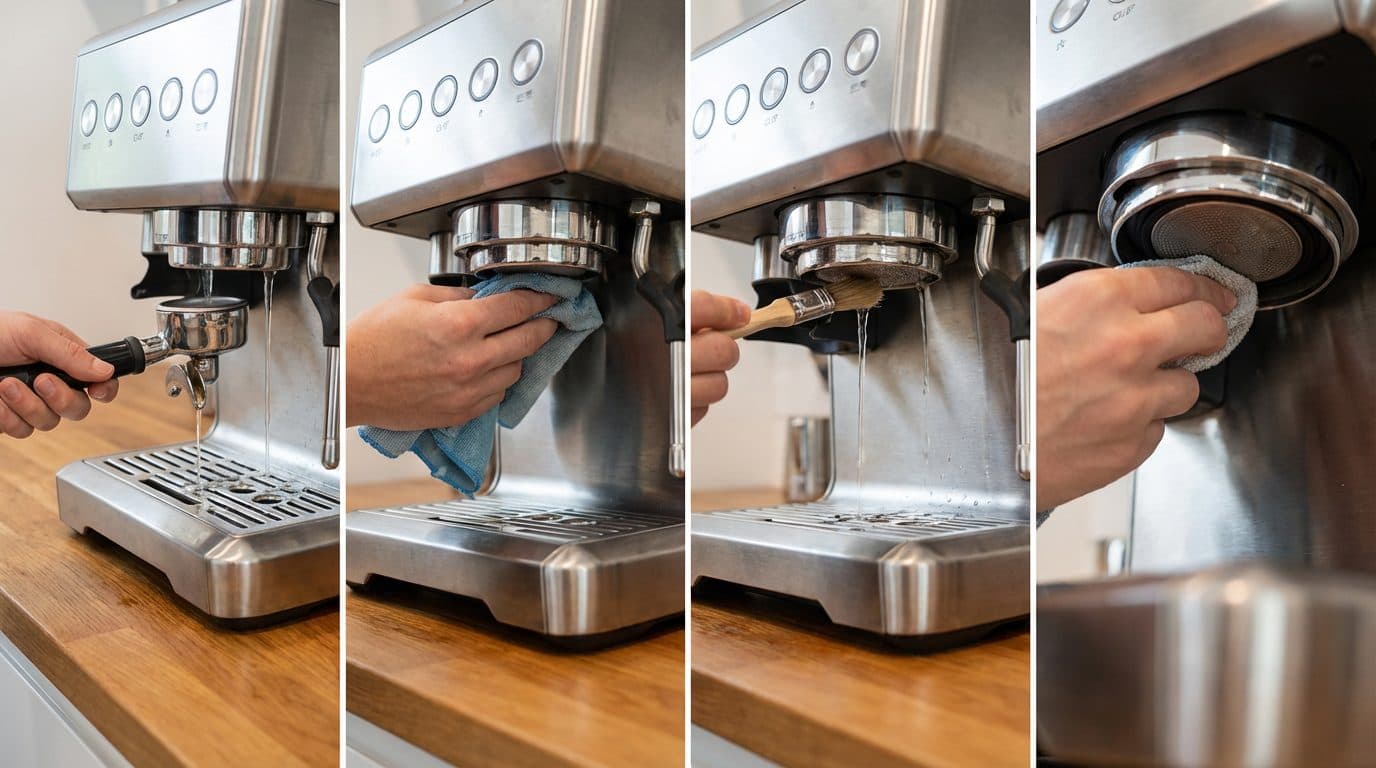
- Run a quick flush: After your last shot, remove the portafilter and run water through the group head for 2-3 seconds. This rinses away loose grounds.
- Wipe the screen: Using a damp microfiber cloth, wipe the shower screen in circular motions. The heat from the machine helps loosen oils.
- Brush if needed: Give the screen a few quick scrubs with your espresso brush while water drips through.
- Check the gasket: While you’re there, wipe the rubber group gasket too. Coffee oils love to accumulate there.
In short: flush, wipe, brush, done. This simple habit prevents the majority of buildup and extends the time between deep cleans significantly.
Weekly Deep Cleaning: Removing the Shower Screen
Once a week, you’ll want to actually remove the shower screen for a proper cleaning. This sounds intimidating, but I promise it’s straightforward. Here’s a realistic scenario: it’s Sunday morning, you’ve just finished your weekend espresso ritual, and you have five extra minutes. That’s all you need.
Step-by-Step Removal Process
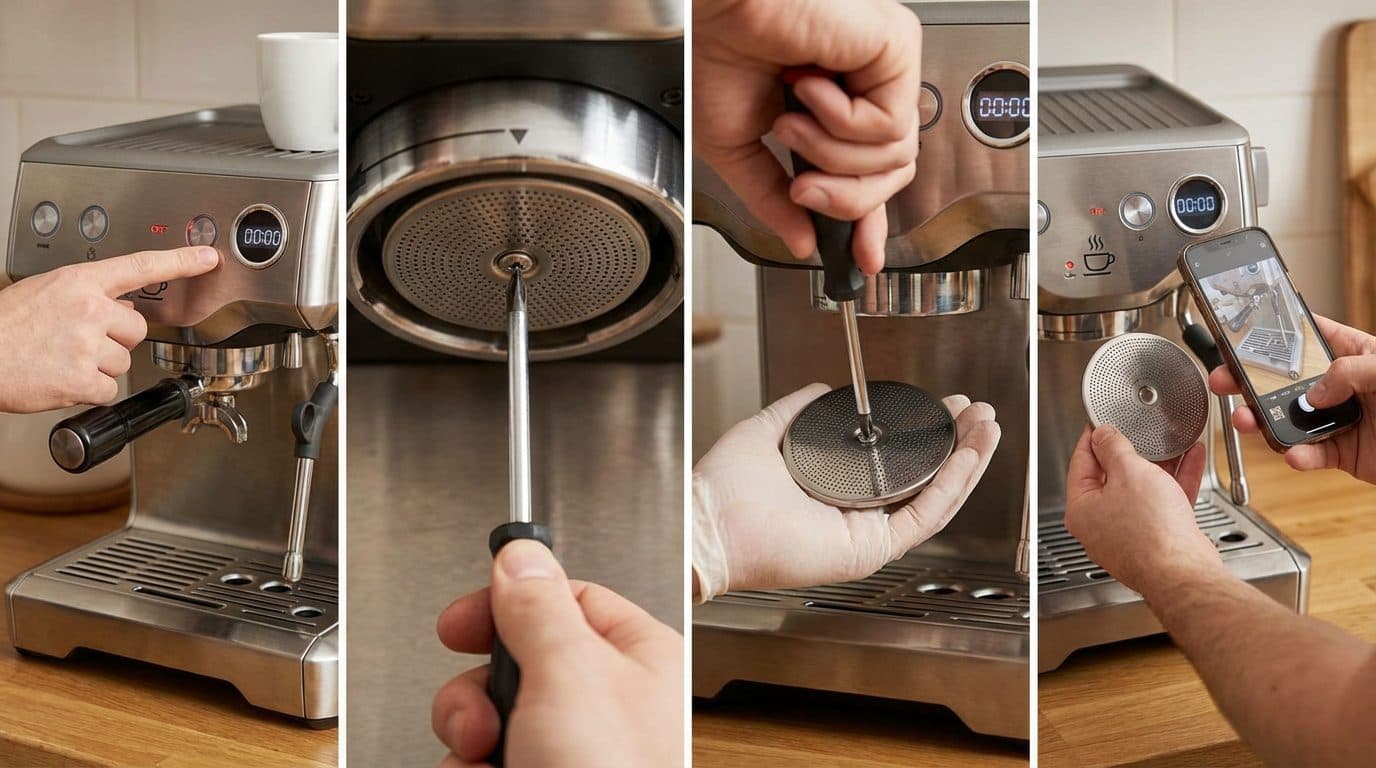
- Turn off and cool down: Switch off your machine and let it cool for at least 15-20 minutes. The group head retains heat and can burn you.
- Locate the screw: Look at the center of your shower screen. You’ll see a single screw (usually Phillips head) holding it in place.
- Remove carefully: Unscrew counterclockwise. Hold one hand underneath to catch the screen—it may drop suddenly.
- Note the orientation: Some screens have a specific top and bottom. Take a quick photo if you’re unsure.
- Remove the dispersion plate: Behind the screen, there’s often a second piece called the dispersion plate or block. Gently pull this out too.
Cleaning the Removed Parts
Now for the satisfying part. Fill your small bowl with hot water and add about half a teaspoon of espresso machine cleaner. Drop in the shower screen, screw, and dispersion plate. Let them soak for 15-20 minutes.
While soaking, grab your brush and clean inside the group head itself. You’ll likely see brown residue up there—that’s normal. Scrub gently but thoroughly. Use a toothpick to clear any blocked holes in the shower screen if needed.
After soaking, rinse all parts thoroughly under running water. Make sure no cleaner residue remains. Dry everything with a clean cloth before reassembling.
Reassembly Tips
- Place the dispersion plate back first, ensuring it sits flush
- Align the shower screen over it (check your photo if needed)
- Hand-tighten the screw—don’t overtighten or you may strip the threads
- Run water through without the portafilter to flush any remaining cleaner
Barista Tip: If your screw is corroded or stripped, replacement shower screen kits are inexpensive and widely available for most machines. Budget around $10-15 for quality replacements.
Monthly Deep Clean: The Backflush Method
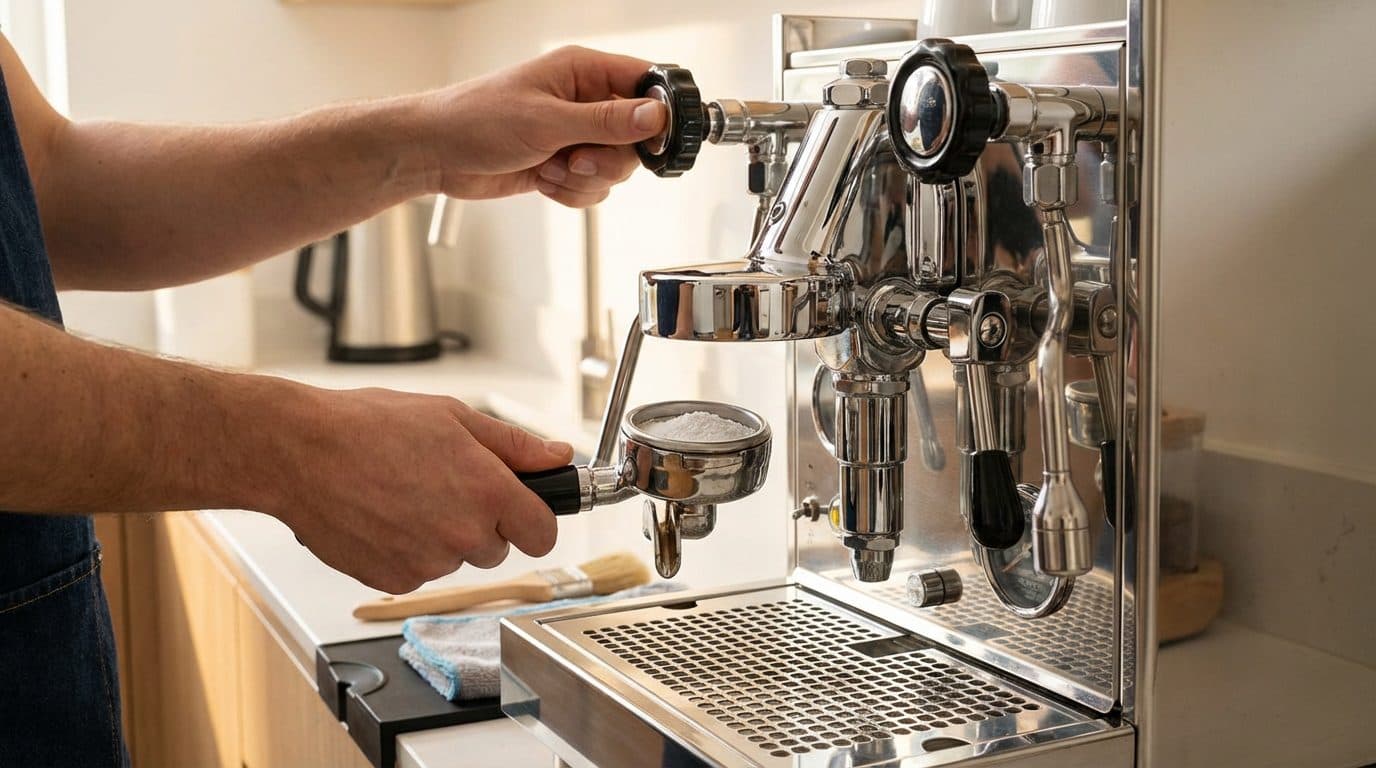
If your espresso machine has a three-way solenoid valve (most machines with an E61 group head or similar do), you can backflush to clean the internal pathways. This pushes cleaning solution back through the system, dissolving oils you can’t reach otherwise.
| Cleaning Method | Frequency | Time Required | Effectiveness |
|---|---|---|---|
| Daily wipe-down | Every session | 30 seconds | Prevents buildup |
| Screen removal | Weekly | 10-15 minutes | Removes visible oils |
| Backflushing | Monthly | 5-10 minutes | Cleans internal pathways |
How to Backflush
- Insert a blind filter (solid basket with no holes) into your portafilter
- Add about half a teaspoon of espresso cleaner to the basket
- Lock the portafilter into the group head
- Run the pump for 10 seconds, then stop for 10 seconds—repeat 5-6 times
- Remove the portafilter and rinse the blind basket
- Repeat the process with just water (no cleaner) to rinse
- Pull a “blank shot” with your regular basket to flush any remaining cleaner
Did You Know? Some entry-level espresso machines don’t have three-way valves and shouldn’t be backflushed. Check your manual. If water doesn’t release from the group head when you stop the pump, your machine likely doesn’t have this feature.
Common Mistakes to Avoid
I’ve seen plenty of home baristas make these errors, and I’ve made a few myself when I was starting out. Learn from our mistakes:
- Using too much cleaner: More isn’t better. Excess cleaner is harder to rinse and can leave residue that affects taste.
- Cleaning while hot: Besides the burn risk, thermal shock can damage some components. Let things cool first.
- Forgetting to rinse: Always flush thoroughly after using any cleaning product. That chemical taste is worse than coffee oils.
- Overtightening the screw: Hand-tight is sufficient. Stripped threads mean replacing parts.
- Ignoring the gasket: The rubber group gasket collects oils too and should be wiped regularly. Replace it annually for best results.
Frequently Asked Questions
How often should I clean my shower screen?
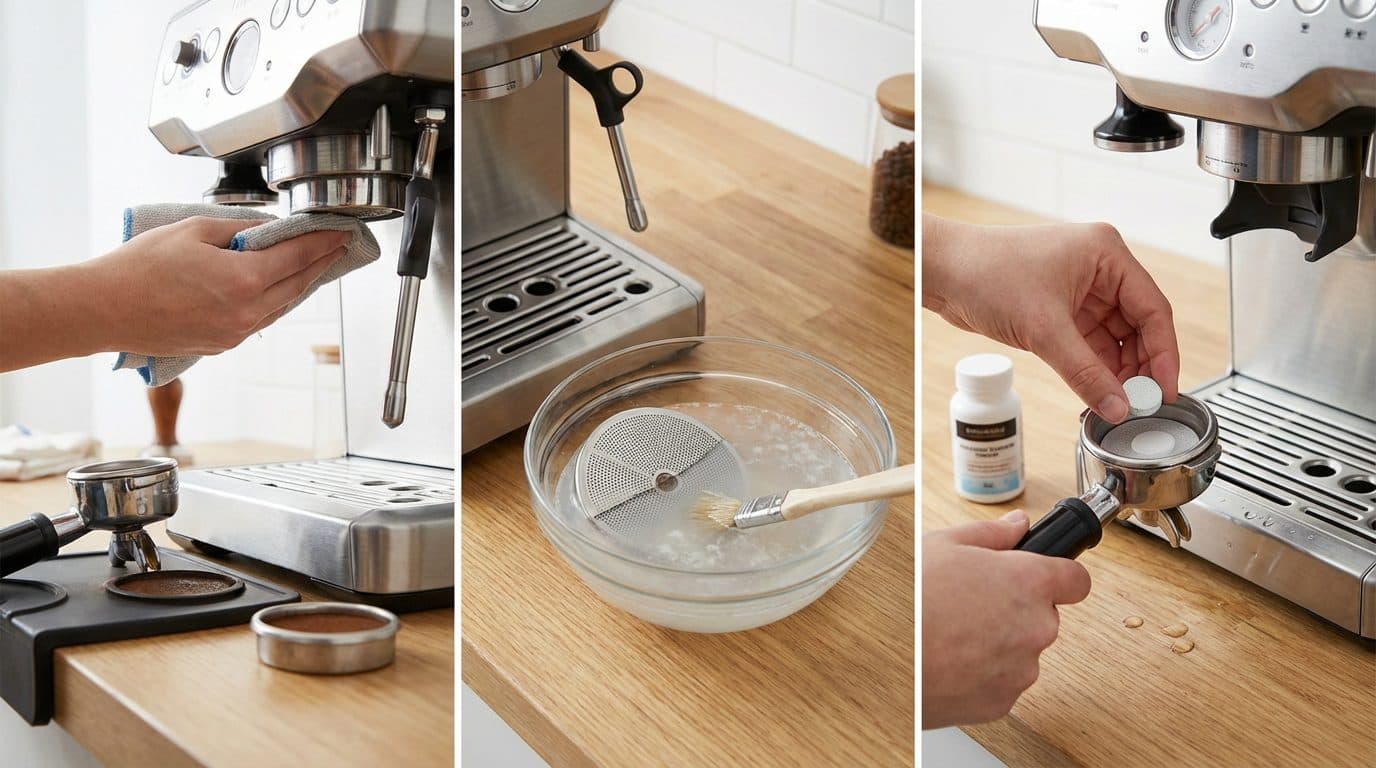
Daily wiping takes seconds and should happen after every brewing session. Remove and soak the screen weekly if you’re a daily espresso drinker, or bi-weekly for occasional use. Monthly deep cleaning with backflushing keeps everything in top shape.
Can I use vinegar to clean the shower screen?
White vinegar can work for occasional descaling and oil removal, but it’s not ideal for regular cleaning. It doesn’t break down coffee oils as effectively as dedicated espresso cleaners and can leave a lingering smell if not rinsed thoroughly. Save vinegar for descaling your water tank instead.
My shower screen holes are completely blocked. What should I do?
Soak the screen in hot water with espresso cleaner for several hours or overnight for severe buildup. Use a toothpick or fine needle to carefully clear individual holes. If the screen is damaged or won’t come clean, replacement screens are affordable and easy to find.
Will cleaning the shower screen really improve my espresso taste?
Absolutely. Rancid coffee oils impart bitter, stale flavors that mask the nuances of your beans. Many home baristas are shocked at the difference after their first proper cleaning. I’ve had people tell me it’s like they upgraded their machine—when really they just maintained it properly.
Is it safe to put the shower screen in the dishwasher?
I’d advise against it. Dishwasher detergents can be harsh and leave residue. The high heat may also affect certain metals or coatings. Hand cleaning with proper espresso cleaner is safer and more effective.
Summary and Your Next Steps
Cleaning the shower screen and removing coffee oils isn’t glamorous, but it’s one of the most impactful maintenance habits you can develop as a home barista. A clean screen means even water distribution, better extraction, and espresso that actually tastes like your beans should taste—not like old, rancid oil.
Start with the daily wipe-down today. Set a weekly reminder to remove and soak the screen. Your taste buds will thank you, and your machine will last longer. Life is too short for bad coffee, and it’s definitely too short for coffee ruined by preventable gunk buildup. Now go give that shower screen the attention it deserves—your next shot will be worth it.


Comments