


Table of Contents
- Quick Verdict: Chemex vs. Bodum Pour Over
- Filter Type: The Biggest Difference Between Chemex and Bodum
- Chemex Paper Filters
- Bodum Permanent Metal Filter
- Taste Profile: What to Expect in Your Cup
- Chemex Flavor Profile
- Bodum Flavor Profile
- Design and Build Quality
- Chemex Design
- Bodum Design
- Price and Long-Term Costs: Chemex vs. Bodum
- Initial Investment
- Ongoing Costs
- Ease of Use and Cleaning
- Brewing Process
- Cleaning
- Who Is Each Brewer For?
- Chemex Is For You If:
- Chemex Is NOT For You If:
- Bodum Pour Over Is For You If:
- Bodum Pour Over Is NOT For You If:
- Conclusion and Recommendations
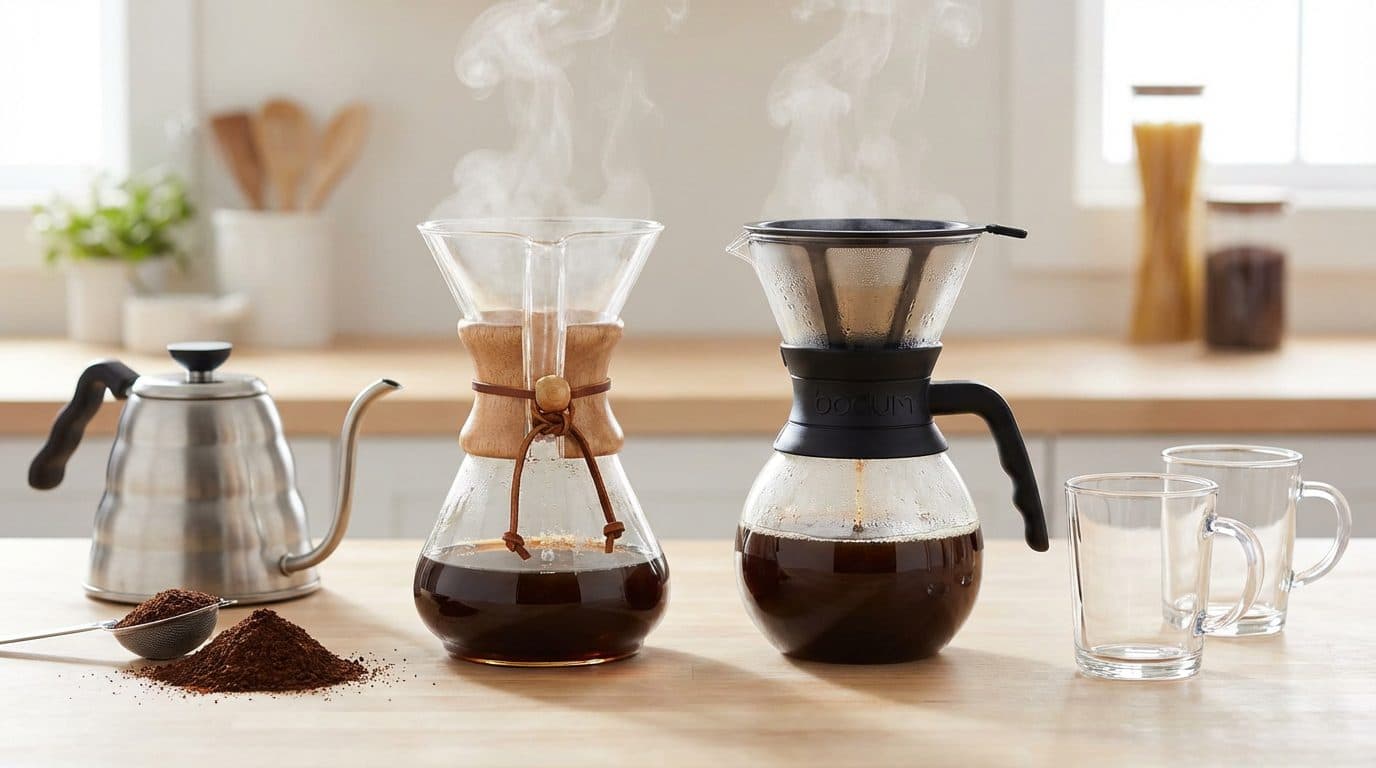
Choosing between the Chemex and Bodum pour over can feel like picking between two different coffee philosophies. Both brewers look elegant on your countertop and promise a hands-on brewing ritual, but they deliver surprisingly different cups. If you’ve been staring at these two options wondering which one deserves a spot in your kitchen, you’re in the right place. I’ll break down everything from filter types and flavor profiles to long-term costs and ease of use so you can make the right call for your morning routine.
In my experience, the Chemex vs. Bodum pour over debate really comes down to one fundamental question: do you prefer a clean, bright cup or a fuller-bodied brew with more texture? Let’s dig into the details.
Quick Verdict: Chemex vs. Bodum Pour Over
Winner: Chemex — for coffee lovers who prioritize a clean, nuanced cup and don’t mind the ongoing cost of paper filters. The Chemex’s thick bonded filters remove oils and sediment, producing a remarkably smooth and sweet brew that highlights origin flavors beautifully.
However, if you want a budget-friendly option with zero recurring costs and prefer a fuller-bodied cup, the Bodum pour over is a solid choice that won’t disappoint.
Filter Type: The Biggest Difference Between Chemex and Bodum
This is where these two brewers truly part ways. The filter system affects everything — taste, texture, convenience, and cost.
Chemex Paper Filters
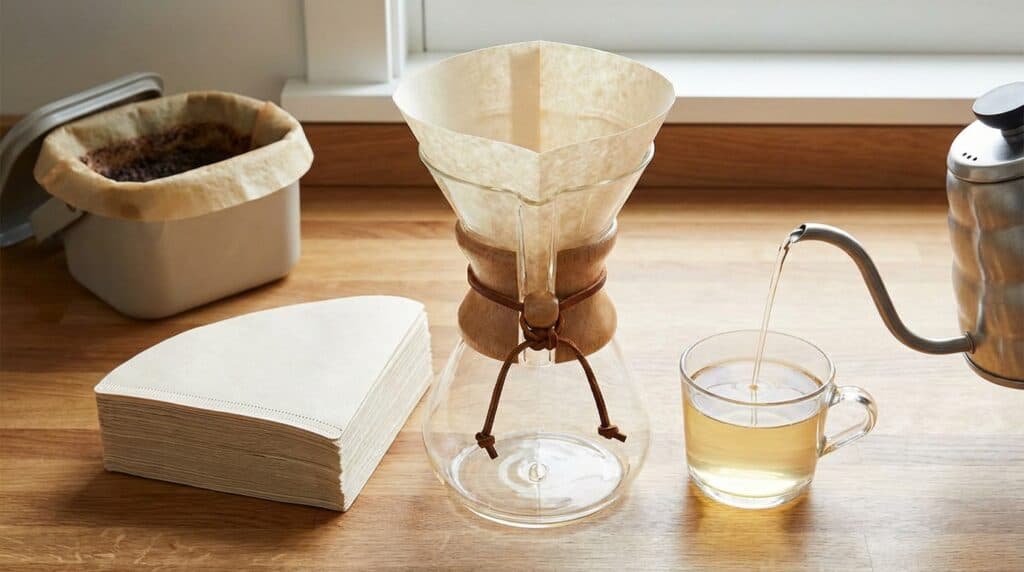
The Chemex uses proprietary bonded paper filters that are 20-30% thicker than standard coffee filters. These heavy-duty filters trap oils, fine particles, and sediment, resulting in an exceptionally clean cup. Coffee enthusiasts often describe Chemex coffee as “tea-like” in its clarity.
- Pros: Crystal-clear brew, no sediment, highlights delicate flavor notes, easy cleanup (toss the filter)
- Cons: Ongoing filter costs (roughly $0.15-0.25 per brew), filters can be hard to find locally, requires pre-wetting to remove paper taste
Bodum Permanent Metal Filter
The Bodum pour over comes with a reusable stainless steel mesh filter. This allows more coffee oils and fine particles to pass through into your cup, creating a brew with more body and texture — somewhat similar to French press coffee.
- Pros: No recurring filter costs, eco-friendly, fuller body, more oils in the cup
- Cons: Some sediment in the cup, requires thorough cleaning after each use, can develop buildup over time
Barista Tip: If you buy a Bodum but want a cleaner cup occasionally, you can use standard #4 cone filters with it. It’s a nice way to get the best of both worlds.
Taste Profile: What to Expect in Your Cup
I’ve found that the taste difference between these two brewers is significant enough that most people develop a clear preference after trying both.
Chemex Flavor Profile
The Chemex produces a bright, clean, and sweet cup. Because the thick filters remove most oils, you get a lighter body with pronounced acidity and clarity. Fruity and floral notes in single-origin beans really shine through. If you enjoy light to medium roasts and want to taste the nuances of specialty coffee, the Chemex is hard to beat.
Think of it like this: Chemex coffee is to pour over what a crisp white wine is to wine — clean, refreshing, and nuanced.
Bodum Flavor Profile
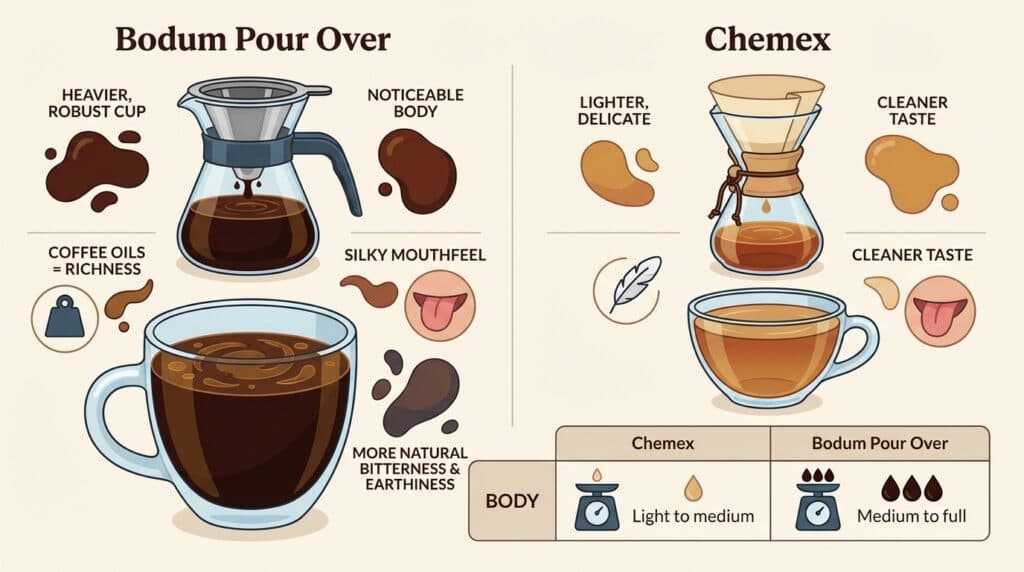
The Bodum delivers a heavier, more robust cup with noticeable body. Those coffee oils that pass through the metal filter add richness and a slightly silky mouthfeel. You’ll also notice more of the coffee’s natural bitterness and earthiness. Dark roast fans and those who enjoy French press often gravitate toward the Bodum.
In short: Bodum coffee has more “weight” on your palate, while Chemex feels lighter and more delicate.
| Attribute | Chemex | Bodum Pour Over |
|---|---|---|
| Body | Light to medium | Medium to full |
| Clarity | Excellent | Moderate (some sediment) |
| Oil Content | Very low | Higher |
| Best Roast Level | Light to medium | Medium to dark |
Design and Build Quality
Both brewers are made from borosilicate glass, which is heat-resistant and durable. But their aesthetics and construction differ quite a bit.
Chemex Design
The Chemex has been around since 1941 and is considered a design icon — it’s even part of the Museum of Modern Art’s permanent collection. The hourglass shape with a wooden collar and leather tie is instantly recognizable. It looks stunning on any countertop and doubles as a serving carafe.
- Available in 3, 6, 8, and 10-cup sizes
- Glass handle versions available for those who prefer no wood
- Elegant but requires careful handling (the glass is thin in spots)
Bodum Design
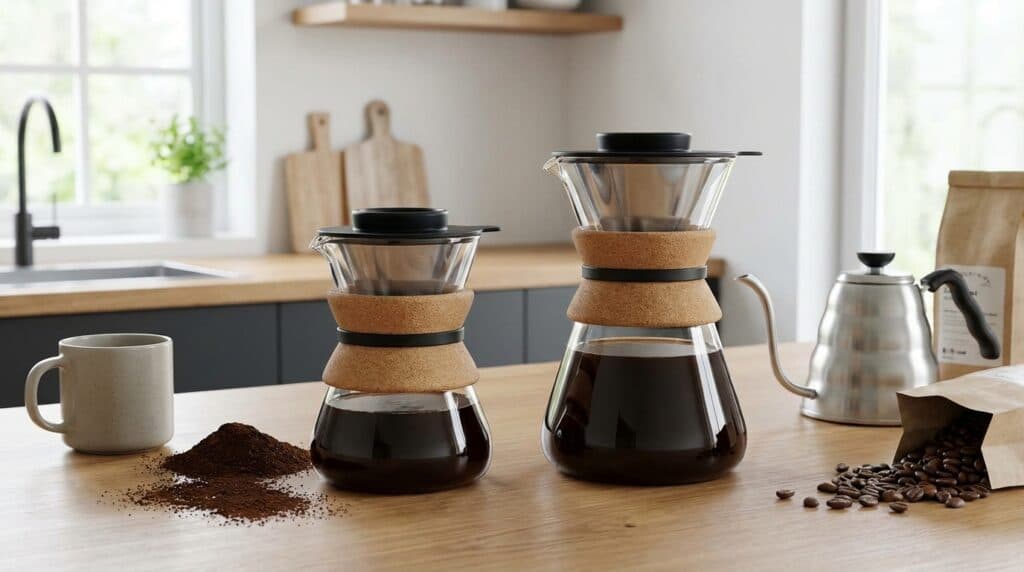
The Bodum pour over has a more modern, minimalist look. It typically features a cork or plastic band around the middle for grip and heat protection. The design is functional and attractive, though it doesn’t have the same “classic” appeal as the Chemex.
- Usually available in 4-cup and 8-cup sizes (approximately 17oz and 34oz)
- Often includes a plastic lid to retain heat
- Generally more affordable and widely available
Price and Long-Term Costs: Chemex vs. Bodum
Let’s talk money — because the upfront price is only part of the story.
Initial Investment
Based on current retail pricing, here’s what you can expect:
- Bodum Pour Over (8-cup): Around $25-40
- Chemex Classic (6-cup): Around $45-55
The Bodum is clearly the more budget-friendly option upfront.
Ongoing Costs
This is where things get interesting. The Bodum’s metal filter is reusable indefinitely (with proper care), meaning your ongoing cost is essentially zero. The Chemex, however, requires those special bonded paper filters.
A box of 100 Chemex filters typically costs $10-15. If you brew once daily, that’s roughly $40-55 per year in filters alone. Over five years, you could spend $200+ just on filters — more than the cost of several Bodum brewers.
Key Takeaway: If you’re budget-conscious or environmentally minded, the Bodum’s reusable filter offers significant long-term savings. But if you value that ultra-clean Chemex taste, the filter cost is worth it for many home baristas.
Ease of Use and Cleaning
Both brewers follow the same basic pour-over technique: add ground coffee, pour hot water in slow circles, wait, and enjoy. Neither is particularly difficult, but there are some practical differences.
Brewing Process
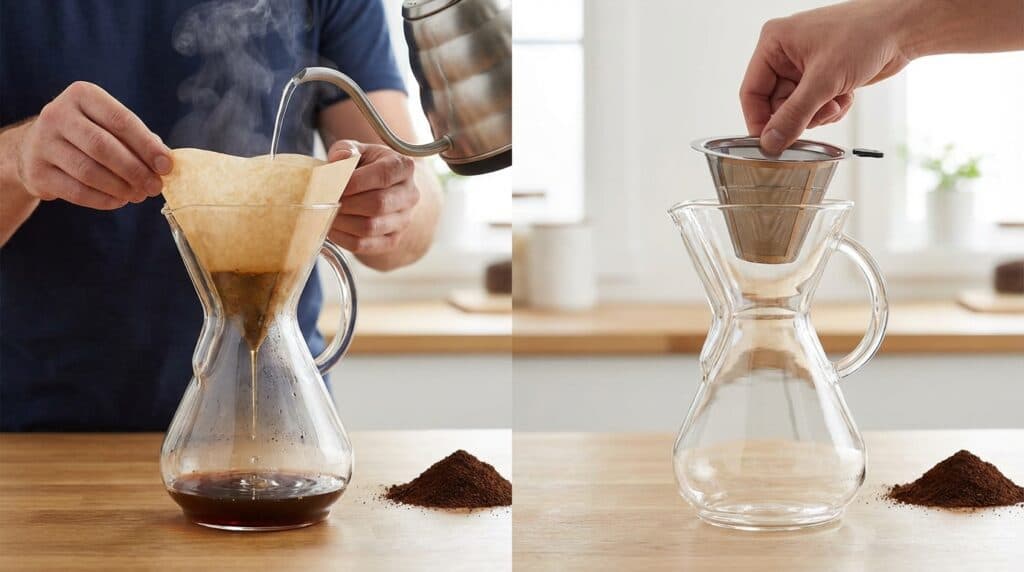
The Chemex requires you to fold and place the paper filter, then pre-wet it to remove any papery taste and preheat the carafe. This adds an extra step but becomes second nature quickly. The Bodum is slightly more straightforward — just drop in the metal filter and you’re ready to go.
Cleaning
Here’s where the Bodum requires more attention. That metal mesh filter needs thorough rinsing after each use, and periodic deep cleaning to prevent oil buildup. Some users soak it in a mixture of water and baking soda weekly. The Bodum carafe itself is often dishwasher safe, which is convenient.
The Chemex is easier to clean day-to-day — just toss the paper filter and rinse the carafe. However, the narrow neck can make deep cleaning tricky. A bottle brush is helpful, and you’ll want to hand wash it rather than risk the dishwasher.
Who Is Each Brewer For?
Chemex Is For You If:
- You prefer light to medium roasts and want to taste subtle flavor notes
- You value a clean, sediment-free cup above all else
- You appreciate classic design and don’t mind the filter expense
- You often brew for guests and want an impressive presentation
Chemex Is NOT For You If:
- You’re on a tight budget and want to minimize ongoing costs
- You prefer bold, full-bodied coffee with more texture
- You want the simplest possible brewing routine
Bodum Pour Over Is For You If:
- You want a budget-friendly pour-over setup with no recurring costs
- You enjoy fuller-bodied coffee with more oils and richness
- You prefer dark roasts or want something closer to French press flavor
- Environmental sustainability matters to you
Bodum Pour Over Is NOT For You If:
- You can’t stand any sediment in your cup
- You want the cleanest, brightest possible brew
- You don’t want to deal with cleaning a metal filter regularly
Conclusion and Recommendations
The Chemex vs. Bodum pour over decision ultimately comes down to your taste preferences and priorities. The Chemex wins on clarity, elegance, and that signature clean cup — it’s a favorite among specialty coffee enthusiasts for good reason. The Bodum counters with affordability, sustainability, and a richer, more textured brew that appeals to those who like their coffee with a bit more heft.
If you’re still unsure, consider what coffee you typically drink. Light roast single-origins? Go Chemex. Dark roast blends or anything you’d normally make in a French press? The Bodum will serve you well. And honestly, life is too short for bad coffee — either of these brewers will elevate your morning ritual compared to a standard drip machine.
Whichever you choose, take the time to dial in your grind size and water temperature. A good pour-over is as much about technique as equipment. Start brewing, experiment a little, and enjoy the journey to your perfect cup.


Comments