


Table of Contents
- Quick Verdict: The Affordable Sweet Spot Wins
- What Actually Makes a Tamper Good or Bad?
- The Four Things That Matter
- Cheap Tampers: What You Get for Under $20
- The Plastic Freebies
- Budget Aluminum Models ($10–$18)
- Mid-Range Tampers: The $20–$40 Sweet Spot
- What Your Money Buys
- Premium Tampers: Is $50+ Ever Worth It?
- The Real Differences
- But Does It Taste Better?
- Cheap vs. Expensive Tampers: Direct Comparison
- Where Your Money Actually Matters More
- Frequently Asked Questions
- Does tamper weight really matter for espresso?
- Should I get a flat or convex tamper base?
- Can a bad tamper ruin my espresso?
- How do I know if my tamper is the right size?
- Are self-leveling tampers worth the extra cost?
- Conclusion: Spend Smart, Not Big
You’re standing in your kitchen, freshly roasted beans ready to go, and you’re eyeing that $15 tamper sitting next to espresso tampers online that cost $50, $80, or even more. The question nags at you: is this really where my money should go? After all, it’s just a thing that pushes coffee down, right?
I’ve been there. In my early home barista days, I used everything from the plastic tamper that came with my machine to a premium stainless steel model that cost more than some people spend on a month of coffee. The truth about cheap vs. expensive tampers is more nuanced than most gear snobs will admit. In this guide, I’ll break down exactly what you’re paying for, whether it actually matters for your espresso, and help you decide if that $50 tamper is a smart investment or just shiny overkill.
Quick Verdict: The Affordable Sweet Spot Wins
Winner: A well-made tamper in the $20–$35 range. You don’t need to spend $50 or more to get excellent results. However, that $8 plastic tamper? Toss it. The sweet spot exists in the middle, where you get the weight, precision, and durability that actually impact your espresso—without paying for features that are purely aesthetic.
What Actually Makes a Tamper Good or Bad?
Before we compare prices, let’s understand what a tamper actually needs to do. Its job is simple: compress your coffee grounds evenly and consistently so water flows through the puck uniformly. When this happens correctly, you get balanced extraction and delicious espresso. When it doesn’t, you get channeling, uneven extraction, and a cup that tastes either bitter, sour, or just… off.
The Four Things That Matter
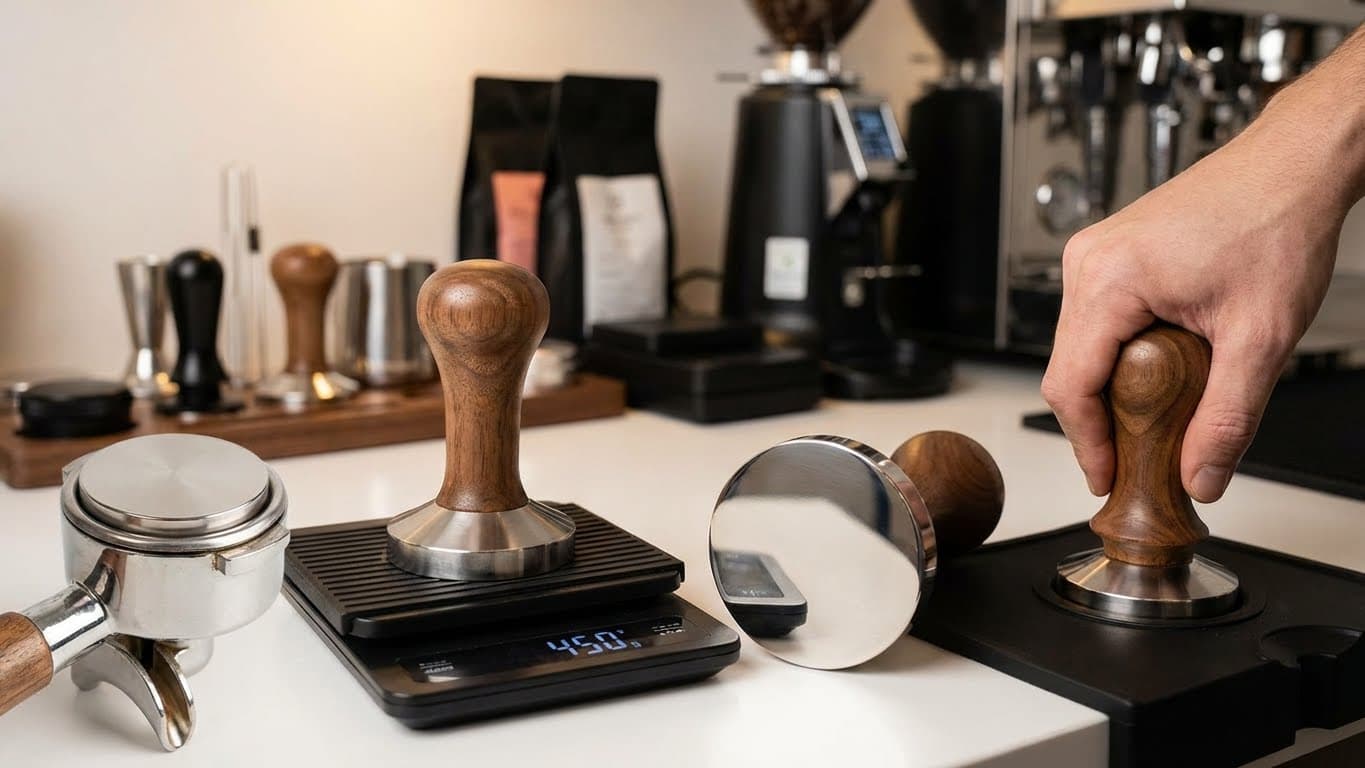
- Size fit: Your tamper must match your portafilter basket precisely. A 58mm basket needs a 58mm (or 58.5mm) tamper. Too small and you’ll leave untamped edges.
- Weight: Heavier tampers (around 300–500g) let gravity do some work, reducing strain on your wrist and improving consistency.
- Base flatness: The bottom surface needs to be perfectly flat (or intentionally convex) and smooth. Any wobble or unevenness creates problems.
- Ergonomics: If the handle hurts your hand or wrist, you’ll rush the process or apply uneven pressure.
Notice what’s not on that list? The type of wood on the handle. Whether it’s “hand-turned by artisans.” The engraved logo. These things are nice, but they don’t make your espresso taste better.
Cheap Tampers: What You Get for Under $20
Let me be direct: most tampers under $20 have real problems. I’ve tested plenty, and here’s what I consistently find.
The Plastic Freebies
That tamper included with your espresso machine? It’s usually undersized, incredibly light, and sometimes made of plastic that can actually flex under pressure. In my experience, these are worse than useless—they teach you bad habits because you can never achieve consistent results no matter what you do.
Budget Aluminum Models ($10–$18)
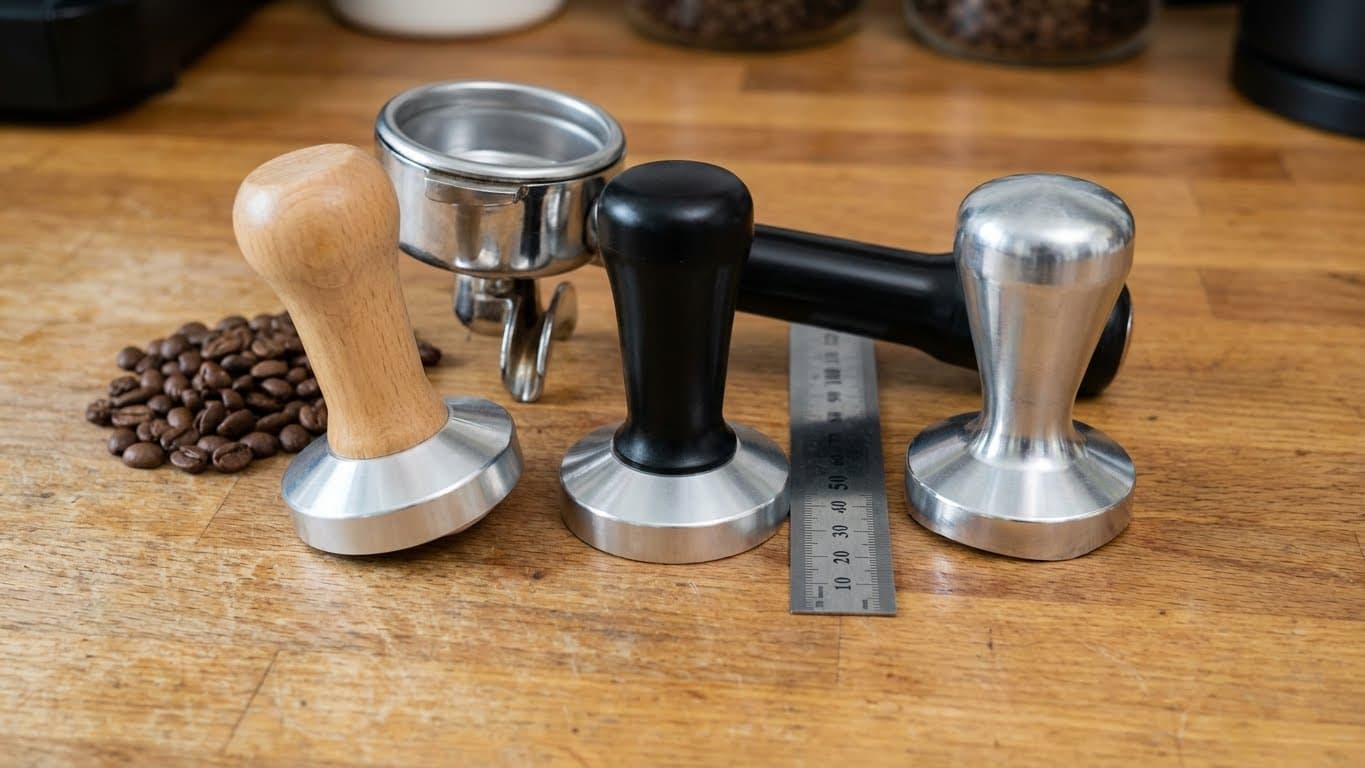
Step up slightly and you’ll find aluminum tampers with wooden or plastic handles. These are better but often suffer from poor quality control. I’ve received ones where the base wasn’t perfectly flat, or the handle sat at a slight angle to the base. One I tested was actually 57.5mm despite being labeled 58mm—that 0.5mm gap around the edge meant the outer ring of grounds never got properly compressed.
Pros:
- Very affordable entry point
- Usually acceptable weight
- Can work fine if you get a good one
Cons:
- Inconsistent quality control
- Often slightly undersized
- Bases may not be perfectly flat
- Handles can be uncomfortable for daily use
Who is this for? Someone who makes espresso occasionally and wants to see if they’ll stick with the hobby before investing more.
Who is this NOT for? Anyone making espresso daily who wants consistent results without the frustration of wondering if their tools are the problem.
Mid-Range Tampers: The $20–$40 Sweet Spot
This is where things get interesting. In my experience, this price range offers about 90% of the performance of premium tampers at a fraction of the cost. Brands like Normcore, Crema, and even some offerings from Amazon’s better-reviewed options live here.
What Your Money Buys
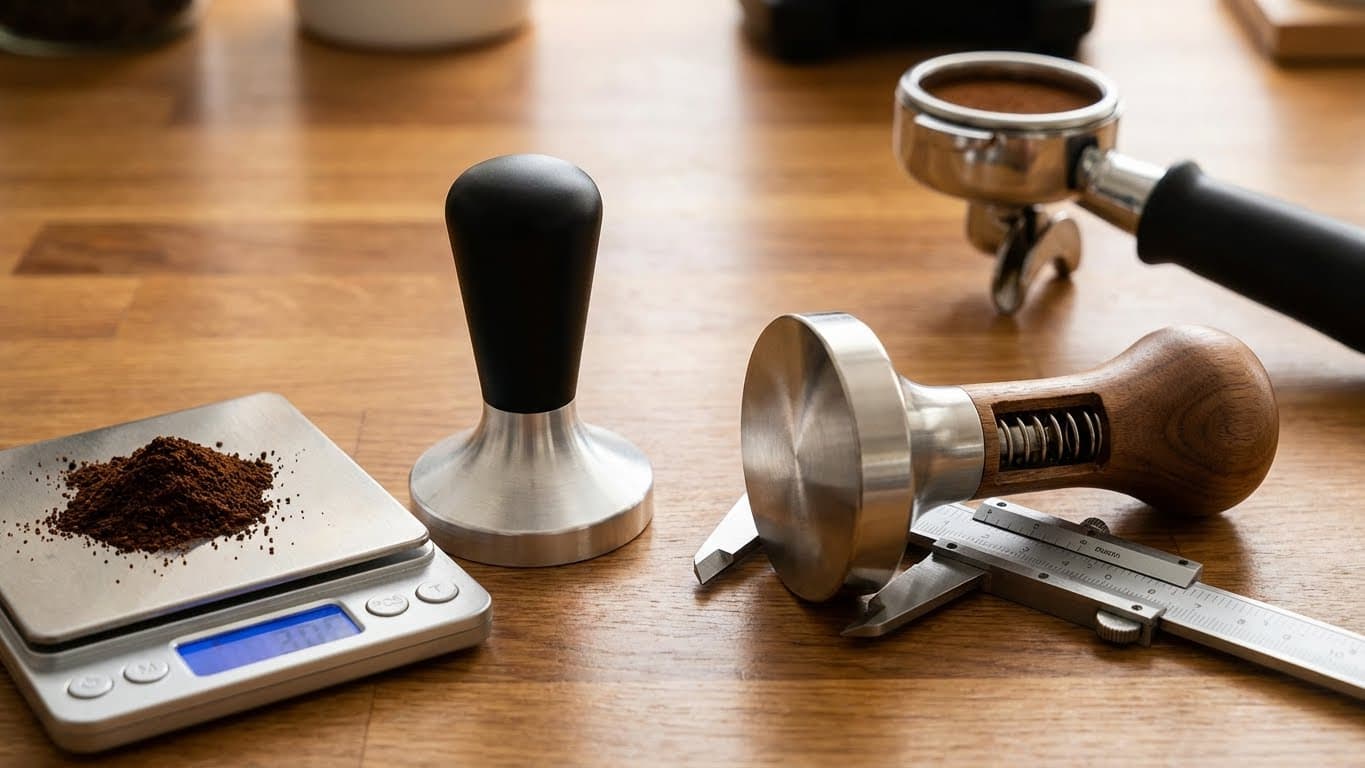
In this range, you typically get stainless steel bases with proper machining. The difference you can feel immediately—pick up a $15 aluminum tamper and then a $30 stainless steel one, and the weight difference alone is noticeable. More importantly, the manufacturing tolerances are tighter. A $30 tamper labeled 58.5mm is actually going to be 58.5mm.
Many mid-range tampers also include features that were premium-only a few years ago:
- Calibrated springs: These click or stop when you’ve applied enough pressure (usually around 30 lbs), taking the guesswork out of consistent tamping
- Precision bases: Machined flat with proper edge geometry
- Ergonomic handles: Designed to reduce wrist strain during repeated use
- Proper sizing: Including the increasingly popular 58.5mm size for a tighter fit
Barista Tip: Look for 58.5mm tampers instead of 58mm. That extra half millimeter creates a much snugger fit in most modern portafilters, eliminating the untamped ring around the edges that causes channeling.
Pros:
- Consistent manufacturing quality
- Proper weight and materials
- Often include calibration features
- Will last for years with normal use
Cons:
- Less premium feel and aesthetics
- May not perfectly match high-end machine aesthetics
- Fewer customization options
Who is this for? Home baristas who make espresso regularly and want reliable, consistent results without overspending.
Who is this NOT for? Collectors who value aesthetics equally with function, or those seeking specific customization options.
Premium Tampers: Is $50+ Ever Worth It?
Now we enter the territory of brands like Pullman, Reg Barber, Decent, and Kafatek. These tampers can run anywhere from $50 to $150 or more. Let’s be honest about what you’re actually getting.
The Real Differences
Premium tampers offer genuinely superior materials and craftsmanship. We’re talking about handles made from exotic woods, titanium components, medical-grade stainless steel, and manufacturing tolerances measured in hundredths of a millimeter. The fit and finish are impeccable.
Some high-end options also offer features you simply can’t find cheaper:
- Self-leveling mechanisms: Like the Decent or Normcore V4, which automatically correct for slight tilts
- Adjustable depth: Set your tamper to stop at exactly the right depth for your dose
- Custom sizing: Get exactly 58.55mm if that’s what works best for your specific basket
- Lifetime warranties: Some premium brands will repair or replace your tamper forever
But Does It Taste Better?
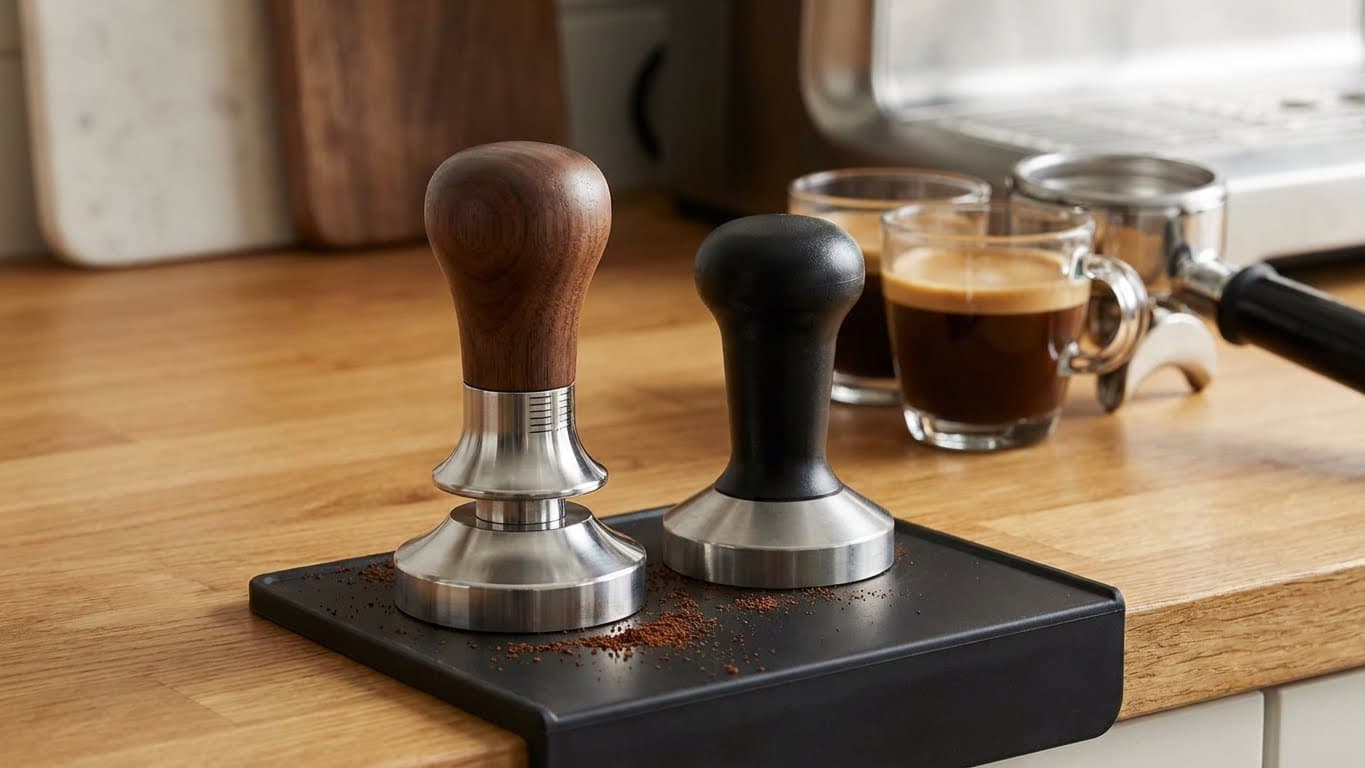
Here’s the uncomfortable truth: in a blind taste test, I cannot consistently tell the difference between espresso tamped with my $30 calibrated tamper and my $80 premium one. Both create an even, well-compressed puck. Both allow me to produce excellent espresso.
The premium tamper feels nicer in my hand. It looks beautiful sitting on my counter. It will probably outlast me. But is it making my coffee taste better? Not really.
Pros:
- Exceptional build quality and aesthetics
- Advanced features for perfect consistency
- Lifetime durability
- Customization and perfect sizing options
- Supports small businesses and craftspeople
Cons:
- Diminishing returns on actual espresso quality
- Price premium is largely for feel and aesthetics
- May be overkill for most home setups
Who is this for? Enthusiasts who appreciate craftsmanship, want every tool to feel special, or have specific technical needs that budget options can’t meet.
Who is this NOT for? Anyone primarily focused on taste per dollar, or those still dialing in their overall espresso workflow.
Cheap vs. Expensive Tampers: Direct Comparison
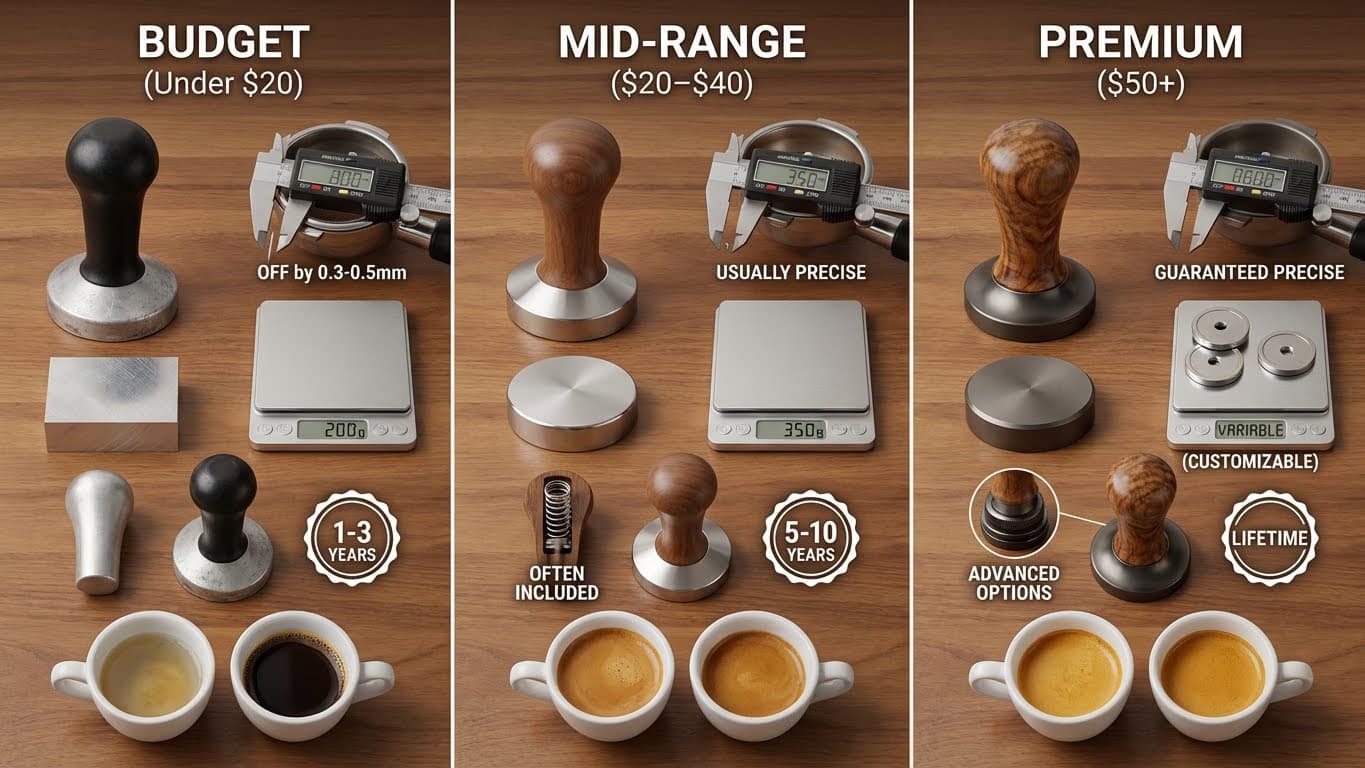
| Feature | Budget (Under $20) | Mid-Range ($20–$40) | Premium ($50+) |
|---|---|---|---|
| Base Material | Aluminum, sometimes plastic | Stainless steel | Premium stainless or titanium |
| Size Accuracy | Often off by 0.3–0.5mm | Usually precise | Guaranteed precise |
| Weight | Light (150–250g) | Medium (300–400g) | Variable (customizable) |
| Calibration | Rarely available | Often included | Advanced options |
| Durability | 1–3 years | 5–10 years | Lifetime |
| Espresso Impact | Inconsistent results | Consistent results | Consistent results |
Where Your Money Actually Matters More
Here’s what I tell every home barista worried about gear upgrades: your tamper matters, but not as much as other factors. If you’re considering spending $50 on a tamper, ask yourself whether these things are already sorted:
- Fresh beans: Coffee more than 3–4 weeks past roast will never taste great, regardless of your tamper
- Good grinder: A quality grinder impacts flavor far more than any tamper ever will
- Proper dose: Consistent dosing is crucial—a cheap scale is more valuable than an expensive tamper
- Technique: Learning to distribute grounds evenly before tamping matters enormously
In short: a $30 tamper with fresh beans, a good grinder, and solid technique will beat a $100 tamper with stale beans and inconsistent dosing every single time.
Frequently Asked Questions
Does tamper weight really matter for espresso?
Yes, but within reason. A heavier tamper (300g+) helps you apply consistent pressure without straining your wrist. However, studies show that anything above about 15–20 pounds of pressure compresses the puck nearly identically. The key is consistency, not maximum force. A calibrated tamper that clicks at 30 lbs solves this problem regardless of weight.
Should I get a flat or convex tamper base?
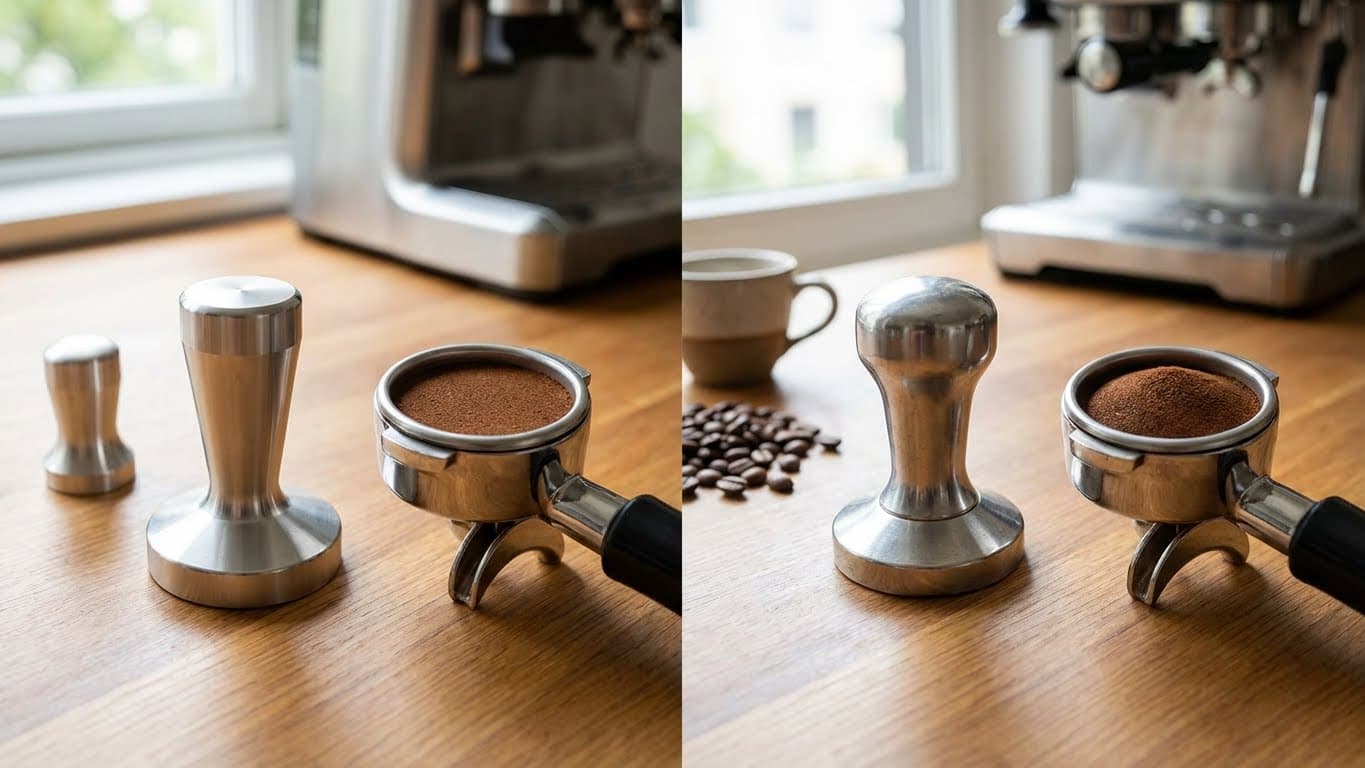
For most home baristas, flat is the way to go. Convex bases were popular when people believed they helped water flow toward the edges, but modern thinking favors flat bases with proper distribution before tamping. Flat bases are simpler, more forgiving, and work well with all basket shapes.
Can a bad tamper ruin my espresso?
An undersized or uneven tamper can definitely cause problems. If your tamper is too small, you’ll get channeling around the edges. If the base isn’t flat, one side of your puck will be more compressed than the other. These issues cause uneven extraction and inconsistent flavor. So yes, a genuinely bad tamper hurts your espresso—but you don’t need to spend $50+ to avoid these problems.
How do I know if my tamper is the right size?
Measure your portafilter basket’s internal diameter. Most standard baskets are 58mm, but some machines use 54mm, 53mm, or other sizes. Your tamper should be 0.5mm smaller than your basket at most—ideally exactly matching or just 0.25mm smaller. When you tamp, you shouldn’t see a visible ring of untamped grounds around the edge.
Are self-leveling tampers worth the extra cost?
If you struggle with keeping your tamper perfectly level, a self-leveling model can help. However, with a little practice, most people can learn to tamp level consistently. I’d recommend starting with a basic calibrated tamper and upgrading to self-leveling only if you’re still fighting inconsistency after working on your technique.
Conclusion: Spend Smart, Not Big
Life is too short for bad coffee—and it’s also too short to stress about whether your tamper costs enough. The honest answer to “do you really need to spend $50?” is no, you don’t. A well-made tamper in the $25–$35 range will give you everything you need for consistently excellent espresso.
That said, if you’ve already dialed in your beans, grinder, and technique, and you simply want a beautiful tool that feels perfect in your hand every morning? There’s nothing wrong with treating yourself to something premium. Just go in with clear eyes: you’re paying for craftsmanship and joy of use, not better-tasting espresso.
Start with a calibrated stainless steel tamper in the mid-range, and put the $20–$30 you saved toward better beans. Your taste buds will thank you more than your Instagram ever will.


Comments