


Table of Contents
- Quick Verdict: Best Coffee for Students Overall
- What Makes Coffee "Student-Friendly"?
- Caffeine Content Explained
- Budget Considerations
- Best High-Caffeine Coffees for Students
- Death Wish Coffee
- Biohazard Coffee
- Best Budget Coffee Options for Students
- Café Bustelo
- Folgers Black Silk
- Store Brand Whole Beans
- Coffee Comparison: Budget vs. High Caffeine
- Brewing Methods That Maximize Your Coffee
- Cold Brew: The Caffeine Champion
- French Press: Quality Without Equipment Costs
- Moka Pot: Espresso-Style on a Budget
- Tips for Maximizing Coffee Effectiveness
- Frequently Asked Questions
- How much caffeine is safe for students?
- Is instant coffee a good option for students?
- Should students choose dark or light roast for more caffeine?
- Can I make coffee in my dorm room without a coffee maker?
- How do I store coffee to keep it fresh longer?
- Summary and Your Next Step
Pulling an all-nighter for that exam? Trying to survive an 8 AM lecture after staying up too late? I’ve been there, and I know exactly what you need: coffee that delivers a serious caffeine kick without destroying your student budget. Finding the best coffee for students means balancing two crucial factors—high caffeine content and affordability. The good news? You don’t have to choose between them.
In this guide, I’ll walk you through the best coffee options that will keep you alert during study sessions, taste decent enough to actually enjoy, and won’t force you to survive on instant noodles for the rest of the month. Let’s find your perfect study fuel.
Quick Verdict: Best Coffee for Students Overall
Death Wish Coffee (Ground or Whole Bean) takes the crown for students who want maximum caffeine on a reasonable budget. It delivers approximately twice the caffeine of regular coffee, comes at a competitive price per serving, and actually tastes smooth rather than bitter. For the budget-conscious student who still wants quality, Café Bustelo is the unbeatable value pick—incredibly affordable and packs a stronger punch than most mainstream brands.
What Makes Coffee “Student-Friendly”?
Before diving into specific recommendations, let’s talk about what actually matters when choosing coffee as a student. Not all coffee is created equal, especially when you’re optimizing for late-night study sessions.
Caffeine Content Explained
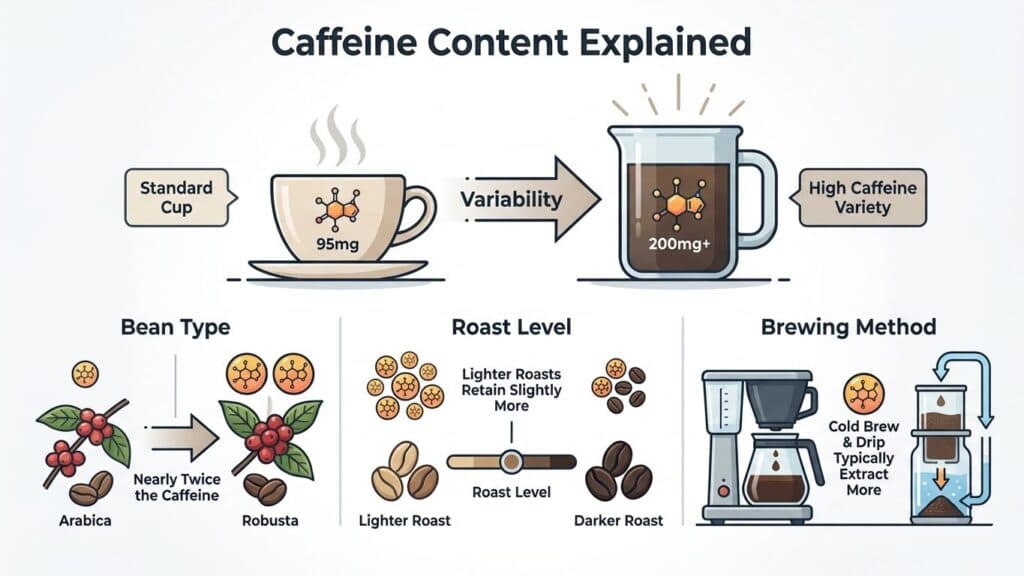
Here’s something most people don’t realize: caffeine content varies dramatically between coffee types. A standard cup of coffee contains around 95mg of caffeine, but some varieties pack 200mg or more per cup. The factors that influence caffeine levels include:
- Bean type: Robusta beans contain nearly twice the caffeine of Arabica beans
- Roast level: Contrary to popular belief, lighter roasts actually retain slightly more caffeine
- Brewing method: Cold brew and drip coffee typically extract more caffeine than espresso per serving
- Serving size: A “cup” can mean anything from 6 to 16 ounces
In short: if you want maximum alertness, look for blends that include Robusta beans or are specifically marketed as high-caffeine options.
Budget Considerations
Student budgets are tight—I get it. The key metric here is cost per cup, not just the sticker price. A $15 bag that makes 60 cups is actually cheaper than a $10 bag that only makes 30. I’ve calculated the value for each recommendation below so you can make an informed choice.
Best High-Caffeine Coffees for Students
These options prioritize maximum caffeine delivery while still being reasonably priced. Perfect for exam weeks and those brutal morning classes.
Death Wish Coffee
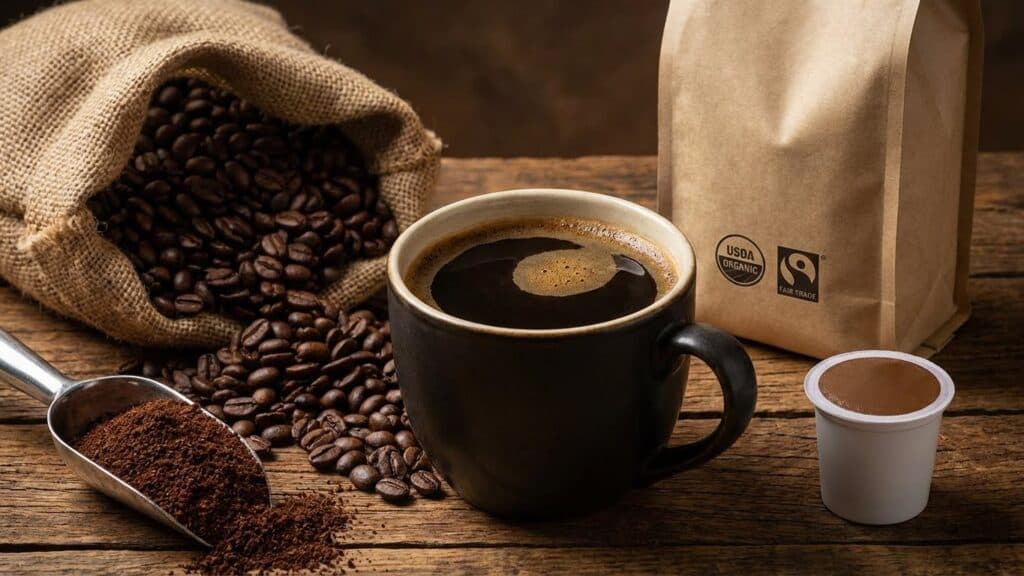
This is the coffee that built its entire brand around being the “world’s strongest.” And honestly? It lives up to the hype. Death Wish uses a blend of Arabica and Robusta beans, which explains the elevated caffeine content—roughly 300mg per 8oz cup.
Pros:
- Approximately 2x the caffeine of regular coffee
- Surprisingly smooth taste without excessive bitterness
- USDA Organic and Fair Trade certified
- Available in ground, whole bean, and K-cups
Cons:
- Higher price point than budget options (around $0.50-0.60 per cup)
- Bold flavor might be too intense for some
- Easy to overdo it—pace yourself
Who is this for? Students who need serious caffeine power and don’t mind paying a bit more for quality. Great for dedicated coffee drinkers who’ve built up a tolerance.
Who is this NOT for? Caffeine-sensitive individuals or those on an extremely tight budget. If regular coffee already makes you jittery, steer clear.
Check the latest price on Amazon for Death Wish Coffee.
Biohazard Coffee
If Death Wish isn’t strong enough (yes, some people reach that point), Biohazard claims even higher caffeine levels. In my experience, the difference is noticeable, though the taste is more aggressive.
Pros:
- Extremely high caffeine content (allegedly 928mg per 12oz serving)
- Lower acidity than expected
- Good value for high-caffeine specialty coffee
Cons:
- Flavor is secondary to function—it’s not gourmet
- Potentially dangerous if you’re not careful with serving sizes
- Can cause serious jitters if you’re not used to high caffeine
Barista Tip: Start with a half-cup of Biohazard and see how you feel. I’ve seen students overdo it and end up too wired to actually focus. More caffeine isn’t always better.
Best Budget Coffee Options for Students
These picks prioritize affordability without completely sacrificing quality or caffeine content. Because sometimes you need to choose between coffee and textbooks.
Café Bustelo
This is my personal favorite budget recommendation. Café Bustelo is a Cuban-style espresso ground coffee that’s been a staple in Latin American households for decades. It’s strong, affordable, and actually tastes good.
Pros:
- Incredibly affordable (often under $0.15 per cup)
- Bold, rich flavor with natural sweetness
- Higher caffeine than most mainstream brands
- Versatile—works in drip machines, pour-over, moka pots, and even cold brew
- Available at most grocery stores
Cons:
- Pre-ground only (no whole bean option)
- Very fine grind may not suit all brewing methods
- Flavor profile is specific—not everyone loves it
Who is this for? Budget-conscious students who want strong coffee and don’t mind a bold, slightly sweet flavor profile. Perfect for espresso-style drinks.
Who is this NOT for? Students who prefer light, fruity coffee or need whole beans for their grinder.
See current deals on Café Bustelo.
Folgers Black Silk
I know, I know—Folgers isn’t exactly trendy. But Black Silk is their dark roast option, and for the price, it’s genuinely solid. It’s smooth, readily available everywhere, and costs pennies per cup.
Pros:
- Extremely affordable (around $0.10-0.12 per cup)
- Smooth, low-acid taste
- Available literally everywhere
- Consistent quality
Cons:
- Not the highest caffeine content
- Lacks complexity for coffee enthusiasts
- Pre-ground loses freshness quickly
Store Brand Whole Beans
Here’s a student hack: many grocery stores now sell surprisingly decent whole bean coffee under their store brand. Trader Joe’s, Aldi, and Costco’s Kirkland brand all offer excellent value. Buying whole beans and grinding them yourself (even with a cheap grinder) dramatically improves freshness and flavor.
Coffee Comparison: Budget vs. High Caffeine
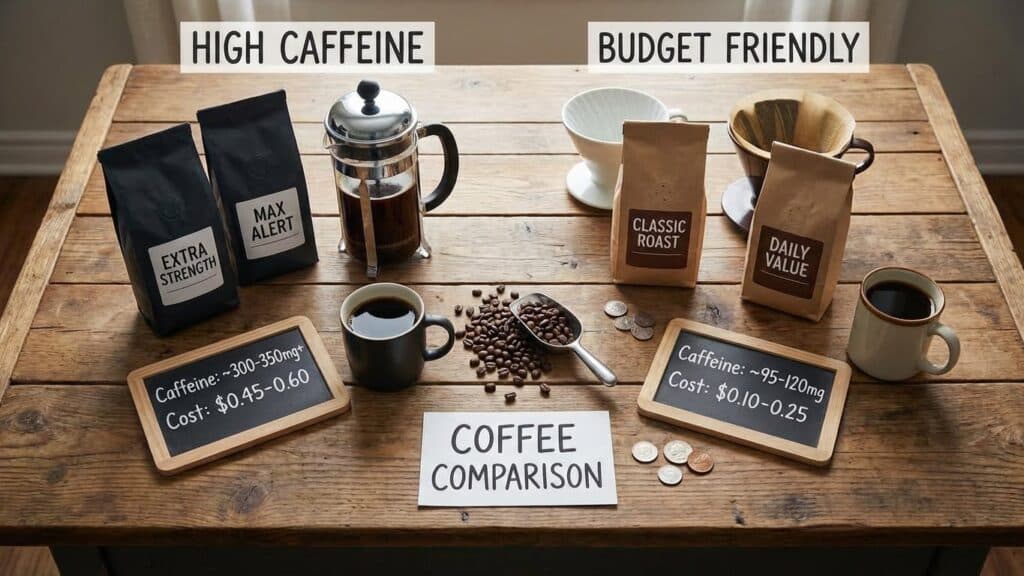
| Coffee | Caffeine (per 8oz) | Approx. Cost/Cup | Best For |
|---|---|---|---|
| Death Wish | ~300mg | $0.50-0.60 | Maximum alertness |
| Biohazard | ~350mg+ | $0.45-0.55 | Extreme caffeine needs |
| Café Bustelo | ~120mg | $0.10-0.15 | Best value overall |
| Folgers Black Silk | ~100mg | $0.10-0.12 | Tight budgets |
| Store Brand Beans | ~95-110mg | $0.15-0.25 | Quality on a budget |
Brewing Methods That Maximize Your Coffee
The brewing method you choose affects both caffeine extraction and your overall cost. Here’s what works best for student life.
Cold Brew: The Caffeine Champion
Cold brew extracts more caffeine than hot brewing methods and stays fresh in your fridge for up to two weeks. Make a big batch on Sunday, and you’re set for the week. All you need is a mason jar and a filter.
In my experience, cold brew from Café Bustelo is an absolute game-changer for students. The bold flavor mellows out beautifully, and you get a concentrated caffeine source you can dilute to taste.
French Press: Quality Without Equipment Costs
A basic French press costs under $20 and lasts for years. It extracts more oils and caffeine than drip coffee and requires zero filters. Just add grounds, hot water, wait four minutes, and press.
Moka Pot: Espresso-Style on a Budget
If you love lattes but can’t afford an espresso machine, a stovetop moka pot (around $25-30) produces strong, concentrated coffee that works perfectly for milk-based drinks.
Tips for Maximizing Coffee Effectiveness
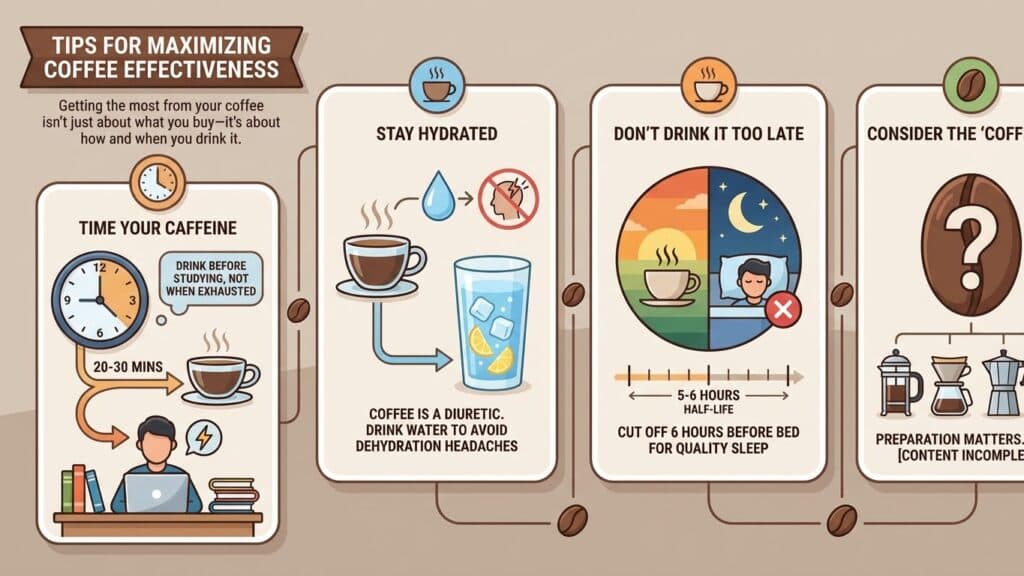
Getting the most from your coffee isn’t just about what you buy—it’s about how and when you drink it.
- Time your caffeine: Caffeine takes 20-30 minutes to kick in. Drink your coffee before you start studying, not when you’re already exhausted
- Stay hydrated: Coffee is a diuretic. Drink water alongside it to avoid dehydration headaches
- Don’t drink it too late: Caffeine has a half-life of 5-6 hours. Cut yourself off at least 6 hours before bed, or your sleep quality will suffer
- Consider the “coffee nap”: Drink coffee, then immediately take a 20-minute power nap. You’ll wake up just as the caffeine kicks in
Key Takeaway: More coffee isn’t always the answer. Strategic caffeine timing often beats higher doses for actual productivity.
Frequently Asked Questions
How much caffeine is safe for students?
The FDA recommends no more than 400mg of caffeine daily for healthy adults—that’s roughly 4 standard cups of coffee. However, individual tolerance varies significantly. If you experience anxiety, rapid heartbeat, or trouble sleeping, cut back regardless of what the guidelines say.
Is instant coffee a good option for students?
Instant coffee is convenient and affordable, but it typically contains less caffeine (around 60-80mg per cup) and lacks the flavor complexity of brewed coffee. If convenience is your priority, it works fine. For maximum caffeine or taste, ground coffee is worth the extra effort.
Should students choose dark or light roast for more caffeine?
This is a common misconception. Light roasts actually contain slightly more caffeine per bean because the roasting process burns off some caffeine. However, dark roasts are less dense, so if you measure by scoop rather than weight, dark roast might give you more caffeine. The difference is minimal—choose based on taste preference.
Can I make coffee in my dorm room without a coffee maker?
Absolutely. You can make cold brew in any container with a lid. Instant coffee only requires hot water (use an electric kettle or microwave). A French press doesn’t require electricity. Even pour-over works with a $5 plastic dripper and filters.
How do I store coffee to keep it fresh longer?
Keep coffee in an airtight container away from light, heat, and moisture. Don’t refrigerate or freeze it—the temperature changes cause condensation that degrades quality. Whole beans stay fresh longer than pre-ground. Buy in smaller quantities if possible.
Summary and Your Next Step
Finding the best coffee for students comes down to your specific priorities. If caffeine is your main concern and you have a bit of budget flexibility, Death Wish Coffee delivers unmatched energy. If you’re watching every dollar, Café Bustelo offers remarkable quality and strength at a price that won’t hurt.
My recommendation? Start with Café Bustelo to establish your baseline, then experiment with higher-caffeine options during exam weeks when you need extra support. Pair your coffee with good sleep habits and strategic timing, and you’ll be amazed at how much more productive your study sessions become.
Life’s too short for bad coffee—especially when you’re spending it studying. Pick one of these options, brew yourself a cup, and get back to conquering that reading list. You’ve got this.



Comments