


Table of Contents
- What Is a Roast Date and Why Does It Matter?
- The Freshness Timeline
- What Does the Expiration Date Actually Mean?
- Why Expiration Dates Can Be Misleading
- Roast Date vs. Expiration Date: A Direct Comparison
- How to Tell If Your Coffee Is Past Its Prime
- Visual Clues
- The Aroma Test
- The Taste Test
- Maximizing Your Coffee's Freshness
- The Enemies of Fresh Coffee
- Storage Best Practices
- What About Freezing Coffee?
- Whole Beans vs. Pre-Ground: A Freshness Factor
- Frequently Asked Questions
- Can I drink coffee after the expiration date?
- How fresh should coffee be for espresso vs. drip?
- Why don't all coffee brands show the roast date?
- Is there such a thing as coffee that is too fresh?
- Does dark roast coffee stay fresh longer than light roast?
- Bottom Line
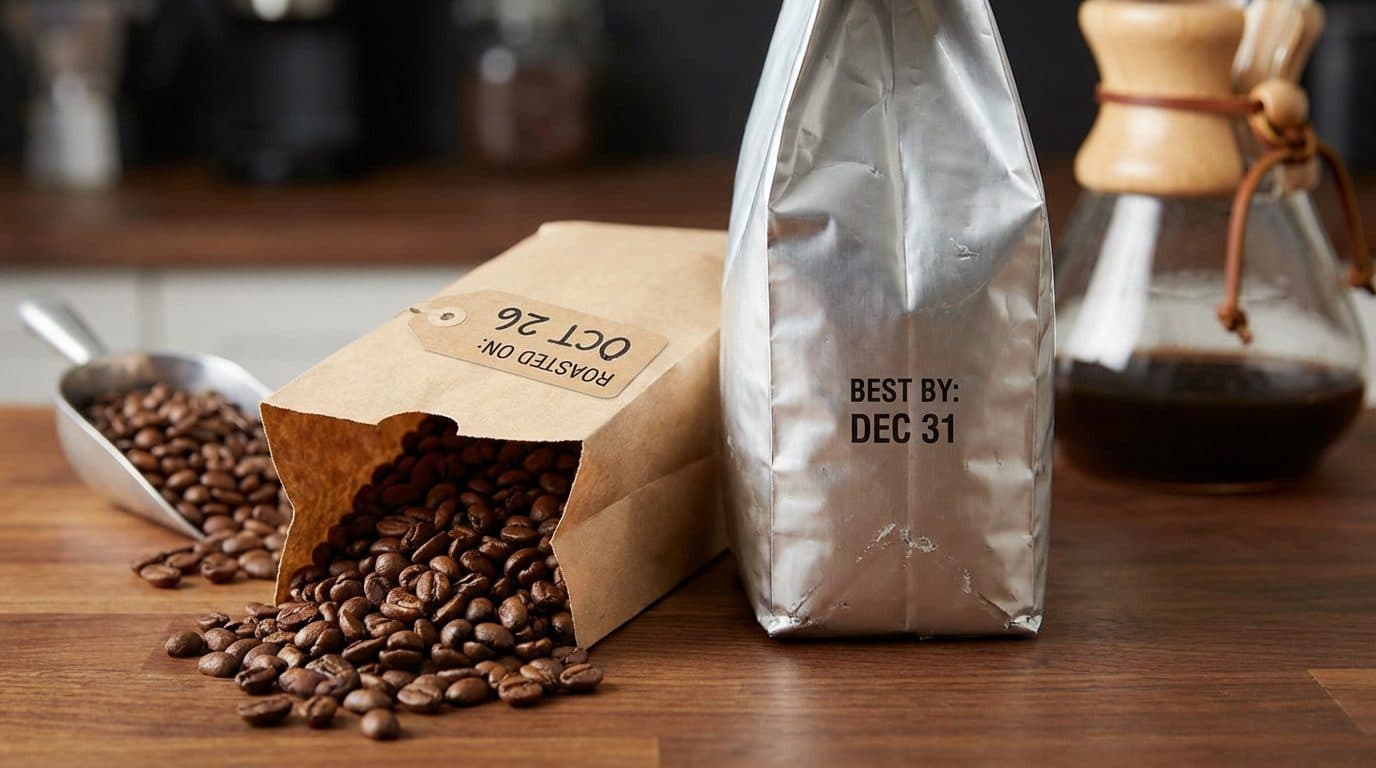
For flavor, the roast date matters far more than the expiration date. The roast date tells you when the beans were roasted and where they are in their freshness window. The expiration date, “best by” date, or “use by” date is usually a broad quality marker set months later. It can be useful for inventory, but it does not tell you when the coffee tasted its best.
A coffee bag can be technically fine and still taste flat. That is the key distinction. Most stale coffee is not dangerous; it is just dull, papery, or lifeless. If you care about the cup, shop by roast date whenever you can and use whole beans within a few weeks.
What Is a Roast Date and Why Does It Matter?
The roast date is the day green coffee was roasted. It is the clearest freshness signal because roasted coffee changes quickly. After roasting, beans release carbon dioxide in a process called degassing. At the same time, volatile aroma compounds slowly fade and oils begin to oxidize.
Fresh does not always mean “same day.” Coffee can be too fresh for some brew methods, especially espresso, because heavy degassing can disturb extraction. A reasonable target for many home brewers is to start using beans a few days after roasting and finish the bag within about 2 to 4 weeks.
The Freshness Timeline
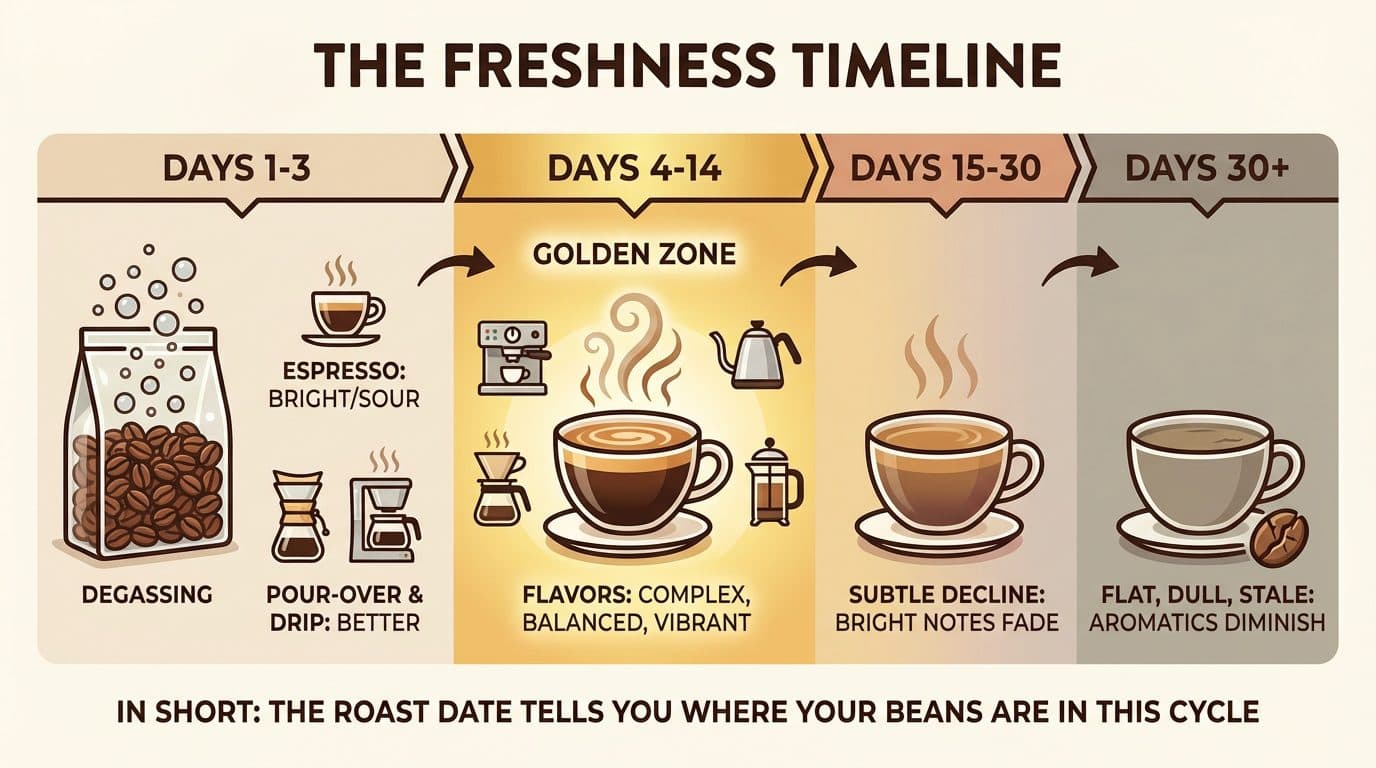
- Days 1-3: Beans are actively degassing. Filter coffee can work, but espresso may taste sharp or behave unevenly.
- Days 4-14: A strong window for many brewing methods. Aroma is lively, and extraction is easier to manage.
- Days 15-30: Still useful for most home brewing, though delicate floral and fruit notes start fading.
- Days 30+: Coffee often becomes flatter and less distinct, especially if the bag has been opened often.
This timeline is not a law. Roast level, packaging, storage, processing style, and brew method all change the pace. Still, it gives you a better shopping signal than a date printed 8 or 12 months into the future.
What Does the Expiration Date Actually Mean?
The expiration date on coffee is usually a quality date, not a precise freshness date. Many bags use “best by” or “best before” wording. The FDA explains that “Best if Used By” language is intended to describe best flavor or quality, not safety. Coffee is dry and shelf-stable when stored properly, so flavor loss normally happens long before a true safety concern.
That does not mean you should ignore obvious problems. If coffee smells rancid, musty, moldy, or contaminated by another pantry odor, do not brew it. But a bag that is past its printed best date is usually a taste issue first.
Why Expiration Dates Can Be Misleading
- A bag with a best-by date many months away may already be several months post-roast.
- Large commercial brands often print only a future date, not the roast date.
- The date assumes decent storage. Heat, air, moisture, and sunlight can stale coffee much sooner.
For supermarket coffee, an expiration date may be the only date available. In that case, choose intact bags with one-way valves, avoid dusty stock, and buy from stores that move coffee quickly.
Roast Date vs. Expiration Date: A Direct Comparison
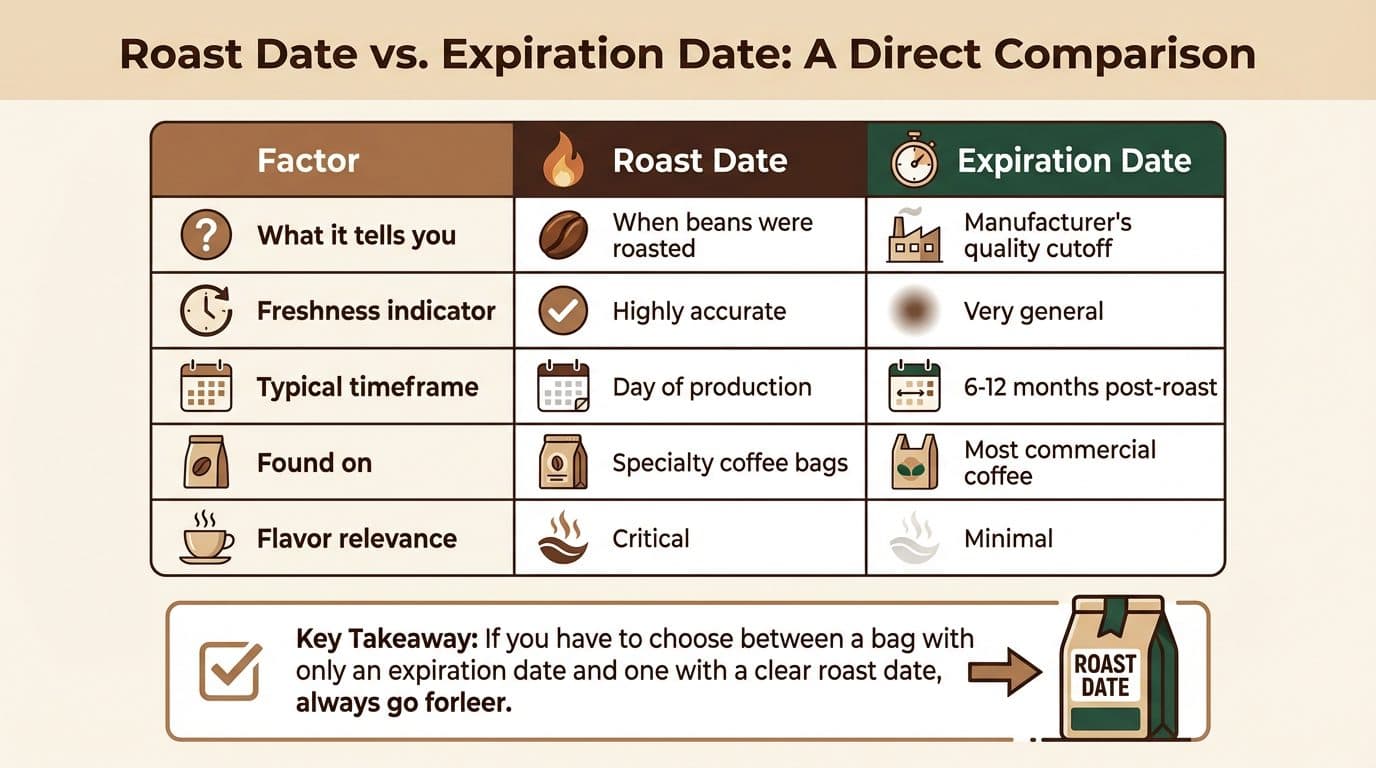
Here is the practical difference:
| Factor | Roast Date | Expiration Date |
|---|---|---|
| What it tells you | When beans were roasted | Manufacturer’s quality cutoff |
| Freshness indicator | Best starting signal | Broad quality signal |
| Typical timeframe | Day of production | 6-12 months post-roast |
| Found on | Specialty coffee bags | Most commercial coffee |
| Flavor relevance | Very useful, especially before opening | Limited for flavor timing |
Key point: If two bags cost about the same, choose the one with a clear roast date. Roasters willing to show that date are usually treating freshness as part of the product, not an afterthought.
How to Tell If Your Coffee Is Past Its Prime
Dates help, but your senses still matter. Staling is easy to miss because it happens gradually. The clearest signal is not that the coffee tastes awful; it is that it tastes generic.
Visual Clues
Darker roasts may show a light oil sheen, while lighter roasts often look dry even when fresh. Do not judge by shine alone. Instead, watch for dustiness, broken beans, unusual clumping, or oil that smells rancid. Very oily beans that leave residue on the bag can be old, very dark, or both.
The Aroma Test
Open the bag and smell before grinding. Fresh coffee should have clear aroma: chocolate, nuts, fruit, spice, florals, toast, or something identifiable. Stale coffee smells faint, cardboard-like, woody, or simply absent. If you have to hunt for the smell, the cup will probably taste muted too.
The Taste Test
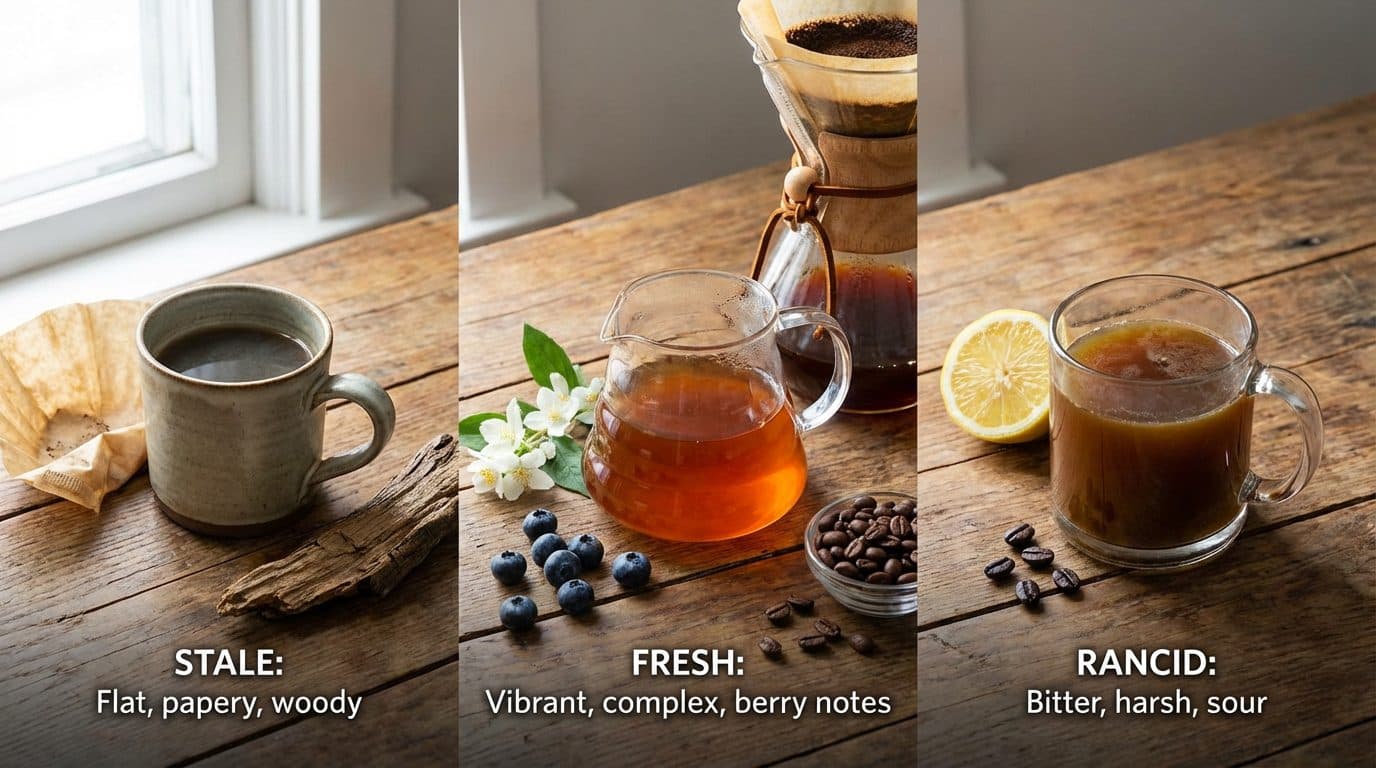
- Stale coffee tastes: Flat, papery, woody, thin, or broadly “coffee-like” without distinct notes.
- Fresh coffee tastes: Clear, sweet, balanced, and easier to describe after each sip.
- Rancid coffee tastes: Harsh, oily, sour in an unpleasant way, or bitter beyond normal roast bitterness.
One useful comparison is to brew a fresh bag next to an old bag using the same method. Staleness becomes obvious when the old cup loses aroma, sweetness, and finish beside a fresher one.
Maximizing Your Coffee’s Freshness
Freshness is partly about the date and partly about how you treat the bag after opening. The enemies are simple: oxygen, light, heat, and moisture. The National Coffee Association gives the same broad storage advice: keep coffee away from air, moisture, heat, and light.
The Enemies of Fresh Coffee
- Oxygen: Speeds oxidation and dulls flavor.
- Light: Breaks down delicate compounds over time.
- Heat: Accelerates aging and can make oils taste stale.
- Moisture: Encourages off-flavors and, in bad cases, spoilage.
Storage Best Practices
Keep beans in an airtight, opaque container at room temperature. A quality retail bag with a one-way valve can work if you squeeze out excess air and seal it tightly. Avoid the refrigerator because coffee can pick up odors and condensation.
Practical buying rule: Buy only what you can finish in 2 to 4 weeks. Bulk coffee looks economical, but stale beans waste money in a quieter way: every cup tastes worse.
What About Freezing Coffee?
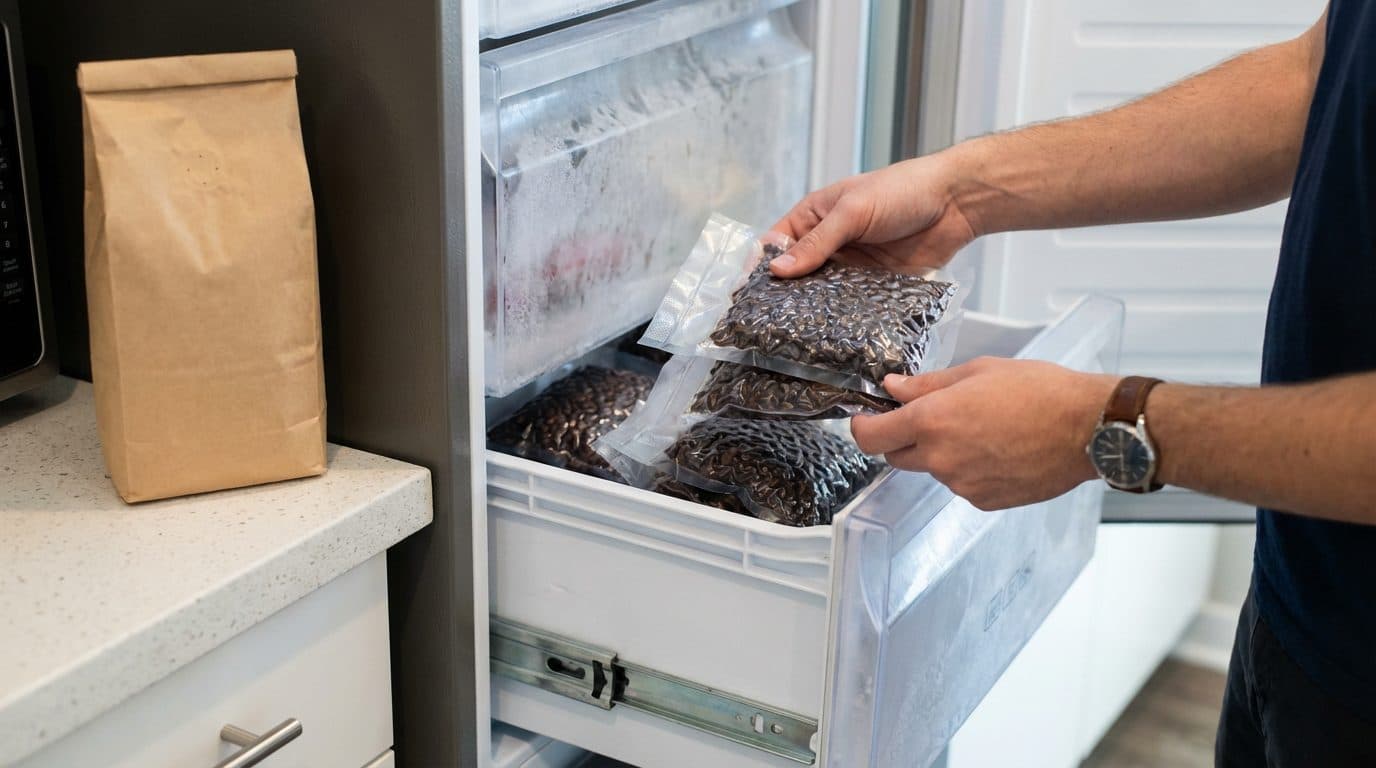
Freezing can help if you do it carefully. Portion beans into small airtight bags, remove as much air as possible, freeze once, and thaw only the portion you plan to use. Do not open and close one large frozen bag repeatedly; condensation is the problem.
For most people, buying smaller bags more often is simpler. Freezing is most useful when you ordered several bags from a favorite roaster or want to preserve an expensive limited lot.
Whole Beans vs. Pre-Ground: A Freshness Factor
Grinding speeds staling because it exposes far more surface area to oxygen. Whole beans can stay lively for weeks. Pre-ground coffee can taste noticeably flatter within days of opening, even if the bag still has a future best-by date.
If you want one upgrade that affects nearly every cup, buy whole beans and grind just before brewing. A modest burr grinder will usually improve consistency more than a fancy brewer paired with old pre-ground coffee.
Frequently Asked Questions
Can I drink coffee after the expiration date?
Usually, yes, if it was stored dry and shows no signs of mold, rancid odor, or contamination. The date is generally about quality rather than safety. Expect weaker aroma and flatter flavor.
How fresh should coffee be for espresso vs. drip?
Espresso often benefits from a rest period of about 7 to 14 days after roasting because very fresh beans can release too much gas during extraction. Drip, French press, and pour-over can work earlier, often after 3 to 5 days, depending on the coffee.
Why don’t all coffee brands show the roast date?
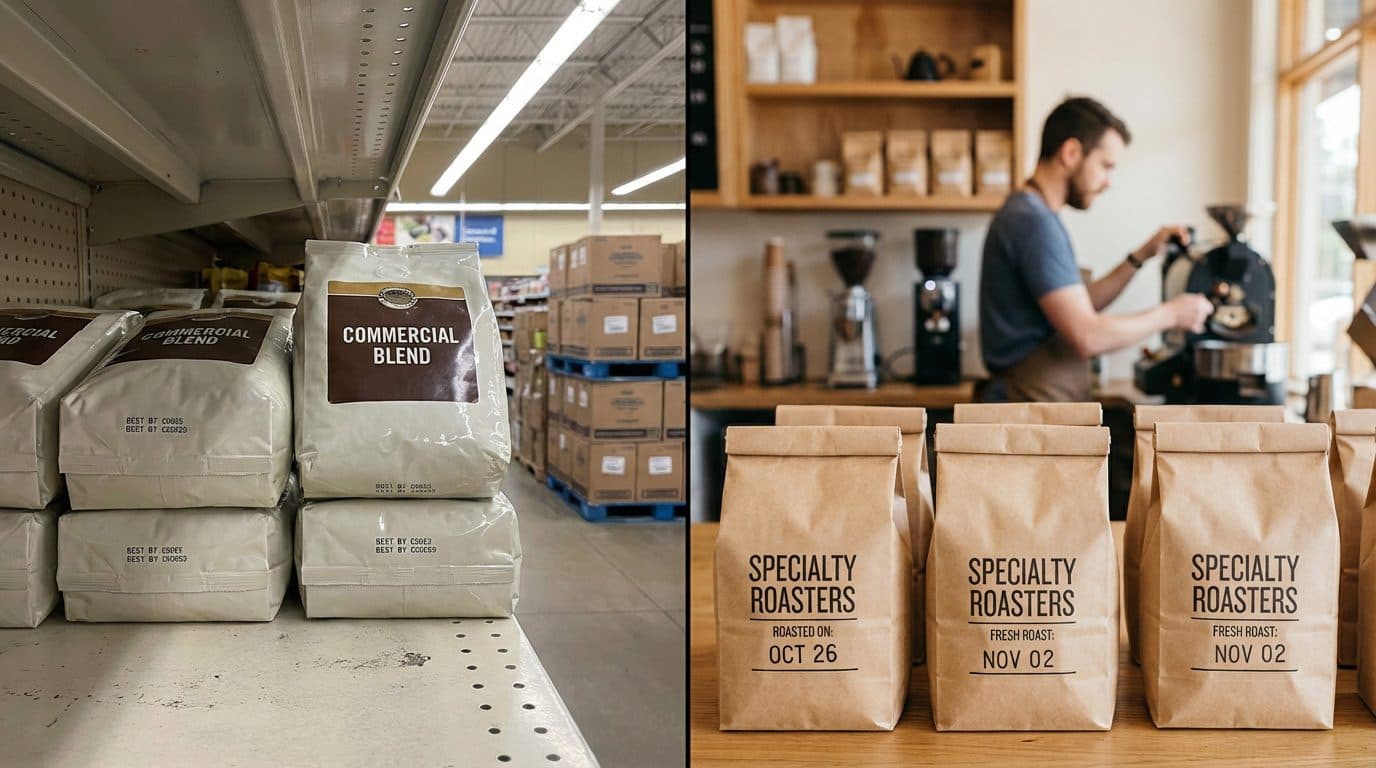
Roast dates reveal inventory age. Large brands may prefer longer distribution windows and simpler labeling. Specialty roasters usually show roast dates because their customers expect transparency and faster turnover.
Is there such a thing as coffee that is too fresh?
Yes. Beans right out of the roaster can be hard to brew evenly because they are still releasing a lot of carbon dioxide. Letting coffee rest a few days often improves sweetness, balance, and consistency.
Does dark roast coffee stay fresh longer than light roast?
Not necessarily. Dark roasts often have more surface oil, and that oil can oxidize. Light roasts may preserve delicate notes longer under good storage, but storage and bag age matter more than roast level alone.
Bottom Line
The roast date is your best freshness compass. The expiration date is a broad quality marker. Shop for clear roast dates, buy smaller amounts, store beans airtight and away from heat, and grind right before brewing.
If a bag has no roast date, it can still be usable, but treat it as a gamble. Your senses get the final vote: fresh coffee smells clear and tastes specific; old coffee tastes like a memory of what it used to be.


Comments