



Table of Contents
- What Is Low-Acid Coffee, Exactly?
- The Main Acids in Coffee
- How Is Low-Acid Coffee Made?
- Bean Origin and Variety
- Roasting Techniques
- Processing Methods
- Cold Brewing
- Is Low-Acid Coffee Actually Better for Your Stomach?
- When Low-Acid Coffee Helps
- When Low-Acid Coffee Might Not Help
- Comparing Low-Acid Coffee to Regular Coffee
- Does Low-Acid Coffee Taste Different?
- Tips for Reducing Coffee's Impact on Your Stomach
- Brewing Adjustments
- Choosing the Right Beans
- Lifestyle Considerations
- Frequently Asked Questions
- Does low-acid coffee have less caffeine?
- Is low-acid coffee more expensive?
- Can I make regular coffee less acidic at home?
- Will low-acid coffee help with acid reflux?
- Does low-acid coffee taste weak or bland?
- Final Thoughts: Is Low-Acid Coffee Right for You?
Ever take that first sip of morning coffee only to feel a burning sensation creeping up your chest? You’re not alone. Millions of coffee lovers deal with acid reflux, heartburn, and stomach discomfort every single day—yet they can’t imagine giving up their beloved brew. That’s where low-acid coffee enters the picture, promising all the flavor with less digestive drama.
But what exactly makes coffee “low-acid,” and is it genuinely better for your stomach, or is it just clever marketing? In this guide, I’ll break down the science behind coffee acidity, explain how low-acid varieties differ from regular coffee, and help you decide if making the switch is right for you.
What Is Low-Acid Coffee, Exactly?
Low-acid coffee refers to coffee that has been processed, roasted, or sourced in ways that reduce its overall acidity. In my experience, most people confuse two different concepts here: pH acidity (the actual chemical measurement) and perceived acidity (how your stomach reacts). Both matter, but they’re not the same thing.
Regular coffee typically has a pH level between 4.85 and 5.10, making it mildly acidic—similar to a banana. Low-acid coffees aim to push that pH closer to neutral (7.0), usually landing somewhere between 5.5 and 6.0. That might not sound like a huge difference on paper, but for sensitive stomachs, it can be game-changing.
The Main Acids in Coffee
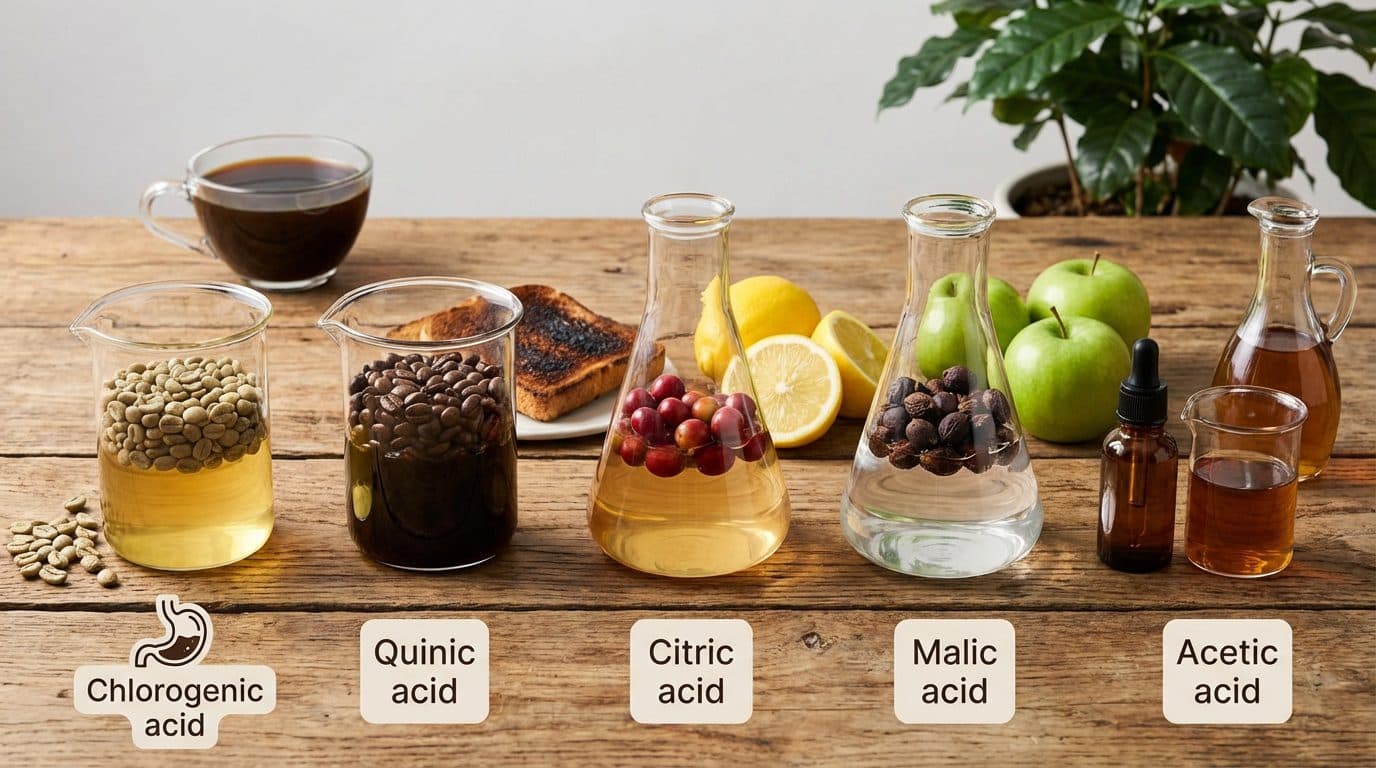
Coffee contains over 30 organic acids, but these are the primary players:
- Chlorogenic acid: The most abundant acid, responsible for some of coffee’s antioxidant properties but also linked to stomach irritation
- Quinic acid: Forms when coffee sits too long or is over-roasted; creates that bitter, sour taste
- Citric acid: Adds brightness and fruity notes
- Malic acid: Contributes apple-like tartness
- Acetic acid: In small amounts, adds complexity; in excess, creates vinegar-like sourness
Low-acid coffee production focuses on reducing chlorogenic and quinic acids specifically, as these tend to cause the most digestive discomfort.
How Is Low-Acid Coffee Made?
There’s no single method for creating low-acid coffee. Producers use various approaches, and understanding these can help you choose the right option for your needs.
Bean Origin and Variety
Geography matters more than most people realize. Coffee grown at lower altitudes naturally contains less acid because the beans develop more slowly and produce fewer acidic compounds. Brazilian, Sumatran, and some Mexican coffees tend to be naturally lower in acid compared to high-altitude Ethiopian or Kenyan beans.
Did You Know? Arabica beans are generally more acidic than Robusta beans. However, Robusta has more caffeine and a harsher flavor, so most specialty low-acid brands stick with carefully selected Arabica varieties.
Roasting Techniques
Here’s something I’ve found fascinating over years of home roasting: darker roasts are typically lower in acid than light roasts. The extended roasting time breaks down chlorogenic acids, reducing their concentration. However, if beans are over-roasted, quinic acid increases, which can still upset your stomach.
The sweet spot? Medium-dark to dark roasts from reputable roasters who understand this balance.
Processing Methods
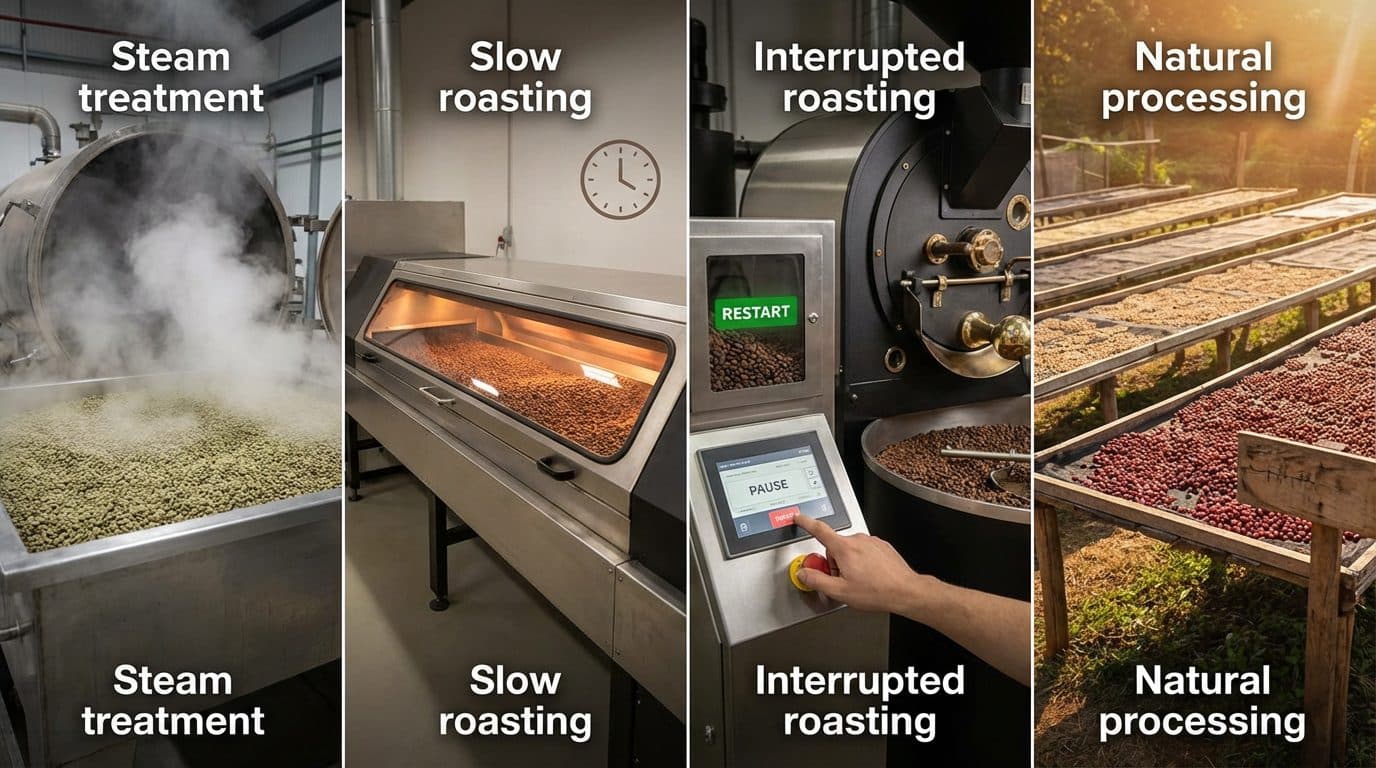
Some companies use specialized processing to reduce acidity:
- Steam treatment: Beans are steamed before roasting to remove waxy outer layers that contain acids
- Slow roasting: Extended roasting at lower temperatures gradually reduces acid content
- Interrupted roasting: The roasting process is paused and restarted to break down more acids
- Natural processing: Drying coffee cherries whole before removing the bean often produces smoother, less acidic results
Cold Brewing
This isn’t about the beans themselves but how you brew them. Cold brew coffee extracts up to 70% less acid than hot brewing methods because heat is what pulls out most acidic compounds. If you’re not ready to buy specialty low-acid beans, simply switching to cold brew can make a significant difference.
Is Low-Acid Coffee Actually Better for Your Stomach?
Let’s get to the question everyone really wants answered. The short answer: it depends on why coffee bothers your stomach in the first place.
When Low-Acid Coffee Helps
If your symptoms are directly caused by coffee’s acidity triggering excess stomach acid production, then yes—low-acid coffee can provide meaningful relief. Common conditions that may improve include:
- GERD (Gastroesophageal Reflux Disease): Less acid means less irritation to the esophageal lining
- Gastritis: Inflamed stomach lining is less aggravated by lower-acid beverages
- Acid reflux and heartburn: Reduced acid content means less fuel for that burning sensation
- Tooth enamel sensitivity: Lower acidity is gentler on dental enamel
I’ve heard from countless home baristas who switched to low-acid coffee and finally enjoy their morning cup without reaching for antacids afterward. For them, it’s been genuinely transformative.
When Low-Acid Coffee Might Not Help
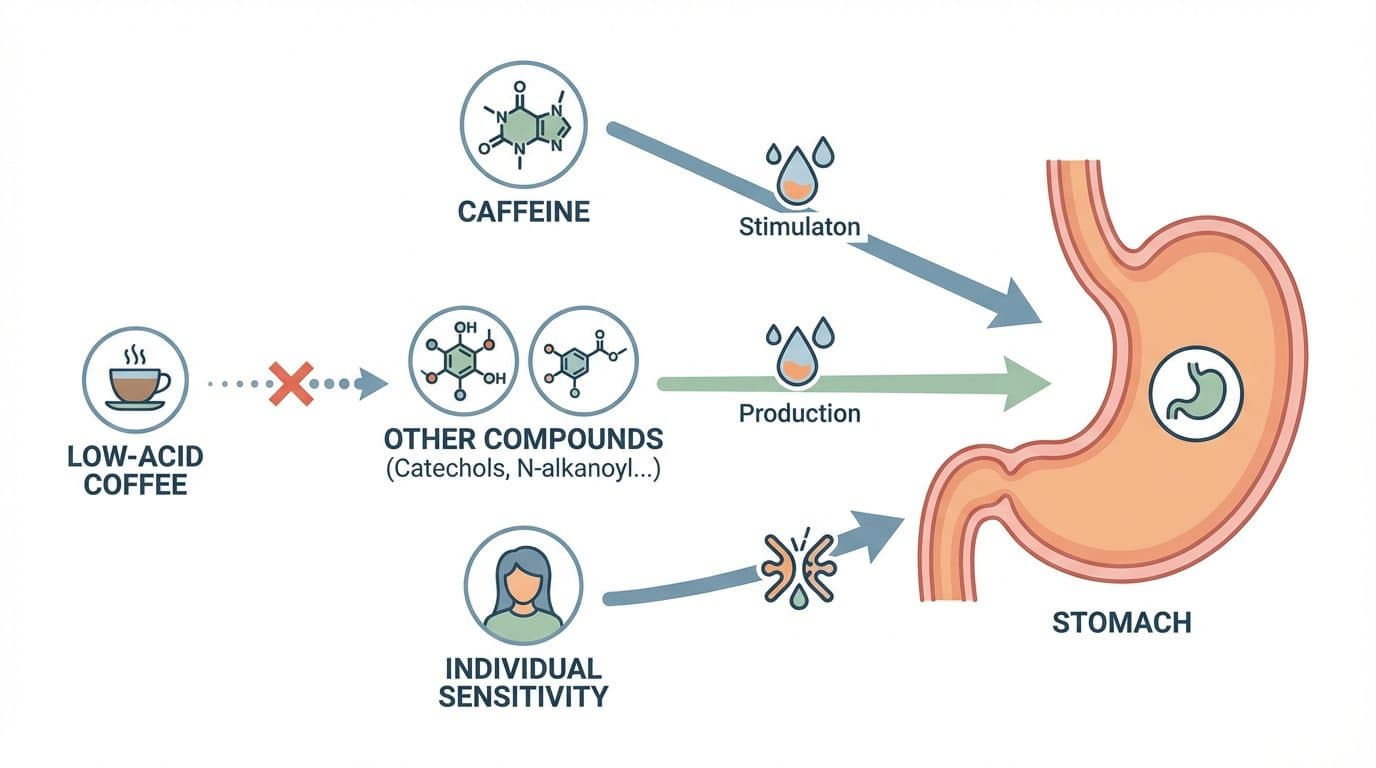
Here’s where it gets complicated. Coffee affects your stomach through multiple mechanisms, not just acidity:
- Caffeine: Stimulates gastric acid secretion regardless of coffee’s pH level
- Other compounds: Catechols and N-alkanoyl-5-hydroxytryptamides (fancy names, I know) also trigger stomach acid production
- Individual sensitivity: Some people react to compounds that have nothing to do with acidity
In short: if caffeine is your primary trigger, low-acid coffee alone won’t solve your problems. You might need to combine it with reduced caffeine intake or switch to decaf low-acid options.
Important Note: If you experience persistent stomach pain, frequent heartburn, or other digestive issues, please consult a healthcare professional. The information here is general in nature and shouldn’t replace proper medical advice for your specific situation.
Comparing Low-Acid Coffee to Regular Coffee
Let me break down the key differences so you can make an informed choice:
| Factor | Regular Coffee | Low-Acid Coffee |
|---|---|---|
| pH Level | 4.85–5.10 | 5.5–6.0+ |
| Flavor Profile | Bright, complex, sometimes sharp | Smoother, mellower, less brightness |
| Stomach Impact | May cause irritation in sensitive individuals | Generally gentler on digestive system |
| Price | Varies widely | Usually 10-30% more expensive |
| Caffeine Content | Standard | Usually similar (unless decaf) |
| Antioxidants | Higher chlorogenic acid content | Slightly reduced but still present |
Does Low-Acid Coffee Taste Different?
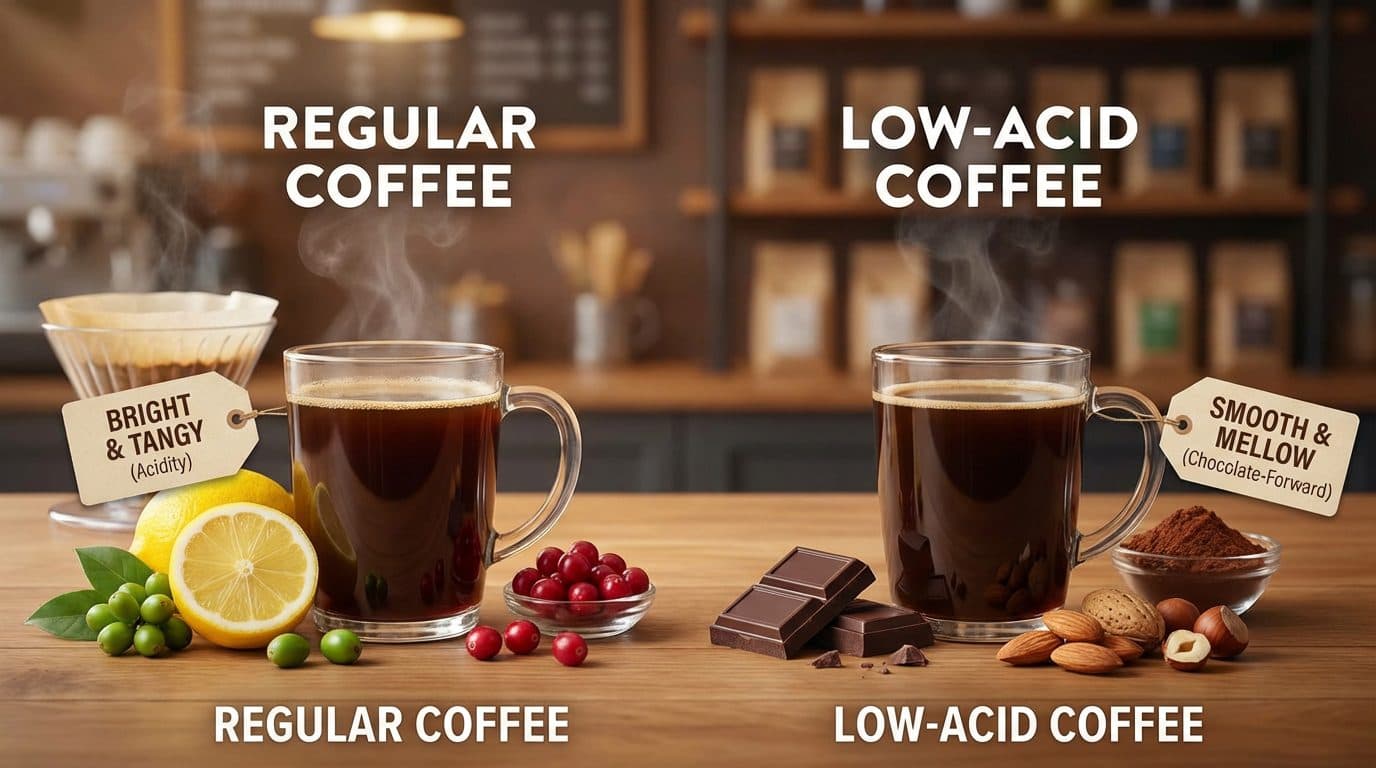
Honestly? Yes, but not necessarily worse. Low-acid coffee tends to taste smoother and more mellow. You’ll notice less of that bright, tangy quality that coffee enthusiasts call “acidity” (used as a positive tasting term, confusingly enough).
Some people love this—they find regular coffee too sharp or sour. Others miss that lively brightness. I’d describe good low-acid coffee as having a rounder, more chocolate-forward profile with nutty undertones. Life is too short for bad coffee, and thankfully, there are excellent low-acid options available now that don’t sacrifice quality for gentleness.
Tips for Reducing Coffee’s Impact on Your Stomach
Whether you switch to low-acid coffee or not, these strategies can help minimize digestive discomfort:
Brewing Adjustments
- Try cold brew: As mentioned, it extracts significantly less acid
- Use coarser grinds: Finer grinds extract more acids
- Shorten brew time: Less contact time means less acid extraction
- Add a pinch of salt: Sounds strange, but it neutralizes some acids without affecting flavor noticeably
Barista Tip: Never drink coffee on an empty stomach. Having food first creates a buffer that protects your stomach lining. Even a small snack makes a difference.
Choosing the Right Beans
- Look for beans from Brazil, Sumatra, or Mexico
- Choose medium-dark to dark roasts
- Avoid light roasts marketed as “bright” or “citrusy”
- Consider shade-grown coffee, which often has lower acidity
Lifestyle Considerations
Timing matters too. I’ve found that drinking coffee mid-morning (rather than first thing) gives your stomach time to prepare. Also, staying hydrated and limiting coffee to 1-2 cups daily can reduce cumulative irritation.
Frequently Asked Questions
Does low-acid coffee have less caffeine?
Not necessarily. Acidity and caffeine content are independent factors. Low-acid coffee typically has the same caffeine levels as regular coffee unless it’s specifically labeled as decaf. If caffeine is also bothering your stomach, look for low-acid decaf options.
Is low-acid coffee more expensive?
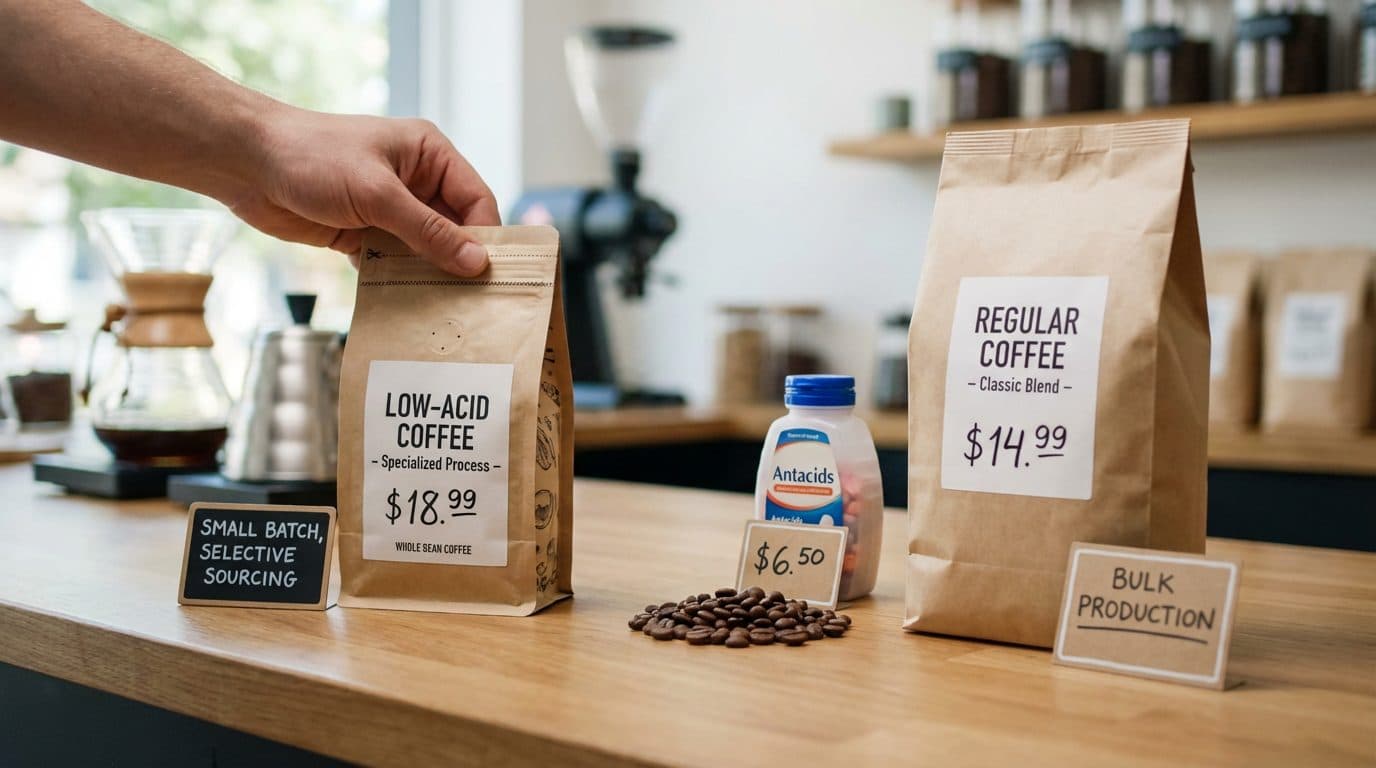
Generally, yes. The specialized processing, selective sourcing, and smaller production batches mean low-acid coffee usually costs 10-30% more than comparable regular coffee. However, if it saves you from buying antacids or skipping coffee altogether, many people find it worth the investment.
Can I make regular coffee less acidic at home?
Absolutely. Cold brewing is the easiest method—simply steep coarse grounds in cold water for 12-24 hours. You can also add a tiny pinch of baking soda to neutralize some acid, though this may slightly alter the flavor. Choosing darker roasts and brewing with cooler water also helps.
Will low-acid coffee help with acid reflux?
Many people with acid reflux report improvement when switching to low-acid coffee. However, results vary depending on your individual triggers. If caffeine is a primary cause of your reflux, you may need to reduce intake or switch to decaf regardless of acidity levels.
Does low-acid coffee taste weak or bland?
Quality low-acid coffee shouldn’t taste weak. It will taste different—smoother, less bright, often more chocolatey or nutty. Some early low-acid brands did sacrifice flavor, but today’s best options are crafted by specialty roasters who prioritize both gentleness and taste.
Final Thoughts: Is Low-Acid Coffee Right for You?
Low-acid coffee isn’t magic, but it’s also not marketing hype. For people whose stomach troubles stem specifically from coffee’s acidic compounds, switching to a low-acid variety can genuinely reduce symptoms and bring back the joy of that morning ritual. I’ve seen it work for too many people to dismiss it.
That said, it’s not a universal solution. Understanding why coffee bothers your stomach—whether it’s acidity, caffeine, or other compounds—helps you make smarter choices. Sometimes the answer is low-acid beans. Sometimes it’s cold brew. Sometimes it’s simply not drinking coffee on an empty stomach.
My recommendation? If regular coffee causes discomfort, try a quality low-acid brand for two weeks and see how your body responds. Combine it with the brewing and timing tips above for best results. Your stomach will tell you whether it’s making a difference—and hopefully, you’ll be back to enjoying every sip without the burn.



Comments