


Table of Contents
- What Makes Vietnamese Robusta Different?
- Is Vietnamese Robusta Really the Strongest Coffee?
- Caffeine Content Comparison
- Strength vs. Flavor Intensity
- The Flavor Profile of Vietnamese Robusta
- Who Is Vietnamese Robusta For?
- Who Is It NOT For?
- How to Brew Vietnamese Robusta at Home
- What You'll Need
- Brewing Steps
- Common Myths About Vietnamese Robusta
- Myth 1: All Robusta Tastes Bad
- Myth 2: More Caffeine Means More Jitters
- Myth 3: Vietnamese Coffee Is Just About the Condensed Milk
- Frequently Asked Questions
- How much caffeine is in a cup of Vietnamese Robusta?
- Can I use Vietnamese Robusta in my regular coffee maker?
- Is Vietnamese Robusta good for espresso?
- Where can I buy quality Vietnamese Robusta?
- Does Vietnamese Robusta have health benefits?
- Final Thoughts: Should You Try Vietnamese Robusta?
If you’ve ever taken a sip of traditional Vietnamese iced coffee and felt like your eyes suddenly opened wider, you’ve experienced the power of Vietnamese Robusta firsthand. This bold, intense coffee has earned a reputation as one of the most potent brews on the planet—but does it truly deserve the title of “strongest coffee”? Let’s dig into what makes Vietnamese Robusta so special, how it stacks up against other coffees, and whether it belongs in your daily rotation.
In this post, you’ll discover the science behind Robusta’s caffeine punch, learn how Vietnamese growing conditions create a unique flavor profile, and get practical tips for brewing this powerhouse bean at home.
What Makes Vietnamese Robusta Different?
Vietnam is the world’s second-largest coffee producer, and the country grows almost exclusively Robusta beans. Unlike the more delicate Arabica variety that dominates specialty coffee shops, Robusta (Coffea canephora) is a hardy, resilient plant that thrives in Vietnam’s Central Highlands.
Here’s what sets Vietnamese Robusta apart:
- Higher caffeine content: Robusta beans contain roughly 2.2–2.7% caffeine, compared to Arabica’s 1.2–1.5%
- Bold, earthy flavor: Expect notes of dark chocolate, nuts, and a distinctive woody or smoky character
- Lower acidity: Vietnamese Robusta tends to be smoother on the stomach than bright, acidic Arabicas
- Thicker body: The higher oil content creates a fuller mouthfeel and better crema in espresso
In my experience, Vietnamese Robusta isn’t just about raw strength—it’s about a completely different coffee experience. The first time I brewed it using a traditional phin filter, I was struck by how rich and syrupy the result was.
Is Vietnamese Robusta Really the Strongest Coffee?

This is where things get interesting. “Strongest” can mean different things depending on who you ask.
Caffeine Content Comparison
If we’re talking pure caffeine levels, Vietnamese Robusta is certainly among the strongest natural coffee beans available. Here’s a quick comparison:
| Coffee Type | Caffeine (per 100g beans) |
|---|---|
| Vietnamese Robusta | 2.2–2.7g |
| Standard Arabica | 1.2–1.5g |
| Brazilian Santos | 1.0–1.2g |
| Ethiopian Arabica | 1.1–1.4g |
So yes, Vietnamese Robusta packs nearly double the caffeine of most Arabica beans. However, some specialty “high-caffeine” blends on the market use specific Robusta varieties or processing methods to push caffeine even higher.
Strength vs. Flavor Intensity
Many people confuse caffeine content with flavor strength. A dark-roasted Arabica might taste more intense or bitter, but it actually contains slightly less caffeine than a lighter roast. Vietnamese Robusta delivers both—high caffeine and bold flavor.
Key Takeaway: Vietnamese Robusta is one of the strongest naturally occurring coffees by caffeine content, but “strongest” also depends on how you brew it and your personal tolerance.
The Flavor Profile of Vietnamese Robusta
Let’s address the elephant in the room: Robusta has historically gotten a bad reputation in specialty coffee circles. Critics call it harsh, rubbery, or one-dimensional. But high-quality Vietnamese Robusta tells a different story.
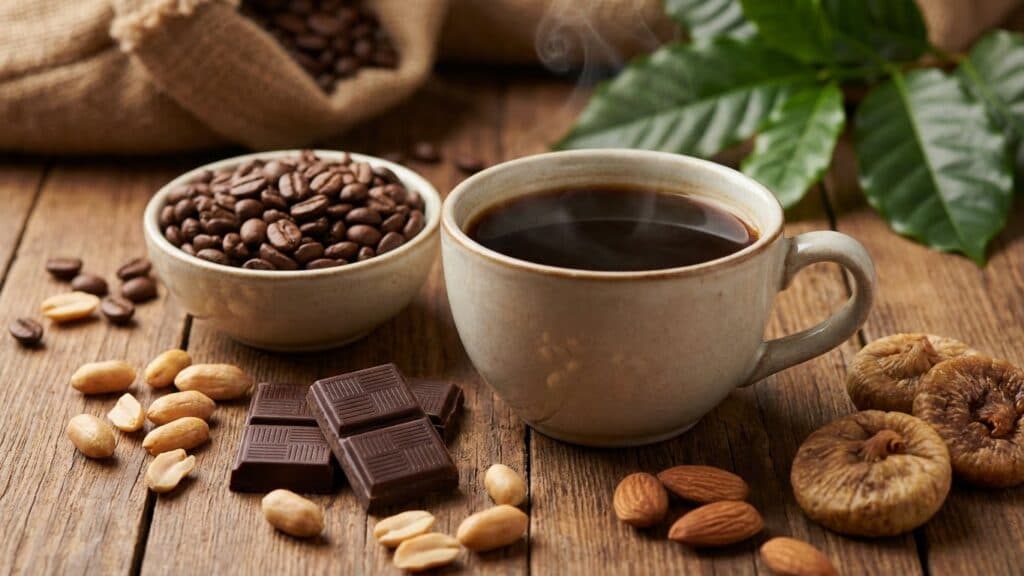
When properly grown and processed, Vietnamese Robusta offers:
- Deep, dark chocolate notes
- Roasted nuts (think peanuts or almonds)
- A subtle smokiness
- Low acidity with a smooth finish
- Hints of dried fruit in premium lots
The key word here is “quality.” Mass-produced Robusta destined for instant coffee is a completely different product from specialty-grade Vietnamese beans. I’ve found that seeking out single-origin Vietnamese Robusta from reputable roasters makes all the difference.
Who Is Vietnamese Robusta For?
- People who need a serious caffeine kick to start their day
- Fans of bold, full-bodied coffee without bright acidity
- Espresso lovers who want better crema and a punchy shot
- Anyone curious about traditional Vietnamese coffee culture
Who Is It NOT For?
- Those who prefer delicate, fruity, or floral coffee notes
- People sensitive to caffeine (this stuff is potent)
- Specialty coffee purists who only drink light-roasted Arabica
How to Brew Vietnamese Robusta at Home
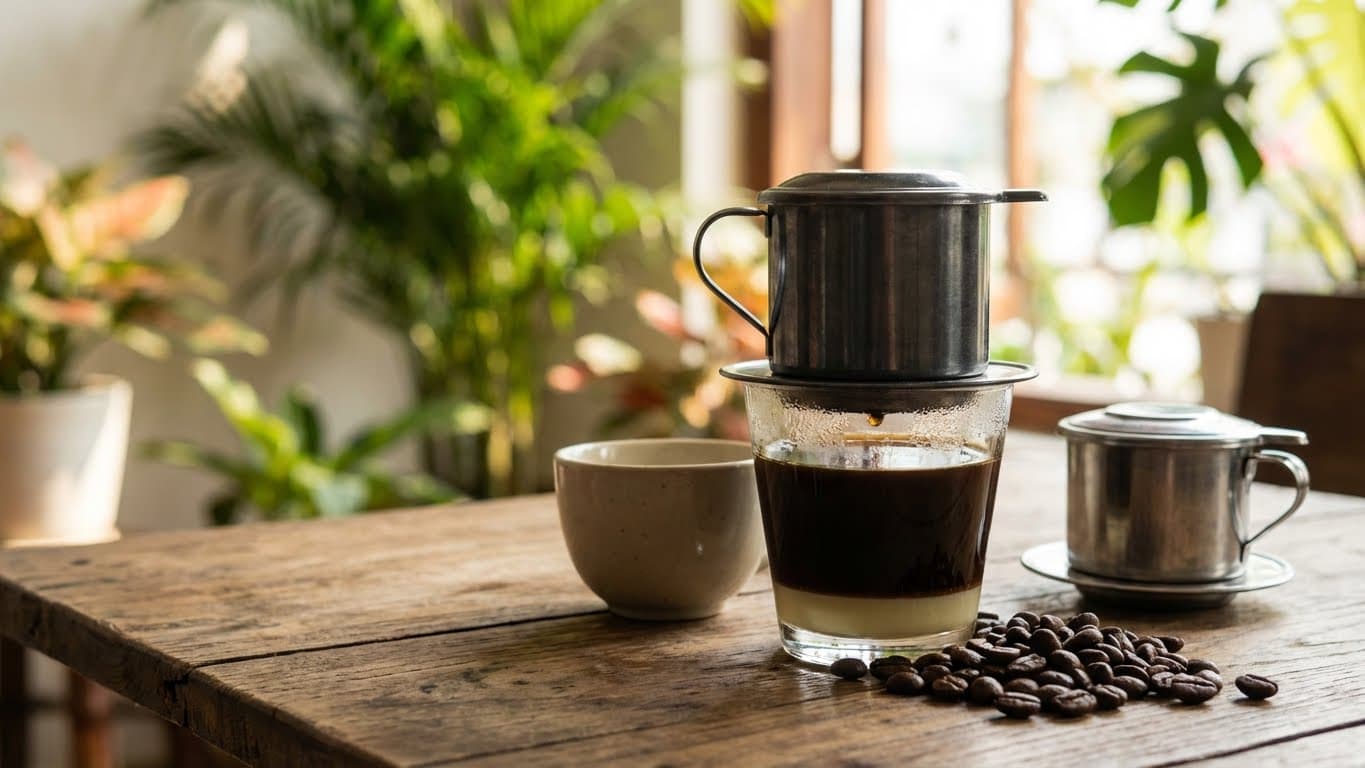
The traditional way to enjoy Vietnamese Robusta is with a phin filter—a small metal dripper that sits directly on your cup. This method produces a concentrated, almost syrupy brew that’s typically served over ice with sweetened condensed milk (cà phê sữa đá).
What You’ll Need
- Vietnamese phin filter
- Coarsely ground Vietnamese Robusta (about 2–3 tablespoons)
- Hot water just off the boil (around 200°F / 93°C)
- Sweetened condensed milk (optional but traditional)
- Ice cubes
Brewing Steps
- Add 2–3 tablespoons of ground coffee to the phin chamber
- Gently press down with the filter press—don’t compact too tightly
- Add a small splash of hot water and let it bloom for 20–30 seconds
- Fill the chamber with hot water and place the lid on top
- Wait 4–5 minutes for the coffee to drip through completely
- Stir in condensed milk to taste, pour over ice, and enjoy
Barista Tip: If you find the brew too intense, try a slightly coarser grind or reduce the coffee amount. Vietnamese Robusta is forgiving, but it rewards experimentation.
You can also use Vietnamese Robusta in espresso machines, moka pots, or French presses. The high oil content makes it particularly good for espresso-based drinks where you want a thick crema and bold flavor that cuts through milk.
Common Myths About Vietnamese Robusta
Let’s bust some misconceptions that keep people from trying this unique coffee.
Myth 1: All Robusta Tastes Bad
This is outdated thinking. While low-grade Robusta used in cheap instant coffee deserves its poor reputation, specialty Vietnamese Robusta can be genuinely delicious. The coffee industry is increasingly recognizing “fine Robusta” as a legitimate category.
Myth 2: More Caffeine Means More Jitters
Not necessarily. How your body responds to caffeine depends on many factors, including your tolerance, how quickly you drink it, and what you eat alongside it. Some people find Robusta’s lower acidity actually easier on their system than acidic Arabica.
Myth 3: Vietnamese Coffee Is Just About the Condensed Milk
While cà phê sữa đá is iconic, Vietnamese Robusta stands on its own. Try it black first to appreciate the bean’s natural character before adding sweeteners.
Did You Know? Vietnam’s coffee industry only took off in the 1990s, but the country now produces over 1.5 million metric tons annually—almost all of it Robusta.
Frequently Asked Questions
How much caffeine is in a cup of Vietnamese Robusta?
A typical 8oz cup brewed with Vietnamese Robusta contains roughly 200–265mg of caffeine, compared to 95–165mg for standard Arabica. The exact amount depends on your brewing method and coffee-to-water ratio.
Can I use Vietnamese Robusta in my regular coffee maker?
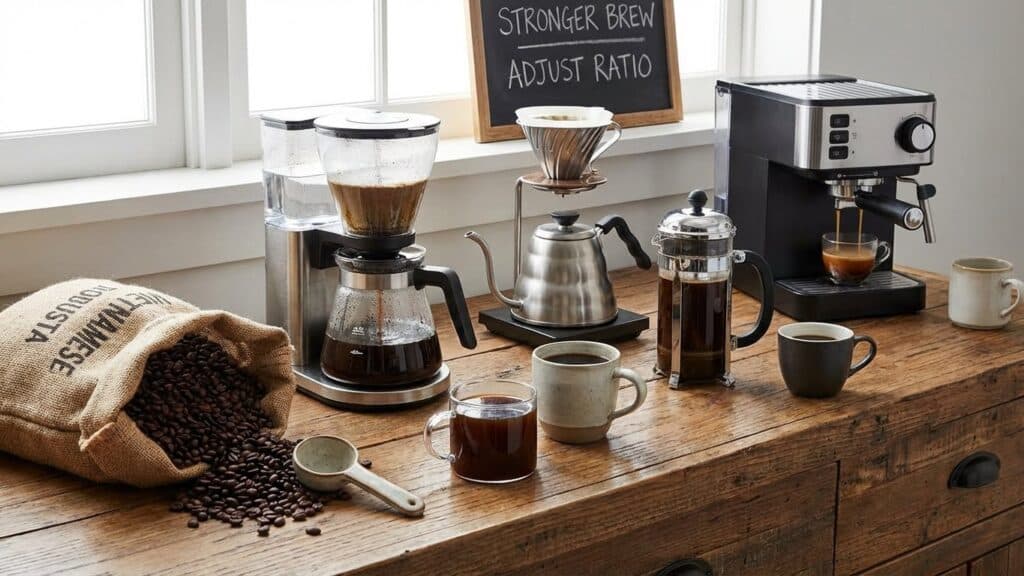
Absolutely. Vietnamese Robusta works in drip machines, pour-overs, French presses, and espresso machines. Just be aware that it brews stronger than Arabica, so you might want to adjust your ratios.
Is Vietnamese Robusta good for espresso?
Yes, many espresso blends include Robusta specifically for its ability to produce thick, lasting crema and add body to the shot. Italian-style espresso traditionally incorporates some Robusta for this reason.
Where can I buy quality Vietnamese Robusta?
Look for specialty roasters who source directly from Vietnamese farms. Online retailers specializing in Vietnamese coffee often offer fresher, higher-quality options than generic supermarket brands.
Does Vietnamese Robusta have health benefits?
Coffee in general contains antioxidants and has been linked to various health benefits in research. Robusta actually contains more chlorogenic acids (antioxidants) than Arabica. However, the higher caffeine content means you should moderate your intake. If you have specific health concerns, consult with a healthcare professional.
Final Thoughts: Should You Try Vietnamese Robusta?
So, is Vietnamese Robusta the strongest coffee? In terms of natural caffeine content, it’s certainly a top contender. But strength is only part of the story. Vietnamese Robusta offers a unique flavor experience—bold, chocolatey, and smooth—that’s worth exploring regardless of your caffeine needs.
If you’ve only ever drunk Arabica, Vietnamese Robusta might challenge your assumptions about what coffee can be. Start with a quality single-origin bean, brew it traditionally with a phin filter, and give it a fair chance. You might just discover your new favorite way to wake up.
Life’s too short for boring coffee—and Vietnamese Robusta is anything but boring.



Comments