


Table of Contents
- Quick Verdict: Immersion Cold Brew Wins for Most Home Baristas
- Understanding Immersion Cold Brew
- How Immersion Affects Taste
- Pros and Cons of Immersion Cold Brew
- Understanding Slow Drip Cold Brew
- How Slow Drip Affects Taste
- Pros and Cons of Slow Drip Cold Brew
- Taste Comparison: Immersion vs. Slow Drip Cold Brew
- Which Method Brings Out More Flavor Complexity?
- Real-World Scenario: The Morning Rush vs. Weekend Ritual
- Who Should Choose Each Method?
- Immersion Cold Brew Is For You If:
- Immersion Cold Brew Is NOT For You If:
- Slow Drip Cold Brew Is For You If:
- Slow Drip Cold Brew Is NOT For You If:
- Key Takeaway: Different Methods, Different Missions
- Conclusion and Final Recommendations
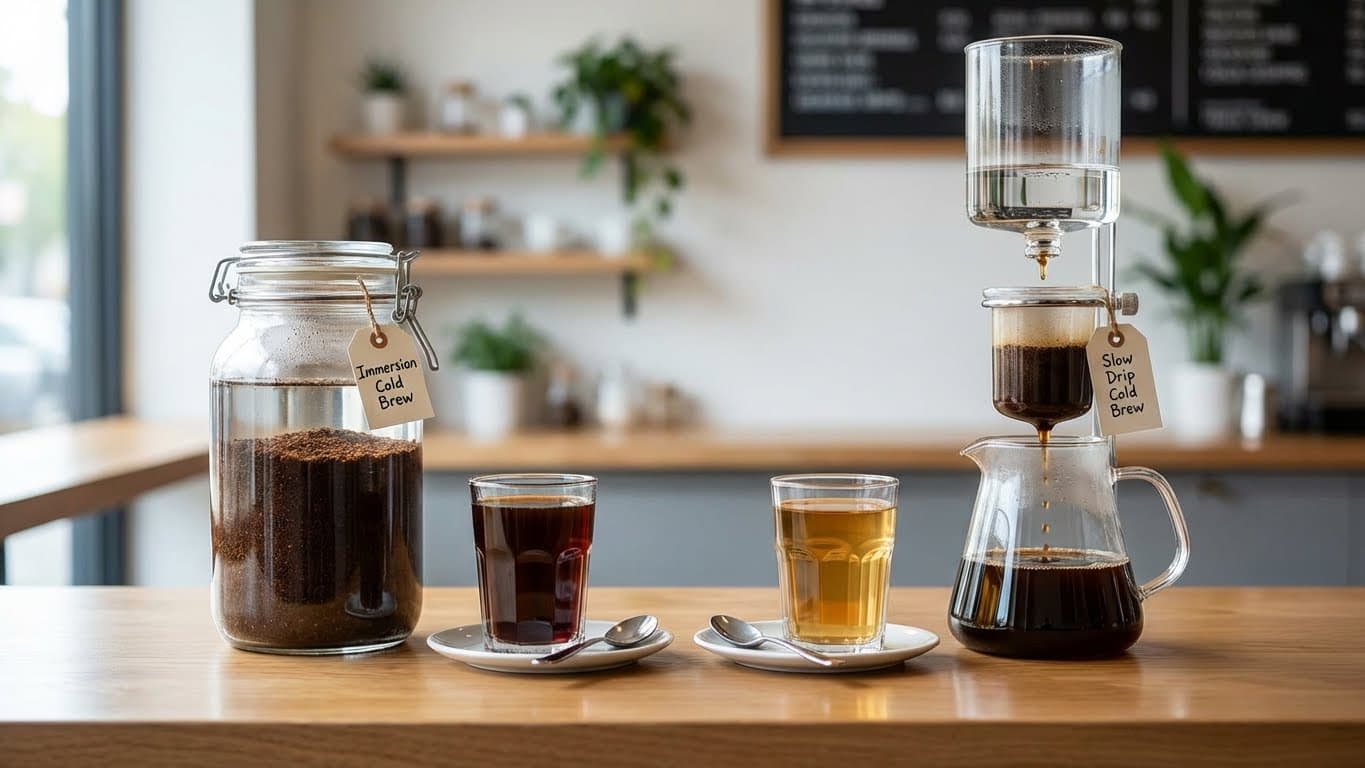
Ever wonder why your homemade cold brew tastes different from the one at that fancy coffee shop downtown? The secret might not be the beans—it could be the method. When it comes to cold brew coffee, two techniques dominate the scene: immersion and slow drip. Both produce smooth, low-acid coffee, but the taste profiles can be surprisingly different.
If you’re trying to decide which cold brew method deserves a spot in your kitchen, you’re in the right place. I’ve spent countless mornings (and a small fortune in coffee beans) experimenting with both techniques. Let’s break down how immersion vs. slow drip cold brew compare in terms of flavor, body, and overall drinking experience.
Quick Verdict: Immersion Cold Brew Wins for Most Home Baristas
For the majority of home coffee lovers, immersion cold brew is the way to go. It’s forgiving, affordable, and produces a rich, full-bodied concentrate that’s perfect for mixing or sipping straight. That said, if you’re chasing clarity and nuanced flavor notes, slow drip cold brew offers something truly special—it just requires more equipment and patience.
In short: immersion is the reliable daily driver, while slow drip is the weekend project for coffee nerds who want to impress.
Understanding Immersion Cold Brew
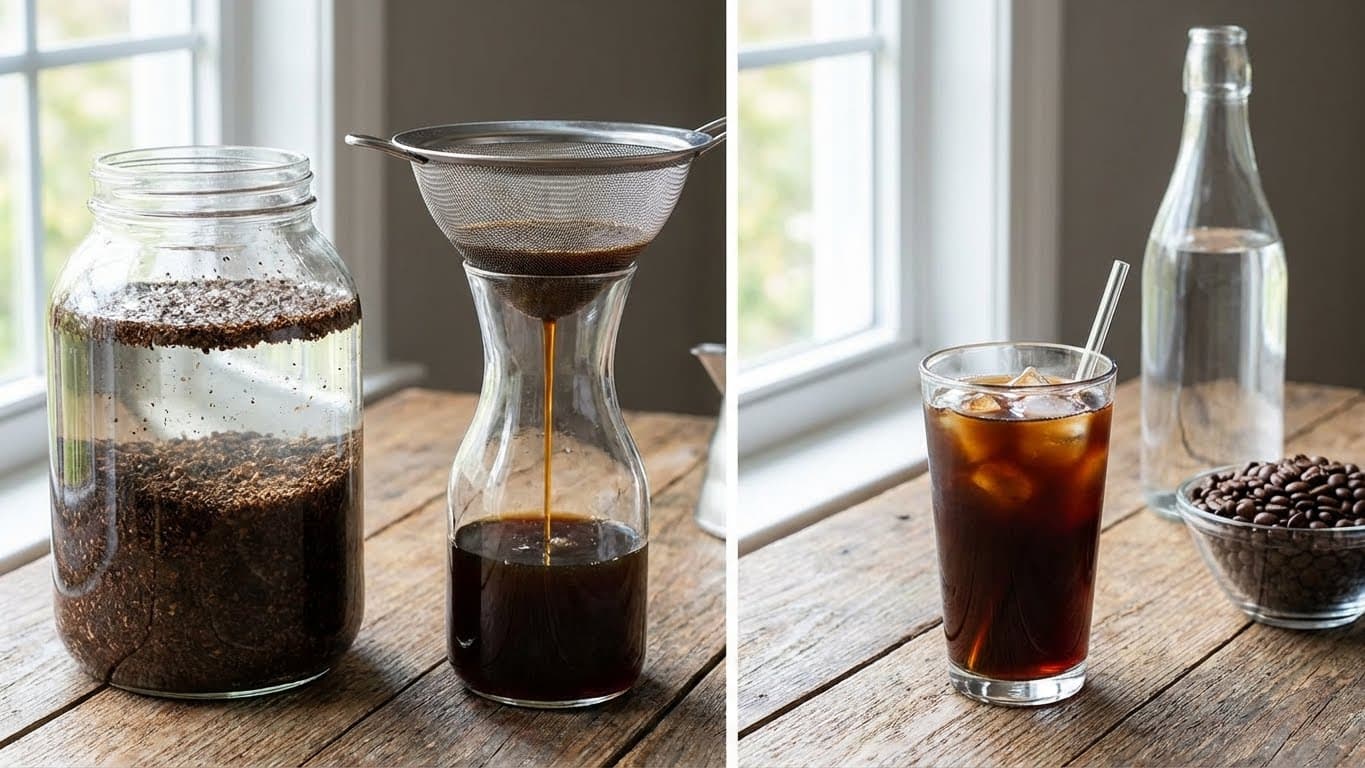
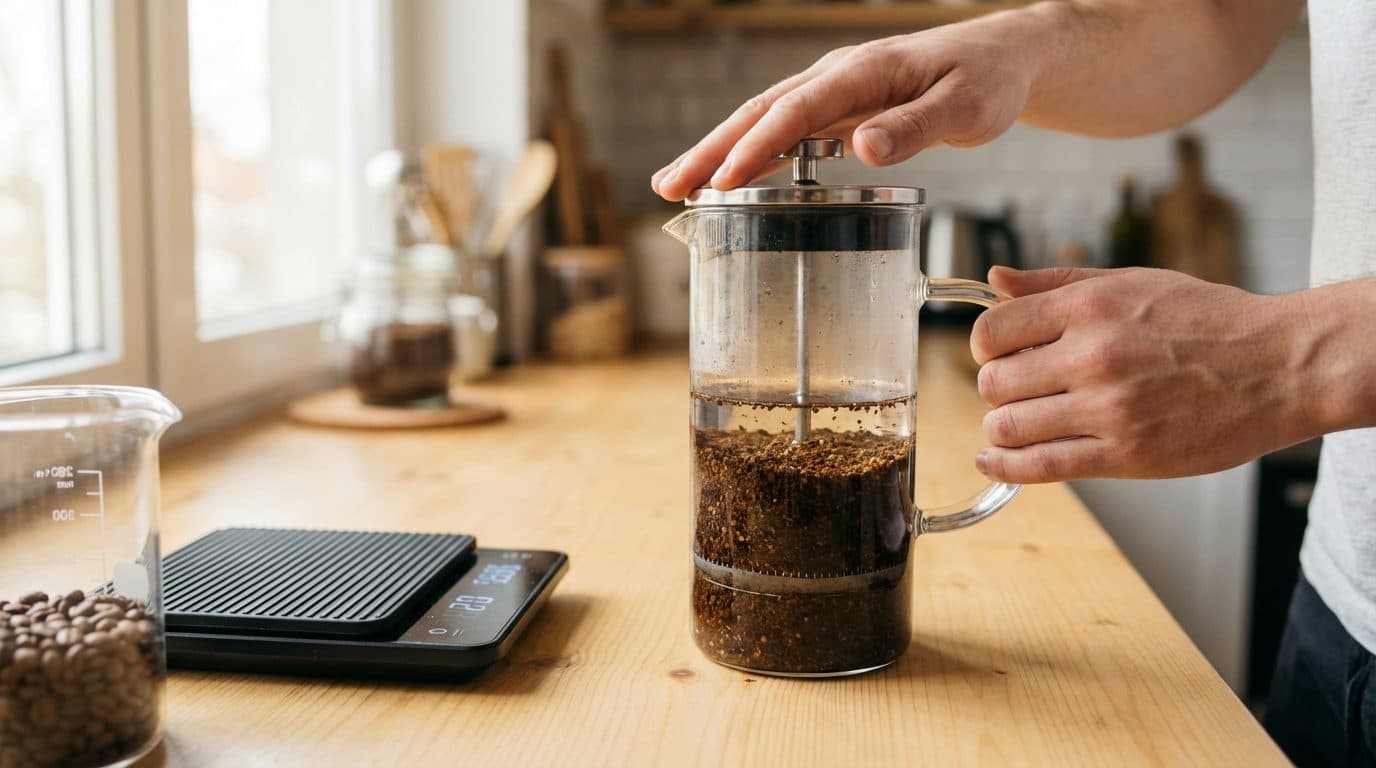
Immersion cold brew is exactly what it sounds like. You steep coarsely ground coffee in cold water for an extended period—typically 12 to 24 hours—then strain out the grounds. The result is a concentrated coffee that’s smooth, sweet, and remarkably low in acidity.
This is the method most people picture when they think of cold brew. It’s the technique behind those big batches you see at coffee chains, and it’s incredibly easy to replicate at home with nothing more than a jar and a fine-mesh strainer.
How Immersion Affects Taste
Because the grounds sit in constant contact with water, immersion extraction is thorough and uniform. You get a heavy, syrupy body with pronounced chocolate and nutty notes. The extended steep time softens any harsh edges, making even medium-roast beans taste remarkably mellow.
In my experience, immersion cold brew tends to emphasize the base notes of coffee—think dark chocolate, caramel, and roasted nuts. Brighter, fruitier notes often get muted, which is either a blessing or a curse depending on your preferences.
Pros and Cons of Immersion Cold Brew
- Pros:
- Simple and beginner-friendly—no special equipment needed
- Produces large batches easily
- Rich, full-bodied, and naturally sweet
- Very forgiving of timing variations
- Affordable to start
- Cons:
- Can taste heavy or muddy if over-extracted
- Subtle flavor notes may get lost
- Requires filtering, which can be messy
- Takes12-24 hours—no instant gratification here
Understanding Slow Drip Cold Brew
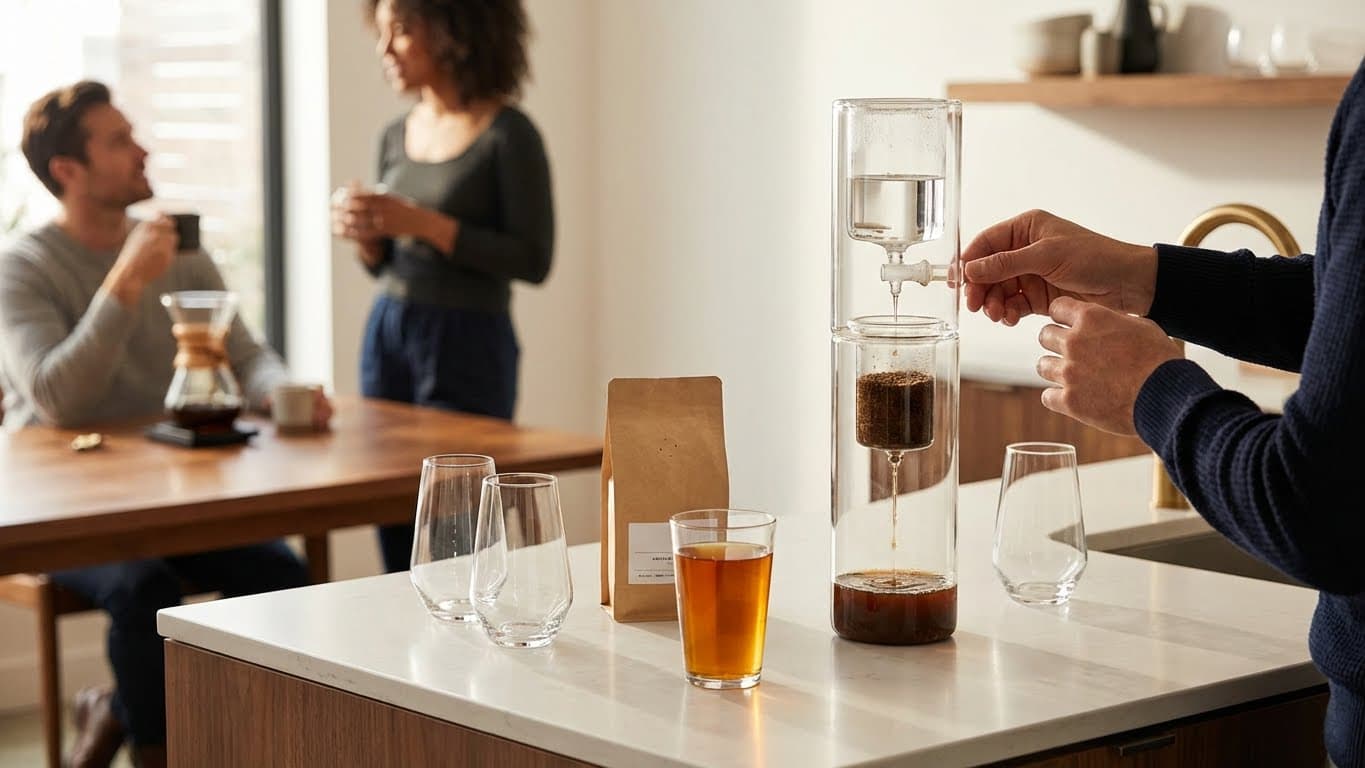
Slow drip cold brew, sometimes called Kyoto-style or Dutch coffee, uses a completely different approach. Instead of soaking grounds in water, cold water drips slowly through a bed of coffee over several hours. The drip rate is carefully controlled—usually one drop every second or two.
This method requires a dedicated tower or dripper, which can range from affordable plastic setups to stunning glass contraptions that look like they belong in a chemistry lab. The visual appeal alone makes it a conversation starter.
How Slow Drip Affects Taste
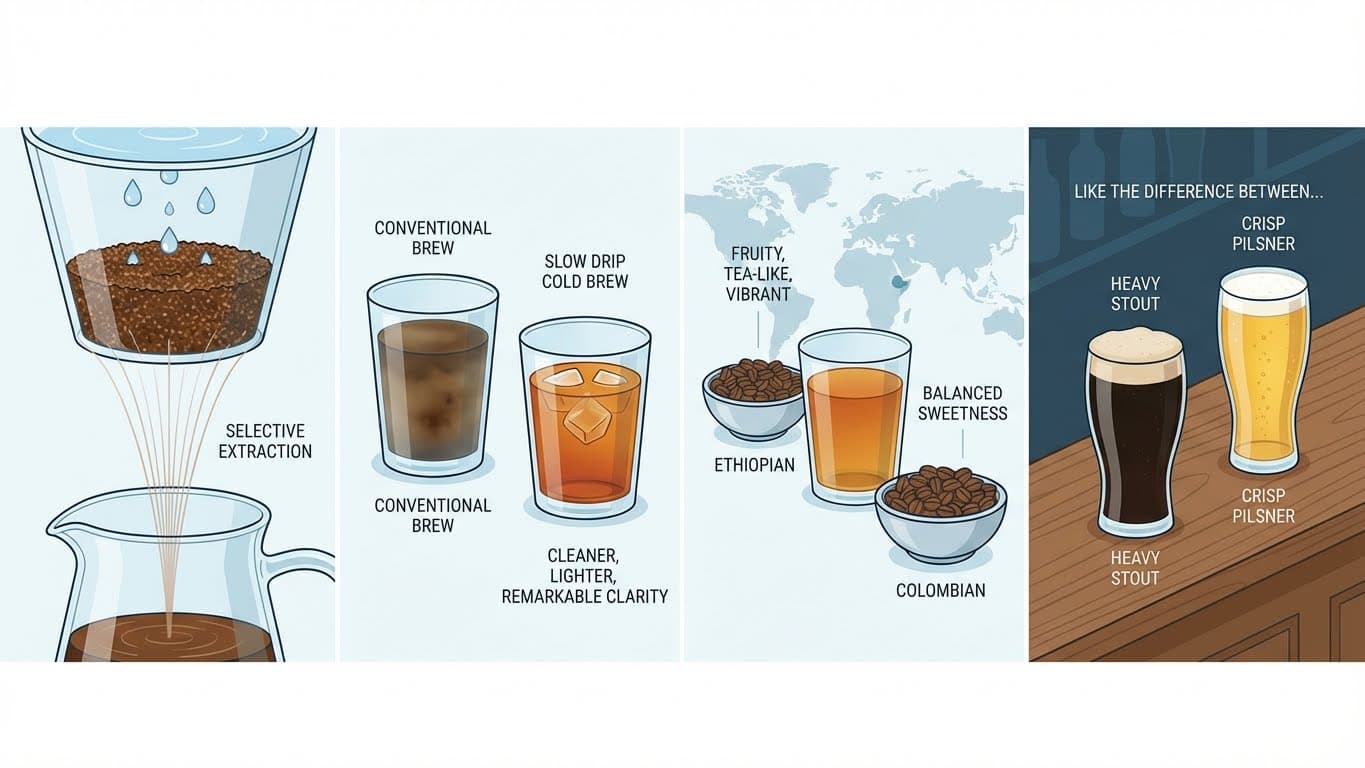
The drip method extracts coffee more gently and selectively. Water passes through the grounds only once, pulling out specific compounds without over-saturating. The result is a cleaner, lighter brew with remarkable clarity.
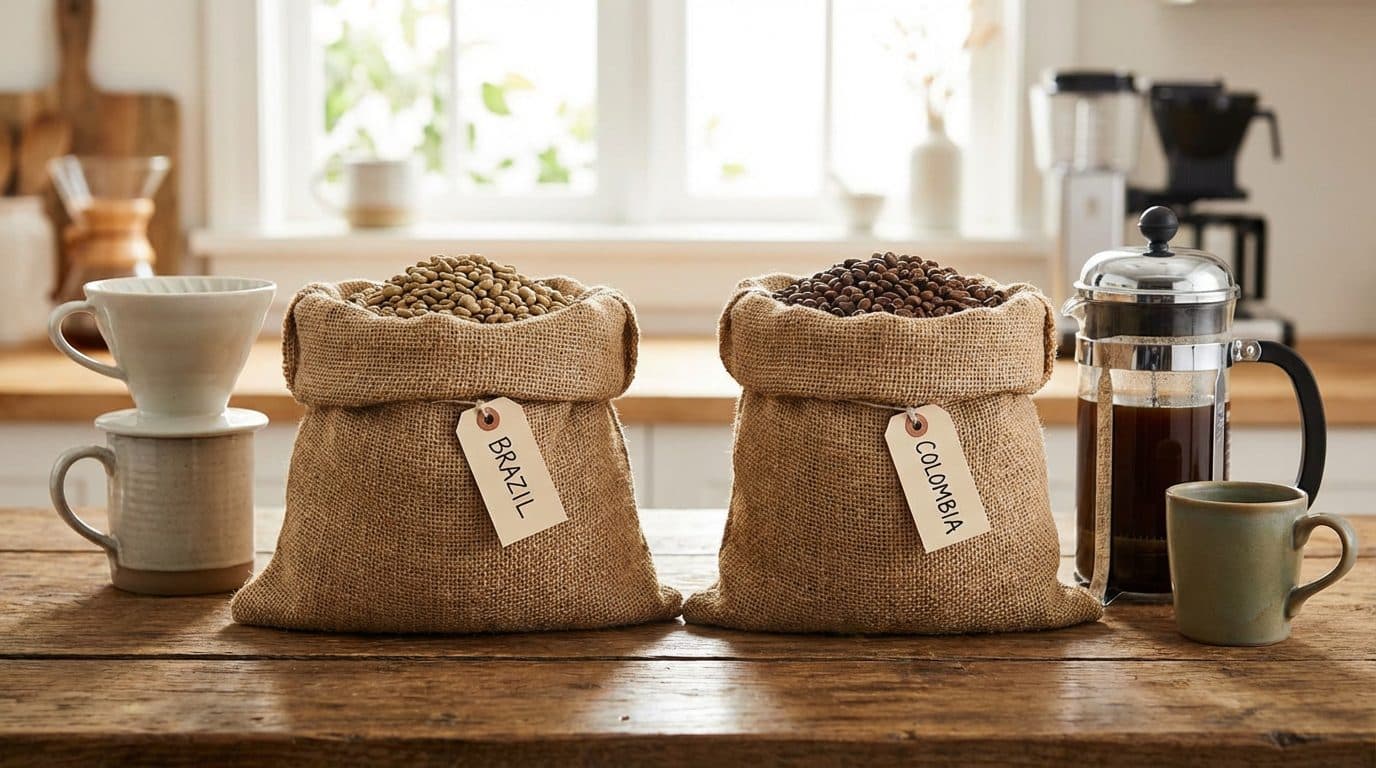
I’ve found that slow drip cold brew highlights origin characteristics beautifully. Fruity Ethiopian beans taste vibrant and tea-like. Colombian coffees show off their balanced sweetness. It’s like the difference between a heavy stout and a crisp pilsner—both are beer, but the experience is entirely different.
Pros and Cons of Slow Drip Cold Brew
- Pros:
- Clean, crisp, and tea-like texture
- Preserves delicate origin flavors
- Lower bitterness and sediment
- Visually impressive brewing process
- Great for showcasing light roasts
- Cons:
- Requires specialized equipment
- Higher upfront cost
- Smaller batch sizes typically
- More variables to control (drip rate, grind consistency)
- Less forgiving of mistakes
Taste Comparison: Immersion vs. Slow Drip Cold Brew
Now for the main event. I brewed the same single-origin beans using both methods to give you a fair comparison. Here’s what I noticed:
| Attribute | Immersion Cold Brew | Slow Drip Cold Brew |
|---|---|---|
| Body | Heavy, syrupy | Light, tea-like |
| Clarity | Slightly hazy | Crystal clear |
| Sweetness | Rich caramel notes | Subtle, bright sweetness |
| Acidity | Very low | Low but more present |
| Flavor Notes | Chocolate, nuts, malt | Fruit, floral, citrus |
| Aftertaste | Lingering, bold | Clean, refreshing |
Which Method Brings Out More Flavor Complexity?
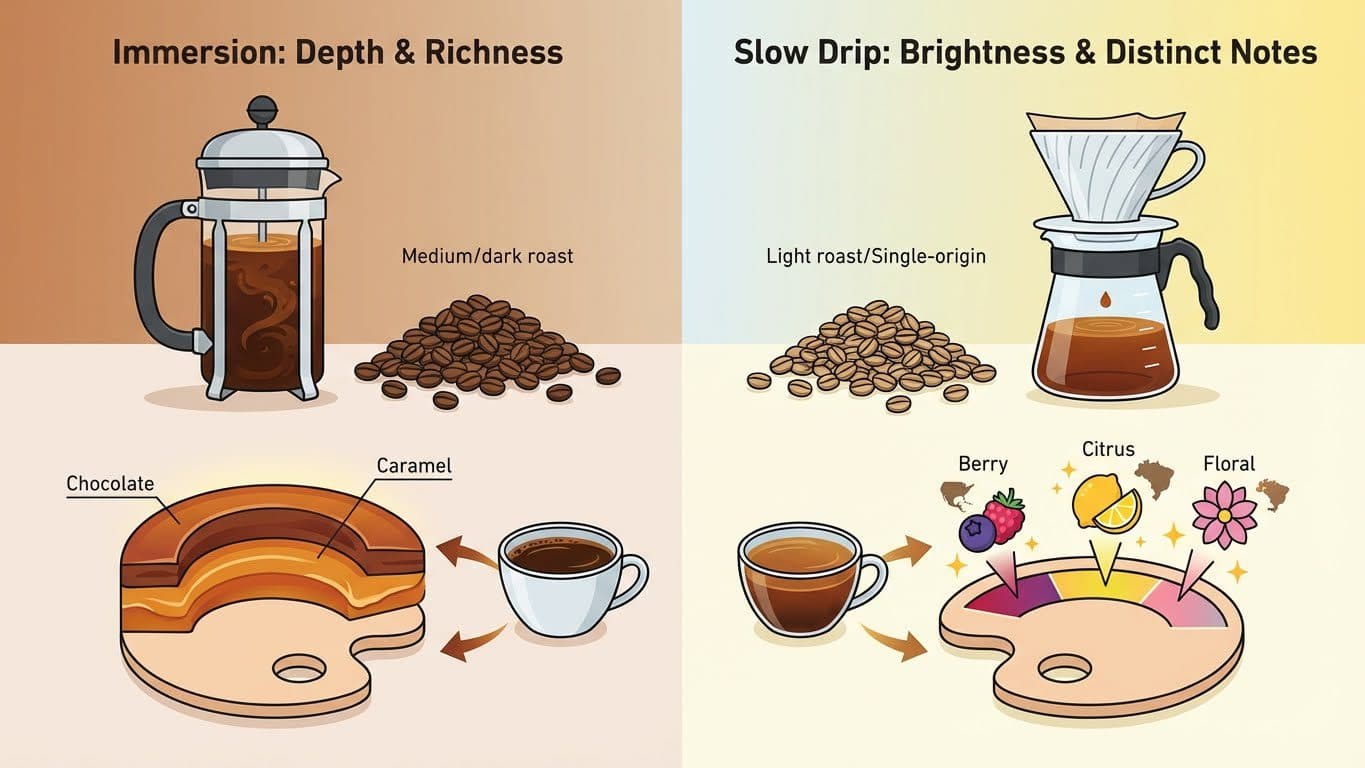
This depends on what you mean by “complexity.” Immersion creates depth through richness—layers of chocolate and caramel that coat your palate. Slow drip creates complexity through brightness—distinct notes that pop individually, almost like tasting the coffee’s origin story.
For a medium or dark roast, immersion usually wins. The extended steeping complements those roasty, bittersweet characteristics. For light roasts or single-origin specialty beans, slow drip is the clear choice. You’re paying premium prices for those beans; you might as well taste what makes them special.
Real-World Scenario: The Morning Rush vs. Weekend Ritual
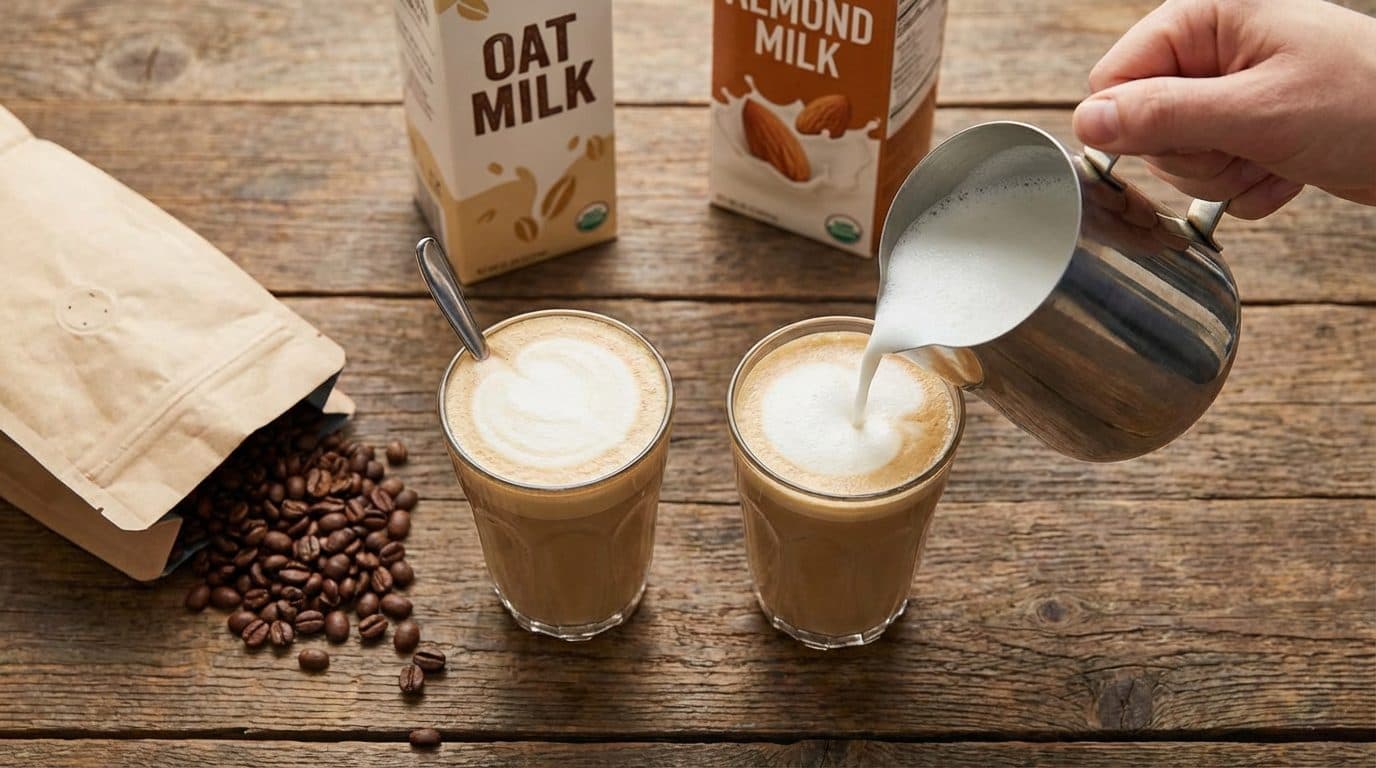
Picture this: it’s Tuesday morning, you’re half-awake, and you need coffee that delivers. You grab your immersion cold brew concentrate from the fridge, mix it with oat milk, and you’re out the door. That bold, reliable flavor never disappoints.
Now imagine it’s Sunday. You’ve got time. You set up your slow drip tower the night before, adjusting the drip rate until it’s perfect. You wake up to a carafe of crystal-clear coffee that tastes like chilled jasmine tea with hints of blueberry. You sip it slowly on the porch, appreciating every nuance.
Both experiences are valid. Life is too short for bad coffee, but it’s also too short to overcomplicate your Tuesday mornings.
Who Should Choose Each Method?
Immersion Cold Brew Is For You If:
- You want simplicity and reliability
- You prefer bold, rich coffee flavors
- You’re new to making cold brew at home
- You make large batches for the week
- You like adding milk, cream, or sweeteners
- Budget matters—you don’t want to invest in specialty equipment
Immersion Cold Brew Is NOT For You If:
- You love bright, fruity coffee notes
- You drink coffee black and notice subtle flavors
- You find traditional cold brew too heavy or flat
Slow Drip Cold Brew Is For You If:
- You appreciate specialty coffee and origin flavors
- You enjoy light roasts and delicate taste profiles
- You drink cold brew black, without additions
- You enjoy the brewing process as part of the experience
- You want to impress guests with your coffee setup
Slow Drip Cold Brew Is NOT For You If:
- You want a quick, hands-off brewing method
- You prefer bold, heavy coffee
- You’re on a tight budget
- You need large quantities regularly
Key Takeaway: Different Methods, Different Missions
Here’s what I want you to remember: immersion and slow drip cold brew aren’t competing to be the “best” method. They’re designed for different taste preferences and different situations. Immersion delivers comfort and convenience. Slow drip delivers clarity and complexity.
Many serious home baristas eventually own equipment for both. I keep a simple mason jar setup for my daily fix and break out the slow drip tower when I get my hands on exciting new beans. There’s room for both in a coffee lover’s life.
Conclusion and Final Recommendations
The taste comparison between immersion and slow drip cold brew comes down to what you value most. If you crave that classic, rich, chocolatey cold brew experience, immersion is your friend. It’s accessible, affordable, and consistently delicious. If you’re chasing nuance, brightness, and the unique characteristics of your favorite beans, slow drip opens up a whole new world.
My advice? Start with immersion. Master your ratios, experiment with steep times, and enjoy the simplicity. Once you’ve got that down and find yourself craving more complexity, consider adding a slow drip setup to your arsenal. Either way, you’re making better coffee than most people ever will—and that’s worth celebrating.
Now go brew something great. Your taste buds will thank you.

Comments