


Table of Contents
- The Ethiopian Origins: Where Coffee History Began
- Did You Know?
- Coffee Spreads to the Arab World
- Key Takeaway
- Coffee Conquers Europe
- The Coffee vs. Beer Shift
- Coffee Goes Global: Colonialism and Cultivation
- Brazil Becomes a Coffee Giant
- The Rise of Modern Coffee Culture
- The Third Wave and Beyond
- Frequently Asked Questions
- Who actually discovered coffee?
- Why is coffee called "java"?
- When did Starbucks become popular?
- Is Ethiopian coffee still considered the best?
- How did coffee change society?
- Conclusion: From Ancient Beans to Your Morning Cup
Have you ever wondered how that aromatic cup of coffee in your hands traveled through centuries and continents to reach you? The history of coffee is one of the most fascinating journeys in the culinary world—a tale that begins with dancing goats in Ethiopia and ends with a green-aproned barista calling your name. I’ve spent years diving into coffee lore, and trust me, the story behind your morning brew is as rich as a perfectly pulled espresso shot.
In this post, you’ll discover how coffee was first discovered, how it spread across the globe, and how it evolved into the multi-billion dollar industry we know today. Whether you’re a casual sipper or a dedicated home barista, understanding coffee’s past gives you a deeper appreciation for every cup you make.
The Ethiopian Origins: Where Coffee History Began
The history of coffee starts in the ancient highlands of Ethiopia, sometime around the 9th century. The most popular legend involves a goat herder named Kaldi who noticed his goats became unusually energetic after eating berries from a certain tree. Curious, Kaldi tried the berries himself and experienced a similar burst of energy.
He brought the berries to a local monastery, where monks initially threw them into the fire, dismissing them as the devil’s work. But the enticing aroma that rose from the flames changed their minds. They retrieved the roasted beans, crushed them, and dissolved them in hot water—creating the world’s first cup of coffee.
Did You Know?
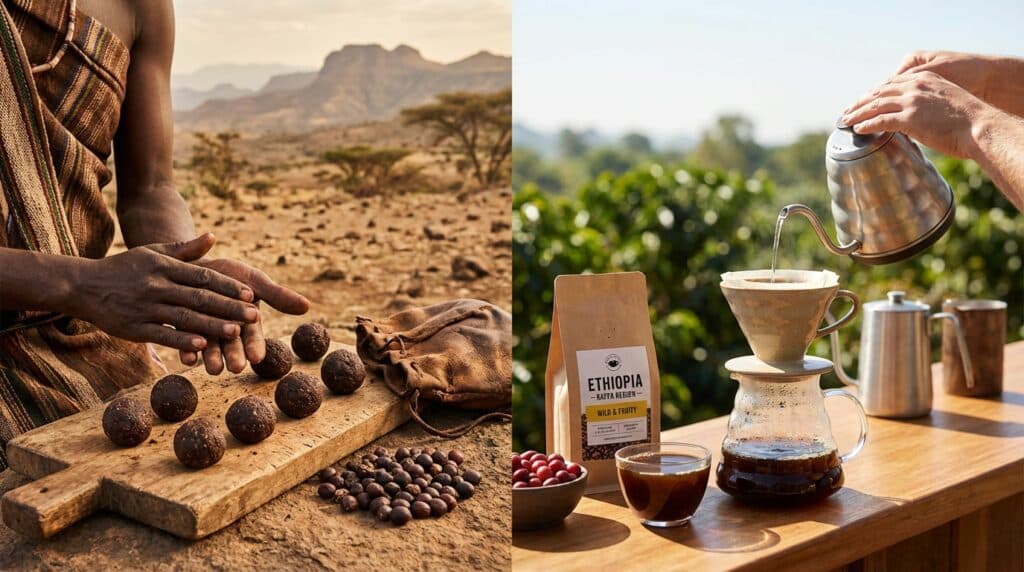
While the Kaldi legend is charming, historians believe coffee was likely consumed in Ethiopia long before this story emerged. Indigenous tribes would mix ground coffee beans with animal fat to create energy balls for long journeys. In my experience brewing Ethiopian beans today, you can still taste that wild, fruity character that hints at coffee’s untamed origins.
- Ethiopia remains one of the world’s top coffee producers
- The word “coffee” likely derives from “Kaffa,” an Ethiopian region
- Traditional Ethiopian coffee ceremonies still honor these ancient roots
Coffee Spreads to the Arab World
By the 15th century, coffee had crossed the Red Sea to Yemen, where it found its first true commercial success. Sufi monks embraced the beverage for its ability to keep them awake during long nights of prayer. The port city of Mocha became the center of the coffee trade, and the beans were carefully guarded—Yemen maintained a monopoly by ensuring no fertile beans left the country.
The Arabs developed the first methods of roasting and brewing coffee that resemble what we do today. They called the drink “qahwa,” which eventually became “coffee” in English. Coffeehouses, known as “qahveh khaneh,” began appearing throughout the Middle East, becoming centers of social activity, intellectual discussion, and even political debate.
Key Takeaway
The Arab world didn’t just spread coffee—they created coffee culture. The concept of the coffeehouse as a social gathering place was born here, centuries before Starbucks put couches in their stores. I find it remarkable that the same ritual of meeting friends over coffee has persisted for over 500 years.
- Yemen’s Mocha port gave its name to the mocha coffee drink
- Coffee was initially called “wine of Araby” by European traders
- Some rulers tried to ban coffeehouses, fearing political unrest
Coffee Conquers Europe
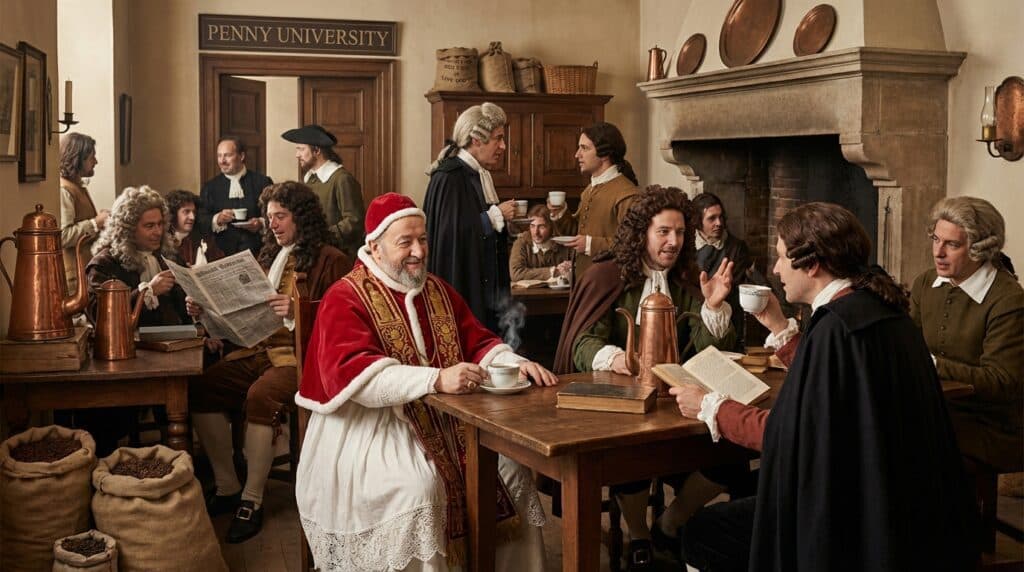
Coffee arrived in Europe during the 17th century, and reactions were mixed. Some called it the “bitter invention of Satan.” Pope Clement VIII was asked to ban the drink, but after tasting it, he reportedly said it would be a sin to let only non-believers enjoy something so delicious. He gave coffee his papal approval, and the rest is history.
Coffeehouses exploded across Europe. In England, they were called “penny universities” because for the price of a cup, you could engage in stimulating conversation with scholars, merchants, and artists. Lloyd’s of London, the famous insurance market, started as a coffeehouse. The London Stock Exchange began in Jonathan’s Coffee House.
The Coffee vs. Beer Shift
Here’s something I love sharing with fellow coffee enthusiasts: before coffee became popular, Europeans typically drank beer or wine with every meal—including breakfast. Water was often unsafe, and alcohol was the practical choice. Coffee changed everything. People went from being mildly intoxicated all day to being alert and productive. Some historians credit coffee with helping spark the Age of Enlightenment.
- The first European coffeehouse opened in Venice in 1645
- Paris cafés became famous for hosting philosophers like Voltaire
- Bach composed a “Coffee Cantata” celebrating the drink
- Women were often banned from early coffeehouses
Coffee Goes Global: Colonialism and Cultivation
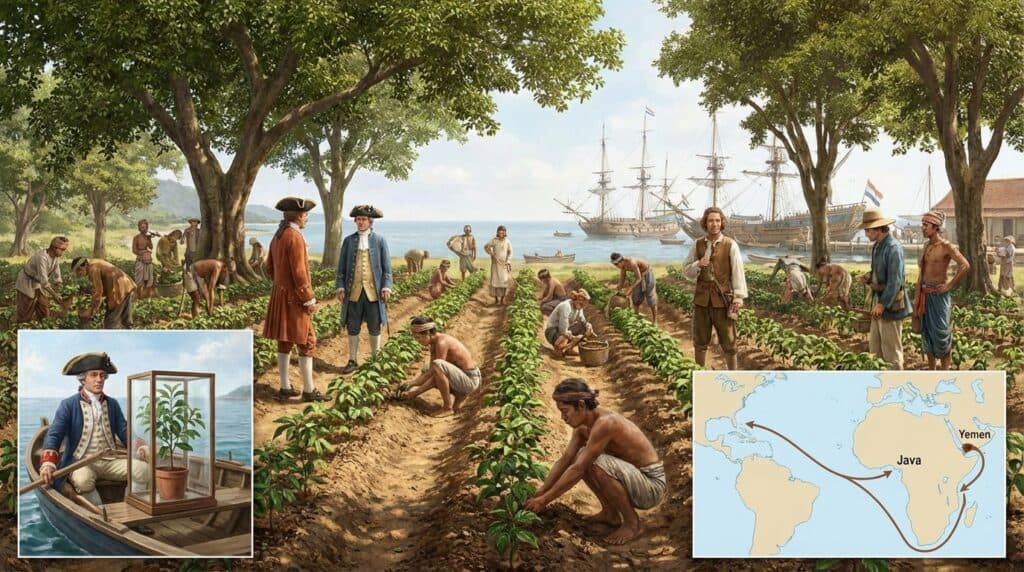
The Dutch were the first to successfully cultivate coffee outside of Arabia, establishing plantations in their colonies in Java (Indonesia) around 1696. This broke Yemen’s monopoly and began coffee’s global spread. The French, Spanish, Portuguese, and British followed, planting coffee throughout their colonial territories.
A single coffee plant gifted to King Louis XIV of France became the ancestor of most coffee grown in the Americas. A French naval officer named Gabriel de Clieu transported a seedling to Martinique in 1723, protecting it during a perilous voyage that included pirate attacks and water shortages. From that one plant, coffee spread throughout the Caribbean and Central and South America.
Brazil Becomes a Coffee Giant
Brazil’s coffee industry began with a bit of espionage. In 1727, a Brazilian official named Francisco de Melo Palheta was sent to French Guiana to obtain coffee seeds. The French refused to share, but Palheta charmed the governor’s wife, who secretly gave him seeds hidden in a bouquet of flowers. Today, Brazil produces about one-third of the world’s coffee.
- Coffee cultivation often relied on slave labor in colonial times
- The “Coffee Belt” spans the globe between the Tropics of Cancer and Capricorn
- Different regions developed distinct flavor profiles based on climate and soil
The Rise of Modern Coffee Culture
The 20th century transformed coffee from a simple commodity into a cultural phenomenon. In the United States, instant coffee became popular during World War II, prioritizing convenience over quality. For decades, Americans drank weak, mass-produced coffee without complaint.
Then came what coffee historians call the “waves” of coffee culture. The first wave was about accessibility—making coffee available to everyone. The second wave, led by companies like Starbucks, Peet’s, and others, introduced Americans to espresso drinks, darker roasts, and the coffeehouse experience. Starbucks, founded in Seattle in 1971, grew from a single store selling beans to a global empire with over 35,000 locations.
The Third Wave and Beyond

The third wave of coffee treats beans like wine—emphasizing origin, processing methods, and artisanal brewing techniques. As a home barista, I’ve found this movement incredibly exciting. We now have access to single-origin beans, detailed tasting notes, and brewing equipment that would make our grandparents’ heads spin.
- Starbucks popularized Italian coffee terminology in America
- Specialty coffee now represents a significant portion of the market
- Home brewing equipment has become increasingly sophisticated
- Direct trade relationships connect roasters with farmers
Frequently Asked Questions
Who actually discovered coffee?
While the legend credits an Ethiopian goat herder named Kaldi, the true discoverer is unknown. Coffee was likely used by Ethiopian tribes for centuries before any recorded history. The drink as we know it was developed by Arab traders and monks in Yemen around the 15th century.
Why is coffee called “java”?
The nickname comes from the Indonesian island of Java, where the Dutch established some of the first large-scale coffee plantations outside of Arabia in the late 1600s. Java became synonymous with coffee in Western culture, and the name stuck.
When did Starbucks become popular?
Starbucks was founded in 1971 but remained a small Seattle-based company until Howard Schultz joined in 1982. After visiting Italian espresso bars, Schultz transformed Starbucks into a coffeehouse chain. The company went public in 1992 and expanded rapidly throughout the 1990s and 2000s.
Is Ethiopian coffee still considered the best?
Ethiopian coffee is highly prized for its unique, complex flavors—often featuring fruity, floral, and wine-like notes. Whether it’s “the best” is subjective, but Ethiopia remains one of the most respected origins among specialty coffee enthusiasts. In my experience, a well-sourced Ethiopian bean offers flavors you simply can’t find elsewhere.
How did coffee change society?
Coffee fundamentally altered social habits, work patterns, and even political movements. Coffeehouses became centers of intellectual exchange, business dealings, and revolutionary planning. The shift from alcohol to coffee as a daily beverage contributed to increased productivity and the rise of modern capitalism.
Conclusion: From Ancient Beans to Your Morning Cup
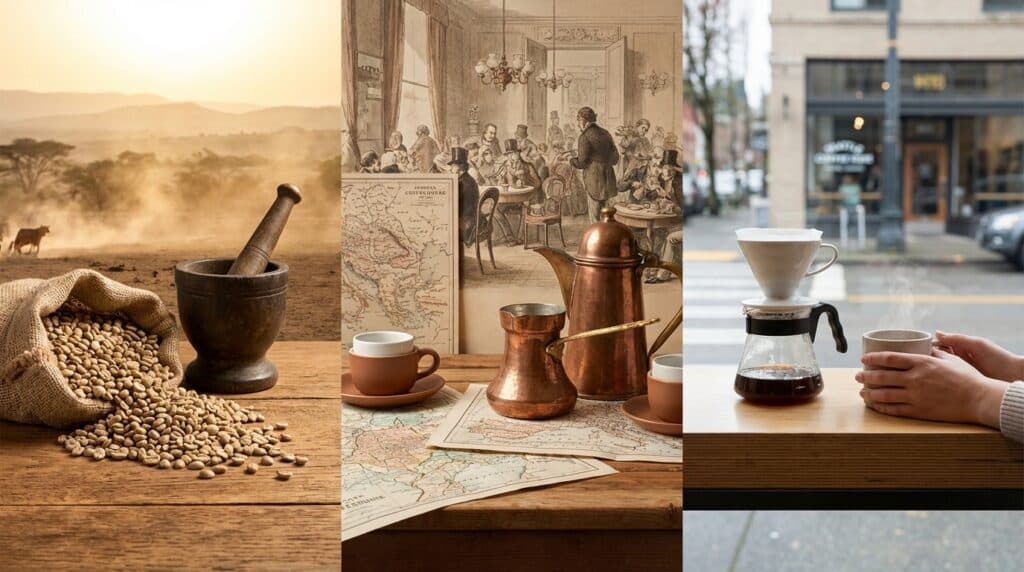
The history of coffee spans over a thousand years, multiple continents, and countless cultural transformations. From Ethiopian highlands to Yemeni ports, European coffeehouses to Seattle storefronts, coffee has been a constant companion to human progress. Every cup you brew connects you to this remarkable journey.
Next time you grind your beans and prepare your morning ritual, take a moment to appreciate the centuries of discovery, trade, and innovation that made it possible. Life really is too short for bad coffee—and now you know just how long humanity has been working to make it better. Try exploring beans from different origins to taste the history for yourself, and consider how your own coffee routine fits into this ongoing story.



Comments