


Table of Contents
- Why Coffee Beans Go Stale in the First Place
- The Look Test: Visual Signs of Stale Coffee Beans
- Check for Oil on the Surface
- Observe the Color
- Look for Physical Damage
- The Smell Test: What Fresh vs. Stale Coffee Beans Smell Like
- How Fresh Beans Should Smell
- Red Flags in the Aroma
- The Taste Test: Flavor Indicators of Stale Beans
- Fresh Coffee Flavor Profile
- Stale Coffee Flavor Profile
- Common Myths About Coffee Freshness
- Myth: Storing Beans in the Freezer Keeps Them Fresh Forever
- Myth: The Roast Date Doesn't Matter If the Bag Is Sealed
- Myth: Oily Beans Are Always Bad
- Myth: If It Smells Like Coffee, It's Fine
- How to Keep Your Coffee Beans Fresh Longer
- Frequently Asked Questions
- How long do coffee beans stay fresh after roasting?
- Can you revive stale coffee beans?
- Do darker roasts go stale faster than lighter roasts?
- Is the "best by" date on coffee reliable?
- Why does my coffee taste stale even though I just opened the bag?
- Conclusion: Trust Your Senses
You’ve invested in quality coffee beans, ground them fresh, and followed your usual brewing routine—but something tastes off. Flat, dull, maybe even a little cardboard-like. Sound familiar? The culprit is often hiding in plain sight: stale coffee beans. Knowing how to tell if your coffee beans are stale can transform your morning cup from disappointing to delightful.
In my experience, most home coffee lovers don’t realize their beans have gone past their prime until the damage is already done. The good news? Your senses are powerful tools. By the end of this guide, you’ll know exactly how to use your eyes, nose, and taste buds to detect stale coffee beans before they ruin another brew.
Why Coffee Beans Go Stale in the First Place
Before we dive into detection methods, it helps to understand what’s actually happening inside your coffee beans. Coffee is a surprisingly complex product, and freshness fades faster than most people expect.
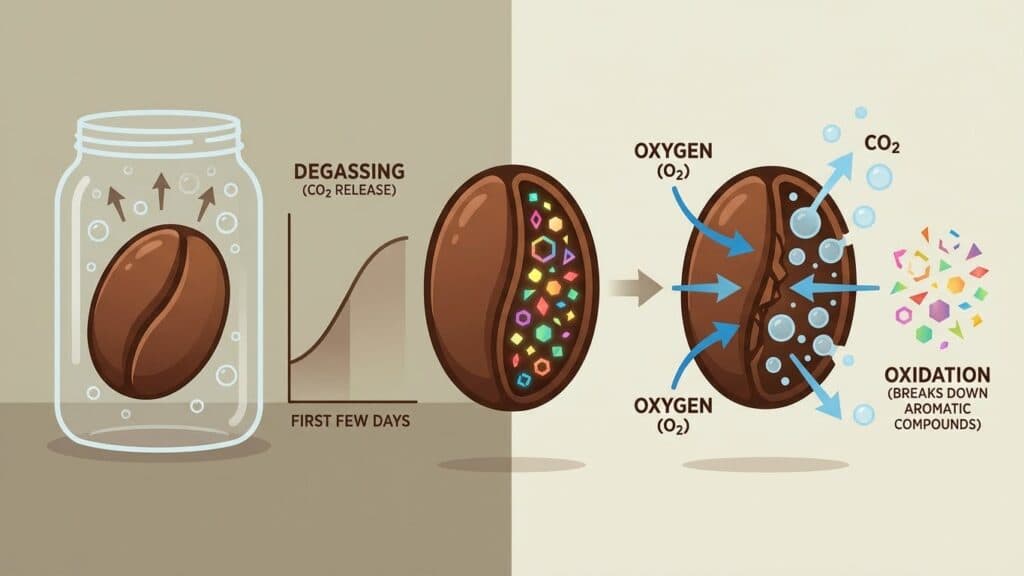
Once coffee beans are roasted, they begin releasing carbon dioxide—a process called degassing. This is normal and even desirable for the first few days. However, as degassing continues, oxygen starts replacing that CO2 and triggers oxidation. In short, oxidation breaks down the aromatic compounds that make coffee taste vibrant and complex.
Other enemies of fresh coffee include:
- Moisture: Humidity accelerates staleness and can introduce unwanted flavors
- Heat: Warm environments speed up chemical degradation
- Light: UV rays break down flavor compounds surprisingly quickly
- Time: Even under perfect conditions, beans lose freshness over weeks
Key Takeaway: Roasted whole beans typically stay fresh for 2-4 weeks when stored properly. Ground coffee? You’re looking at days, not weeks.
The Look Test: Visual Signs of Stale Coffee Beans
Your eyes can reveal a lot about your coffee’s condition. Fresh beans have distinct visual characteristics that fade as they age.
Check for Oil on the Surface
Fresh medium to dark roast beans often have a slight sheen of oils on their surface. This is natural and indicates recently roasted coffee. However, if your beans look excessively oily—almost wet or greasy—and you’ve had them for a while, those oils have migrated to the surface and started oxidizing.
Here’s a real-world example: I once received a bag of “freshly roasted” beans from an online retailer. They looked like they’d been dipped in vegetable oil. One sip confirmed my suspicion—those beans had been sitting in a warehouse for months.
Observe the Color
Fresh beans have a rich, consistent color appropriate to their roast level. Stale beans often appear dull or faded. Dark roasts might look ashy rather than deep brown. Light roasts can take on a yellowish, washed-out appearance.
Look for Physical Damage
While not directly related to staleness, cracked, chipped, or broken beans indicate poor handling and increased surface area for oxidation. More damage means faster staleness.
Did You Know? Light roast beans may not show visible surface oils even when fresh—this doesn’t mean they’re stale. The oils in lighter roasts stay locked inside the bean structure longer.
The Smell Test: What Fresh vs. Stale Coffee Beans Smell Like
If I could only use one method to check freshness, this would be it. Your nose is incredibly sensitive to the volatile compounds that define coffee’s aroma—and those compounds disappear when beans go stale.
How Fresh Beans Should Smell
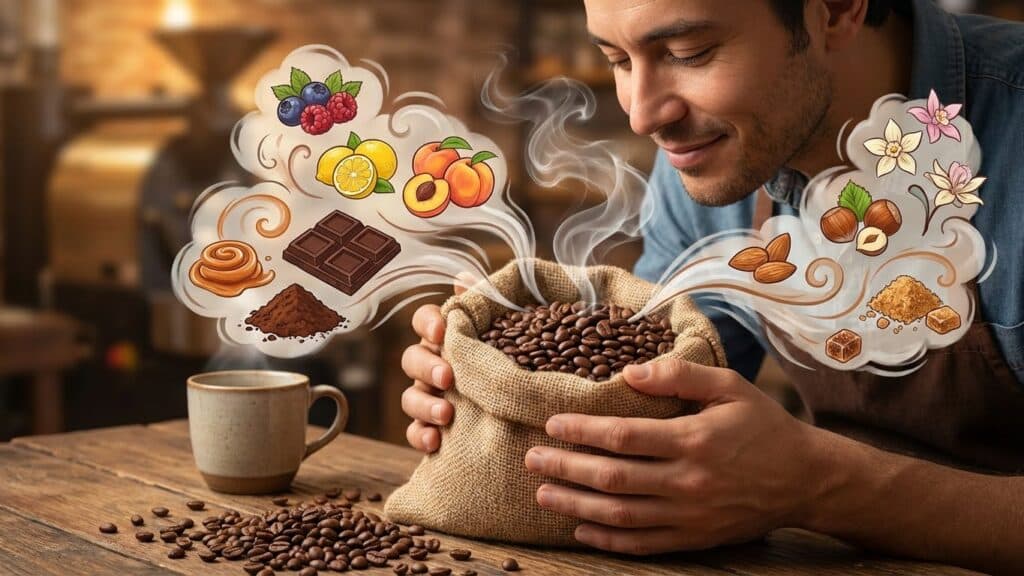
Open a bag of truly fresh coffee beans and you’ll be greeted by an intense, complex aroma. Depending on the origin and roast, you might detect:
- Fruity notes (berries, citrus, stone fruits)
- Chocolate or cocoa undertones
- Nutty aromas (almond, hazelnut)
- Caramel or brown sugar sweetness
- Floral hints in lighter roasts
The smell should be robust enough that it fills the space around you. Fresh beans practically announce their presence.
Red Flags in the Aroma
Stale coffee beans tell a different story. Watch out for these warning signs:
- Weak or muted aroma: You have to really shove your nose in the bag to smell anything
- Dusty or cardboard-like smell: A telltale sign of oxidation
- Rancid or sour notes: Oils have gone bad
- Papery or hay-like scent: The aromatic compounds have largely evaporated
- No smell at all: The saddest outcome—your beans are well past their prime
I’ve found that the “sniff test” becomes more accurate with practice. Start paying attention to how your beans smell when you first open a fresh bag, then notice how that aroma changes over the following weeks.
The Taste Test: Flavor Indicators of Stale Beans
Sometimes beans pass the look and smell tests but reveal their true age in the cup. Here’s what stale coffee actually tastes like—and what fresh coffee should deliver.
Fresh Coffee Flavor Profile
A cup brewed from fresh beans offers complexity. You’ll taste distinct flavor notes, pleasant acidity (brightness), and a satisfying finish that lingers. The coffee feels dynamic on your palate—not one-dimensional.
Stale Coffee Flavor Profile
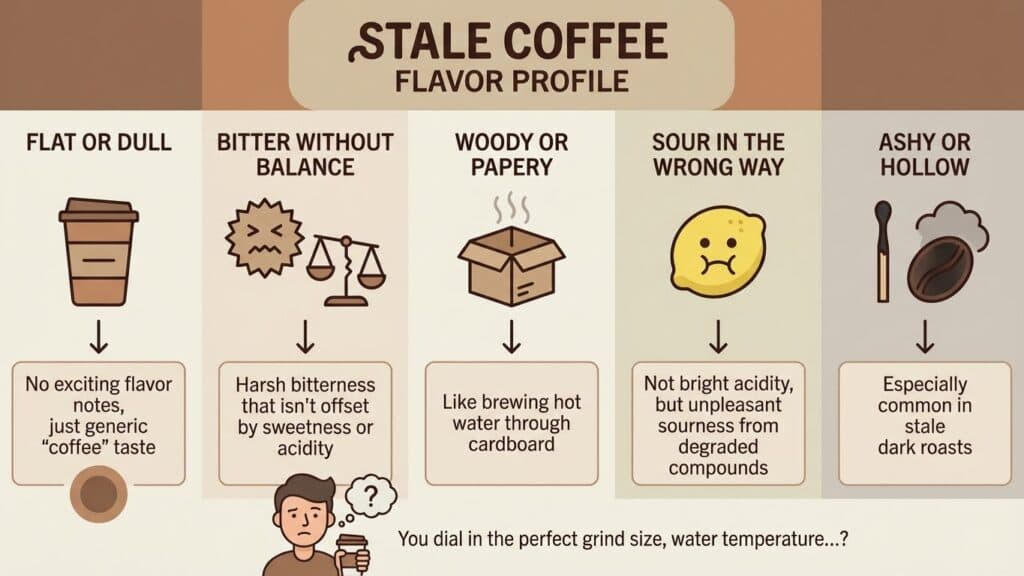
Stale beans produce coffee that tastes:
- Flat or dull: No exciting flavor notes, just generic “coffee” taste
- Bitter without balance: Harsh bitterness that isn’t offset by sweetness or acidity
- Woody or papery: Like brewing hot water through cardboard
- Sour in the wrong way: Not bright acidity, but unpleasant sourness from degraded compounds
- Ashy or hollow: Especially common in stale dark roasts
Here’s a scenario many home baristas experience: You dial in the perfect grind size, water temperature, and ratio—but the coffee still tastes off. Before blaming your technique, consider that stale beans can’t be rescued by better brewing. Life is too short for bad coffee, and no amount of skill compensates for old beans.
Common Myths About Coffee Freshness
Let’s bust some misconceptions that lead people astray when assessing their coffee beans.
Myth: Storing Beans in the Freezer Keeps Them Fresh Forever
There’s nuance here. Freezing can extend freshness if done correctly—beans in an airtight container, frozen once, and fully thawed before opening. But repeatedly taking beans in and out of the freezer introduces moisture and causes flavor degradation. Most home setups don’t handle this well.
Myth: The Roast Date Doesn’t Matter If the Bag Is Sealed
Even vacuum-sealed bags can’t stop time completely. Oxygen eventually permeates most packaging, and degassing continues regardless. A sealed bag from six months ago won’t taste anything like a sealed bag from last week.
Myth: Oily Beans Are Always Bad
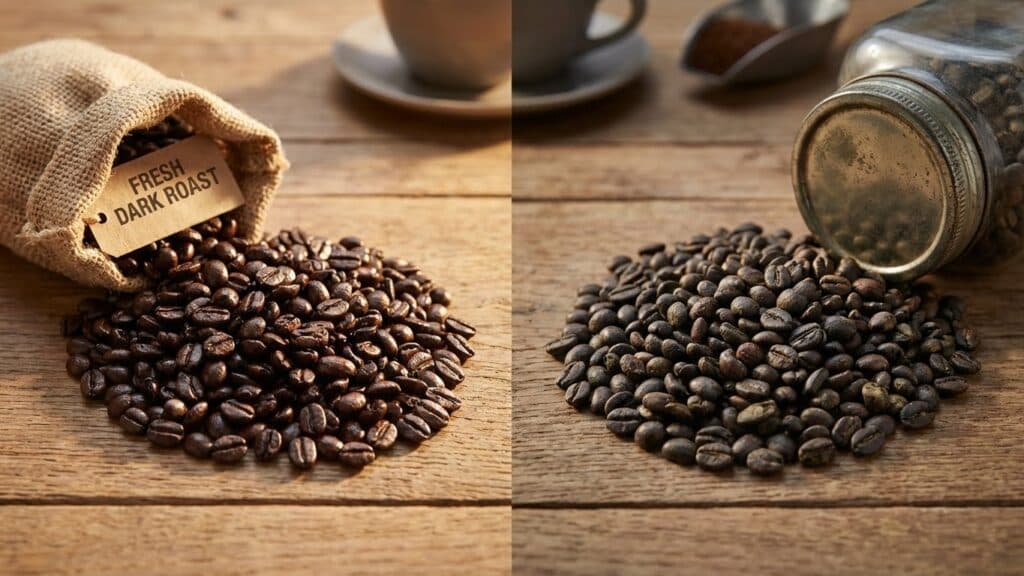
Not necessarily. Some dark roasts naturally have oily surfaces when fresh. The concern is when beans become oily over time, indicating that internal oils have migrated outward and started oxidizing. Context matters.
Myth: If It Smells Like Coffee, It’s Fine
Stale beans still smell like coffee—just not good coffee. The question isn’t whether there’s an aroma, but whether that aroma is vibrant, complex, and inviting.
How to Keep Your Coffee Beans Fresh Longer
Prevention beats detection. These storage practices will help you enjoy fresh-tasting coffee for as long as possible.
- Buy smaller quantities: Purchase only what you’ll use in2-3 weeks
- Store in airtight containers: Opaque, airtight containers work best
- Keep beans cool and dark: A pantry away from the stove is ideal
- Avoid the refrigerator: Too much moisture and competing food odors
- Grind just before brewing: Whole beans stay fresh far longer than ground coffee
Barista Tip: If you buy in bulk, divide your beans into weekly portions in separate containers. This limits how often you expose the main supply to air.
Frequently Asked Questions
How long do coffee beans stay fresh after roasting?
Whole beans generally stay fresh for 2-4 weeks after the roast date when stored properly. Some coffees benefit from a few days of rest after roasting to let excess CO2 escape, but the window for peak flavor is relatively short.
Can you revive stale coffee beans?
Unfortunately, once beans go stale, there’s no way to restore their original flavor. The aromatic compounds that make coffee taste fresh are gone permanently. Your best option is to use stale beans for cold brew, where the long steeping time extracts different compounds and masks some staleness.
Do darker roasts go stale faster than lighter roasts?
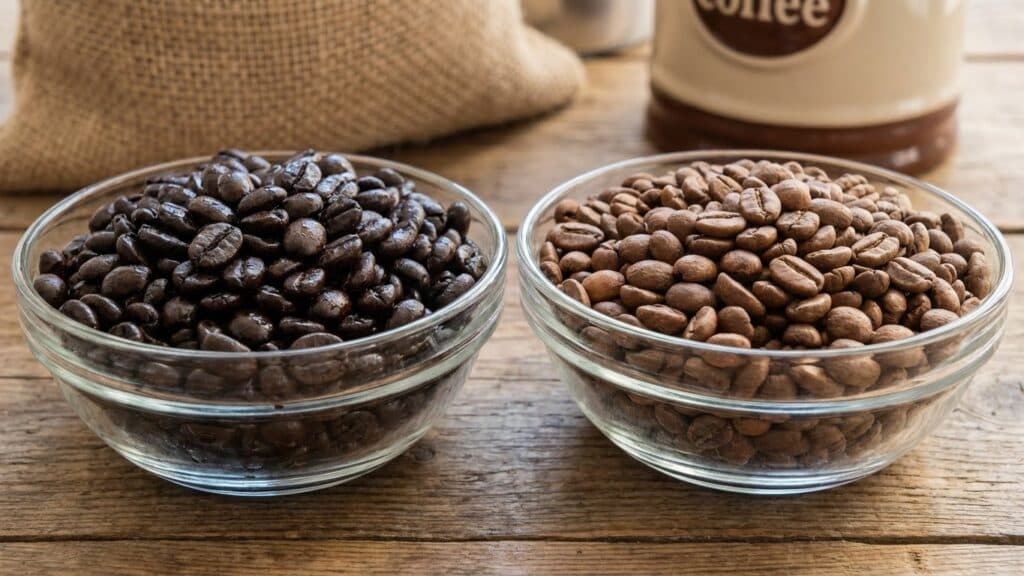
Generally, yes. Dark roasts have more oils on the surface, which oxidize faster when exposed to air. Light roasts retain oils inside the bean longer, offering slightly better shelf stability—though all coffee eventually goes stale.
Is the “best by” date on coffee reliable?
“Best by” dates are often very conservative and don’t tell you when the coffee was actually roasted. Always look for a roast date instead. A roast date gives you real information about freshness, while “best by” dates can be a year or more after roasting.
Why does my coffee taste stale even though I just opened the bag?
This usually means the beans were roasted a long time before you purchased them. Always check for a roast date on the packaging. Grocery store coffee often sits on shelves for months before being sold.
Conclusion: Trust Your Senses
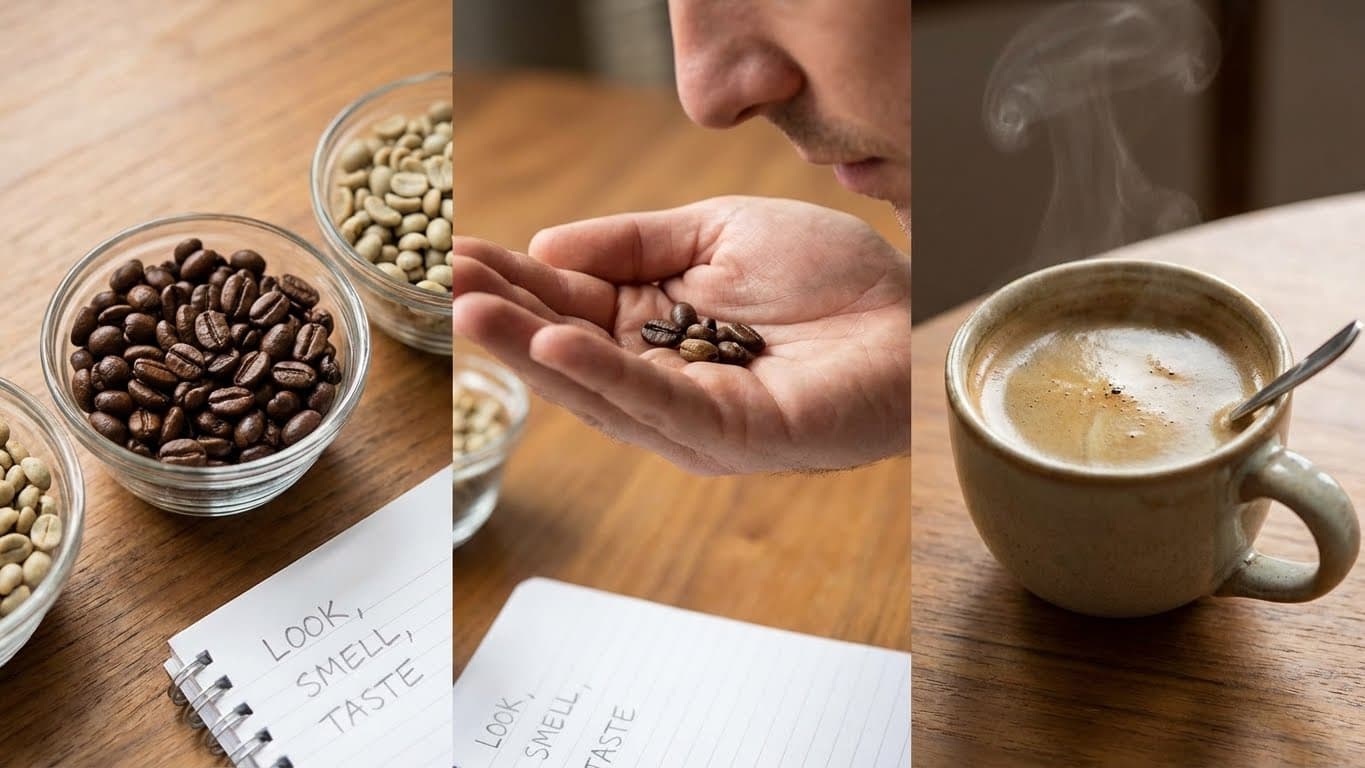
Learning how to tell if your coffee beans are stale comes down to engaging your senses intentionally. Look for visual clues like excessive oiliness ordull color. Smell for that vibrant, complex aroma that fresh beans deliver. And taste with attention—fresh coffee should be dynamic, not flat.
The more you practice these assessments, the more naturally they’ll come. Start by paying close attention to your next bag of freshly roasted beans. Notice what truly fresh coffee looks, smells, and tastes like. That sensory baseline becomes your reference point for detecting staleness in the future.
Your morning cup deserves better than tired, oxidized beans. By staying aware and buying fresh, you’ll enjoy coffee that actually delivers on its promise. Now go give your current stash the sniff test—you might be surprised by what you find.

Comments