


Table of Contents
- What Is Shade Grown Coffee?
- The Difference Between Shade and Sun-Grown Coffee
- Why Shade Grown Coffee Is Better for Birds
- A Critical Habitat for Migratory Species
- The Deforestation Problem
- How Shade Growing Creates Superior Flavor
- The Science of Slow Ripening
- The Terroir Effect
- How to Find Authentic Shade Grown Coffee
- Certifications to Look For
- Questions to Ask Your Roaster
- Price Expectations
- The Bigger Picture: Coffee and Climate
- Carbon Sequestration
- Soil and Water Protection
- Supporting Farmer Resilience
- Frequently Asked Questions
- Is shade grown coffee the same as organic coffee?
- Does shade grown coffee taste different from regular coffee?
- Why isn't all coffee grown in shade?
- How can I tell if my coffee is really shade grown?
- Is shade grown coffee worth the extra cost?
- Conclusion: Your Cup Can Make a Difference
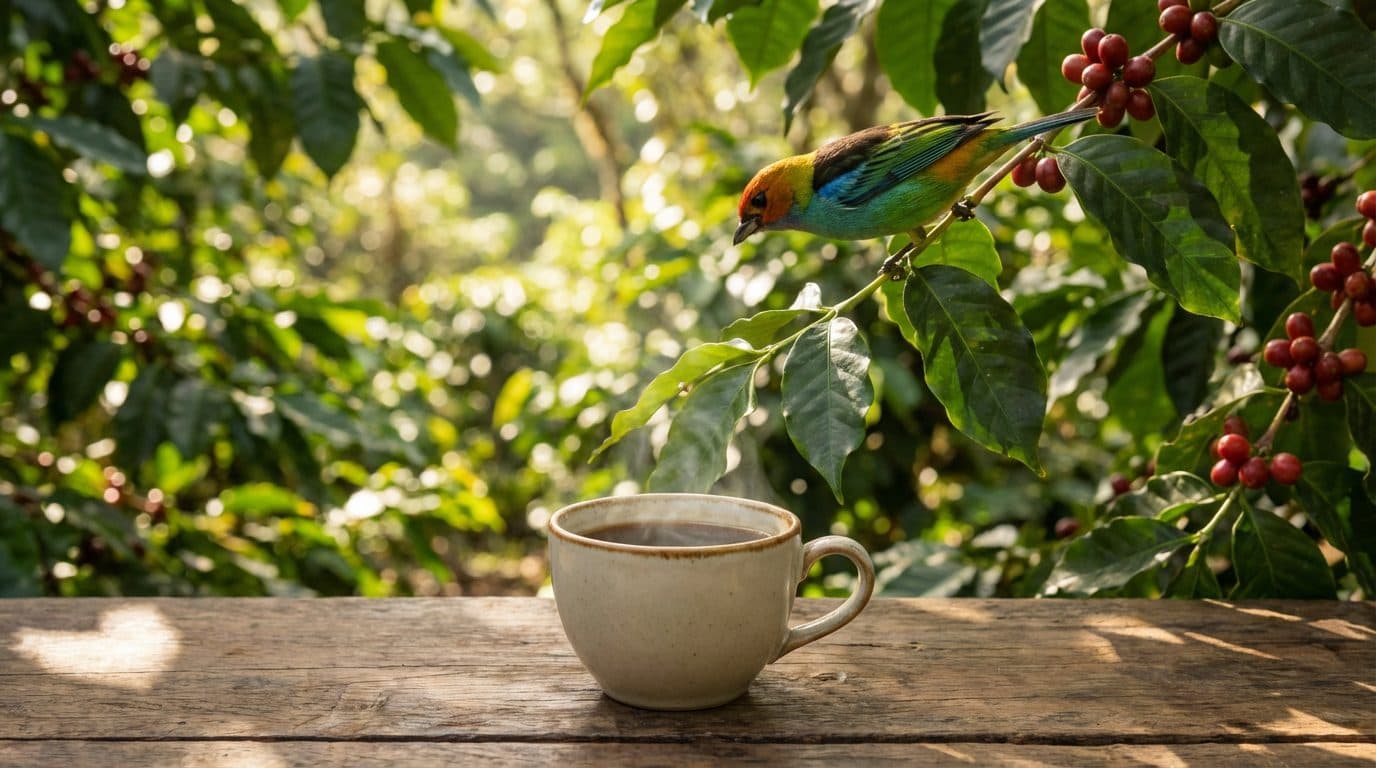
Have you ever wondered if your morning cup of coffee could actually help protect tropical songbirds? It might sound far-fetched, but the way coffee is grown has a massive impact on wildlife habitats—and surprisingly, on the flavor in your cup too. Shade grown coffee represents one of those rare wins where environmental responsibility and exceptional taste go hand in hand.
In this guide, I’ll walk you through what shade grown coffee actually means, why it matters for bird populations, and how it creates a noticeably different (and better) flavor profile. Whether you’re a casual coffee drinker looking to make more ethical choices or a home barista chasing complex flavors, understanding shade grown coffee will change how you shop for beans.
What Is Shade Grown Coffee?
Shade grown coffee refers to coffee plants cultivated under a canopy of taller trees, mimicking the natural forest environment where coffee originated in Ethiopia. This traditional growing method stands in stark contrast to “sun-grown” or “technified” coffee, which involves clearing forests to plant coffee in open fields for maximum yield.
Coffee is naturally an understory plant. In the wild, it thrives beneath the dappled light of tropical forest canopies. When we grow coffee this way intentionally, we’re essentially working with nature rather than against it.
The Difference Between Shade and Sun-Grown Coffee
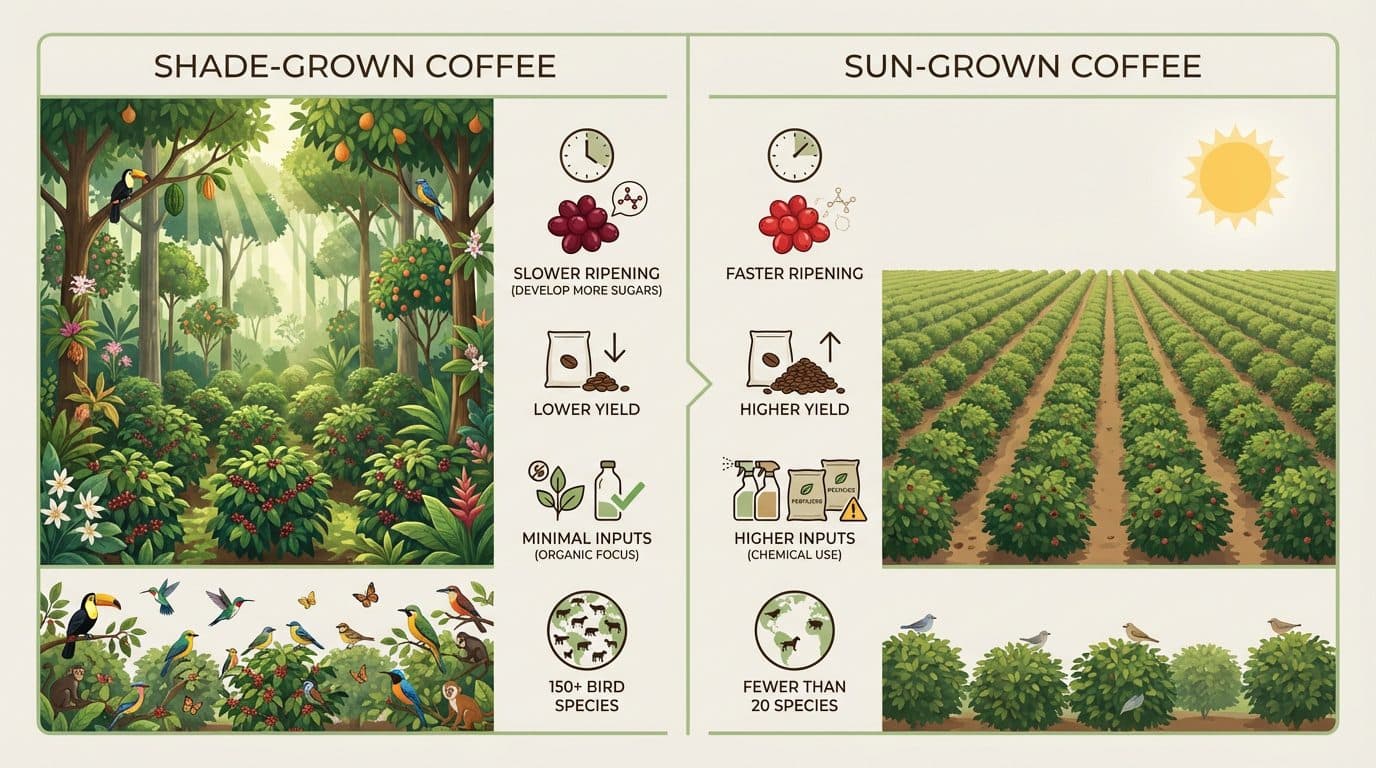
Here’s a quick comparison to illustrate the key differences:
| Factor | Shade Grown Coffee | Sun Grown Coffee |
|---|---|---|
| Growing Environment | Under tree canopy (40-60% shade) | Open fields, full sun exposure |
| Yield Per Acre | Lower | Higher |
| Chemical Inputs | Minimal to none | Often requires more fertilizers/pesticides |
| Ripening Time | Slower (develops more sugars) | Faster |
| Biodiversity | Supports 150+ bird species | Supports fewer than 20 species |
In my experience, once you understand these differences, it becomes hard to view that bag of cheap supermarket coffee the same way again.
Why Shade Grown Coffee Is Better for Birds
The connection between coffee and bird conservation isn’t just marketing fluff—it’s backed by decades of scientific research. The Smithsonian Migratory Bird Center has been studying this relationship since the 1990s, and their findings are remarkable.
A Critical Habitat for Migratory Species
Many songbirds that breed in North America—warblers, orioles, tanagers, and thrushes—spend their winters in Central and South American coffee-growing regions. When these forests are cleared for sun-grown coffee, these birds lose critical wintering habitat.
Shade coffee farms, on the other hand, can support:
- 150+ bird species on a single well-managed farm
- Populations of migratory birds nearly identical to undisturbed forests
- Year-round resident tropical species that never leave
- Insects and other wildlife that birds depend on for food
Think about it this way: that Baltimore Oriole you spot in your backyard each spring might have spent the winter on a coffee farm in Guatemala. Your coffee choice literally affects whether that bird survives to make the journey north.
The Deforestation Problem
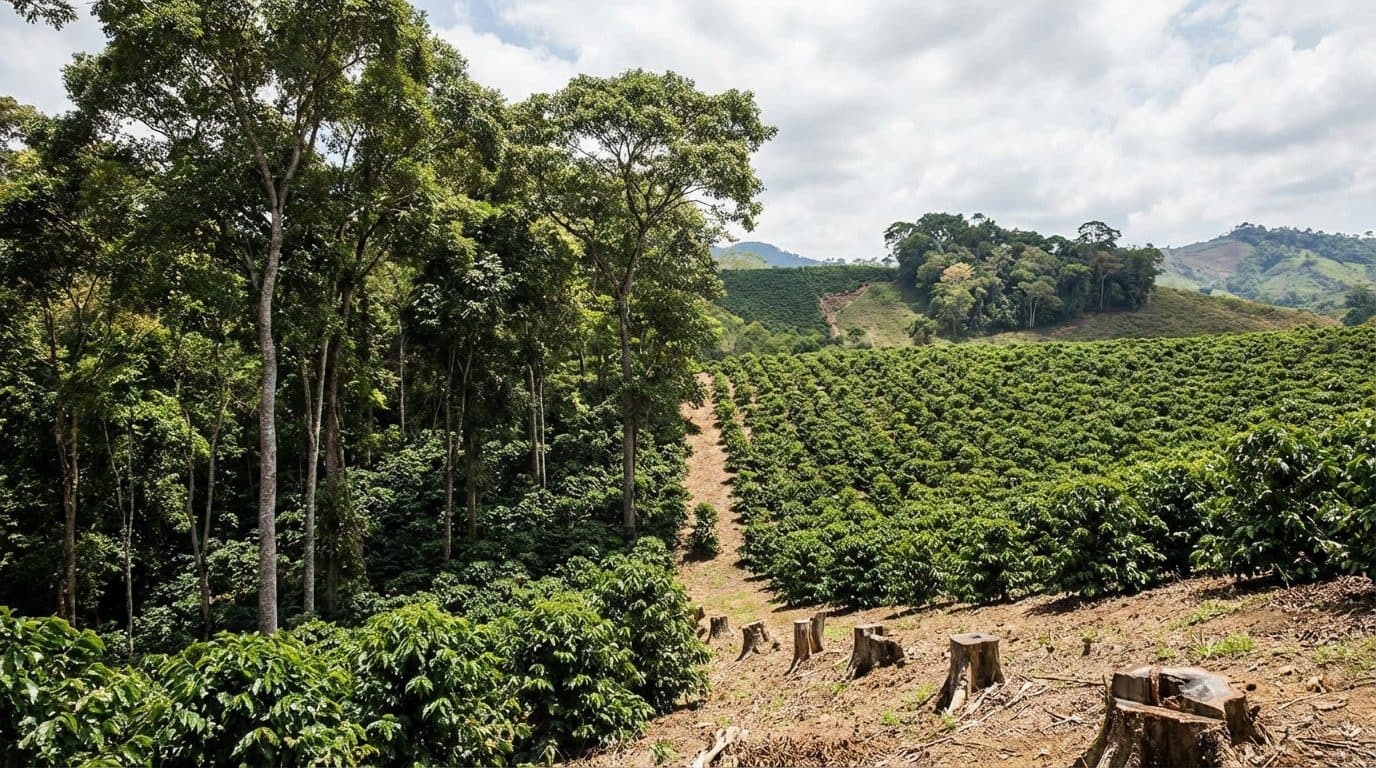
Starting in the 1970s, a push for “technified” coffee production led to widespread forest clearing across Latin America. Farmers were encouraged to plant sun-tolerant coffee varieties in open fields, promising higher yields. The result? An estimated 60% of coffee-growing regions lost their shade canopy.
This habitat loss coincided with alarming declines in migratory bird populations. While correlation doesn’t equal causation, researchers have drawn clear links between forest loss in coffee regions and bird population crashes.
Key Takeaway: Shade grown coffee farms act as “surrogate forests,” providing crucial habitat for over 200 species of migratory and resident birds that would otherwise have nowhere to go.
How Shade Growing Creates Superior Flavor
Here’s where things get exciting for coffee lovers: shade grown coffee doesn’t just help the environment—it consistently produces better-tasting beans. I’ve found that once people try a quality shade grown coffee, they immediately notice the difference.
The Science of Slow Ripening
Coffee cherries grown in shade take longer to mature. This extended ripening period allows the beans to develop more complex sugars and organic acids. The result is a cup with:
- Greater sweetness from fully developed sugars
- Brighter acidity that’s pleasant, not sharp
- More complex flavor notes (think fruit, chocolate, florals)
- Smoother body with less bitterness
Sun-grown coffee ripens quickly under intense heat. The beans don’t have time to develop nuanced flavors, often resulting in flat, one-dimensional cups that need heavy roasting to mask their shortcomings.
The Terroir Effect
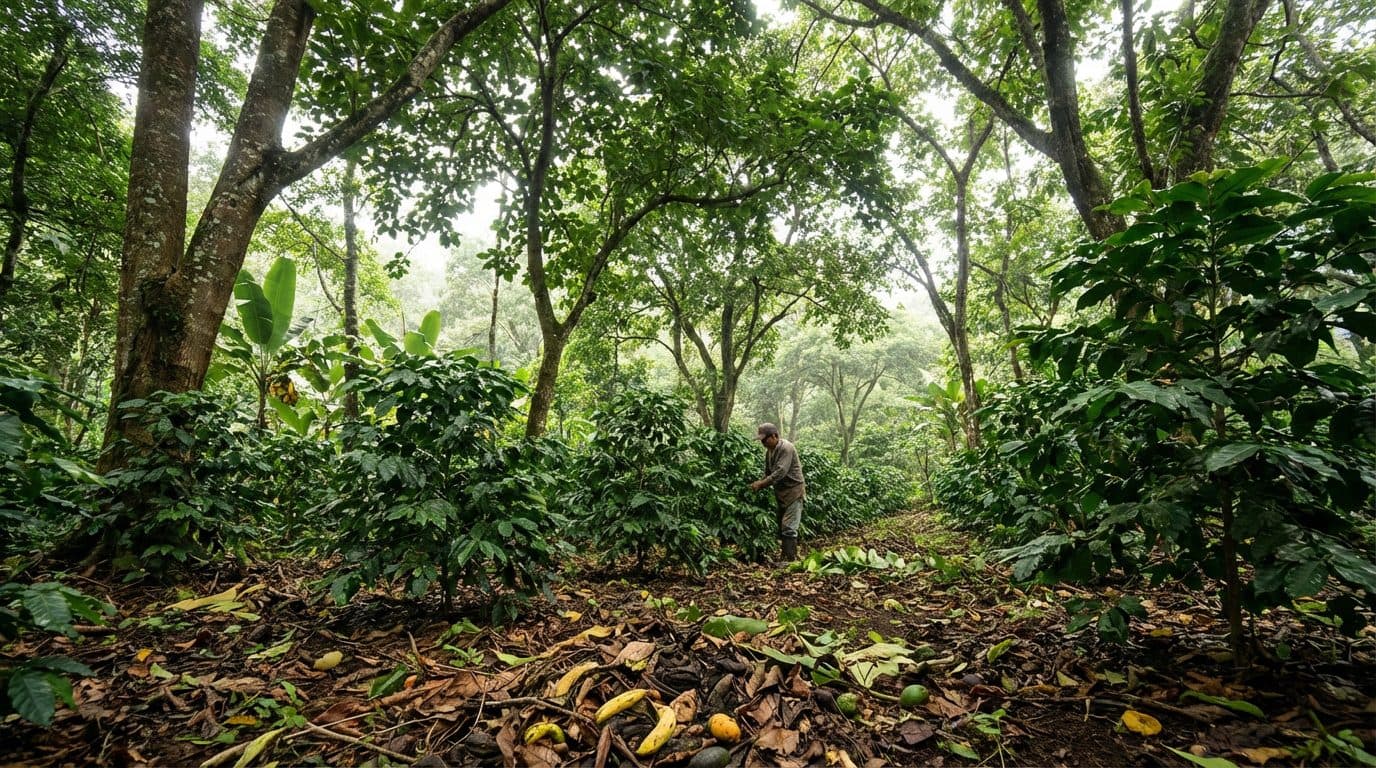
The diverse tree canopy above shade coffee creates a unique microclimate. Different shade trees—from native hardwoods to fruit trees like banana and avocado—contribute organic matter to the soil and influence the coffee’s terroir.
Picture a farm in Chiapas, Mexico, where coffee grows beneath towering Inga trees and wild fig trees. The fallen leaves enrich the soil with nutrients. The filtered sunlight creates consistent temperatures. The result is beans with distinctive chocolate and citrus notes you simply can’t replicate in an open field.
Barista Tip: When shopping for shade grown coffee, look for single-origin beans from regions known for traditional shade cultivation: Chiapas (Mexico), Antigua (Guatemala), and the highlands of Ethiopia and Colombia are excellent starting points.
How to Find Authentic Shade Grown Coffee
Not all coffee labeled “shade grown” meets the same standards. The term isn’t regulated, so some producers use it loosely. Here’s how to find the real deal.
Certifications to Look For
The most reliable certification is Bird Friendly® from the Smithsonian Migratory Bird Center. This certification requires:
- At least 40% shade canopy coverage
- A minimum of 10 different tree species providing shade
- Organic certification (no synthetic chemicals)
- Trees of varying heights to mimic natural forest structure
Other certifications that indicate shade-friendly practices include:
- Rainforest Alliance – Requires shade but with less stringent standards
- Organic certification – Often correlates with shade growing (though not always)
- Direct trade relationships – Roasters who visit farms can verify practices
Questions to Ask Your Roaster
If you buy from local roasters or specialty shops, don’t hesitate to ask questions:
- “Do you know if this coffee is grown under shade canopy?”
- “Does the farm use organic practices?”
- “Have you visited this farm or have photos of the growing conditions?”
Reputable specialty roasters love talking about their sourcing. If they can’t answer basic questions about how the coffee is grown, that’s a red flag.
Price Expectations
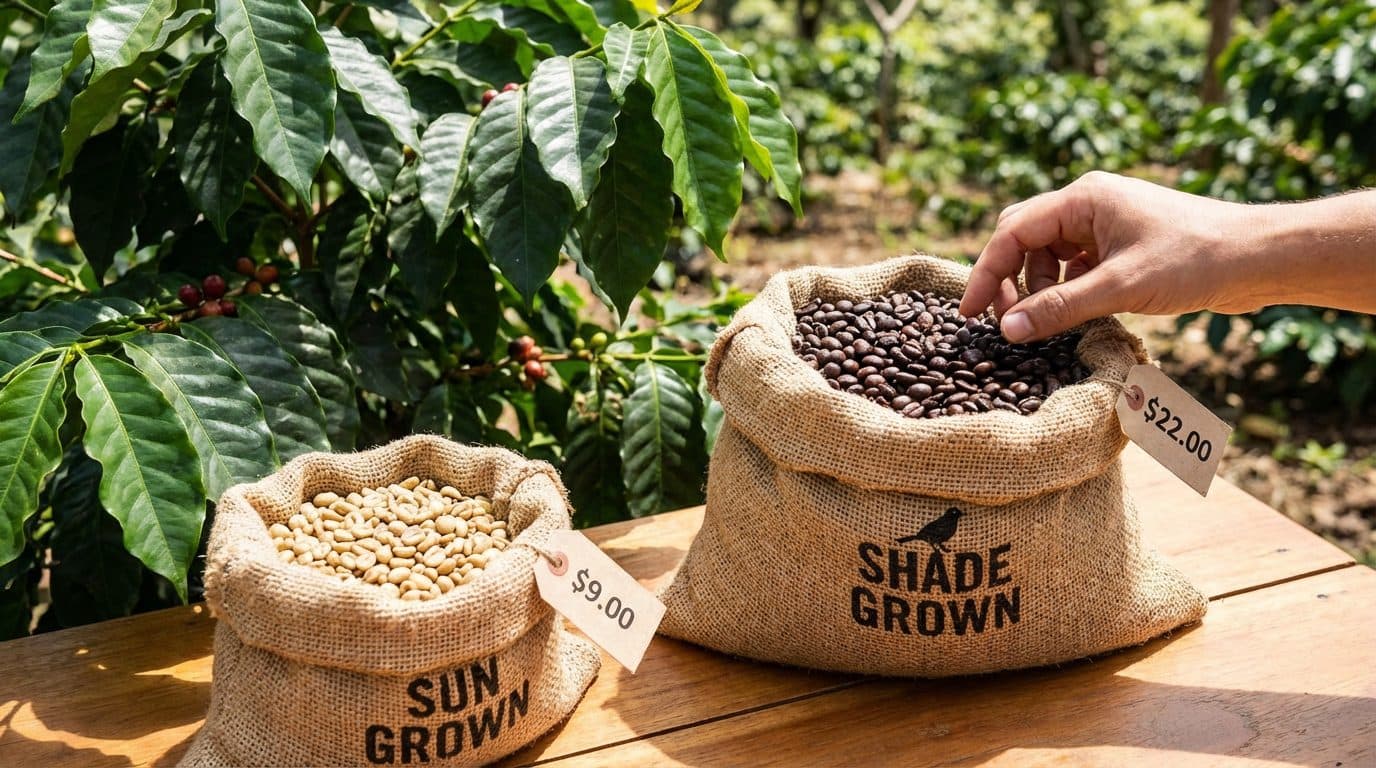
Shade grown coffee typically costs more than commodity sun-grown coffee. Expect to pay $15-25 per 12oz bag for certified Bird Friendly or quality shade grown beans. This reflects lower yields and higher labor costs for farmers who maintain sustainable practices.
In short: you’re paying for better flavor and genuine environmental impact, not just a feel-good label.
The Bigger Picture: Coffee and Climate
Beyond birds, shade grown coffee offers broader environmental benefits worth understanding.
Carbon Sequestration
Shade trees absorb significant amounts of carbon dioxide. A single shade coffee farm can store 50-100% more carbon than a sun-grown operation. At a time when climate change threatens coffee production itself, shade growing helps mitigate the very problem endangering the industry.
Soil and Water Protection
The root systems of shade trees prevent erosion on steep hillsides where coffee is often grown. Leaf litter decomposes into natural fertilizer. Water filtration improves, protecting local streams and aquifers.
Farmers who maintain shade canopy also rely less on synthetic fertilizers and pesticides, which means fewer chemicals entering waterways and affecting downstream communities.
Supporting Farmer Resilience
Shade farms provide farmers with additional income streams. They can harvest fruit, firewood, and timber from canopy trees. This diversification protects them from total loss when coffee prices drop or a bad season hits.
When you buy shade grown coffee, you’re supporting an agricultural model that works for farmers long-term—not just extracting maximum yield until the soil gives out.
Frequently Asked Questions
Is shade grown coffee the same as organic coffee?
Not necessarily, though they often overlap. Shade grown refers to the growing environment (under tree canopy), while organic refers to the absence of synthetic chemicals. Many shade farms are organic because the natural ecosystem reduces pest pressure, but you’ll want to check for both certifications if both matter to you.
Does shade grown coffee taste different from regular coffee?
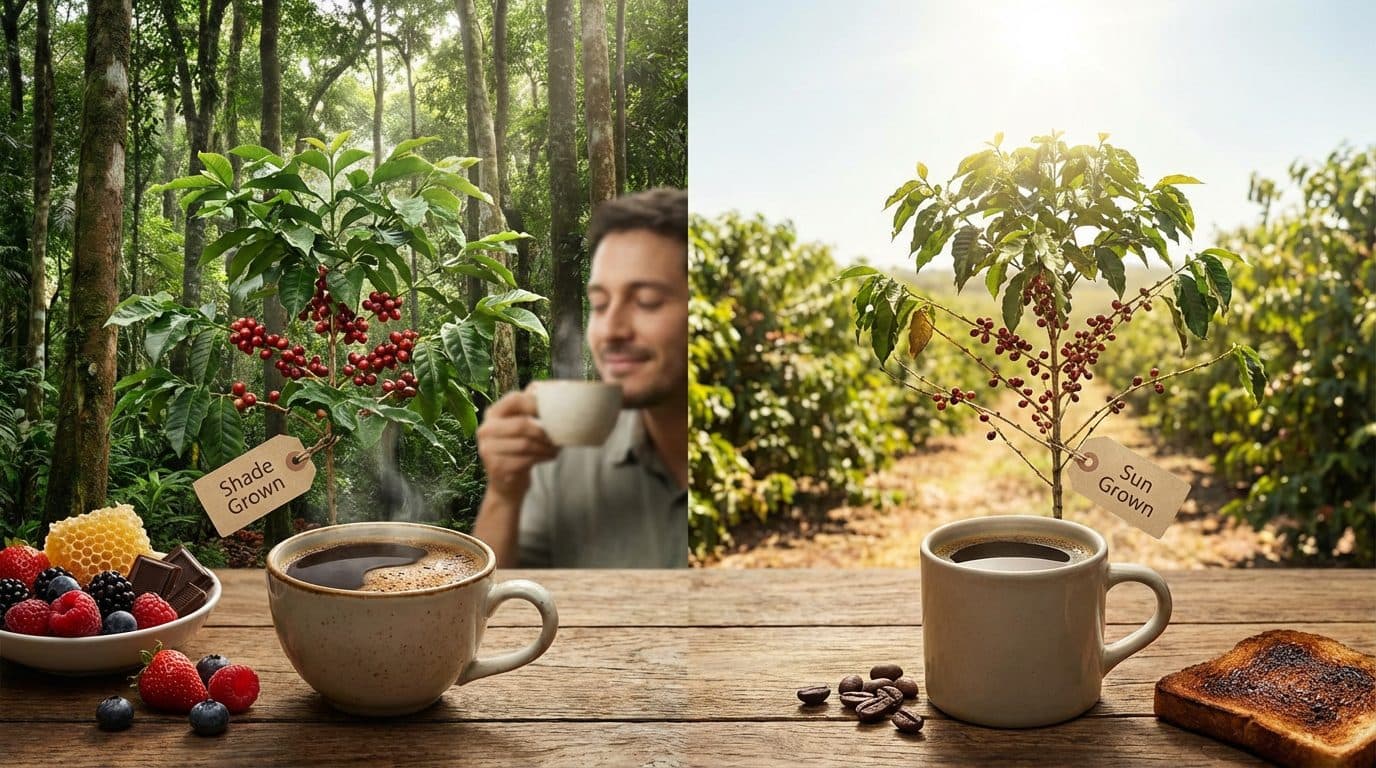
Yes, most people notice a difference. Shade grown coffee tends to be sweeter, more complex, and smoother than sun-grown coffee. The slower ripening process develops more sugars and nuanced flavor compounds. If you’re used to bitter, one-note coffee, a quality shade grown bean might surprise you.
Why isn’t all coffee grown in shade?
Economics. Sun-grown coffee produces higher yields per acre in the short term. When global coffee prices crashed in the 1990s and 2000s, many farmers cleared shade canopy to plant more densely and survive financially. The push for “efficiency” prioritized quantity over quality and sustainability.
How can I tell if my coffee is really shade grown?
Look for the Smithsonian Bird Friendly® certification—it’s the gold standard with strict requirements. Rainforest Alliance certification also indicates shade practices. For uncertified coffee, buy from specialty roasters who can tell you specifically about their sourcing and farm relationships.
Is shade grown coffee worth the extra cost?
In my experience, absolutely. You’re getting superior flavor while supporting farming practices that protect wildlife and the environment. When you break down the cost per cup, even premium shade grown coffee costs less than a dollar per serving—a small price for better taste and genuine impact.
Conclusion: Your Cup Can Make a Difference
Shade grown coffee represents a beautiful intersection of flavor and responsibility. By choosing beans grown under forest canopy, you’re voting for agricultural practices that protect migratory birds, sequester carbon, support farmer livelihoods, and—as a bonus—produce genuinely delicious coffee.
Life is too short for bad coffee, and it’s too short to ignore how our choices affect the world beyond our cup. Start by looking for the Bird Friendly® certification on your next bag, or ask your local roaster about their shade-grown options. Your taste buds will thank you, and so will the warblers spending winter in the trees above those coffee plants.
Next time you sip your morning brew, you might just appreciate it a little more knowing the forest—and the birds—are still standing because of choices like yours.



Comments