


Table of Contents
- Why Homemade Cold Brew Tastes Watery
- The Gear You Actually Need
- How to Make Sweet Cold Brew Concentrate (Step by Step)
- Ingredients
- Method
- How to Sweeten Cold Brew So the Sugar Dissolves
- Add a Pinch of Salt
- The Dilution Ratio That Actually Works
- Troubleshooting Sweet Cold Brew
- How Long Sweet Cold Brew Keeps
- Frequently Asked Questions
- How do you sweeten cold brew coffee?
- How do you make coffee taste sweet without more sugar?
- Can you make cold brew at home without a machine?
- Should I sweeten the whole batch?
Sweet cold brew that does not taste watery comes down to three things: a strong enough batch, a measured dilution, and a sweetener that dissolves in a cold drink. Brew a concentrate at the National Coffee Association’s 1:4 to 1:5 coffee-to-water ratio, dilute each glass rather than the whole jar, and sweeten with syrup or with sugar dissolved before the drink is cold. Daily Home Coffee does not test products; the figures below come from the named sources or from the arithmetic of the recipe.
You do not need a cold brew machine for any of this. A jar, a sieve, a paper filter and a fridge are enough.
Why Homemade Cold Brew Tastes Watery
A thin glass usually has one of three causes, and they are worth separating because each has a different fix:
- The batch is too weak. The NCA’s quick numbers for cold brew are 1 gram of coffee to 4-5 grams of water, with “an approximate 12 hours” of contact. A batch brewed with much more water than that starts out thin, and no serving trick puts the missing coffee back.
- The glass is over-diluted. Concentrate is meant to be thinned, but every part of water, milk or melted ice counts. The NCA describes concentrate as “designed to be diluted with water or enjoyed with ice, even as it melts”, so the melt is part of the recipe, not an accident.
- The ice is doing the diluting. Pouring a ready-to-drink mix over a full glass of ice adds more water as it melts, so the end of the glass tastes weaker than the start.
The Gear You Actually Need
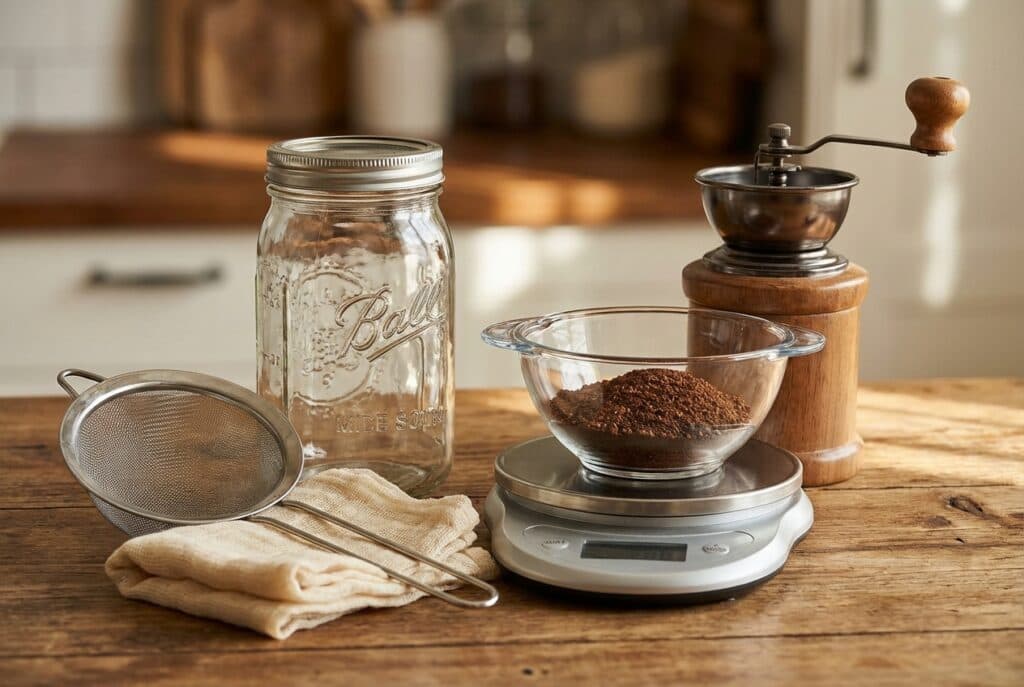
The NCA lists a cold brew maker, a French press or any container, plus filters, a scale and, optionally, a grinder. In practice that means:
- A jar or pitcher with a lid, large enough for the grounds as well as the water
- A fine-mesh sieve
- Cheesecloth or a paper coffee filter
- A kitchen scale, so the ratio stays the same from batch to batch
- A grinder set to coarse, or pre-ground coffee sold for a French press
A dedicated cold brew maker combines the container and the filter in one piece. It is a convenience, not a requirement.
How to Make Sweet Cold Brew Concentrate (Step by Step)
This is the same base as the site’s cold brew concentrate recipe: brew strong, then sweeten and dilute by the glass.
Ingredients
- 200 g coarsely ground coffee
- 800 ml cold, filtered water
That is 1 part coffee to 4 parts water by weight, the strong end of the NCA’s 1:4 to 1:5 range. For a 1:5 batch, keep 200 g of coffee and use 1,000 ml of water. Weighing beats scooping, because a scoop of coarse grounds varies from one roast to the next.
Method
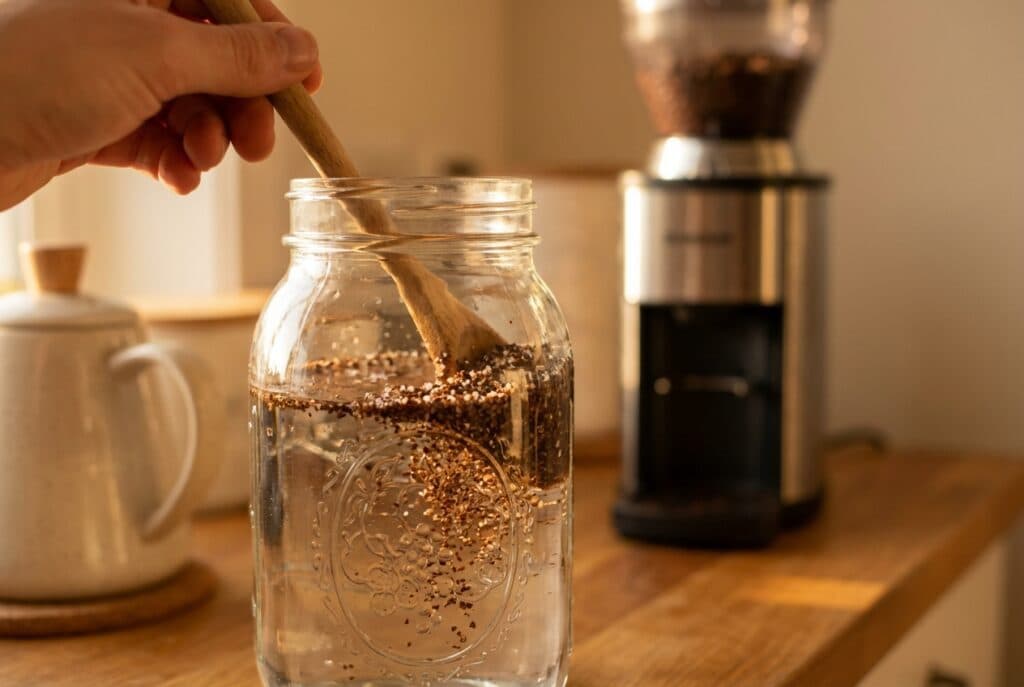
- Grind coarse. Aim for the texture of coarse sea salt. Fine grounds clog the filter and leave grit in the glass.
- Combine and stir. Put the grounds in the jar, add the water gradually and stir gently until every pocket of grounds is wet, as the NCA’s hands-on method describes.
- Cover and refrigerate for about 12 hours. The NCA’s method allows the fridge or room temperature for 12 hours or overnight, but if you plan to keep the batch for several days, steep it in the fridge. Starting in the evening and straining in the morning lands near 12 hours.
- Strain. Pour through a fine-mesh sieve lined with cheesecloth, or through a coffee filter, into a clean jar.
- Strain a second time if needed. The NCA suggests a second pass; a paper filter catches the fine sediment that makes cold brew feel muddy.
- Store it undiluted, sealed, in the fridge. Keep it at 41 °F (5 °C) or below and use it within seven days (see storage below).
How to Sweeten Cold Brew So the Sugar Dissolves
Granulated sugar stirred into an iced glass is slow to dissolve. Wikipedia’s entry on syrup puts it plainly: “Granulated sugar does not dissolve easily in cold drinks”, which is why liquid syrups are used in mixed drinks instead. Three ways around it:
- Simple syrup. Dissolve sugar in water at 1:1 by volume, the ratio given for standard simple syrup, then cool it. A spoonful mixes straight into a cold glass.
- Flavoured syrup. The same entry describes flavoured syrups as simple syrups infused with flavourings, the kind commonly used at coffee bars. Being liquid, they mix into a cold glass the same way.
- Dissolve sugar while something is warm. If you only have granulated sugar, dissolve it in a little warm water first and let it cool, which is simply a small batch of simple syrup.
Sweeten the concentrate and the diluting liquid together, taste, then add ice. Sweetness is easier to judge before the glass is full of ice.
Add a Pinch of Salt
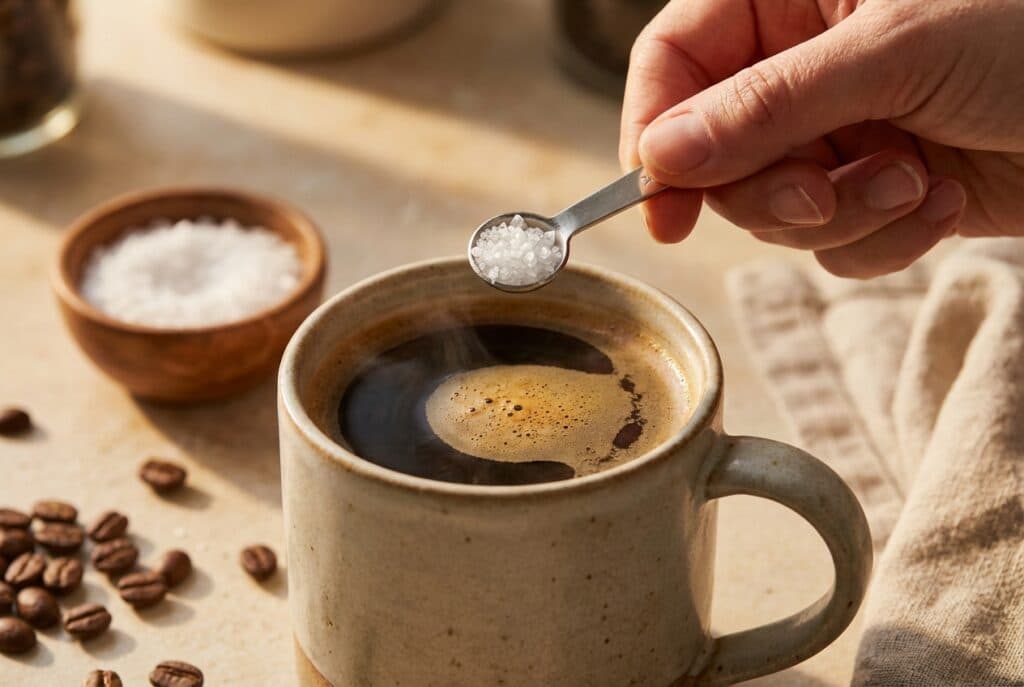
Some people add a very small amount of salt to take the edge off bitterness. The idea has a basis in taste research: Breslin and Beauchamp, writing in Nature in 1997, proposed that salts suppress unpleasant tastes such as bitterness more than palatable ones such as sweetness, which makes the sweetness more noticeable. The abstract does not mention coffee or give a dose, so treat salt in coffee as something to try, not an established result. Start with the smallest pinch you can manage in a whole glass and stop before the drink tastes salty.
The Dilution Ratio That Actually Works
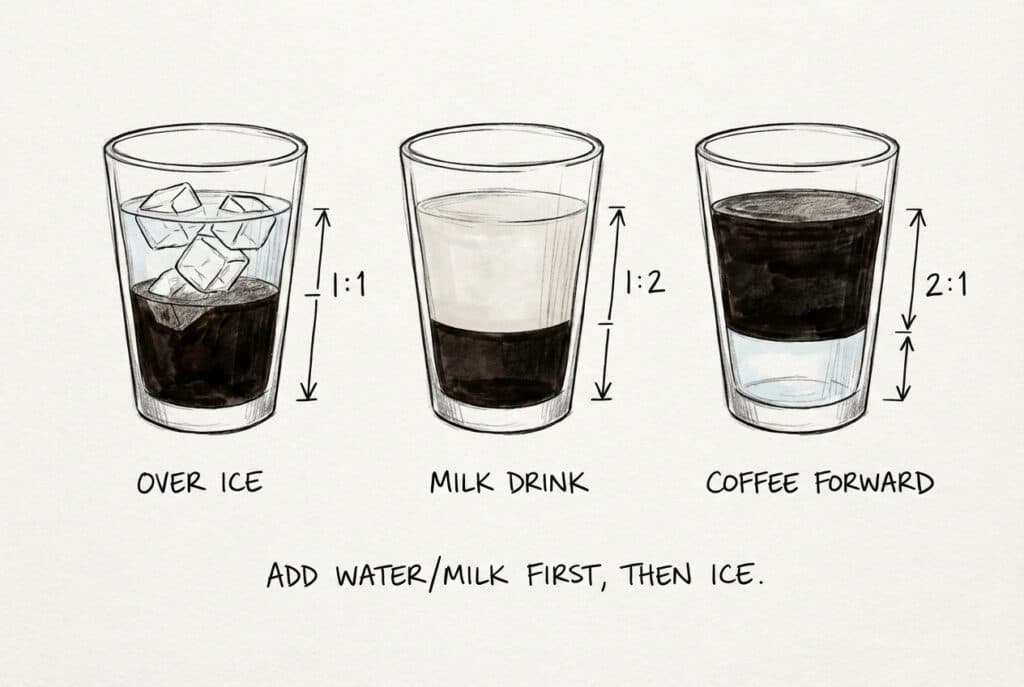
For a concentrate brewed at 1:4 or 1:5, the site’s dilution ratio guide starts at 1 part concentrate to 2 parts water or milk, then adjusts:
- Stronger glass: 1 part concentrate to 1 part water or milk
- Starting point: 1 part concentrate to 2 parts water or milk
- Long, light drink: 1 part concentrate to 3 parts water
Count the syrup and the ice as part of that liquid. A glass packed with ice needs less water up front, because the melt will supply some of it. If the end of the glass still tastes thin, move one step stronger next time rather than adding more ice.
Coffee ice cubes avoid the problem altogether: freeze some concentrate in an ice tray and use those cubes instead of plain ice, so the melt adds coffee, not water.
Troubleshooting Sweet Cold Brew
| Problem | Likely cause | What to change |
|---|---|---|
| Tastes watery | Weak batch or too much dilution | Brew at 1:4, dilute 1:1 or 1:2 |
| Watery by the end of the glass | Plain ice melting | Less water up front, or coffee ice cubes |
| Sugar at the bottom of the glass | Granulated sugar in a cold drink | Use simple syrup |
| Muddy or gritty | Fines passing the sieve | Strain a second time through paper |
| Harsh even after diluting | The batch itself | Grind coarser for the next batch |
How Long Sweet Cold Brew Keeps
Treat seven days from brewing as the ceiling for the concentrate. Wisconsin’s Department of Agriculture, Trade and Consumer Protection classifies cold brew made without a heat step as a time/temperature control for safety food, and its guidance is to hold it at 41 °F or below and date-mark it for no more than seven days from production. That fact sheet is written for retail food businesses, but the reason applies at home too: the coffee is never heated.
Keep the concentrate unsweetened and undiluted in the jar, and sweeten each glass as you pour it. Once a glass is poured, with or without milk, apply the USDA’s general rule for perishable food: do not leave it out of refrigeration for more than 2 hours, or more than 1 hour above 90 °F. Applying that rule to a poured glass is this site’s reasoning rather than a cold-brew-specific USDA rule.
Frequently Asked Questions
How do you sweeten cold brew coffee?
Use a liquid sweetener. Simple syrup, made from sugar and water at 1:1 by volume, mixes into a cold glass, while granulated sugar does not dissolve easily in cold drinks. Stir it into the concentrate and milk or water before adding ice, then taste.
How do you make coffee taste sweet without more sugar?
A tiny pinch of salt can reduce bitterness, which makes the sweetness already in the glass easier to notice. The abstract of the salt research behind that idea does not mention coffee, so treat it as something to try, not an established result. Diluting a harsh glass a step further, for example from 1:1 to 1:2, also softens it.
Can you make cold brew at home without a machine?
Yes. The NCA’s fully hands-on method uses a container, coarse grounds, water and a filter: combine, stir, cover, steep about 12 hours (in the fridge if you plan to keep it), then strain through a coffee filter or a sieve lined with cheesecloth.
Should I sweeten the whole batch?
No. Keep the jar as plain concentrate and sweeten each glass. That way each drink can be sweetened differently, and you can still use the concentrate unsweetened.


Comments