


Table of Contents
- Quick Verdict: Iced Latte
- What Exactly Is Iced Coffee?
- Typical Iced Coffee Ingredients
- What Exactly Is an Iced Latte?
- Typical Iced Latte Ingredients
- Iced Latte vs Iced Coffee: Key Differences at a Glance
- Pros and Cons of Iced Coffee
- Pros
- Cons
- Pros and Cons of Iced Latte
- Pros
- Cons
- Who Is Iced Coffee For?
- Who Is Iced Latte For?
- Who Should Skip Each Drink?
- How to Make Iced Coffee at Home
- How to Make an Iced Latte at Home
- Conclusion: Which One Wins for Home Brewers?
You’re standing in your kitchen on a hot summer morning, craving something cold and caffeinated. You know you want iced coffee… or wait, is it an iced latte you’re after? If you’ve ever found yourself confused about the difference between these two popular drinks, you’re not alone. Both are refreshing, both contain coffee, and both look pretty similar in a glass. But as any home barista knows, the details matter—and these two drinks are more different than they appear.
In this guide, I’ll break down exactly what separates an iced latte from iced coffee, how to make both at home, and which one suits your taste preferences and equipment. By the end, you’ll know exactly which drink to reach for on your next warm afternoon.
Quick Verdict: Iced Latte
If you own an espresso machine or moka pot and love creamy, milk-forward drinks, the iced latte is your winner. It’s smooth, balanced, and feels like a treat. However, if you prefer a stronger coffee flavor, want something simpler to make, or don’t have espresso equipment, iced coffee is the practical and delicious choice. Both are excellent—it really comes down to your gear and taste preferences.
What Exactly Is Iced Coffee?
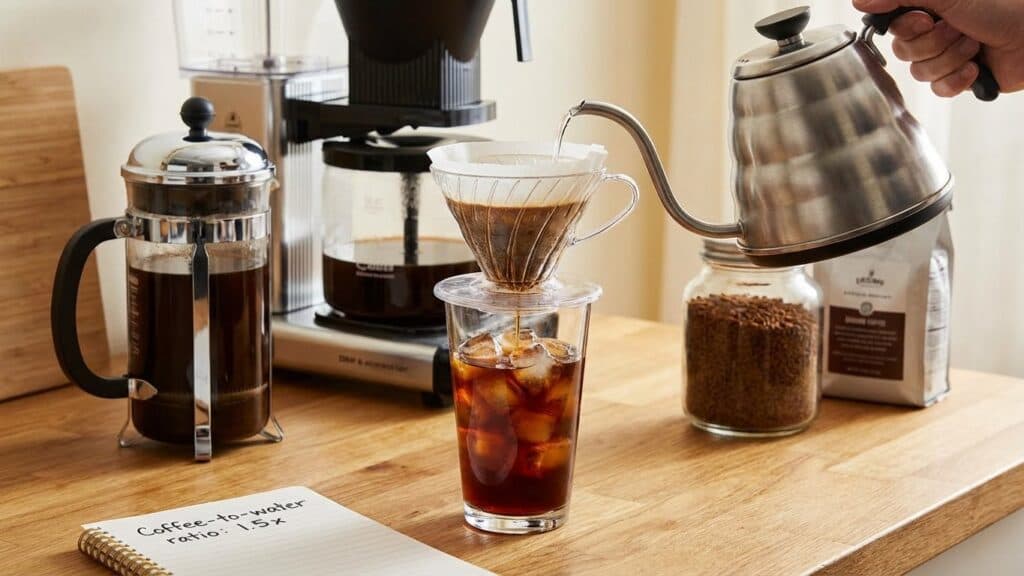
Iced coffee is, at its core, regular brewed coffee served over ice. That’s it. You can make it with a drip coffee maker, pour-over, French press, or even instant coffee in a pinch. The brewing method is the same as hot coffee—you just chill it down afterward or pour it directly over ice.
In my experience, the best iced coffee comes from brewing it a bit stronger than usual. Why? Because the ice will dilute it as it melts. I typically use about 1.5 times my normal coffee-to-water ratio to compensate. Some home brewers prefer cold brew, which is technically a different drink, but it works beautifully as a base for iced coffee too.
Typical Iced Coffee Ingredients
- Brewed coffee (any method)
- Ice cubes
- Optional: milk, cream, sweetener, or flavored syrups
The beauty of iced coffee is its simplicity. You don’t need fancy equipment, and you can customize it however you like. Want it black? Go for it. Prefer a splash of oat milk and vanilla syrup? That works too.
What Exactly Is an Iced Latte?
An iced latte is an espresso-based drink. It combines one or two shots of espresso with cold milk and ice. The ratio is typically more milk than coffee, which gives it that signature creamy, smooth character. If you’ve ever ordered one at a café, you know it tastes noticeably different from iced coffee—richer, more velvety, and less intensely “coffee-forward.”
The key distinction here is the espresso. Espresso is a concentrated form of coffee made by forcing hot water through finely-ground beans under pressure. This creates a bold, slightly syrupy base that blends beautifully with milk. In short, no espresso means no latte.
Typical Iced Latte Ingredients
- 1-2 shots of espresso (or strong moka pot coffee)
- 6-8 oz cold milk of your choice
- Ice cubes
- Optional: sweetener or flavored syrups
I’ve found that the type of milk you use makes a huge difference in an iced latte. Whole milk gives you that classic café creaminess, while oat milk adds a subtle sweetness that pairs wonderfully with espresso. Almond milk works too, though it’s thinner and less rich.
Iced Latte vs Iced Coffee: Key Differences at a Glance
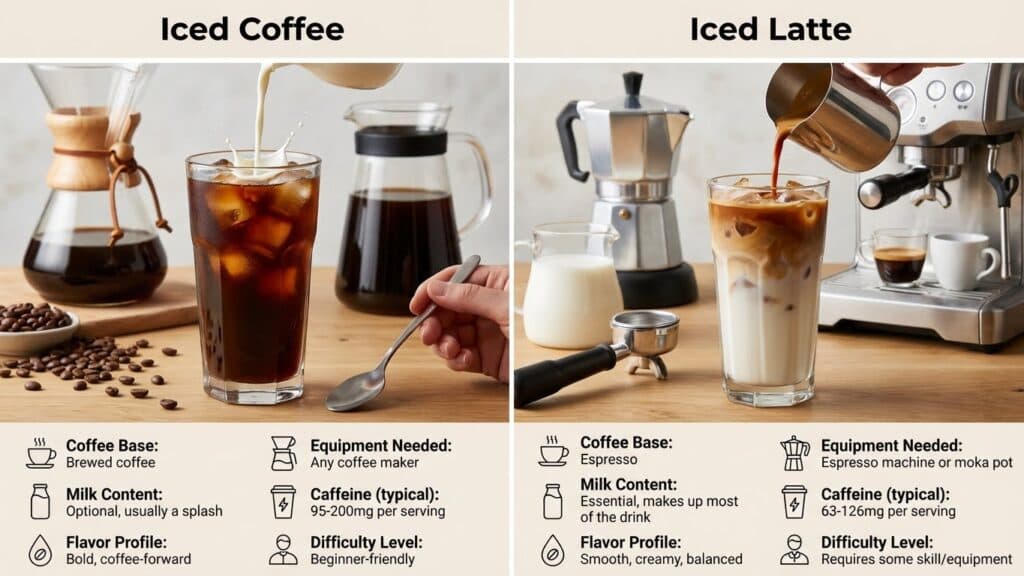
| Feature | Iced Coffee | Iced Latte |
|---|---|---|
| Coffee Base | Brewed coffee | Espresso |
| Milk Content | Optional, usually a splash | Essential, makes up most of the drink |
| Flavor Profile | Bold, coffee-forward | Smooth, creamy, balanced |
| Equipment Needed | Any coffee maker | Espresso machine or moka pot |
| Caffeine (typical) | 95-200mg per serving | 63-126mg per serving |
| Difficulty Level | Beginner-friendly | Requires some skill/equipment |
Pros and Cons of Iced Coffee
Pros
- Simple to make with equipment you already own
- Higher caffeine content per serving
- More affordable (no espresso machine required)
- Showcases the coffee’s natural flavors
- Easy to batch-brew for the whole week
Cons
- Can taste watered-down if not brewed strong enough
- Less creamy and indulgent than a latte
- May taste bitter or acidic depending on the beans
- Requires planning if you want it pre-chilled
Pros and Cons of Iced Latte
Pros
- Creamy, smooth, and satisfying
- Espresso flavor cuts through the milk beautifully
- Feels more like a café-quality treat
- Works wonderfully with flavored syrups
- Lower acidity due to milk content
Cons
- Requires espresso equipment (or a moka pot workaround)
- Lower caffeine than a large iced coffee
- More expensive to make at home initially
- Takes more time and skill to prepare
Who Is Iced Coffee For?

Iced coffee is perfect for you if:
- You love the taste of coffee and want it front and center
- You’re working with basic equipment like a drip machine or French press
- You need a serious caffeine boost to power through your day
- You prefer black coffee or just a small splash of milk
- You want to batch-brew and have cold coffee ready all week
A typical scenario: You wake up early, brew a strong pot of coffee, and pour it into a pitcher to chill. By mid-morning, you’ve got perfectly cold iced coffee ready to go. No fuss, no fancy equipment, just straightforward caffeination.
Who Is Iced Latte For?
An iced latte is your drink if:
- You own an espresso machine, moka pot, or AeroPress
- You prefer creamy, milk-based drinks over black coffee
- You enjoy experimenting with different milk alternatives
- You want something that feels like a café treat at home
- Strong, bitter coffee isn’t your thing
Picture this: It’s a lazy Sunday afternoon, and you want something special. You pull a shot of espresso, pour it over ice, add cold oat milk, and maybe a pump of vanilla. That’s the iced latte experience—a little more effort, but worth it for the indulgence.
Who Should Skip Each Drink?
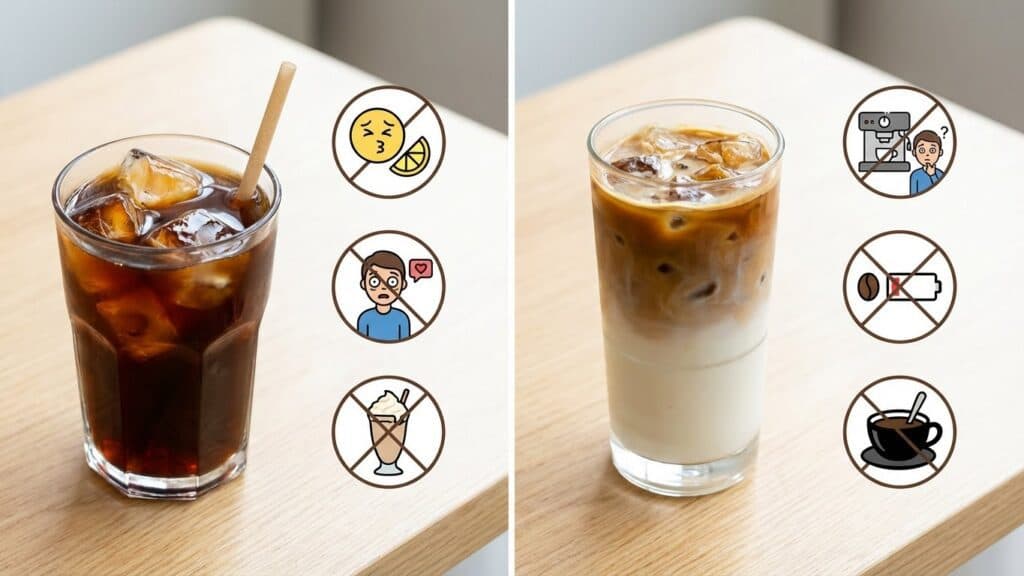
Iced coffee might not be for you if you find regular coffee too bitter or acidic, or if you’re sensitive to higher caffeine levels. It’s also not ideal if you’re expecting a creamy, dessert-like drink.
An iced latte might not suit you if you don’t have espresso-making equipment and don’t want to invest in any. It’s also not the best choice if you’re chasing maximum caffeine or prefer tasting the coffee itself without milk softening the flavor.
How to Make Iced Coffee at Home
Here’s my go-to method for foolproof iced coffee:
- Brew coffee using your preferred method, but use 1.5x your normal coffee grounds
- Let it cool to room temperature (or refrigerate overnight for best results)
- Fill a tall glass with ice cubes
- Pour the chilled coffee over the ice
- Add milk, cream, or sweetener if desired
Barista Tip: Freeze leftover coffee in ice cube trays. Use these coffee cubes instead of regular ice to prevent dilution as they melt. Game changer.
How to Make an Iced Latte at Home
Even without a professional espresso machine, you can make a solid iced latte:
- Pull 1-2 shots of espresso (or brew strong coffee with a moka pot or AeroPress)
- Fill a tall glass with ice
- Pour the espresso directly over the ice
- Add 6-8 oz of cold milk
- Stir gently and enjoy
Barista Tip: For a layered look like you see at cafés, pour the milk first, then slowly add the espresso. It creates that beautiful gradient effect and makes you feel like a pro.
Conclusion: Which One Wins for Home Brewers?
There’s no universal winner here—it depends entirely on your preferences and setup. If you value simplicity, higher caffeine, and bold coffee flavor, iced coffee is your everyday champion. If you crave something creamy, smooth, and café-worthy, and you have the equipment to make espresso, the iced latte delivers that special experience.
My honest advice? Master both. Keep a pitcher of cold brew or chilled coffee in your fridge for quick weekday mornings. Save the iced lattes for weekends or when you want to treat yourself. Life is too short for bad coffee—or for limiting yourself to just one delicious option.



Comments