


Table of Contents
- Can You Bring Coffee on a Plane? The TSA Rules Explained
- Whole Beans and Ground Coffee
- Liquid Coffee and the 3-1-1 Rule
- International Travel Considerations
- How to Pack Coffee Beans for Maximum Freshness
- Keep It Sealed and Airtight
- Protect Against Pressure Changes
- Temperature and Light Exposure
- Carry-On vs. Checked Bag: Where Should Coffee Go?
- Essential Travel Brewing Gear Worth Packing
- The Non-Negotiables
- Nice-to-Have Additions
- Gear for Minimalist Travelers
- Special Situations: International Flights and Coffee Gifts
- Bringing Coffee Home from Origin Countries
- Coffee as Gifts: Presentation Matters
- Frequently Asked Questions
- Can I bring a coffee maker on a plane?
- Will coffee beans set off the security scanner?
- How long does coffee stay fresh when traveling?
- Can I bring instant coffee on a plane?
- Is it worth checking coffee vs. shipping it home?
- Final Thoughts and Packing Checklist
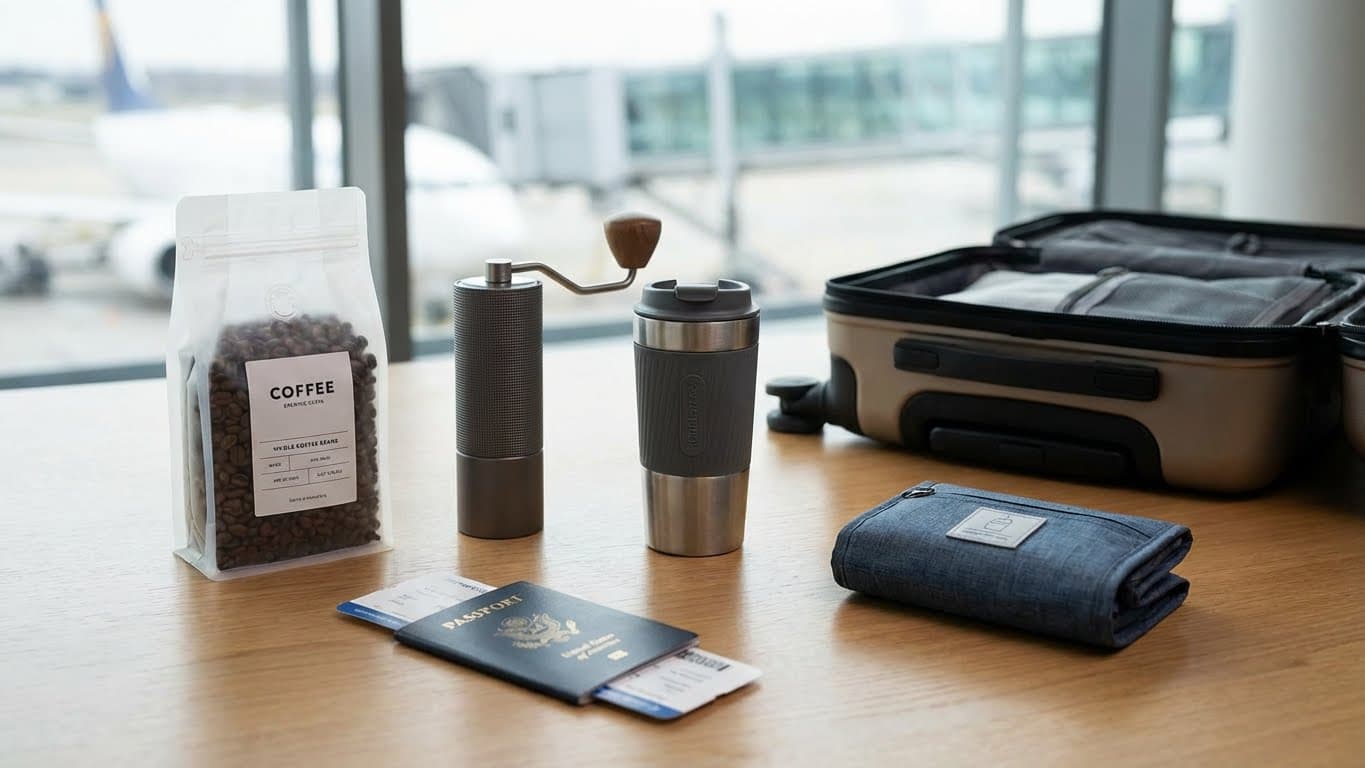
Ever arrived at your destination, craving that first cup of your favorite single-origin Ethiopian, only to realize you left it on the kitchen counter? Or worse, had airport security confiscate your precious beans because you packed them wrong? I’ve been there, and trust me, it’s not a great way to start a trip. The good news is that traveling with coffee is completely doable—you just need to know the rules and a few smart packing tricks.
In this guide, I’ll walk you through exactly how to pack coffee for travel, including what’s allowed on planes, how to keep your beans fresh, and the gear worth bringing along. Whether you’re a carry-on minimalist or someone who checks a bag full of brewing equipment, you’ll find practical tips to ensure your coffee travels as well as you do.
Can You Bring Coffee on a Plane? The TSA Rules Explained
Let’s start with the most common question: is coffee allowed on airplanes? The short answer is yes, absolutely. But there are some nuances depending on the form your coffee takes.
Whole Beans and Ground Coffee
Solid coffee—whether whole bean or ground—is permitted in both carry-on and checked luggage without quantity restrictions. The Transportation Security Administration (TSA) treats dry coffee like any other food item. You can bring an entire kilogram of your favorite roast if you want, and security won’t bat an eye.
However, here’s something I’ve learned from experience: large quantities of ground coffee can sometimes look suspicious on X-ray machines. If your bag gets pulled for additional screening, don’t panic. It’s routine, and a quick visual inspection clears things up immediately.
Liquid Coffee and the 3-1-1 Rule
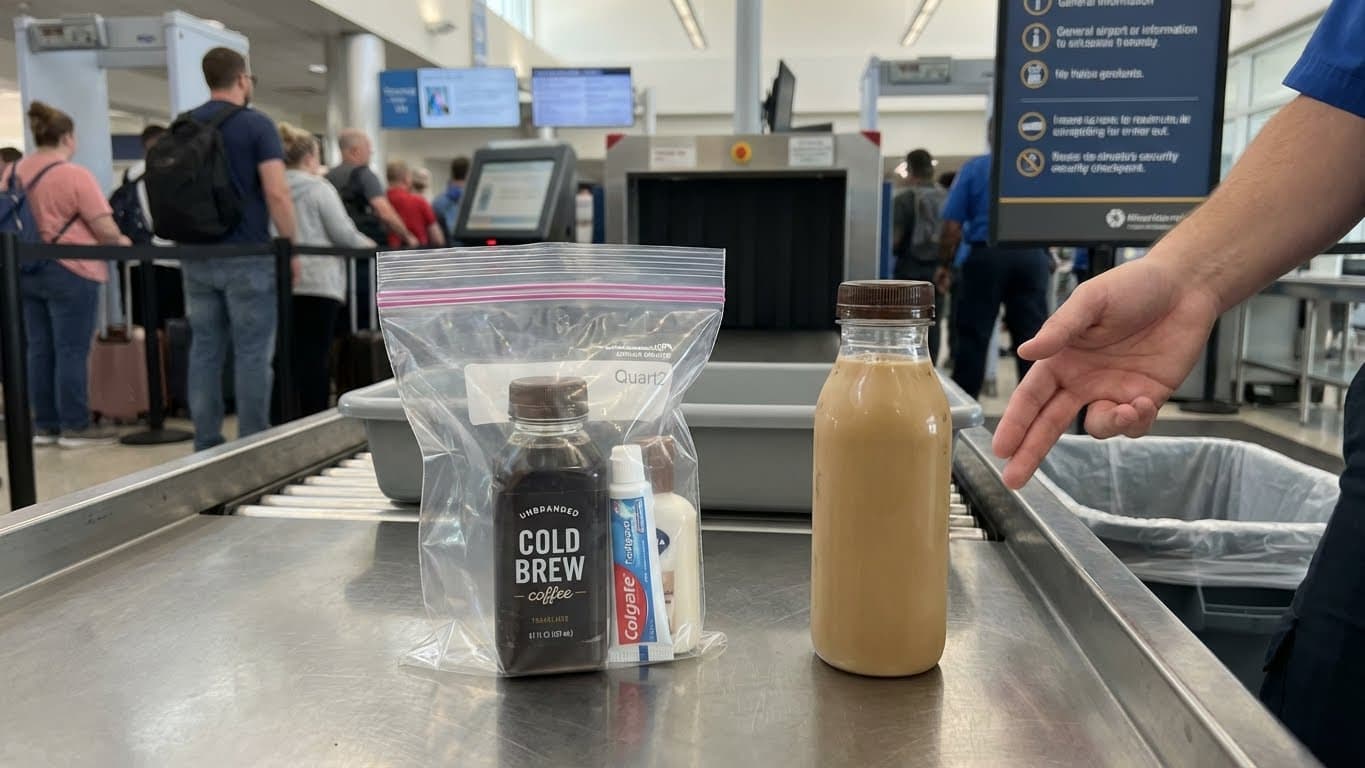
This is where things get tricky. Any liquid coffee—cold brew, bottled iced coffee, or even that latte you grabbed before boarding—falls under the TSA’s 3-1-1 liquids rule:
- Containers must be 3.4 ounces (100ml) or smaller
- All containers must fit in one quart-sized clear plastic bag
- One bag per passenger
In short, that 12-ounce cold brew bottle won’t make it through security. Either finish it before the checkpoint or buy coffee after you’ve passed through. I always opt for the latter—most airports have decent coffee options these days, and it’s not worth the hassle.
International Travel Considerations
Flying internationally? Coffee rules vary by country. Most destinations welcome roasted coffee without issues, but some countries have strict agricultural import regulations. Green (unroasted) coffee beans can sometimes trigger additional scrutiny because they’re considered agricultural products.
Key Takeaway: Always check the customs regulations for your destination country, especially if you’re bringing coffee as a gift or in large quantities. Countries like Australia and New Zealand are particularly strict about food imports.
How to Pack Coffee Beans for Maximum Freshness
Getting coffee through security is one thing. Keeping it fresh during your journey is another challenge entirely. Here’s how I approach it.
Keep It Sealed and Airtight
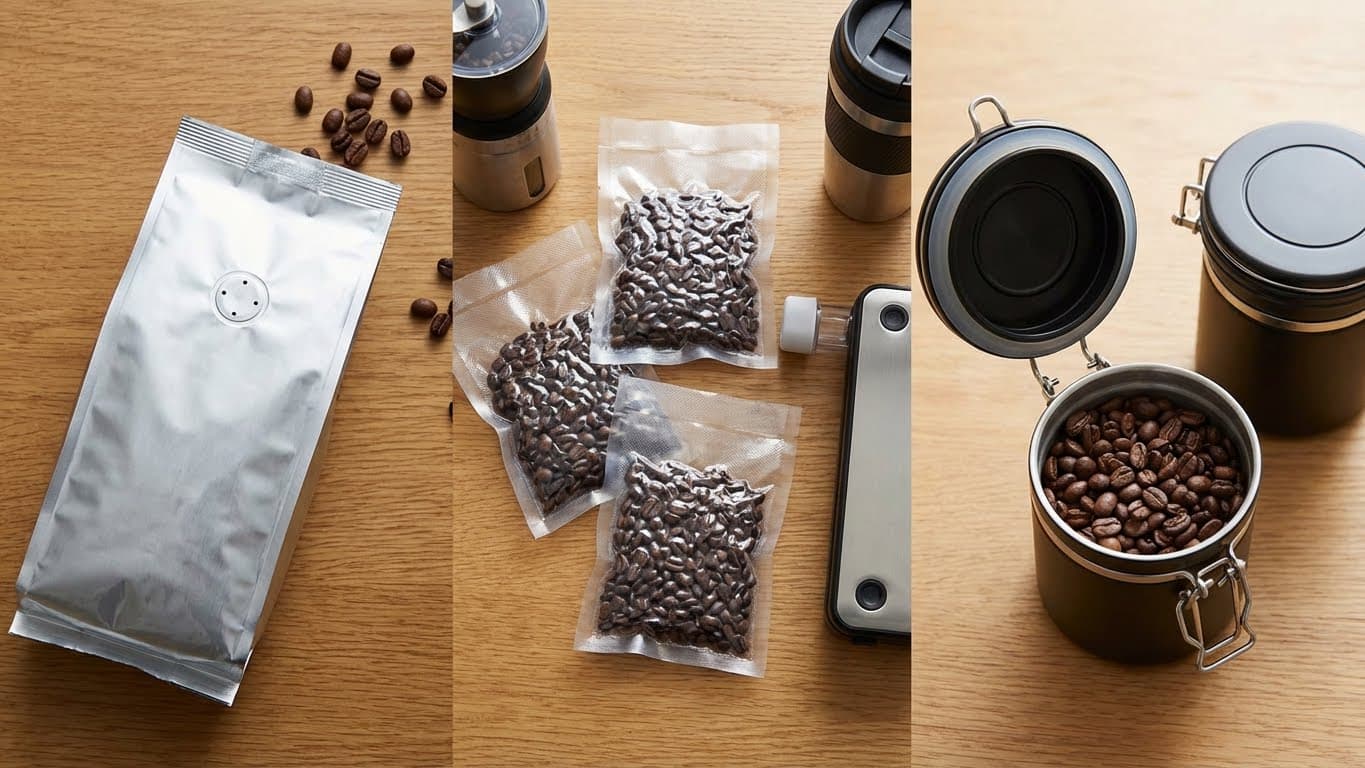
Oxygen is coffee’s enemy. Once a bag is opened, the clock starts ticking on freshness. For travel, I recommend one of these approaches:
- Unopened bags: If possible, travel with sealed bags. Most specialty roasters use bags with one-way valves that release CO2 while keeping oxygen out.
- Vacuum-sealed portions: For longer trips, vacuum-seal your beans into trip-sized portions. This protects against both air and accidental crushing.
- Airtight travel containers: Several companies make compact, airtight coffee canisters designed for travel. They’re worth the investment if you travel frequently.
One trick I’ve found useful: wrap your coffee bag inside a ziplock freezer bag as an extra layer of protection. It also contains any mess if a bag gets punctured.
Protect Against Pressure Changes
Here’s something many travelers don’t consider: cabin pressure changes can cause sealed bags to expand or even burst. Those one-way valve bags handle this beautifully—they’ll puff up a bit but release excess pressure safely. Completely sealed containers without valves? They might pop open in your luggage.
If you’re using a non-valved container, leave a tiny bit of headspace and don’t seal it completely airtight. Or simply pack it in checked luggage where pressure changes are less dramatic.
Temperature and Light Exposure
Avoid storing coffee near heat sources or in direct sunlight. That mesh pocket on the outside of your backpack? Terrible spot for coffee. Instead:
- Pack coffee in the center of your bag, insulated by clothes
- Keep it away from toiletries or anything with strong odors
- Never leave coffee in a hot car during layovers
Carry-On vs. Checked Bag: Where Should Coffee Go?
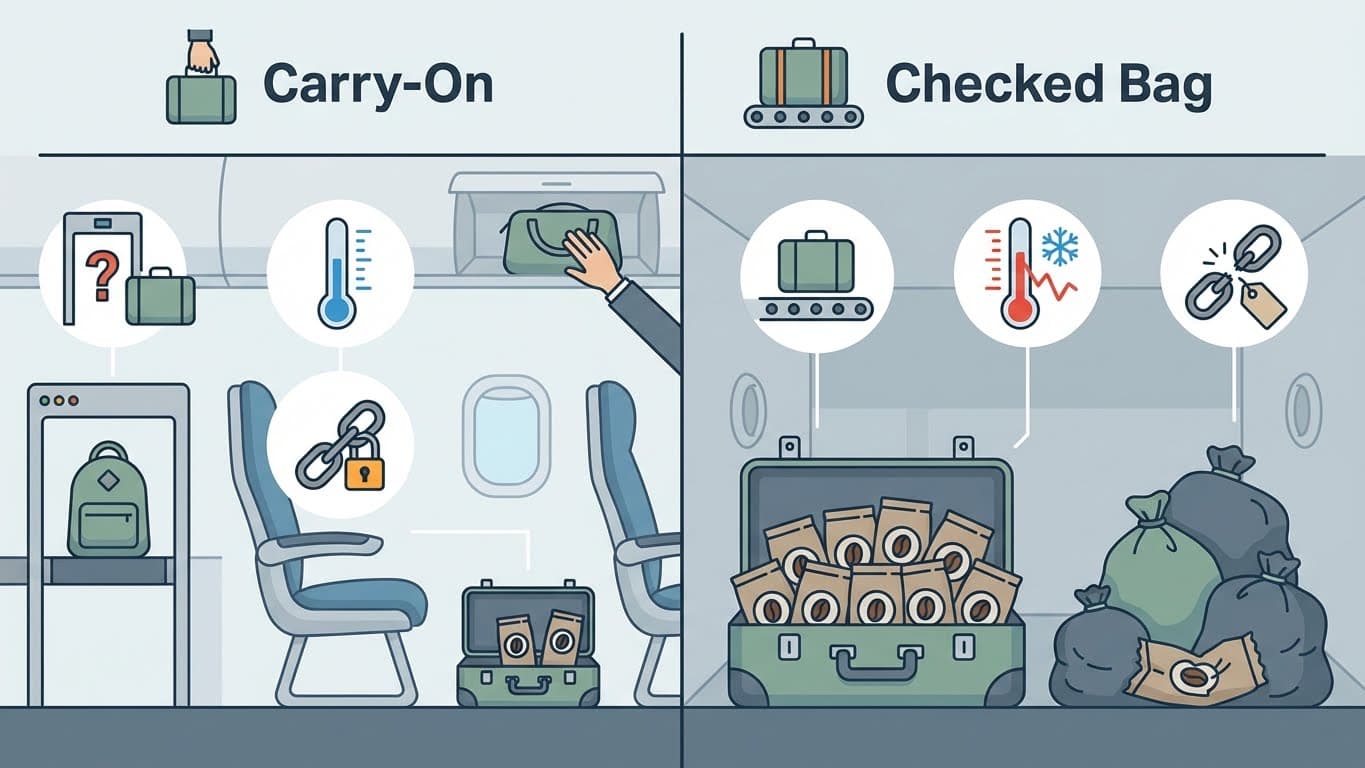
This depends on your priorities and how much you’re bringing. Let me break down the pros and cons of each approach.
| Factor | Carry-On | Checked Bag |
|---|---|---|
| Security screening | May require additional inspection | No personal screening required |
| Temperature control | Better—cabin is climate controlled | Worse—cargo hold temperatures vary |
| Risk of loss | Lower—always with you | Higher—bags can get lost |
| Quantity limits | Limited by bag space | More room available |
| Crushing risk | Lower—you control handling | Higher—bags get tossed around |
My personal preference? I keep my current coffee stash in my carry-on and pack any extra bags in checked luggage, wrapped in clothing for protection. That way, even if my checked bag is delayed, I’m not starting the trip without coffee.
Essential Travel Brewing Gear Worth Packing
What good are premium beans if you’re stuck with the hotel room’s stale pre-ground sachets and crusty drip machine? Here’s the gear I never travel without.
The Non-Negotiables
- AeroPress or AeroPress Go: Compact, durable, and makes excellent coffee anywhere. The Go version comes with its own travel mug and carrying case.
- Hand grinder: Fresh grinding makes all the difference. Look for models like the Timemore C2 or 1Zpresso Q2—they’re small, quiet, and produce consistent grinds.
- Collapsible kettle or immersion heater: For destinations where hot water isn’t readily available.
Nice-to-Have Additions
- A small digital scale (many travel scales are pocket-sized)
- Paper filters in a small plastic case
- A reusable filter if you prefer metal filtration
Barista Tip: Pack your brewing gear inside your carry-on. I once had a checked bag delayed for three days, and my hand grinder saved that entire trip. Also, always pack your grinder empty—a grinder with old grounds looks suspicious on X-ray and might get pulled for inspection.
Gear for Minimalist Travelers
Traveling ultra-light? A simple pour-over dripper like the collapsible Sea to Summit X-Brew weighs almost nothing and folds flat. Pair it with pre-ground coffee (sacrilege, I know, but practical) for a minimal setup that still beats instant coffee by miles.
Special Situations: International Flights and Coffee Gifts
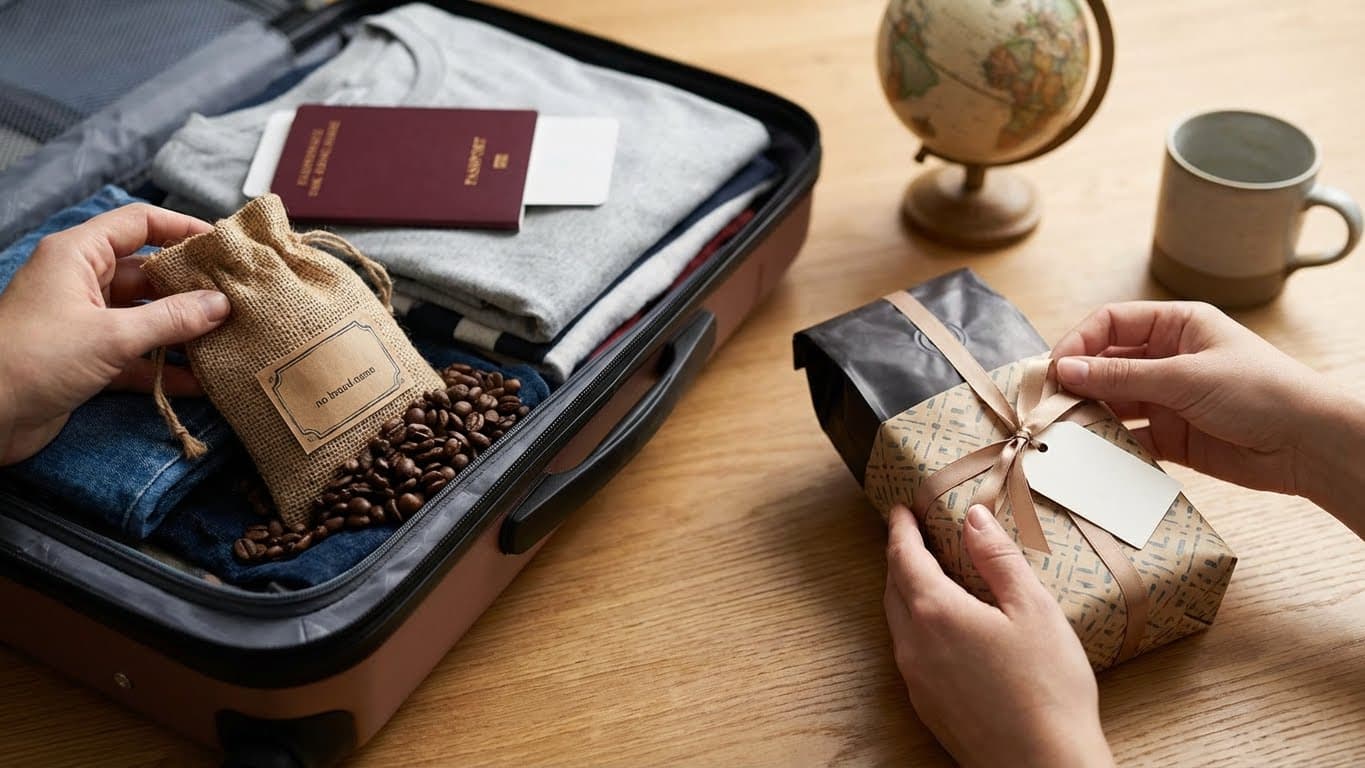
Planning to bring coffee back from a coffee-producing country? Or maybe you’re packing beans as a gift for your hosts? These situations require extra attention.
Bringing Coffee Home from Origin Countries
If you’re visiting Colombia, Ethiopia, Guatemala, or any coffee-growing region, the temptation to bring back freshly roasted local beans is strong. Here’s what to know:
- Most countries allow roasted coffee imports freely
- Green (unroasted) beans may require agricultural declaration
- Keep quantities reasonable—large amounts might trigger customs questions about commercial intent
- Save receipts in case you need to prove personal use
When I visited Costa Rica last year, I brought back about two kilograms of locally roasted coffee without any issues. I declared it on my customs form, the officer nodded, and that was it.
Coffee as Gifts: Presentation Matters
If you’re bringing coffee as a gift, consider keeping it in the original retail packaging. This makes it clear that it’s a legitimate purchase rather than something suspicious. Remove any price tags if you prefer, but keep the branding visible.
Frequently Asked Questions
Can I bring a coffee maker on a plane?
Most small coffee makers like AeroPress, pour-over drippers, and French presses are fine in carry-on luggage. However, devices with heating elements (like electric kettles) should go in checked bags. When in doubt, check the TSA’s “What Can I Bring?” tool on their website for specific items.
Will coffee beans set off the security scanner?
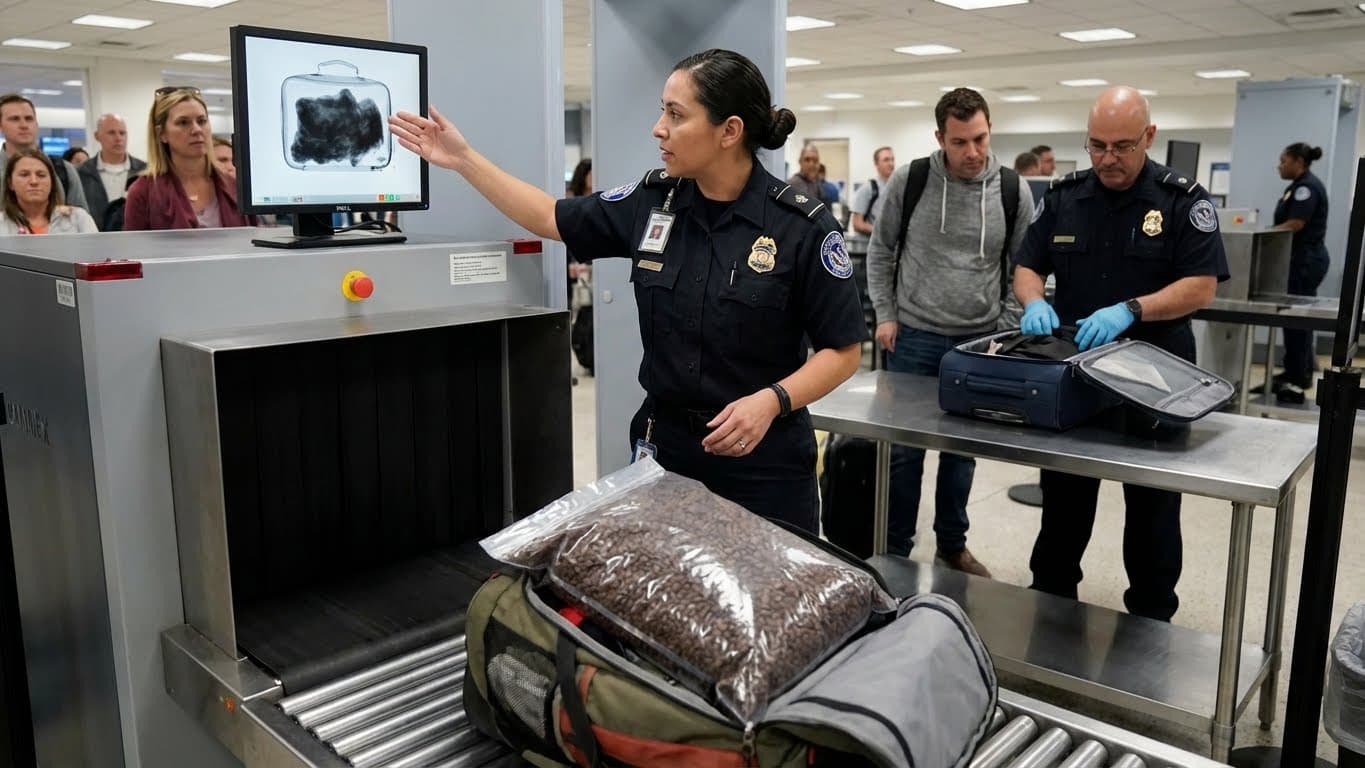
Coffee beans won’t set off any alarms, but they can appear as a dense mass on X-ray screens. Large quantities of ground coffee especially might prompt a bag check. This is purely visual inspection—nothing to worry about, just a minor delay.
How long does coffee stay fresh when traveling?
Properly stored whole bean coffee stays fresh for about 2-4 weeks after roasting. Ground coffee degrades faster—roughly 1-2 weeks for optimal flavor. For trips longer than a week, I recommend bringing whole beans and a hand grinder rather than pre-ground coffee.
Can I bring instant coffee on a plane?
Yes, instant coffee is treated exactly like ground coffee. It’s allowed in both carry-on and checked luggage without restrictions. It’s actually one of the easiest coffee options for travel if you’re not too particular about quality.
Is it worth checking coffee vs. shipping it home?
For a few bags, checking is simpler and usually cheaper. For larger quantities (say, over 5 pounds), consider shipping. You’ll avoid weight limits in your luggage, reduce crushing risk, and won’t have to carry extra weight through airports.
Final Thoughts and Packing Checklist
Traveling with coffee is simpler than it might seem once you understand the rules. Solid coffee goes anywhere, liquid coffee follows the 3-1-1 rule, and a little thoughtful packing keeps everything fresh and protected.
Here’s a quick packing checklist before your next trip:
- Coffee in sealed, airtight packaging
- Extra protection (ziplock bag or padding)
- Hand grinder (packed empty)
- Compact brewing device
- Filters if needed
- Any destination-specific customs research completed
Life really is too short for bad coffee—especially when you’re traveling and need that familiar comfort of a great cup. By packing smart and knowing the rules, you’ll never have to settle for subpar hotel room brew again. Safe travels, and may your coffee always arrive intact.


Comments