


Table of Contents
- Why Cleaning Your Burr Grinder Actually Matters
- What You'll Need
- Method 1: Cleaning with Grindz Tablets
- How to Use Grindz Tablets
- Pros of Grindz Tablets
- Cons of Grindz Tablets
- Method 2: Cleaning with Rice
- How to Clean a Burr Grinder with Rice
- Pros of Rice
- Cons of Rice
- Grindz Tablets vs. Rice: The Honest Comparison
- When to Deep Clean Your Burr Grinder
- Signs You Need a Deep Clean
- Deep Cleaning Steps
- Frequently Asked Questions
- How often should I clean my burr grinder?
- Will rice really damage my grinder?
- Can I use instant rice instead of regular rice?
- Do I really need to waste coffee beans after cleaning?
- Are there alternatives to Grindz tablets?
- Final Thoughts and Recommendations
Your burr grinder is the unsung hero of your morning ritual—but when was the last time you actually cleaned it? Over time, coffee oils turn rancid, stale grounds accumulate in every crevice, and your once-bright brew starts tasting flat or even bitter. If you’re wondering how to clean a burr grinder properly, you’ve probably stumbled across two popular methods: Grindz tablets and rice. But which one actually works better, and which one might secretly damage your grinder? Let’s break it all down.
In this guide, I’ll walk you through both cleaning methods step by step, compare their pros and cons, and share some hard-earned wisdom from years of grinding beans at home. By the end, you’ll know exactly which approach suits your grinder, your budget, and your coffee standards.
Why Cleaning Your Burr Grinder Actually Matters
Coffee beans contain natural oils that give your cup its rich flavor and aroma. The problem? Those same oils oxidize and go stale within days. When old, rancid oils coat your burrs and chute, every fresh batch of beans picks up that off-taste on its way through.
Here’s what happens when you skip regular cleaning:
- Stale, bitter, or “cardboard-like” flavors contaminate fresh coffee
- Old grounds clump and cause inconsistent grind sizes
- Buildup can slow down or even jam your grinder motor
- In humid environments, trapped moisture can lead to mold growth
Key Takeaway: A dirty grinder doesn’t just affect taste—it can shorten your machine’s lifespan. I’ve found that grinders cleaned regularly run smoother and quieter, too.
What You’ll Need
Before diving into either cleaning method, gather these essentials:
- A stiff grinder brush or clean paintbrush
- Dry microfiber cloth or paper towels
- Your cleaning agent of choice: Grindz tablets OR uncooked dry rice
- A small amount of “sacrificial” coffee beans (to purge residue afterward)
- Optional: wooden toothpicks for stubborn buildup in tight spots
For a deeper clean, you may also want mild dish soap and warm water—but only for removable, non-electrical parts.
Method 1: Cleaning with Grindz Tablets
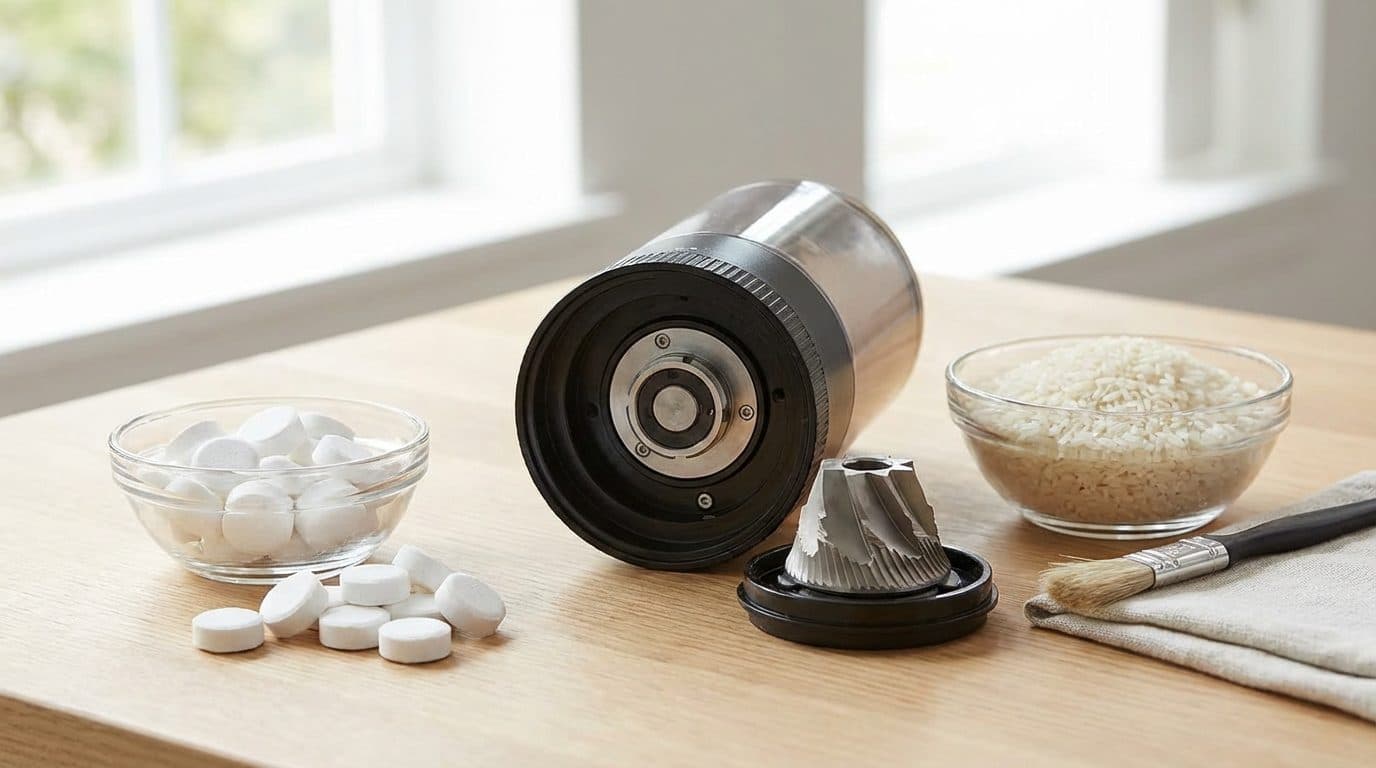
Grindz tablets (and similar grinder cleaning products) are specifically formulated to absorb oils and push out old grounds without harming your burrs. They’re made from food-safe ingredients—essentially grain-based pellets that grind up and carry away residue.
How to Use Grindz Tablets
- Empty your hopper completely and brush out any loose grounds
- Add the recommended amount of tablets (usually about 35-40 grams for home grinders)
- Run your grinder on a medium setting until all tablets have passed through
- Discard the ground tablet residue—don’t brew with it!
- Run 20-30 grams of fresh coffee beans through to purge any remaining tablet dust
- Wipe down the hopper and exterior with a dry cloth
Barista Tip: Always follow up with sacrificial beans. I once skipped this step and my first espresso shot tasted like cardboard mixed with cleaning product. Not my finest morning.
Pros of Grindz Tablets
- Specifically designed for coffee grinders—no risk of damage
- Food-safe and leaves no harmful residue
- Effectively absorbs oils and removes stale grounds
- Quick and convenient—takes about 5 minutes
- Safe for both flat and conical burrs
Cons of Grindz Tablets
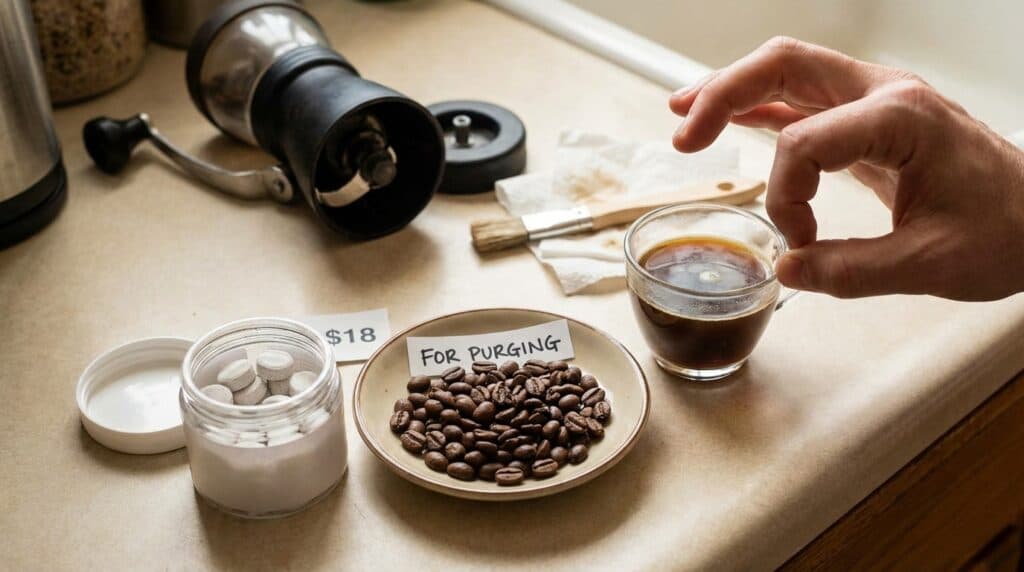
- Ongoing cost (roughly $15-20 for a jar that lasts several months)
- Requires sacrificial beans afterward, adding to waste
- Not a substitute for occasional deep cleaning
- Some users report a slight residue taste if not purged properly
Method 2: Cleaning with Rice
The rice method has been floating around coffee forums for years. The idea is simple: dry rice acts as an abrasive that scrubs the burrs and absorbs oils as it grinds. It’s cheap, accessible, and you probably have some in your pantry right now.
How to Clean a Burr Grinder with Rice
- Empty and brush out your hopper
- Add about 1/4 cup of uncooked white rice (not instant rice)
- Grind on a coarse setting in short bursts—don’t run continuously
- Discard the rice powder
- Run sacrificial coffee beans through to clear any rice dust
- Brush out remaining particles and wipe down
Barista Tip: If you try this method, use short pulses rather than continuous grinding. Rice is harder than coffee beans, and prolonged grinding generates more heat and stress on your motor.
Pros of Rice
- Extremely cheap—you likely already own it
- Readily available anywhere
- Does absorb some oils and push out old grounds
- No special products to order
Cons of Rice
- Harder than coffee beans—can dull burrs over time
- Many grinder manufacturers explicitly warn against using rice
- Rice dust is starchier and can leave residue
- May void your warranty on some grinders
- Doesn’t absorb oils as effectively as purpose-made cleaners
Grindz Tablets vs. Rice: The Honest Comparison
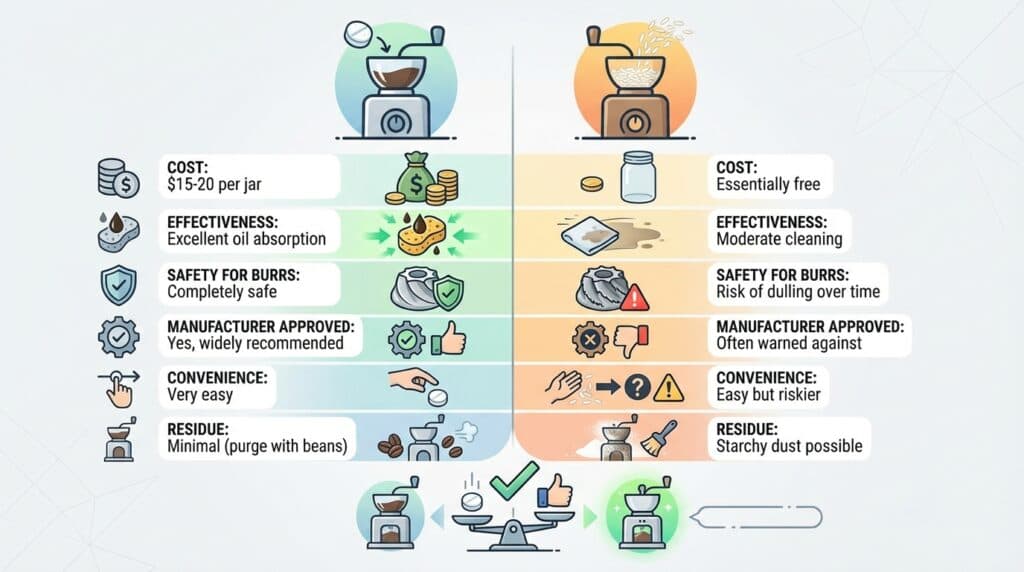
So which method should you actually use? Here’s how they stack up:
| Factor | Grindz Tablets | Rice |
|---|---|---|
| Cost | $15-20 per jar | Essentially free |
| Effectiveness | Excellent oil absorption | Moderate cleaning |
| Safety for Burrs | Completely safe | Risk of dulling over time |
| Manufacturer Approved | Yes, widely recommended | Often warned against |
| Convenience | Very easy | Easy but riskier |
| Residue | Minimal (purge with beans) | Starchy dust possible |
My verdict: For regular maintenance cleaning, Grindz tablets (or similar products) are worth the investment. The cost per cleaning works out to roughly $1-2, and you’re not risking damage to burrs that cost far more to replace. I’ve seen too many forum posts from folks who used rice for years and ended up with noticeably duller burrs.
That said, if you’re in a pinch and need to clean your grinder before company arrives, a single rice cleaning probably won’t destroy anything. Just don’t make it a habit.
When to Deep Clean Your Burr Grinder
Running tablets or rice through your grinder handles surface-level maintenance, but every few months, you should do a proper deep clean. This means actually disassembling the burrs.
Signs You Need a Deep Clean
- Visible oil buildup on the burrs or chute
- Grind consistency has noticeably declined
- Strange smells coming from the grinder
- It’s been 3+ months since your last deep clean
- You switched between very different roast levels (light to dark or vice versa)
Deep Cleaning Steps
- Unplug your grinder and remove the hopper
- Remove the upper burr (check your manual—most twist off)
- Use a stiff brush to remove all grounds from both burrs
- Wipe burrs with a dry cloth; for stubborn oil, use a slightly damp cloth with mild soap
- Clean the grinding chamber and chute with your brush
- Let everything dry completely before reassembling
- Run sacrificial beans through before brewing
Important: Never submerge electrical components or the motor housing in water. Only wash parts that are explicitly marked as removable and washable in your manual.
Frequently Asked Questions
How often should I clean my burr grinder?
For most home users grinding daily, a quick tablet cleaning every 2-4 weeks works well. Deep cleaning every 2-3 months keeps things in top shape. If you notice off-flavors or inconsistent grinds sooner, clean earlier.
Will rice really damage my grinder?
A single use probably won’t cause noticeable harm, but rice is harder than coffee beans. Repeated use can gradually dull your burrs and stress the motor. Many manufacturers—including Baratza—specifically advise against rice for this reason.
Can I use instant rice instead of regular rice?
No. Instant rice is softer and more processed, which means it creates more dust and doesn’t clean as effectively. If you’re going the rice route, use plain uncooked white rice only.
Do I really need to waste coffee beans after cleaning?
Yes—this step is essential. Both Grindz tablets and rice leave residue that you don’t want in your cup. Running 20-30 grams of beans through purges the system. Think of it as a small price for clean-tasting coffee.
Are there alternatives to Grindz tablets?
Several brands make similar grinder cleaning products, including Puly Caff and Caffetto. They all work on the same principle—food-safe pellets that absorb oils and clear residue. Choose whichever is most accessible to you.
Final Thoughts and Recommendations
Cleaning your burr grinder isn’t glamorous, but it’s one of the easiest ways to improve your daily cup without spending money on fancier beans or equipment. In my experience, the difference between coffee from a clean grinder versus a neglected one is immediately noticeable—brighter, cleaner, more true to the bean’s character.
If you take one thing from this guide: invest in proper grinder cleaning tablets and use them every few weeks. The small ongoing cost protects your burrs, preserves your warranty, and keeps your coffee tasting the way it should. Save the rice for dinner.
Now go give that grinder some love—your next cup will thank you for it.



Comments