


Table of Contents
- The Truth About Coffee and Hydration
- What the Science Says
- Why the Myth Persists
- Understanding Your Daily Hydration Needs
- Factors That Affect Your Hydration Needs
- Signs You're Not Drinking Enough Water
- Creating a Balanced Coffee and Water Routine
- The Morning Routine
- The 1:1 Rule
- Strategic Timing Throughout the Day
- Common Mistakes When Balancing Coffee and Water Intake
- Mistake #1: Waiting Until You're Thirsty
- Mistake #2: Counting Only Plain Water
- Mistake #3: Overcompensating
- Mistake #4: Ignoring Individual Tolerance
- Practical Tips for Staying Hydrated as a Coffee Lover
- Frequently Asked Questions
- Does coffee count toward my daily water intake?
- How much coffee is too much for hydration purposes?
- Should I drink water immediately after coffee?
- Can I drink coffee before a workout?
- Why do I feel dehydrated even when I drink lots of coffee?
- Conclusion and Your Next Steps
Ever feel like you’re caught in a tug-of-war between your beloved coffee and that nagging voice telling you to drink more water? You’re not alone. Many home coffee enthusiasts wonder if their daily cups are secretly sabotaging their hydration. The good news? Learning how to balance coffee and water intake doesn’t require giving up your favorite brew. With a few simple hydration basics, you can enjoy your coffee ritual and keep your body properly hydrated throughout the day.
In this guide, I’ll walk you through the science behind coffee and hydration, bust some common myths, and share practical strategies I’ve personally used to stay energized and hydrated. By the end, you’ll have a clear roadmap for balancing coffee and water intake that fits your lifestyle.
The Truth About Coffee and Hydration
Let’s address the elephant in the room: does coffee actually dehydrate you? This myth has been floating around for decades, and it’s time to set the record straight.
What the Science Says
Coffee does contain caffeine, which has mild diuretic properties. This means it can increase urine production slightly. However, the water content in your coffee largely offsets this effect. Studies have shown that moderate coffee consumption (around 3-4 cups per day) doesn’t cause significant dehydration in regular coffee drinkers.
Key Takeaway: Your morning cup of coffee counts toward your daily fluid intake. It’s not hydrating you as efficiently as plain water, but it’s not working against you either. Your body adapts to regular caffeine consumption, reducing the diuretic effect over time.
Why the Myth Persists
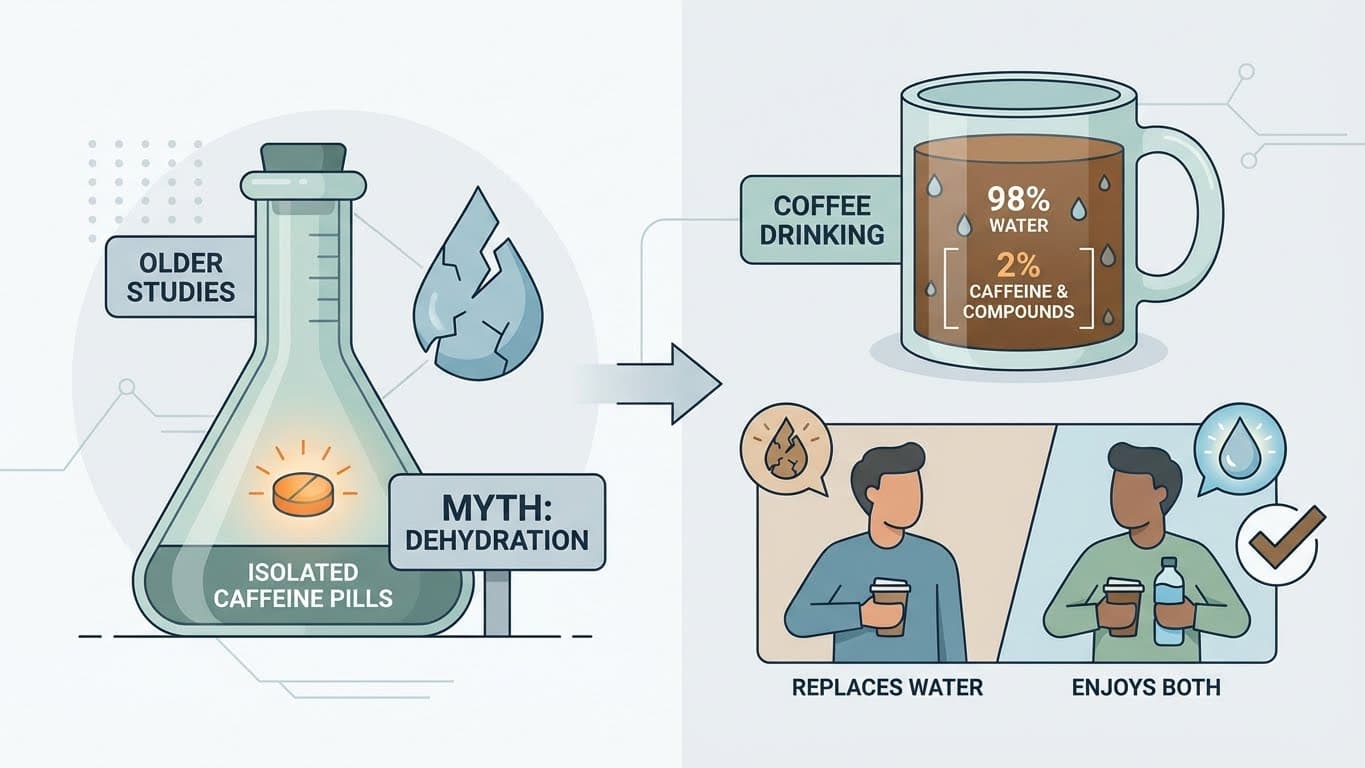
The confusion often stems from older studies that used caffeine in isolation (pills) rather than coffee itself. When you drink coffee, you’re consuming water along with the caffeine. Think of it this way: a standard 8-ounce cup of coffee is still mostly water. In my experience, the people who feel dehydrated after coffee are usually those who replace water entirely with coffee, not those who enjoy both.
Understanding Your Daily Hydration Needs
Before you can balance coffee and water intake effectively, you need to understand how much fluid your body actually needs. The old “8 glasses a day” rule is a decent starting point, but it’s not one-size-fits-all.
Factors That Affect Your Hydration Needs
- Body weight: Larger bodies generally need more fluids
- Activity level: Exercise and physical labor increase fluid requirements
- Climate: Hot or dry environments mean you’ll need to drink more
- Diet: High-sodium or high-protein diets can increase water needs
- Health conditions: Certain medications and illnesses affect hydration
A practical formula I’ve found useful: aim for roughly half your body weight (in pounds) in ounces of fluid daily. So if you weigh 160 pounds, target around 80 ounces of total fluids. This includes water, coffee, tea, and water-rich foods like fruits and vegetables.
Signs You’re Not Drinking Enough Water
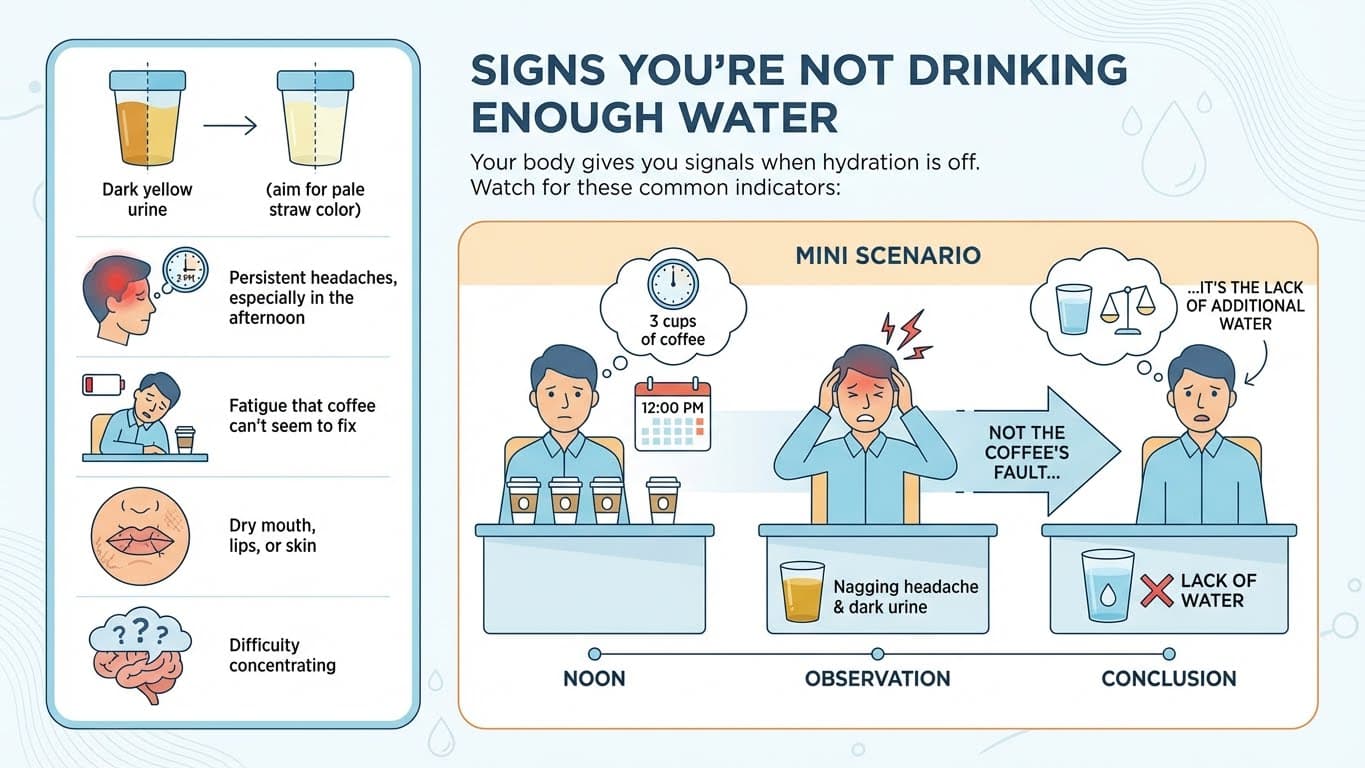
Your body gives you signals when hydration is off. Watch for these common indicators:
- Dark yellow urine (aim for pale straw color)
- Persistent headaches, especially in the afternoon
- Fatigue that coffee can’t seem to fix
- Dry mouth, lips, or skin
- Difficulty concentrating
Here’s a mini scenario: imagine you’ve had three cups of coffee by noon but zero glasses of water. You notice a nagging headache and your urine looks darker than usual. This isn’t the coffee’s fault per se—it’s the lack of additional hydration to complement your coffee habit.
Creating a Balanced Coffee and Water Routine
Now for the practical part. How do you structure your day to enjoy coffee while staying properly hydrated? I’ve tested various approaches over the years, and here’s what works best.
The Morning Routine
Start your day with water before coffee. After 7-8 hours of sleep, your body is naturally dehydrated. I recommend drinking 8-16 ounces of water within the first 30 minutes of waking up. This doesn’t mean delaying your coffee indefinitely—just hydrate first.
Barista Tip: Keep a glass of water on your nightstand. Drink it as soon as you wake up, then head to your coffee station. By the time your brew is ready, you’ve already given your body a head start on hydration.
The 1:1 Rule
For every cup of coffee you drink, aim to consume an equal amount of water at some point during the day. This simple guideline ensures you’re not relying solely on coffee for your fluid intake. It doesn’t have to be immediately after—just keep a mental tally.
| Coffee Cups | Minimum Water Glasses | Total Fluid Goal |
|---|---|---|
| 2 cups | 2 glasses (16 oz) | 32 oz baseline + additional water |
| 3 cups | 3 glasses (24 oz) | 48 oz baseline + additional water |
| 4 cups | 4 glasses (32 oz) | 64 oz baseline + additional water |
Strategic Timing Throughout the Day
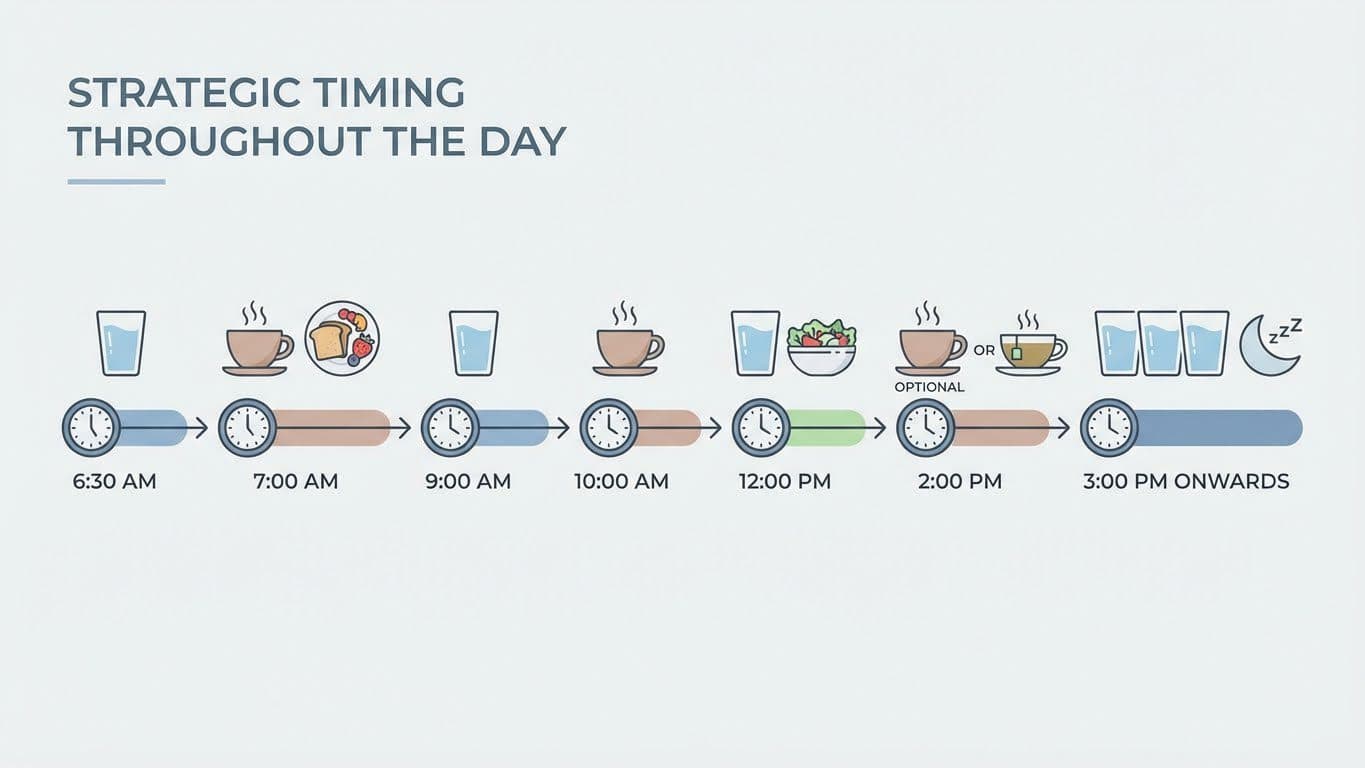
Spreading your coffee and water intake strategically prevents energy crashes and keeps hydration steady. Here’s a sample schedule that has worked well for me:
- 6:30 AM: Glass of water upon waking
- 7:00 AM: First cup of coffee with breakfast
- 9:00 AM: Glass of water
- 10:00 AM: Second cup of coffee (if desired)
- 12:00 PM: Glass of water with lunch
- 2:00 PM: Afternoon coffee (optional) or herbal tea
- 3:00 PM onwards: Focus primarily on water to avoid caffeine affecting sleep
Notice how the afternoon shifts toward water-dominant hydration. This respects your body’s caffeine sensitivity while ensuring you wind down properly for sleep.
Common Mistakes When Balancing Coffee and Water Intake
Even with good intentions, many coffee lovers fall into certain traps. Let’s look at what to avoid.
Mistake #1: Waiting Until You’re Thirsty
Thirst is actually a late indicator of dehydration. By the time you feel thirsty, your body is already somewhat depleted. Instead of waiting for thirst cues, drink water proactively throughout the day. Set reminders on your phone if necessary.
Mistake #2: Counting Only Plain Water
Some people become obsessive about drinking only plain water, ignoring that coffee, tea, and water-rich foods contribute to hydration. While water should be your primary fluid source, don’t stress if you get some hydration from other beverages.
Mistake #3: Overcompensating
On the flip side, some coffee drinkers drink excessive amounts of water, thinking they need to “flush out” the caffeine. This isn’t necessary and can actually dilute electrolytes if taken to extremes. Balance is key—life is too short for bad coffee and for obsessive water tracking.
Mistake #4: Ignoring Individual Tolerance
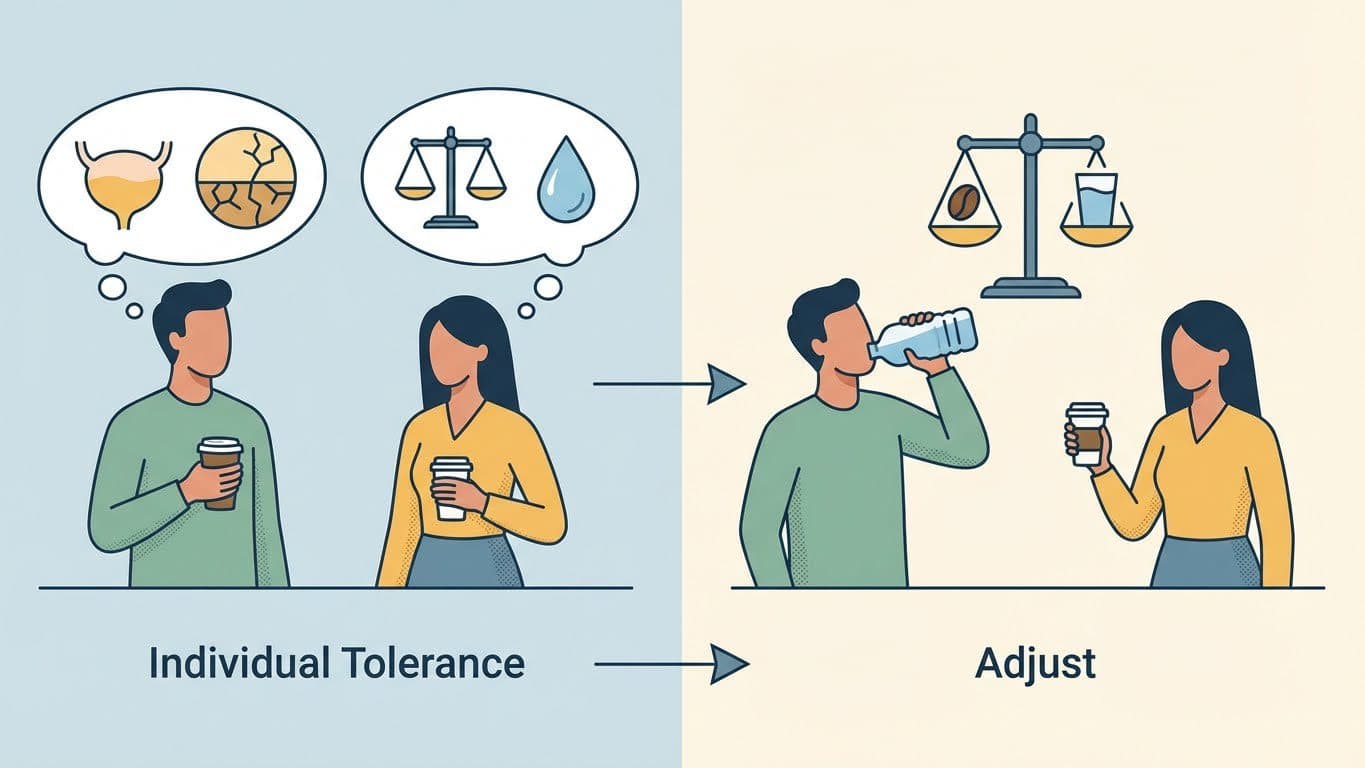
Everyone’s caffeine sensitivity differs. If you notice that coffee seems to make you urinate excessively or leaves you feeling dehydrated, you might be more sensitive to its diuretic effects. Adjust your water intake accordingly, or consider reducing coffee slightly.
Practical Tips for Staying Hydrated as a Coffee Lover
Here are some actionable strategies I’ve found helpful over the years:
- Invest in a quality water bottle: Having water visible and accessible makes you more likely to drink it
- Add flavor if plain water bores you: Lemon slices, cucumber, or mint can make water more appealing
- Eat your water: Watermelon, cucumbers, oranges, and soups contribute to hydration
- Track for a week: Use an app or simple tally to understand your current habits before making changes
- Match environments to beverages: Keep water at your desk, coffee in specific locations to create mental cues
Here’s another realistic scenario: You work from home and find yourself reaching for coffee whenever you pass the kitchen. Try keeping a filled water bottle at your workspace instead. You’ll naturally sip water during work hours and save coffee for intentional breaks.
Frequently Asked Questions
Does coffee count toward my daily water intake?
Yes, coffee contributes to your overall fluid intake. While it’s not as hydrating as plain water due to caffeine’s mild diuretic effect, it still provides significant hydration. Most experts agree that moderate coffee consumption can be counted as part of your daily fluids.
How much coffee is too much for hydration purposes?
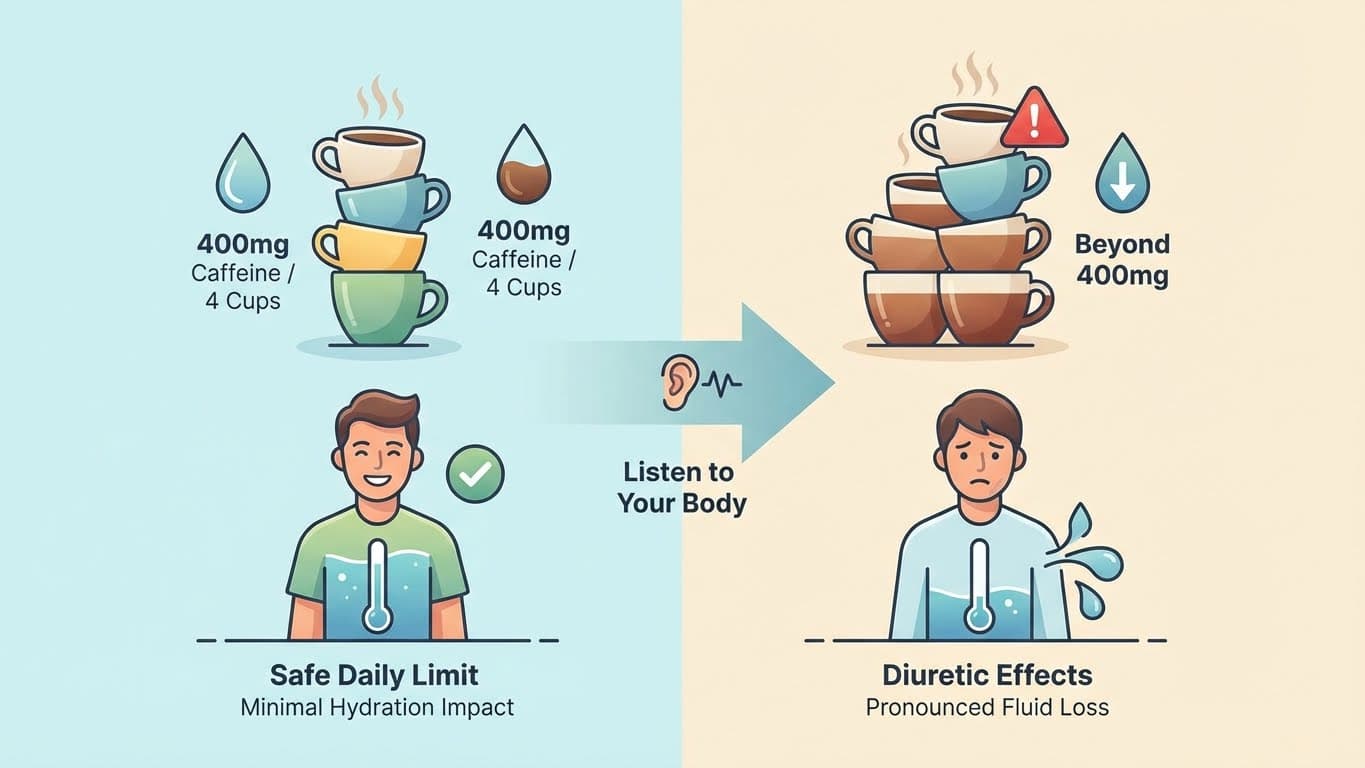
For most healthy adults, up to 400mg of caffeine daily (roughly 4 standard cups of brewed coffee) is considered safe and shouldn’t significantly impact hydration. Beyond this, you might notice more pronounced diuretic effects. Listen to your body and adjust as needed.
Should I drink water immediately after coffee?
It’s not strictly necessary to drink water right after coffee. What matters more is your total fluid intake throughout the day. However, if you find that coffee leaves your mouth feeling dry or you want to cleanse your palate, a glass of water afterward can be refreshing.
Can I drink coffee before a workout?
Coffee before exercise can actually enhance performance for many people. Just ensure you’re also hydrating with water before, during, and after your workout. The combination of coffee’s caffeine boost and proper water intake can support both energy and hydration during physical activity.
Why do I feel dehydrated even when I drink lots of coffee?
If coffee alone isn’t satisfying your hydration needs, it’s likely because your body requires more plain water. Coffee provides fluids, but if you’re sweating, exercising, or in a dry climate, you’ll need additional water. Also, high caffeine intake can increase urination, creating a sensation of dehydration.
Conclusion and Your Next Steps
Balancing coffee and water intake doesn’t require complicated formulas or giving up your daily brew. The key takeaways are simple: start your day with water, follow a rough 1:1 ratio of water to coffee, and pay attention to your body’s signals. Coffee can absolutely be part of a well-hydrated lifestyle.
My recommendation? Start tomorrow by drinking a full glass of water before your first cup of coffee. Notice how you feel throughout the day. Small adjustments compound over time, and within a week, you’ll likely feel more energized and balanced. Here’s to enjoying great coffee and staying hydrated—because you can absolutely have both.



Comments