


Table of Contents
- What Makes Colombian Coffee Taste "Balanced"
- Geography and Altitude: Colombia's Natural Advantage
- Regional Differences Worth Knowing
- Huila
- Nariño
- Cauca
- Processing: Why Washed Coffees Dominate
- Myth vs. Reality
- How to Brew Colombian Coffee for Maximum Balance
- Recommended Parameters
- Troubleshooting Common Issues
- Buying Colombian Coffee: What to Look For
- Key Takeaways
Colombian coffee is the standard for balanced coffee because it delivers what most people actually want in a cup: medium body, clean sweetness, and enough brightness to keep things interesting—without any single note overwhelming the others. It’s the reliable center of the coffee flavor spectrum.
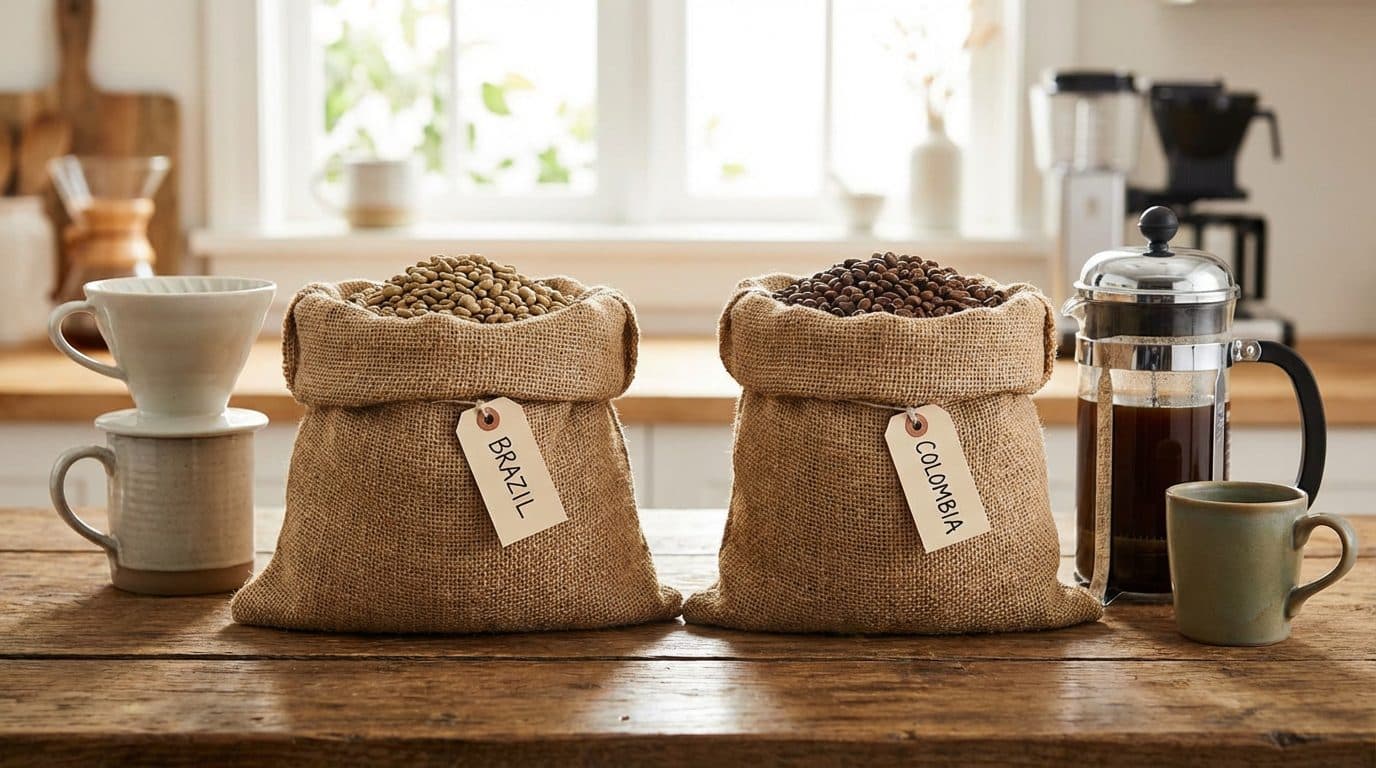
If you want the broader flavor comparison, our full guide to Brazilian vs Colombian coffee shows how the two origins behave in everyday home brewing.
That reputation isn’t accidental. Colombia’s geography, climate, and processing traditions have aligned over generations to produce beans that roasters love to work with and drinkers find approachable. Whether you’re brewing your first pour-over or you’ve been pulling espresso shots for years, understanding why Colombian coffee occupies this sweet spot can help you pick better beans and appreciate what’s actually in your cup.
What Makes Colombian Coffee Taste “Balanced”
Balance in coffee means no single attribute—acidity, sweetness, body, or bitterness—dominates the experience. Colombian beans typically hit that mark with:
- Mild, citrus-like acidity: Bright enough to add liveliness, but not the sharp, wine-like punch you’d find in Kenyan or Ethiopian coffees.
- Medium body: Neither thin and tea-like nor heavy and syrupy. Think smooth, satisfying mouthfeel.
- Caramel and nutty sweetness: A clean sweetness that often leans toward brown sugar, toffee, or toasted almond.
- Subtle fruit notes: Depending on the region, you might catch hints of red apple, stone fruit, or mild berries—but they stay in the background.
This profile makes Colombian coffee incredibly versatile. It works as a single-origin espresso, blends seamlessly with other beans, and tastes great across brewing methods from French press to Chemex.
Geography and Altitude: Colombia’s Natural Advantage
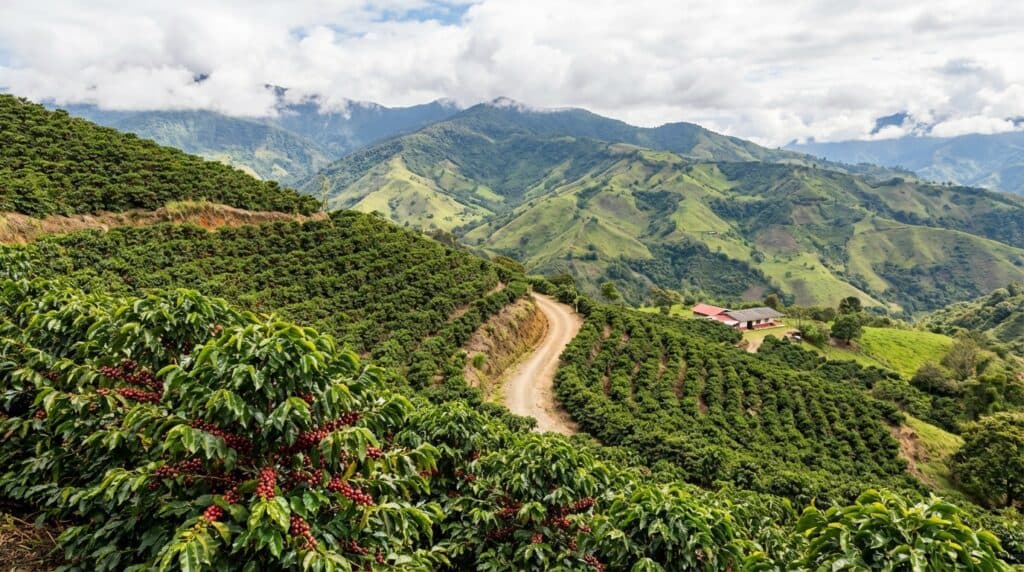
Colombia sits in a coffee-growing sweet spot. The country straddles the equator and is crossed by three Andean mountain ranges, creating microclimates that would make any specialty coffee producer jealous.
Elevation matters enormously. Most Colombian coffee grows between 1,200 and 2,000 meters above sea level—some farms in regions like Nariño push past 2,200 meters. Higher altitude means cooler temperatures, which slows cherry maturation. Slower growth allows sugars and organic acids to develop more complexity before harvest.
Here’s the counter-intuitive part: altitude alone doesn’t guarantee quality. A1,400-meter farm with excellent soil, proper shade, and skilled picking can outperform a poorly managed 2,000-meter plot. Elevation is one ingredient in a larger recipe.
Colombia also benefits from consistent rainfall distributed across two main harvest seasons (April–June and September–December in most regions). This means fresh-crop Colombian coffee reaches roasters almost year-round—a logistical advantage many origins can’t match.
Regional Differences Worth Knowing
Calling all Colombian coffee “the same” is like saying all French wine tastes identical. The country’s 20+ coffee-growing departments produce distinct profiles. Three southern regions have emerged as the new quality triangle:
Huila
Colombia’s largest specialty coffee producer. Expect bright acidity, pronounced fruit notes (often red berries or tropical fruit), and a juicy, complex cup. Huila coffees tend to be the most “interesting” of the three—sometimes edging toward the flavor complexity of East African beans.
Nariño
Extremely high altitudes (many farms above 1,800m) and volcanic soil create coffees with sparkling acidity and floral aromatics. Nariño beans often taste cleaner and more delicate, with citrus and stone fruit notes. If you like brightness without heaviness, start here.
Cauca
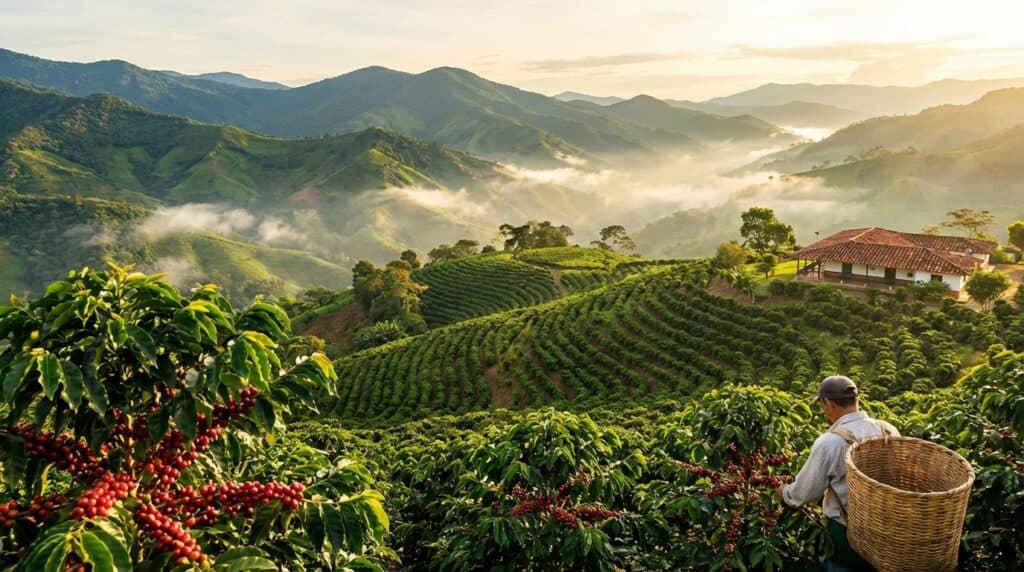
Sits between Huila and Nariño in both geography and flavor. Balanced sweetness, medium acidity, and notes of caramel and milk chocolate. Cauca represents the “classic” Colombian profile most people imagine.
The traditional coffee axis—Caldas, Risaralda, and Quindío—still produces excellent beans with that quintessential smooth, nutty character. These regions pioneered Colombian coffee’s global reputation and remain reliable choices for everyday drinking.
Processing: Why Washed Coffees Dominate
Around 90% of Colombian coffee is washed (wet-processed). This method removes the fruit from the bean before drying, resulting in a cleaner, more consistent cup that highlights the bean’s inherent characteristics rather than adding fermented fruit flavors.
Washed processing contributes directly to that “balanced” reputation. The cup is transparent—what you taste reflects terroir and variety, not processing funk. For roasters building blends or seeking predictable single-origins, this clarity is invaluable.
Barista Tip: If you want to taste the difference processing makes, compare a washed Colombian to a natural-processed Ethiopian side by side. Brew both at15:1 ratio, 93°C water, same grind size. The Colombian will taste “cleaner” and more uniform; the Ethiopian will explode with fruit and fermentation notes. Neither is better—they’re just different tools for different moods.
That said, experimental processing is growing in Colombia. Some producers now offer honey-processed and natural lots, particularly from Huila and Nariño. These fetch premium prices and deliver more fruit-forward, sometimes wine-like profiles. Worth seeking out if you want to explore beyond the classic Colombian taste.
Myth vs. Reality
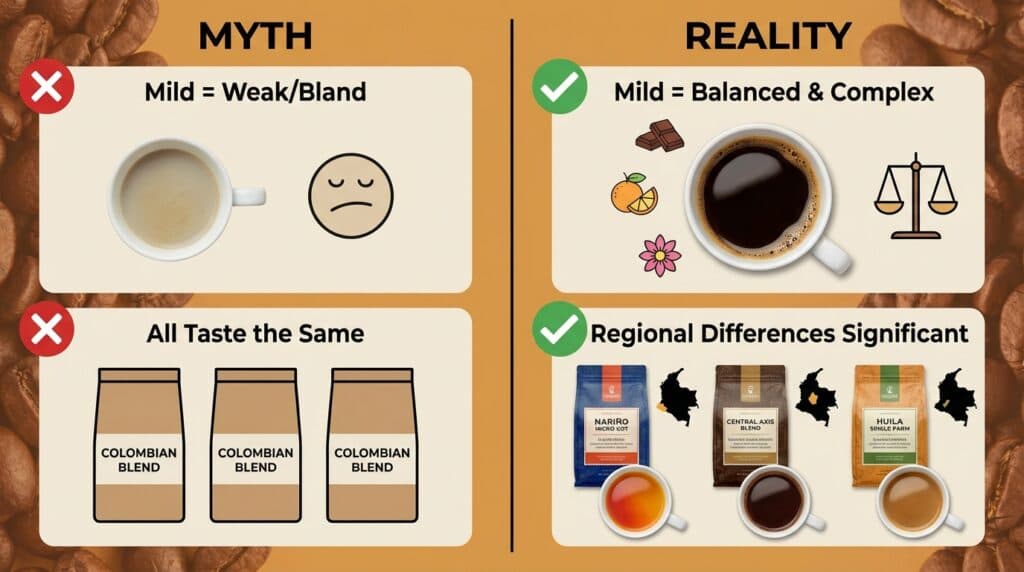
- Myth: Colombian coffee is “mild” because it’s weak or bland.
Reality: “Mild” refers to acidity and balance, not intensity. A properly extracted Colombian can be just as flavorful and complex as any origin—it simply won’t assault your palate with aggressive sourness or bitterness. - Myth: All Colombian coffee tastes the same.
Reality: Regional differences are significant. A Nariño micro-lot tastes nothing like a commercial blend from the central axis. Seek single-origin, single-farm lots to experience the diversity. - Myth: “100% Colombian” on a bag guarantees quality.
Reality: That label only confirms origin, not grade. Commercial Colombian coffee can include lower-quality beans mixed together. Look for specific region names, farm names, or SCA scores above 80 for specialty-grade assurance. - Myth: Darker roasts hide bad beans.
Reality: Dark roasting does mask origin character, but Colombian beans work across the roast spectrum. Medium roasts (City to Full City) typically showcase the balance best; light roasts emphasize acidity and fruit; dark roasts push toward chocolate and caramel with reduced brightness.
How to Brew Colombian Coffee for Maximum Balance
Colombian beans are forgiving, but a few adjustments help you hit that sweet spot:
Recommended Parameters
| Variable | Guideline |
|---|---|
| Water Temperature | 92°C–96°C (lighter roasts toward 96°C) |
| Ratio (Pour-Over) | 1:15 to 1:17(start at 1:16) |
| Ratio (Immersion) | 1:14 to 1:16 |
| Grind Size | Medium (table salt texture for pour-over) |
| Total Brew Time | 2:30–3:30 for 300ml pour-over |
Troubleshooting Common Issues

Symptom: Flat, boring cup lacking sweetness.
Cause: Under-extraction (grind too coarse, water too cool, brew time too short).
Fix: Grind finer by 1–2 clicks, increase water temperature to 94°C, extend brew time by 15–20 seconds.
Symptom: Overly sour, sharp acidity.
Cause: Under-extraction or water temperature too low.
Fix: Same adjustments as above. Colombian coffee shouldn’t taste aggressively sour when properly extracted.
Symptom: Bitter, ashy finish.
Cause: Over-extraction (grind too fine, water too hot, brew time too long).
Fix: Coarsen grind by 1–2 clicks, drop water to 92°C, shorten contact time.
Buying Colombian Coffee: What to Look For
Not all bags labeled “Colombian” deliver the same experience. Here’s how to shop smarter:
- Region specificity: “Huila” or “Nariño” beats generic “Colombian.” Farm or cooperative names are even better.
- Roast date: Buy beans roasted within the past 2–4 weeks. Freshness matters more than almost any other factor.
- Process listed: “Washed” is standard; “honey” or “natural” signals something different (and often pricier).
- Variety information: Caturra, Castillo, Colombia, and Typica are common. Pink Bourbon and Gesha command premiums and deliver unique profiles.
- Altitude noted: Farms above 1,600m generally produce more complex cups. Not a guarantee, but a useful signal.
Key Takeaways
- Colombian coffee’s “balanced” reputation comes from mild acidity, medium body, and clean sweetness—not from being weak or boring.
- Geography matters: high altitudes, consistent rainfall, and volcanic soils create ideal growing conditions.
- Regions differ significantly. Huila offers fruit and complexity; Nariño brings brightness and florals; Cauca delivers classic smoothness.
- Washed processing dominates, producing clean, transparent cups that showcase terroir.
- Look for specific region names, roast dates, and altitude information when buying to ensure quality.
- Brew at 92°C–96°C with a1:15–1:17 ratio to extract that signature balance.
Tomorrow morning, grab a bag from Huila or Nariño if you can find one. Brew it at 94°C,1:16 ratio, medium grind. Taste it black before adding anything. That clean sweetness, gentle brightness, and smooth finish? That’s why Colombian coffee became the global benchmark—and why it’s still worth your attention.
If you want the broader flavor comparison, our full guide to Brazilian vs Colombian coffee shows how the two origins behave in everyday home brewing.


Comments