


Table of Contents
- What Is Anaerobic Fermentation in Coffee?
- How It Differs from Traditional Processing
- The Science Behind Anaerobic Fermentation
- What Happens Inside the Tank
- Time and Temperature Control
- Why Anaerobic Fermentation Creates Such Wild Flavors
- The Funk Factor
- Real-World Example
- Variations of Anaerobic Processing
- Anaerobic Washed vs. Anaerobic Natural
- Carbonic Maceration
- Extended Fermentation and Additions
- How to Brew Anaerobic Fermented Coffee at Home
- Barista Tips for Brewing
- Sample Brewing Recipe for Pour-Over
- Is Anaerobic Fermentation Worth the Hype?
- Who Is This For?
- Who Is This NOT For?
- Frequently Asked Questions
- Does anaerobic fermentation make coffee more caffeinated?
- Why is anaerobic coffee so expensive?
- Is anaerobic coffee safe to drink?
- Can I taste the difference between anaerobic and regular coffee?
- Does all anaerobic coffee taste funky?
- Summary and Your Next Step
Have you ever tasted a coffee that reminded you of tropical fruit, red wine, or even bubbly champagne? If so, you might have experienced the magic of anaerobic fermentation. This processing method has taken the specialty coffee world by storm, creating flavor profiles that were unimaginable just a decade ago. But what exactly is anaerobic fermentation, and why are roasters and baristas everywhere buzzing about it?
In this guide, I’ll walk you through everything you need to know about this funky coffee trend. You’ll discover how it works, why it produces such wild flavors, and whether it’s worth seeking out for your home brewing adventures. Trust me—once you understand anaerobic fermentation, you’ll never look at your morning cup the same way again.
What Is Anaerobic Fermentation in Coffee?
Let’s start with the basics. Anaerobic fermentation is a coffee processing method where coffee cherries or beans ferment in a sealed, oxygen-free environment. The word “anaerobic” literally means “without oxygen.” This is the opposite of traditional fermentation methods, which typically occur in open tanks or patios exposed to air.
During this process, producers place coffee cherries or depulped beans into airtight containers—often stainless steel tanks or sealed plastic barrels. As the coffee ferments without oxygen, specific bacteria and yeasts thrive, breaking down sugars and creating unique organic compounds. These compounds directly influence the final flavor of your cup.
How It Differs from Traditional Processing
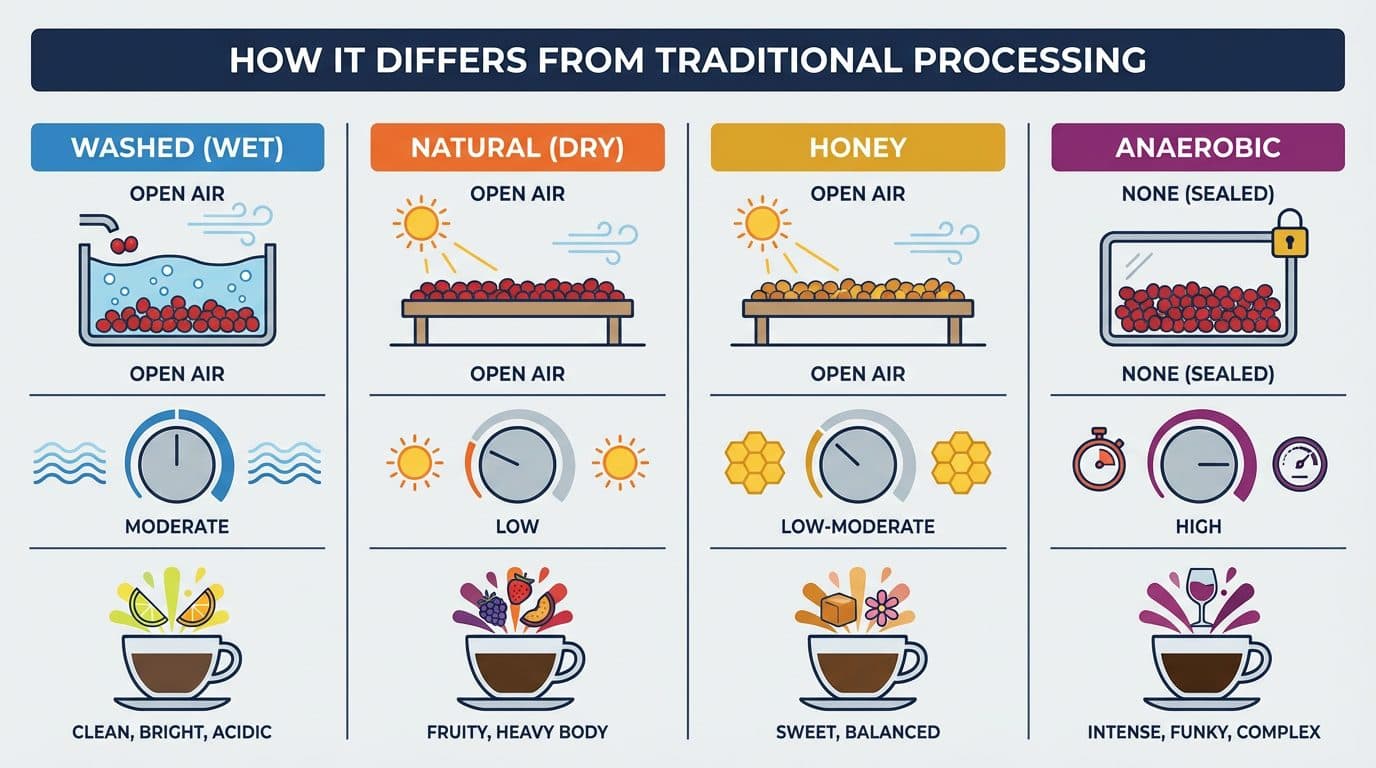
Washed, natural, and honey describe when fruit is removed and how the coffee is dried; fermentation conditions can vary within each family. Read the washed vs natural vs honey coffee comparison for the full foundation. Here’s a simplified comparison with anaerobic processing:
| Processing Method | Oxygen Exposure | Fermentation Control | Typical Flavor Profile |
|---|---|---|---|
| Washed (Wet) | Open air | Moderate | Clean, bright, acidic |
| Natural (Dry) | Open air | Low | Fruity, heavy body |
| Honey | Open air | Low-Moderate | Sweet, balanced |
| Anaerobic | None (sealed) | High | Intense, funky, complex |
The sealed environment of anaerobic fermentation allows producers to control variables like temperature, pH levels, and fermentation time with incredible precision. This control is what creates those distinctive, sometimes polarizing flavor notes.
The Science Behind Anaerobic Fermentation
I’ll admit, the science here is genuinely fascinating. When you remove oxygen from the fermentation equation, you fundamentally change which microorganisms can survive and work their magic on the coffee.
What Happens Inside the Tank
In an oxygen-free environment, anaerobic bacteria (rather than aerobic bacteria) become the primary actors. These bacteria produce different byproducts than their oxygen-loving counterparts. Specifically, they create:
- Lactic acid – contributes to a creamy, yogurt-like mouthfeel
- Acetic acid – adds winey, vinegar-like notes when controlled
- Esters – responsible for fruity and floral aromas
- Alcohols – create complex, boozy undertones
Producers often use one-way valves on their fermentation tanks. These valves allow carbon dioxide (produced during fermentation) to escape without letting oxygen back in. Think of it like a coffee-specific airlock. Some producers even inject additional carbon dioxide to ensure a completely oxygen-free environment.
Time and Temperature Control
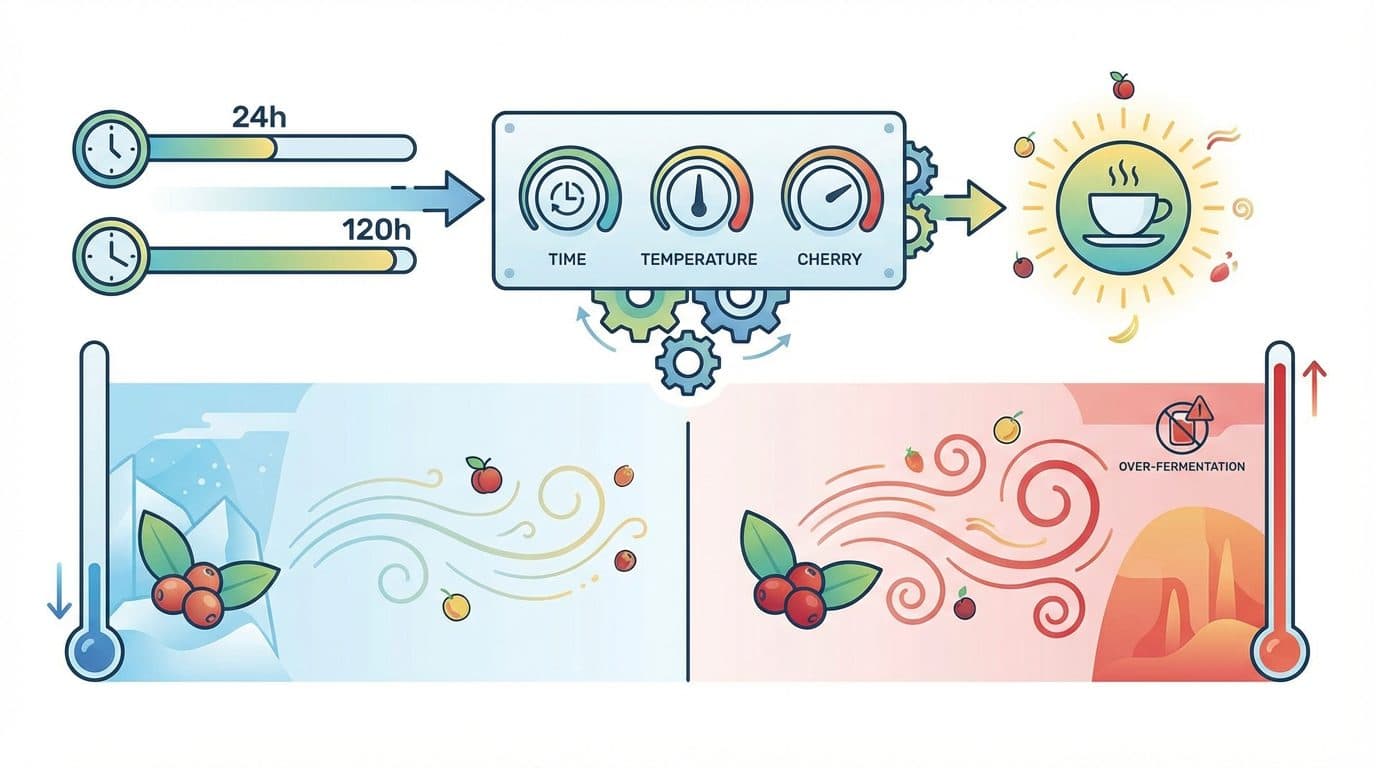
Anaerobic fermentation typically lasts anywhere from 24 to 120 hours, depending on the desired flavor outcome. Temperature plays a huge role too. Lower temperatures slow down fermentation, creating more delicate flavor compounds. Higher temperatures speed things up but can lead to over-fermentation if not carefully monitored.
In my experience, the coffees that really shine are those where producers have dialed in their specific recipe—balancing time, temperature, and even the cherry selection itself. It’s part art, part science, and a lot of careful experimentation.
Why Anaerobic Fermentation Creates Such Wild Flavors
Here’s where things get really interesting for us home baristas. Anaerobic fermentation can produce flavor notes that seem almost impossible for coffee. I’m talking tasting notes like strawberry jam, banana candy, cinnamon rolls, tropical cocktails, and even blue cheese.
The Funk Factor
That “funky” descriptor you often see isn’t random. The specific bacteria that thrive without oxygen produce compounds that can taste unusual, bold, and sometimes challenging to traditional coffee palates. Some people absolutely love it. Others find it overwhelming or artificial-tasting.
For example, imagine brewing a cup and tasting distinct notes of passion fruit and jasmine with a champagne-like effervescence. That’s anaerobic fermentation at its best. Now imagine those same processes going slightly wrong—you might get unpleasant vinegar notes or an overly boozy, almost off-putting flavor. The margin for error is slim.
Real-World Example
A Colombian producer I’ve followed for years started experimenting with anaerobic natural processing on his Gesha variety. His first batches were inconsistent—some tasted incredible with candy-like sweetness, while others had an unpleasant fermented tang. After two years of refining his process (adjusting fermentation time from 72 to 96 hours and lowering tank temperatures), he’s now producing some of the most sought-after lots in specialty coffee auctions.
This is why anaerobic coffees often command premium prices. The expertise, equipment, and risk involved are significant.
Variations of Anaerobic Processing
Not all anaerobic fermentation is the same. Producers continue to innovate, creating subcategories and hybrid methods that push flavor boundaries even further.
Anaerobic Washed vs. Anaerobic Natural
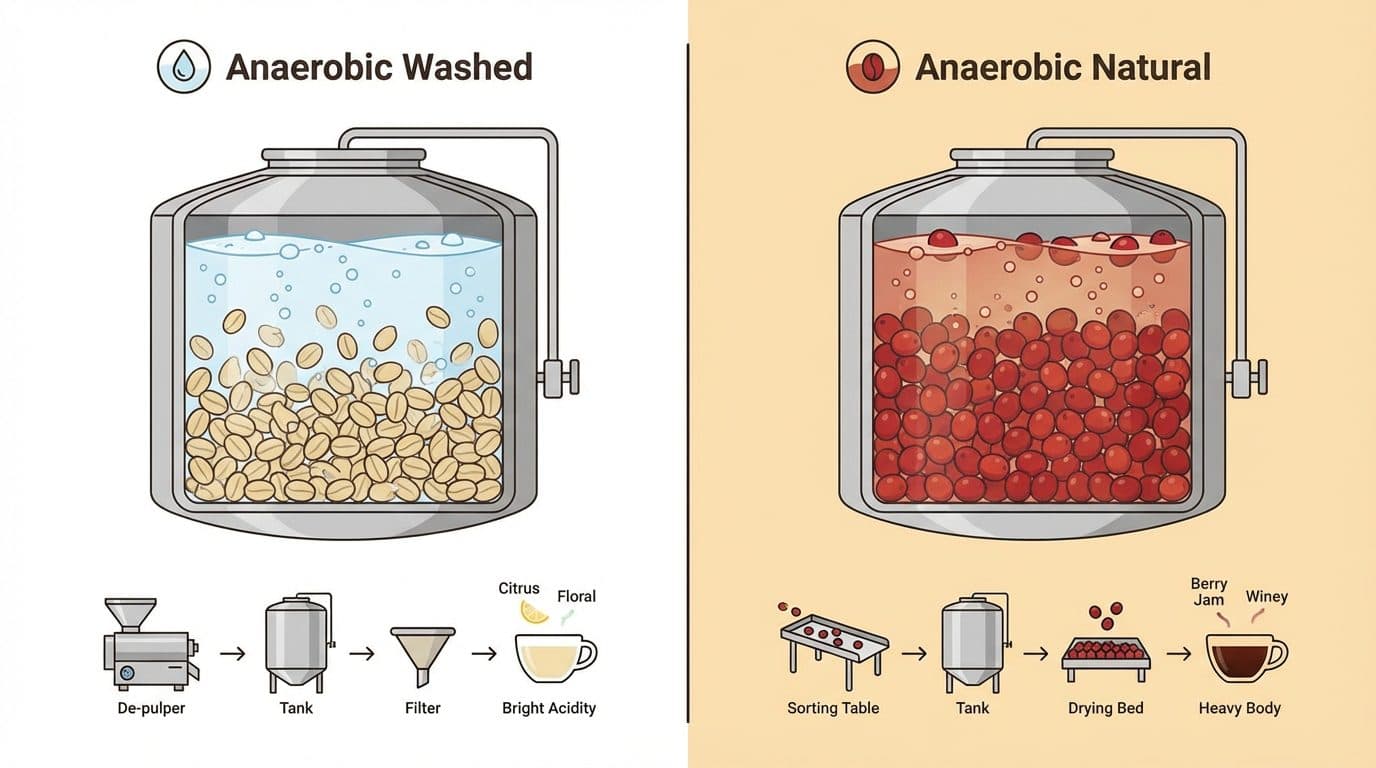
- Anaerobic Washed: Cherries are depulped first, then the beans ferment anaerobically in their mucilage. This tends to produce cleaner, more nuanced flavors with heightened acidity.
- Anaerobic Natural: Whole cherries ferment intact in sealed tanks. Expect heavier body, intense fruitiness, and more pronounced fermentation character.
Carbonic Maceration
Borrowed directly from winemaking (specifically Beaujolais-style wines), carbonic maceration involves placing whole cherries in tanks filled with carbon dioxide. This technique creates intracellular fermentation—the coffee essentially ferments from the inside out. The result? Incredibly bright, juicy coffees with candy-like sweetness.
Extended Fermentation and Additions
Some producers are adding ingredients to their fermentation tanks—things like fruit juices, spices, or even yeast strains used in beer and wine production. This practice is controversial. Purists argue it crosses the line from processing into flavoring. Others see it as exciting innovation.
To sum up: if you see “anaerobic” on a coffee bag, it’s worth asking (or researching) which specific method was used. The differences in the cup are substantial.
How to Brew Anaerobic Fermented Coffee at Home
Now for the practical stuff. You’ve got a bag of funky, experimental anaerobic coffee. How do you make the most of it?
Barista Tips for Brewing
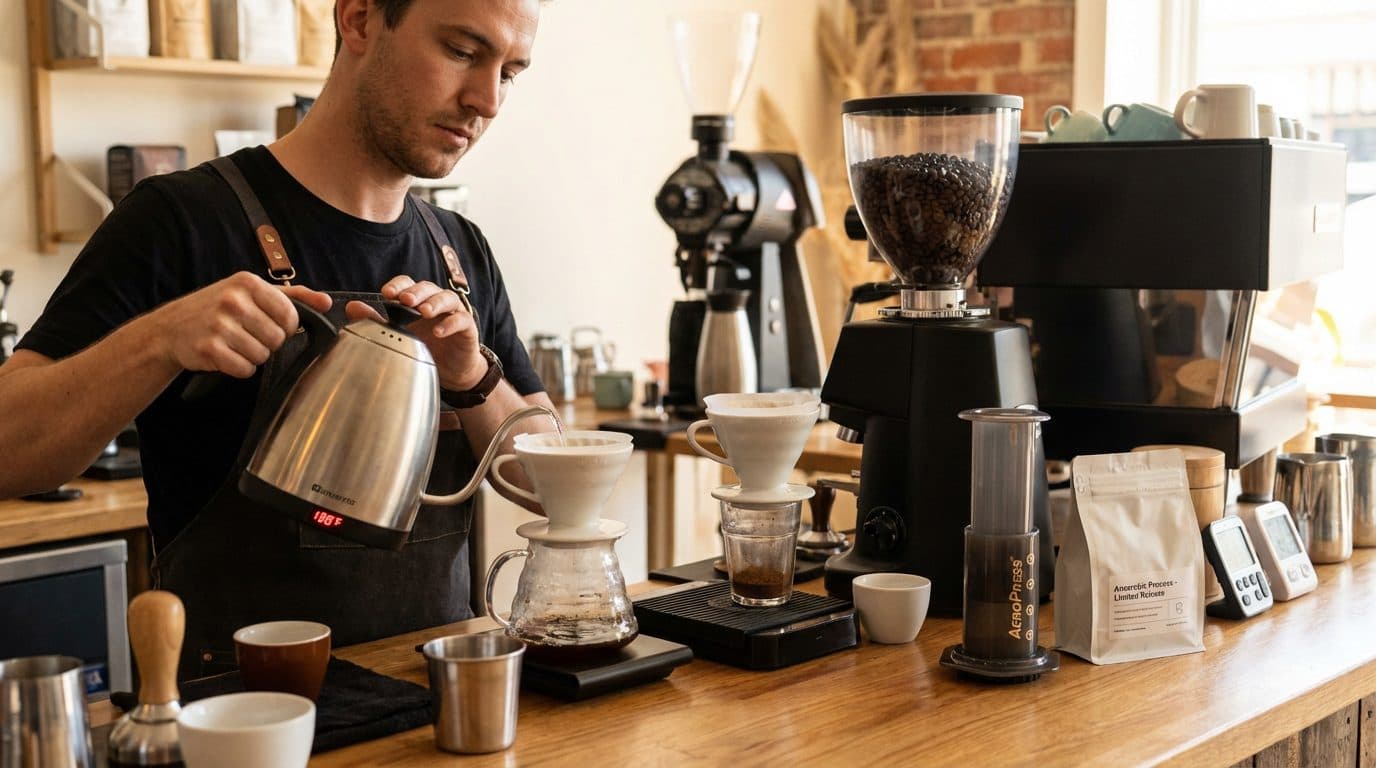
Tip: Anaerobic coffees often benefit from slightly cooler water temperatures (around 195-200°F instead of boiling) to avoid amplifying any harsh or overly intense notes.
- Grind fresh: These coffees have volatile aromatics that dissipate quickly. Grind right before brewing.
- Try multiple methods: I’ve found that pour-over methods (like V60 or Kalita Wave) highlight the unique flavor notes best. But a clean AeroPress brew can also be excellent.
- Start with the roaster’s recommendations: If the bag has a suggested recipe, use it as your starting point. These coffees can behave unpredictably.
- Let it cool: Many anaerobic coffees reveal their most interesting flavors as they cool down. Don’t rush your drinking experience.
Sample Brewing Recipe for Pour-Over
What You’ll Need:
- 18g of anaerobic fermented coffee (medium-fine grind)
- 300ml filtered water at 200°F (93°C)
- V60 or similar pour-over dripper
- Paper filter (rinsed)
- Scale and timer
Pour in a slow, circular motion. Aim for a total brew time of 2:30 to 3:00. Taste, adjust your grind finer or coarser, and experiment from there.
Is Anaerobic Fermentation Worth the Hype?
This is the question I get asked most often. And honestly, my answer is: it depends on what you’re looking for.
Who Is This For?
- Adventurous coffee drinkers who enjoy exploring unusual flavors
- Specialty coffee enthusiasts seeking new experiences
- Anyone curious about the wine-like complexity coffee can achieve
- Home baristas who want a “wow factor” coffee for guests
Who Is This NOT For?
- Folks who prefer classic, straightforward coffee flavor
- Those sensitive to acidity or unusual tastes
- Budget-conscious buyers (these coffees aren’t cheap)
- Anyone who wants consistency over experimentation
Life is too short for bad coffee—but it’s also too short to drink only one type. Anaerobic fermentation represents the experimental edge of specialty coffee, and trying it at least once is worth the experience.
Frequently Asked Questions
Does anaerobic fermentation make coffee more caffeinated?
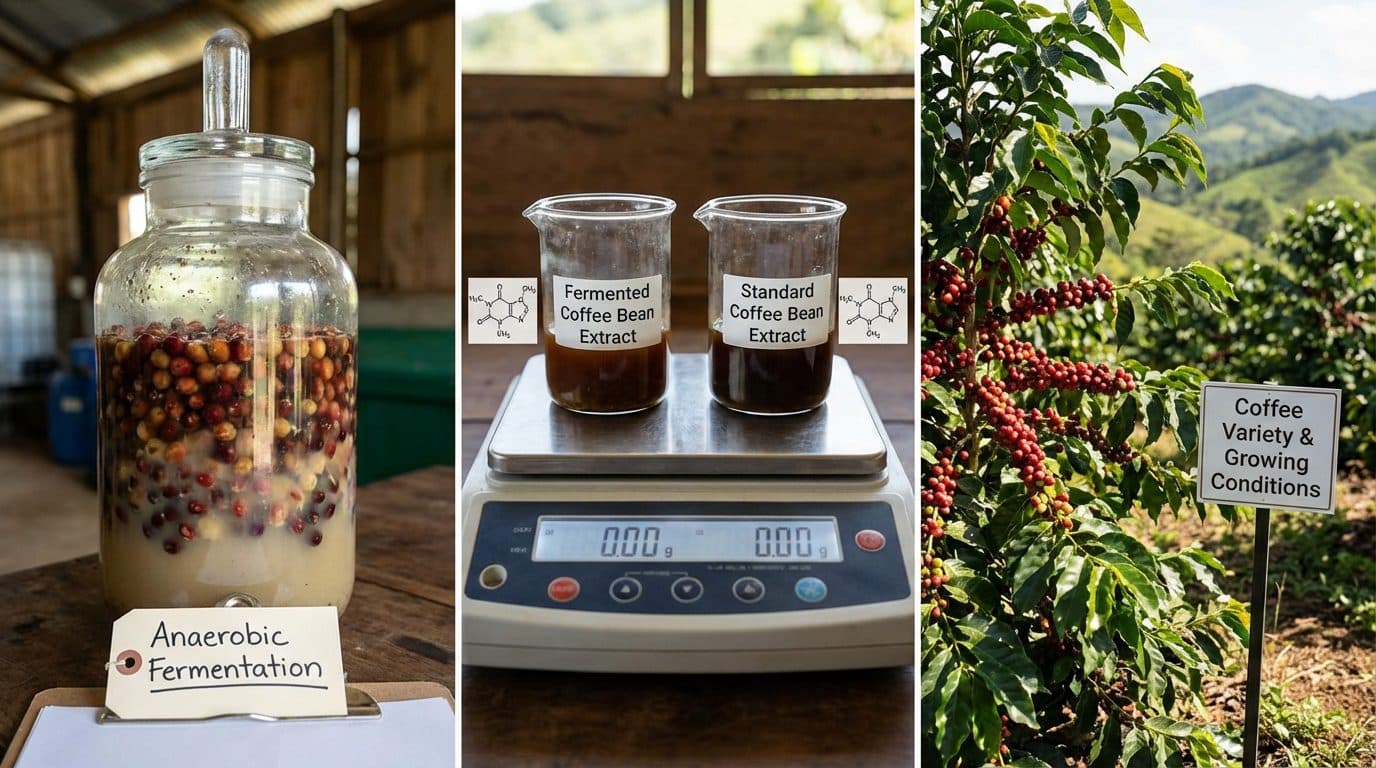
No, the fermentation process doesn’t affect caffeine content. Caffeine levels are determined by the coffee variety and growing conditions, not by how the beans are processed after harvesting.
Why is anaerobic coffee so expensive?
The process requires specialized equipment, careful monitoring, and significant expertise. There’s also higher risk—a batch that over-ferments becomes unsellable. These factors, combined with lower production volumes, drive up prices.
Is anaerobic coffee safe to drink?
Absolutely. The fermentation is carefully controlled, and the beans are dried and roasted after processing. Any bacteria involved in fermentation don’t survive the roasting process. It’s just as safe as any other coffee.
Can I taste the difference between anaerobic and regular coffee?
Most people can, especially when tasting side by side. Anaerobic coffees tend to have more intense, fruit-forward, and sometimes unusual flavor profiles compared to traditionally processed beans.
Does all anaerobic coffee taste funky?
Not necessarily. “Funky” is one end of the spectrum. Well-executed anaerobic fermentation can produce coffees that are bright, sweet, and complex without being challenging or off-putting. It all depends on the producer’s skill.
Summary and Your Next Step
Anaerobic fermentation represents one of the most exciting developments in coffee processing over the past decade. By removing oxygen from the fermentation environment, producers unlock flavor possibilities that range from tropical fruit explosions to creamy, wine-like complexity. It’s not for everyone, but for curious coffee lovers, it opens up an entirely new world of tasting experiences.
If you’re intrigued, I’d encourage you to seek out a well-reviewed anaerobic lot from a reputable roaster. Start with a smaller bag, brew it carefully with the tips I’ve shared, and pay attention to how the flavors evolve as your cup cools. You might just discover a new favorite—or at least gain a deeper appreciation for how much craft and science goes into every cup.

Comments