



Table of Contents
- Quick Verdict: The Sensible Coffee Pattern
- What Large Studies Are Finding
- The UK Biobank Study
- EPIC and Other European Cohorts
- Harvard Long-Term Cohorts
- Coffee Habits That Fit a Longevity Routine
- Protect Your Sleep First
- Keep Added Sugar Low
- Consider Filtered Coffee if Cholesterol Is a Concern
- Do Not Use Coffee to Cover Basic Gaps
- Keep the Serving Size Honest
- Special Considerations for Sensitive Drinkers
- Low-Acid Coffee Options
- Decaf and Longevity
- Who Should Be More Cautious
- Frequently Asked Questions
- Is drinking coffee every day good for longevity?
- Does the time of day matter?
- Is decaf as beneficial as regular coffee?
- Can too much coffee be harmful?
- Does bean type affect longevity benefits?
- Building Your Longevity Coffee Routine
Can coffee help you live longer? That question gets exaggerated easily. Coffee is not a longevity treatment, and no study can prove that one morning habit adds years to your life on its own. What large studies do suggest is more modest and more useful: people who drink coffee moderately often have lower rates of early death than people who do not drink coffee, even after researchers adjust for many lifestyle factors.
The best coffee habits for longevity are not glamorous. They are mostly about moderation, sleep protection, less sugar, and choosing a brewing style that fits your health profile. If you already enjoy coffee, the evidence is reassuring. If you dislike it or cannot tolerate it, there is no good reason to force it.
Quick Verdict: The Sensible Coffee Pattern
Across many large observational studies, an associated lower-risk range often sits around 2 to 4 cups per day. Some analyses find favorable patterns at slightly higher intake too, but that does not mean more is always better. The important caveat is that these are associations, not proof that coffee itself caused the lower risk.
A practical routine looks like this: drink an amount you tolerate well, avoid turning every cup into dessert, stop caffeine early enough to protect sleep, and choose filtered coffee if cholesterol is a concern. Also remember that a study “cup” may be smaller than your favorite 12 to 16 oz mug or a strong cold brew concentrate. That is less exciting than a miracle claim, but it is much closer to what the evidence can support.
What Large Studies Are Finding
The research base is large, but it is mostly observational. Researchers follow people for years, compare coffee habits with health outcomes, and adjust for factors like smoking, age, diet, and exercise. This can reveal patterns, but it cannot fully remove every difference between coffee drinkers and non-drinkers.
The UK Biobank Study
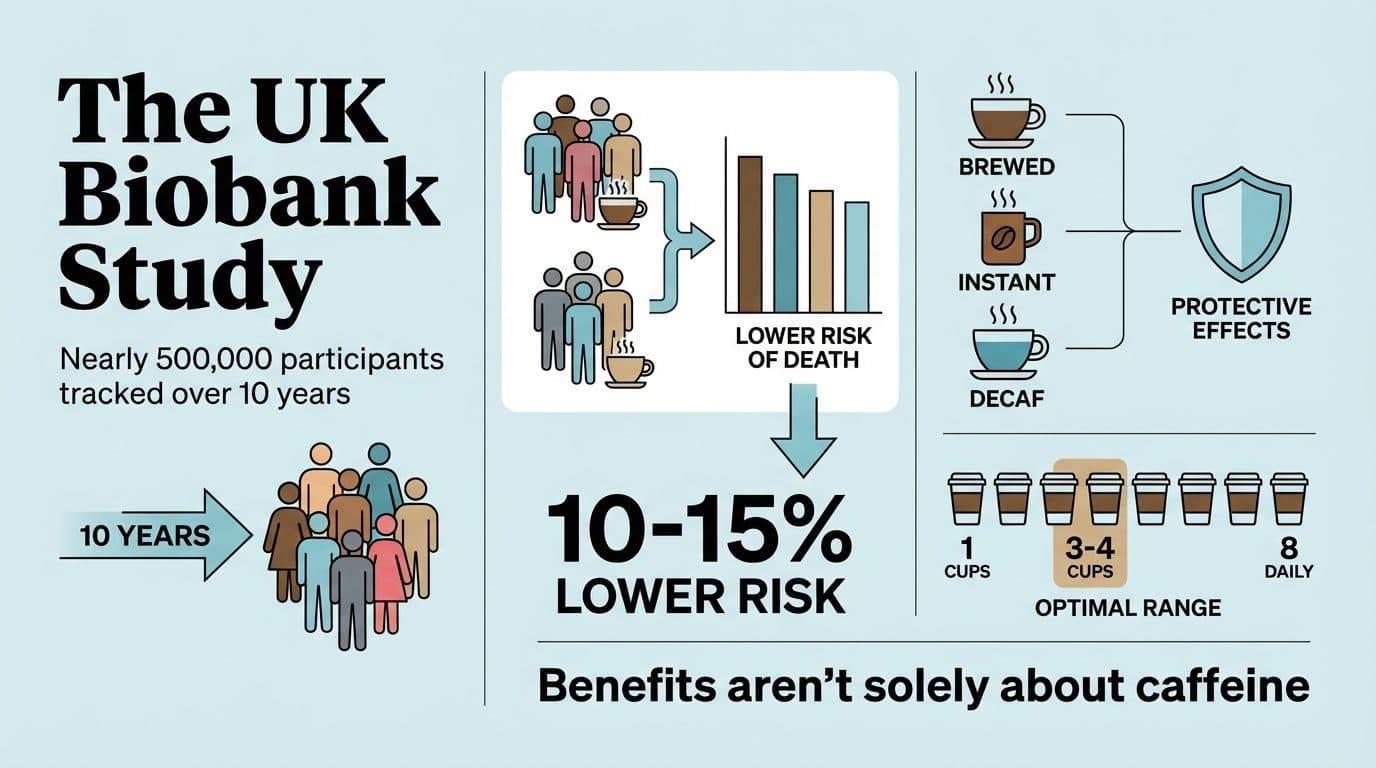
UK Biobank research has followed hundreds of thousands of adults and found that moderate coffee drinkers tend to have lower mortality risk than non-drinkers. One interesting point is that similar patterns appear for ground, instant, and decaf coffee in some analyses. That suggests caffeine is probably not the whole story.
Coffee contains many bioactive compounds, including polyphenols and other antioxidants. These may help explain why decaf can show similar associations. Still, the study design cannot prove that coffee alone caused the difference.
EPIC and Other European Cohorts
The European Prospective Investigation into Cancer and Nutrition, often called EPIC, followed more than half a million people across Europe. Higher coffee intake was associated with lower risk of death from some causes, including digestive and circulatory diseases, though the size of the association varied by group.
Harvard Long-Term Cohorts
Long-running Harvard cohorts, including the Nurses’ Health Study and Health Professionals Follow-Up Study, have also linked moderate coffee intake with lower mortality risk in published analyses such as this Circulation paper on coffee consumption and mortality. Again, both caffeinated and decaffeinated coffee have looked favorable in several analyses.
| Research source | Scale | General pattern | Important caution |
|---|---|---|---|
| UK Biobank | Hundreds of thousands of adults | Moderate drinkers often show lower mortality risk | Observational data, not proof of cause |
| EPIC | More than 500,000 participants | Associations with lower death from some disease categories | Results vary by population and confounders |
| Harvard cohorts | More than 200,000 participants across long follow-up | Caffeinated and decaf coffee both look favorable in several analyses | Lifestyle differences may still play a role |
Coffee Habits That Fit a Longevity Routine
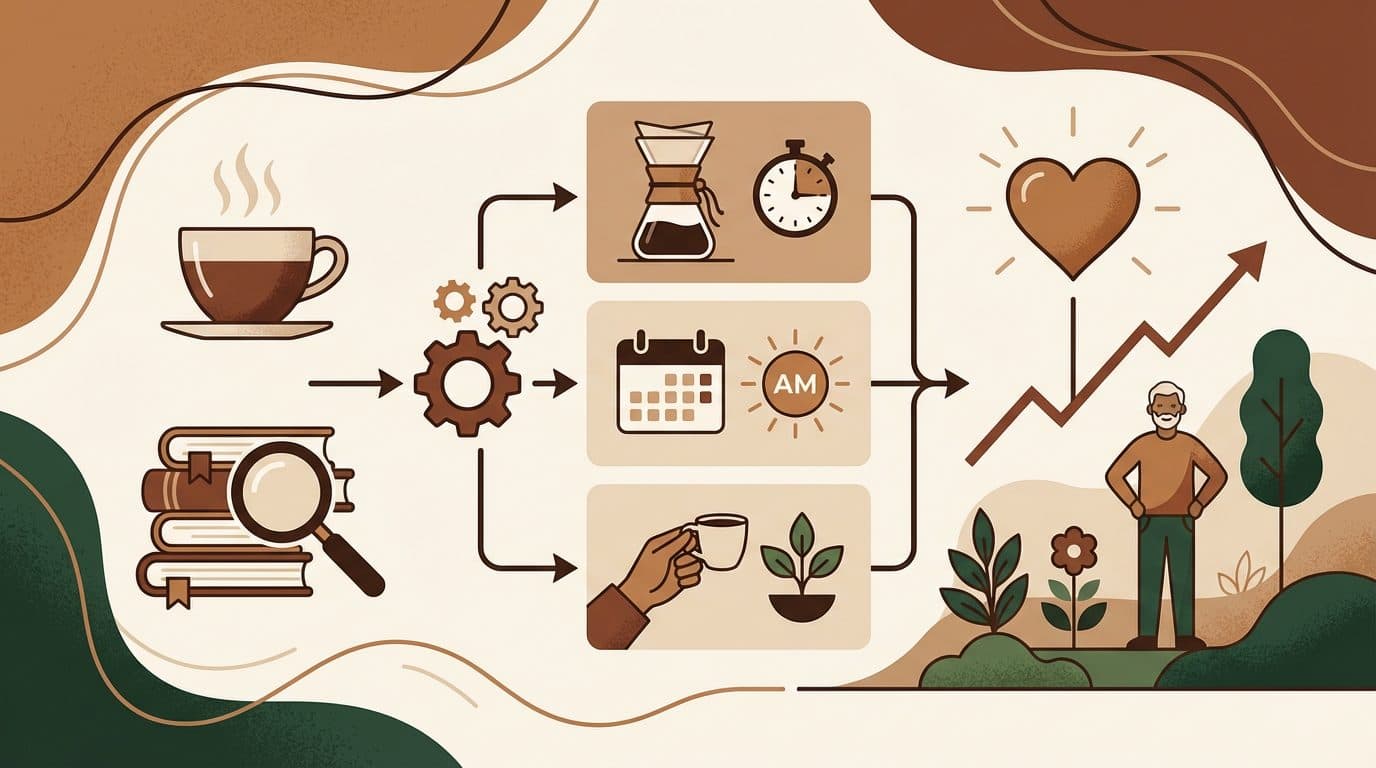
If you want coffee to sit comfortably inside a health-focused life, focus on the habits around the cup. The coffee itself is only one part of the routine.
Protect Your Sleep First
Sleep is more clearly tied to long-term health than any specific coffee habit. Caffeine can remain active for hours, so a late cup may hurt sleep even when you do not feel obviously wired.
- Set a caffeine cutoff, commonly around noon to 2 p.m.
- Move afternoon cups to decaf if you enjoy the ritual.
- Watch sleep quality, not just bedtime.
- If anxiety or palpitations show up, reduce the dose rather than pushing through.
If coffee improves your morning but steals your night, it is not helping your longevity routine.
Keep Added Sugar Low
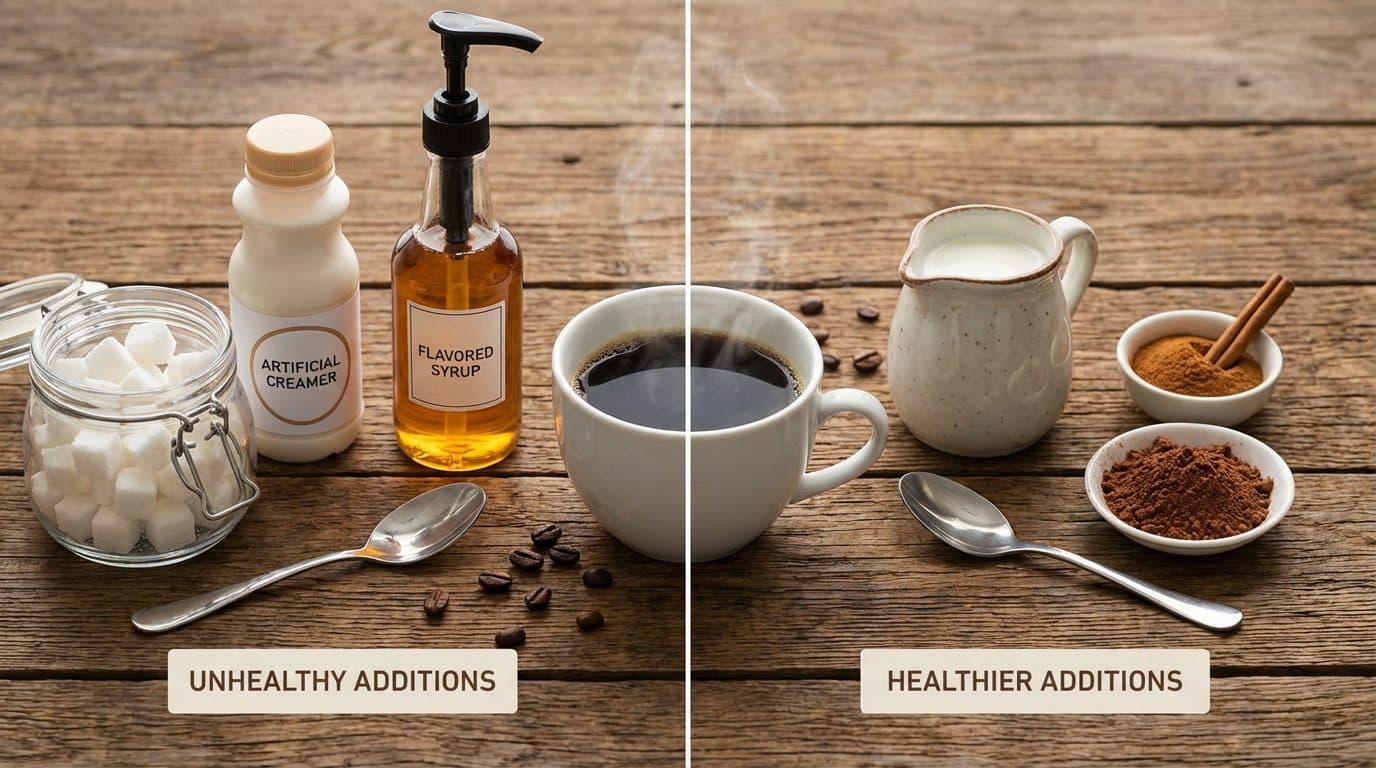
The strongest coffee findings generally do not apply to sugar-heavy dessert drinks. A daily coffee with several pumps of syrup and whipped cream is nutritionally different from coffee with a splash of milk.
- Milk or cream: Fine for many people in modest amounts.
- Cinnamon: Adds sweetness perception without much sugar.
- Sweetener: If you use it, measure it. Guessing usually means more.
- Flavored creamers: Check the label; small servings can add up quickly.
A good transition is to reduce sugar by about 25 percent each week. Your palate usually adjusts faster than you expect, especially if the coffee itself is fresh and well brewed.
Consider Filtered Coffee if Cholesterol Is a Concern
Unfiltered coffee, including French press, Turkish coffee, and some espresso-heavy routines, contains more cafestol and kahweol. These compounds can raise LDL cholesterol in some people. Paper filters remove much of them while keeping plenty of coffee flavor.
This does not mean French press is “bad.” It means filtered drip or pour-over may be a better default if you already have high LDL cholesterol or your clinician has asked you to watch it. If your numbers are normal, you may simply want to monitor them during routine care.
Do Not Use Coffee to Cover Basic Gaps
One of the least helpful interpretations of the research is, “I can sleep less, move less, eat poorly, and make up for it with coffee.” The studies do not support that. Coffee drinkers who do well over time may also have other patterns working in their favor, even when researchers try to adjust for obvious differences.
A better question is whether coffee supports a routine that is already moving in the right direction. A morning cup after decent sleep, breakfast, and a short walk is very different from five rushed coffees used to push through chronic exhaustion. If your coffee habit is mostly compensating for burnout, the longevity move is probably not another brew method. It is fixing the underlying schedule.
Keep the Serving Size Honest
Study “cups” are often smaller than the mugs people use at home. A 12 to 16 oz mug can easily count as more than one cup, and cold brew concentrate can make the math even fuzzier. For one week, measure your usual coffee once: how many tablespoons of grounds, how much water, how much concentrate, and how many refills. You do not need perfect lab numbers. You just need a realistic sense of whether your “two cups” is actually closer to four.
This is also where decaf can be useful. If you love the ritual but your total caffeine is creeping upward, make the later cups decaf and keep the first cup caffeinated. That preserves enjoyment while reducing the part most likely to disturb sleep.
Special Considerations for Sensitive Drinkers
The average study result does not tell you what your body will tolerate. Coffee can be part of a healthy routine and still be wrong for a particular person at a particular dose.
Low-Acid Coffee Options
- Cold brew: Often smoother and less sharp than hot coffee.
- Medium-dark roasts: Often taste less bright than light roasts.
- Lower-altitude or naturally mellow origins: Brazil and Sumatra are common examples.
- Smaller servings: Sometimes the issue is dose, not acidity.
If reflux or stomach pain is frequent, do not rely on low-acid coffee as a solution. It may help some people, but ongoing symptoms deserve medical attention.
Decaf and Longevity

Decaf is a reasonable choice if caffeine causes anxiety, insomnia, reflux, or palpitations. It still contains coffee polyphenols and flavor compounds, though small amounts of caffeine usually remain. For many people, decaf offers the ritual without the same sleep cost.
Who Should Be More Cautious
- Pregnant people: Many guidelines recommend limiting caffeine, often around 200 mg per day.
- People with heart rhythm symptoms: Palpitations or racing heartbeat after coffee should be discussed with a clinician.
- People with uncontrolled hypertension: Caffeine can temporarily raise blood pressure.
- People with anxiety or panic symptoms: Caffeine can intensify the physical feeling of anxiety.
- People taking certain medications: Ask about caffeine interactions if you take regular prescriptions.
This is general information, not personal medical advice. The healthiest coffee habit for you is the one that fits your sleep, symptoms, medical history, and clinician guidance.
Frequently Asked Questions
Is drinking coffee every day good for longevity?
Daily moderate coffee intake is associated with lower mortality risk in many large studies. That does not prove coffee is the cause, and it does not mean everyone should drink it.
Does the time of day matter?
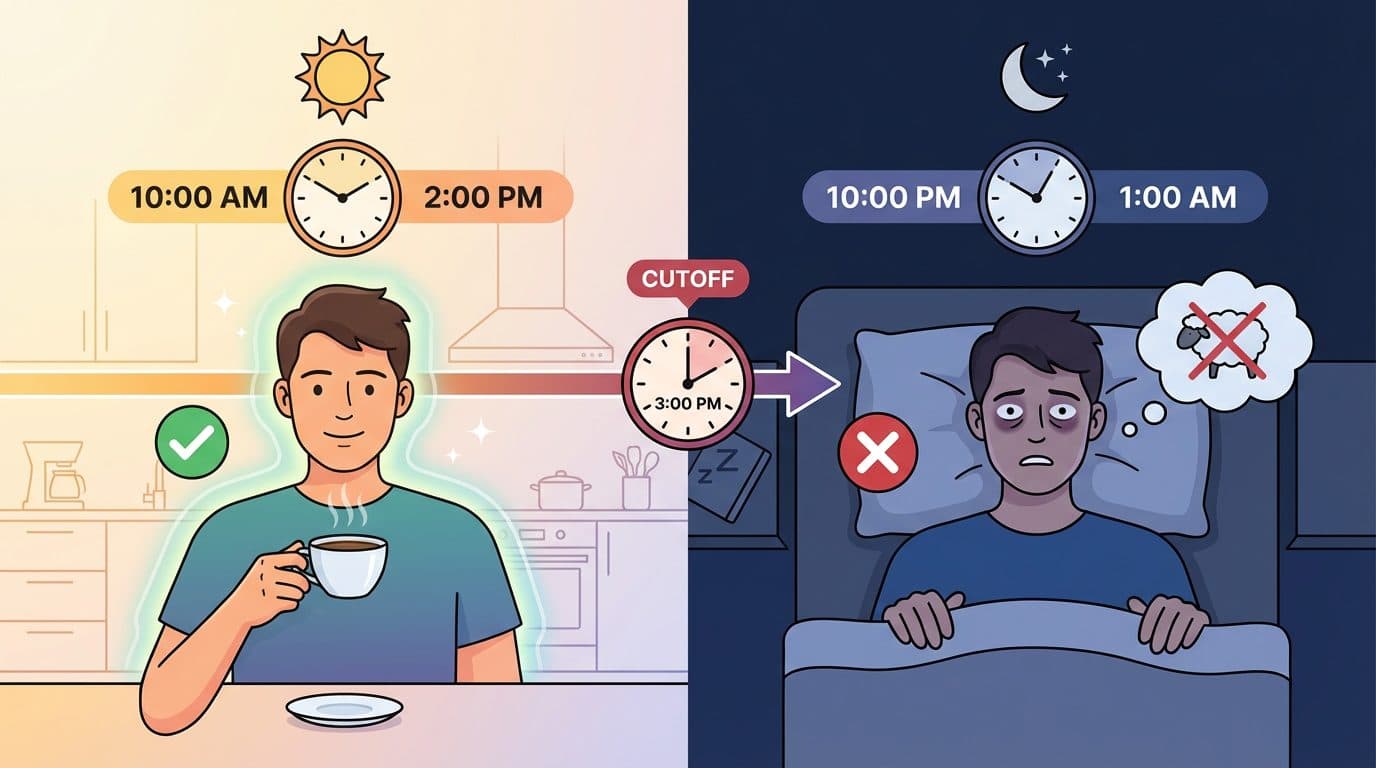
The study associations are not mainly about timing, but your personal health routine is. Late caffeine can harm sleep, and sleep is central to long-term health. Earlier is usually safer.
Is decaf as beneficial as regular coffee?
Several large studies find favorable patterns for decaf as well as caffeinated coffee. That supports the idea that coffee compounds beyond caffeine may matter.
Can too much coffee be harmful?
Yes, for some people. High intake can worsen anxiety, insomnia, reflux, palpitations, and dependence. Even if mortality studies do not show clear harm at higher intake for the average person, your symptoms still matter.
Does bean type affect longevity benefits?
There is no strong reason to chase one bean variety for longevity. Arabica, canephora, roast level, and brew method all change flavor and compounds, but the best choice is the coffee you tolerate, prepare well, and do not load with sugar.
Building Your Longevity Coffee Routine
The strongest takeaway is not “drink coffee to live longer.” It is that moderate coffee can fit comfortably inside a healthy life for many adults. The best habits are simple: keep your intake moderate, protect sleep, use less sugar, consider filtered brewing, and switch to decaf or smaller servings if caffeine bothers you.
If you do not already drink coffee, the evidence is not a reason to start for longevity. It is reassurance for people who already enjoy it and tolerate it well.
Good coffee should support the rest of your day, not compete with it. If your cup helps you enjoy a calm morning, pairs with decent food, and does not disrupt your sleep or symptoms, the current evidence gives you permission to enjoy it without turning it into a miracle cure.


Comments