



Table of Contents
- Understanding How Caffeine Affects Your Sleep
- Why Some People Are More Sensitive Than Others
- The Best Low-Caffeine Options for Evening Coffee
- Decaf Coffee: Not as Boring as You Think
- Half-Caff: The Useful Compromise
- Naturally Lower-Caffeine Options
- Timing Your Night Coffee Right
- The 6-Hour Rule
- Consider Your Personal Sleep Chronotype
- Sleep-Friendly Coffee Recipes and Preparations
- The Evening Decaf Latte
- Mushroom Coffee Blend
- Cold Brew Concentrate (Diluted)
- Lifestyle Habits That Help You Sleep Despite Caffeine
- Physical Activity Helps Process Caffeine
- Stay Hydrated
- Create a Wind-Down Routine
- Frequently Asked Questions
- Is decaf coffee completely caffeine-free?
- Will drinking coffee with food reduce its impact on sleep?
- Can I build tolerance to caffeine's sleep-disrupting effects?
- Are there any supplements that counteract caffeine for sleep?
- How do I know if my sleep problems are caffeine-related?
- Summary and Your Next Steps
Night coffee is tricky because the part you want and the part you pay for are separated by several hours. The cup after dinner may feel comforting. The lighter sleep, long wakeups, or tired morning may not show up until later. Some people can handle coffee late in the day. Many cannot, even when they fall asleep on time.
The realistic answer is not that evening coffee is harmless. It is that you can reduce the risk by lowering caffeine, shrinking the serving, moving the timing earlier, and treating decaf as a real option. If sleep is already fragile, regular night coffee is usually a poor trade. If the ritual matters, keep the ritual and change the caffeine load.
Understanding How Caffeine Affects Your Sleep
Caffeine blocks adenosine, a chemical signal involved in sleep pressure. That is why coffee can make you feel more alert. The problem is that alertness is not the only effect. Caffeine can also make sleep lighter, shorten deep sleep for some people, and make it harder to return to sleep after waking.
A common caffeine half-life estimate is around 5 to 6 hours, but that is only an average. If you drink a coffee with 100 mg of caffeine at 6 PM, a meaningful amount may still be active around midnight. Slow metabolizers may feel the effect for longer. Fast metabolizers may clear it sooner. Your own sleep is the evidence that matters most.
Why Some People Are More Sensitive Than Others
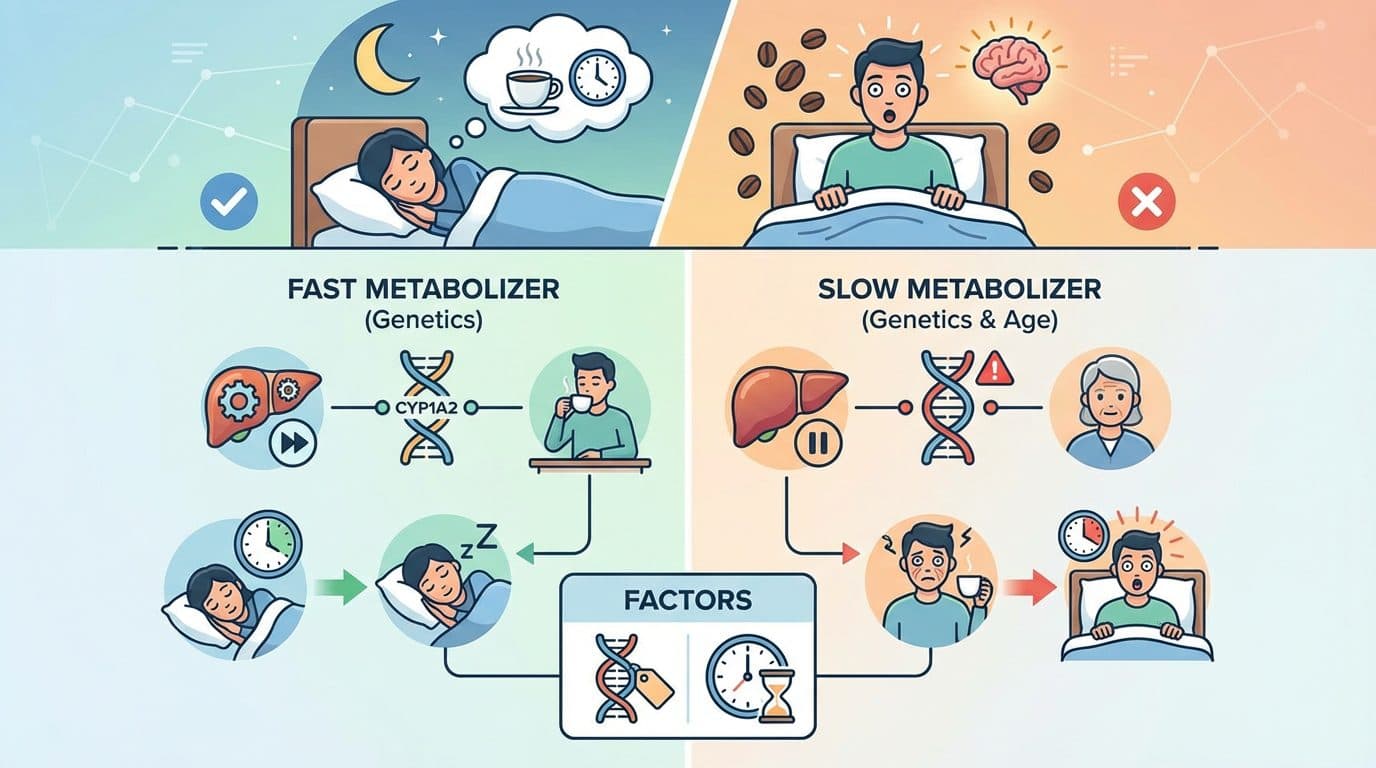
Caffeine sensitivity is not a personality trait. It is affected by genetics, age, liver metabolism, medications, pregnancy, anxiety, sleep debt, and daily caffeine habits. Someone else's after-dinner espresso does not prove your body will handle one.
- Genetics: some people metabolize caffeine more slowly.
- Age: caffeine may feel stronger as sleep becomes lighter with age.
- Medication and hormones: some prescriptions and hormonal factors can change caffeine clearance.
- Tolerance: regular intake can reduce the obvious buzz without fully protecting sleep quality.
- Baseline sleep: a stressed, underslept body has less room for extra stimulation.
If late coffee brings palpitations, anxiety, reflux, or repeated insomnia, do not try to outsmart it with a recipe. Cut back and ask a clinician if symptoms are concerning or new.
The Best Low-Caffeine Options for Evening Coffee
The most reliable way to drink coffee later without wrecking sleep is to reduce caffeine sharply. That usually means decaf, half-caff, a smaller serving, or a drink that tastes like coffee without being built around a full-strength mug.
Decaf Coffee: Not as Boring as You Think
Decaf is the best evening default for most coffee drinkers. It is not caffeine-free, but it is much lower in caffeine than regular coffee. A typical cup may contain a small amount, often in the single digits to low teens of milligrams, while regular coffee can land far higher depending on serving size and brew strength.
The key is buying decent decaf. Swiss Water Process, CO2, and other modern methods can produce coffee that still tastes like coffee. If your memory of decaf is stale office coffee, try a fresh medium roast from a roaster that takes decaf seriously.
Half-Caff: The Useful Compromise
Half-caff works better in the afternoon than at night. Mixing equal parts regular and decaf beans can preserve some caffeine feel while cutting the dose. But half of a large mug can still be too much close to bedtime, especially for sensitive sleepers.
If you use half-caff after dinner, keep the cup small and track your sleep. Do not assume “half” means safe.
Naturally Lower-Caffeine Options

Some choices reduce caffeine without changing to full decaf, but they are not magic.
- Small espresso drinks: one espresso shot often has less caffeine than a big mug of drip coffee, though exact amounts vary.
- Arabica coffee: arabica usually has less caffeine than canephora-heavy blends.
- Smaller mugs: a 4-ounce cup is a real strategy, not a punishment.
- Diluted cold brew: use concentrate carefully; it can be very caffeinated before dilution.
| Coffee Type | Approximate Caffeine | Evening Risk |
|---|---|---|
| Regular drip coffee, 8 oz | Often around 95-200 mg | High for many sleepers |
| Single espresso shot | Often around 60-75 mg | Still risky near bedtime |
| Half-caff, 8 oz | Often around 50-100 mg | Depends on timing and sensitivity |
| Decaf, 8 oz | Usually much lower, not zero | Best coffee option for night |
Timing Your Night Coffee Right
Timing matters because caffeine has a long tail. The cup does not stop affecting you when the warm feeling fades. If you are protecting sleep, the lowest-risk cutoff for regular coffee is often earlier than people want it to be.
The 6-Hour Rule
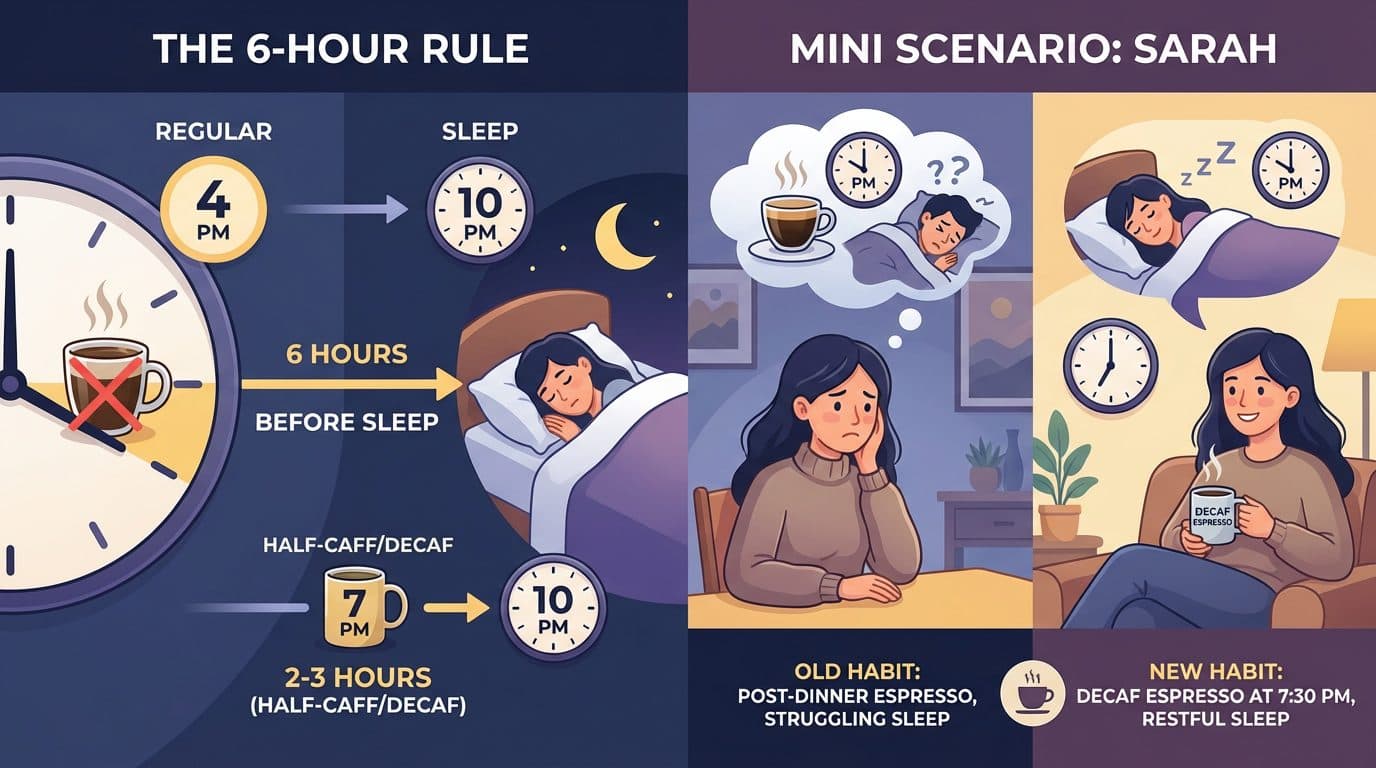
A useful starting rule is to stop regular caffeine at least 6 hours before bed. A Journal of Clinical Sleep Medicine study found that 400 mg of caffeine taken even 6 hours before bedtime significantly disrupted sleep in its test group. If you sleep at 10 PM, that puts regular coffee around 4 PM or earlier. Sensitive people may need 8 to 10 hours. A few people need to stop by noon.
Decaf can usually be closer to bedtime, but very sensitive drinkers may still notice it. If sleep is the goal, test one change at a time: same bedtime, same dinner, same routine, different coffee timing.
Consider Your Personal Sleep Chronotype
A night owl who sleeps from 1 AM to 9 AM may have a different cutoff than someone who sleeps from 9:30 PM to 5:30 AM. Work backward from your actual bedtime, not from generic evening language.
A simple sleep log is more useful than guesswork. For one week, write down the coffee type, amount, time, bedtime, wakeups, and morning energy. If late coffee is the problem, the pattern usually appears quickly.
Sleep-Friendly Coffee Recipes and Preparations
These drinks keep the coffee ritual while lowering the caffeine burden. They are not sleep treatments. They are lower-risk ways to keep the taste and routine.
The Evening Decaf Latte
What you need:
- 2 shots decaf espresso or 4 oz strong decaf coffee.
- 6-8 oz milk or oat milk.
- Optional cinnamon or a few drops of vanilla.
Steps:
- Brew the decaf espresso or strong decaf coffee.
- Warm and froth the milk.
- Pour coffee into the mug.
- Add milk slowly and taste before sweetening.
This works because the drink feels substantial without relying on a full-strength caffeine hit. Keep sweeteners modest if sugar tends to wake you up or trigger reflux.
Mushroom Coffee Blend
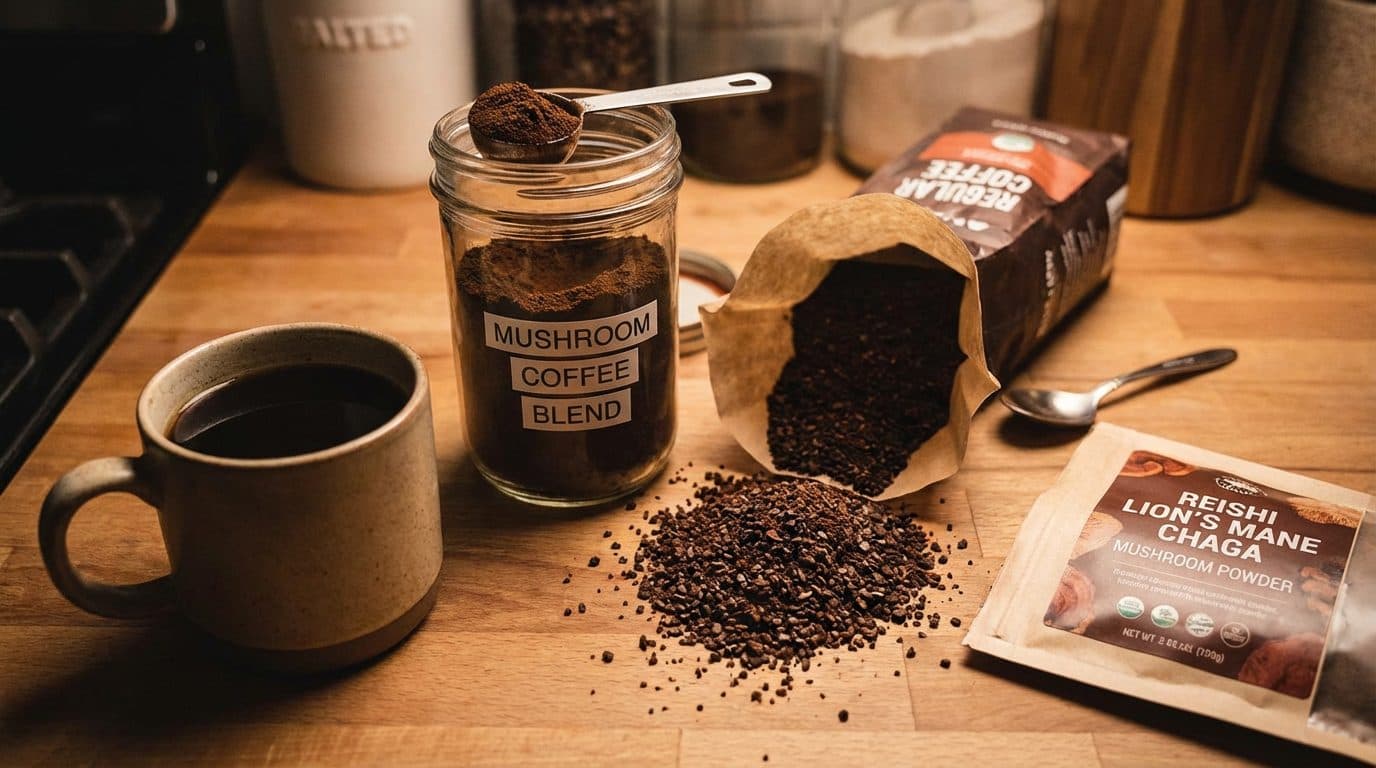
Mushroom coffee blends are often marketed as calming, but be skeptical. Some are still caffeinated, and supplement claims vary widely. If you use one at night, choose a decaf or very low-caffeine product, check the ingredient list, and avoid treating it as a sleep aid.
People taking medications, managing immune conditions, dealing with allergies, or using blood thinners should be cautious with supplement-style blends and ask a qualified clinician when unsure.
Cold Brew Concentrate (Diluted)
Cold brew can be smooth, but concentrate can also be caffeine-heavy. For evening, dilute more than usual. Try 1 part concentrate to 4 parts water or milk, then decide whether the flavor is worth the remaining caffeine.
Lifestyle Habits That Help You Sleep Despite Caffeine
No habit fully cancels caffeine. Still, the rest of your evening can either reduce or amplify the damage.
Physical Activity Helps Process Caffeine
A light walk after dinner can help you feel calmer and may support better sleep. Avoid hard workouts close to bed if they leave you wired. Exercise is useful, but it is not a caffeine eraser.
Stay Hydrated
Coffee is not instantly dehydrating in a dramatic way, but water still helps the evening feel steadier. If coffee makes you thirsty or gives you a dry mouth, drink water alongside it.
Create a Wind-Down Routine
- Dim lights during the last hour before bed.
- Keep screens lower and less stimulating.
- Use a warm shower, stretching, reading, or quiet music as a consistent cue.
- Keep the bedroom cool and dark.
These steps cannot guarantee sleep after caffeine. They simply stop the rest of the evening from making the problem worse.
Frequently Asked Questions
Is decaf coffee completely caffeine-free?
No. Decaf still contains small amounts of caffeine. For most people it is a much better night option than regular coffee, but extremely sensitive drinkers may still need to stop decaf a couple of hours before bed or skip it entirely.
Will drinking coffee with food reduce its impact on sleep?
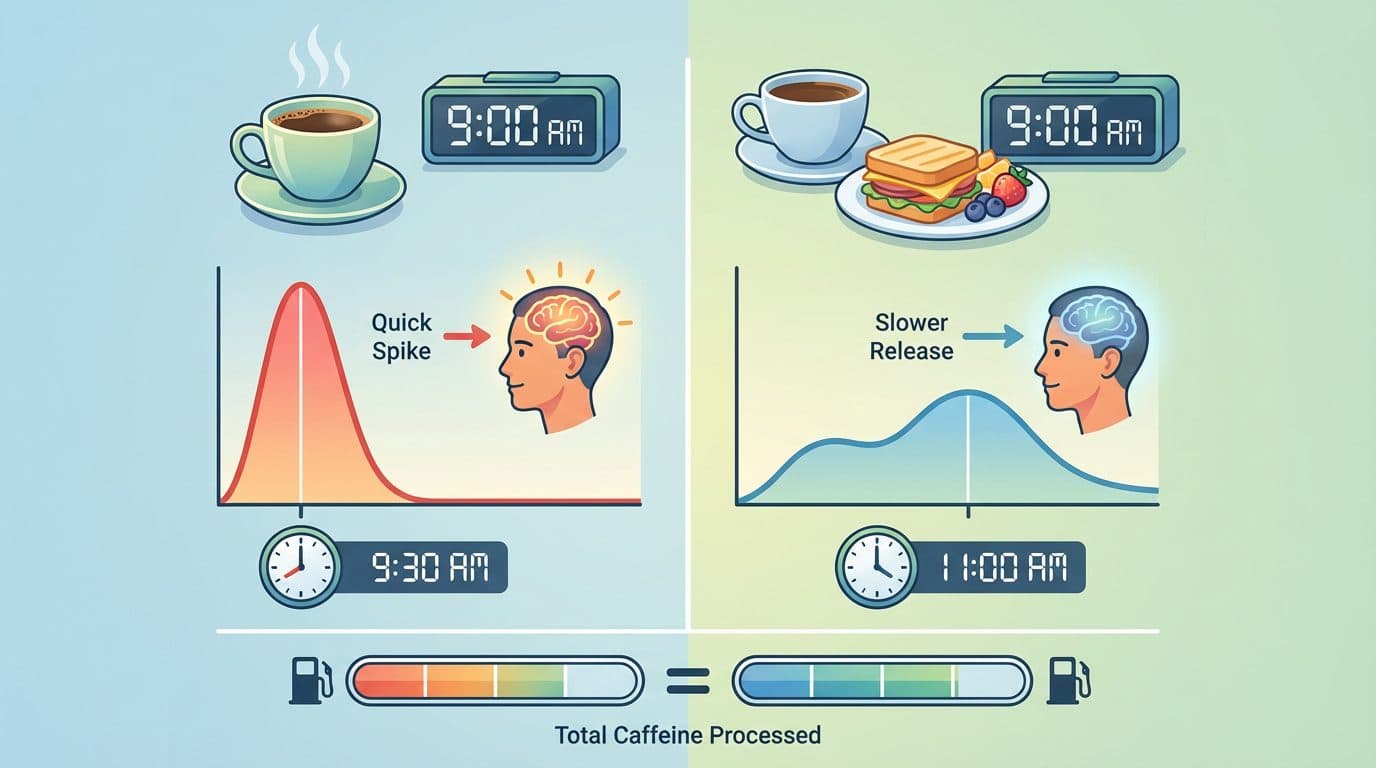
Food may slow absorption and reduce a sharp caffeine hit, but it does not remove the caffeine. A coffee with dessert may feel gentler and still affect sleep later.
Can I build tolerance to caffeine's sleep-disrupting effects?
Some tolerance happens, but it is incomplete. You may stop feeling wired while your sleep quality still suffers. Do not rely on tolerance if you are waking tired.
Are there any supplements that counteract caffeine for sleep?
No supplement reliably cancels caffeine. Magnesium, L-theanine, or herbal products may help some people relax, but they are not a license to drink regular coffee late. Check with a clinician if you take medication, are pregnant, or have a medical condition.
How do I know if my sleep problems are caffeine-related?
Run a boring test. Stop caffeine after noon for 10 to 14 days and track sleep. If your sleep improves, timing was probably part of the problem. If not, caffeine may still matter, but other sleep issues deserve attention too.
Summary and Your Next Steps
Night coffee carries less sleep risk when it is decaf, small, and separated from bedtime. Regular coffee after dinner is a gamble for many people, even if they can fall asleep. The real test is whether you wake rested.
Keep the ritual if it matters: use better decaf, make a small latte, or switch to half-caff earlier in the afternoon. Then watch your sleep honestly. Good coffee is not worth turning every morning into recovery mode.



Comments