


Table of Contents
- What Exactly Is Proffee?
- What You'll Need
- Why Does Protein Powder Clump in Hot Coffee?
- Step-by-Step: How to Mix Protein Powder in Hot Coffee Without Clumping
- Step 1: Let Your Coffee Cool Slightly
- Step 2: Create a Protein Slurry First
- Step 3: Slowly Add the Slurry to Your Coffee
- Step 4: Blend or Froth Immediately
- Step 5: Taste and Adjust
- Best Protein Powders for Proffee
- Whey Protein Isolate
- Collagen Peptides
- Plant-Based Options
- Taste Profile
- Common Mistakes and How to Fix Them
- Frequently Asked Questions
- Does heat destroy the protein in proffee?
- Can I use espresso instead of regular coffee?
- How much protein powder should I add to my coffee?
- Is proffee safe to drink every day?
- Can I make proffee ahead of time?
- The Bottom Line
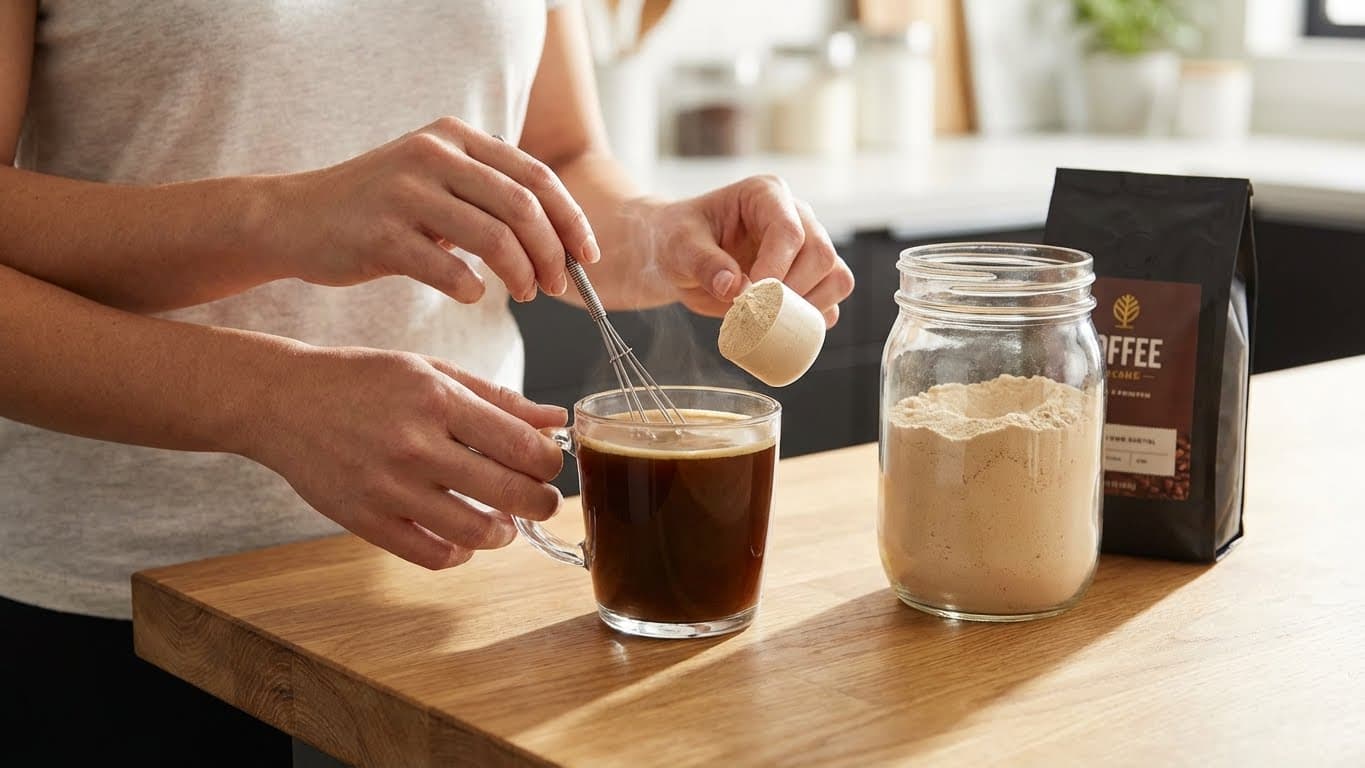
The smoothest way to mix protein powder into hot coffee is to cool the coffee slightly, make a cold protein slurry first, then whisk, froth, or blend it into the coffee. Do not dump dry powder straight into a steaming mug. That is how you get rubbery clumps.
Protein coffee, often called proffee, can be convenient if you already drink coffee and use protein powder. But it is still a food choice, not a health shortcut. Pick a powder that agrees with you, watch your total caffeine and protein intake, and treat taste and digestion as part of the test.
What Exactly Is Proffee?
Proffee is coffee mixed with protein powder or a ready-to-drink protein shake. Some people use it after a workout, some use it as a fast breakfast add-on, and some simply like the latte-like texture. The idea is straightforward: caffeine from coffee, protein from the powder.
The nutritional details depend on the powder. A typical scoop may provide about 20 to 30 grams of protein, but formulas vary widely in sweeteners, thickeners, dairy content, and added vitamins. Read the label and use the serving size that fits your diet rather than assuming more is better.
What You’ll Need
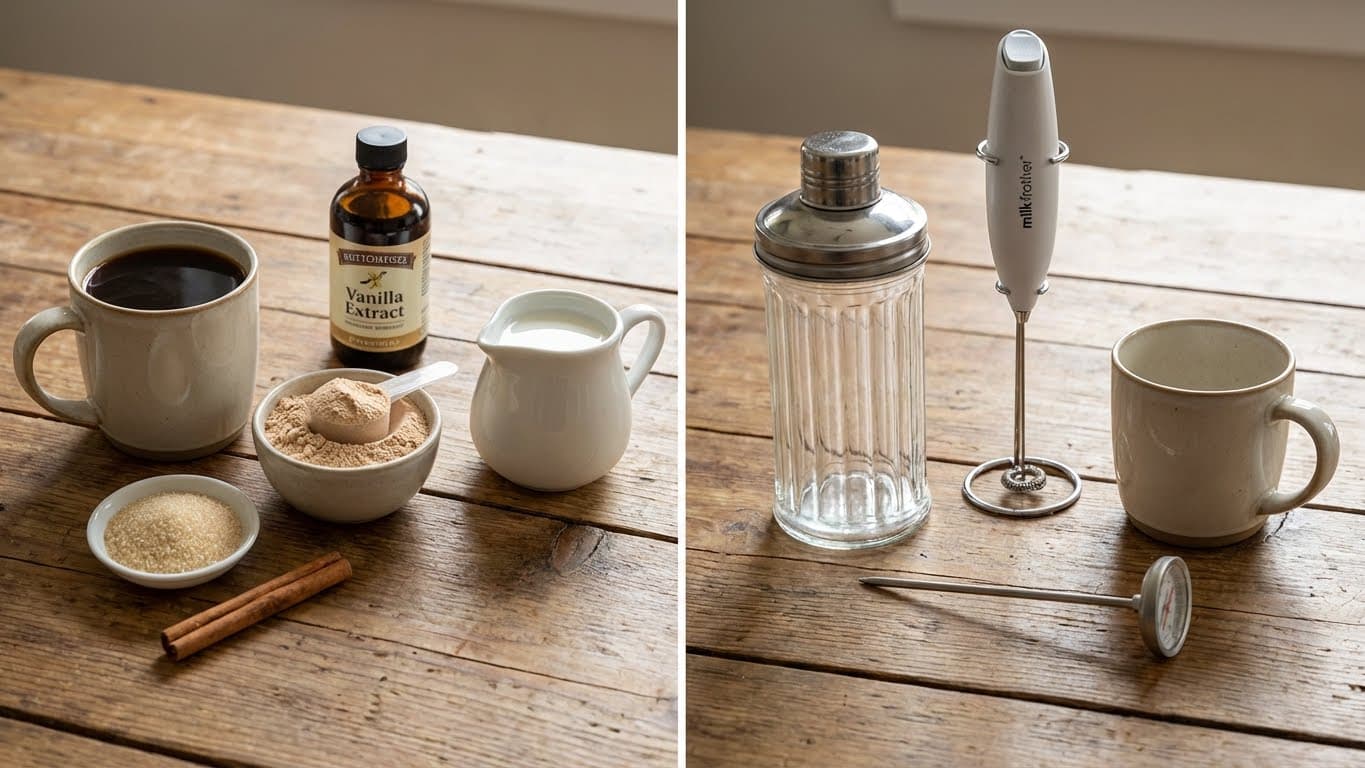
Gather the basics before you brew so the coffee does not sit around getting bitter.
Ingredients:
- 8-12 oz freshly brewed coffee
- 1 scoop protein powder, usually 25-30g powder depending on the brand
- 2-3 tablespoons cold water, milk, or creamer
- Optional: cinnamon, vanilla extract, cocoa, or a small amount of sweetener
Gear:
- Small shaker bottle, jar, or cup for the slurry
- Milk frother, whisk, immersion blender, or a sealed shaker for cooled coffee only
- Coffee mug or travel cup
- Thermometer if you want repeatable results
Why Does Protein Powder Clump in Hot Coffee?
Protein clumps because heat changes protein structure before the powder has dispersed. With whey especially, very hot liquid can make the outside of powder particles tighten and stick together, trapping dry powder inside. The result is the familiar lumpy texture.
This is related to denaturation, the same broad process that changes egg whites when they cook. Denaturation does not mean the amino acids vanish, but it can create a texture you do not want in a drink.
Common clump triggers:
- Coffee that is still near brewing temperature
- Dry powder added directly to hot liquid
- Protein powders with poor solubility or lots of gums
- Gentle stirring when the drink needs vigorous mixing
The FDA notes that dietary supplements are regulated differently from conventional foods and drugs, so choose reputable brands and be skeptical of exaggerated claims.
Step-by-Step: How to Mix Protein Powder in Hot Coffee Without Clumping
This method works because it solves the two main problems at once: temperature shock and poor dispersion.
Step 1: Let Your Coffee Cool Slightly
Freshly brewed coffee is often around 195-205°F during brewing, which is hotter than most protein powders tolerate gracefully. Let the cup sit for 3 to 5 minutes, or add cold milk to bring it closer to 140-150°F. You do not have to be exact, but the coffee should be hot to drink, not scalding.
Step 2: Create a Protein Slurry First
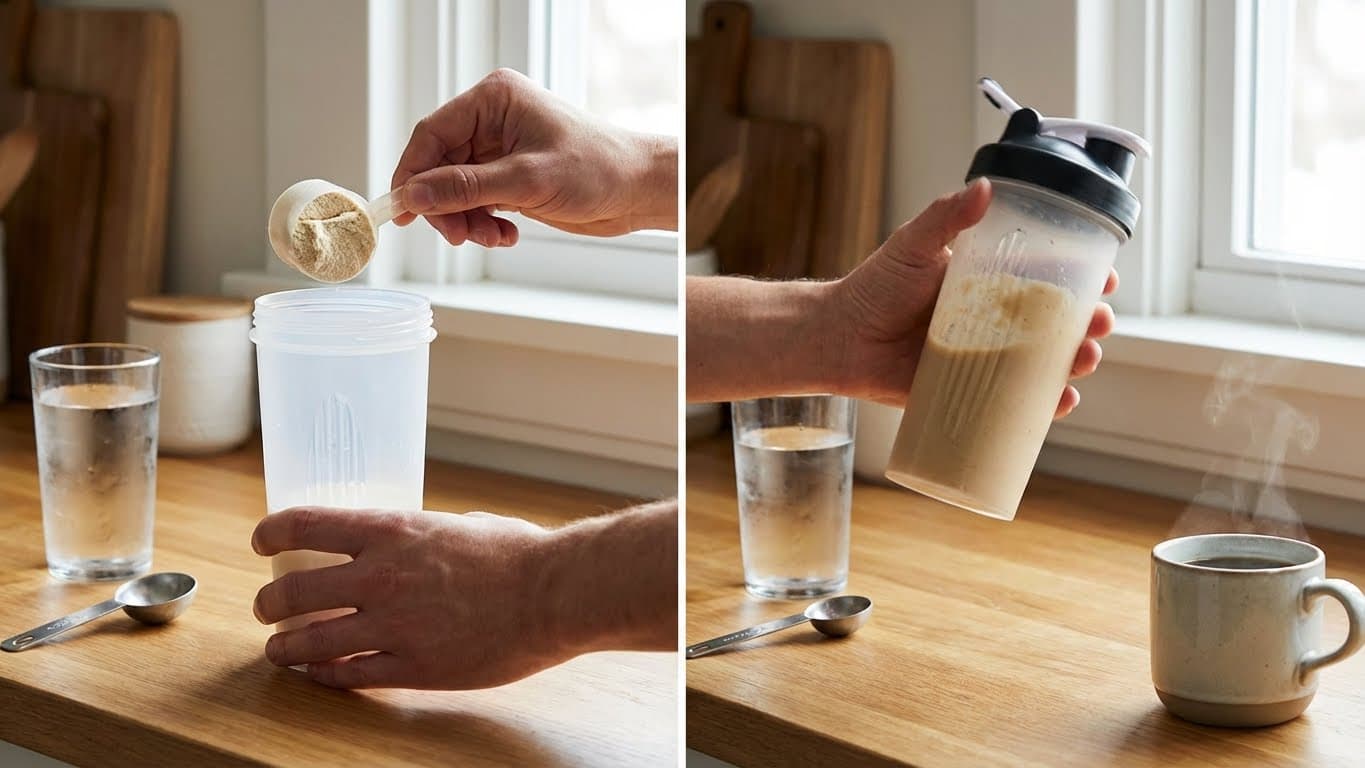
Put the protein powder in a small shaker, jar, or cup. Add 2 to 3 tablespoons of cold water, milk, or creamer. Shake or stir until the mixture becomes a smooth paste or thin slurry. This step wets the powder evenly before heat reaches it.
Step 3: Slowly Add the Slurry to Your Coffee
Pour the slurry into the coffee in a slow stream while stirring. If you add it all at once, the temperature shift is harsher and clumps are more likely. Slow mixing is especially helpful with whey concentrate and plant-based powders.
Step 4: Blend or Froth Immediately
Use a milk frother, immersion blender, or whisk for hot coffee. A spoon can work with easy-mixing powders, but mechanical agitation gives a smoother texture. Use a sealed shaker only for cooled coffee or iced proffee; hot liquids can build pressure fast and cause burns.
Step 5: Taste and Adjust
Taste before adding sweetener. Many protein powders are already sweet. If the drink tastes chalky, try more milk, a pinch of salt, or a different powder rather than covering the problem with extra syrup.
Practical tip: Iced proffee is easier. Cold brew, chilled espresso, or cooled coffee can be shaken directly with many powders because there is no heat shock.
Best Protein Powders for Proffee
The best powder is the one that dissolves smoothly, tastes good with coffee, and fits your dietary needs. Hot coffee makes flaws obvious, so small sample packs are useful before buying a large tub.
Whey Protein Isolate
Whey isolate often mixes better than whey concentrate because it is more refined and usually contains less fat and lactose. It can taste cleaner in coffee, especially vanilla, chocolate, mocha, or unflavored versions. People with dairy sensitivity should still check labels carefully.
Collagen Peptides
Collagen peptides dissolve easily in hot liquids and usually have a mild taste. They are convenient for coffee, but collagen is not a complete protein in the same way whey, soy, or many blended plant proteins are. If your goal is muscle protein synthesis, do not treat collagen as a one-for-one replacement without understanding that difference.
Plant-Based Options
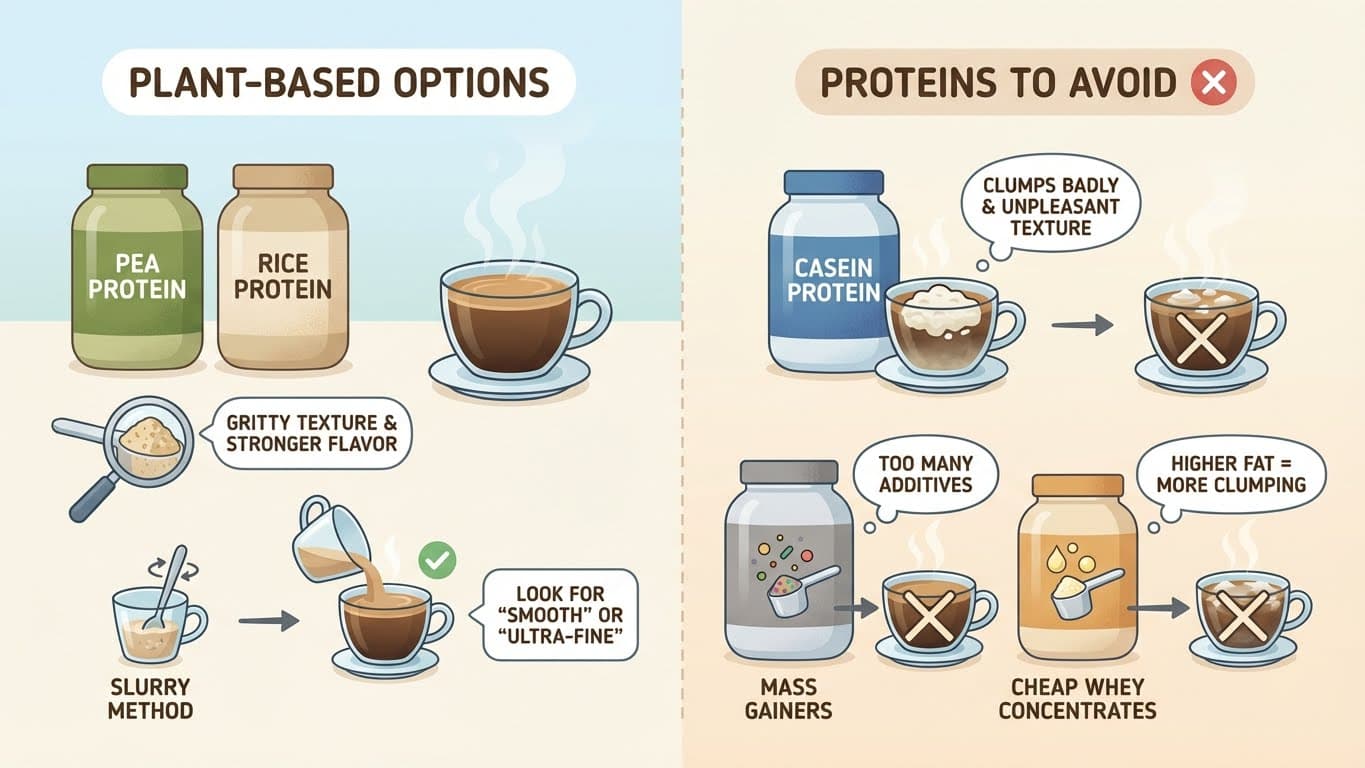
Pea, rice, soy, and blended plant proteins can work, but they often taste earthier and feel grittier than whey. Look for powders described as smooth or instantized, and use the slurry method every time. Chocolate plant protein usually hides better in coffee than vanilla.
Be cautious with:
- Casein-heavy powders, which can thicken dramatically
- Mass gainers, which often contain starches and additives that do not drink like coffee
- Very cheap whey concentrate if it tastes chalky even in cold shakes
Taste Profile
Good proffee tastes like a lighter protein latte: creamy, slightly sweet, and coffee-forward. Vanilla powder can taste like a sweet latte. Chocolate powder moves it toward mocha. Unflavored powder keeps the coffee more recognizable but can still add dairy notes.
Common Mistakes and How to Fix Them
Most problems come from heat, powder choice, or not mixing hard enough.
- Small lumps remain: Cool the coffee more and use a frother or blender.
- The drink tastes chalky: Try whey isolate, collagen, or a smoother plant blend.
- The texture is too thick: Use half a scoop, add more coffee or milk, or avoid casein-heavy powders.
- The drink separates: Stir again before drinking. Some separation is normal.
- It tastes too sweet: Use unflavored powder and add your own sweetener only if needed.
Travel cup tip: A tight-lid travel mug lets you swirl the drink again as it sits. Do not shake boiling-hot coffee in a sealed bottle.
Frequently Asked Questions
Does heat destroy the protein in proffee?
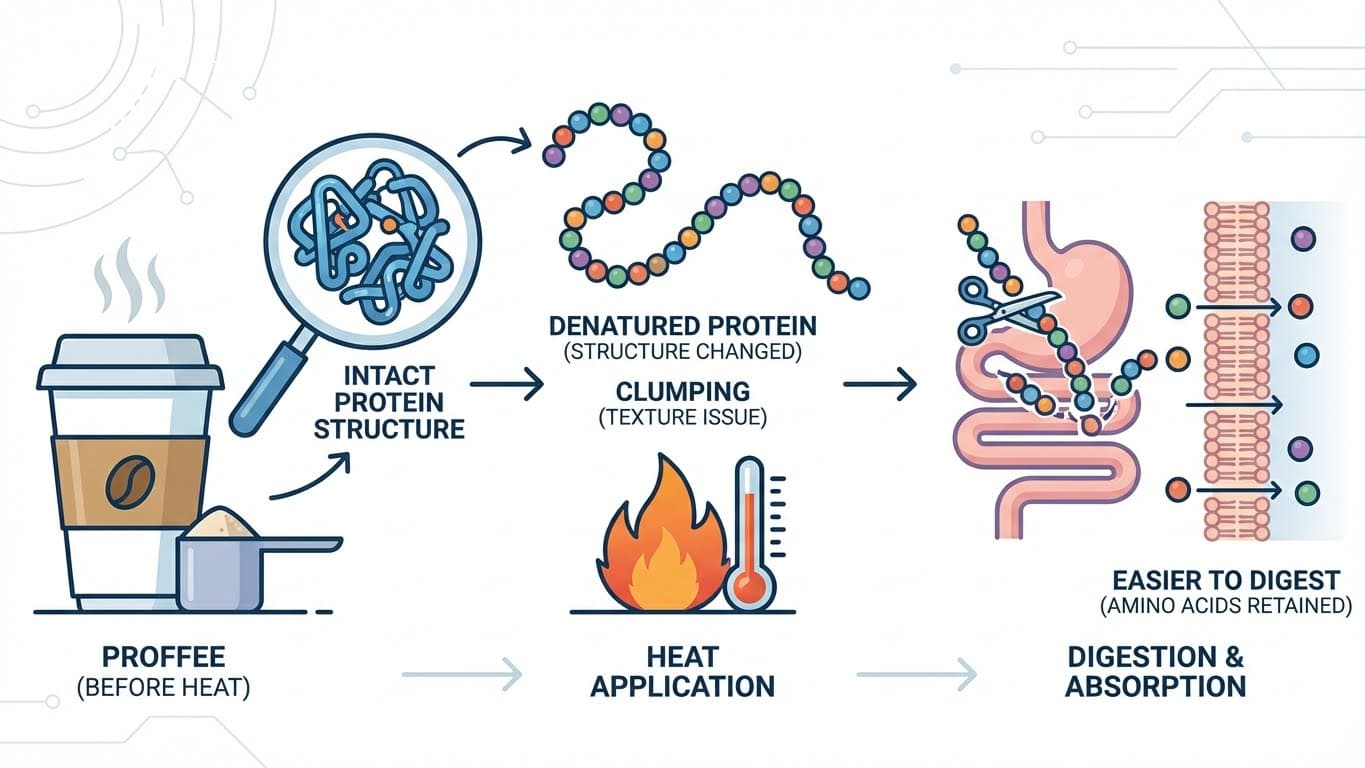
Normal coffee heat can denature protein, but denaturation is mainly a structure change, not the disappearance of protein. The bigger issue for proffee is texture. If you have specific nutrition or medical concerns, ask a qualified clinician or dietitian.
Can I use espresso instead of regular coffee?
Yes. Let the espresso cool briefly, then mix it with the slurry or pour it into warmed milk and protein slurry. Because espresso is concentrated, it can make a better latte-style proffee than a large mug of weak coffee.
How much protein powder should I add to my coffee?
One serving from the label is the practical upper limit for most mugs. Many people prefer half a scoop for better flavor and texture. More powder is not automatically better, especially if it makes the drink hard to digest.
Is proffee safe to drink every day?
For many healthy adults, it can fit into a normal diet, but daily use depends on total caffeine, protein needs, kidney health, medications, and tolerance. The FDA cites 400 mg of caffeine per day as an amount not generally associated with dangerous effects for most adults, while noting sensitivity varies.
Can I make proffee ahead of time?
Yes, especially iced proffee. Store it cold and shake before drinking. Hot proffee usually tastes best soon after mixing because texture and aroma fade as it sits.
The Bottom Line
Clump-free proffee is mostly technique: cool the coffee a little, make a cold slurry, add it slowly, and mix with enough force. Once you do that, the powder choice becomes the main difference between a smooth drink and a chalky one.
Keep the claims realistic. Proffee can be convenient and satisfying, but it does not replace a balanced diet or solve fitness goals on its own. Use it because it fits your morning and tastes good, not because a social-media clip made it sound like a miracle.




Comments