



Table of Contents
- Quick Verdict: Cold Brew
- What Is Cold Brew Coffee?
- How Cold Brew Is Made
- What Is Iced Coffee?
- How Iced Coffee Is Made
- Key Differences Between Cold Brew and Iced Coffee
- Taste and Flavor
- Caffeine Levels
- Acidity and Stomach Sensitivity
- Pros and Cons of Each Method
- Cold Brew
- Iced Coffee
- Who Should Choose Which?
- Cold Brew Is For You If:
- Cold Brew Is NOT For You If:
- Iced Coffee Is For You If:
- Iced Coffee Is NOT For You If:
- Conclusion: Which Cold Coffee Wins?
You’re standing at your favorite coffee shop, staring at the menu, and there it is: cold brew and iced coffee sitting side by side. They’re both cold, they’re both caffeinated, and they both look refreshing. So what’s the big deal? As it turns out, cold brew vs. iced coffee is more than just a naming difference—these two drinks are made completely differently, taste nothing alike, and even hit your body in unique ways.
If you’ve ever wondered which cold coffee drink deserves a spot in your daily routine, you’re in the right place. I’ll break down exactly how each one is made, what they taste like, and help you figure out which one matches your coffee personality. Life’s too short for bad coffee, so let’s make sure you’re ordering the right one.
Quick Verdict: Cold Brew
If you want a smoother, less acidic coffee with a naturally sweet flavor and don’t mind planning ahead, cold brew is your winner. It’s perfect for sensitive stomachs and those who appreciate a mellow, rich taste. However, if you need your cold coffee fix in minutes and prefer that classic, bright coffee flavor, iced coffee will serve you better. Both are excellent—it just depends on your priorities.
What Is Cold Brew Coffee?
Cold brew is exactly what it sounds like: coffee brewed with cold water. But here’s where it gets interesting. Instead of using heat to extract flavor quickly, cold brew relies on time—lots of it. Coarsely ground coffee steeps in cold or room-temperature water for anywhere from 12 to 24 hours. The result is a concentrate that’s typically diluted with water or milk before drinking.
In my experience, the magic of cold brew lies in its patience. That long steeping process pulls out the coffee’s natural sweetness and rich, chocolatey notes while leaving behind much of the bitterness and acidity. It’s like the coffee had time to relax and show you its best side.
How Cold Brew Is Made
- Coarse coffee grounds are combined with cold or room-temperature water
- The mixture steeps for 12-24 hours (usually in the refrigerator)
- The grounds are filtered out, leaving a smooth concentrate
- The concentrate is diluted to taste before serving
One thing I’ve found helpful: the ratio matters. Most home baristas use about 1 cup of coarsely ground coffee to 4-5 cups of water. You can adjust based on how strong you like it, but starting there gives you a solid foundation.
What Is Iced Coffee?
Iced coffee takes a more straightforward approach. It’s regular hot-brewed coffee that’s been cooled down and poured over ice. Some coffee shops brew it double-strength to account for the ice dilution, while others simply chill their standard brew. Either way, you’re getting traditional coffee—just cold.
The brewing process is familiar: hot water extracts flavor from ground coffee in a matter of minutes. This quick extraction captures all those bright, acidic notes that coffee lovers know and appreciate. When you pour it over ice, you get an instantly refreshing drink with that classic coffee punch.
How Iced Coffee Is Made
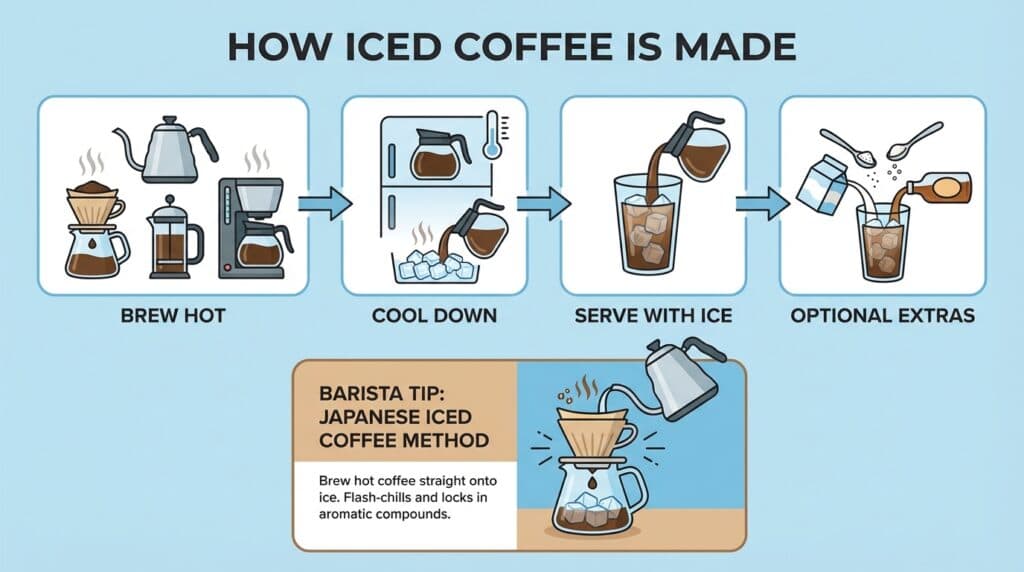
- Coffee is brewed hot using any standard method (drip, pour-over, French press)
- The hot coffee is cooled—either gradually in the refrigerator or quickly over ice
- Ice is added to the glass before serving
- Optional: milk, cream, or sweeteners are added to taste
Here’s a barista tip: if you’re making iced coffee at home, try brewing it directly over ice using the Japanese iced coffee method. You brew hot coffee straight onto ice, which flash-chills it and locks in those aromatic compounds. It’s a game-changer for flavor.
Key Differences Between Cold Brew and Iced Coffee
Now let’s get into the real comparison. While both drinks end up cold in your hand, they differ in almost every other way. Here’s a side-by-side breakdown:
| Factor | Cold Brew | Iced Coffee |
|---|---|---|
| Brewing Temperature | Cold or room temperature | Hot (then cooled) |
| Brewing Time | 12-24 hours | 3-5 minutes |
| Flavor Profile | Smooth, sweet, chocolatey | Bright, acidic, bold |
| Acidity Level | Up to 67% less acidic | Standard coffee acidity |
| Caffeine Content | Higher (when undiluted) | Standard |
| Shelf Life | Up to 2 weeks refrigerated | Best within 24 hours |
Taste and Flavor
This is where the rubber meets the road. Cold brew delivers a noticeably smoother, almost velvety drinking experience. Because heat isn’t involved in extraction, fewer bitter compounds and acids make it into your cup. Many people describe cold brew as naturally sweet, even without added sugar.
Iced coffee, on the other hand, tastes like… well, coffee. You get those familiar bright, sometimes tangy notes that hot brewing brings out. If you love the classic taste of a good cup of joe, iced coffee will feel like home. It’s more complex in some ways, with higher notes that cold brew tends to mute.
Caffeine Levels

Here’s where things get a bit tricky. Cold brew concentrate is typically stronger than regular coffee—sometimes containing nearly double the caffeine per ounce. However, since it’s usually diluted before drinking, the final caffeine content can be similar to iced coffee or even lower, depending on how it’s prepared.
In short: if you’re drinking cold brew concentrate straight (which some brave souls do), you’re getting a serious caffeine kick. Diluted normally, both drinks deliver comparable energy boosts.
Acidity and Stomach Sensitivity
If you’ve ever felt that uncomfortable acidic feeling after drinking coffee, cold brew might be your new best friend. Studies suggest cold brew can be up to 67% less acidic than hot-brewed coffee. For people with acid reflux, GERD, or sensitive stomachs, this difference is significant.
I’ve recommended cold brew to countless friends who thought they had to give up coffee entirely. Many found they could enjoy it again without the digestive drama. That said, if acidity has never bothered you, iced coffee’s brighter profile might actually be more appealing.
Pros and Cons of Each Method
Cold Brew
Pros:
- Smooth, naturally sweet flavor without bitterness
- Significantly lower acidity—easier on sensitive stomachs
- Concentrate lasts up to two weeks in the fridge
- No special equipment needed (a jar and filter work fine)
- Great for batch preparation and meal prepping
Cons:
- Requires 12-24 hours of planning ahead
- Uses more coffee grounds than hot brewing
- Lacks the bright, complex notes some coffee lovers prefer
- Can be too mellow for those who like bold, punchy coffee
Iced Coffee

Pros:
- Ready in minutes—no advance planning required
- Delivers that classic, familiar coffee taste
- More economical with coffee grounds
- Bright, complex flavor profile with aromatic notes
- Works with any brewing method you already use
Cons:
- Higher acidity may irritate sensitive stomachs
- Ice dilution can water down the flavor
- Doesn’t keep well—best consumed fresh
- Can taste bitter if not brewed properly
Who Should Choose Which?
Cold Brew Is For You If:
- You prefer smooth, mellow coffee without bitterness
- Acid reflux or stomach sensitivity is a concern
- You like to prep your coffee in advance for the week
- You enjoy naturally sweet flavors without adding sugar
- You want a versatile concentrate for recipes and cocktails
Picture this: it’s Sunday afternoon, and you’re setting up your cold brew for the week ahead. By Monday morning, you’ve got a fridge full of smooth, ready-to-drink coffee that requires zero effort. That’s the cold brew lifestyle.
Cold Brew Is NOT For You If:
- You want coffee right now, not tomorrow
- You love bright, acidic coffee flavors
- You prefer the ritual of brewing fresh each morning
- You’re trying to minimize coffee ground usage
Iced Coffee Is For You If:
- You crave that classic, bold coffee taste
- Spontaneity is your thing—you decide on coffee in the moment
- You appreciate complex, aromatic flavor notes
- You already have a hot brewing setup you love
- You don’t have stomach sensitivity issues
Imagine waking up, deciding you want iced coffee, and having it in your hand five minutes later. No planning, no waiting, just coffee. That’s the iced coffee advantage.
Iced Coffee Is NOT For You If:
- Coffee acidity bothers your stomach
- You dislike bitter or tangy notes in your cup
- You want to batch-prep for convenience
- You’re sensitive to the taste of diluted coffee
Conclusion: Which Cold Coffee Wins?
Here’s the honest truth: there’s no universal winner in the cold brew vs. iced coffee debate. Both drinks have earned their place in the coffee world for good reasons. Cold brew offers that smooth, low-acid experience perfect for leisurely sipping and weekly meal prep. Iced coffee delivers instant gratification with the bright, bold flavors traditional coffee lovers crave.
My suggestion? Try both. Make a batch of cold brew this weekend and brew some iced coffee tomorrow morning. Pay attention to how each one tastes and how your body responds. You might find yourself becoming a two-method household—cold brew for lazy weekends and iced coffee for busy mornings. However you choose to enjoy your cold coffee, you’re now equipped to make that choice with confidence. Now go brew something delicious.


Comments