


Table of Contents
- Quick Verdict: Metal Filters for the Win
- Understanding Cold Brew Bags
- Pros of Cold Brew Bags
- Cons of Cold Brew Bags
- Understanding Metal Filters for Cold Brew
- Pros of Metal Filters
- Cons of Metal Filters
- Cold Brew Bags vs. Metal Filters: Head-to-Head Comparison
- The Flavor Factor: Why It Actually Matters
- Who Should Choose Cold Brew Bags?
- Who Should NOT Choose Cold Brew Bags?
- Who Should Choose Metal Filters?
- Who Should NOT Choose Metal Filters?
- A Practical Scenario: The Cost Breakdown
- Conclusion: Making Your Choice
You’ve decided to make cold brew at home—smart move. But now you’re staring at two popular filtering options: disposable cold brew bags and reusable metal filters. Which one actually delivers better coffee? Which one saves you money in the long run? And perhaps most importantly, which one fits your lifestyle?
I’ve brewed countless batches using both methods, and the answer isn’t as straightforward as you might think. In this comparison, you’ll discover the key differences between cold brew bags and metal filters, their pros and cons, and which option makes the most sense for your home brewing setup.
Quick Verdict: Metal Filters for the Win
If you’re looking for the short answer, here it is: metal filters are the better long-term investment for most home baristas. They produce a richer, fuller-bodied cold brew, they’re environmentally friendly, and they pay for themselves after just a few weeks of use. However, cold brew bags still have their place—especially if you value convenience and a cleaner cup above all else.
Now let’s break down exactly why, so you can make the right choice for your kitchen.
Understanding Cold Brew Bags
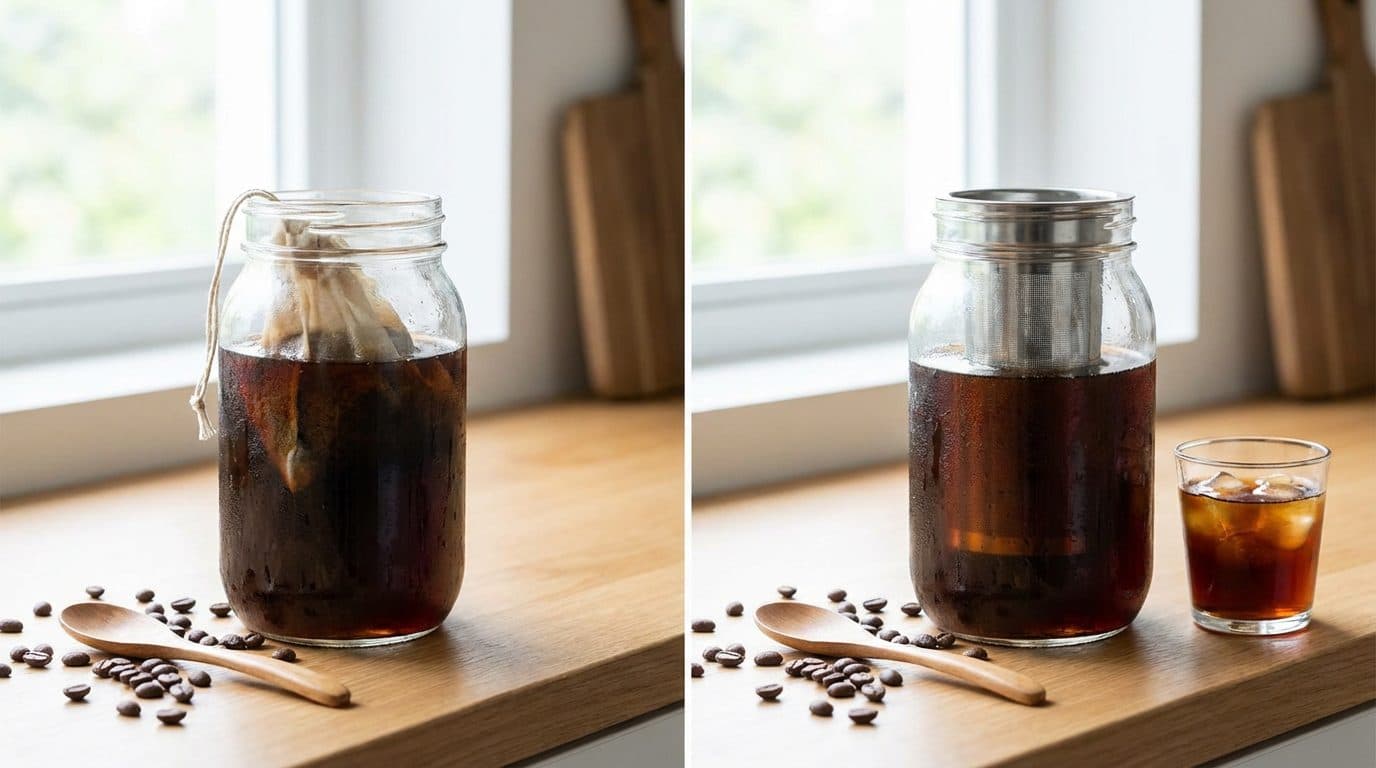
Cold brew bags are essentially large tea bags designed for coffee grounds. They’re typically made from food-grade nylon mesh, cotton muslin, or paper-based materials. You fill them with coarsely ground coffee, submerge them in cold water, and let time do its magic.
The appeal is obvious: minimal mess, easy cleanup, and no need for additional equipment. When your brew is ready, you simply lift out the bag and toss it (or compost it, depending on the material). Many home brewers start their cold brew journey with these bags because they’re affordable and beginner-friendly.
Pros of Cold Brew Bags
- Extremely easy cleanup – Just remove and discard the bag
- No sediment – The fine mesh catches virtually all coffee particles
- Low upfront cost – A pack of disposable bags costs just a few dollars
- Portable – Great for travel or making cold brew at the office
- Cleaner taste profile – Some prefer the lighter, less oily result
Cons of Cold Brew Bags
- Ongoing expense – You need to keep buying replacements
- Environmental impact – Disposable options create waste
- Reduced extraction – The bag can limit water-coffee contact
- Thinner body – Oils and fine particles that add richness get filtered out
- Size limitations – Most bags only hold enough grounds for small batches
Understanding Metal Filters for Cold Brew
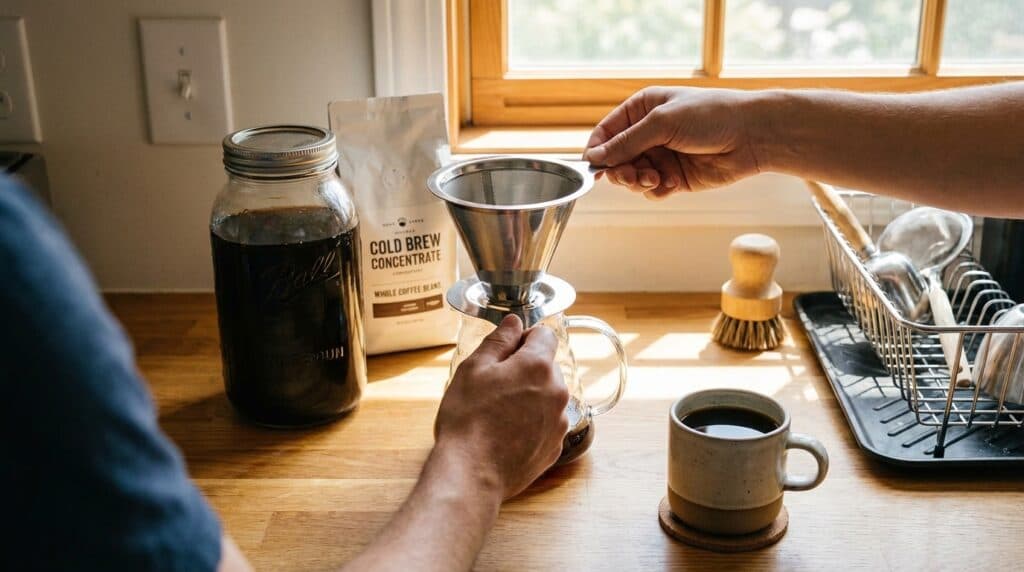
Metal filters—usually made from stainless steel—take a different approach. These reusable filters feature laser-cut or etched micro-holes that allow water to flow freely through the coffee grounds while keeping most sediment out. They come in various designs: some fit inside mason jars, others work with dedicated cold brew pitchers, and some are standalone units you can use with any container.
In my experience, the switch to a quality stainless steel filter was a game-changer. The cold brew tasted noticeably richer, and I stopped feeling guilty about throwing away bags every few days.
Pros of Metal Filters
- One-time purchase – A good filter lasts for years
- Fuller flavor – More oils and fine particles make it through
- Better extraction – Direct water contact with grounds improves brewing
- Eco-friendly – No waste beyond coffee grounds (which are compostable)
- Larger capacity – Many designs accommodate bigger batches
Cons of Metal Filters
- Higher upfront cost – Quality options typically run $15–$40
- Some sediment – Fine particles may slip through, especially with finer grinds
- Requires cleaning – You’ll need to rinse and occasionally deep-clean
- Heavier mouthfeel – Not everyone prefers the oilier texture
- Learning curve – Grind size matters more with metal filters
Cold Brew Bags vs. Metal Filters: Head-to-Head Comparison
Let’s put these two options side by side so you can see exactly how they stack up:
| Factor | Cold Brew Bags | Metal Filters |
|---|---|---|
| Upfront Cost | $5–$15 for a pack | $15–$40 one-time |
| Long-term Cost | Higher (ongoing purchases) | Lower (reusable) |
| Flavor Profile | Cleaner, lighter | Richer, fuller-bodied |
| Sediment | Almost none | Minimal to moderate |
| Cleanup | Effortless | Quick rinse required |
| Environmental Impact | Creates waste | Sustainable |
| Extraction Quality | Good | Excellent |
| Best For | Beginners, travelers | Regular brewers, flavor seekers |
The Flavor Factor: Why It Actually Matters
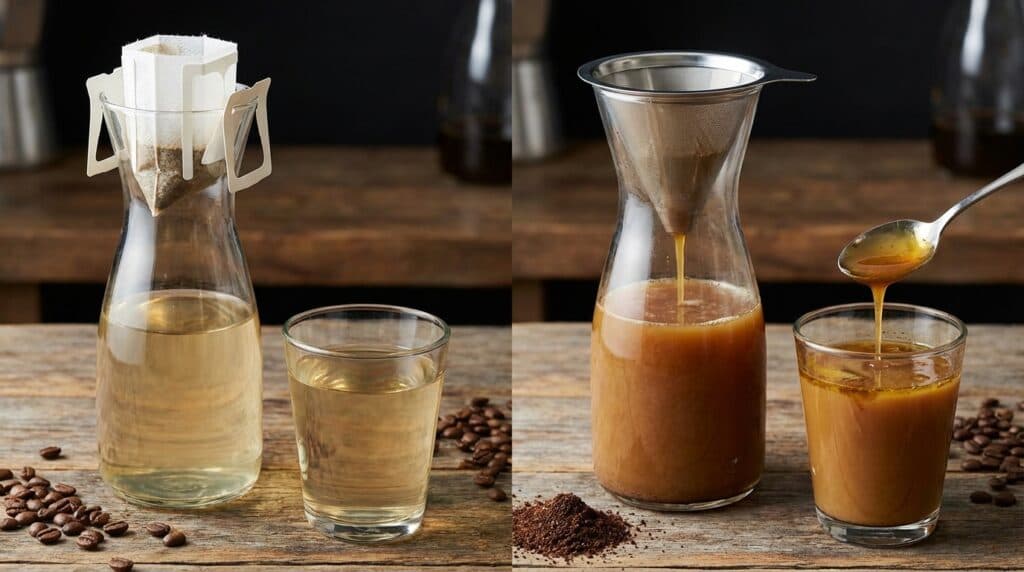
Here’s something many comparison guides gloss over: the filter material genuinely affects your cold brew’s taste. It’s not just marketing fluff.
Coffee contains oils that carry a significant portion of its flavor compounds. Paper and fine mesh bags trap these oils, resulting in a cleaner but somewhat “flatter” cup. Metal filters let more of these oils pass through, creating that smooth, almost syrupy mouthfeel that cold brew lovers crave.
Think of it like this: cold brew bags give you a cup that’s refreshing and easy to drink. Metal filters give you a cup with depth and complexity. Neither is objectively “better”—it depends on your personal preference.
Barista Tip: If you use a metal filter and find too much sediment in your cup, try using a coarser grind. The grounds should look like raw sugar, not fine sand. This single adjustment solves most sediment complaints.
Who Should Choose Cold Brew Bags?
Cold brew bags are the right choice if you fit any of these descriptions:
- You’re new to cold brew and want to test the waters without investing much
- You only make cold brew occasionally (once a month or less)
- You travel frequently and want to brew in hotel rooms or rentals
- You strongly prefer a clean, sediment-free cup
- You genuinely don’t mind the ongoing cost of replacements
- Cleanup convenience is your top priority
Who Should NOT Choose Cold Brew Bags?
- You brew cold brew weekly or more often
- You’re trying to reduce household waste
- You want the richest, most flavorful cold brew possible
- You’re budget-conscious over the long term
Who Should Choose Metal Filters?
Metal filters make more sense if you identify with these points:
- You brew cold brew at least once a week
- You want to maximize flavor extraction from your beans
- You prefer a fuller-bodied, richer cup
- You’re environmentally conscious and want to minimize waste
- You don’t mind spending a few extra seconds on cleanup
- You’re looking for the most cost-effective solution over time
Who Should NOT Choose Metal Filters?
- You absolutely cannot tolerate any sediment in your coffee
- You only make cold brew a few times per year
- You want zero cleanup—just toss and go
- You frequently make cold brew away from home
A Practical Scenario: The Cost Breakdown
Let’s do some quick math. Say you make one batch of cold brew per week.
With disposable bags at roughly $0.50–$1.00 per bag, you’re spending $26–$52 per year just on bags. A quality stainless steel filter costs around $25–$35 upfront and lasts for years with proper care. By the end of year one, the metal filter has already paid for itself. By year three, you’ve saved over $100.
I’ve found that this cost difference becomes even more significant if you brew larger batches or more frequently. The numbers simply favor reusable filters for anyone who’s serious about their cold brew habit.
Conclusion: Making Your Choice
Both cold brew bags and metal filters can produce excellent cold brew—the “better” option depends entirely on your priorities. If convenience and a clean cup matter most, bags serve you well. If you want richer flavor, long-term savings, and a more sustainable approach, metal filters are the clear winner.
For most home baristas who brew regularly, I recommend starting with a quality stainless steel filter. The upfront investment is modest, the flavor improvement is noticeable, and you’ll feel good about reducing waste. Life is too short for bad coffee—and it’s also too short to keep buying disposable bags when a better solution exists.
Whichever route you choose, the most important thing is that you’re making cold brew at home. That alone puts you ahead of the game. Now go brew something delicious.



Comments