


Table of Contents
- Quick Verdict: Oat Milk Takes the Crown
- Why Your Milk Choice Matters for Lattes
- Dairy Milk for Lattes: The Classic Choice
- How Dairy Performs in Your Steam Wand
- Taste Profile with Espresso
- Pros and Cons of Dairy Milk
- Oat Milk for Lattes: The Plant-Based Winner
- Why Baristas Love Oat Milk
- Taste Profile with Espresso
- Pros and Cons of Oat Milk
- Almond Milk for Lattes: The Lightweight Option
- The Frothing Challenge
- Taste Profile with Espresso
- Pros and Cons of Almond Milk
- Head-to-Head Comparison: Dairy vs Oat vs Almond
- Who Should Choose Which Milk?
- Dairy Milk Is For You If:
- Dairy Milk Is NOT For You If:
- Oat Milk Is For You If:
- Oat Milk Is NOT For You If:
- Almond Milk Is For You If:
- Almond Milk Is NOT For You If:
- Tips for Steaming Any Milk at Home
- Frequently Asked Questions
- Can I use regular grocery store plant milk for lattes?
- Why does my almond milk curdle when I add espresso?
- Which milk is best for latte art at home?
- Does milk type affect caffeine content in my latte?
- How long do barista milk alternatives last after opening?
- Final Thoughts: Choosing Your Perfect Latte Milk
Quick Verdict: Oat Milk Takes the Crown
After countless mornings spent steaming, frothing, and tasting my way through every milk option on the shelf, I can tell you this: oat milk is the best milk for lattes at home for most home baristas. It froths beautifully, tastes balanced, and plays nicely with espresso without overpowering it. That said, if you’re a traditionalist who craves that classic café latte experience, whole dairy milk remains unbeatable for richness and natural sweetness.
But here’s the thing—the “best” milk depends on your priorities. Are you chasing the creamiest foam? The lowest calories? The most eco-friendly option? In this comparison of dairy vs oat vs almond milk for lattes, I’ll break down exactly what each brings to your cup so you can make the right choice for your morning ritual.
Why Your Milk Choice Matters for Lattes
You’ve invested in a decent espresso machine or moka pot. You’ve dialed in your grind. You’ve even mastered the art of pulling a shot that doesn’t taste like battery acid. But here’s a truth many home baristas overlook: your milk can make or break that latte.
The best milk for lattes needs to do three things well:
- Foam properly – creating that velvety microfoam for latte art or just a pleasant texture
- Complement the espresso – balancing bitterness without masking coffee flavor
- Taste good – because life is too short for lattes that disappoint
Let’s see how our three contenders stack up across these criteria and more.
Dairy Milk for Lattes: The Classic Choice
How Dairy Performs in Your Steam Wand

There’s a reason cafés have used dairy for over a century. Whole milk contains the perfect balance of proteins, fats, and sugars that create stable, creamy microfoam. The proteins (mainly casein and whey) stabilize air bubbles, while the fat adds that luxurious mouthfeel. When you heat dairy milk to around 140-150°F (60-65°C), the natural lactose sugars become noticeably sweeter.
In my experience, whole milk is the most forgiving for beginners learning to steam. It stretches predictably, holds its texture well, and gives you a decent window before it overheats. If you’re practicing latte art, dairy milk is your best teacher—it behaves consistently and pours smoothly.
Taste Profile with Espresso
Dairy milk creates a rich, rounded latte with natural sweetness that softens espresso’s edges. The fat content coats your palate, making even slightly bitter shots taste smoother. For a classic latte flavor profile—think traditional Italian café—nothing quite replicates whole dairy milk.
Barista Tip: Using 2% milk? You’ll get slightly less creamy foam but still decent results. Skim milk froths into larger bubbles and tastes thinner—I’d skip it for lattes unless calories are your main concern.
Pros and Cons of Dairy Milk
Pros:
- Easiest to foam with consistent, stable microfoam
- Natural sweetness that complements espresso beautifully
- Rich, creamy mouthfeel
- Most affordable option per serving
- Best for practicing latte art
Cons:
- Not suitable for lactose intolerant or dairy-free diets
- Higher in saturated fat and calories than alternatives
- Larger environmental footprint than plant milks
- Can overpower delicate single-origin espressos
Oat Milk for Lattes: The Plant-Based Winner
Why Baristas Love Oat Milk

Walk into any specialty coffee shop today and you’ll notice oat milk has become the default alternative. There’s good reason for this. Among plant-based options, oat milk comes closest to mimicking dairy’s behavior in a latte. The natural starches and oils in oats create a creamy texture that froths into silky microfoam.
Not all oat milks are created equal, though. Look for “barista” versions from brands like Oatly Barista Edition, Minor Figures, or Califia Farms Barista Blend. These are specifically formulated with added oils and stabilizers that help them steam properly. Regular oat milk from the grocery aisle often separates or produces thin, bubbly foam.
Taste Profile with Espresso
Oat milk brings a subtle, slightly sweet flavor with mild oat undertones. It’s neutral enough to let your espresso shine while adding pleasant creaminess. I’ve found it pairs particularly well with medium-roast espresso blends—the gentle sweetness rounds out any brightness without masking origin flavors.
One thing I love about oat milk: it doesn’t leave that slightly chalky aftertaste some plant milks have. The finish is clean, and the overall latte tastes balanced rather than “alternative.”
Pros and Cons of Oat Milk
Pros:
- Froths well, especially barista versions—great for latte art
- Neutral, slightly sweet flavor that complements espresso
- Creamy texture closest to dairy
- Lower environmental impact than dairy
- Suitable for most dietary restrictions (check for gluten-free labels if needed)
Cons:
- Barista versions cost more than regular oat or dairy milk
- Higher in carbohydrates than almond milk
- Not suitable for those avoiding gluten (unless certified gluten-free)
- Regular versions foam poorly—you need the barista blends
Almond Milk for Lattes: The Lightweight Option
The Frothing Challenge
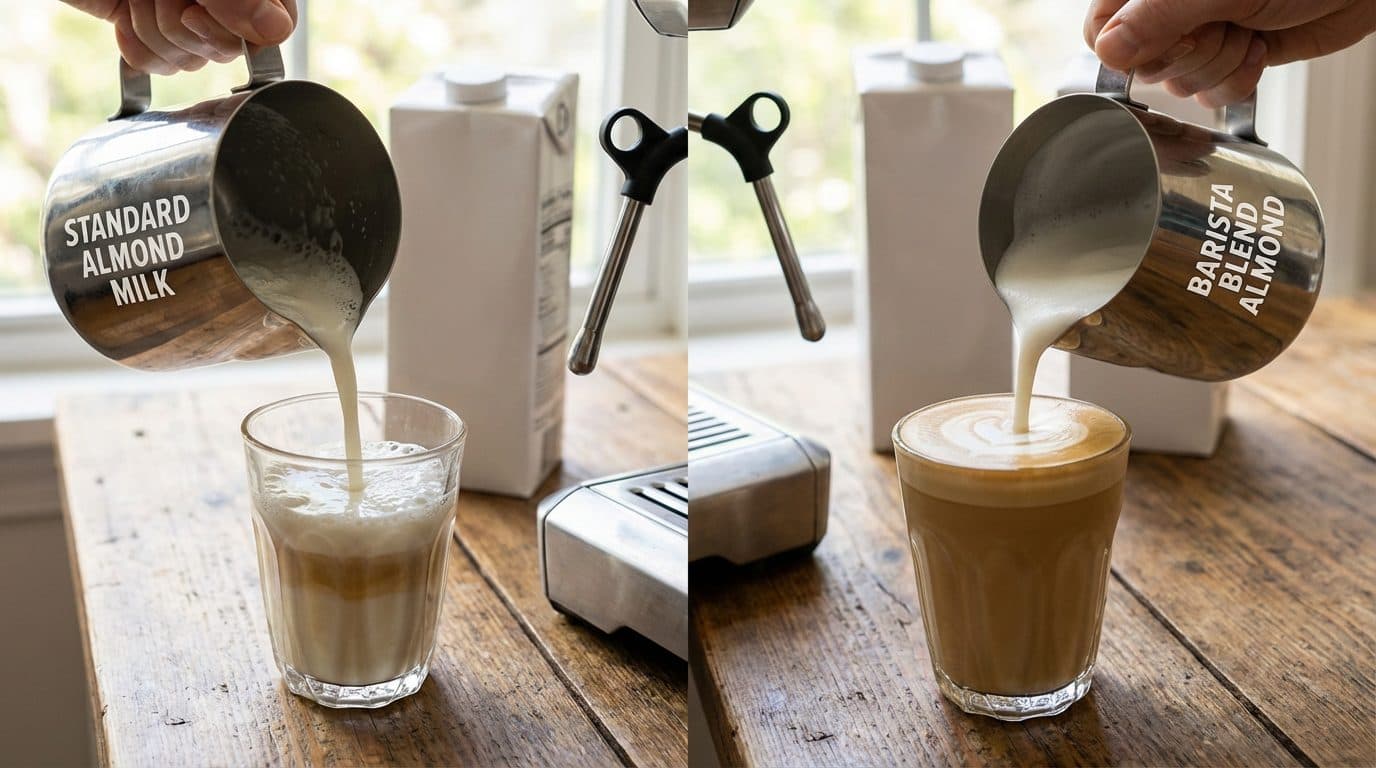
Here’s where I have to be honest: almond milk is the trickiest of our three contenders. Standard almond milk from the refrigerator section often separates when heated, creating watery layers and thin, unstable foam. The low protein and fat content means there’s less structure to hold air bubbles.
That said, barista-specific almond milks have improved dramatically. Brands like Califia Barista Blend Almond or Almond Breeze Barista have added sunflower oil and other stabilizers to improve performance. With these, you can achieve decent foam—though it still requires more technique than dairy or oat.
Taste Profile with Espresso
Almond milk adds a distinct nutty flavor to your latte. For some people, this is a feature; for others, it’s a bug. The nuttiness can either complement or compete with your espresso depending on the roast profile. I find it works best with darker, more robust espresso where the nutty notes blend into the overall flavor rather than standing out.
One caution: sweetened almond milks will throw off your latte’s balance. Stick to unsweetened versions and let the espresso provide the flavor backbone.
Pros and Cons of Almond Milk
Pros:
- Lowest calorie option among the three
- Pleasant nutty flavor if you enjoy that profile
- Widely available and often affordable
- Good choice for those watching carbs
- Lower environmental impact than dairy
Cons:
- Hardest to foam—requires barista versions and good technique
- Nutty flavor doesn’t suit all espresso profiles
- Thinner mouthfeel than dairy or oat
- Can separate or curdle if overheated
- Not suitable for nut allergies
Head-to-Head Comparison: Dairy vs Oat vs Almond
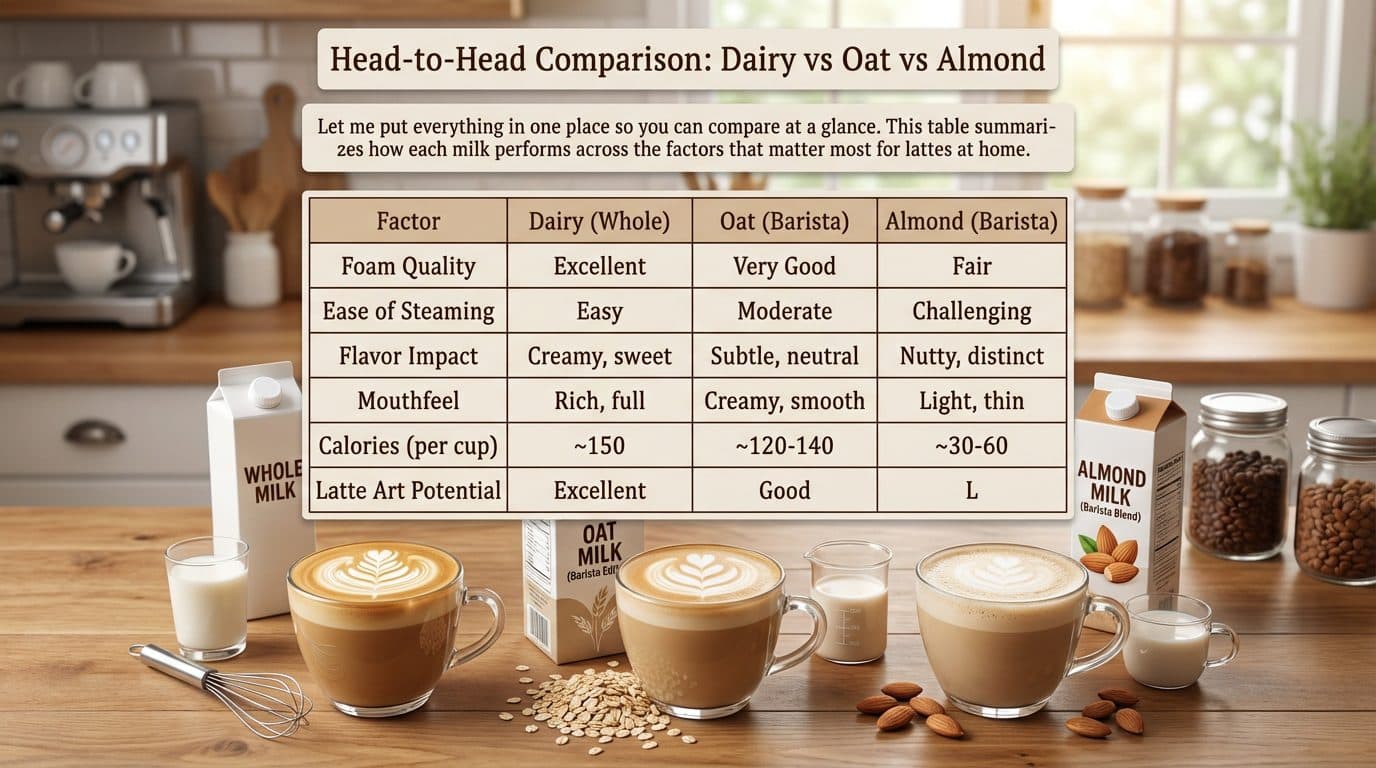
Let me put everything in one place so you can compare at a glance. This table summarizes how each milk performs across the factors that matter most for lattes at home.
| Factor | Dairy (Whole) | Oat (Barista) | Almond (Barista) |
|---|---|---|---|
| Foam Quality | Excellent | Very Good | Fair |
| Ease of Steaming | Easy | Moderate | Challenging |
| Flavor Impact | Creamy, sweet | Subtle, neutral | Nutty, distinct |
| Mouthfeel | Rich, full | Creamy, smooth | Light, thin |
| Calories (per cup) | ~150 | ~120-140 | ~30-60 |
| Latte Art Potential | Excellent | Good | Limited |
| Price | $ | $$ | $$ |
| Environmental Impact | Higher | Lower | Lower |
Who Should Choose Which Milk?
Dairy Milk Is For You If:
- You want the most authentic, traditional latte experience
- You’re learning to steam and need a forgiving milk
- Latte art is a priority
- You have no dietary restrictions around dairy
- Budget matters—dairy is typically cheapest
Dairy Milk Is NOT For You If:
- You’re lactose intolerant or vegan
- You’re watching saturated fat intake
- Environmental impact is a major concern
Oat Milk Is For You If:
- You want plant-based without sacrificing foam quality
- You prefer a neutral flavor that lets espresso shine
- You want good latte art capability from a non-dairy option
- Creamy texture matters to you
Oat Milk Is NOT For You If:

- You have gluten sensitivity (unless using certified gluten-free)
- You’re watching carbohydrate intake
- You’re on a tight budget (barista versions cost more)
Almond Milk Is For You If:
- You’re counting calories and want the lightest option
- You enjoy nutty flavor notes in your coffee
- You’re already comfortable with steaming technique
- You’re avoiding dairy and soy
Almond Milk Is NOT For You If:
- You’re a beginner at frothing milk
- You want silky microfoam or good latte art
- You have tree nut allergies
- You prefer your espresso flavor unaltered
Tips for Steaming Any Milk at Home
Regardless of which milk you choose, these techniques will help you get better results:
- Start cold – milk straight from the fridge gives you more time to work before it overheats
- Use a thermometer at first – aim for 140-150°F (60-65°C); plant milks can scorch above 160°F
- Listen for the right sound – a steady “tss” sound means you’re incorporating air; a screeching sound means your wand is too shallow
- Swirl immediately – after steaming, tap the pitcher and swirl to integrate foam and eliminate large bubbles
- Don’t re-steam – reheating already steamed milk breaks down the proteins and ruins texture
Barista Tip: For plant milks, keep the steam wand tip slightly deeper than you would with dairy. This helps prevent the large, unstable bubbles that plant milks tend to produce.
Frequently Asked Questions
Can I use regular grocery store plant milk for lattes?
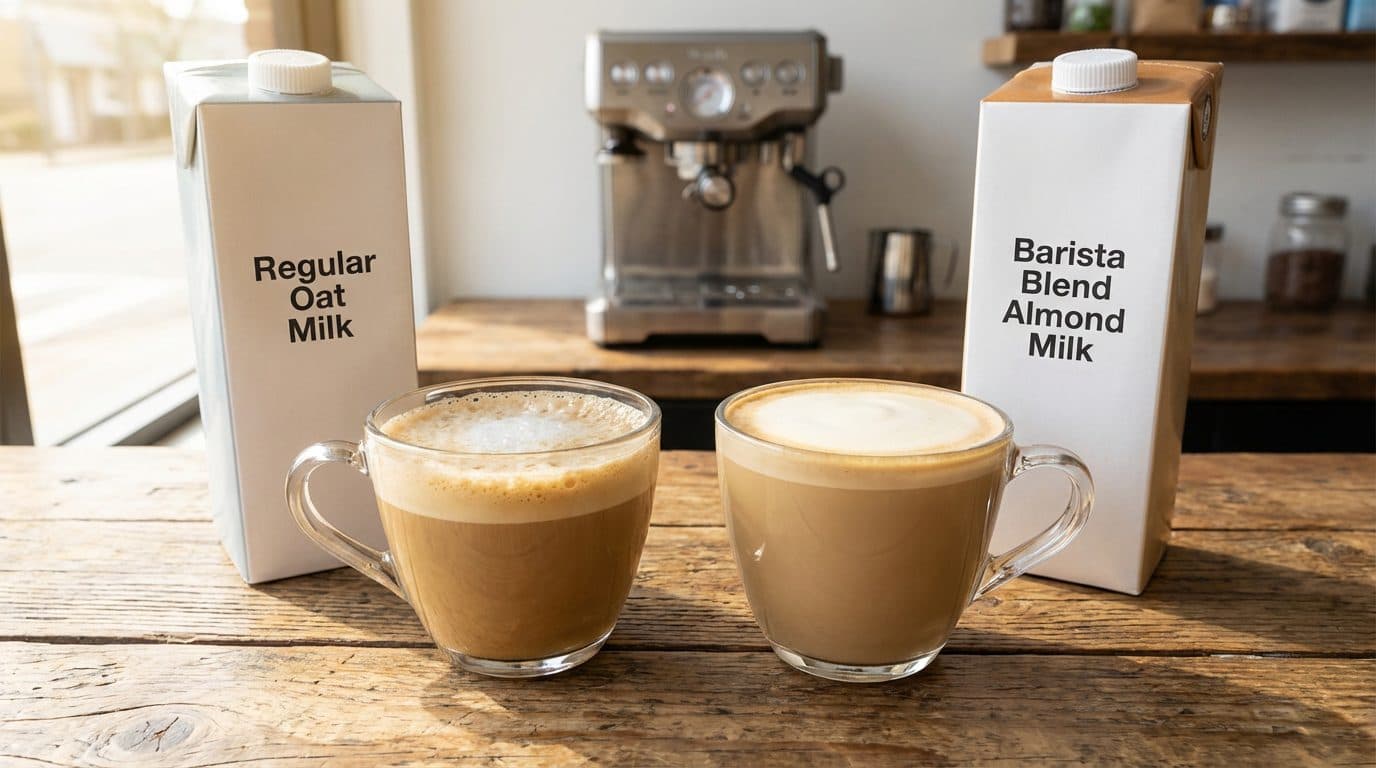
You can, but results will be inconsistent. Regular oat or almond milk lacks the added fats and stabilizers that barista versions contain. Expect thinner foam, possible separation, and less creamy texture. For occasional lattes, it might be fine; for daily use, investing in barista blends makes a noticeable difference.
Why does my almond milk curdle when I add espresso?
The acidity and heat of espresso can cause plant milks to curdle. Almond milk is particularly prone to this. To prevent curdling, try warming the milk slightly before combining, add espresso to milk rather than milk to espresso, or switch to a barista blend formulated to resist curdling.
Which milk is best for latte art at home?
Whole dairy milk is the most forgiving and produces the best microfoam for latte art. Oat barista blends come in second place—with practice, you can pour decent hearts and rosettas. Almond milk is challenging for latte art due to its thin foam consistency.
Does milk type affect caffeine content in my latte?
No, your milk choice has zero impact on caffeine. The caffeine comes entirely from your espresso shot. What milk does affect is how you perceive the coffee’s strength—fats in whole dairy milk can slightly mute bitterness, making the same shot taste “softer.”
How long do barista milk alternatives last after opening?
Most barista oat and almond milks last 7-10 days refrigerated after opening. Check individual package labels. Unlike dairy, plant milks may not smell obviously sour when spoiled—they might taste off or have unusual texture. When in doubt, toss it out.
Final Thoughts: Choosing Your Perfect Latte Milk
The best milk for lattes at home ultimately comes down to what matters most to you. For pure performance and that classic latte experience, whole dairy milk remains the gold standard. For plant-based drinkers who don’t want to compromise on texture or foam, oat milk barista blends are the clear winner. And for calorie-conscious coffee lovers who don’t mind a nuttier flavor and simpler foam, almond milk can work with the right technique.
My suggestion? If you’re unsure, start with oat barista milk. It offers the best balance of accessibility, performance, and taste for most home baristas. From there, you can experiment with dairy for comparison or almond for variety.
Try steaming each option at least three or four times before making your final call—the first attempt rarely represents a milk’s true potential. Once you find your favorite, you’ll have one less variable to worry about and can focus on what really matters: enjoying an excellent latte every single morning.




Comments