



Table of Contents
- What Is Ashwagandha Coffee?
- Understanding Morning Anxiety and Caffeine
- How Caffeine Triggers Anxiety
- How Ashwagandha May Help With Anxiety
- What the Research Says
- A Realistic Expectation
- How to Make Ashwagandha Coffee at Home
- What You'll Need
- Simple Brewing Steps
- Taste Profile
- Who Should Try Ashwagandha Coffee?
- Who Is This For?
- Who Is This NOT For?
- Common Myths About Ashwagandha Coffee
- Myth 1: It Will Make You Sleepy
- Myth 2: You'll Feel Results Immediately
- Myth 3: More Is Better
- Frequently Asked Questions
- Does ashwagandha cancel out caffeine?
- How long does it take for ashwagandha to work?
- Can I take ashwagandha coffee every day?
- What's the best time to drink ashwagandha coffee?
- Does ashwagandha coffee taste bad?
- Final Thoughts: Is Ashwagandha Coffee Worth Trying?
Do you dread that jittery, anxious feeling that sometimes accompanies your morning cup of coffee? You’re not alone. Many coffee lovers experience a spike in anxiety alongside their caffeine boost, leaving them searching for a gentler way to start the day. Enter ashwagandha coffee—a trending blend that promises the alertness you crave without the unwanted edge.
In this post, I’ll break down what ashwagandha coffee actually is, how it might help with morning anxiety, and whether it’s worth adding to your routine. By the end, you’ll have a clear picture of whether this adaptogenic brew deserves a spot in your kitchen.
What Is Ashwagandha Coffee?
Ashwagandha coffee is simply regular coffee blended with ashwagandha root powder or extract. Ashwagandha (Withania somnifera) is an ancient herb used in Ayurvedic medicine for thousands of years. It’s classified as an “adaptogen,” meaning it’s believed to help your body manage stress more effectively.
You can find ashwagandha coffee in a few forms:
- Pre-blended ground coffee with ashwagandha already mixed in
- Instant coffee packets containing ashwagandha
- DIY versions where you add ashwagandha powder to your regular brew
The idea is straightforward: combine the energizing effects of caffeine with the calming properties of ashwagandha. In my experience, the taste is earthy and slightly bitter, but it blends surprisingly well with coffee’s natural flavor profile—especially in darker roasts.
Understanding Morning Anxiety and Caffeine
Before diving into whether ashwagandha can help, let’s talk about why morning anxiety happens in the first place. For many people, cortisol levels are naturally highest in the morning. This is your body’s way of waking you up. Add caffeine to the mix, and you’re essentially pouring fuel on an already active fire.
How Caffeine Triggers Anxiety
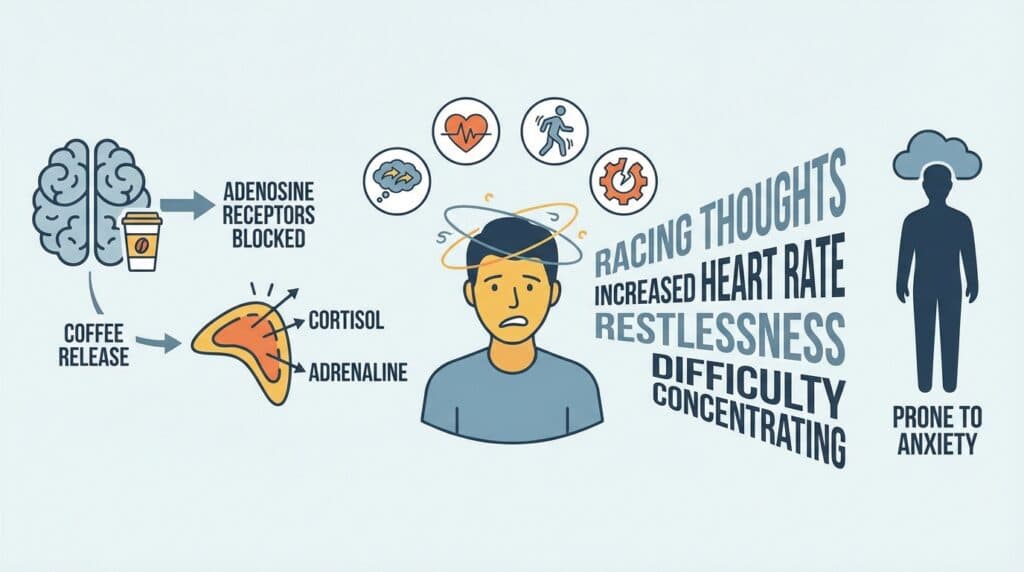
Caffeine blocks adenosine receptors in your brain, which prevents you from feeling sleepy. However, it also stimulates your adrenal glands to release more cortisol and adrenaline. For sensitive individuals, this can lead to:
- Racing thoughts
- Increased heart rate
- Restlessness or feeling “wired”
- Difficulty concentrating
I’ve found that people who are already prone to anxiety often feel these effects more intensely. If your morning coffee leaves you feeling more stressed than energized, your body might be telling you something.
How Ashwagandha May Help With Anxiety
Here’s where things get interesting. Ashwagandha has been studied for its potential to reduce cortisol levels and promote a sense of calm. Unlike sedatives, it doesn’t make you drowsy—it simply helps your body respond to stress more efficiently.
What the Research Says
Several studies have examined ashwagandha’s effects on stress and anxiety:
- A 2019 study published in Medicine found that participants taking ashwagandha extract experienced significantly lower cortisol levels compared to a placebo group
- Research in the Indian Journal of Psychological Medicine showed reduced anxiety scores in adults taking ashwagandha over 60 days
- A systematic review noted improvements in sleep quality, which indirectly affects morning anxiety levels
In short, ashwagandha appears to work by modulating your stress response system. When paired with coffee, the theory is that it can “smooth out” the stimulating effects of caffeine, giving you energy without the anxious edge.
A Realistic Expectation
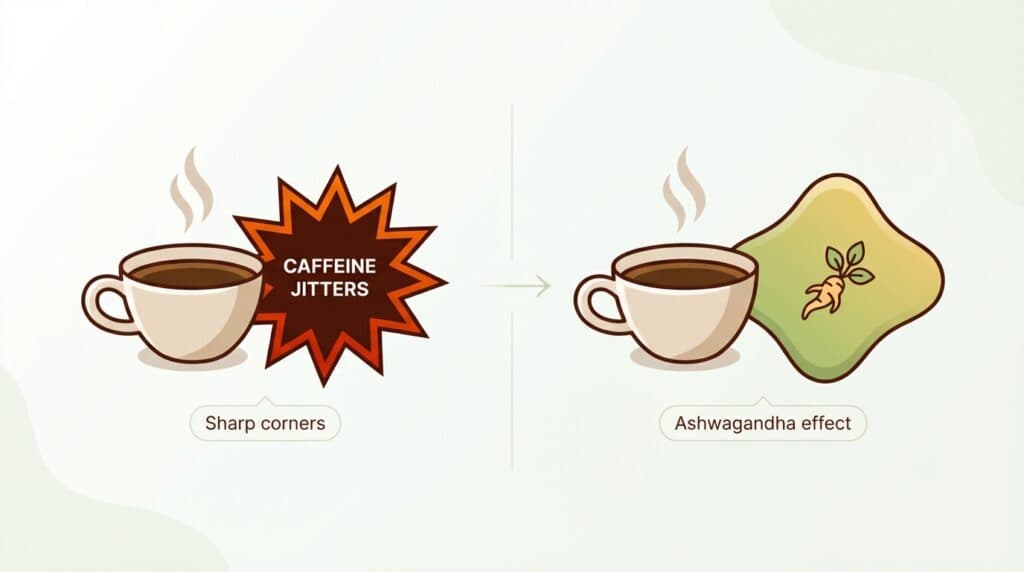
I want to be honest with you: ashwagandha isn’t a magic bullet. If you’re dealing with severe anxiety, this herb alone won’t solve the problem. However, for mild to moderate morning jitters caused by caffeine sensitivity, many people report noticeable improvements.
Think of it as taking the sharp corners off your coffee experience rather than eliminating the ride altogether.
How to Make Ashwagandha Coffee at Home
Making ashwagandha coffee is surprisingly simple. Here’s what you’ll need and how to do it.
What You’ll Need
- Your favorite coffee (any brewing method works)
- Ashwagandha powder or extract (look for KSM-66 or Sensoril standardized extracts for quality)
- Optional: milk, creamer, or sweetener of choice
Simple Brewing Steps
- Brew your coffee as you normally would
- Add 300-600mg of ashwagandha powder to your cup (start with a lower dose)
- Stir thoroughly—ashwagandha can clump if not mixed well
- Add milk or sweetener if desired (this can help mask the earthy taste)
Barista Tip: If you find the taste too strong, try blending ashwagandha into a latte with oat milk and a touch of honey. The creaminess helps balance the herb’s natural bitterness.
Taste Profile
Expect a slightly earthy, almost mushroom-like undertone. It’s not unpleasant, but it does change your coffee’s flavor. Dark roasts and chocolate-forward beans tend to complement ashwagandha better than bright, fruity coffees.
Who Should Try Ashwagandha Coffee?
This blend isn’t for everyone. Here’s a quick breakdown to help you decide.
Who Is This For?
- People who love coffee but experience mild anxiety or jitters
- Those looking for a natural way to manage stress
- Anyone curious about adaptogens and functional beverages
- Coffee drinkers who want sustained energy without crashes
Who Is This NOT For?
- Pregnant or breastfeeding individuals (ashwagandha isn’t recommended)
- People taking thyroid medications or immunosuppressants
- Anyone with autoimmune conditions (consult your doctor first)
- Those who dislike earthy flavors in their coffee
Common Myths About Ashwagandha Coffee
Let’s clear up some misconceptions I’ve encountered.
Myth 1: It Will Make You Sleepy
Not true. Ashwagandha is calming, not sedating. You’ll still feel alert from the caffeine—just potentially less anxious.
Myth 2: You’ll Feel Results Immediately
Some people notice subtle effects right away, but ashwagandha typically works best with consistent use over several weeks. Don’t expect a dramatic shift after one cup.
Myth 3: More Is Better
Stick to recommended doses (typically 300-600mg daily). Higher amounts don’t necessarily mean better results and could cause digestive upset.
Frequently Asked Questions
Does ashwagandha cancel out caffeine?
No, ashwagandha doesn’t block or neutralize caffeine. Instead, it may help balance your body’s stress response, potentially reducing the anxious side effects while preserving the alertness caffeine provides.
How long does it take for ashwagandha to work?
While some people notice subtle effects within a few days, most research suggests that consistent use over 4-8 weeks produces the most noticeable benefits for stress and anxiety reduction.
Can I take ashwagandha coffee every day?
For most healthy adults, daily consumption is considered safe. However, some practitioners recommend cycling off periodically (for example, taking a week off every two months). Listen to your body and consult a healthcare provider if unsure.
What’s the best time to drink ashwagandha coffee?
Morning is ideal since you’re combining it with your regular coffee routine. The ashwagandha may help buffer the cortisol spike that naturally occurs in the morning, making it a strategic time to consume it.
Does ashwagandha coffee taste bad?
It has an earthy, slightly bitter flavor that some people love and others need time to adjust to. Using quality coffee, adding milk, or choosing flavored creamers can help if you’re sensitive to the taste.
Final Thoughts: Is Ashwagandha Coffee Worth Trying?
If morning anxiety has been stealing the joy from your coffee ritual, ashwagandha coffee might be worth experimenting with. It’s not a cure-all, but the combination of caffeine’s energy boost and ashwagandha’s stress-modulating properties makes sense on paper—and many people find it genuinely helpful in practice.
Start with a small dose, give it a few weeks, and pay attention to how you feel. You might discover that this ancient herb is exactly what your modern morning routine has been missing. Life’s too short for anxious coffee—so why not explore a calmer way to caffeinate?



Comments