


Table of Contents
- Understanding the Main Types of Coffee Makers on Amazon
- Drip Coffee Makers
- Single-Serve Pod Machines
- Pour-Over and Manual Brewers
- French Press
- Espresso Machines
- Key Features That Actually Matter When Buying Your First Coffee Maker
- Brew Capacity
- Brewing Temperature
- Programmability
- Ease of Cleaning
- Carafe Type: Glass vs. Thermal
- Setting a Realistic Budget for Your First Coffee Maker
- Under $50: Entry-Level Territory
- $50–$100: The Sweet Spot for Beginners
- $100–$200: Enthusiast Upgrades
- How to Read Amazon Reviews Without Getting Misled
- Focus on 3- and 4-Star Reviews
- Look for Verified Purchases and Photos
- Search for Long-Term Updates
- Watch for Red Flags
- Frequently Asked Questions
- Should I buy a coffee maker with a built-in grinder?
- Are expensive brands like Breville or Technivorm worth it for beginners?
- How important is the warranty when buying on Amazon?
- Can I trust Amazon's "Amazon's Choice" badge?
- What's the single best coffee maker for an absolute beginner?
- Summary and Your Next Steps
So you’ve decided to stop relying on overpriced café lattes and start brewing your own coffee at home. Smart move. But here’s the thing—searching for “coffee maker” on Amazon returns thousands of results, ranging from $15 basic machines to $500 espresso monsters. How do you know which one is right for you? I’ve been down this rabbit hole more times than I care to admit, and I’ve helped dozens of friends navigate the overwhelming world of home coffee brewing. This guide will walk you through everything you need to know about buying your first coffee maker on Amazon, so you can confidently hit that “Add to Cart” button without buyer’s remorse.
By the end of this guide, you’ll understand the main types of coffee makers available, which features actually matter (and which are just marketing fluff), how to set a realistic budget, and what to look for in Amazon reviews. Let’s brew this.
Understanding the Main Types of Coffee Makers on Amazon
Before you start comparing prices and reading reviews, you need to figure out which style of coffee maker suits your lifestyle. Each type produces a different flavor profile and requires varying levels of effort. Here’s a breakdown of what you’ll encounter.
Drip Coffee Makers
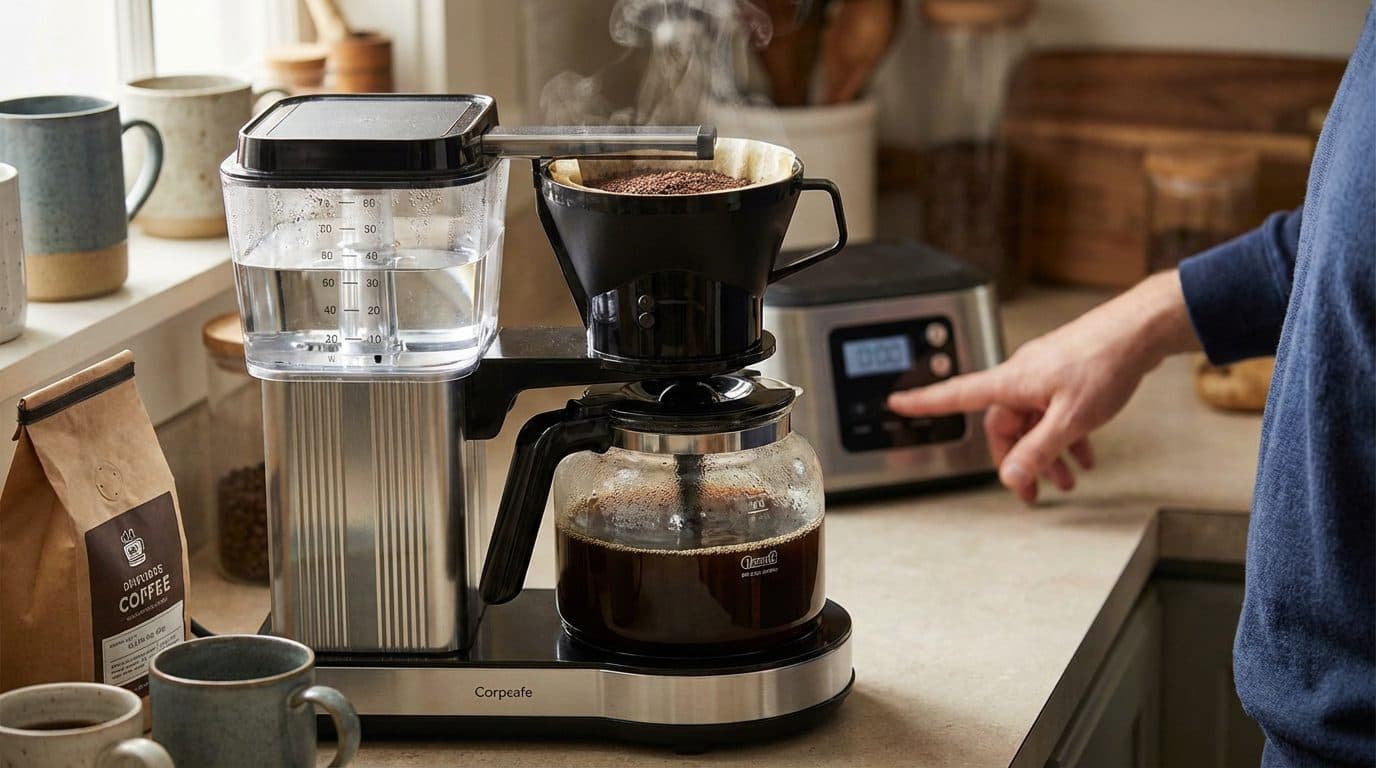
These are the classic machines you probably grew up with. You add water to a reservoir, put ground coffee in a filter, press a button, and wait. They’re incredibly beginner-friendly and perfect for brewing multiple cups at once. In my experience, drip coffee makers are ideal if you’re making coffee for a household or want a pot ready when you wake up (thanks to programmable timers).
- Best for: Families, batch brewing, hands-off convenience
- Flavor profile: Clean, mild, consistent
- Price range on Amazon: $20–$150
Single-Serve Pod Machines
Think Keurig, Nespresso, and similar brands. You pop in a pod or capsule, press a button, and have coffee in under a minute. They’re convenient but come with ongoing pod costs and environmental considerations. If you’re the only coffee drinker in your home and value speed above all else, these machines deliver.
- Best for: Solo drinkers, small spaces, maximum convenience
- Flavor profile: Varies by pod brand, generally less nuanced
- Price range on Amazon: $50–$200
Pour-Over and Manual Brewers
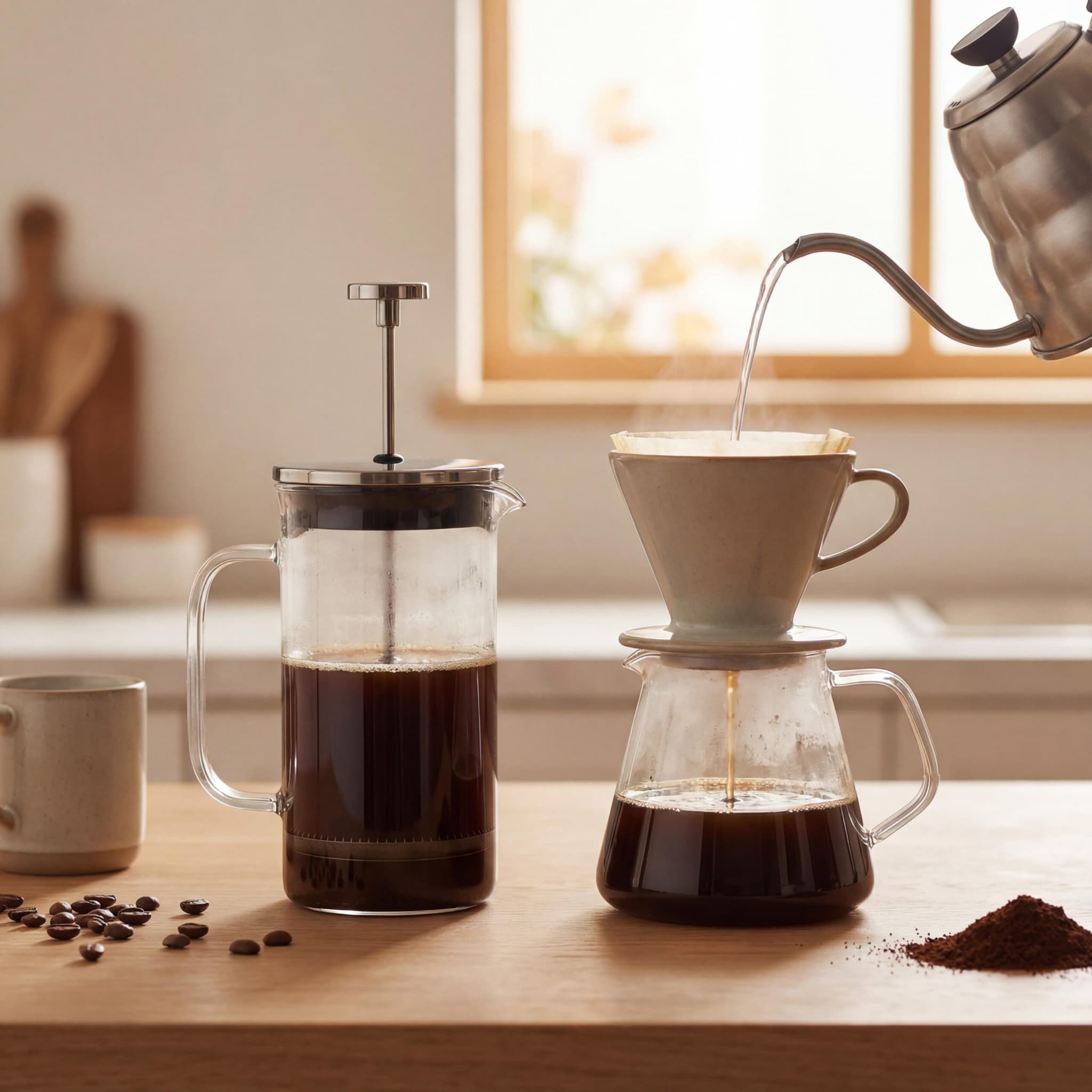
Devices like the Chemex, Hario V60, or basic pour-over drippers give you complete control over your brew. They require more attention and technique but reward you with exceptional flavor clarity. I’ve found that many coffee enthusiasts eventually gravitate toward manual brewing once they catch the bug.
- Best for: Flavor chasers, weekend rituals, those who enjoy the process
- Flavor profile: Bright, clean, complex
- Price range on Amazon: $10–$80
French Press
A French press steeps coarse coffee grounds in hot water, then uses a metal mesh filter to separate them. It produces a rich, full-bodied cup with natural oils intact. This method is forgiving for beginners and requires no electricity—just hot water and patience.
- Best for: Bold coffee lovers, travelers, minimalists
- Flavor profile: Heavy body, robust, slightly gritty
- Price range on Amazon: $15–$50
Espresso Machines
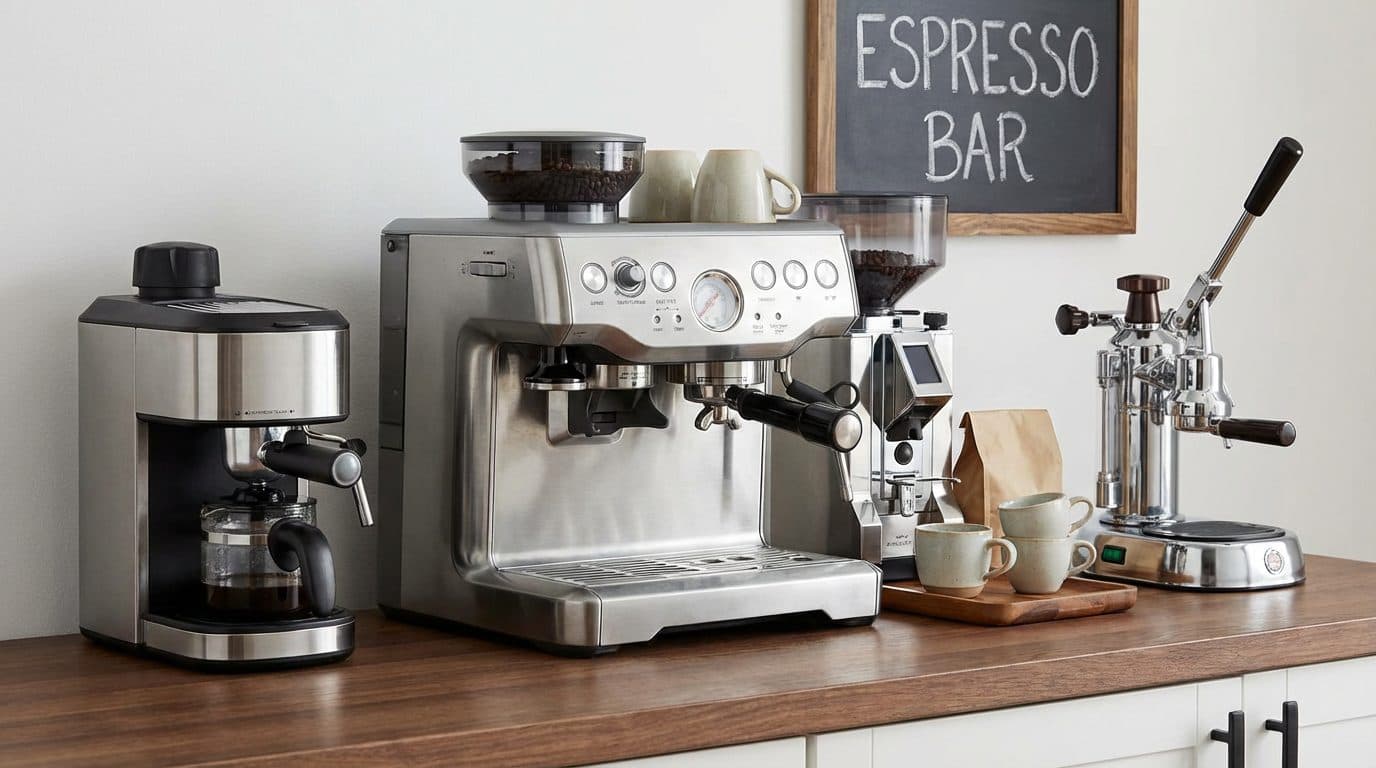
If you dream of making lattes, cappuccinos, or straight espresso shots at home, you’ll need a dedicated espresso machine. These range from affordable steam-driven models to serious semi-automatic machines with proper pump pressure. Fair warning: espresso is a deeper rabbit hole with a steeper learning curve.
- Best for: Espresso enthusiasts, latte lovers, those willing to learn
- Flavor profile: Concentrated, intense, versatile
- Price range on Amazon: $80–$500+
Key Features That Actually Matter When Buying Your First Coffee Maker
Amazon listings are packed with feature lists designed to impress you. But not all features are created equal. Here’s what genuinely impacts your daily brewing experience—and what you can safely ignore.
Brew Capacity
Ask yourself: how many cups do you realistically drink per day, and are you brewing for others? A single-serve machine makes sense for one person, while a 12-cup drip maker suits a household. Buying too large means stale coffee sitting on a warming plate; too small means constant refilling.
Brewing Temperature
This is a feature many first-time buyers overlook. Optimal coffee extraction happens between 195°F and 205°F (90–96°C). Cheaper machines often don’t reach these temperatures, resulting in under-extracted, sour coffee. Look for machines certified by the Specialty Coffee Association (SCA) if quality matters to you.
Programmability
Want coffee ready when your alarm goes off? Programmable timers let you set brewing times in advance. This feature is standard on mid-range drip machines but not universal. If your morning routine is chaotic, this convenience might be worth prioritizing.
Ease of Cleaning
I’ve found that the best coffee maker is the one you’ll actually use—and nothing kills enthusiasm faster than a machine that’s annoying to clean. Look for removable water reservoirs, dishwasher-safe parts, and accessible brew baskets. Read reviews specifically mentioning cleaning; real users will tell you if it’s a hassle.
Carafe Type: Glass vs. Thermal
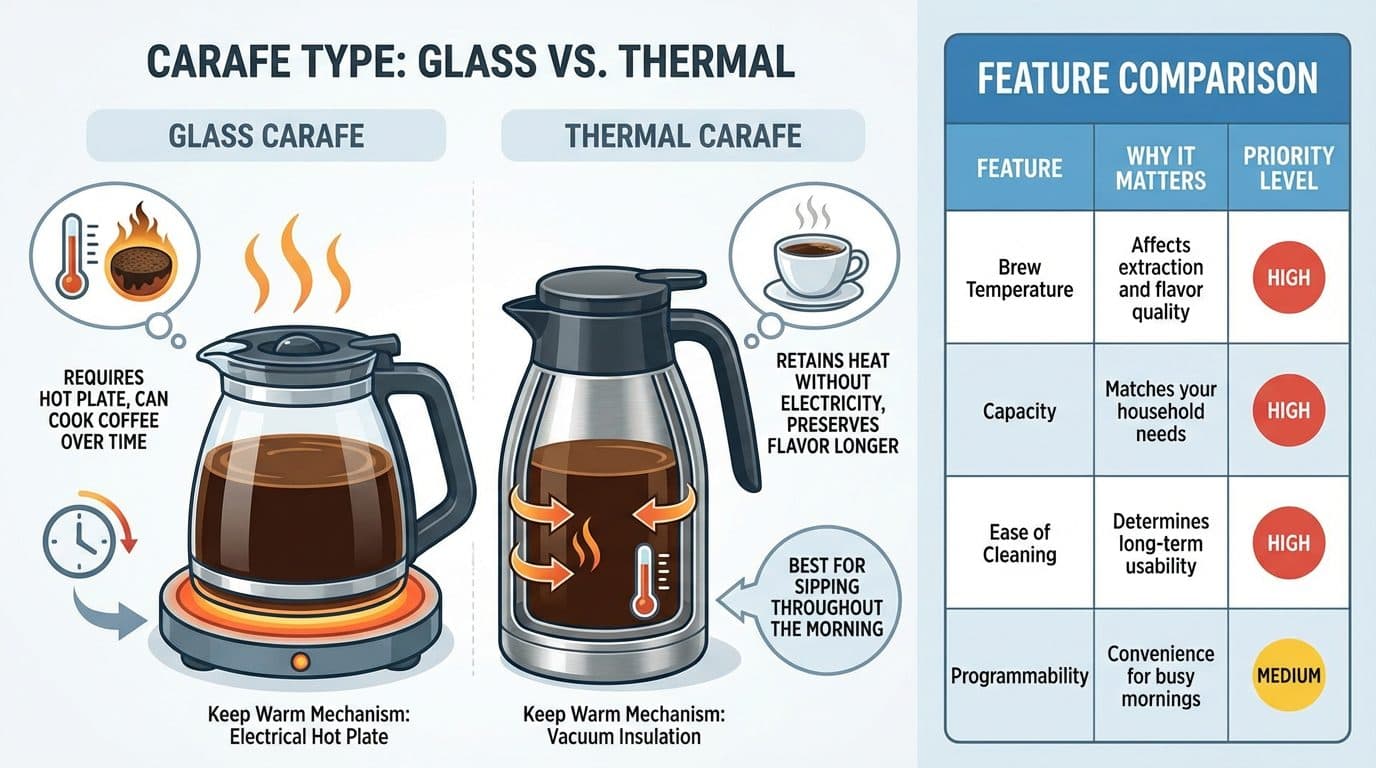
Glass carafes require a hot plate to keep coffee warm, which can cook your coffee over time. Thermal carafes retain heat without electricity and preserve flavor longer. If you sip coffee throughout the morning, thermal is the way to go.
| Feature | Why It Matters | Priority Level |
|---|---|---|
| Brew Temperature | Affects extraction and flavor quality | High |
| Capacity | Matches your household needs | High |
| Ease of Cleaning | Determines long-term usability | High |
| Programmability | Convenience for busy mornings | Medium |
| Thermal Carafe | Keeps coffee fresh longer | Medium |
| Built-in Grinder | Freshness boost, adds complexity | Low (for first-timers) |
Setting a Realistic Budget for Your First Coffee Maker
Here’s a truth that took me years to accept: expensive doesn’t always mean better, but extremely cheap often means disappointing. For your first coffee maker on Amazon, here’s how I’d think about budgeting.
Under $50: Entry-Level Territory
You can find functional drip machines, basic French presses, and pour-over setups in this range. Expect simpler construction and fewer features, but plenty of options will brew perfectly acceptable coffee. If you’re testing the waters, this is a sensible starting point.
$50–$100: The Sweet Spot for Beginners
This range unlocks better build quality, more consistent brewing temperatures, and useful features like programmable timers. In my experience, machines in this bracket offer the best value for first-time buyers. You’re getting reliable performance without overcommitting financially.
$100–$200: Enthusiast Upgrades
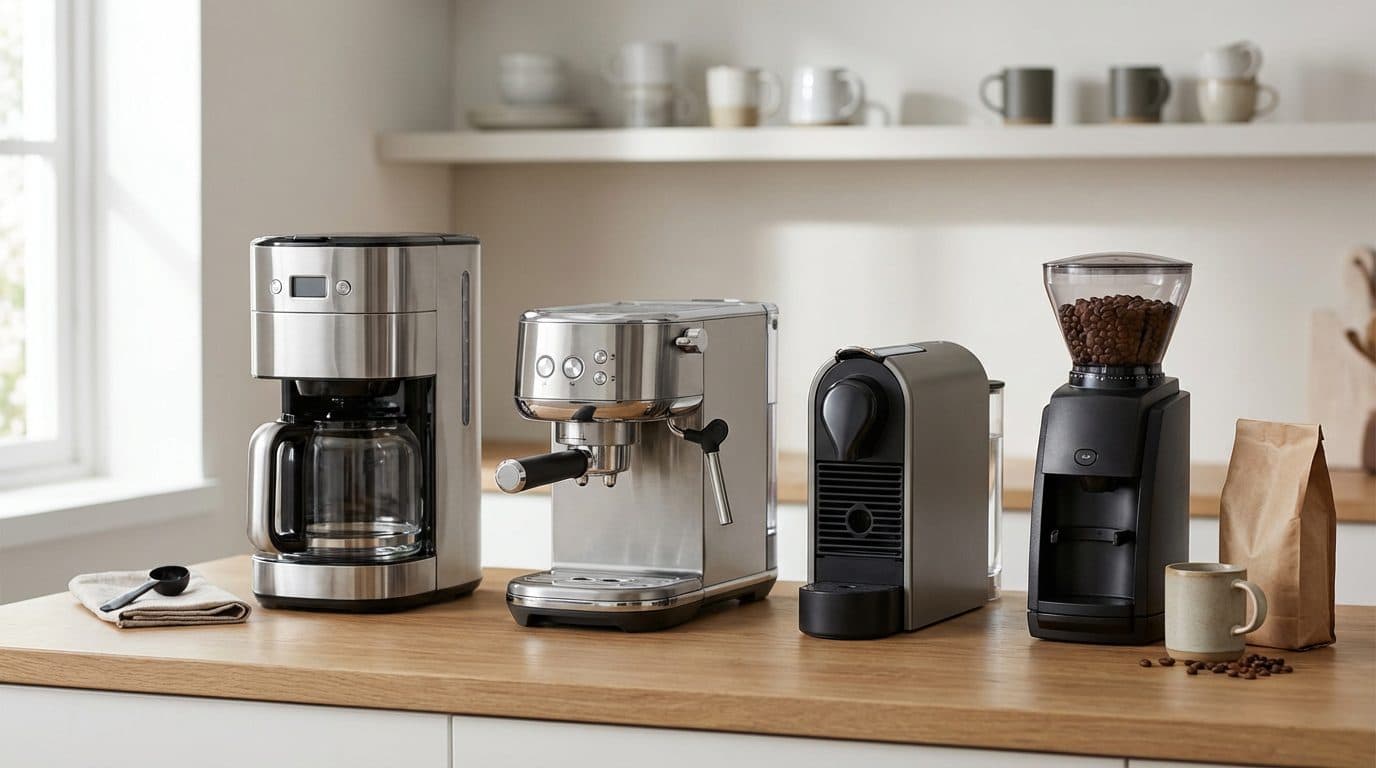
If you already know you love coffee and want a machine that’ll last years, this tier delivers. You’ll find SCA-certified drip brewers, quality single-serve machines, and entry-level espresso options. Consider this range if you’re confident about your preferences.
Barista Tip: Whatever you spend on the machine, budget at least $30–$50 for a decent burr grinder. Fresh-ground coffee makes a bigger difference than any fancy feature on your brewer.
How to Read Amazon Reviews Without Getting Misled
Amazon reviews can be incredibly helpful—or completely misleading. After years of sifting through thousands of reviews, here’s my approach to finding honest, useful feedback.
Focus on 3- and 4-Star Reviews
Five-star reviews are sometimes fake or written by overly enthusiastic new owners. One-star reviews often reflect user error or shipping damage. The most balanced, detailed feedback usually lives in the middle. These reviewers liked the product enough to keep it but have genuine critiques.
Look for Verified Purchases and Photos
Reviews marked “Verified Purchase” come from people who actually bought the product through Amazon. User-submitted photos are even better—they show real-world appearance and scale. If a $30 machine looks flimsy in customer photos, that tells you something the professional product shots won’t.
Search for Long-Term Updates
Some reviewers update their reviews after months of use. Phrases like “Update after 6 months” or “Still going strong after a year” provide insight into durability. A machine that works great on day one but breaks after three months isn’t worth your money.
Watch for Red Flags
Be skeptical of reviews that use marketing language, sound generic, or all appear on the same date. Also beware of listings with thousands of reviews but a very new release date—sometimes reviews are merged from older products or manipulated.
Frequently Asked Questions
Should I buy a coffee maker with a built-in grinder?
For your first machine, I’d generally say no. Built-in grinders add complexity, are harder to clean, and often produce inconsistent grinds. You’re better off buying a quality standalone grinder and a simpler brewer. This gives you more flexibility and usually better results.
Are expensive brands like Breville or Technivorm worth it for beginners?
These are excellent machines, but they might be overkill if you’re still figuring out your preferences. It makes more sense to start with a solid mid-range option, learn what you like, and upgrade later. That said, if budget isn’t a concern and you’re committed to quality coffee, they won’t disappoint.
How important is the warranty when buying on Amazon?
More important than most people realize. Coffee makers deal with heat and water daily, which means parts can fail. Look for at least a one-year manufacturer warranty. Some brands like Bonavita and Cuisinart have responsive customer service; check reviews for warranty experiences.
Can I trust Amazon’s “Amazon’s Choice” badge?
Not blindly. The badge indicates a well-priced, highly-rated product that ships quickly, but it’s generated algorithmically. It doesn’t mean Amazon’s team personally tested and endorsed the machine. Use it as one data point, not a guarantee of quality.
What’s the single best coffee maker for an absolute beginner?
There’s no single answer since it depends on your priorities, but if you want simplicity and reliability, a mid-range drip coffee maker between $60 and $90 is hard to beat. Brands like Hamilton Beach, Mr. Coffee, and Ninja offer solid options. For those who prefer minimal cleanup and quick brewing, a basic French press or pour-over dripper under $30 is a fantastic low-risk starting point.
Summary and Your Next Steps
Buying your first coffee maker on Amazon doesn’t have to be overwhelming. Start by identifying which brewing style matches your lifestyle—whether that’s hands-off drip brewing, speedy pod machines, or hands-on manual methods. Focus on the features that genuinely matter: brew temperature, capacity, and ease of cleaning. Set a realistic budget (the $50–$100 range hits the sweet spot for most beginners), and learn to read reviews critically by seeking out verified purchases and mid-range ratings.
Life is too short for bad coffee, but it’s also too short to stress over a purchase. Pick a machine that fits your needs, order some quality beans, and enjoy the journey. Once you start brewing at home, you’ll wonder why you waited so long. Happy brewing.

Comments