


Table of Contents
- What Is Backflushing and Why Does It Matter?
- Signs Your Machine Needs Backflushing
- Why Cafiza Is the Home Barista's Best Friend
- What Makes Cafiza Different
- What You'll Need for Backflushing
- Essential Gear
- Optional but Helpful
- How to Backflush with Cafiza: Step-by-Step
- Step 1: Prepare Your Machine
- Step 2: Add Cafiza to the Blind Basket
- Step 3: Lock in and Backflush
- Step 4: Remove and Inspect
- Step 5: Rinse Thoroughly
- Step 6: Clean the Shower Screen and Gasket
- Step 7: Pull a Blank Shot
- Common Backflushing Mistakes to Avoid
- Creating a Maintenance Schedule That Works
- Frequently Asked Questions
- Can I use dish soap instead of Cafiza for backflushing?
- How do I know if my machine has a three-way solenoid valve?
- Is backflushing the same as descaling?
- Will backflushing void my warranty?
- How long does a container of Cafiza last?
- Conclusion: Small Effort, Big Flavor Payoff
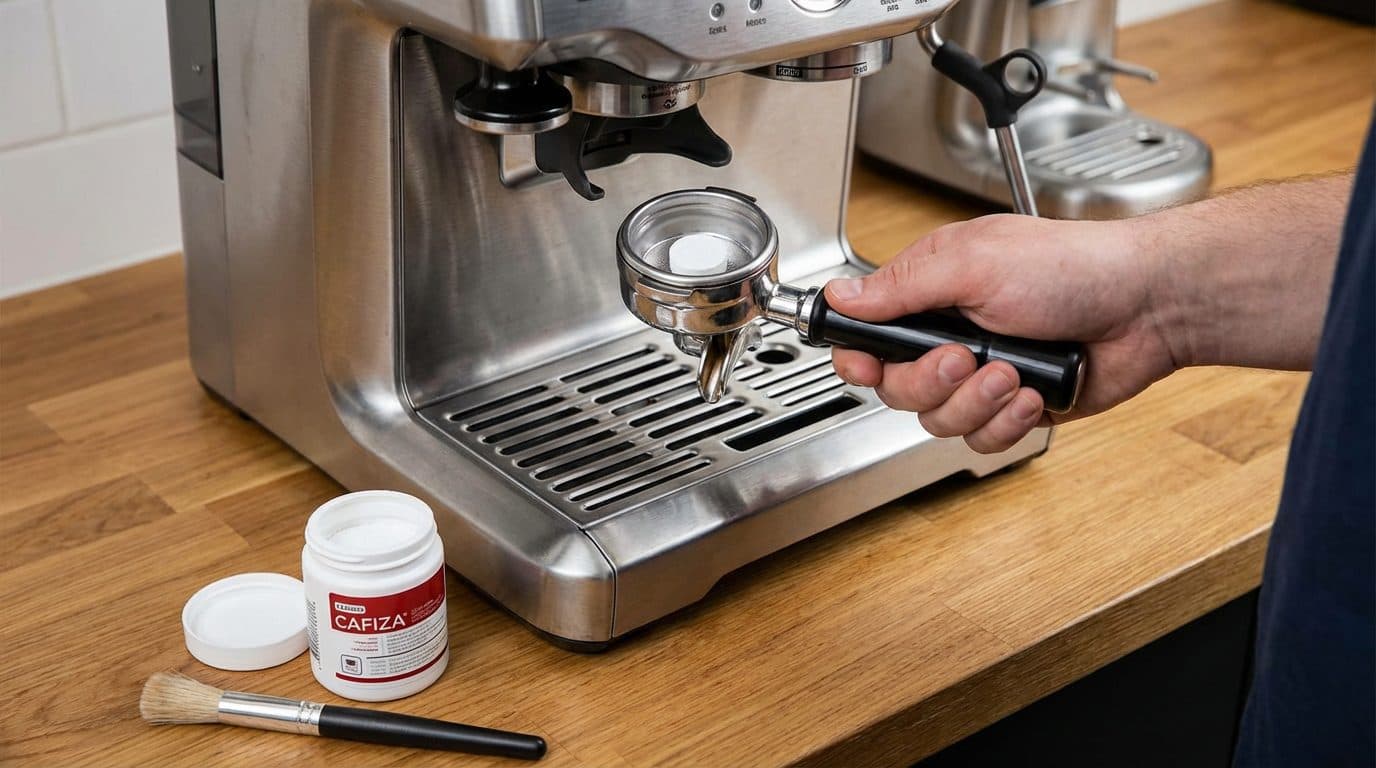
Ever notice your espresso tasting a bit off lately, even with freshly roasted beans and a perfectly dialed-in grind? That lingering bitterness or strange aftertaste might not be your technique at all. It’s probably your machine crying out for a good cleaning. If you’ve got a semi-automatic or automatic espresso machine with a three-way solenoid valve, learning how to backflush with Cafiza is one of the most important maintenance skills you’ll ever pick up. In my experience, it’s the difference between consistently great shots and wondering why your coffee tastes like yesterday’s burnt offerings.
In this guide, you’ll learn exactly what backflushing is, why Cafiza is the go-to cleaner for home baristas on a budget, and how to perform this essential maintenance step without any guesswork. Whether you’re new to espresso or just never got around to reading your machine’s manual, consider this your friendly crash course in keeping your setup running like new.
What Is Backflushing and Why Does It Matter?
Backflushing is a cleaning process that reverses the flow of water through your espresso machine’s brew group and three-way solenoid valve. Instead of water flowing down through your coffee puck and out the portafilter, a blind basket (a filter basket with no holes) forces the water back up into the machine. This dislodges built-up coffee oils, fine grounds, and residue that accumulate over time.
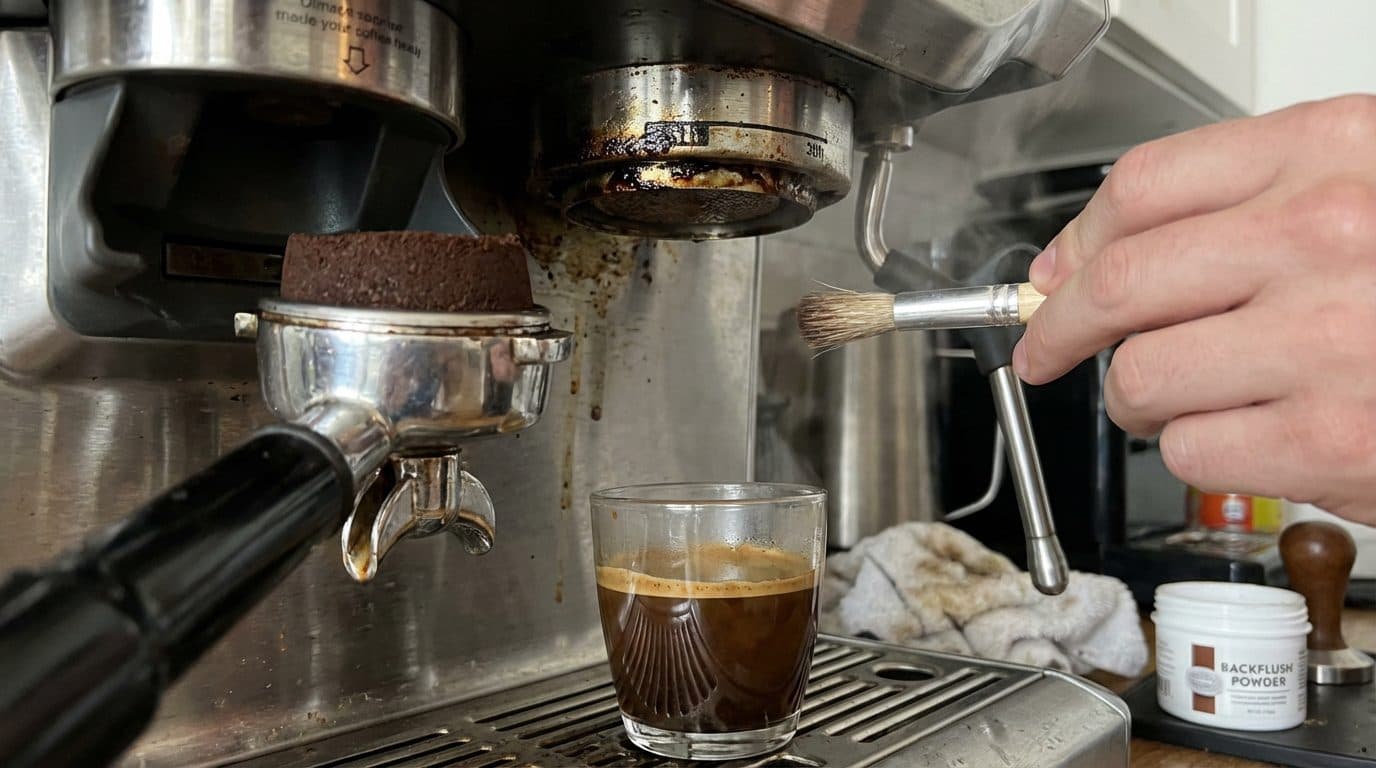
Here’s the thing most people don’t realize: coffee oils go rancid. Those beautiful, aromatic oils that give your espresso its crema and flavor? They start breaking down and turning bitter within days. Every shot you pull leaves a tiny bit of residue behind in the group head, shower screen, and valve. Without regular backflushing, that residue builds up into a nasty, flavor-ruining layer.
Signs Your Machine Needs Backflushing
- Bitter or off-tasting espresso that wasn’t there before
- Visible coffee buildup around the group head or shower screen
- Slow or uneven water flow during extraction
- Strange odors when you run water through the group
- It’s been more than a week since your last cleaning (for daily users)
In short, if you’re pulling shots regularly and not backflushing, you’re probably drinking more rancid oil residue than you’d like to think about. Life is too short for bad coffee, and it’s definitely too short for dirty machine coffee.
Why Cafiza Is the Home Barista’s Best Friend
There are several espresso machine cleaners on the market, but Cafiza (made by Urnex) has earned its reputation as the gold standard for good reason. It’s specifically formulated to dissolve coffee oils and residue without damaging your machine’s internal components. I’ve found that many generic cleaners either don’t work as well or leave their own residue behind, which defeats the purpose entirely.
What Makes Cafiza Different
- Phosphate-free formula: Safer for you and better for the environment
- Fast-acting: Dissolves oils quickly, so you’re not waiting around
- Widely available: Easy to find online or at coffee equipment retailers
- Budget-friendly: A small container lasts months for home use
- Professional-grade: The same product many commercial cafes use
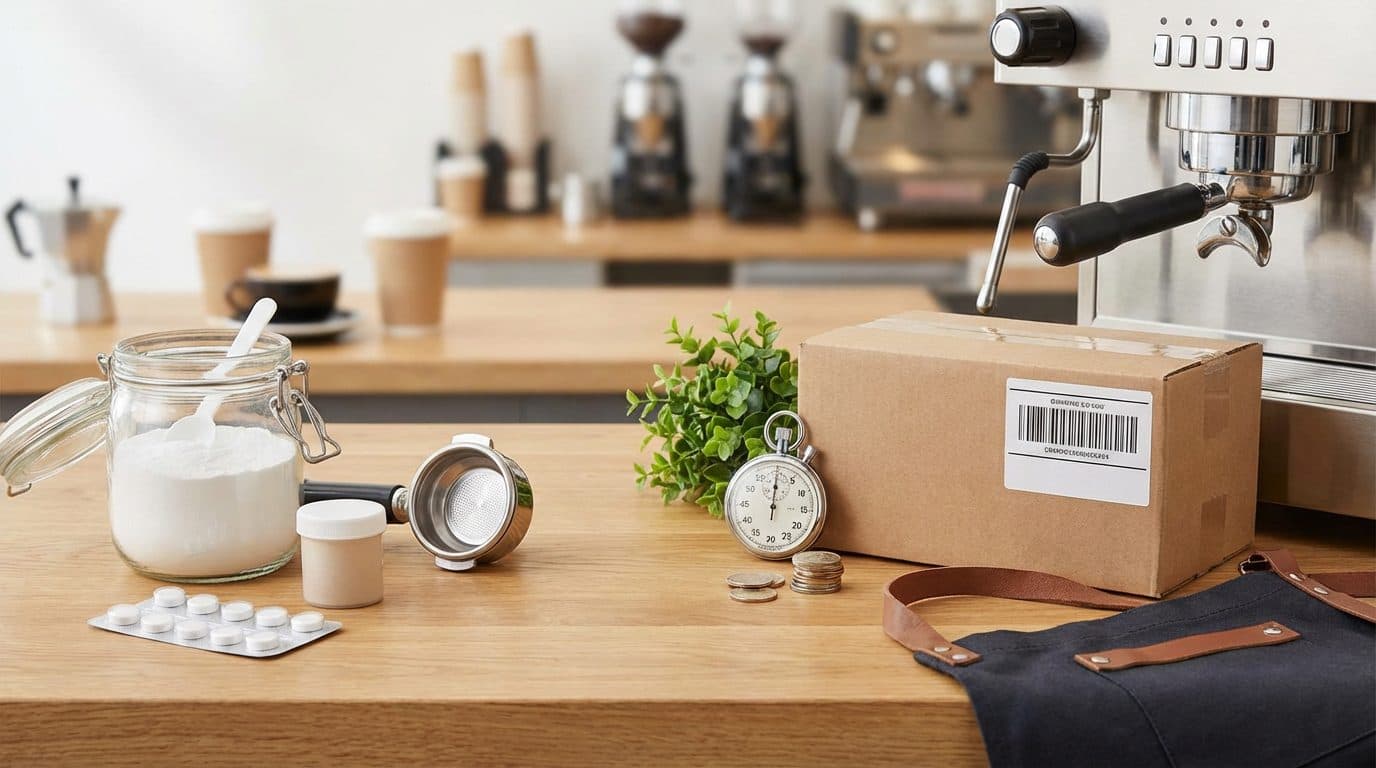
Cafiza comes in both powder and tablet form. For backflushing, the powder is more versatile and cost-effective. The tablets are convenient but better suited for soaking portafilters and baskets. For our purposes today, we’ll focus on the powder since it gives you more control over the amount you use.
| Cafiza Format | Best Use | Cost per Clean |
|---|---|---|
| Powder | Backflushing, general cleaning | ~$0.10-0.15 |
| Tablets | Soaking baskets, super-auto machines | ~$0.30-0.50 |
What You’ll Need for Backflushing
Before we dive into the process, let’s gather everything you’ll need. The good news? This is budget-friendly maintenance at its finest. You probably already have most of these items.
Essential Gear
- Blind filter basket: A rubber or metal disc that fits in your portafilter (most machines include one; replacements cost around $5-10)
- Cafiza powder: About 1/2 teaspoon per cleaning cycle
- Your portafilter: The one you use daily is fine
- Clean water: Your machine’s reservoir should be filled with fresh water
- Small brush: A group head brush or old toothbrush for scrubbing the shower screen
- Microfiber cloth: For wiping down surfaces
Optional but Helpful
- A small bowl for soaking your regular filter basket
- A toothpick or paper clip for clearing the shower screen holes
- Food-safe lubricant for the group gasket (once every few months)
Barista Tip: If your machine didn’t come with a blind basket, don’t try to improvise with tape or other materials. A proper blind basket costs less than a bag of specialty coffee, and using the wrong thing could damage your machine or create a safety hazard.
How to Backflush with Cafiza: Step-by-Step
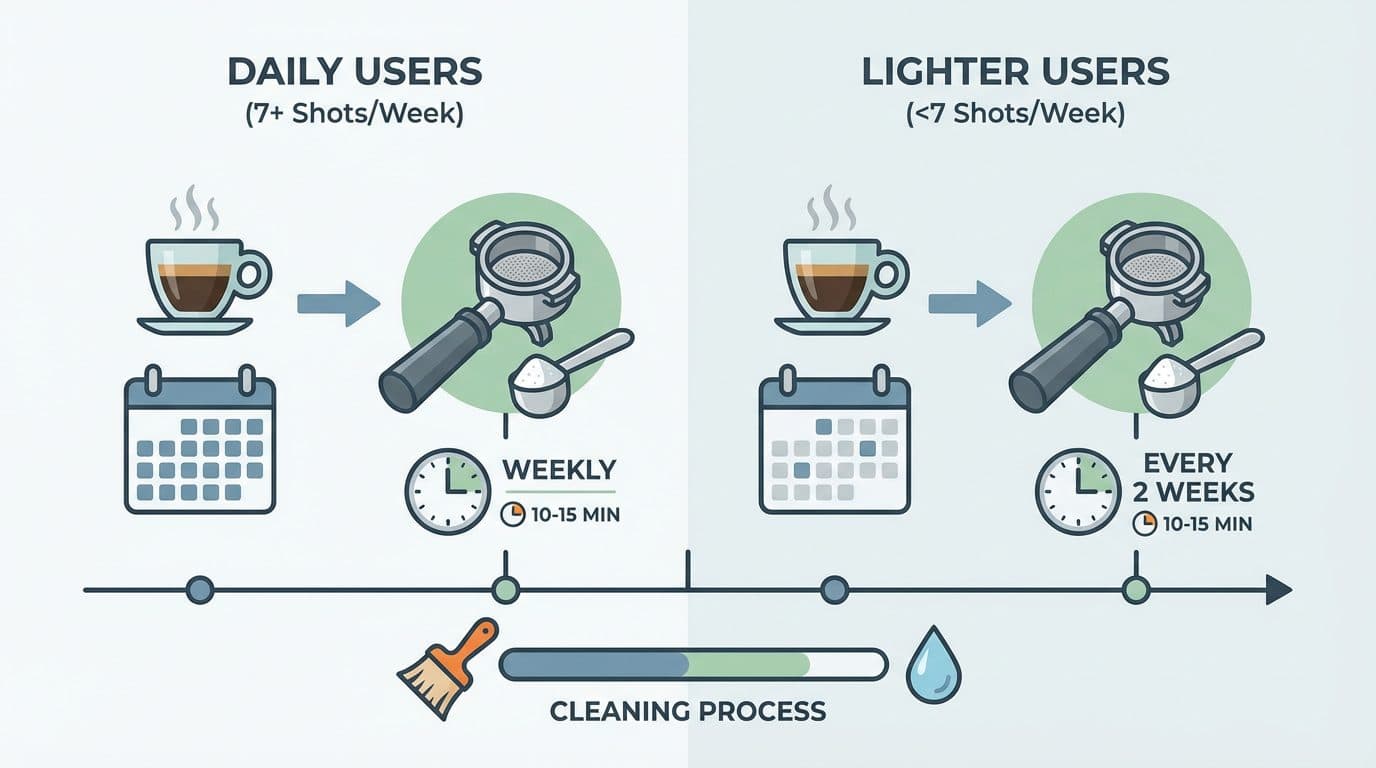
Now for the main event. This process takes about 10-15 minutes, and I recommend doing it at least once a week if you’re pulling daily shots. If you’re a lighter user (a few shots per week), every two weeks is usually sufficient.
Step 1: Prepare Your Machine
Make sure your machine is warmed up and at operating temperature. You want the water hot enough to activate the Cafiza and dissolve oils effectively. Remove your regular filter basket from the portafilter and insert the blind basket. Give the group head a quick wipe to remove any loose grounds.
Step 2: Add Cafiza to the Blind Basket
Put about 1/2 teaspoon of Cafiza powder into the blind basket. You don’t need much—more isn’t better here. Using too much cleaner can leave residue and make rinsing take longer. The powder should sit in a small pile in the center of the basket.
Step 3: Lock in and Backflush
Lock the portafilter into the group head just like you would for a normal shot. Now engage the brew switch for about 10 seconds. You won’t get any coffee out (obviously), but you should hear the pump working. The pressure will force the Cafiza solution up into the group head and valve.
After 10 seconds, release the brew switch. You’ll hear a “psshhh” sound as the three-way valve releases pressure. This is the dirty water being flushed out through the drip tray drain. Repeat this cycle 5-6 times: 10 seconds on, release, pause for a few seconds, repeat.
Step 4: Remove and Inspect
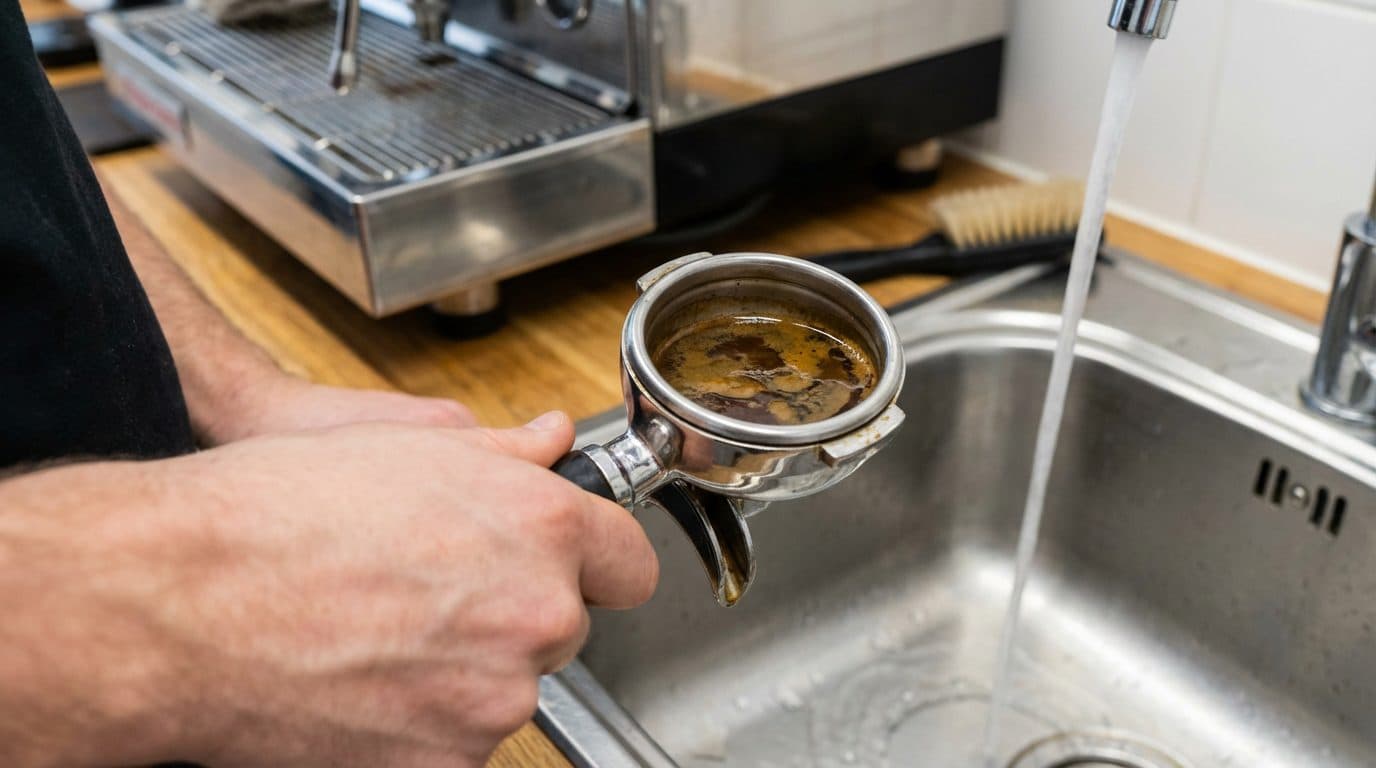
After your cleaning cycles, remove the portafilter. Take a look at the liquid in the blind basket—it’ll probably be pretty gross the first few times. Dark brown, oily water is totally normal and means the Cafiza is doing its job. Dump this out and rinse the blind basket under running water.
Step 5: Rinse Thoroughly
This step is crucial. You need to rinse all the Cafiza out of your machine before making any coffee. With the empty, rinsed blind basket back in place, run 8-10 more backflush cycles with plain water. No Cafiza this time—just water. Each cycle should be about 5 seconds.
After the water-only cycles, remove the portafilter and run water directly through the group head for 10-15 seconds. This flushes out any remaining residue from the shower screen.
Step 6: Clean the Shower Screen and Gasket
While you’ve got everything apart, use your brush to scrub the shower screen. The small holes can get clogged with coffee particles over time. If you have a particularly stubborn buildup, you can remove the shower screen entirely (usually held by a single screw) and soak it in a Cafiza solution.
Wipe around the group gasket with a damp cloth. This rubber seal can accumulate coffee residue that affects your portafilter’s seal. Be gentle—you don’t want to damage the gasket.
Step 7: Pull a Blank Shot
Reinstall your regular filter basket and pull a shot without any coffee. This final rinse ensures no cleaning solution remains. Taste a tiny bit of this water if you’re paranoid (I usually am). It should taste like nothing—just plain water. If there’s any soapy or chemical taste, run a few more rinse cycles.
Key Takeaway: The whole process sounds complicated when written out, but after you’ve done it twice, it becomes second nature. Most home baristas can complete a full backflush in under 10 minutes.
Common Backflushing Mistakes to Avoid
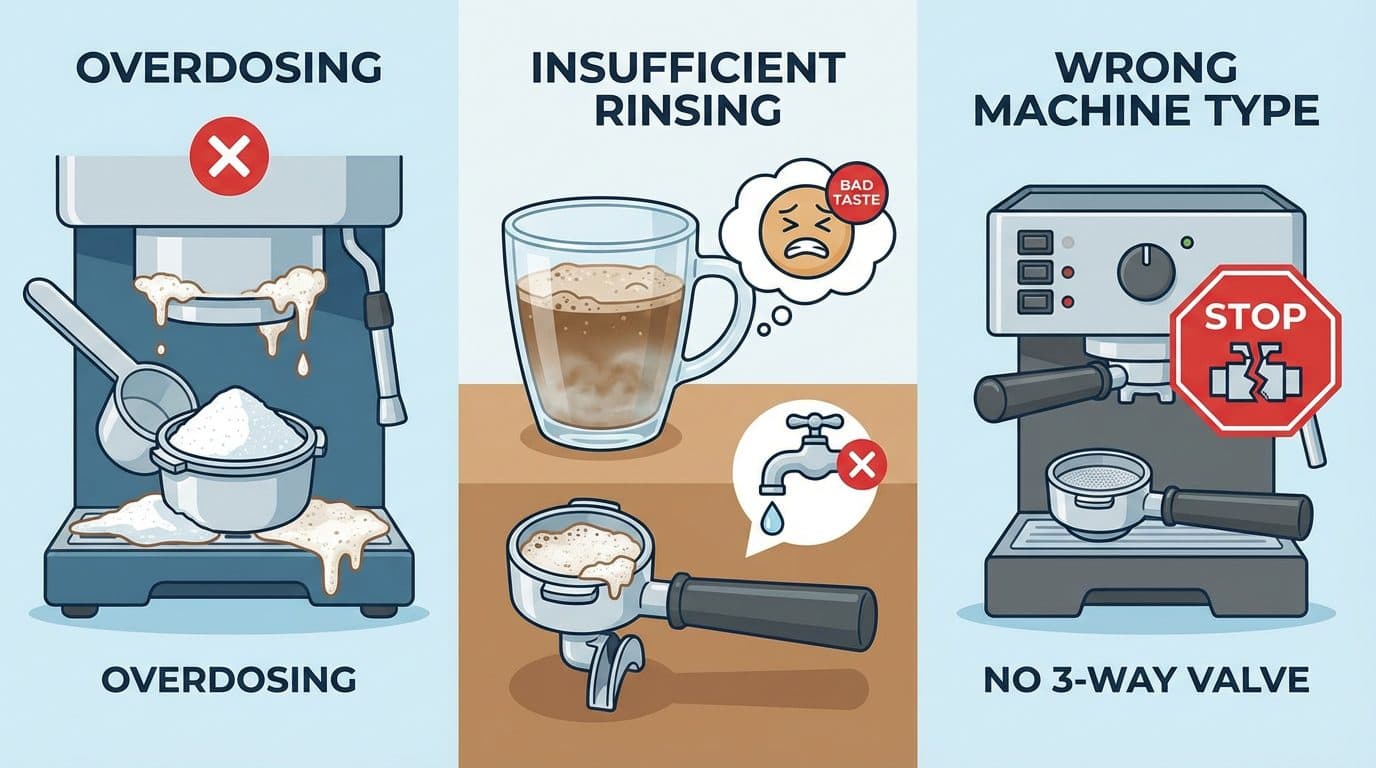
I’ve seen (and made) plenty of backflushing errors over the years. Here are the most common pitfalls and how to avoid them:
- Using too much Cafiza: A little goes a long way. Excess powder creates foamy residue that’s harder to rinse out completely.
- Not rinsing enough: I’ve tasted Cafiza in my espresso before (accidentally, obviously). It’s not pleasant. When in doubt, run more rinse cycles.
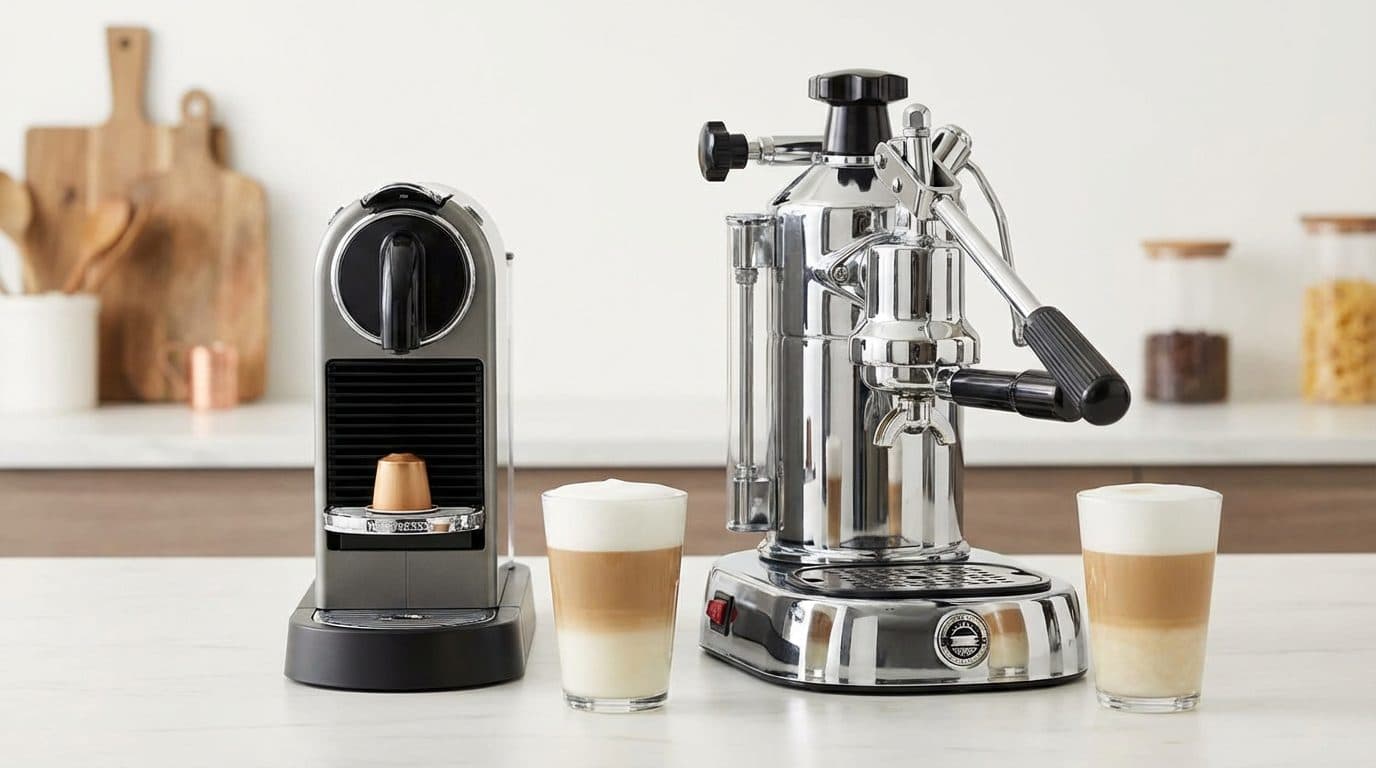
- Backflushing a machine without a three-way valve: Cheaper machines and some lever espresso machines don’t have this valve. Backflushing them can cause damage. Check your manual if you’re unsure.
- Forgetting the shower screen: The screen traps grounds and oils too. Make it part of your routine to scrub it.
- Cleaning while the machine is cold: Hot water activates the cleaner and dissolves oils better. Let your machine warm up first.
Creating a Maintenance Schedule That Works
Consistency is everything with espresso machine maintenance. Here’s a realistic schedule that works for most home baristas without becoming a chore:
| Task | Frequency | Time Required |
|---|---|---|
| Backflush with water only | Daily (after your last shot) | 2 minutes |
| Backflush with Cafiza | Weekly | 10-15 minutes |
| Deep clean shower screen | Monthly | 15-20 minutes |
| Descale (different process) | Every 2-3 months | 30-45 minutes |
A quick water-only backflush at the end of each day takes almost no time and prevents the worst buildup. Think of the weekly Cafiza clean as your deep maintenance session, ideally done on the same day each week so you don’t forget.
Frequently Asked Questions
Can I use dish soap instead of Cafiza for backflushing?
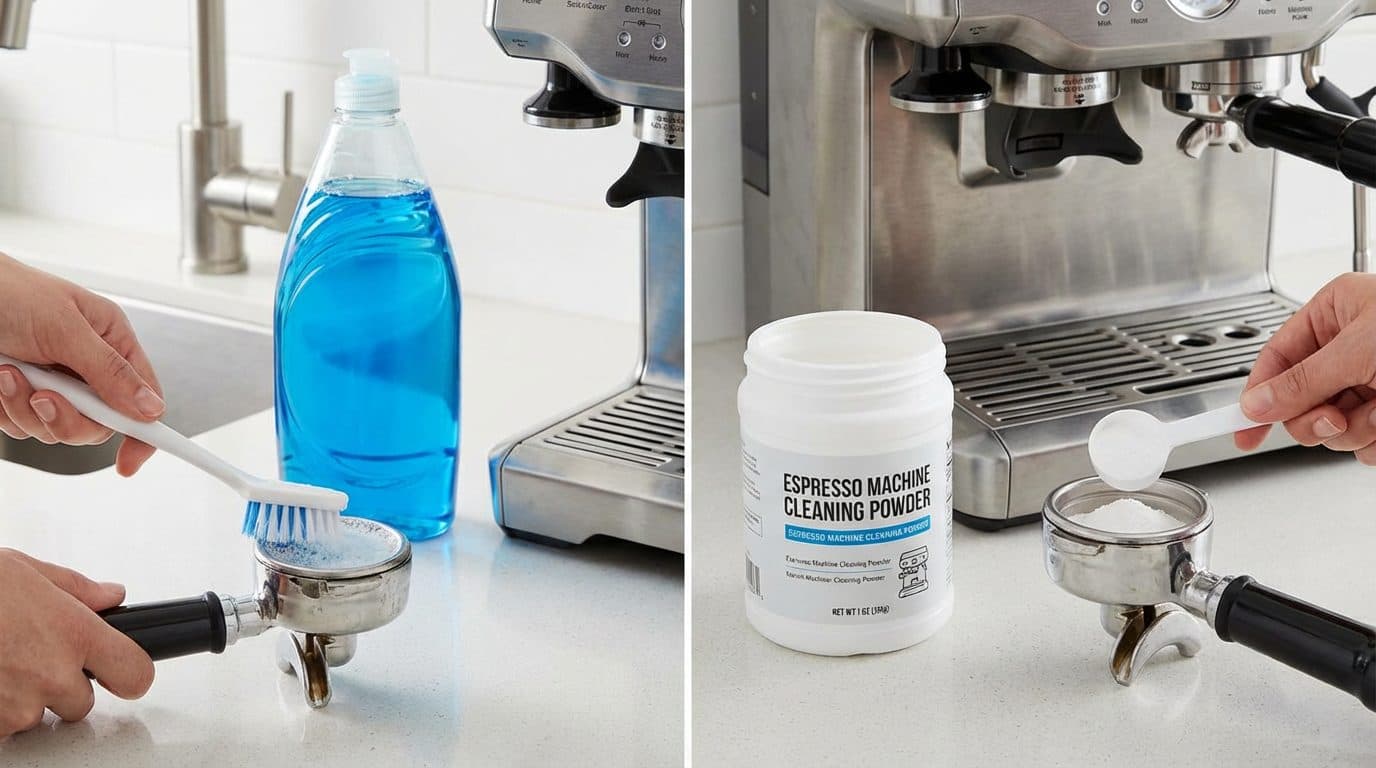
I strongly advise against it. Dish soap isn’t formulated for espresso machines and can leave residue that affects flavor and potentially damages internal components. Cafiza is affordable enough that there’s no good reason to risk it. Plus, dish soap doesn’t dissolve coffee oils as effectively as purpose-made cleaners.
How do I know if my machine has a three-way solenoid valve?
The easiest test: after pulling a shot, does pressure release from the portafilter before you remove it? If you hear a hissing sound and can remove the portafilter without water spraying everywhere, you have a three-way valve. If the portafilter is still pressurized and messy when you remove it, your machine doesn’t have this valve, and you should not attempt backflushing.
Is backflushing the same as descaling?
No, these are two different processes that address different problems. Backflushing removes coffee oils and residue from the brew group. Descaling removes mineral buildup (limescale) from the boiler and water lines. Both are necessary for a healthy machine, but they use different products and techniques.
Will backflushing void my warranty?
Proper backflushing with approved cleaners like Cafiza is actually recommended by most espresso machine manufacturers for machines with three-way valves. Neglecting this maintenance is more likely to cause problems that might affect warranty claims. Always check your specific machine’s manual to be sure.
How long does a container of Cafiza last?
For a home user doing weekly cleanings, a standard 20oz container of Cafiza powder typically lasts 6-12 months. That works out to just pennies per cleaning session, making it one of the most cost-effective investments you can make for your coffee quality.
Conclusion: Small Effort, Big Flavor Payoff
Backflushing with Cafiza isn’t glamorous, and nobody’s going to be impressed when you tell them about your espresso machine cleaning routine at parties. But you’ll know the difference every single morning when you pull a shot that tastes exactly the way it should—clean, balanced, and free from that mysterious bitterness that plagues neglected machines.
The process is simple once you’ve done it a few times, the supplies are inexpensive, and the improvement in your coffee quality is immediate and noticeable. If you’ve been putting off learning how to backflush properly, consider this your sign to start this week. Your taste buds (and your machine) will thank you.
Grab a container of Cafiza, set a weekly reminder on your phone, and make this part of your coffee ritual. You’ve already invested in good beans and decent equipment—now protect that investment with the maintenance it deserves. Check the latest price on Cafiza at Amazon or your favorite coffee gear retailer, and get started on your journey to consistently better espresso.


Comments