


Table of Contents
- The Real Deal: How These Two Milks Stack Up in Your Cup
- What Actually Happens During UHT Processing
- Comparing UHT and Fresh Milk for Coffee
- The Steaming Problem (And Why Baristas Care)
- Fat Content Matters More Than You Think
- When UHT Actually Makes Sense
- Fresh Milk: The Gold Standard (With Caveats)
- Who Should Choose What
- A Quick Taste Test You Can Try
- The Bottom Line
The Real Deal: How These Two Milks Stack Up in Your Cup
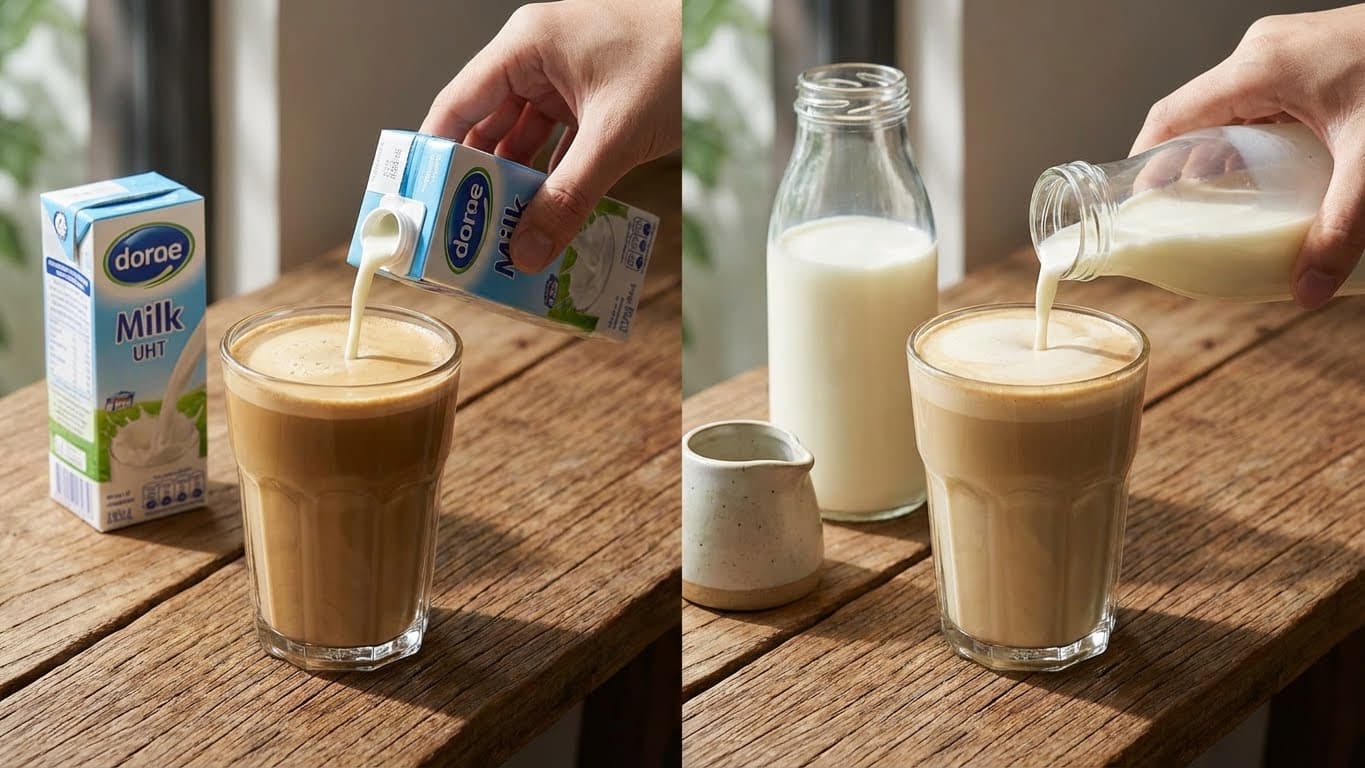
There’s this distinct, almost caramelized sweetness that hits my nose every time I open a carton of UHT milk—it’s nothing like the clean, grassy scent of fresh milk straight from the fridge. That smell alone tells you something’s different. So here’s the short answer onUHT milk vs. fresh milk for coffee: fresh milk wins for taste and texture in lattes and cappuccinos, but UHT has its place when convenience or shelf-stability matters. The taste difference is real, and once you understand why, you’ll make better choices for your daily cup.
Quick Verdict:
- Best for latte art & silky microfoam: Fresh whole milk
- Best for travel, camping, or emergencies: UHT milk
- Best budget compromise: Fresh milk (honestly, it’s usually cheaper too)
What Actually Happens During UHT Processing
UHT stands for Ultra-High Temperature. The milk gets blasted to around 135°C–150°C for 2–4 seconds. That’s hot. Really hot. For context, regular pasteurization only hits about 72°C for 15 seconds.
Here’s the ugly truth: that intense heat does things to milk. It denatures the whey proteins. It triggers something called the Maillard reaction—the same browning process that gives toast its color. That’s why UHT milk tastes slightly cooked or caramelized. Some people like it. I find it distracting in coffee.
Fresh milk, on the other hand, keeps more of its original protein structure intact. The fats emulsify better. The sugars taste cleaner. When I’m pulling a shot of espresso and want a creamy, neutral canvas? Fresh milk every time.
Comparing UHT and Fresh Milk for Coffee
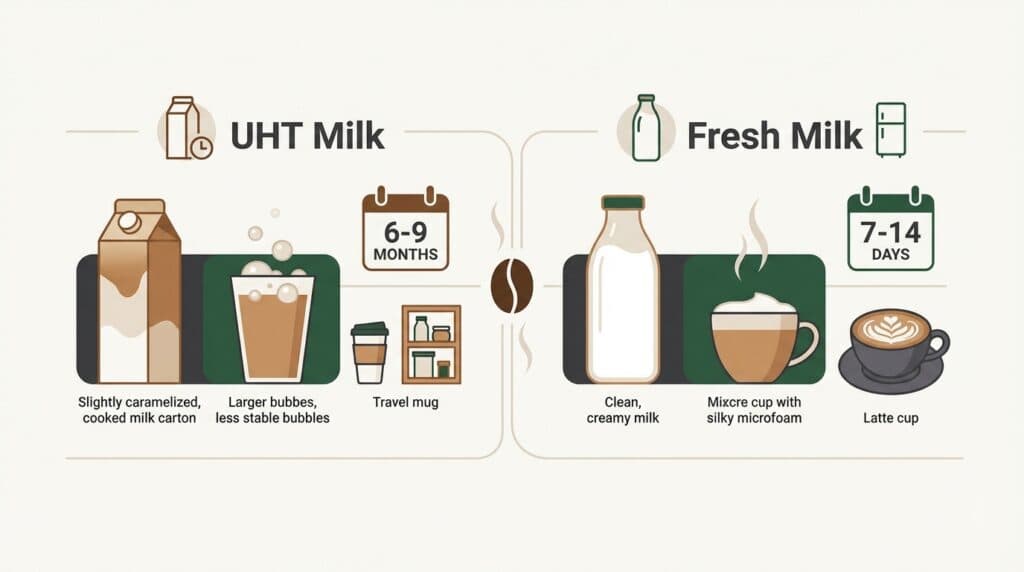
| Factor | UHT Milk | Fresh Milk |
|---|---|---|
| Taste | Slightly cooked, caramelized undertone | Clean, neutral, creamy |
| Foam Quality | Larger bubbles, less stable | Microfoam-friendly, silky |
| Shelf Life (unopened) | 6–9 months (unrefrigerated) | 7–14 days (refrigerated) |
| Protein Structure | Partially denatured | Mostly intact |
| Best Use Case | Black coffee splash, travel, pantry backup | Lattes, cappuccinos, flat whites |
| Price | Varies (often similar or higher) | Usually competitive |
The Steaming Problem (And Why Baristas Care)
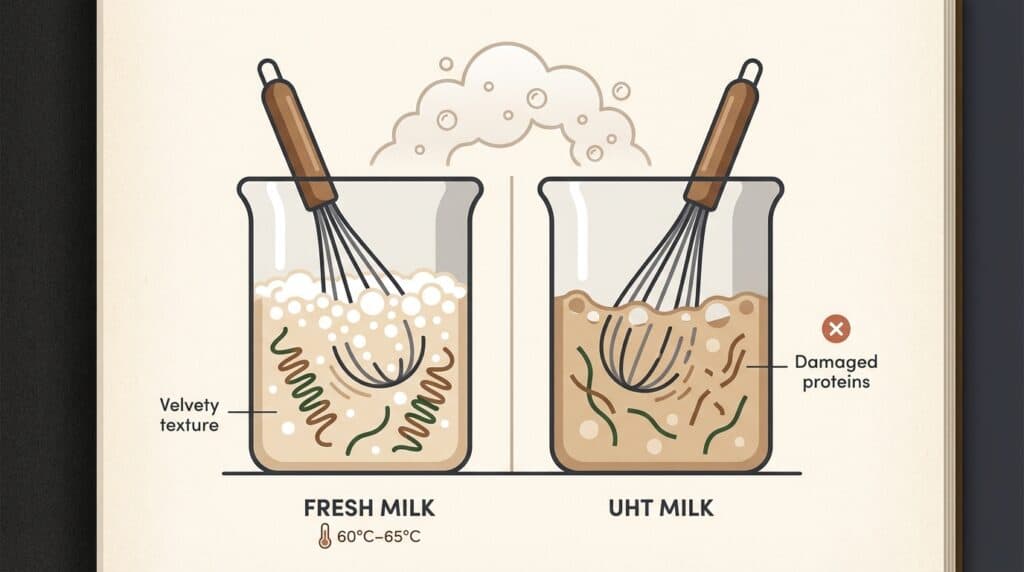
Alright, here’s where it gets nerdy. When you steam milk, you’re doing two things: heating it and incorporating air. The proteins in milk—specifically casein and whey—create a matrix that traps those tiny air bubbles. That’s microfoam.
Fresh milk’s proteins are more cooperative. They unfold at around 60°C–65°C and create a smooth, velvety texture. UHT milk? Its proteins are already damaged from the extreme heat treatment. They don’t stretch the same way. I learned this the hard way during a home latte-art phase. Couldn’t figure out why my tulips looked like blobs. Switched from UHT to fresh, and suddenly my pours looked halfway decent.
If you’re just adding a splash to black coffee, this doesn’t matter much. But for steamed drinks? The difference is night and day.
Barista Tip: When steaming fresh whole milk, aim for 60°C–65°C (140°F–150°F). Go past70°C and you’ll scald it, killing that sweetness. Use a thermometer until you can judge by touch—the pitcher should be almost too hot to hold comfortably.
Fat Content Matters More Than You Think
Both UHT and fresh milk come in various fat levels. Whole milk (around 3.5% fat) steams best regardless of type. But here’s a counter-intuitive insight: UHT whole milk still won’t foam as well as fresh skim milk. The protein damage from ultra-pasteurization matters more than fat content for foam stability.
Honestly, if you’re buying UHT and expecting latte-art-quality microfoam, you’re setting yourself up for frustration. My barista friend Sara puts it bluntly: “UHT is for survival, not for show.”
When UHT Actually Makes Sense
I’m not here to completely trash UHT milk. It has legitimate uses:
Pros of UHT Milk:
- Shelf-stable for months without refrigeration
- Perfect for camping trips, RVs, or office pantries
- Great backup when you run out of fresh milk
- Works fine foriced coffee where texture is less critical
- Some people genuinely prefer the sweeter, cooked flavor
Cons of UHT Milk:
- Altered taste from Maillard reaction
- Poor foam quality and stability
- Protein structure less ideal for espresso drinks
- Can overpower delicate single-origin coffees
I keep a carton in my pantry. No shame in that. When I’m desperate at 6 AM and forgot to buy fresh milk, it does the job. Is it my first choice? Absolutely not.
Fresh Milk: The Gold Standard (With Caveats)
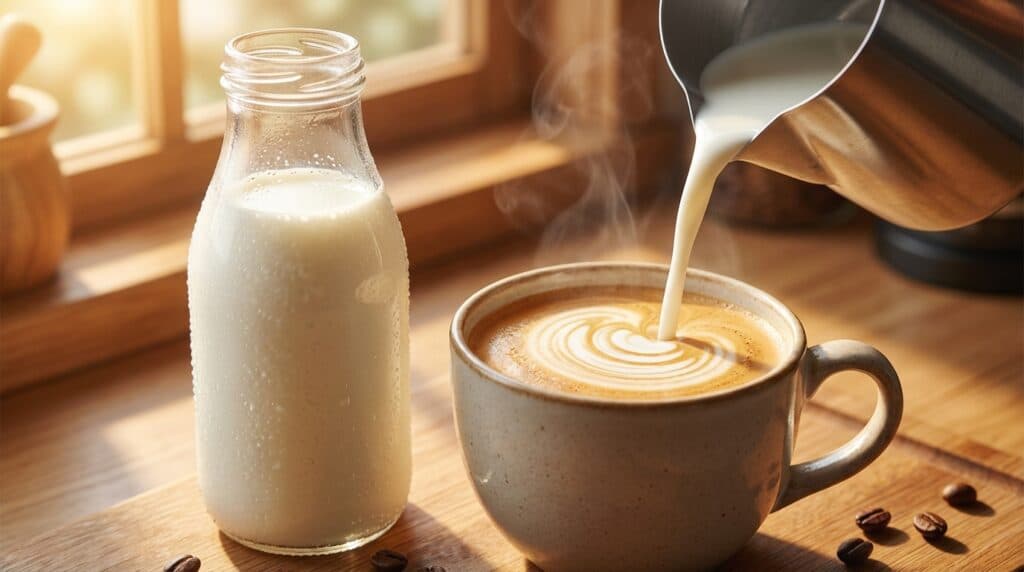
Fresh pasteurized milk is what most specialty coffee shops use. There’s a reason for that.
Pros of Fresh Milk:
- Clean, neutral taste that complements espresso
- Superior foam texture and stability
- Proteins stretch beautifully during steaming
- Natural sweetness enhances coffee without masking it
- Widely available and usually affordable
Cons of Fresh Milk:
- Short shelf life (7–14 days refrigerated)
- Must stay cold—no pantry storage
- Quality varies by brand and source
- Can spoil quickly if temperature fluctuates
One thing I’ve noticed: not all fresh milk is equal. Milk from grass-fed cows often has a slightly richer, more complex flavor. It’s subtle, but when you’re drinking a simple cortado, subtleties matter. I once did a side-by-side with two brands—same fat percentage, same pasteurization method—and the taste difference surprised me.
Who Should Choose What
Go with fresh milk if you:
- Make lattes, cappuccinos, or flat whites regularly
- Care about latte art or microfoam quality
- Want milk that doesn’t compete with your coffee’s flavor
- Have reliable refrigeration and shop weekly
Go with UHT milk if you:
- Travel often or need pantry-stable options
- Only add a small splash to black coffee
- Live somewhere with unreliable refrigeration
- Prefer that slightly sweeter, cooked milk taste (no judgment!)
A Quick Taste Test You Can Try
Skeptical? Good. Try this at home:
- Brew two identical shots of espresso (or strong coffee)
- Steam100ml of UHT whole milk and 100ml of fresh whole milk to the same temperature (62°C)
- Pour into separate cups
- Taste blind if possible—have someone else hand them to you
Most people notice the UHT version tastes sweeter but also slightly “off”—like something’s been cooked. The fresh milk version tends to taste cleaner and more integrated with the coffee. But hey, taste is personal. Maybe you’ll prefer UHT. That’s fine.
The Bottom Line
Long-life milk versus fresh dairy for coffee comes down to priorities. If you’re serious about your morning latte—texture, taste, the whole experience—fresh milk is worth the minor inconvenience of refrigeration and shorter shelf life. The proteins foam better. The flavor stays neutral. Your coffee shines through.
But if convenience wins, or you’re just splashing milk into drip coffee, UHT works. I won’t pretend otherwise. I’ve made plenty of decent cups with shelf-stable milk during road trips or lazy weekends when I forgot to restock.
My honest recommendation? Keep fresh milk as your daily driver and a UHT carton as your backup. That way, you’re covered for both the mornings you want perfection and the mornings you just need caffeine. Now go make something delicious.


Comments