


Table of Contents
- Quick Troubleshooting Reference Table
- Diagnosing Bitter or Harsh Coffee
- Why Your Coffee Tastes Bitter
- How to Fix Bitter Coffee
- Fixing Sour or Overly Acidic Coffee
- Understanding Under-Extraction
- The Fix Checklist for Sour Coffee
- Troubleshooting Weak or Watery Coffee
- Common Causes of Weak Coffee
- Building a Stronger Cup
- Dealing with Stale, Flat, or "Off" Flavors
- Why Freshness Matters So Much
- Proper Coffee Storage
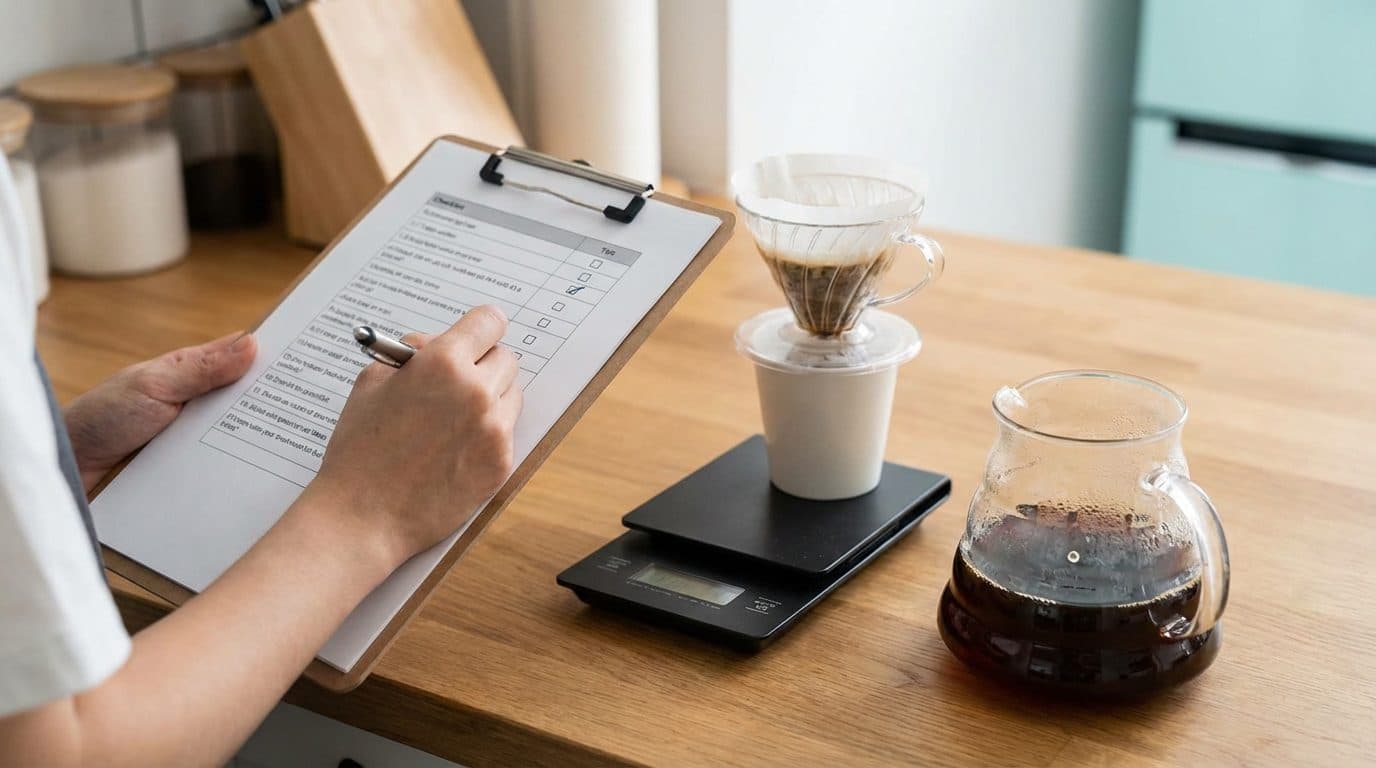
- Your Printable Coffee Troubleshooting Checklist
- Before Brewing
- During Brewing
- Taste Assessment
- Frequently Asked Questions
- How often should I clean my coffee equipment?
- Can I fix a bad cup after I've already brewed it?
- Should I change one variable at a time or multiple?
- My coffee tastes different every day even though I don't change anything. Why?
- What's the most common mistake home brewers make?
- Summary and Your Next Step
You’ve just spent money on specialty beans, invested in a decent grinder, and followed what you thought was the perfect recipe. Yet somehow, your morning cup tastes like disappointment in liquid form. Sound familiar? You’re not alone. Every home brewer hits frustrating roadblocks, and the good news is that most coffee problems have surprisingly simple solutions.
This coffee troubleshooting checklist is designed to be your go-to diagnostic tool whenever something tastes off. I’ve organized it so you can quickly identify your issue, understand why it’s happening, and fix it without tearing your hair out. Whether your coffee is bitter, sour, weak, or just plain weird, this guide will help you dial things in. Feel free to bookmark this page or print it out and tape it near your brewing station—I promise it’ll save you countless frustrating mornings.
Quick Troubleshooting Reference Table
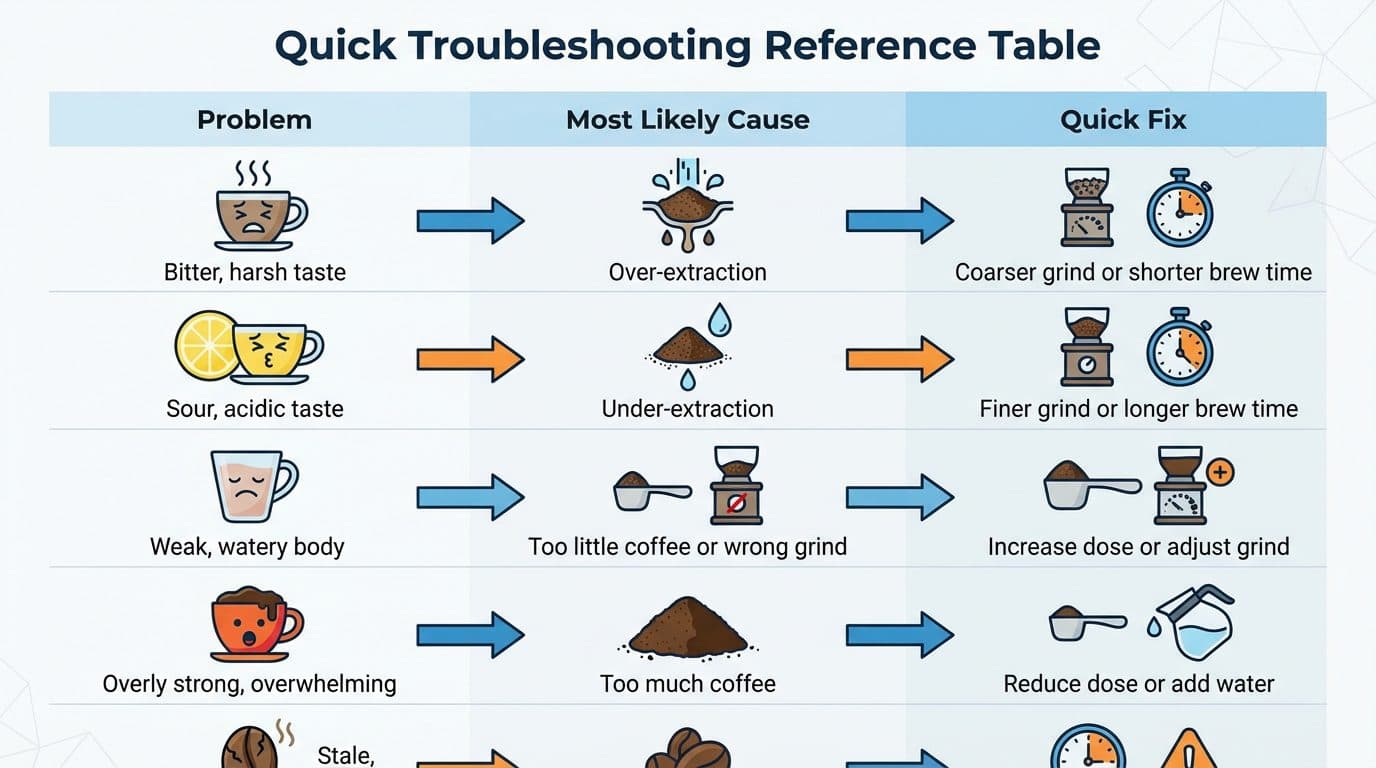
Before diving into the details, here’s a snapshot of the most common problems and their likely causes. This table gives you a starting point for diagnosis:
| Problem | Most Likely Cause | Quick Fix |
|---|---|---|
| Bitter, harsh taste | Over-extraction | Coarser grind or shorter brew time |
| Sour, acidic taste | Under-extraction | Finer grind or longer brew time |
| Weak, watery body | Too little coffee or wrong grind | Increase dose or adjust grind |
| Overly strong, overwhelming | Too much coffee | Reduce dose or add water |
| Stale, flat flavor | Old beans or poor storage | Buy fresher beans, store properly |
| Muddy, gritty texture | Grind too fine or poor filtration | Coarsen grind, check filter |
Now let’s break down each issue in detail so you understand what’s actually happening in your cup.
Diagnosing Bitter or Harsh Coffee
Bitterness is probably the most common complaint I hear from home brewers. A little bitterness is normal—coffee is inherently a bitter beverage—but when it’s overwhelming or leaves an unpleasant aftertaste, something’s gone wrong.
Why Your Coffee Tastes Bitter
The culprit is almost always over-extraction. This happens when water pulls too many compounds from the coffee grounds, including the harsh, astringent ones that come out last. In my experience, these are the usual suspects:
- Grind is too fine: More surface area means faster extraction, which can tip into over-extraction territory quickly.
- Brew time is too long: Leaving your French press to steep for 6 minutes instead of 4 will make things bitter.
- Water is too hot: Boiling water (100°C/212°F) scorches grounds and extracts bitter compounds aggressively.
- Using too little coffee: Counterintuitively, less coffee means each particle gets over-extracted to compensate.
How to Fix Bitter Coffee
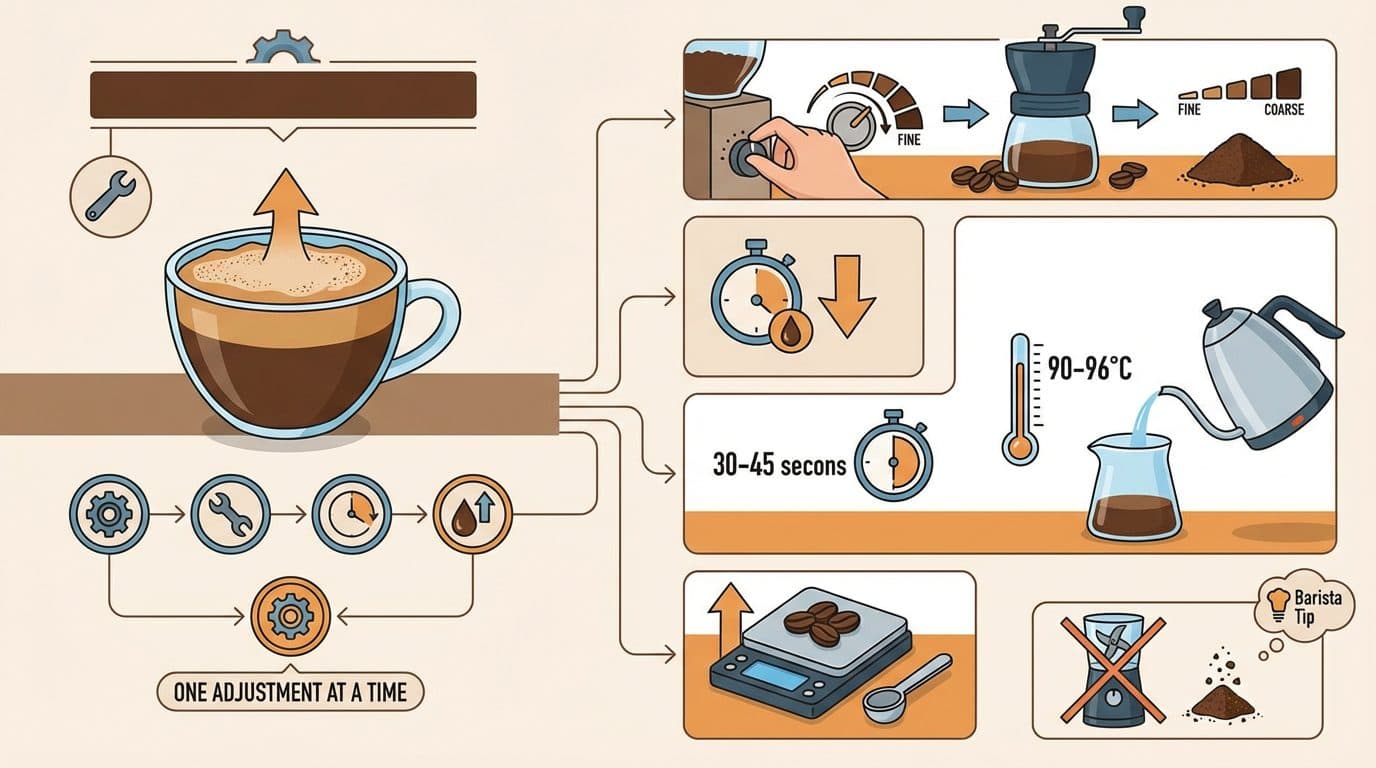
Start by making one adjustment at a time—this is the golden rule of coffee troubleshooting. If you change multiple variables, you won’t know what actually fixed the problem.
- Coarsen your grind by one or two settings.
- Reduce your brew time by 15-30 seconds.
- Let your kettle rest for 30-45 seconds after boiling before pouring (aim for 90-96°C/195-205°F).
- Increase your coffee dose slightly if you’ve been using less than the standard 1:16 ratio.
Barista Tip: If you’re using a blade grinder, you’re likely creating a mix of fine dust and large chunks. The dust over-extracts while the chunks under-extract, giving you a confused, bitter cup. Consider upgrading to a burr grinder—even an affordable hand grinder makes a massive difference.
Fixing Sour or Overly Acidic Coffee
Sourness in coffee isn’t the same as pleasant acidity. Good acidity tastes bright, fruity, and lively. Bad sourness makes you pucker and wonder if something went wrong. Spoiler: something did.
Understanding Under-Extraction
When coffee tastes sour, you’re dealing with under-extraction. Water hasn’t had enough time or contact to dissolve the sugars and compounds that balance out the acids. Here’s what typically causes this:
- Grind is too coarse: Less surface area means slower extraction.
- Brew time is too short: Rushing the process leaves flavors undeveloped.
- Water isn’t hot enough: Cool water extracts more slowly and less efficiently.
- Stale or improperly stored coffee: Old beans lose the compounds needed for balanced flavor.
The Fix Checklist for Sour Coffee
Again, change one thing at a time and taste the results:
- Grind finer by one or two settings.
- Extend your brew time slightly.
- Make sure your water is hot enough (that 90-96°C sweet spot).
- Check your beans’ roast date—ideally, use them within 2-4 weeks of roasting.
Did You Know? Light roasts are naturally more acidic than dark roasts. If you consistently find your light roasts too sour, try grinding finer and brewing slightly longer than you would for darker coffees. Light roasts are denser and need more extraction effort.
Troubleshooting Weak or Watery Coffee
Nothing’s more disappointing than coffee that tastes like brown water. You want body, richness, and presence—not something that barely registers as coffee.
Common Causes of Weak Coffee
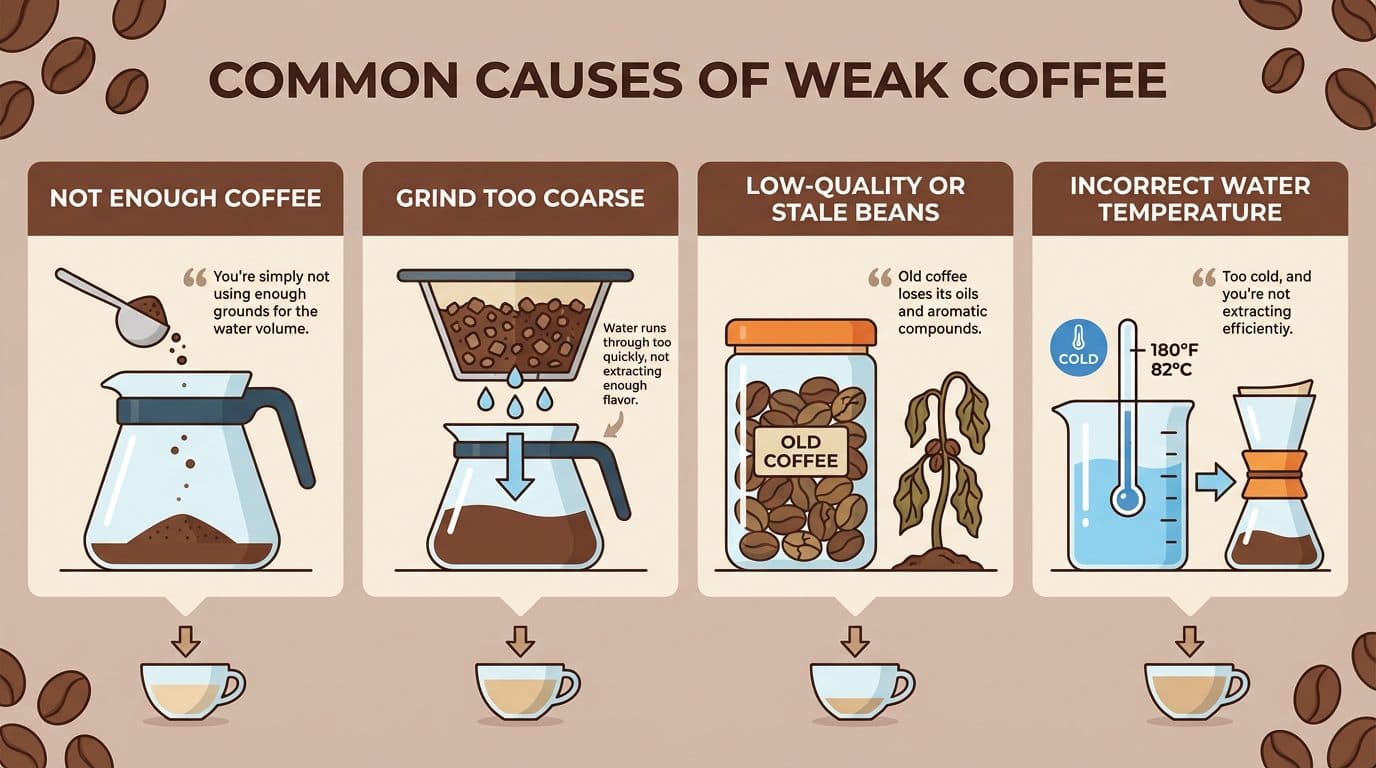
Weak coffee usually comes down to one of these issues:
- Not enough coffee: You’re simply not using enough grounds for the water volume.
- Grind too coarse: Water runs through too quickly, not extracting enough flavor.
- Low-quality or stale beans: Old coffee loses its oils and aromatic compounds.
- Incorrect water temperature: Too cold, and you’re not extracting efficiently.
Building a Stronger Cup
Here’s your action plan:
- Start with a 1:15 or 1:16 coffee-to-water ratio (about 60-65g of coffee per liter of water).
- Invest in a kitchen scale if you haven’t already—eyeballing measurements is wildly inconsistent.
- If your grind looks like coarse sea salt but you’re making pour-over, it’s probably too coarse.
- Taste your water. Seriously. If your tap water tastes flat or chlorinated, your coffee will too.
Real-Life Scenario: I once spent weeks convinced my grinder was broken because my coffee tasted so thin. Turns out, I’d been using filtered water that was essentially mineral-free. A small amount of mineral content actually helps with extraction. I switched to a water with moderate mineral content, and the difference was immediate.
Dealing with Stale, Flat, or “Off” Flavors
Sometimes coffee doesn’t taste specifically bitter or sour—it just tastes… boring. Flat. Like cardboard or old paper. This is the flavor of staleness, and it’s heartbreaking when you’ve paid good money for beans.
Why Freshness Matters So Much
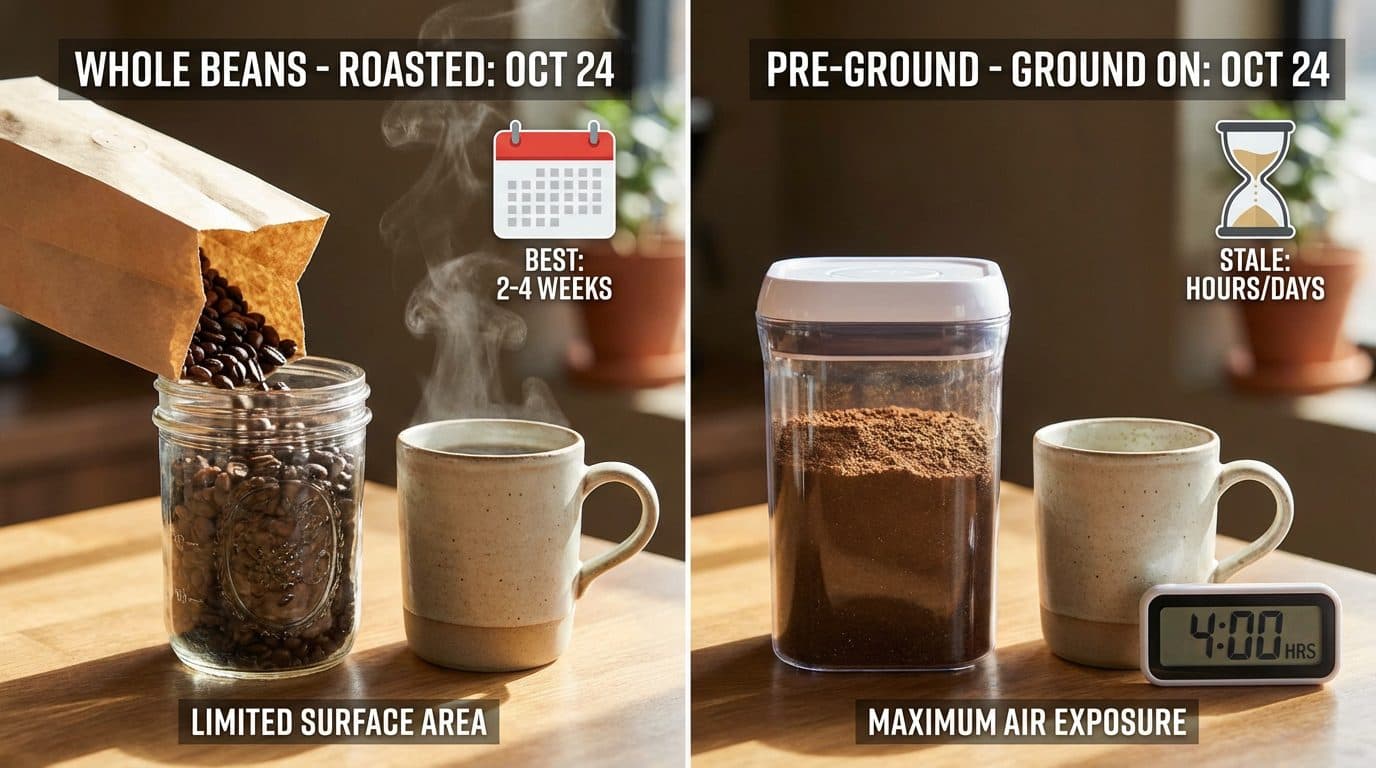
Coffee is a perishable food product. Once roasted, beans immediately start losing their aromatic compounds. Ground coffee goes stale even faster because of the increased surface area exposed to air.
- Whole beans: Best within 2-4 weeks of roast date; acceptable up to 6-8 weeks if stored well.
- Pre-ground coffee: Starts degrading within hours; noticeably stale within days.
Proper Coffee Storage
Here’s what works and what doesn’t:
- Do: Store beans in an airtight container at room temperature, away from light and heat.
- Do: Buy only what you’ll use in 2-3 weeks.
- Don’t: Store coffee in the fridge—it absorbs odors and moisture condenses on beans.
- Don’t: Keep beans in a clear container on your sunny countertop.
Key Takeaway: The single best thing you can do for your coffee quality is grind fresh, right before brewing. Pre-ground convenience isn’t worth the flavor sacrifice. Even a $30 hand grinder will transform your morning cup.
Your Printable Coffee Troubleshooting Checklist
Here’s the checklist you can print and keep handy. When something tastes off, work through it systematically:
Before Brewing
- Are your beans fresh (roasted within the last 4 weeks)?
- Have you stored them properly (airtight, cool, dark)?
- Is your grinder clean and free of old grounds?
- Is your equipment (brewer, carafe, filter basket) clean?
- Are you using filtered water with some mineral content?
During Brewing
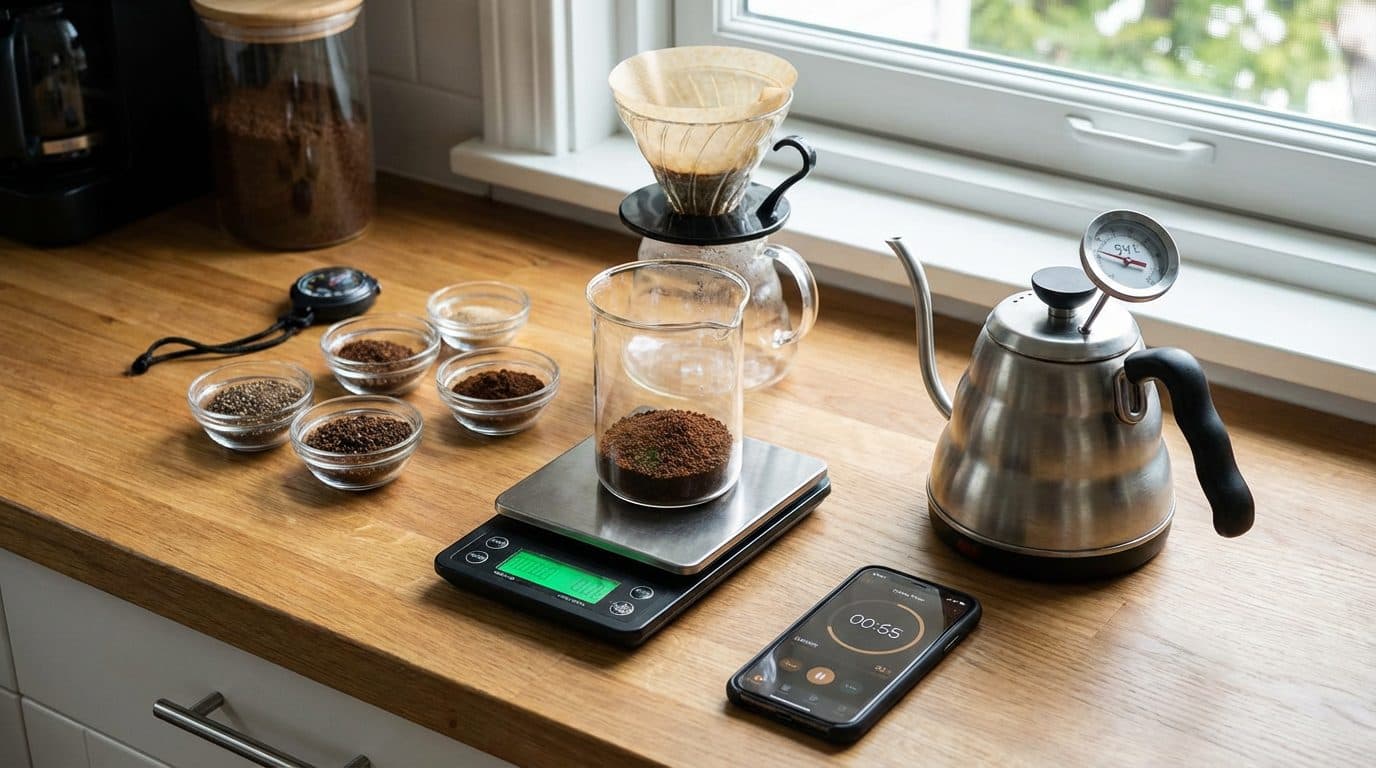
- Are you using a scale for consistent measurements?
- Is your coffee-to-water ratio appropriate (start with 1:16)?
- Is your water temperature between 90-96°C (195-205°F)?
- Is your grind size appropriate for your brew method?
- Is your brew time within the recommended range for your method?
Taste Assessment
- Too bitter? → Coarser grind, shorter time, or cooler water.
- Too sour? → Finer grind, longer time, or hotter water.
- Too weak? → More coffee, finer grind, or check freshness.
- Too strong? → Less coffee or add hot water after brewing.
- Tastes stale? → Check bean freshness and storage.
- Tastes dirty or off? → Clean your equipment thoroughly.
Frequently Asked Questions
How often should I clean my coffee equipment?
Rinse your brewer after every use and do a deeper clean weekly. Coffee oils build up and turn rancid, contributing to off-flavors. For grinders, brush out grounds after each use and do a thorough cleaning monthly. If you notice a rancid or musty smell, it’s overdue for cleaning.
Can I fix a bad cup after I’ve already brewed it?
Sometimes. If it’s too strong, adding hot water (like an Americano) can mellow it out. If it’s slightly bitter, a tiny pinch of salt can reduce perceived bitterness. But honestly, if a cup is truly unpleasant, it’s often better to dump it and try again with adjusted variables. Life is too short for bad coffee.
Should I change one variable at a time or multiple?
Always one at a time. I know it’s tempting to overhaul everything, but then you won’t know what actually solved the problem. Make an adjustment, brew, taste, and record the results. This systematic approach will teach you your equipment and preferences much faster.
My coffee tastes different every day even though I don’t change anything. Why?
Several factors could be at play. Your grinder settings might shift slightly, your water temperature varies, or your coffee is aging throughout the week. Using a scale and thermometer removes most inconsistency. Also, your palate changes—coffee tastes different after brushing your teeth, eating certain foods, or when you’re dehydrated.
What’s the most common mistake home brewers make?
In my experience, it’s not using a scale. Volume measurements (scoops, tablespoons) are notoriously inconsistent. One scoop of a fluffy light roast weighs much less than the same scoop of dense dark roast. A $15 kitchen scale is the single best investment for consistent coffee at home.
Summary and Your Next Step
Coffee troubleshooting doesn’t have to be complicated. Most problems come down to extraction—either too much or too little. Your grind size, brew time, water temperature, and coffee freshness are the four main levers you can pull to dial in your perfect cup. Start with this checklist whenever something tastes off, make one adjustment at a time, and take notes on what works.
Print this guide out, stick it on your fridge or near your coffee station, and use it as your go-to reference. With a little practice and patience, you’ll develop an intuition for what your coffee needs before you even take that first sip. Now go brew something delicious—you’ve got the tools to make it happen.

Comments