


Table of Contents
- Why Soy Milk Became the Go-To Dairy Alternative
- The Science Behind Soy's Superior Foam
- How Soy Compares to Other Plant Milks
- Health Benefits of Soy Milk in Your Coffee
- Low-Acid and Gentle on Digestion
- Heart-Healthy and Cholesterol-Free
- Complete Protein Profile
- How to Steam and Foam Soy Milk Like a Pro
- What You'll Need
- The Soy Milk Steaming Technique
- Solving the Curdling Problem Once and For All
- Why Soy Milk Curdles
- Prevention Strategies That Actually Work
- Choosing the Best Soy Milk for Coffee
- Barista Blends vs. Regular Soy Milk
- Sweetened vs. Unsweetened
- Frequently Asked Questions
- Does soy milk taste weird in coffee?
- Is soy milk healthier than oat milk in coffee?
- Can I froth soy milk with a handheld frother?
- Why does my soy latte taste sour sometimes?
- How long does soy milk last once opened?
- Summary and Your Next Steps
Have you ever watched a barista steam your soy latte and wondered why this particular plant milk became the coffee shop staple? Long before oat milk took over Instagram and almond milk lined every grocery aisle, soy milk was quietly revolutionizing how we drink coffee. For anyone avoiding dairy—whether for health, ethics, or simply taste—soy milk remains the original and, in many ways, still the most reliable alternative for creating that creamy, frothy coffee experience at home.
In this guide, I’ll walk you through everything you need to know about using soy milk in your coffee. We’ll cover why it foams so well, how to avoid that dreaded curdling problem, and the health benefits that make it a smart choice for special-diet coffee lovers. Whether you’re lactose intolerant, watching your cholesterol, or just curious about branching out, soy milk deserves a fresh look in your coffee routine.
Why Soy Milk Became the Go-To Dairy Alternative
Soy milk earned its place as the original coffee alternative for good reason. When plant-based milks first started appearing in cafés during the 1990s and early 2000s, soy was essentially the only game in town. But it wasn’t just availability that kept it on menus—it was performance.
Unlike many other plant milks, soy milk contains a protein content remarkably similar to cow’s milk, typically around 7-9 grams per cup. This protein is crucial for creating stable foam and that velvety texture we associate with a proper latte. In my experience, a well-steamed soy milk can rival dairy in terms of microfoam quality.
The Science Behind Soy’s Superior Foam
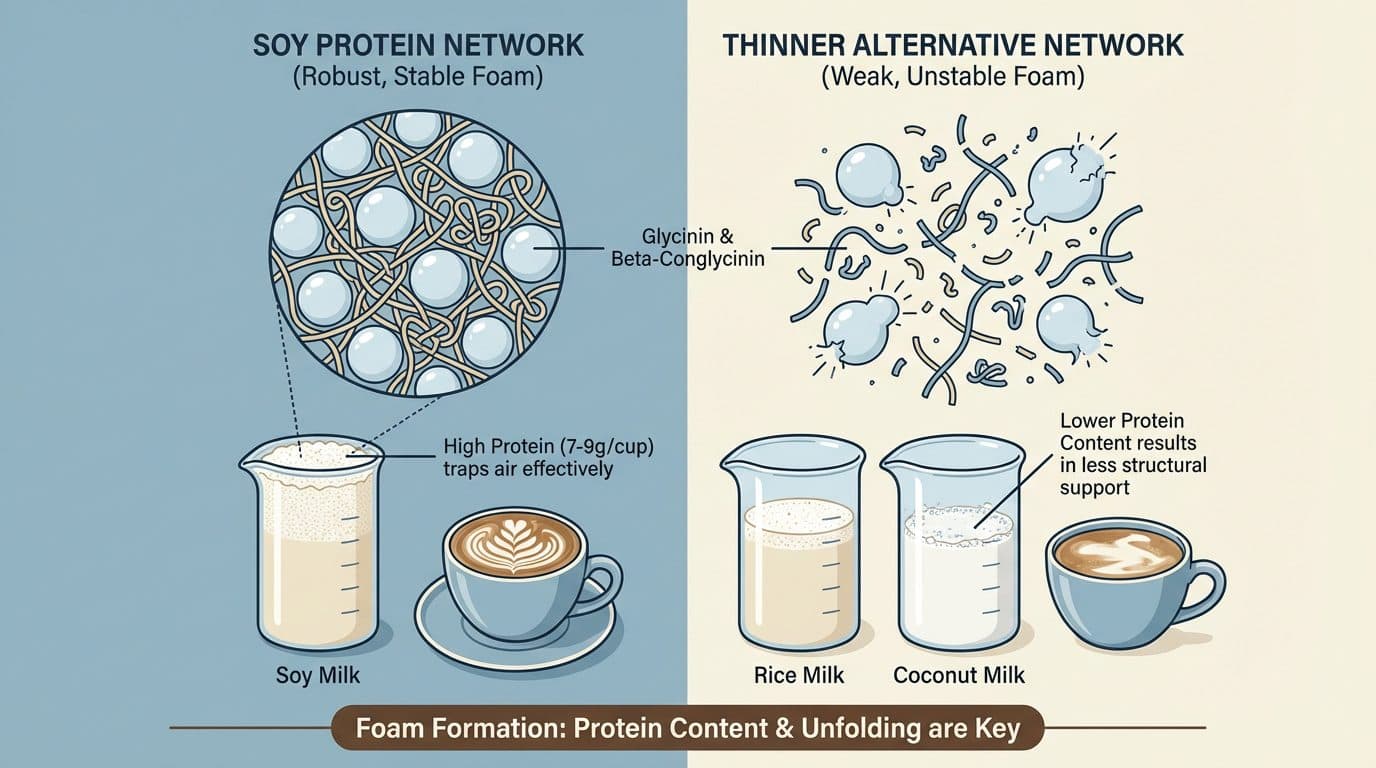
Foam formation depends on proteins unfolding and creating a network that traps air bubbles. Soy milk contains two main proteins—glycinin and beta-conglycinin—that behave similarly to dairy proteins when heated and aerated. This is why your soy cappuccino can hold those beautiful latte art designs that fall flat with thinner alternatives like rice or coconut milk.
Key Takeaway: The protein content in soy milk (7-9g per cup) is nearly identical to cow’s milk, making it structurally capable of producing café-quality foam that other plant milks struggle to match.
How Soy Compares to Other Plant Milks
Let me break down how soy stacks up against the current plant milk favorites:
| Plant Milk | Protein per Cup | Foam Quality | Flavor Impact |
|---|---|---|---|
| Soy Milk | 7-9g | Excellent | Mild, slightly nutty |
| Oat Milk | 2-4g | Very Good | Sweet, creamy |
| Almond Milk | 1-2g | Poor | Nutty, thin |
| Coconut Milk | 0-1g | Fair | Tropical, distinct |
While oat milk has become incredibly popular, soy milk still outperforms it in pure protein content. This matters if you’re looking for a more nutritionally complete addition to your morning coffee.
Health Benefits of Soy Milk in Your Coffee
Choosing soy milk isn’t just about foam—it’s a genuinely healthy choice for many coffee drinkers. If you’re managing specific dietary needs, soy milk offers several advantages worth considering.
Low-Acid and Gentle on Digestion
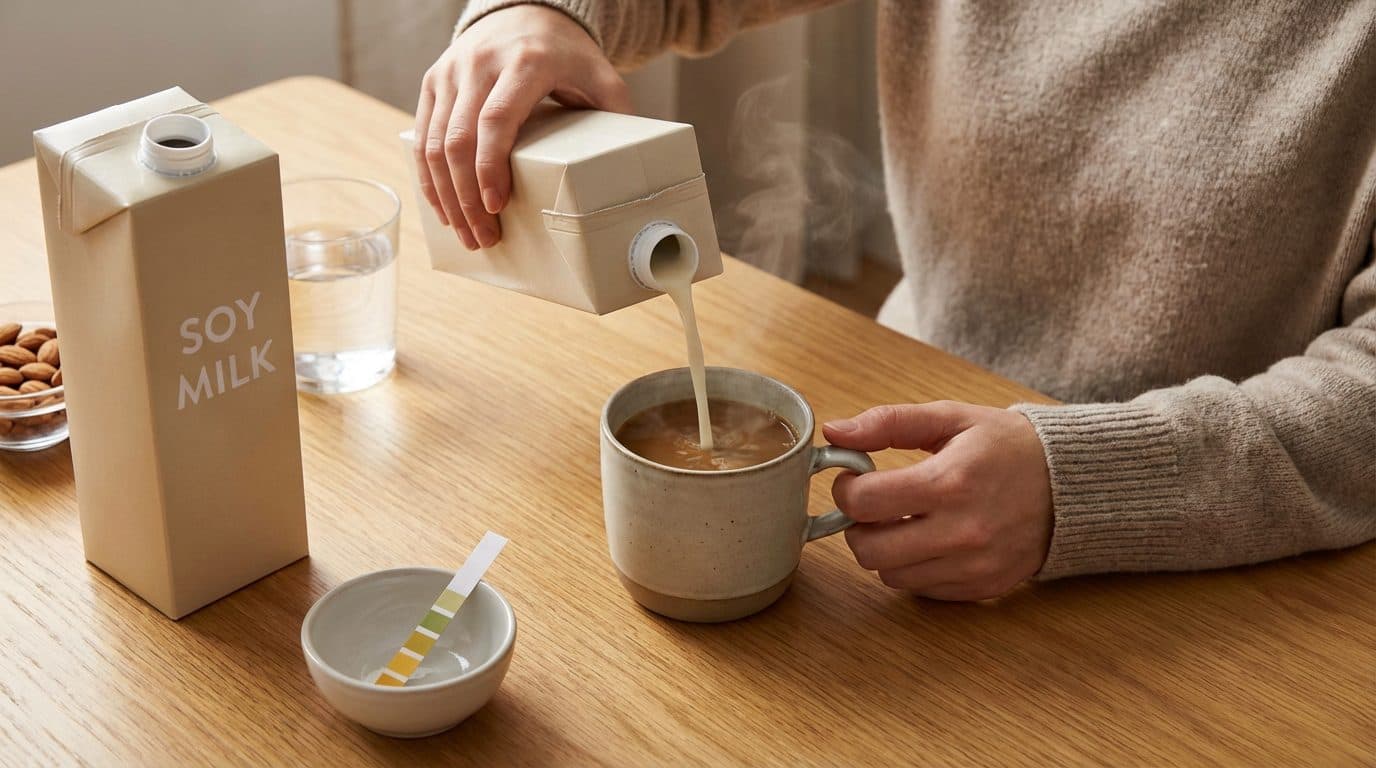
For those with acid reflux or sensitive stomachs, soy milk can be a game-changer. It naturally has a neutral to slightly alkaline pH, which can help buffer the acidity of coffee. I’ve found that switching to soy milk reduced that uncomfortable acidic feeling I used to get from my afternoon espresso.
Additionally, soy milk is naturally lactose-free, making it suitable for the estimated 68% of the global population with some degree of lactose intolerance. No more choosing between your beloved latte and digestive comfort.
Heart-Healthy and Cholesterol-Free
Unlike dairy milk, soy milk contains zero cholesterol and is low in saturated fat. The FDA has acknowledged that consuming 25 grams of soy protein daily, as part of a diet low in saturated fat and cholesterol, may reduce the risk of heart disease. While you won’t hit that target with coffee alone, every bit contributes.
Soy milk also contains isoflavones, plant compounds that some research suggests may support cardiovascular health. These compounds are unique to soy among plant milks.
Complete Protein Profile
Here’s something many people don’t realize: soy is one of the few plant-based complete proteins, containing all nine essential amino acids your body needs. This makes it particularly valuable for vegans, vegetarians, or anyone reducing animal product consumption.
- Protein: 7-9 grams per cup (comparable to cow’s milk)
- Calcium: Often fortified to match dairy levels
- Vitamin D: Typically fortified
- B12: Usually added, important for plant-based diets
A quick note: If you have thyroid conditions or are on certain medications, check with your healthcare provider about soy consumption, as it may interact with some treatments. This information is general in nature—your doctor knows your specific situation best.
How to Steam and Foam Soy Milk Like a Pro
Now let’s get practical. Steaming soy milk requires a slightly different approach than dairy, but once you nail the technique, the results are beautiful.
What You’ll Need
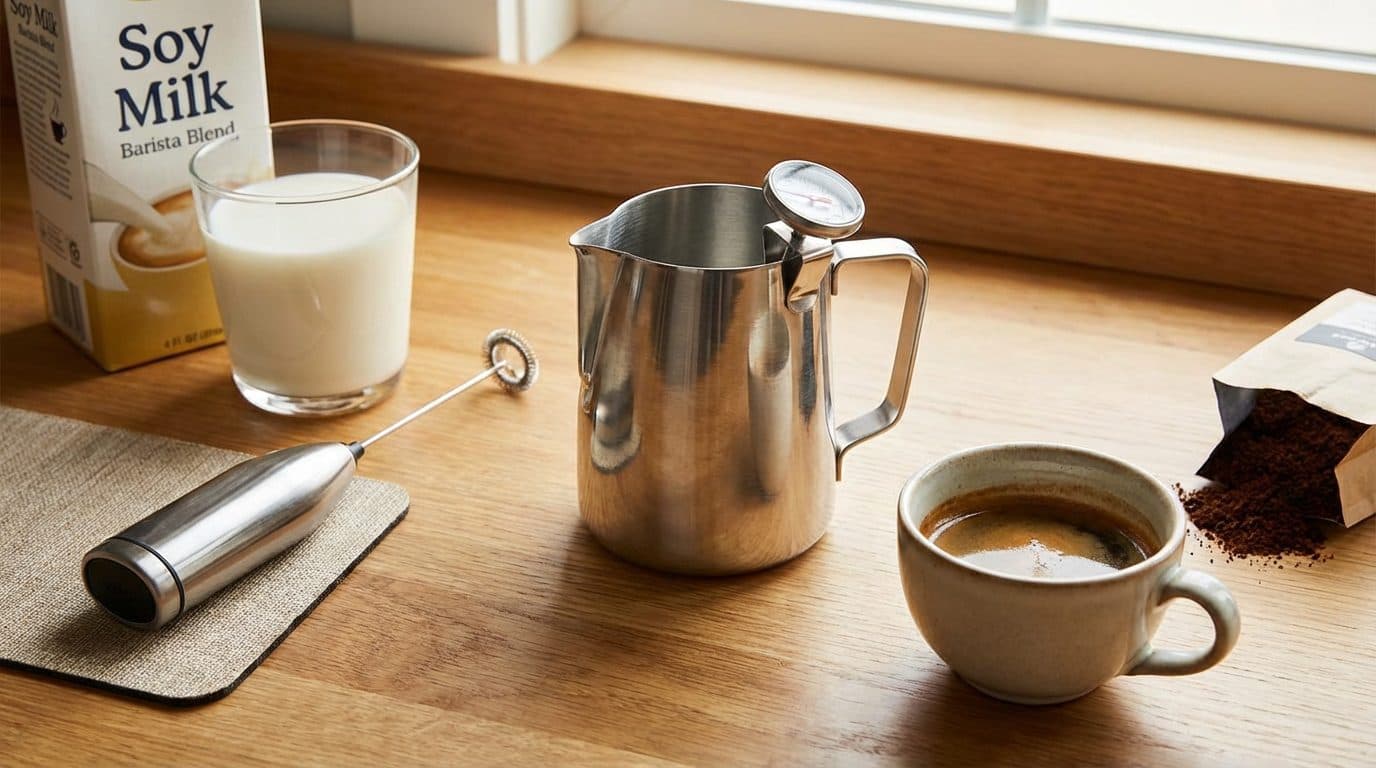
- Fresh, cold soy milk (barista blends work best, but regular works too)
- Steam wand or milk frother
- Cold stainless steel pitcher
- Thermometer (optional but helpful)
- Your favorite espresso or strong coffee
The Soy Milk Steaming Technique
Temperature control is everything with soy milk. While dairy can handle higher temperatures, soy milk starts to break down and curdle around 160°F (71°C). Here’s my tried-and-true method:
Step 1: Start with very cold soy milk straight from the refrigerator. Cold milk gives you more time to work before hitting that danger zone temperature.
Step 2: Submerge your steam wand just below the surface. Introduce air in short bursts during the first few seconds only—soy milk aerates quickly.
Step 3: Once you’ve added enough air (you’ll hear a gentle “chirping” sound), submerge the wand deeper to create a whirlpool motion. This incorporates the foam and creates that silky microfoam texture.
Step 4: Stop steaming at around 140-150°F (60-65°C). The milk will continue heating slightly after you stop.
Barista Tip: Give your pitcher a firm tap on the counter and swirl it gently before pouring. This breaks any large bubbles and creates a glossy, paint-like consistency perfect for latte art.
Solving the Curdling Problem Once and For All
Let’s address the elephant in the room: soy milk curdling in coffee. We’ve all experienced that disappointing moment when our beautiful latte turns into a lumpy mess. But here’s the thing—it’s completely preventable.
Why Soy Milk Curdles

Curdling happens when soy proteins react to three main factors:
- Heat: Extremely hot coffee shocks the proteins
- Acidity: Coffee’s natural acids cause protein coagulation
- Sudden temperature changes: Cold milk meeting hot coffee too quickly
Think of it like this: those same proteins that create wonderful foam can also clump together when stressed. The key is treating them gently.
Prevention Strategies That Actually Work
I’ve tested countless methods over the years. Here’s what consistently prevents curdling:
Warm the soy milk first. Instead of pouring cold soy milk into hot coffee, heat it gently first. This reduces the temperature shock significantly.
Add coffee to milk, not milk to coffee. This sounds backward, but it works. Pour a small amount of coffee into your cup of soy milk first, stir, then add the rest. The gradual acidification gives proteins time to adjust.
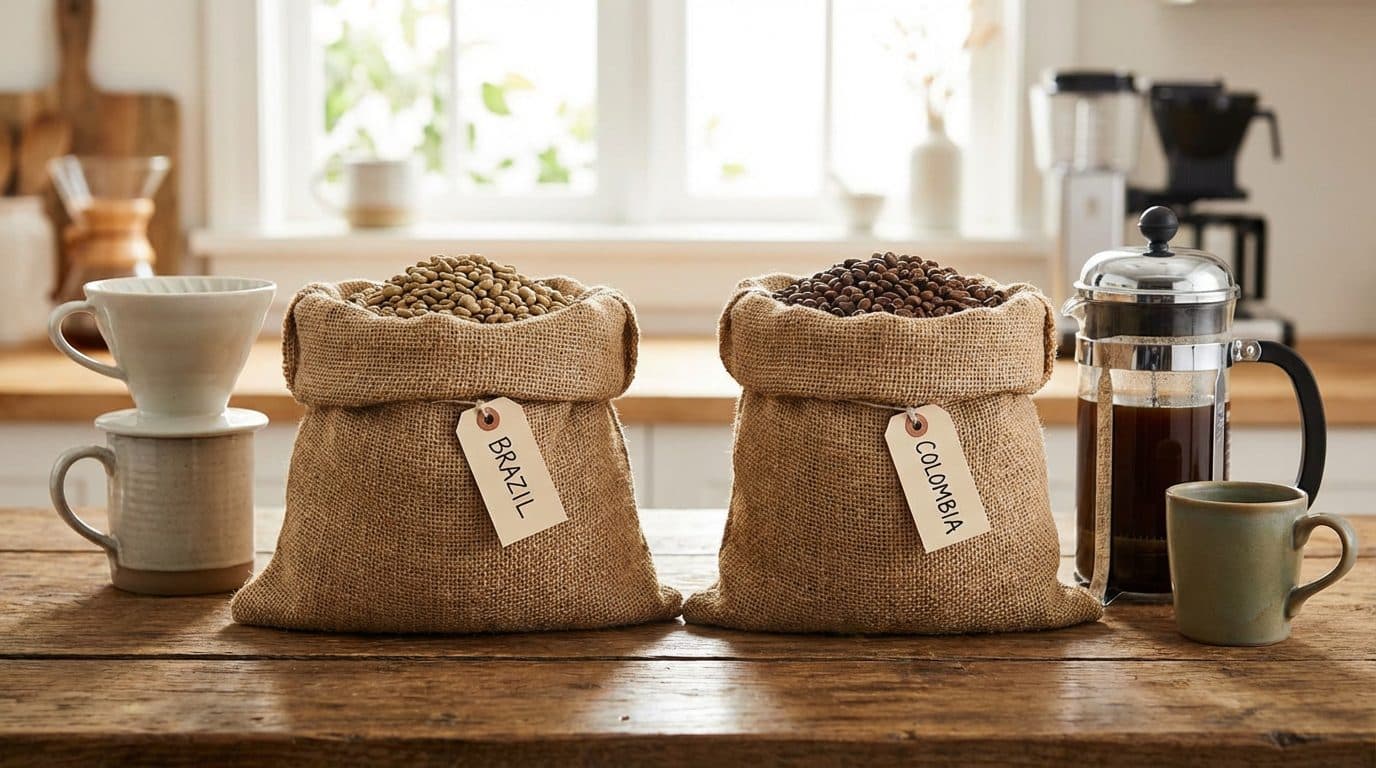
Choose low-acid coffee beans. Darker roasts and certain origins (like Brazilian or Sumatran beans) tend to be less acidic. Cold brew is also naturally lower in acid and pairs beautifully with soy milk.
Let your coffee cool slightly. Wait 30 seconds to a minute after brewing before adding soy milk. That brief window can make all the difference.
Choose barista-blend soy milks. These are specifically formulated with stabilizers that resist curdling. Brands like Pacific Barista Series and Califia Farms Barista Blend are designed for coffee applications.
Choosing the Best Soy Milk for Coffee
Not all soy milks are created equal when it comes to coffee. Your grocery store probably stocks several varieties, and the differences matter more than you might think.
Barista Blends vs. Regular Soy Milk
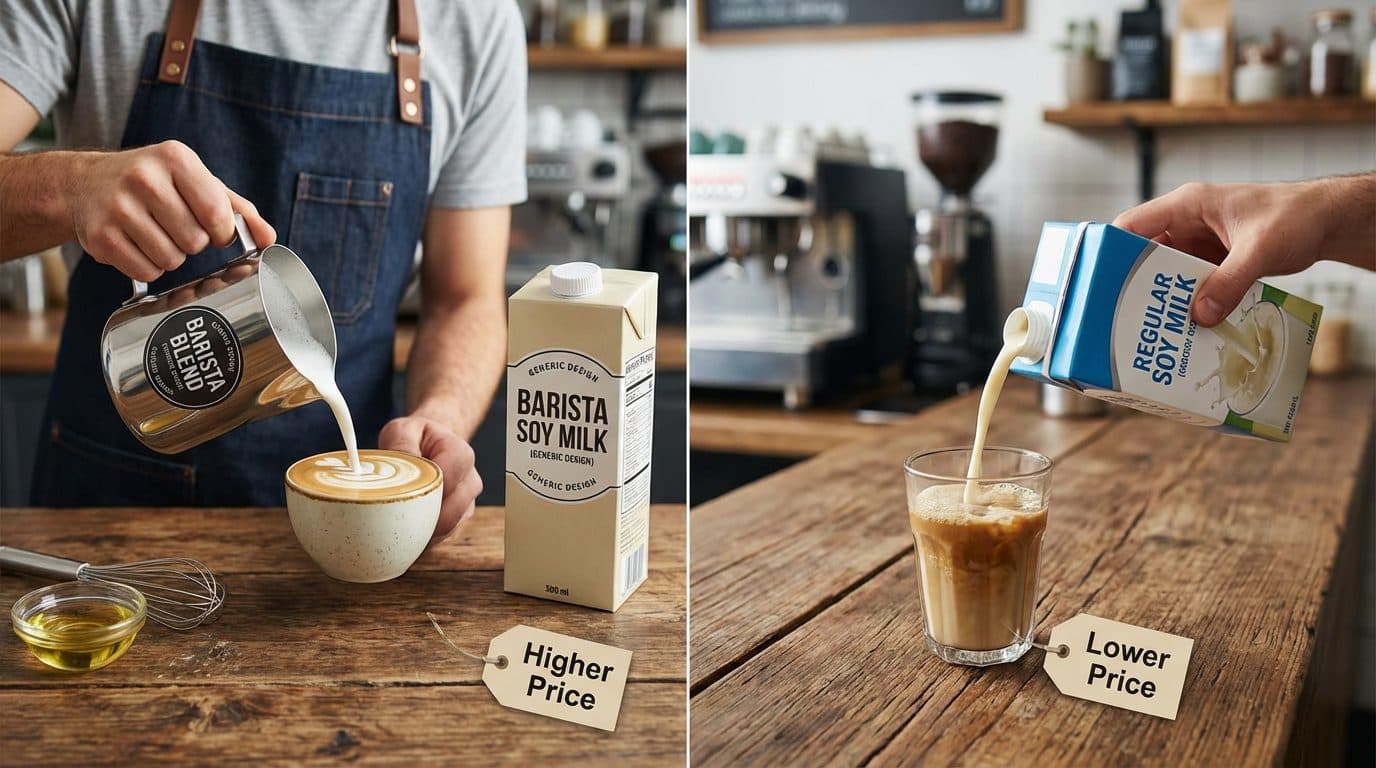
Barista-specific soy milks contain added oils, stabilizers, and sometimes extra protein to improve foaming and prevent separation. They cost a bit more but perform noticeably better.
Pros of Barista Blends:
- Superior foam stability
- More resistant to curdling
- Creamier texture and mouthfeel
- Easier to pour latte art
Cons of Barista Blends:
- Higher price point
- More processed with added ingredients
- May contain added sugars
Regular soy milk from the grocery aisle absolutely works for coffee, especially if you’re adding it to drip coffee rather than making espresso drinks. Just expect slightly less impressive foam and be more careful about temperature.
Sweetened vs. Unsweetened
For specialty coffee drinks, I strongly recommend unsweetened soy milk. This lets you control the sweetness separately and allows the coffee’s natural flavors to shine. Sweetened versions can overpower delicate single-origin beans.
That said, if you’re making a simple cup of morning coffee and prefer some sweetness, vanilla soy milk creates a pleasant flavor profile without needing additional syrups.
Frequently Asked Questions
Does soy milk taste weird in coffee?
Soy milk has a mild, slightly nutty flavor that most people find pleasant in coffee. It’s less neutral than oat milk but far subtler than coconut or almond milk. High-quality, fresh soy milk shouldn’t have any “beany” taste. If yours does, try a different brand—formulations vary significantly.
Is soy milk healthier than oat milk in coffee?
It depends on your priorities. Soy milk offers more protein and a complete amino acid profile, making it nutritionally closer to dairy. Oat milk typically contains more carbohydrates and less protein but is often considered more neutral in flavor. For those watching blood sugar or seeking higher protein, soy milk is generally the better choice.
Can I froth soy milk with a handheld frother?
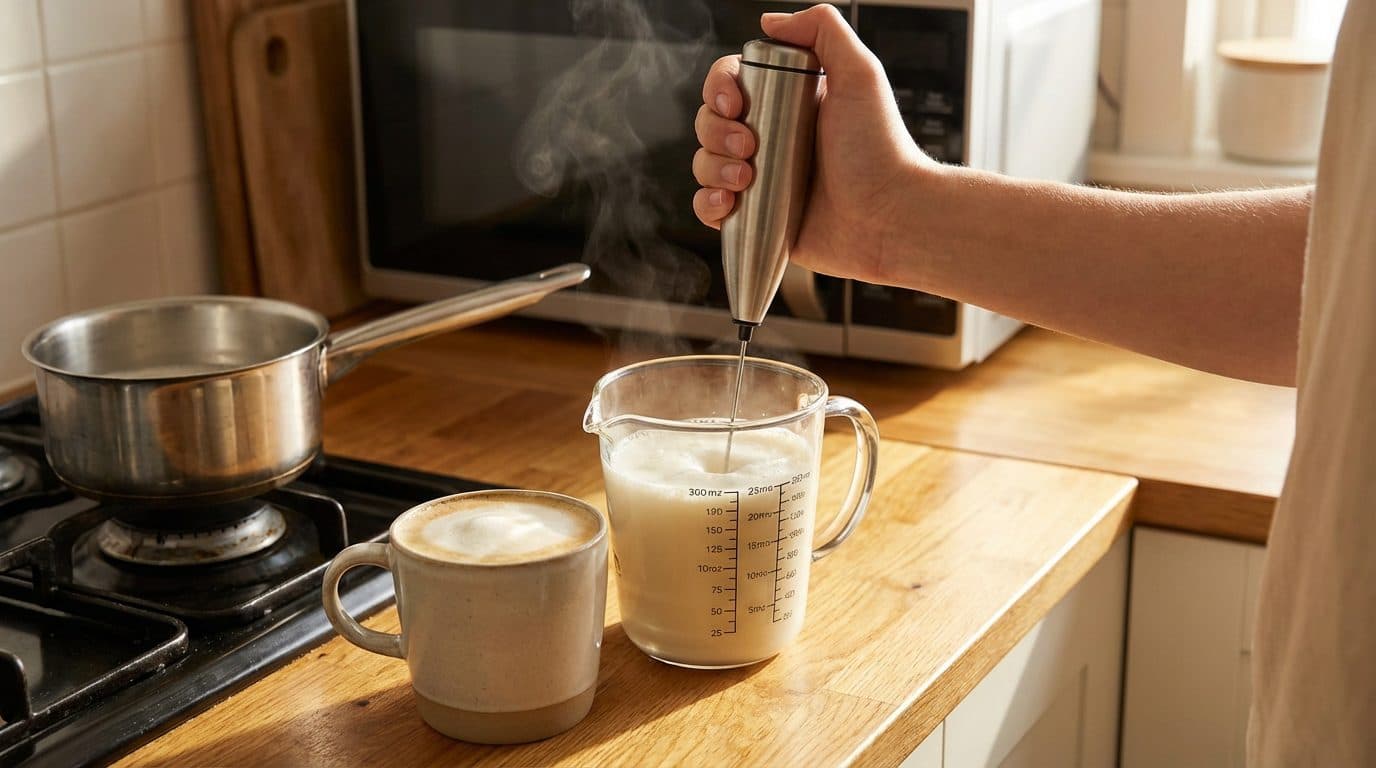
Yes, soy milk froths well with handheld frothers. Heat the milk gently first (to about 140°F) in the microwave or on the stovetop, then use your frother. You won’t get the same microfoam quality as a steam wand, but you’ll achieve a pleasant, light foam suitable for home lattes.
Why does my soy latte taste sour sometimes?
A sour taste usually indicates early-stage curdling that isn’t visible yet. This happens when hot, acidic coffee interacts poorly with the soy proteins. Try using the coffee-into-milk method, let your coffee cool slightly, or switch to a lower-acid bean. Barista-blend soy milk also helps prevent this issue.
How long does soy milk last once opened?
Opened soy milk typically stays fresh for 7-10 days in the refrigerator. Always check the smell before using—fresh soy milk should smell neutral or slightly sweet. Sour or off odors mean it’s time for a new carton. Old soy milk is more prone to curdling in coffee.
Summary and Your Next Steps
Soy milk has earned its reputation as the original coffee alternative for good reason. With protein levels matching dairy, excellent foaming capabilities, and genuine health benefits, it remains a smart choice for anyone seeking a plant-based option that doesn’t compromise on quality.
The keys to success are simple: keep temperatures moderate, introduce coffee to milk gradually, and consider investing in a barista-blend variety if you’re serious about your lattes. Once you master these basics, soy milk becomes an incredibly versatile and reliable part of your home coffee setup.
Life really is too short for bad coffee—and for avoiding the drinks you love because of dairy sensitivities. Give soy milk another chance with these techniques, and you might just rediscover why it became a café staple in the first place. Start with your next morning latte, pay attention to temperature, and see the difference for yourself.


Comments