


Table of Contents
- What Is a Siphon Coffee Maker and How Does It Work?
- The Science Behind the Brew
- Siphon Coffee Maker: The Good, the Bad, and the Beautiful
- Pros of Siphon Coffee Brewing
- Cons of Siphon Coffee Brewing
- How to Brew Coffee with a Siphon
- What You Need
- Brewing Steps
- Taste Profile
- Siphon vs. Other Brewing Methods
- Who Should Consider a Siphon Coffee Maker?
- Who It Is For
- Who Should Skip It
- Frequently Asked Questions
- Is siphon coffee better than regular drip coffee?
- How long does siphon coffee take to make?
- What grind size should I use for siphon coffee?
- Are cloth or metal filters better?
- Why does my siphon coffee taste weak?
- Final Verdict: Science Experiment or Great Coffee?
A siphon coffee maker looks like it escaped from a chemistry classroom. There are glass chambers, a burner, rising water, a filter hook, and a drawdown that feels more dramatic than a normal morning cup needs to be. The fair question is simple: is siphon coffee actually good, or is it mostly table theater?
The answer is both. A siphon brewer is a real coffee maker with a real flavor profile: clean, fragrant, lightly textured, and often very clear with lighter roasts. It is also fussy, fragile, slower than most methods, and not the easiest first brewer for a new home coffee drinker.
What Is a Siphon Coffee Maker and How Does It Work?
A siphon coffee maker, also called a vacuum coffee maker, uses two connected chambers. Water starts in the lower chamber. Coffee grounds sit in the upper chamber once brewing begins. A filter between them lets brewed coffee return downward while keeping most grounds behind.
Heat creates vapor pressure in the lower chamber, which pushes hot water upward through the tube. Once the water reaches the upper chamber, you add coffee, stir, and let it steep briefly. When you remove the heat, the lower chamber cools and pressure drops. The brewed coffee is pulled back down through the filter.
The Science Behind the Brew

The siphon is interesting because it combines immersion brewing with filtered clarity. The coffee steeps in hot water like a French press, but the final cup passes through cloth, paper, metal, or glass filtration depending on your setup.
Temperature is often described too magically in siphon articles. It is not perfectly automatic. Heat source, starting water temperature, room conditions, and technique all matter. Still, once the water is in the upper chamber, the brewer tends to hold a hot, stable brewing environment. That helps extraction stay predictable after you learn the routine.
Flavor-wise, siphon coffee can feel like a clean immersion brew: more rounded than many pour-overs, less gritty than French press, and more fragrant than a basic drip machine. It especially suits coffees where floral, fruit, tea-like, or honeyed notes matter.
Siphon Coffee Maker: The Good, the Bad, and the Beautiful
The siphon earns its reputation honestly. It can make excellent coffee, and it can also punish impatience. Before buying one, decide whether you want a daily appliance or a ritual brewer.
Pros of Siphon Coffee Brewing
- Clean flavor: Cloth and paper filters can produce a cup with strong clarity and low sediment.
- Full immersion: All grounds sit in contact with water, so extraction can be even when stirred well.
- High aroma: The open upper chamber releases a lot of fragrance while brewing.
- Good for light and medium roasts: Bright, delicate coffees often show well.
- Memorable serving: Guests notice it, which is fun if you enjoy brewing as part of hosting.
Cons of Siphon Coffee Brewing

- Setup takes attention: Filter placement, seal, heat, timing, and stirring all matter.
- Cleanup is more involved: Cloth filters need care, and the glass parts are awkward compared with a dripper.
- Glass can break: This is not the brewer to knock around in a crowded sink.
- Heat source matters: Alcohol burners are slow; butane and halogen are easier to control.
- Not ideal when rushed: If you need coffee in four minutes, choose another method.
How to Brew Coffee with a Siphon
A siphon recipe should be simple at first. Once you can repeat a clean cup, adjust grind, steep time, and agitation. Do not change all three at once.
Before lighting anything, set the brewer on a stable, heat-safe surface with clear space around it. Keep children, pets, papers, towels, and low cabinets away from the burner. Butane and alcohol burners are open-flame tools, and halogen heaters still create very hot glass. Avoid sudden temperature shocks, do not set hot glass on a wet or cold counter, and let parts cool before rinsing. If the glass is chipped or cracked, do not brew with it.
What You Need
Equipment:
- Siphon coffee maker, usually 3 to 5 cup capacity for home use
- Butane, alcohol, or halogen heat source
- Burr grinder
- Scale
- Timer
- Bamboo paddle, spoon, or stirrer
Starting recipe:
- 30 grams coffee
- 360 grams filtered water
- Medium-fine grind, around finer than drip but coarser than espresso
- 60 to 90 seconds contact time after adding coffee
Brewing Steps

Step 1: Add water to the lower chamber. Starting with hot kettle water shortens the wait and makes the process less frustrating.
Step 2: Secure the filter in the upper chamber. If the filter is crooked or loose, the drawdown can clog or let grounds through.
Step 3: Set the upper chamber in place according to your brewer’s instructions. Heat the lower chamber until water rises into the top.
Step 4: Once most water is upstairs, lower the heat enough to keep the water stable without violent bubbling.
Step 5: Add coffee, start the timer, and stir gently but thoroughly. All grounds should be wet.
Step 6: Let the coffee steep for 60 to 90 seconds. Stir once more if the crust looks dry or uneven.
Step 7: Remove heat. The coffee should draw down into the lower chamber. A smooth drawdown usually takes under a minute. A stalled drawdown often means too fine a grind, a clogged filter, or too much agitation.
Step 8: Remove the upper chamber carefully and serve. The glass stays hot, so treat the brewer like hot lab glass, not a casual mug.
Barista note: If the cup tastes thin and sharp, grind a little finer or extend contact time. If it tastes dry, bitter, or hollow, grind coarser, shorten contact time, or stir less aggressively.
Taste Profile
Good siphon coffee often has a light to medium body, clear sweetness, and a polished finish. It does not have the heavy oils of French press. It does not have the same pouring control as a V60. Its strength is the combination of immersion sweetness and filter clarity.
Siphon vs. Other Brewing Methods

| Factor | Siphon | Pour-Over | French Press |
|---|---|---|---|
| Total time | 10-15 minutes plus cleanup | 3-5 minutes | 4-6 minutes |
| Cleanup | Moderate to high | Low | Moderate |
| Body | Light to medium | Light to medium | Heavy |
| Clarity | High | High | Low to medium |
| Learning curve | Steep | Moderate | Easy |
| Best use | Ritual, guests, special beans | Daily clarity | Simple full-bodied batches |
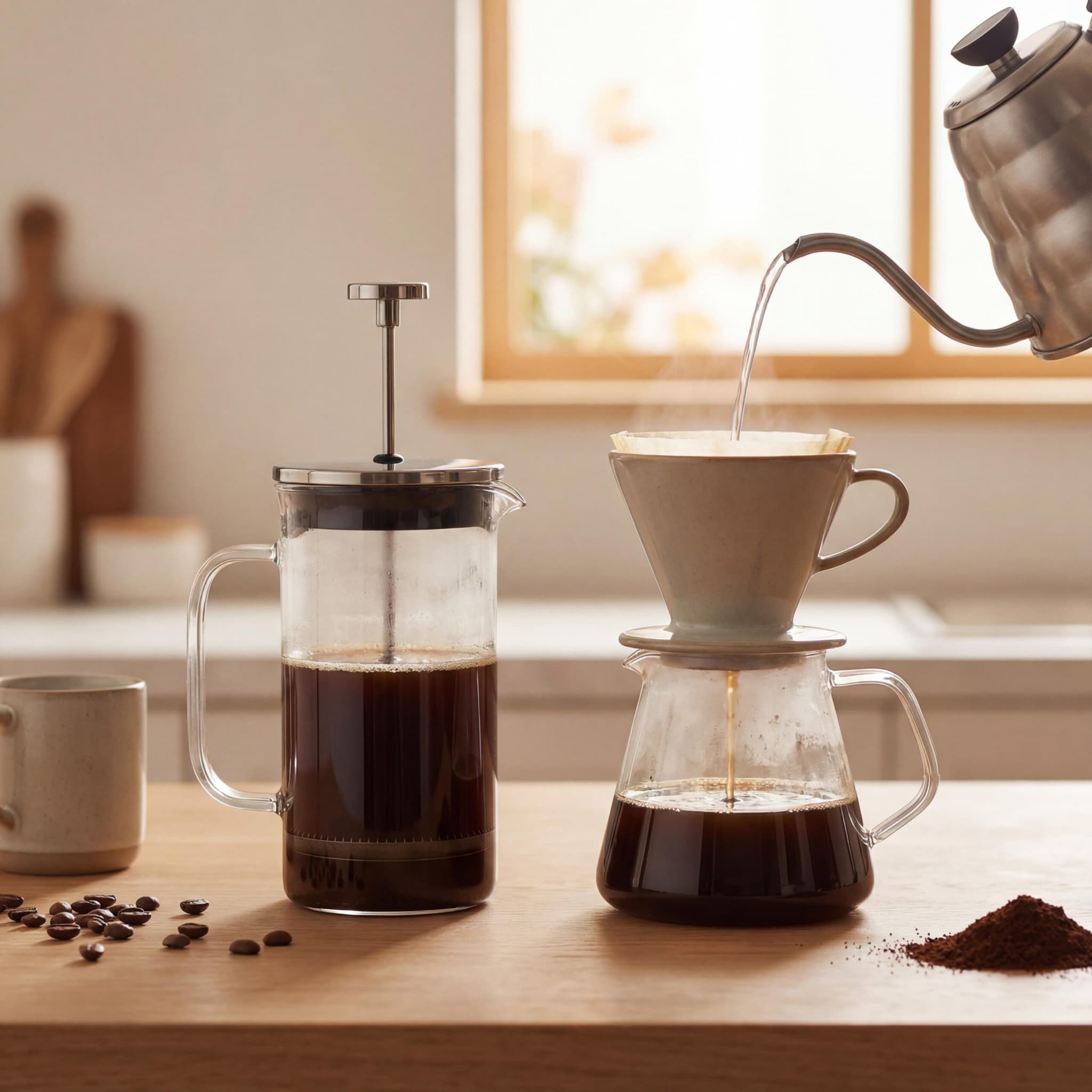
Compared with pour-over, siphon is less efficient but more theatrical and more immersion-driven. Compared with French press, it is cleaner but more fragile and slower. Compared with drip coffee, it gives more control but demands more attention.
Who Should Consider a Siphon Coffee Maker?
A siphon makes sense when the brewing process itself is part of the pleasure. It is a poor fit when coffee is mostly a fast utility.
Who It Is For
- People who enjoy slow weekend brewing
- Light-roast drinkers who want clarity and aroma
- Hosts who like making coffee in front of guests
- Curious home brewers who already have the basics covered
- Anyone willing to clean and store fragile glass carefully
Who Should Skip It
- Rushed weekday coffee drinkers
- Beginners who do not yet own a decent grinder
- People with cramped counters or crowded sinks
- Anyone who hates cloth filter care
- Fans of heavy, oily coffee who mostly want French press body
If you are choosing your first manual brewer, buy an AeroPress, French press, or pour-over dripper first. If you already have those and want a more engaging ritual, a siphon becomes much easier to justify.
Frequently Asked Questions
Is siphon coffee better than regular drip coffee?
It can taste cleaner, sweeter, and more expressive than coffee from a basic drip machine, especially with fresh beans and a good grinder. But “better” depends on what you value. Drip coffee is easier, faster, and more practical for daily use.
How long does siphon coffee take to make?

Plan on 10 to 15 minutes once you include setup and heating. Cleanup adds several more minutes, especially with a cloth filter. It is not a speed brewer.
What grind size should I use for siphon coffee?
Start medium-fine, a little finer than standard drip but not close to espresso powder. If drawdown stalls, go coarser. If the coffee tastes weak and sharp, go slightly finer or steep longer.
Are cloth or metal filters better?
Cloth gives the classic clean, silky siphon cup, but it requires rinsing and proper storage so it does not smell stale. Metal is easier to maintain and lets more oils through. Paper is convenient when available for your brewer. Choose based on cleanup tolerance as much as flavor.
Why does my siphon coffee taste weak?
The common causes are too coarse a grind, too little coffee, short contact time, or poor agitation. Start around a 1:12 coffee-to-water ratio, stir enough to wet all grounds, and taste before changing the recipe dramatically.
Final Verdict: Science Experiment or Great Coffee?
A siphon coffee maker is a science experiment in the best sense: pressure, heat, extraction, filtration, and timing are all visible. It is also capable of genuinely great coffee. The spectacle is not fake, but it is not the whole point.
For daily convenience, it loses to simpler brewers. For a slow weekend cup, a dinner guest moment, or a light roast you want to taste with clarity, it can be excellent. Buy one if the ritual sounds enjoyable even after the novelty wears off. Skip it if you mainly want easier mornings.


Comments