


Table of Contents
- Quick Verdict: Which Cold Brew Steeping Method Wins?
- Understanding Cold Brew Extraction: The Science Behind the Steep
- How Temperature Affects Extraction
- Room Temperature Steeping: The Fast and Bold Approach
- How to Steep at Room Temperature
- Pros of Room Temperature Steeping
- Cons of Room Temperature Steeping
- Who Is Room Temperature Steeping For?
- Who Is Room Temperature Steeping NOT For?
- Fridge Steeping: The Slow and Smooth Method
- How to Steep in the Fridge
- Pros of Fridge Steeping
- Cons of Fridge Steeping
- Who Is Fridge Steeping For?
- Who Is Fridge Steeping NOT For?
- Side-by-Side Comparison: Room Temperature vs. Fridge Steeping
- Common Myths About Cold Brew Steeping—Busted
- Myth 1: Room Temperature Cold Brew Is Dangerous
- Myth 2: Fridge Cold Brew Has Less Caffeine
- Myth 3: You Should Never Combine Both Methods
- How to Choose the Right Method for You
- Frequently Asked Questions
- Can I steep cold brew for 48 hours in the fridge?
- Does the type of coffee matter more than the steeping method?
- Is cold brew from room temperature steeping safe to drink?
- Can I speed up fridge steeping somehow?
- Which method produces stronger cold brew?
- Conclusion and Your Next Steps
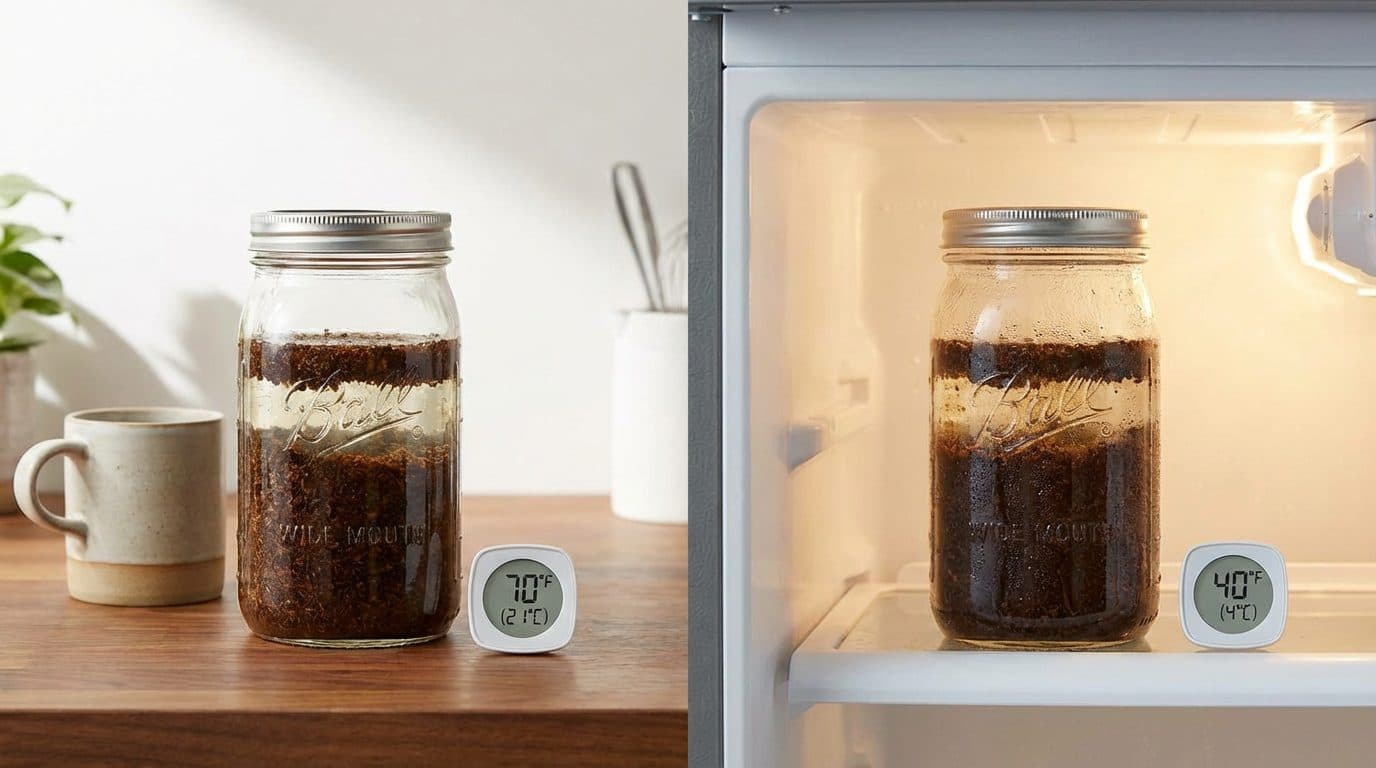
Ever wondered if your cold brew tastes different depending on where you let it steep? You’re not alone. The room temperature vs. fridge steeping debate has divided home baristas for years, and honestly, both camps have valid points. Whether you’re leaving your cold brew on the counter overnight or tucking it into the fridge for a slow, patient extraction, the method you choose affects everything from flavor profile to caffeine content.
In this guide, I’ll break down exactly what happens during each steeping method, help you understand the science behind cold brew extraction, and give you my honest take on which approach works best for different situations. By the end, you’ll know exactly which method suits your taste preferences and lifestyle.
Quick Verdict: Which Cold Brew Steeping Method Wins?
Fridge steeping takes the crown for most home baristas. While room temperature steeping is faster and produces a bolder, more intense brew, fridge steeping offers a smoother, more forgiving process with a longer margin for error. If you’re new to cold brew or prefer a mellow, sweet cup, the fridge is your friend. If you want punchy, robust coffee and don’t mind watching the clock, room temperature delivers.
Understanding Cold Brew Extraction: The Science Behind the Steep
Before we dive into the comparison, let’s talk about what’s actually happening in that jar of coffee and water. Cold brew extraction is fundamentally different from hot brewing. Without heat to speed things up, water slowly pulls compounds from the coffee grounds over hours instead of minutes.
How Temperature Affects Extraction
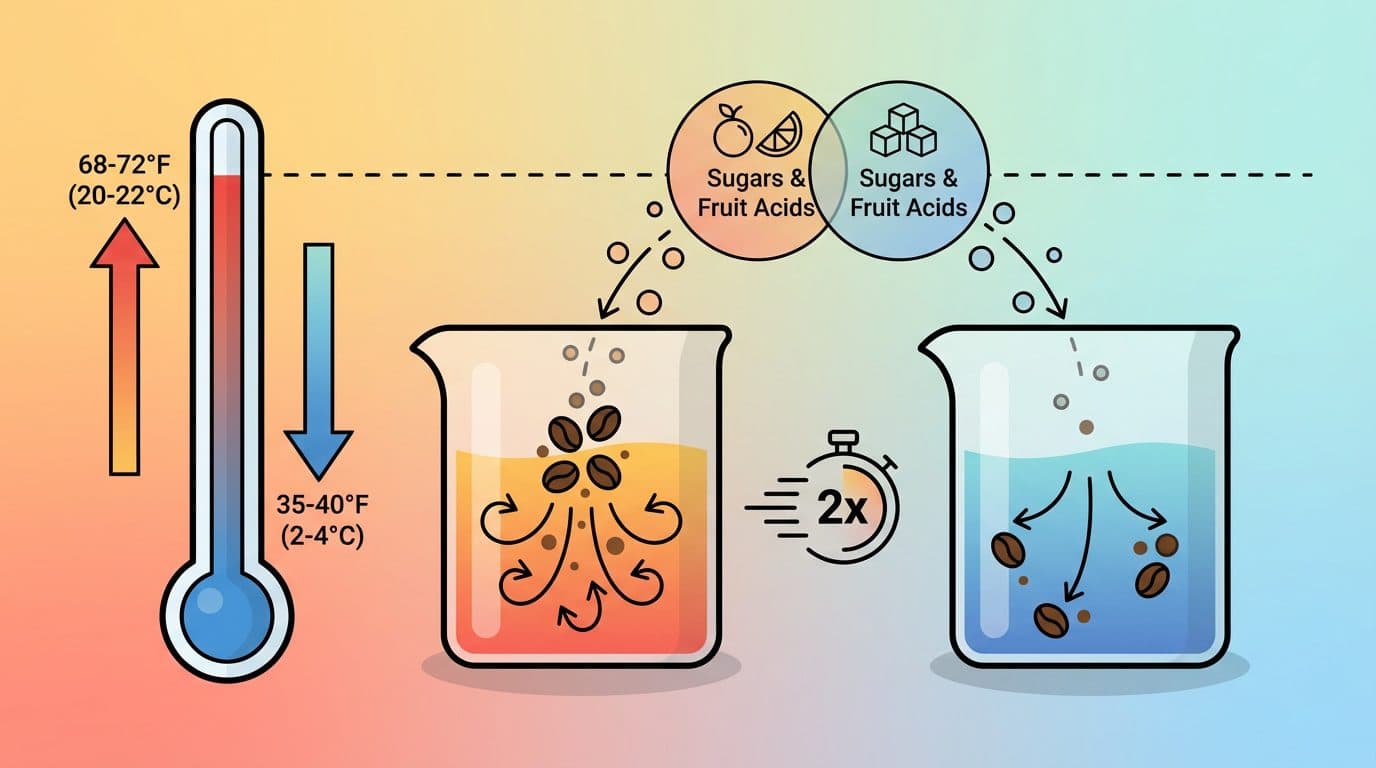
Temperature is the key variable here. Warmer temperatures increase the rate of extraction, meaning compounds dissolve into the water faster. At room temperature (around 68-72°F or 20-22°C), extraction happens roughly twice as fast as it does in a typical refrigerator (35-40°F or 2-4°C).
This isn’t just about speed, though. Different compounds extract at different rates depending on temperature. Here’s what you need to know:
- Sugars and fruit acids: Extract relatively easily at any temperature
- Caffeine: Extracts faster at higher temperatures
- Bitter compounds and chlorogenic acids: More readily extracted with warmth
- Oils and lipids: Move into solution more slowly in cold conditions
Key Takeaway: The temperature you choose doesn’t just change how long you wait—it changes what ends up in your cup.
Room Temperature Steeping: The Fast and Bold Approach
Room temperature cold brew is the impatient coffee lover’s choice, and I mean that as a compliment. When I started making cold brew years ago, this was my go-to method because I couldn’t stand waiting 18+ hours for my morning fix.
How to Steep at Room Temperature
The process is straightforward. Combine your coffee grounds and water (I recommend a 1:8 ratio for concentrate), stir well, cover, and leave on your counter. In my experience, 8-12 hours is the sweet spot, though some people go as short as 6 hours with a finer grind.
Here’s a mini scenario: You set up your cold brew at 10 PM before bed. By 8 AM, you’ve got a rich, ready-to-drink concentrate waiting for you. No planning days ahead required.
Pros of Room Temperature Steeping
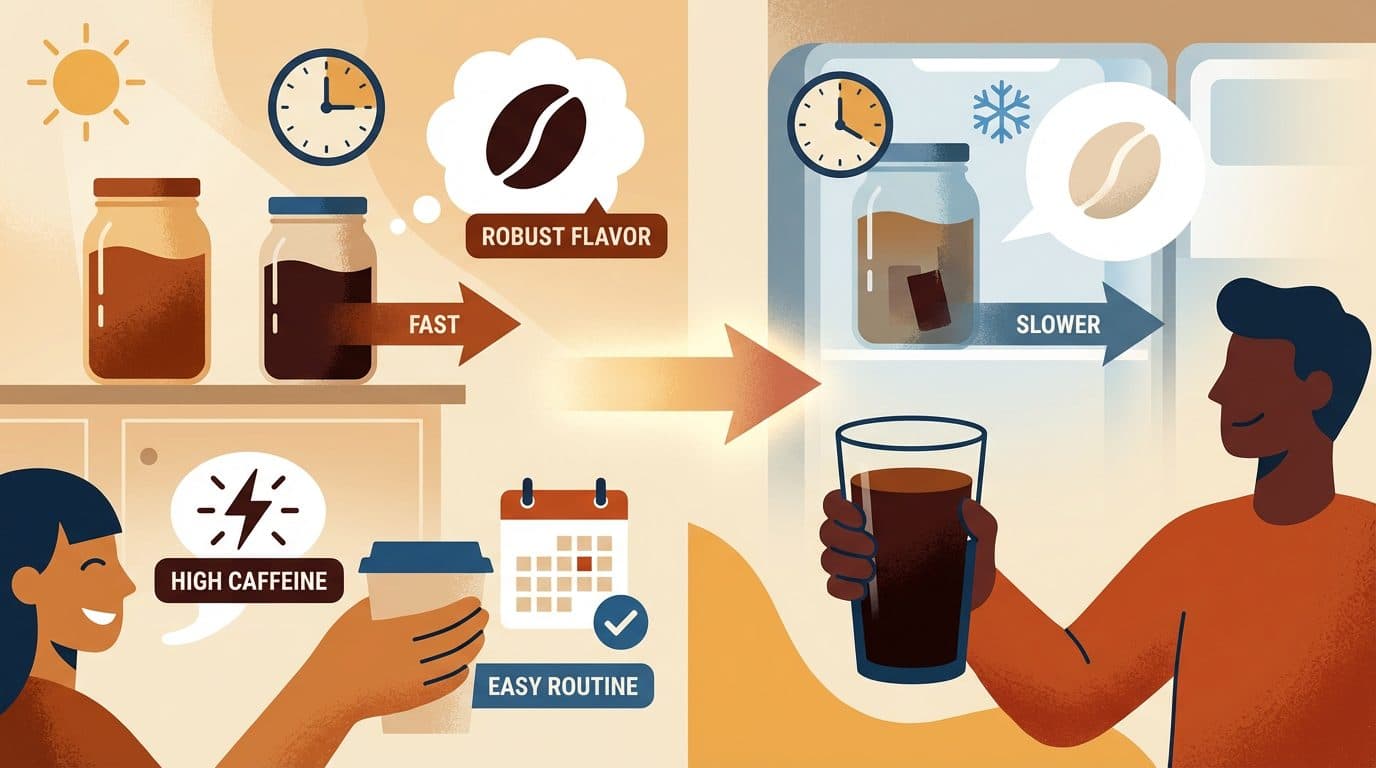
- Faster extraction time (8-12 hours vs. 18-24 hours)
- More robust, full-bodied flavor profile
- Higher caffeine extraction in the same timeframe
- Better for those who like bold, punchy cold brew
- Easier to fit into a daily routine
Cons of Room Temperature Steeping
- Smaller window before over-extraction occurs
- Can become bitter or harsh if left too long
- Slightly higher risk of bacterial growth (though still safe for 12-16 hours)
- Less forgiving of timing mistakes
- May extract more acidic compounds
Barista Tip: If you’re steeping at room temperature, set a timer. Life is too short for bad coffee, and over-extracted cold brew tastes like regret in a glass.
Who Is Room Temperature Steeping For?
This method suits you if you like bold, intense coffee and want results quickly. It’s also great for people who drink cold brew daily and need a faster turnaround.
Who Is Room Temperature Steeping NOT For?
If you’re sensitive to bitterness, prefer smooth and mellow coffee, or tend to forget about brewing projects, room temperature steeping might frustrate you.
Fridge Steeping: The Slow and Smooth Method
Fridge steeping is the “set it and forget it” approach that most commercial cold brew makers use. There’s a reason for that—it’s incredibly consistent and produces that silky, sweet cold brew people pay premium prices for at coffee shops.
How to Steep in the Fridge
Same basic setup as room temperature: combine grounds and water, stir, and cover. The difference is you’ll slide that container into the fridge and walk away for 18-24 hours. Some recipes even call for 36 hours with coarser grinds.
Picture this: It’s Sunday afternoon, and you prep a big batch of cold brew. By Monday evening or Tuesday morning, you’ve got enough smooth, delicious concentrate to last the entire week. That’s the beauty of fridge steeping.
Pros of Fridge Steeping
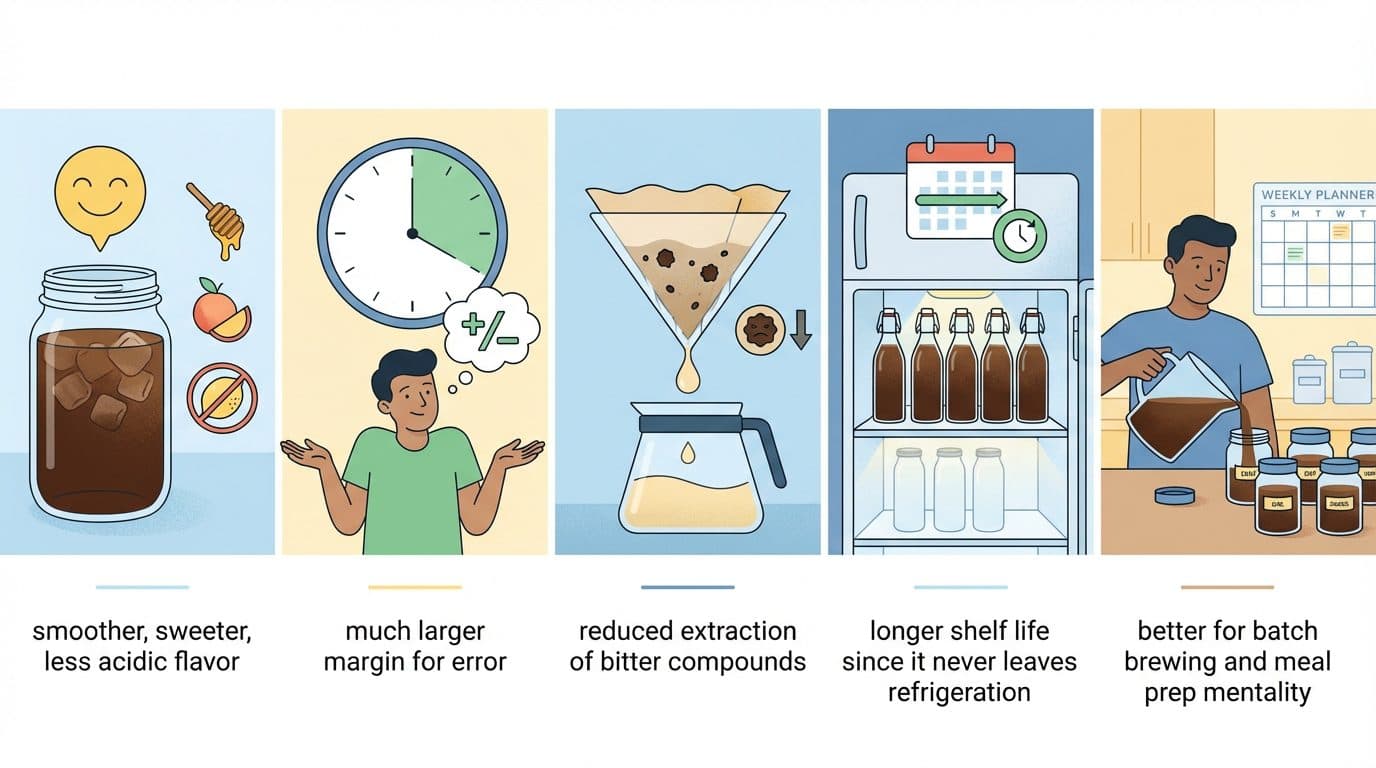
- Smoother, sweeter, less acidic flavor
- Much larger margin for error (a few extra hours won’t ruin it)
- Reduced extraction of bitter compounds
- Longer shelf life since it never leaves refrigeration
- Better for batch brewing and meal prep mentality
Cons of Fridge Steeping
- Requires more patience (18-24+ hours)
- Slightly less caffeine per steep time
- Can taste “flat” or muted to those who prefer bold coffee
- Takes up fridge space
- Harder to adjust on the fly
Barista Tip: I’ve found that fridge-steeped cold brew improves even more if you let the finished concentrate rest for another day after straining. The flavors meld and mellow beautifully.
Who Is Fridge Steeping For?
Perfect for anyone who loves smooth, sweet cold brew with chocolate or caramel notes. Also ideal for batch brewers and people who like a low-maintenance coffee routine.
Who Is Fridge Steeping NOT For?
If you want your cold brew now, or if you find traditional cold brew too mild, fridge steeping might feel like it’s missing something.
Side-by-Side Comparison: Room Temperature vs. Fridge Steeping
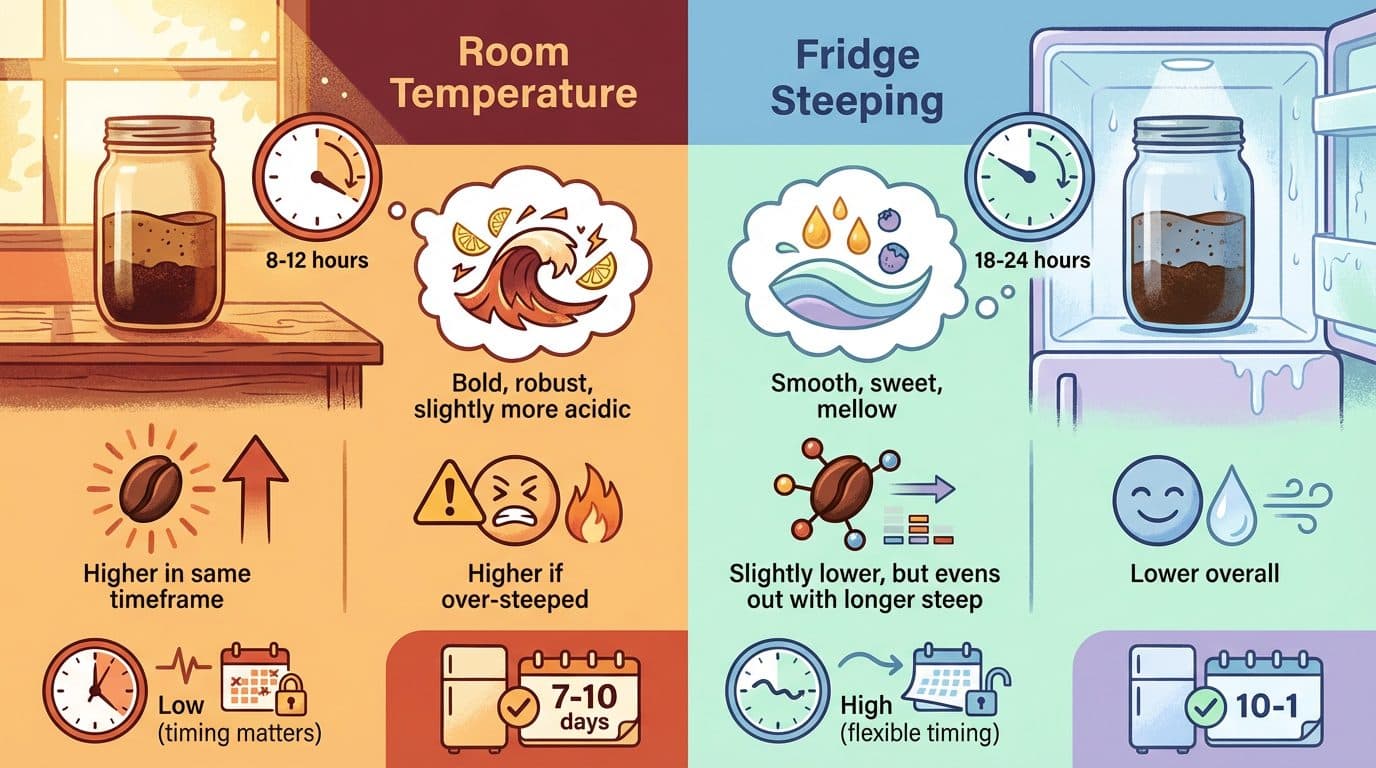
Let’s put these two methods head-to-head so you can see the differences at a glance.
| Factor | Room Temperature | Fridge Steeping |
|---|---|---|
| Steep Time | 8-12 hours | 18-24 hours |
| Flavor Profile | Bold, robust, slightly more acidic | Smooth, sweet, mellow |
| Caffeine Extraction | Higher in same timeframe | Slightly lower, but evens out with longer steep |
| Bitterness Risk | Higher if over-steeped | Lower overall |
| Forgiveness | Low (timing matters) | High (flexible timing) |
| Shelf Life After Brewing | 7-10 days refrigerated | 10-14 days refrigerated |
| Best For | Quick turnaround, bold flavor lovers | Batch brewing, smooth coffee fans |
Common Myths About Cold Brew Steeping—Busted
There’s a lot of misinformation floating around about cold brew methods. Let me address some misconceptions I’ve encountered over the years.
Myth 1: Room Temperature Cold Brew Is Dangerous
Not true for reasonable steep times. Coffee is naturally acidic and contains compounds that inhibit bacterial growth. Steeping for 8-16 hours at room temperature is perfectly safe. That said, I wouldn’t push it past 16-18 hours on the counter, especially in warm kitchens.
Myth 2: Fridge Cold Brew Has Less Caffeine
This is a half-truth. Fridge steeping extracts caffeine more slowly, but you’re also steeping for twice as long. In my experience, the final caffeine content is comparable—sometimes fridge-steeped cold brew even has slightly more because it steeps longer without over-extracting bitter compounds that might make you dilute it more.
Myth 3: You Should Never Combine Both Methods
Actually, a hybrid approach works beautifully. Some baristas start at room temperature for 4-6 hours, then transfer to the fridge for another 12-18 hours. This gives you faster extraction initially with a smooth finish. I’ve experimented with this method and found it hits a nice middle ground.
Did You Know? The “cold” in cold brew refers to the brewing temperature, not the serving temperature. You can heat up cold brew concentrate and enjoy it as a hot coffee with noticeably less acidity than traditionally brewed hot coffee.
How to Choose the Right Method for You
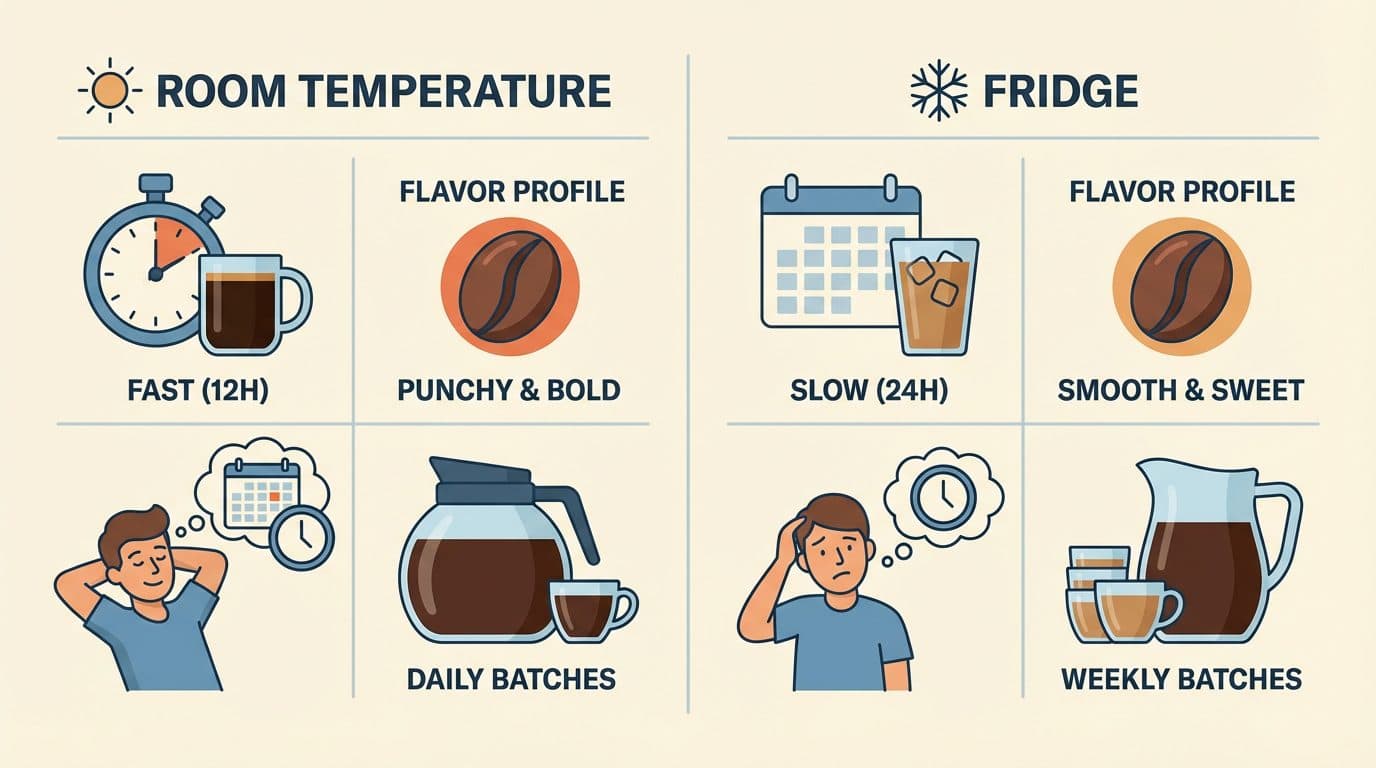
Still not sure which approach fits your life? Ask yourself these questions:
- How quickly do you need your cold brew? Less than 12 hours = room temperature. Can wait 24 hours = fridge.
- What’s your flavor preference? Bold and punchy = room temperature. Smooth and sweet = fridge.
- How precise is your timing? Tend to forget things = fridge (more forgiving). Clock-watcher = either works.
- How much do you drink? Daily consumption = room temperature for faster batches. Weekly batches = fridge for longer shelf life.
Here’s a real-world example: My friend Sarah loves intense, almost syrupy cold brew. She steeps at room temperature for 10 hours, strains immediately, and stores the concentrate. Her husband prefers something mellower, so he makes a separate batch in the fridge for 24 hours. Same household, different methods, everyone’s happy.
Frequently Asked Questions
Can I steep cold brew for 48 hours in the fridge?
You can, but it’s usually unnecessary and may lead to over-extraction even at cold temperatures. Most cold brew hits its peak flavor between 18-24 hours in the fridge. Beyond 36 hours, you’re risking muted, overly extracted flavors without much benefit.
Does the type of coffee matter more than the steeping method?
Both matter significantly. A high-quality, medium to dark roast will taste great with either method. The steeping temperature affects how those flavors express themselves, but starting with good beans makes the biggest difference overall.
Is cold brew from room temperature steeping safe to drink?
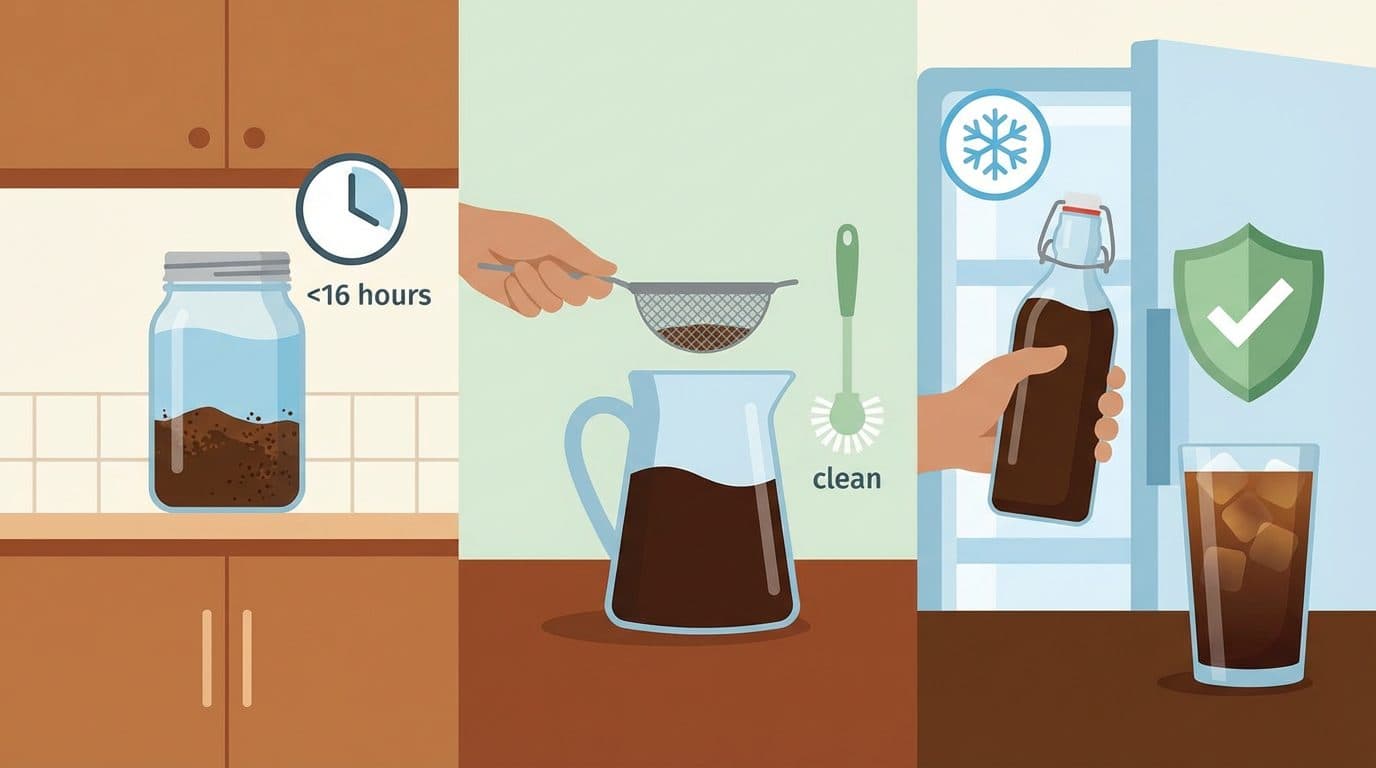
Yes, absolutely. Coffee’s acidity and natural compounds make it resistant to bacterial growth. Keep your steep time under 16 hours at room temperature, use clean equipment, and refrigerate immediately after straining. You’ll be perfectly fine.
Can I speed up fridge steeping somehow?
Using a slightly finer grind will speed up extraction in the fridge, but be careful—too fine and you’ll have a silty, hard-to-filter mess. Stirring the mixture a couple times during steeping can also help. Some people briefly bloom the grounds with a splash of hot water before adding cold water, which can shave a few hours off.
Which method produces stronger cold brew?
Strength depends more on your coffee-to-water ratio than steeping temperature. Both methods can produce equally strong concentrates. Room temperature may taste stronger initially because it extracts more bold, forward flavors, but fridge-steeped cold brew using the same ratio has similar actual caffeine and coffee solid content.
Conclusion and Your Next Steps
The room temperature vs. fridge steeping debate doesn’t have a single right answer—it comes down to your taste preferences, schedule, and how hands-on you want to be with your cold brew process. Room temperature steeping delivers bold, robust results in half the time but requires more attention. Fridge steeping produces smoother, sweeter cold brew with a generous margin for error.
My suggestion? Try both methods with the same coffee and same ratio. Taste them side by side and trust your palate. In my experience, most home baristas eventually settle on fridge steeping for its convenience and consistency, but you might be the exception who loves that punchy room temperature brew.
Grab your favorite beans, pick a method, and start experimenting. Your perfect cold brew is just a steep away.



Comments