


Table of Contents
- Quick Verdict: Pulse Pour Wins for Most Home Baristas
- Understanding Pulse Pouring: The Stop-and-Go Approach
- How Pulse Pouring Affects Extraction
- Pros of Pulse Pouring
- Cons of Pulse Pouring
- Understanding Continuous Pouring: The Steady Stream Method
- How Continuous Pouring Affects Extraction
- Pros of Continuous Pouring
- Cons of Continuous Pouring
- Pulse Pour vs. Continuous Pour: Direct Comparison
- Who is Pulse Pouring For?
- Who is Continuous Pouring For?
- Who is Pulse Pouring NOT For?
- Who is Continuous Pouring NOT For?
- How to Choose the Right Technique for Your Coffee
- Consider Your Roast Level
- Evaluate Your Equipment
- Think About Your Brewer
- Practical Tips for Mastering Both Techniques
- For Better Pulse Pours
- For Better Continuous Pours
- Frequently Asked Questions
- Does pulse pouring or continuous pouring extract more caffeine?
- Can I combine pulse and continuous pouring in one brew?
- Which method works better for cold brew concentrate?
- How do I fix bitter coffee when using continuous pouring?
- Is one method better for making coffee for multiple people?
- Conclusion and Recommendations
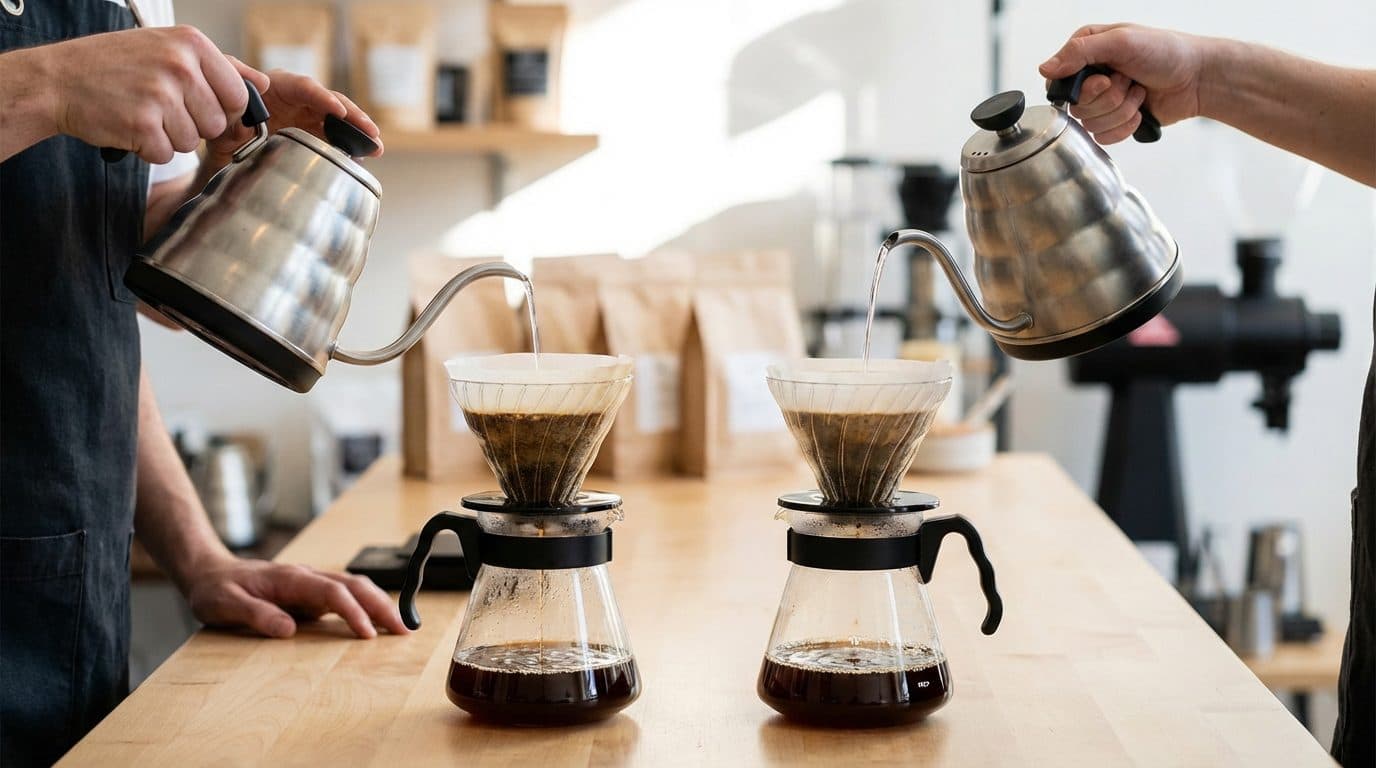
You’ve probably watched a few pour-over videos and noticed something interesting: some baristas pour water in small, controlled bursts, while others maintain one smooth, uninterrupted stream from start to finish. Both methods produce excellent coffee, but they create noticeably different results in your cup. So which technique should you actually be using?
The pulse pour versus continuous pour debate is one of the most discussed topics in the specialty coffee world. I’ve spent years experimenting with both methods across different beans, roast levels, and pour-over devices. The truth is, neither technique is universally “better” – but understanding when and why to use each one will genuinely transform your morning brew. Let’s break down the science, the technique, and ultimately help you decide which approach fits your coffee goals.
Quick Verdict: Pulse Pour Wins for Most Home Baristas
If you’re looking for a quick answer, pulse pouring offers more control and forgiveness, making it the better choice for most home brewers. It allows you to manage extraction more precisely, compensate for minor grind inconsistencies, and create a more balanced cup without requiring perfect technique throughout the entire brew.
That said, continuous pouring shines when you want a cleaner, more delicate flavor profile and have dialed in your variables precisely. I’ve found that experienced brewers often gravitate toward continuous pours for lighter roasts, while pulse pouring remains the go-to for darker roasts and everyday brewing.
Understanding Pulse Pouring: The Stop-and-Go Approach
Pulse pouring involves adding water to your coffee grounds in multiple separate pours, allowing the water level to drop between each addition. A typical pulse pour recipe might include a bloom pour followed by three to five additional pulses, each adding roughly 50-100 grams of water at a time.
How Pulse Pouring Affects Extraction
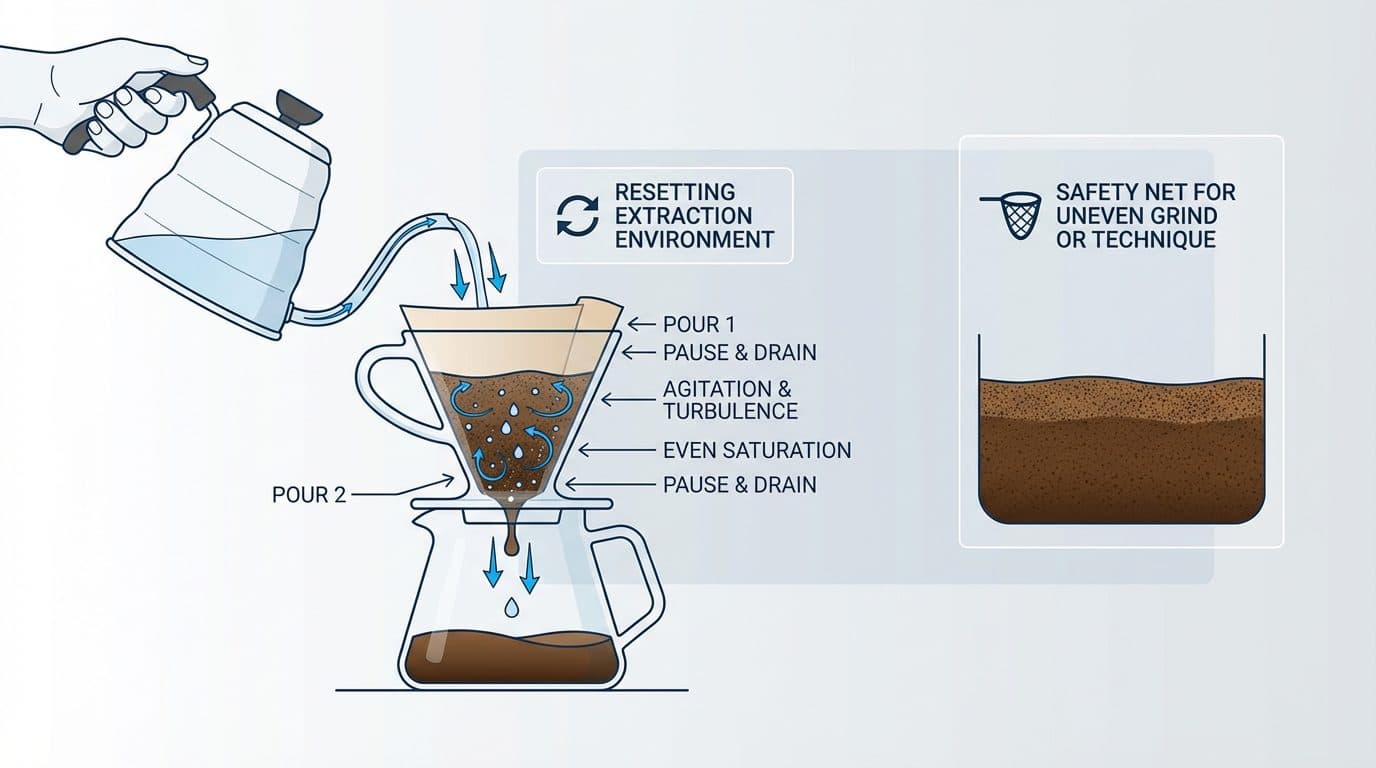
When you pause between pours, several things happen inside your coffee bed. The water drains through, agitating the grounds and creating turbulence. Each new pour disturbs the grounds again, ensuring even saturation and preventing channeling. This repeated agitation means you’re essentially “resetting” the extraction environment multiple times.
In my experience, this method provides a safety net. If your grind is slightly uneven or your pouring technique wavers, the multiple pulses help redistribute water and grounds, correcting small mistakes along the way.
Pros of Pulse Pouring
- Greater control over extraction timing and water distribution
- Forgiving technique that compensates for inconsistent grinds
- Fuller body and more pronounced sweetness in many brews
- Easier to learn for beginners still developing pour control
- Better for darker roasts that benefit from controlled agitation
Cons of Pulse Pouring
- Longer total brew time due to pauses between pours
- Risk of over-extraction if pulses are too aggressive or too many
- Requires attention to timing and water weight for each pulse
- Can create uneven temperatures as grounds cool between pours
Barista Tip: When pulse pouring, aim to pour in concentric circles starting from the center and moving outward. Avoid pouring directly onto the filter walls, as this creates channeling and under-extracts your coffee.
Understanding Continuous Pouring: The Steady Stream Method
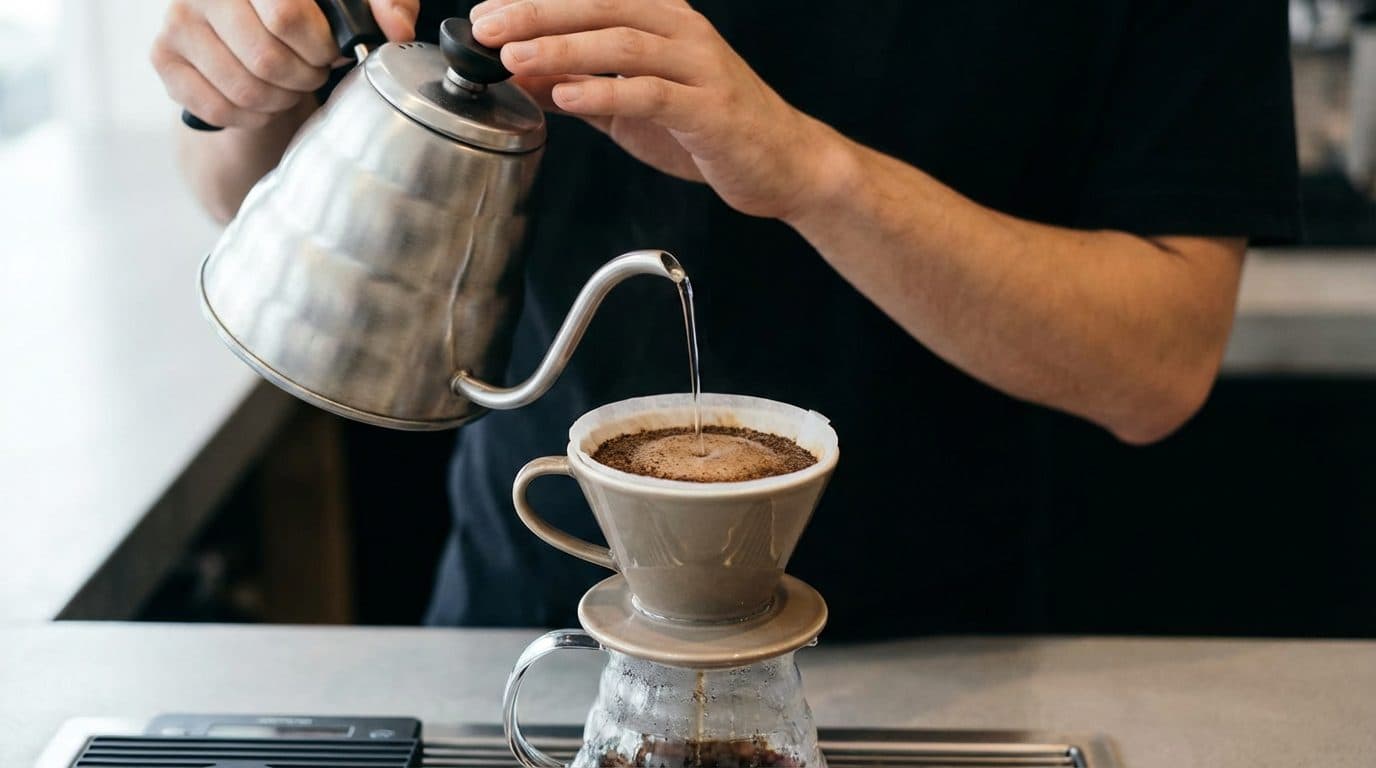
Continuous pouring means maintaining a single, uninterrupted stream of water from the bloom phase through to the final drop. Your kettle stays in motion, creating a steady flow that keeps the water level relatively constant throughout the brew.
How Continuous Pouring Affects Extraction
With continuous pours, the coffee bed remains more stable and undisturbed after the initial bloom. Water moves through the grounds in a more consistent manner, creating less turbulence and agitation. This gentler approach often produces a cleaner cup with more clarity and distinct flavor notes.
Think of it like this: pulse pouring is a series of small waves crashing onto a beach, while continuous pouring is a calm, steady tide. Both get the sand wet, but the resulting texture and movement differ significantly.
Pros of Continuous Pouring
- Cleaner, more delicate flavor profile with pronounced clarity
- More consistent temperature throughout the brewing process
- Faster total brew time without pauses
- Highlights origin characteristics in lighter roasts
- Creates a flatter, more stable coffee bed
Cons of Continuous Pouring
- Less forgiving of grind inconsistencies or technique errors
- Requires excellent pour control and a quality gooseneck kettle
- Can under-extract if flow rate is too fast
- May produce thinner body compared to pulse methods
Pulse Pour vs. Continuous Pour: Direct Comparison
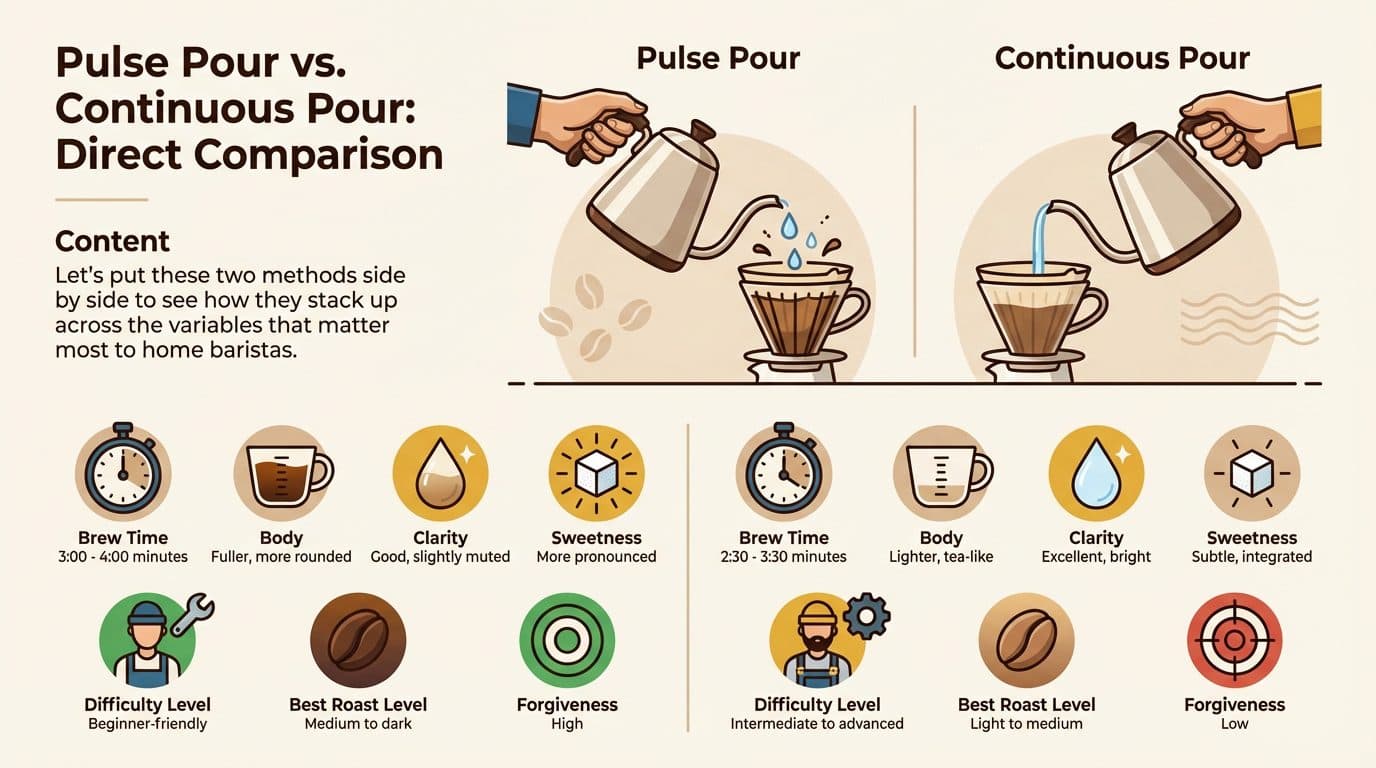
Let’s put these two methods side by side to see how they stack up across the variables that matter most to home baristas.
| Factor | Pulse Pour | Continuous Pour |
|---|---|---|
| Brew Time | 3:00 – 4:00 minutes | 2:30 – 3:30 minutes |
| Body | Fuller, more rounded | Lighter, tea-like |
| Clarity | Good, slightly muted | Excellent, bright |
| Sweetness | More pronounced | Subtle, integrated |
| Difficulty Level | Beginner-friendly | Intermediate to advanced |
| Best Roast Level | Medium to dark | Light to medium |
| Forgiveness | High | Low |
Who is Pulse Pouring For?
- Beginners still developing their pour-over technique
- Home baristas using hand grinders with some inconsistency
- Anyone who prefers fuller-bodied, sweeter coffee
- Those brewing medium to dark roasts regularly
- People who want a more forgiving, repeatable process
Who is Continuous Pouring For?
- Experienced brewers with confident pour control
- Those using high-quality burr grinders with consistent output
- Light roast enthusiasts who want maximum clarity
- Baristas seeking to highlight delicate origin flavors
- Anyone who enjoys the meditative flow of a single, focused pour
Who is Pulse Pouring NOT For?
- Those seeking maximum clarity and brightness in their cup
- Brewers in a hurry who need the fastest possible extraction
- People who find the timing and multiple pours too fussy
Who is Continuous Pouring NOT For?
- Beginners who haven’t mastered consistent pour rate
- Anyone using a standard kettle without a gooseneck spout
- Home baristas with grinders that produce uneven particle sizes
How to Choose the Right Technique for Your Coffee
Rather than committing to one method forever, I recommend choosing your pour style based on what you’re brewing. Here’s a practical framework I use in my own morning routine.
Consider Your Roast Level
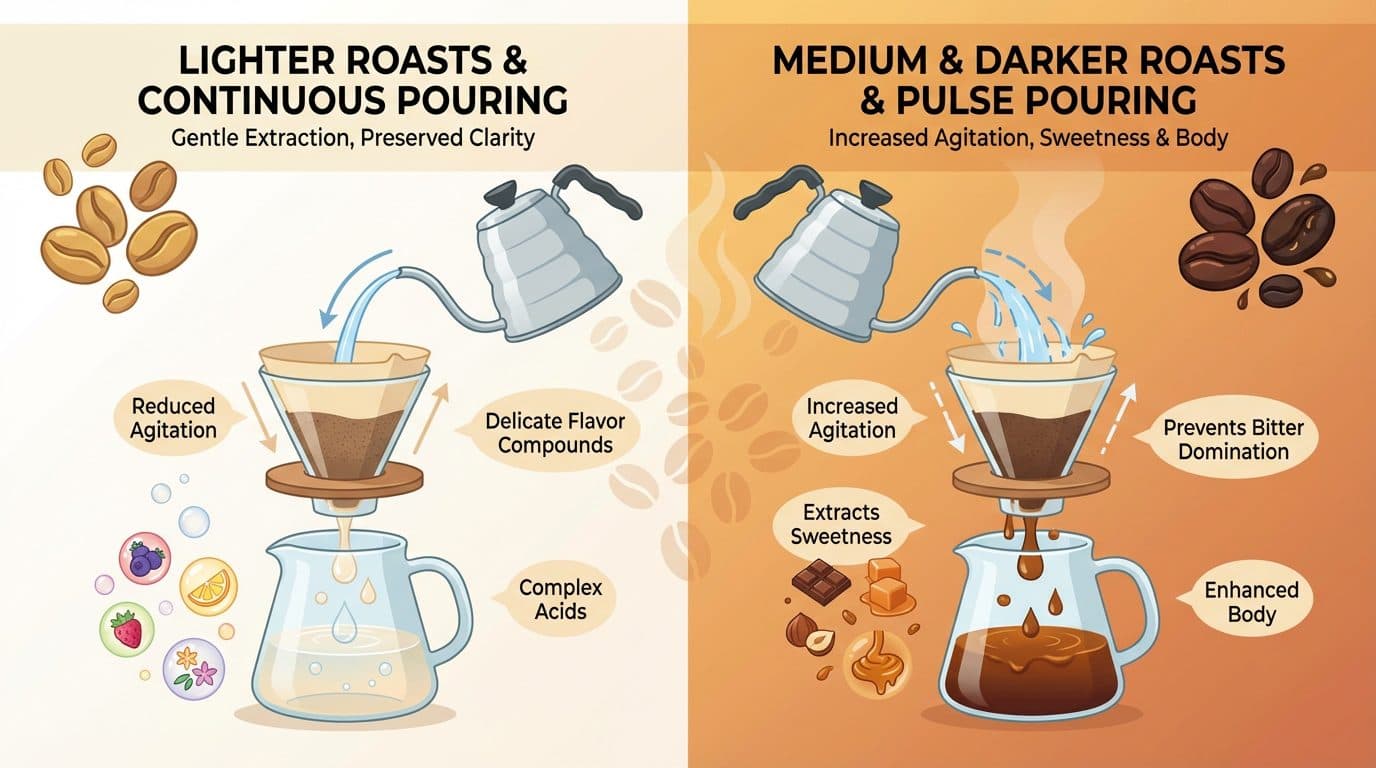
Lighter roasts contain more complex acids and delicate flavor compounds that benefit from the gentle, even extraction of continuous pouring. The reduced agitation preserves clarity and allows those bright, fruity notes to shine through.
Medium and darker roasts, on the other hand, often taste better with pulse pouring. The increased agitation helps extract sweetness and body while preventing the bitter compounds from dominating. In short: light roasts like gentle treatment, dark roasts can handle more turbulence.
Evaluate Your Equipment
Your grinder plays a significant role in this decision. If you’re using a blade grinder or an entry-level burr grinder, pulse pouring will help compensate for inconsistent particle sizes. The repeated agitation ensures all grounds get adequate extraction time.
With a high-quality burr grinder producing uniform particles, continuous pouring becomes more viable. You won’t need the corrective action of multiple pulses because your extraction will be naturally even.
Think About Your Brewer
Different pour-over devices respond differently to these techniques. The Hario V60’s large opening and fast flow rate pairs well with pulse pouring, which slows down extraction. The Kalita Wave, with its flat bottom and smaller drain holes, often performs beautifully with continuous pours because it naturally regulates flow.
Barista Tip: Try brewing the same coffee back-to-back using both methods. Taste them side by side while they’re still warm. This direct comparison will teach you more about your preferences than any guide ever could.
Practical Tips for Mastering Both Techniques
Regardless of which method you choose, a few principles will help you brew better coffee.
For Better Pulse Pours
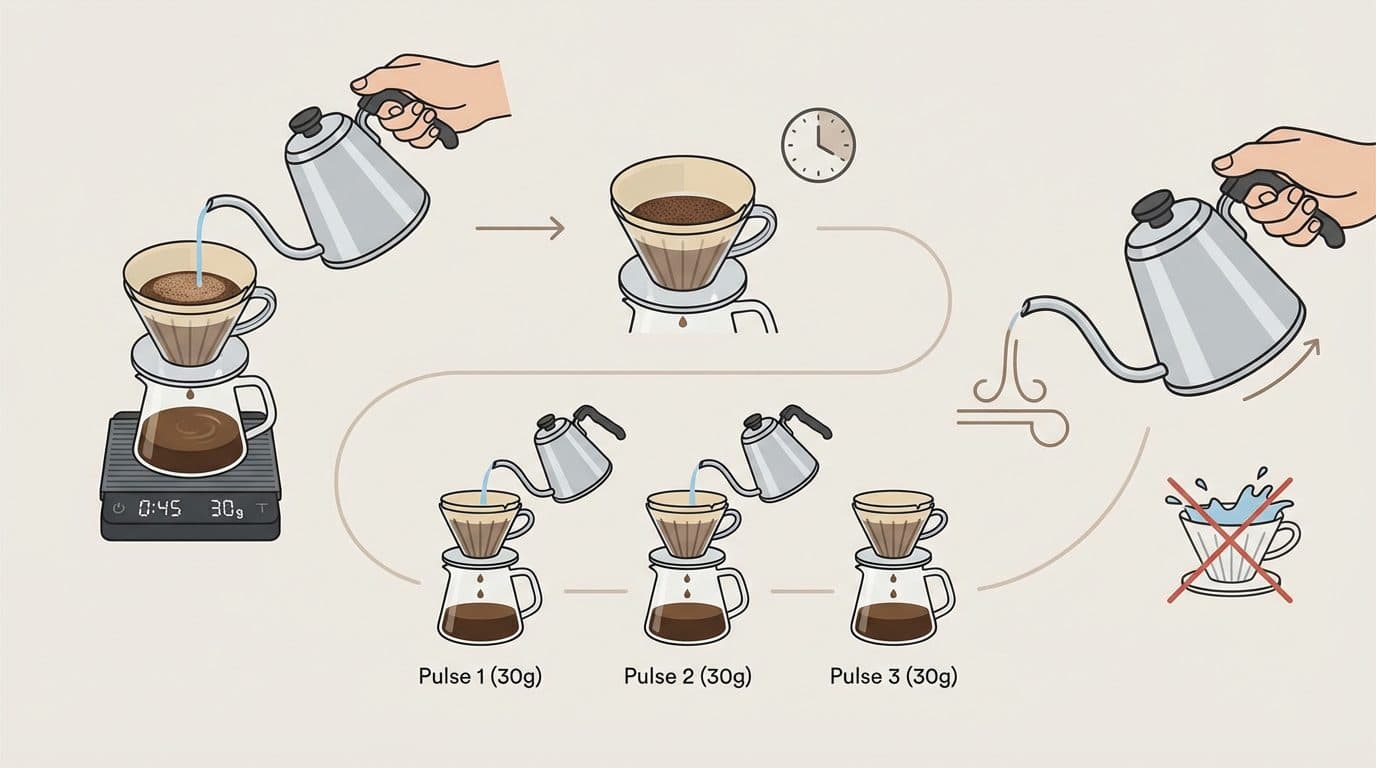
- Keep pulse sizes consistent – aim for the same weight each time
- Wait until the water level drops to just above the coffee bed before the next pulse
- Use a scale with a timer to track both weight and intervals
- Start with three pulses after the bloom, then adjust from there
- Pour slowly and deliberately, not in quick bursts
For Better Continuous Pours
- Practice maintaining a consistent flow rate before brewing
- Keep the water level steady, neither rising nor falling dramatically
- Move in slow, controlled circles to ensure even saturation
- Invest in a quality gooseneck kettle with good flow control
- Focus on your breathing to maintain a steady, relaxed pour
Frequently Asked Questions
Does pulse pouring or continuous pouring extract more caffeine?
Both methods extract similar amounts of caffeine when total brew time and water ratios are equal. The difference lies primarily in flavor profile rather than caffeine content. Pulse pouring’s longer contact time might extract marginally more, but the difference is negligible for practical purposes.
Can I combine pulse and continuous pouring in one brew?
Absolutely. Many recipes call for a pulse-style bloom followed by one or two continuous pours. This hybrid approach gives you initial control during the critical bloom phase while finishing with a cleaner, more consistent extraction. Experiment to find what works best for your palate.
Which method works better for cold brew concentrate?
Neither method applies directly to cold brew since it uses immersion rather than percolation. However, if you’re making a flash-chilled or Japanese-style iced pour-over, pulse pouring generally works better because it compensates for the reduced extraction efficiency caused by the ice.
How do I fix bitter coffee when using continuous pouring?
Bitterness usually indicates over-extraction. Try pouring faster to reduce total brew time, or grind slightly coarser. You can also switch to pulse pouring temporarily, which gives you more control over how long water stays in contact with the grounds.
Is one method better for making coffee for multiple people?
For larger batches, continuous pouring often produces more consistent results because maintaining timing with pulse pours becomes complicated at higher volumes. When I’m brewing for guests, I lean toward a single, steady pour to keep things manageable and consistent.
Conclusion and Recommendations
The pulse pour versus continuous pour debate ultimately comes down to your beans, your equipment, and your taste preferences. Pulse pouring offers control, forgiveness, and fuller body – making it ideal for beginners and those brewing darker roasts. Continuous pouring delivers clarity, speed, and delicate flavor notes – perfect for experienced brewers working with light roasts and quality grinders.
My recommendation? Start with pulse pouring to build your foundational skills and understand how water interacts with coffee. As your technique improves and you explore lighter roasts, experiment with continuous pours to discover new dimensions in your cup. Life is too short for bad coffee, and mastering both techniques means you’ll always have the right tool for whatever beans land in your hopper.
Try brewing the same coffee both ways this weekend. Pay attention to the differences in body, clarity, and sweetness. Your taste buds will guide you toward the method that works best for your morning ritual.

Comments